
Atelier LAI Scatters a Timber Resort Across a Terraced Anhui Valley
Nanshan Junning Resort uses wood joinery and topographic sensitivity to settle 6,700 square meters into a ten-meter slope near Hefei.


Hospitality architecture in rural China has a template problem. Too often the result is either a hermetically sealed luxury box dropped onto a hillside or a pastiche of vernacular forms emptied of structural logic. Atelier LAI's Nanshan Junning Resort, completed in 2024 on a sloping valley site in central Anhui province, avoids both traps. The 6,713-square-meter complex distributes its program across a ten-meter elevation change in three distinct configurations: linear volumes pressed against the mountainside, courtyard clusters that embrace an existing bamboo grove, and loosely arranged public pavilions near the access road. Each building type has its own formal language, yet all share a vocabulary of exposed timber structure, stone retaining walls, and dark pitched roofs that give the compound a coherent identity without monotony.
What makes the project genuinely interesting is not the pastoral setting but the structural ambition. The resort's design philosophy, which the architects describe as "Innovating Antiquity, Defining Form," is less a slogan than a working method. Every building features a distinct timber ceiling geometry: barrel vaults, concentric octagons, radial coffers, stepped pyramids. These are not decorative appliqués. They are the structure itself, built in collaboration with specialist timber engineering firms and legible from the inside as the primary spatial experience. The roofs define the rooms.
Reading the Terrain
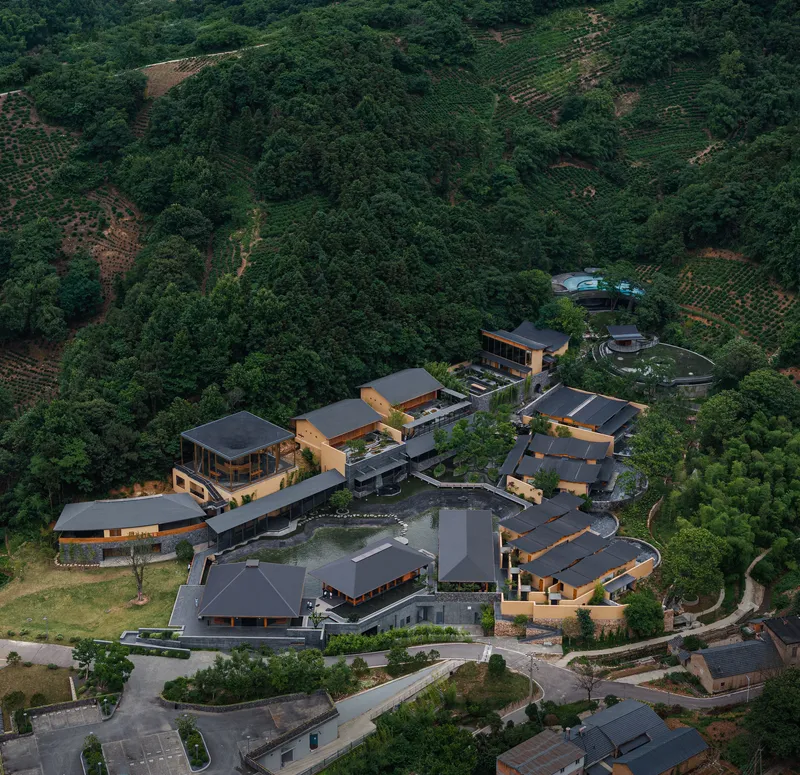
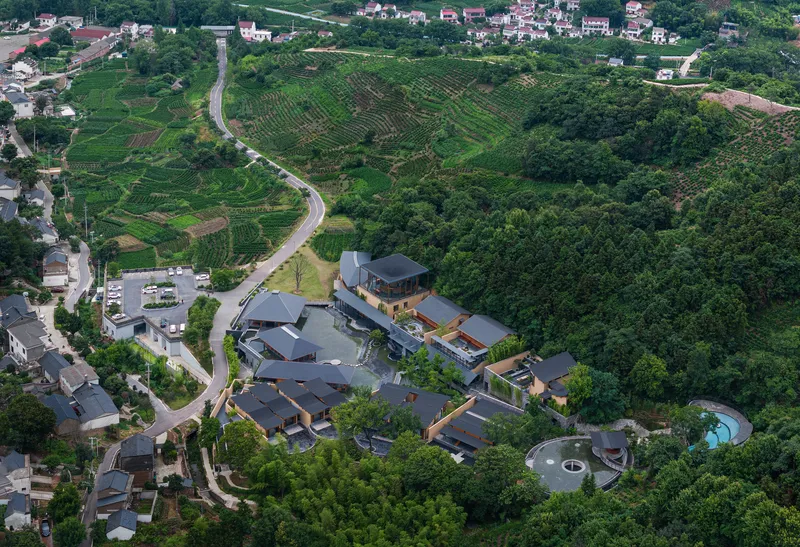
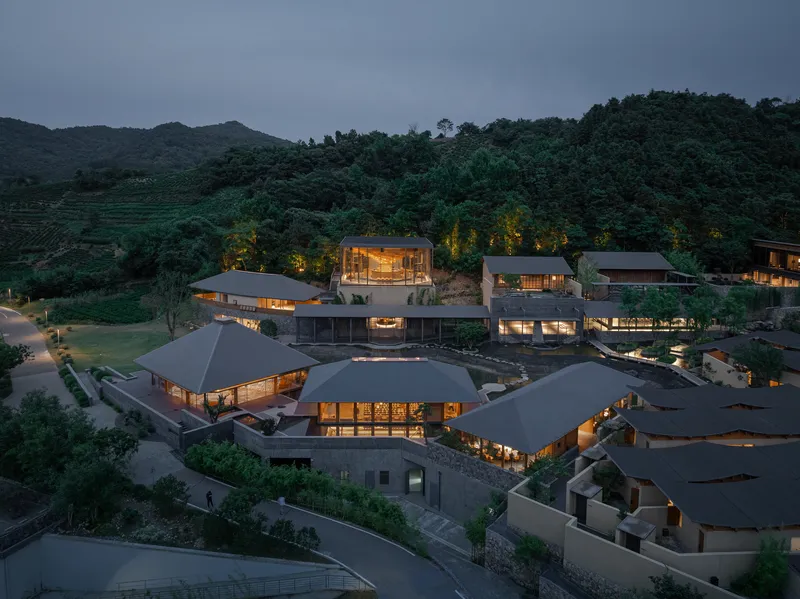
Seen from the air, the resort reads as a dark archipelago among agricultural terraces and forest canopy. The buildings are not arranged on a single datum; they step, rotate, and cluster according to the contours of the land. The aerial views at dusk reveal how the pitched roofs echo the surrounding ridgelines, matching their pitch rather than imposing a flat horizon. The access road, the seasonal stream, and the bamboo grove all preexisted. Atelier LAI treated these as fixed constraints, routing circulation around them rather than through them.
The three organizational strategies are clearly legible from above. Linear guest room blocks hug the steeper slopes. A courtyard cluster wraps around an interior water garden. And the public buildings, the restaurant, auditorium, and bathing facilities, sit at the lowest elevation where the terrain flattens near the road. Gravity organizes the program: private at the top, communal at the bottom.
Courtyards and Water
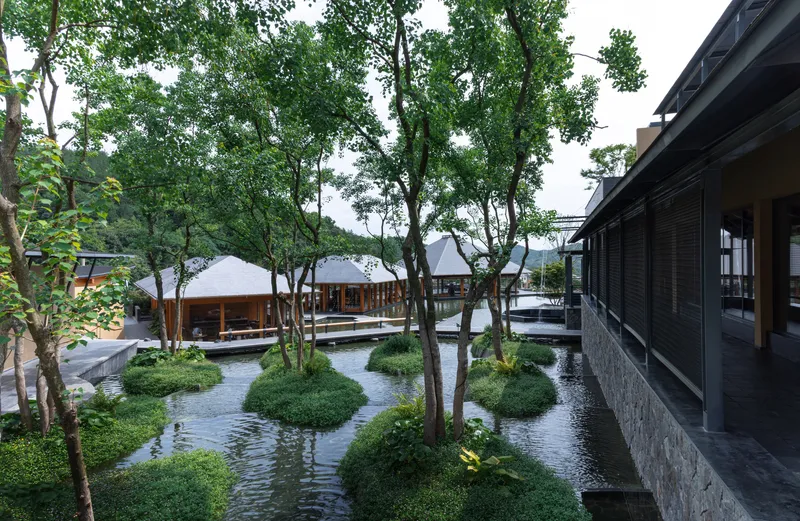
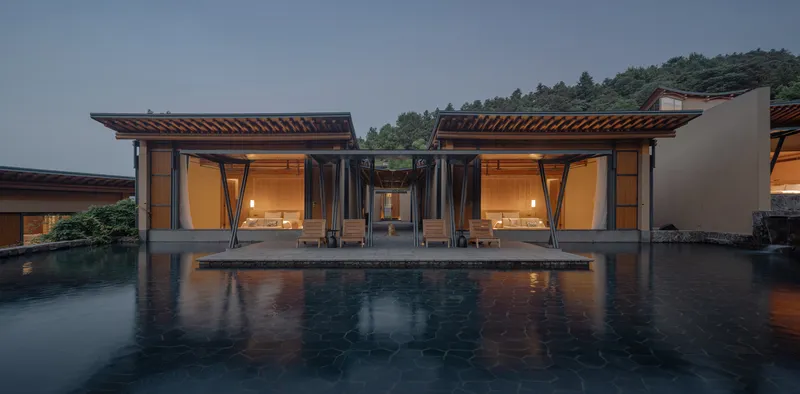
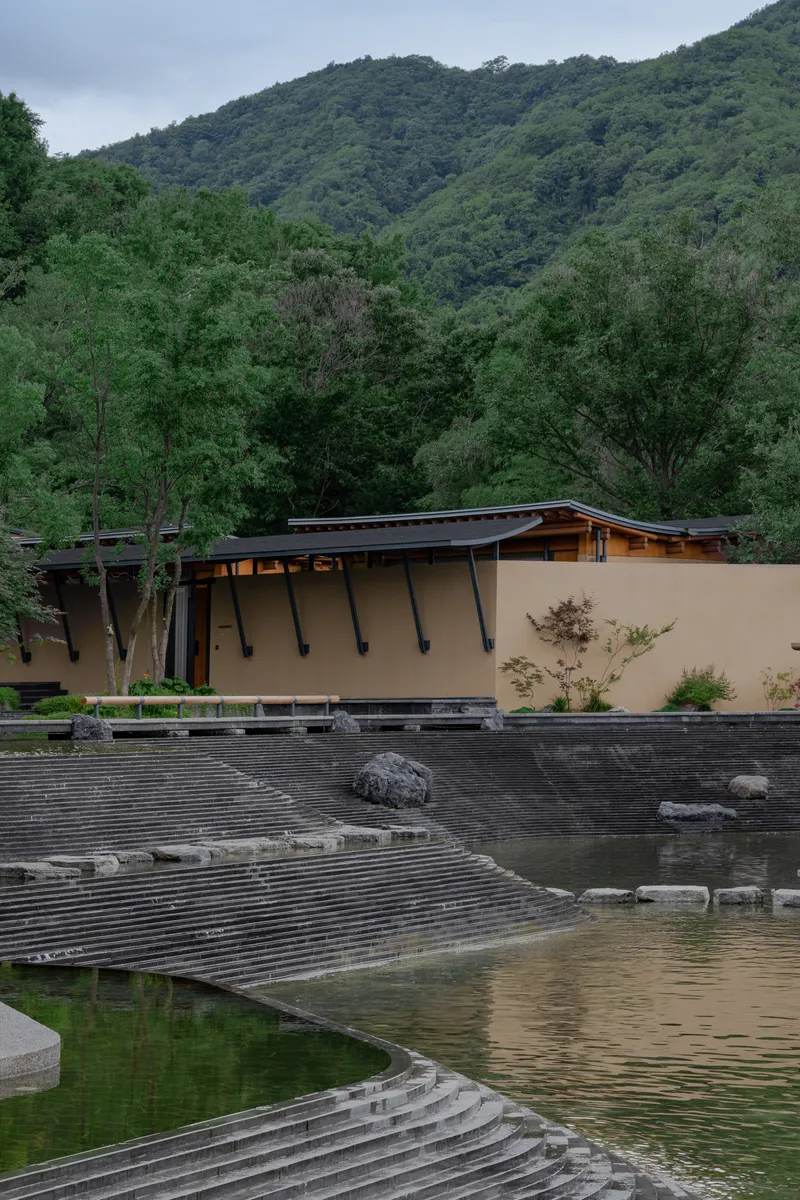
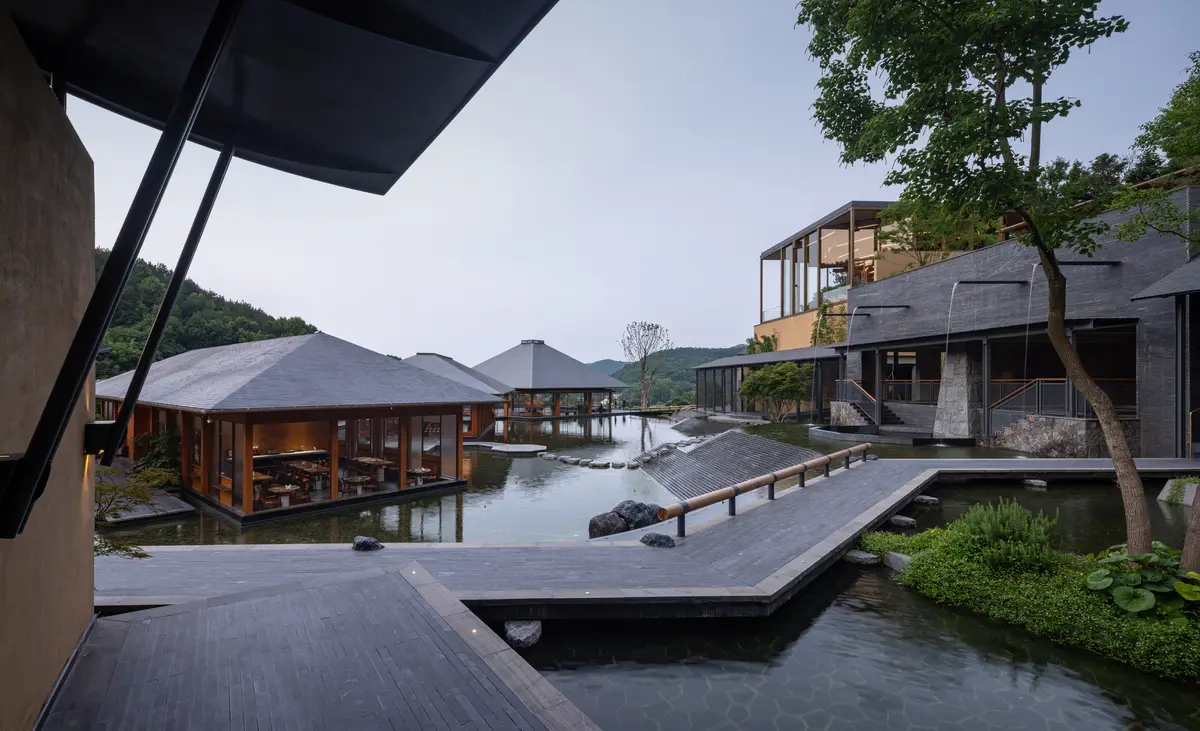
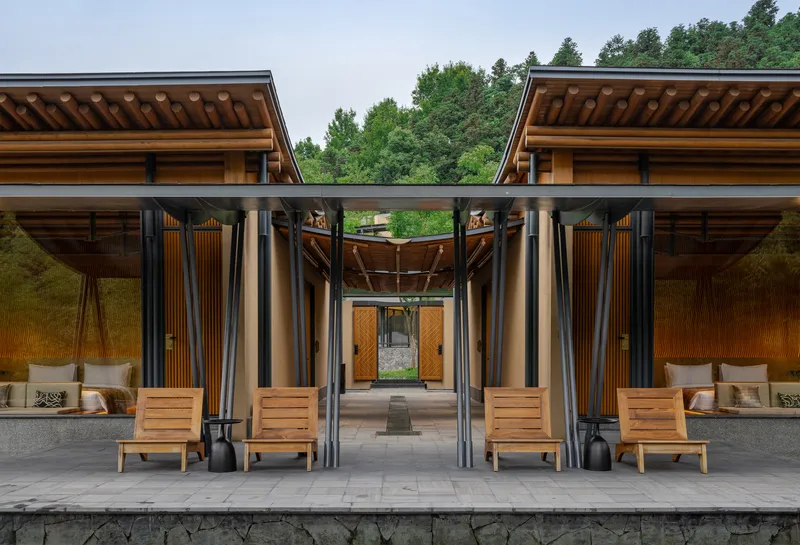
Water is the resort's connective tissue. Reflecting pools, stone channels, and planted water gardens appear at nearly every scale, from the narrow rill that runs through an entry corridor to the broad courtyard pools flanked by twin pavilions. The reflections double the timber soffits and dark rooflines at twilight, giving the low buildings visual weight they would otherwise lack. Stone retaining walls step down to meet the pools, grounding the pavilions and emphasizing the section rather than the plan as the primary drawing.
The courtyard typology here is not a single enclosed space but a sequence of open rooms linked by timber walkways and footbridges. Mature trees are retained within planted islands, so the courtyards feel established rather than newly planted. This is a small but important detail: it means the architects began by mapping existing vegetation and designing around it, not after the fact.
The Timber Ceiling as Protagonist
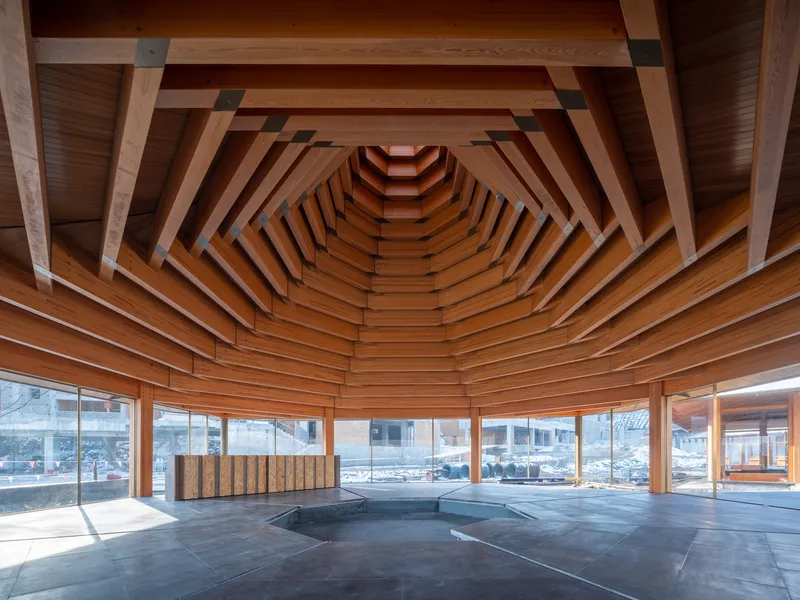
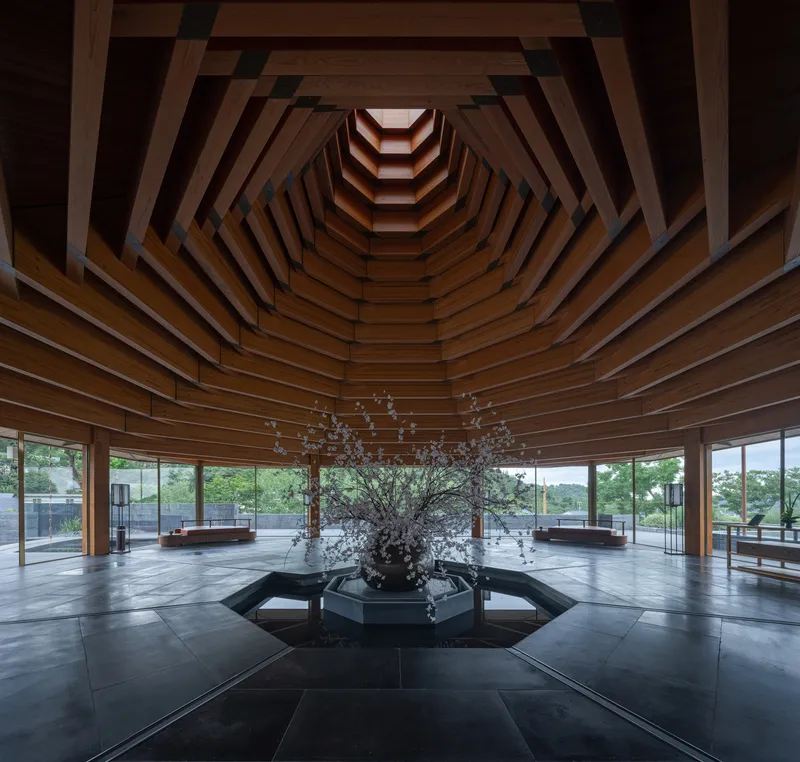
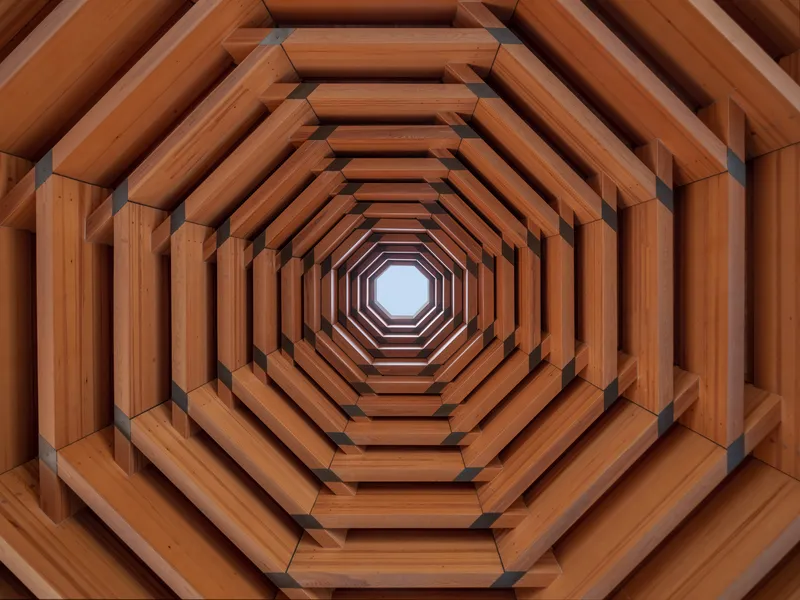
If you look at only three images from this project, make them ceilings. Each major space is defined by a different laminated timber geometry. One hall features concentric ribs converging into a tight spiral above a dark tile floor. Another builds stepped coffers that radiate upward toward a central oculus. A third assembles barrel-vault sections with transverse skylights that wash the structure in winter light. None of these ceilings are interchangeable; each responds to the room's proportions, its program, and its position on the site.
The structural work was executed by Shanghai Mulekang Timber Structure Engineering and Nanjing Jiangyan Construction Technology, specialist firms whose involvement signals that these are engineered assemblies, not decorative carpentry. Steel brackets, through-bolts, and metal connection plates are left exposed, registering the forces in the joints. The result is an architecture that treats craft not as nostalgia but as precision.
Interior Atmospheres
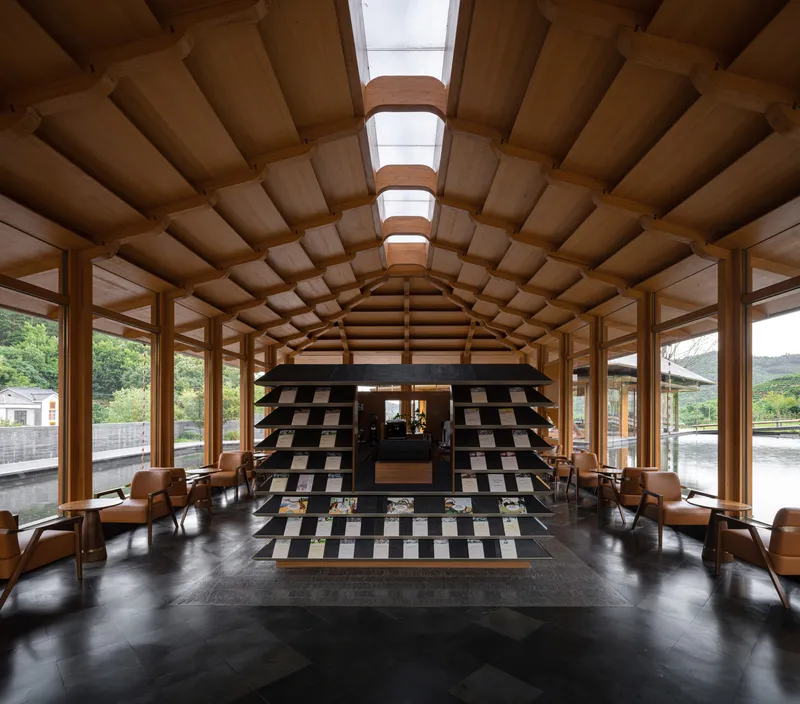
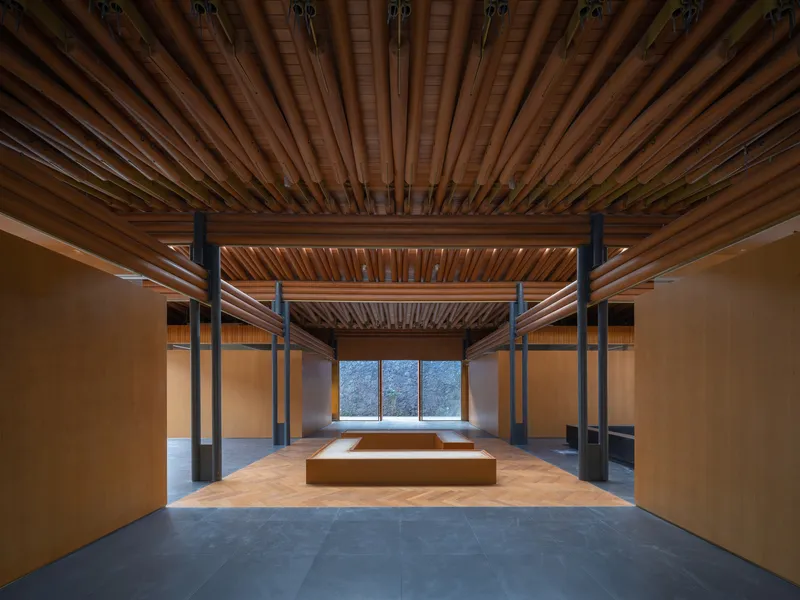
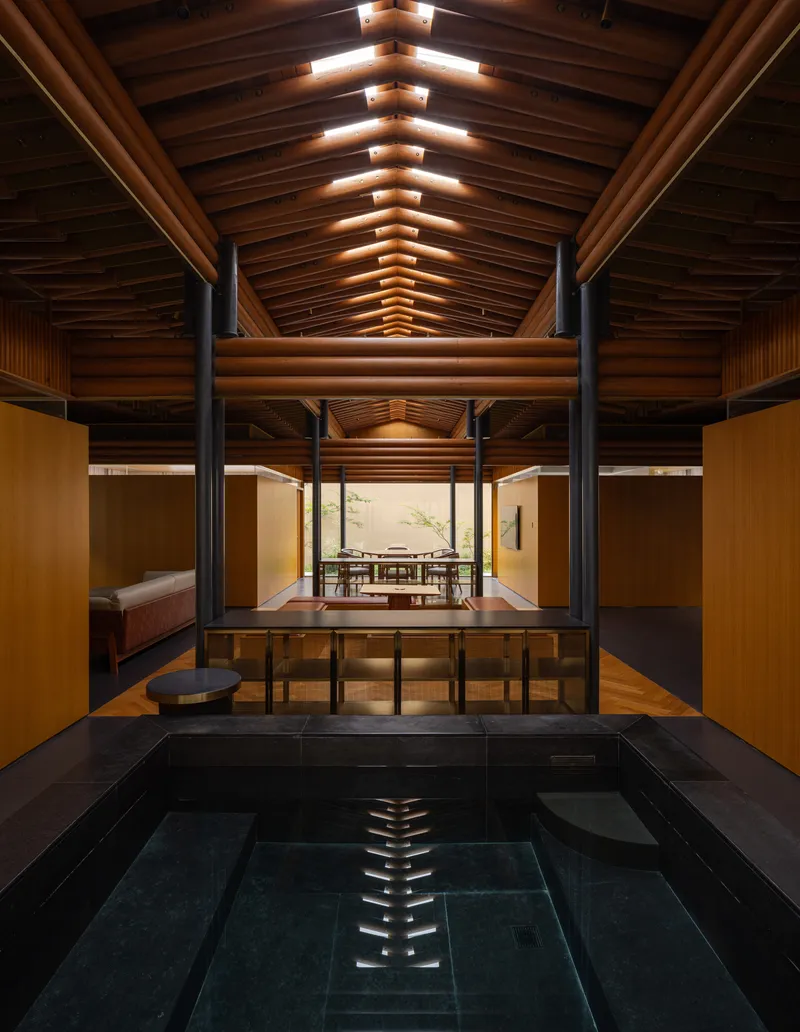
Inside the public halls, the palette is restrained: timber overhead, concrete and stone at the base, black steel columns in between. A chequered black-and-white tile wall in the main hall introduces graphic contrast without competing with the vaulted ceiling above. The bathing space turns this formula inward, placing a dark-tiled soaking pool beneath a vaulted timber ceiling braced with steel tension rods. It is a room that feels both ancient and precisely contemporary, closer to a Nordic sauna than a Chinese bathhouse.
The gallery spaces use radial timber panels and slender black columns to frame distant views through carefully positioned windows. Light enters selectively: sidelights at knee height, skylights overhead, and clerestories where the roof lifts away from the wall. Every opening is calibrated, nothing is floor-to-ceiling glass for the sake of it.
Guest Rooms and Private Terraces
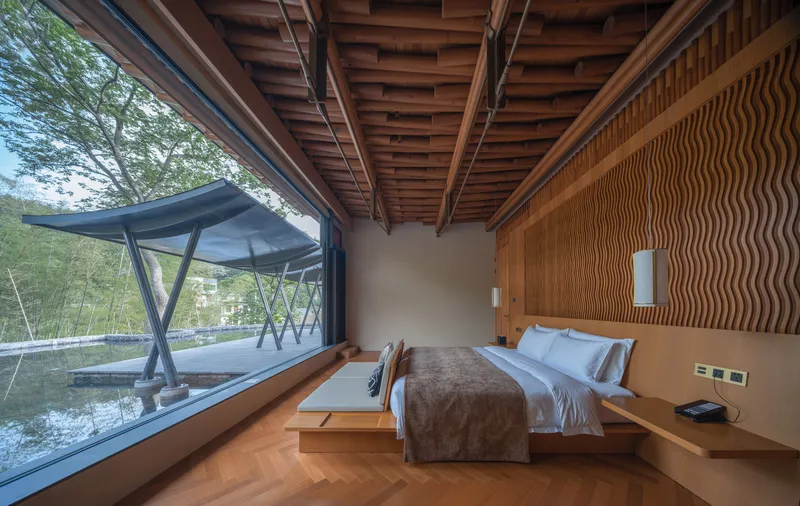
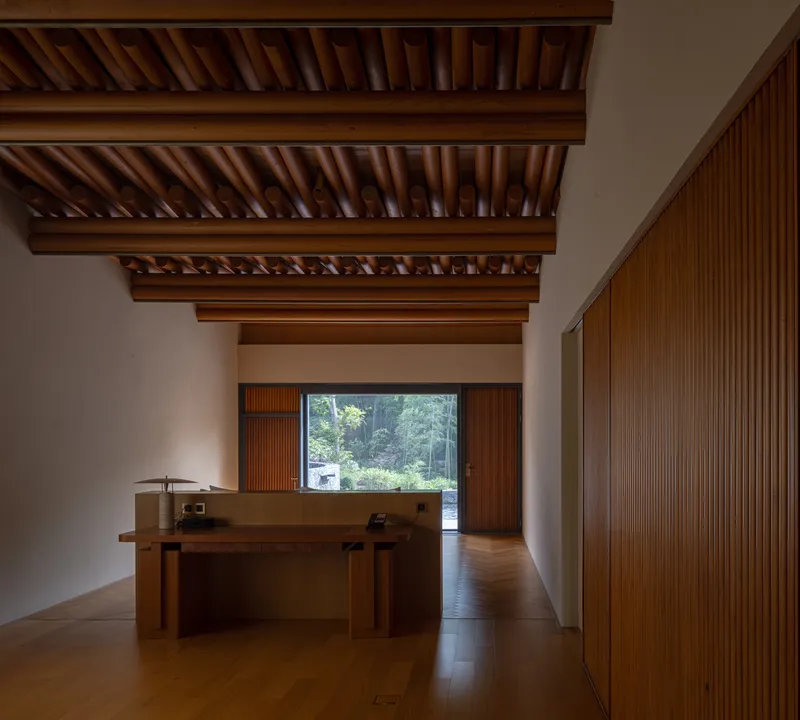
The guest rooms carry the timber language into a domestic register. Herringbone wood flooring, wavy wall paneling, and exposed beam ceilings give the rooms a tactile density that avoids the sterile minimalism of typical resort interiors. Horizontal windows are set into vertical wood slat walls, framing bands of greenery rather than panoramic views. The compression of the view makes it more intense.
Private terraces extend from the rooms under broad timber roofs supported by steel columns. Wooden lounge chairs face the forested hillside. The ceiling depth and the column rhythm create a sense of shelter that is more porch than balcony, a threshold space where inside and outside negotiate on equal terms.
Thresholds and Circulation
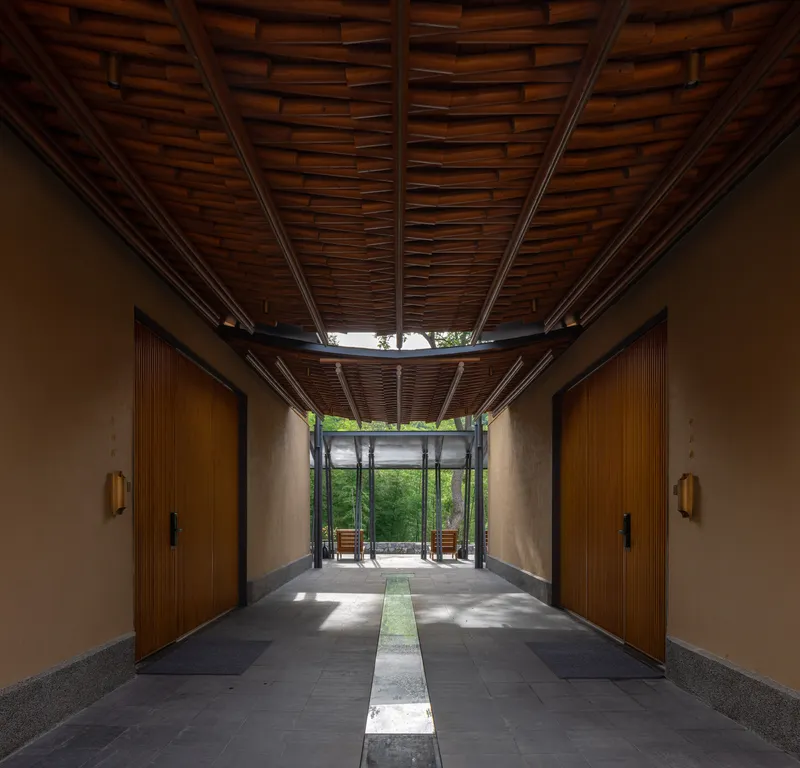
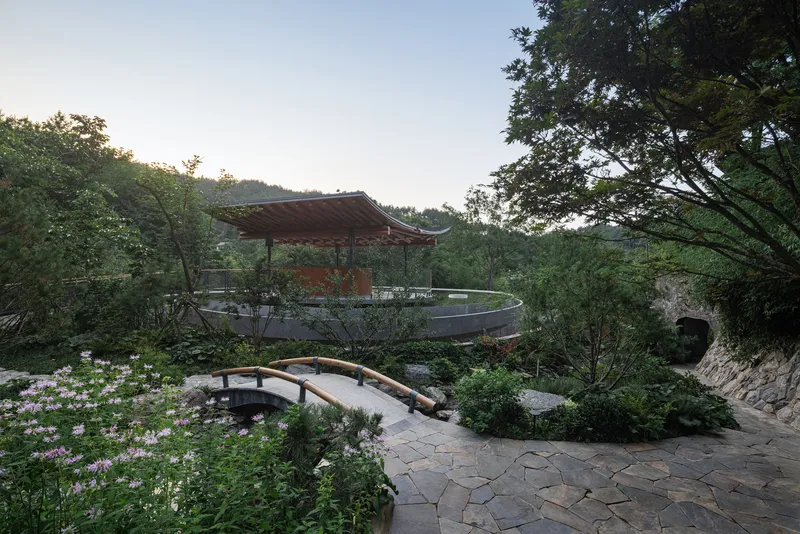
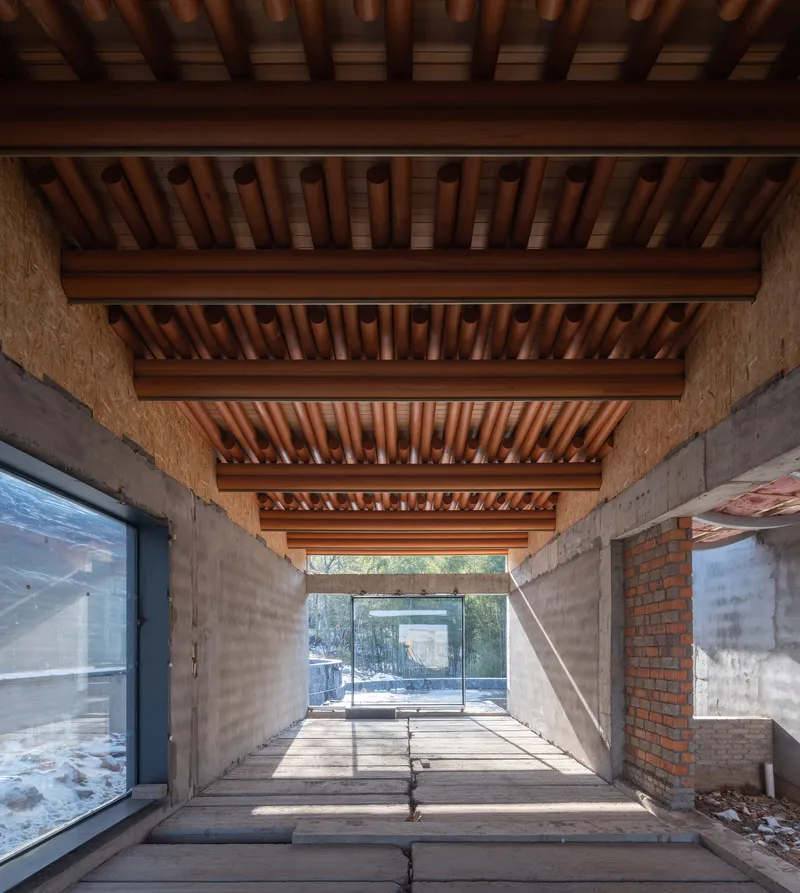
The transitions between buildings are as carefully designed as the rooms themselves. An entry corridor features a woven timber ceiling with a narrow water channel running along the stone floor, guiding you forward while signaling the presence of water throughout the site. An arched timber footbridge crosses a stone-paved garden path, its curvature making the short span feel ceremonial. Interior corridors layer timber beams above concrete walls, creating a rhythm of shadow and light that measures your movement through the building.
These in-between spaces do significant atmospheric work. They slow you down. In a resort where the primary activity is rest, the architecture of arrival and passage matters as much as the destination room.
Structure and Detail
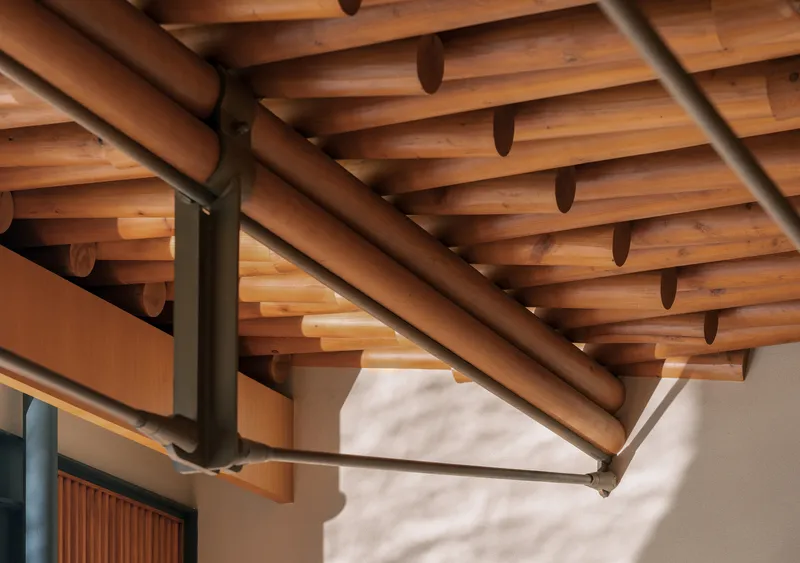
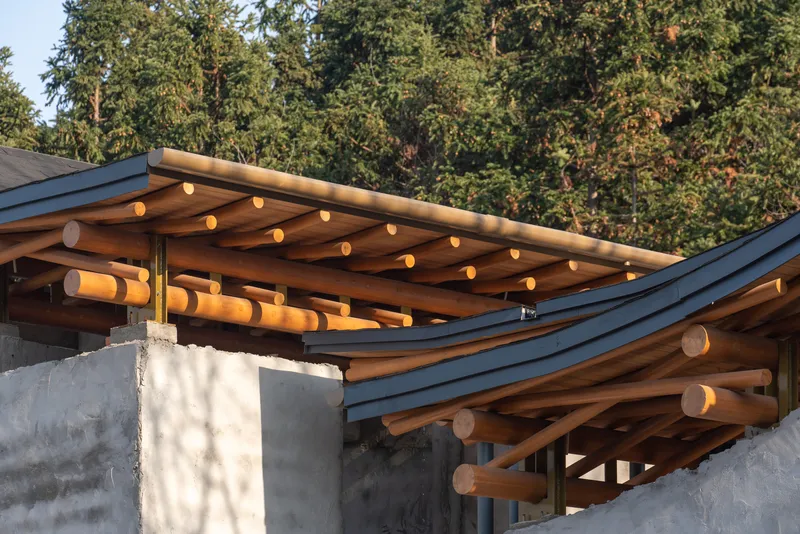
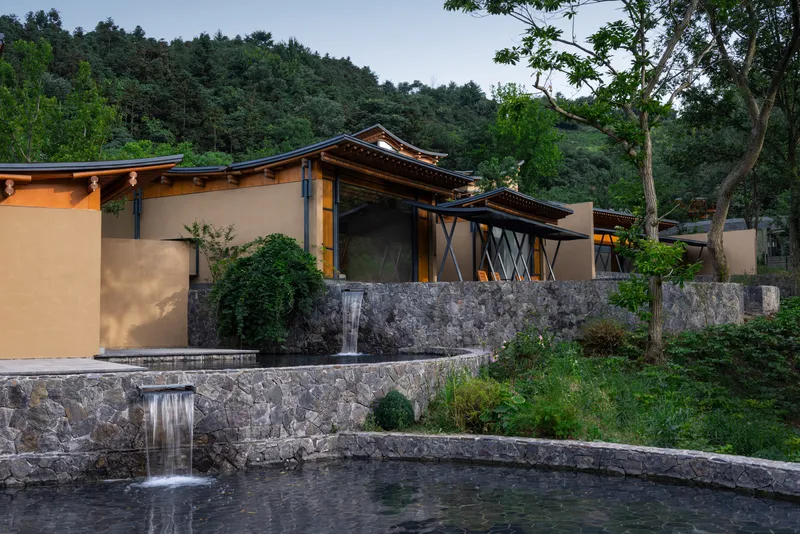
Close-up views reveal the honesty of the construction. Timber beams meet white stucco walls through visible steel brackets. Cylindrical log ends project beyond concrete retaining walls, registering the roof structure on the exterior. Stone terracing absorbs the grade changes and doubles as the building's plinth. Materials are layered by weight: stone at the base, concrete in the middle, timber above.
This hierarchy is not just visual; it is structural logic made legible. Heavy materials handle compression and earth retention. Light materials span and shelter. The palette of stone, rubble, wood, plywood, metal, and concrete is modest, but the specificity of each material's role gives the buildings a tectonic clarity that rewards close looking.
Plans and Drawings
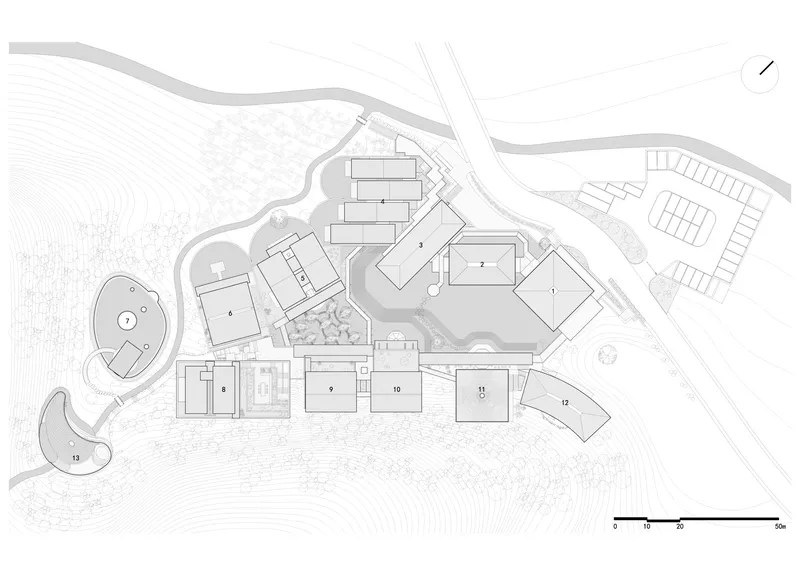
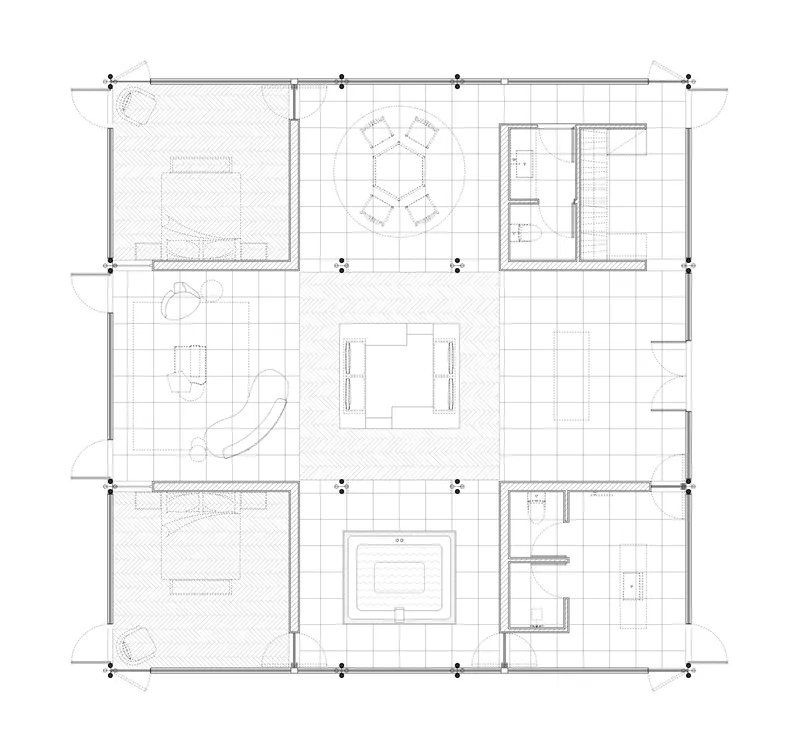
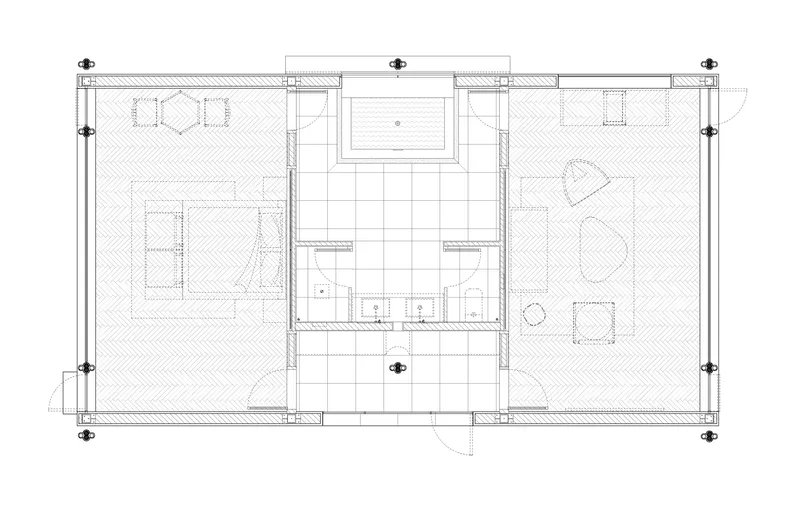
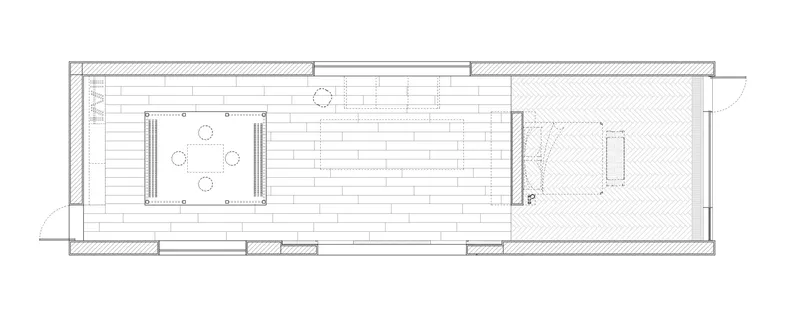
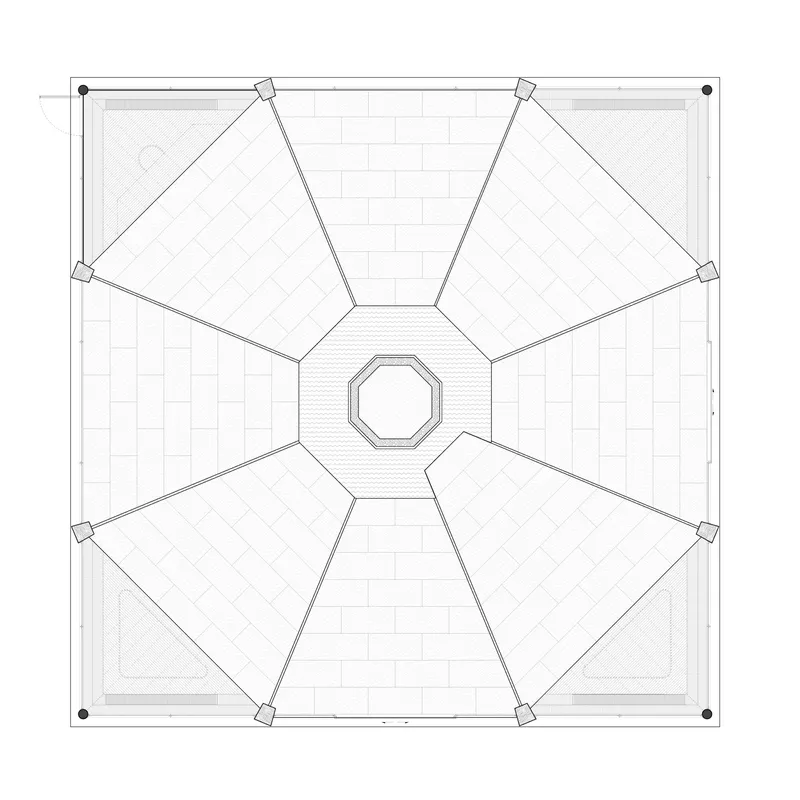
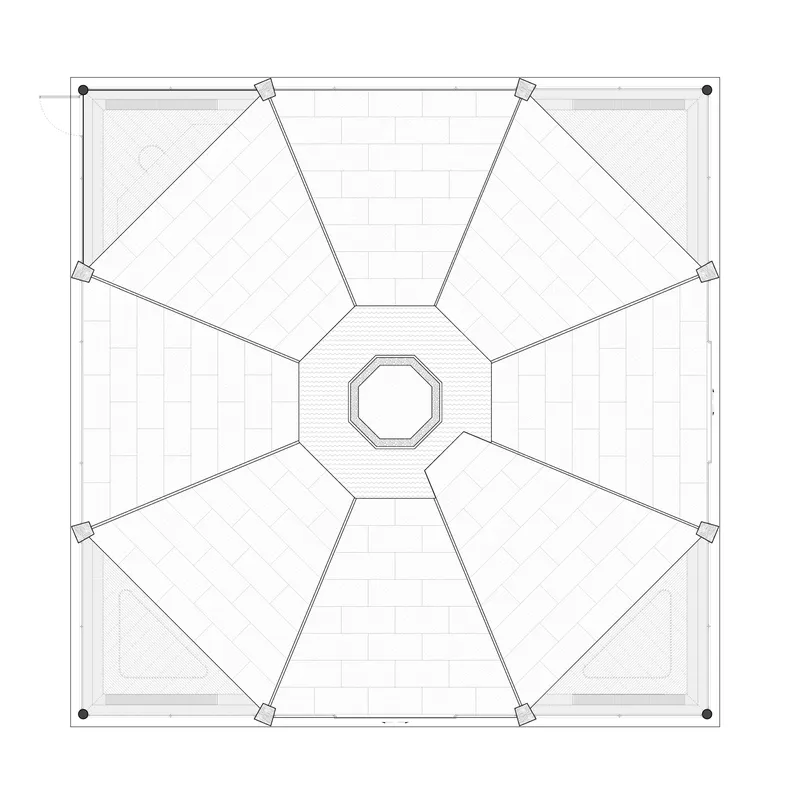
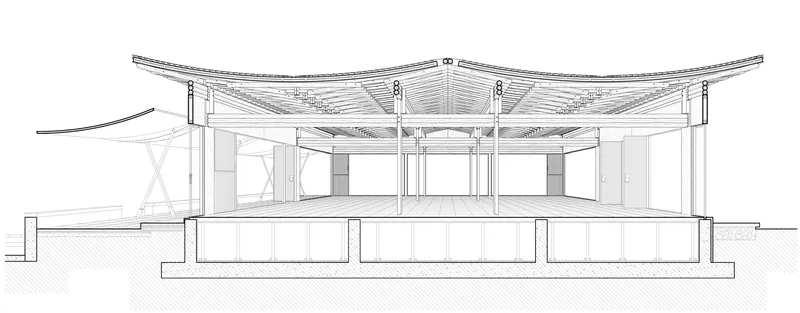
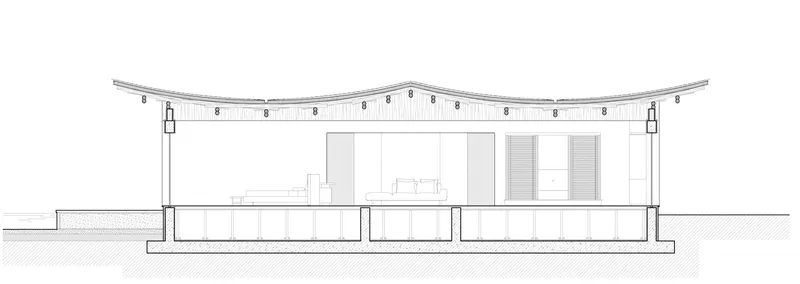
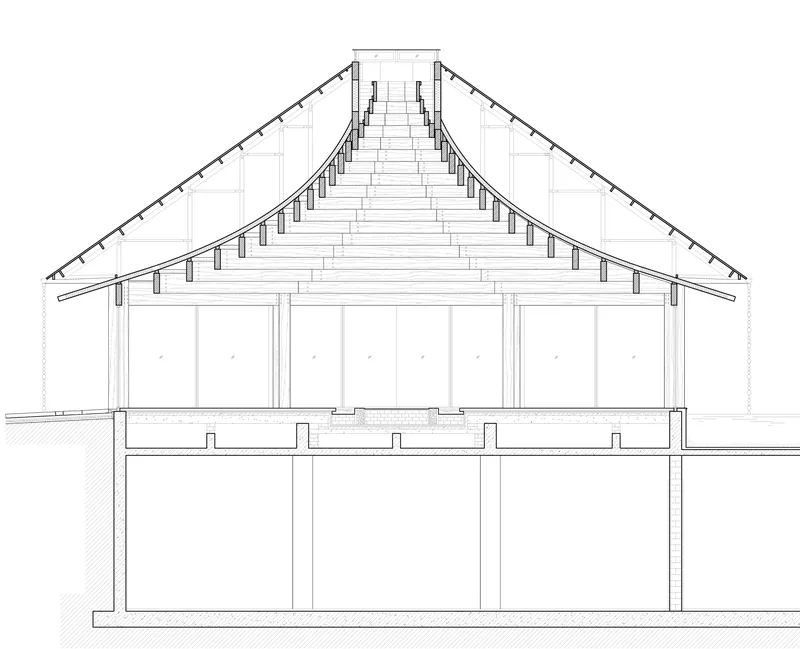
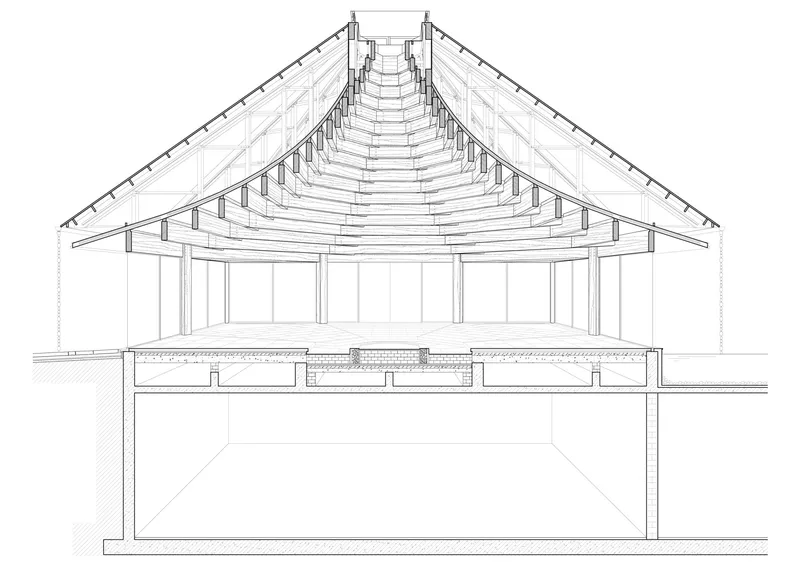
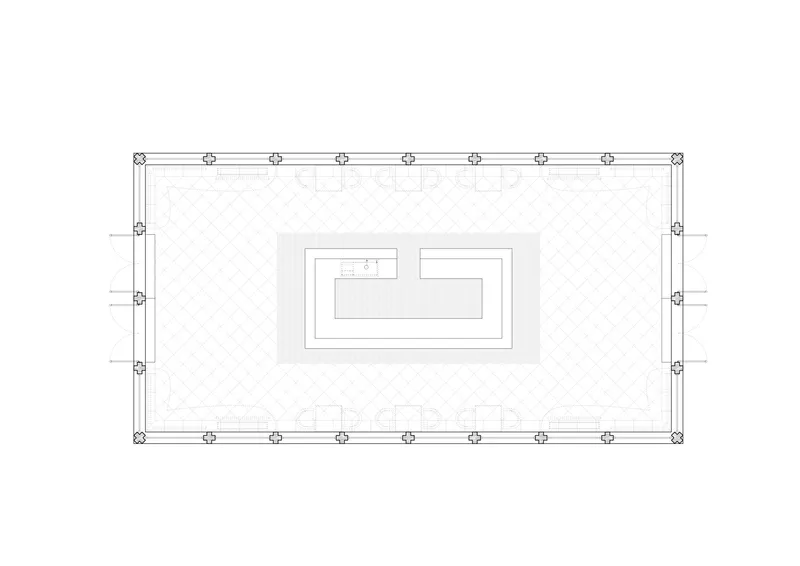
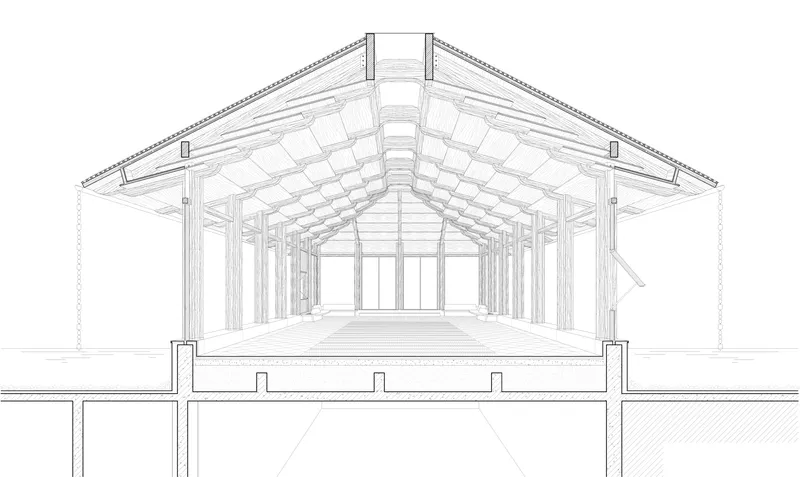
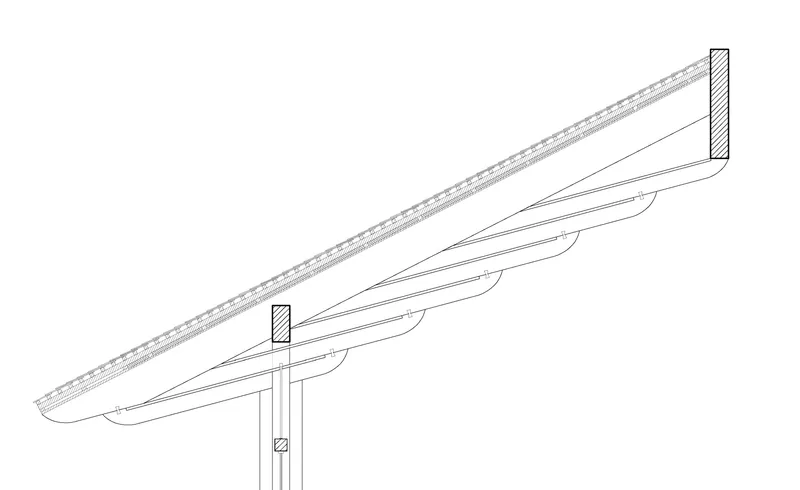
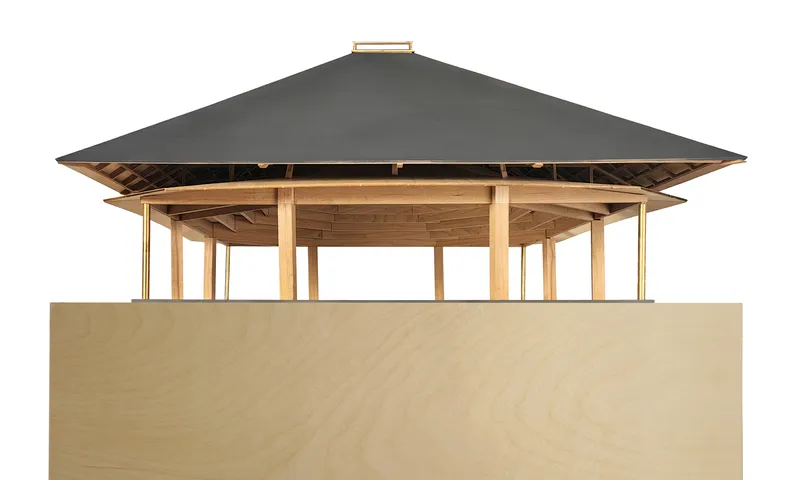
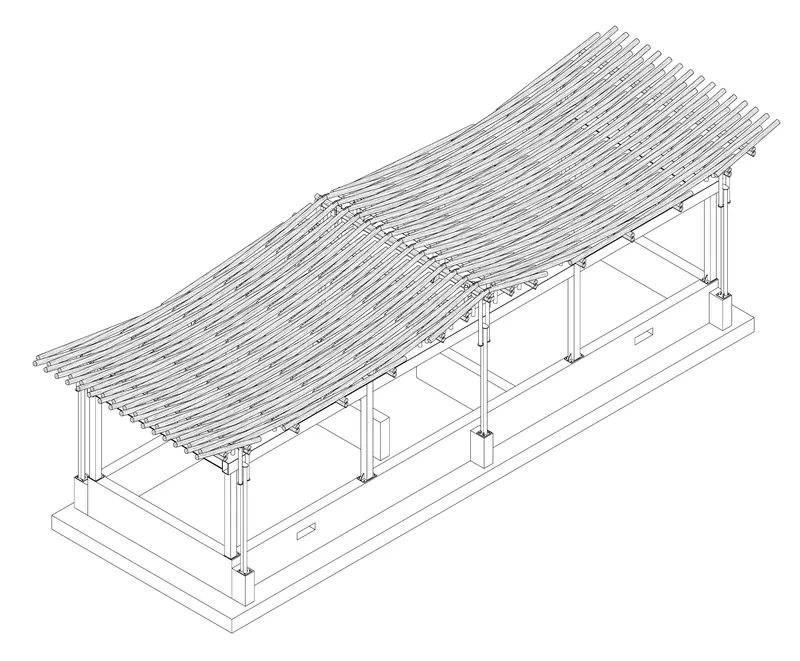
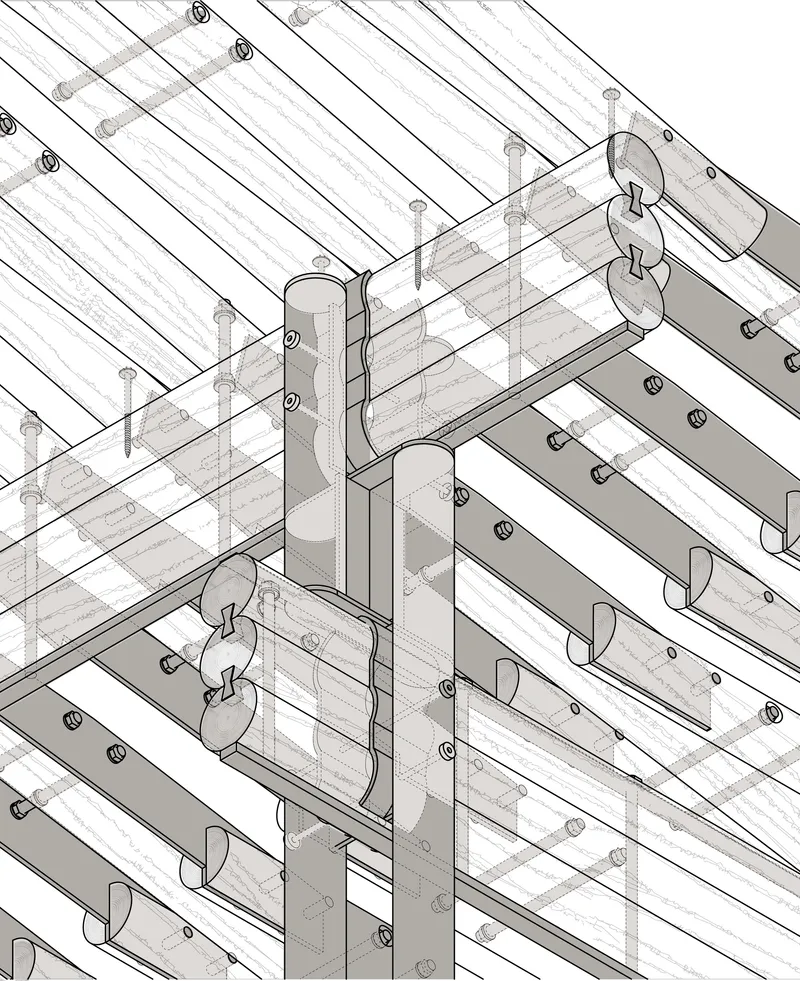
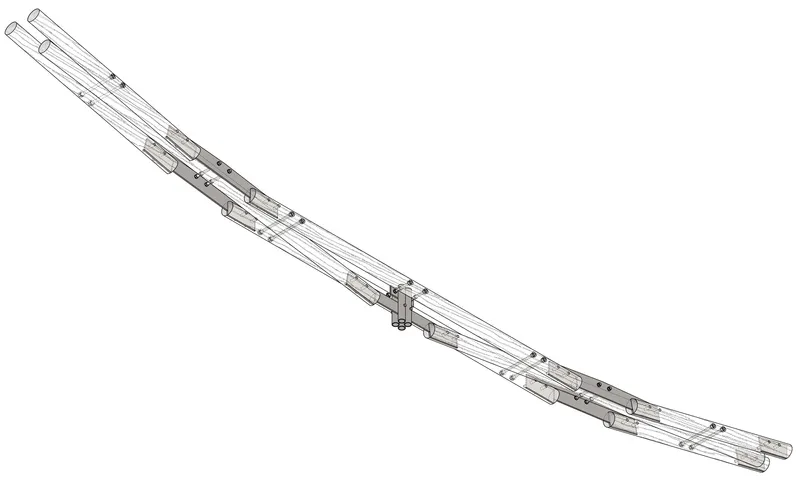
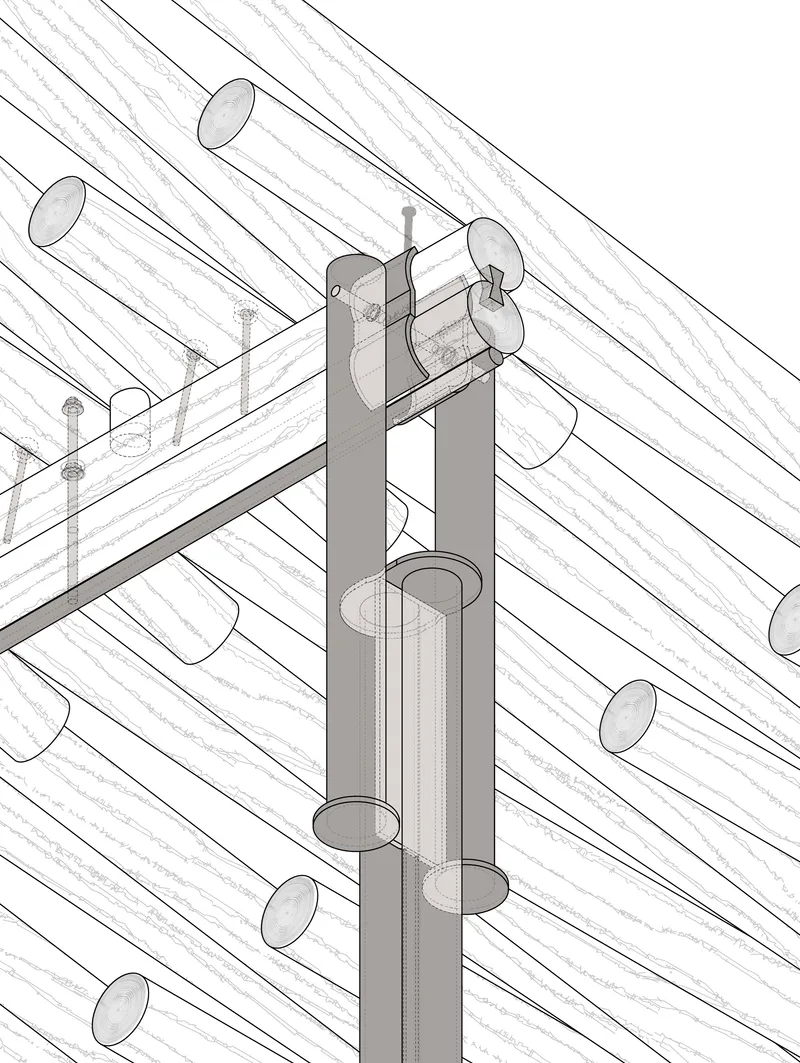
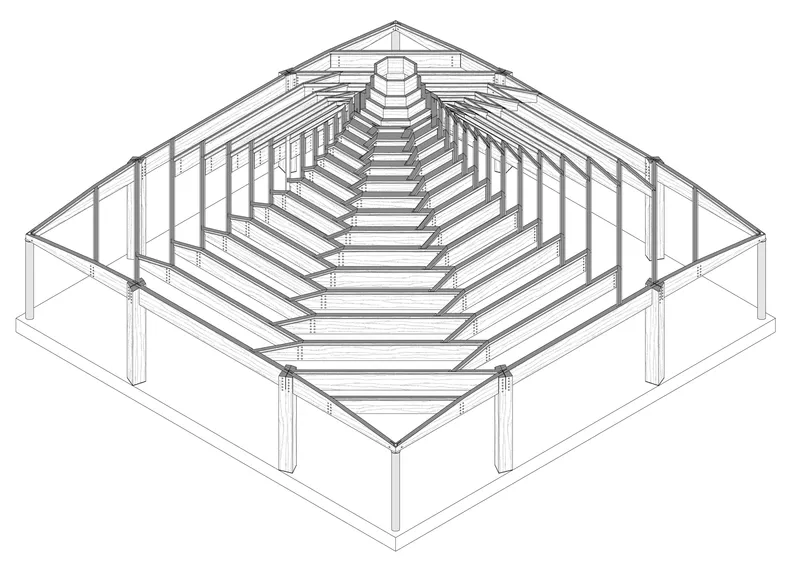
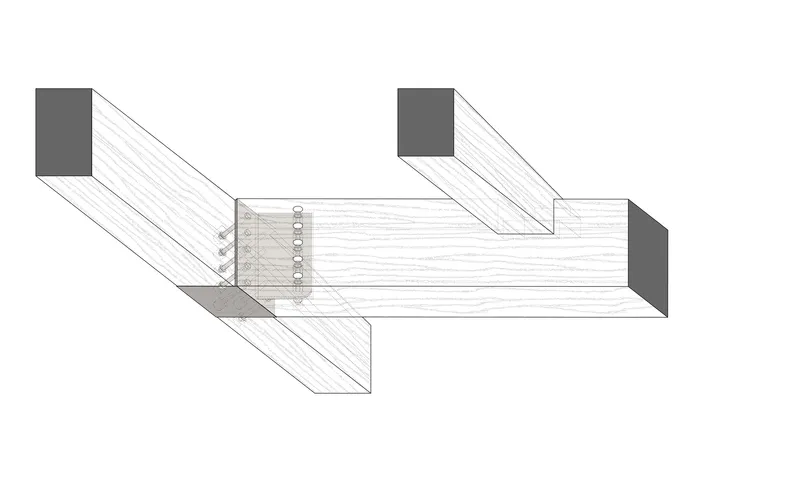
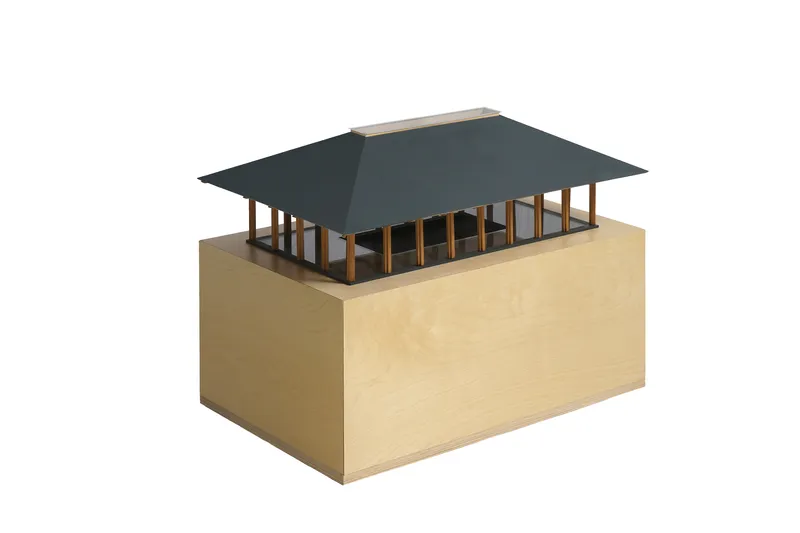
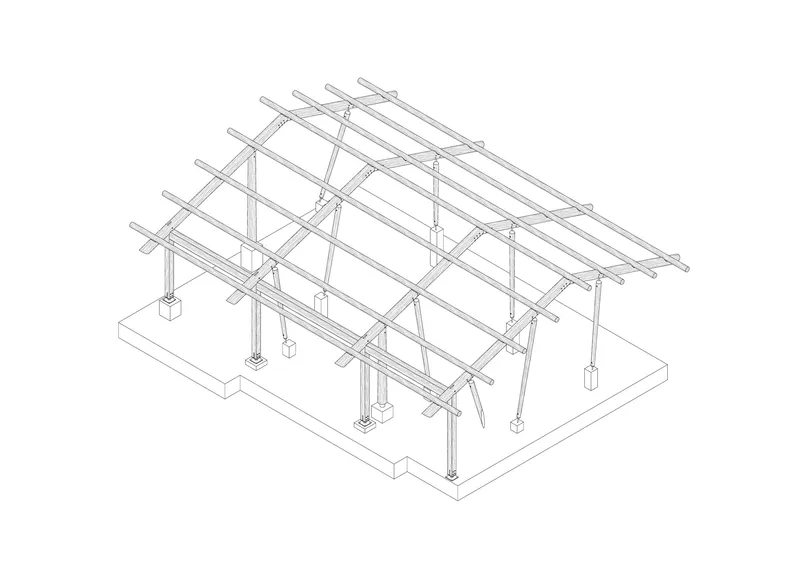
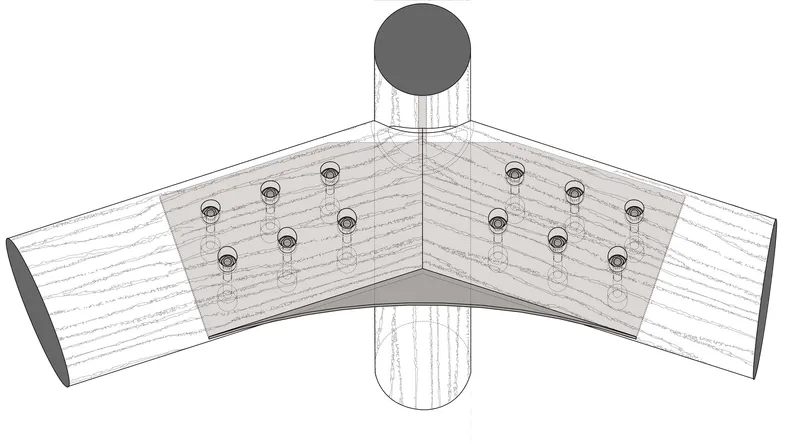
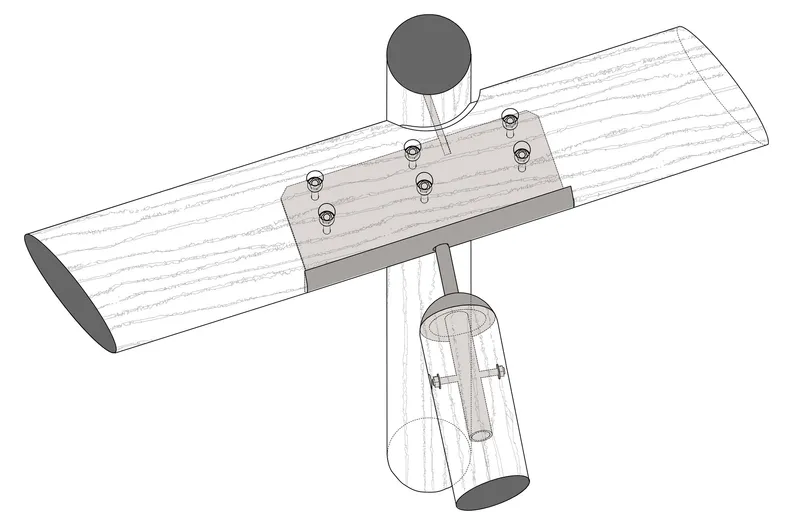
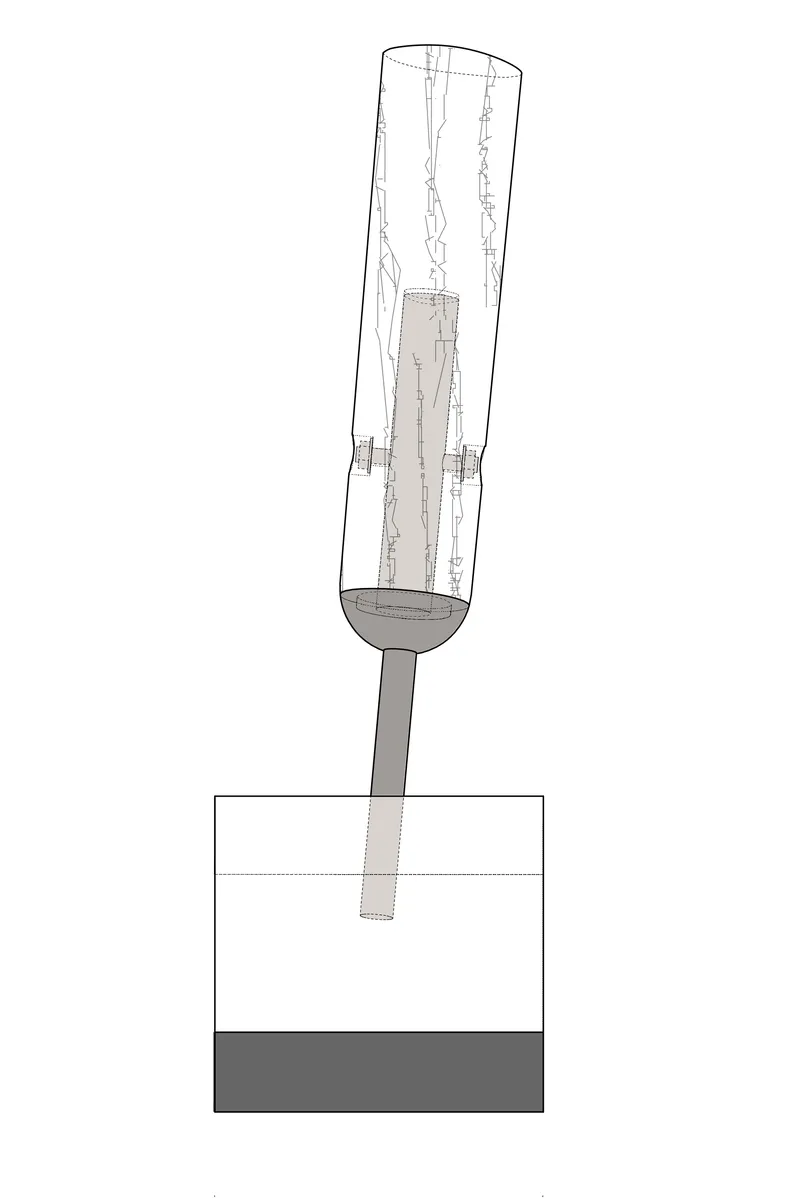
The drawings confirm what the photographs suggest: every building type has a unique roof geometry, and those geometries are not arbitrary. The site plan shows how volumes are distributed across topographic contours, with pathways threading between them. Floor plans reveal compact, efficient room layouts organized around central service cores. Sections are where the project comes alive, exposing the full depth of the timber roof structures, the relationship between floor levels, and the way each building negotiates its specific grade change.
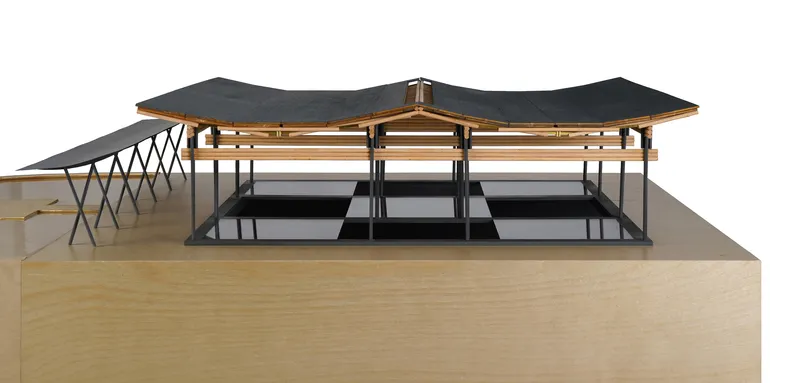
The axonometric and detail drawings of timber joints deserve particular attention. They document a catalog of connection types: column-to-beam brackets, curved roof beam assemblies, tubular column anchors embedded in concrete foundations. Each joint is designed for its specific load path and detailed with metal plates, through-bolts, and mechanical fasteners. The physical model of one pavilion, showing the dark-clad roof over a raised plinth, reveals the building's essential logic at a glance: a heavy base, a light frame, and a sheltering lid.
Why This Project Matters
Nanshan Junning Resort matters because it demonstrates that working with traditional materials and typologies does not require stylistic regression. Atelier LAI has built a resort that feels rooted in its Anhui valley without mimicking the region's historic architecture. The timber structures are contemporary in their engineering, the spatial sequences are inventive, and the relationship to topography is genuinely site-specific. You could not lift these buildings and place them elsewhere.
The project also offers a useful counter-argument to the prevailing Chinese resort model of dramatic gestures and iconic silhouettes. Here the drama is internal, found in the ceiling geometries, the water reflections, and the careful calibration of thresholds. The compound succeeds not because any single building is spectacular but because the collection of buildings, paths, pools, and terraces forms an environment that is more than the sum of its parts. Hospitality architecture at this level of structural commitment and topographic sensitivity is rare anywhere. That it was realized in a relatively modest rural program makes it all the more significant.
Nanshan Junning Resort by Atelier LAI. Hefei, China. 6,713 m². Completed 2024. Photography by Shengliang Su and Yilong Zhao.
About the Studio
Share Your Own Work on uni.xyz
If projects like this are the kind of work you want to make, uni.xyz is a place to publish your own, find collaborators, and enter design competitions.


Popular Articles
Popular articles from the community


Faces of the Soviet Avant-Garde: Turning Moscow's Street Names into an Open-Air Museum
A network of sculptural installations across a Moscow residential district transforms forgotten architect names into spatial encounters with cultural memor

Tsunami Convergenics: Turning Catastrophic Ocean Forces into Underwater Housing Infrastructure
A speculative underwater settlement off the coast of Onagawa, Japan, treats tsunamis and typhoons as energy sources rather than threats.

Opera on the Sea: Driftwood Logic Shapes a Timber Opera House on Estonia's Coast
Trevor Orgill's opera house translates the entangled drift of floating timber into a civic building where wood, water, and music converge.

Singing Woman: An Opera House That Performs Before the Curtain Rises
Ovidiu Cristian Pavel's conceptual opera house translates Estonia's choral identity into a sculpted waterfront landmark facing the Baltic Sea.

Similar Reads
You might also enjoy these articles

Pixel Gardens: One Repeated Module Stacked Into a Terraced Social Housing Tower for Famagusta
Salem Bader's shortlisted housing tower builds a vertical neighbourhood from one repeated module, offsetting units to carve terraces, light and air.

Bao Huynh Watercolor Atelier: A Serene Art Retreat in Hội An
Bao Huynh Watercolor Atelier in Hội An blends multifunctional art spaces, sustainable design, local materials, and family-friendly living in a serene environment.

Atelier Macri Concept Store Interior Design by CASE-REAL
Atelier Macri store features a "ko" counter, walnut wood details, cork displays, blending retail, gallery, and seamless customer experiences.

Manuel Vargas Izquierdo Stadium and High-Performance Sports Center: Architectural Excellence in Jalpa de Méndez
The Manuel Vargas Izquierdo Stadium blends sustainable design, inclusive sports facilities, and cultural-inspired architecture, revitalizing Jalpa de Méndez’s public spaces.

Comments (0)
Please login or sign up to add comments
No comments yet. Be the first to comment!