

Flintstone6 House by Mitti: A Model for Sustainable Living
Flintstone6 House combines sustainable design, reclaimed materials, and eco-friendly techniques, blending seamlessly into its natural surroundings in India.


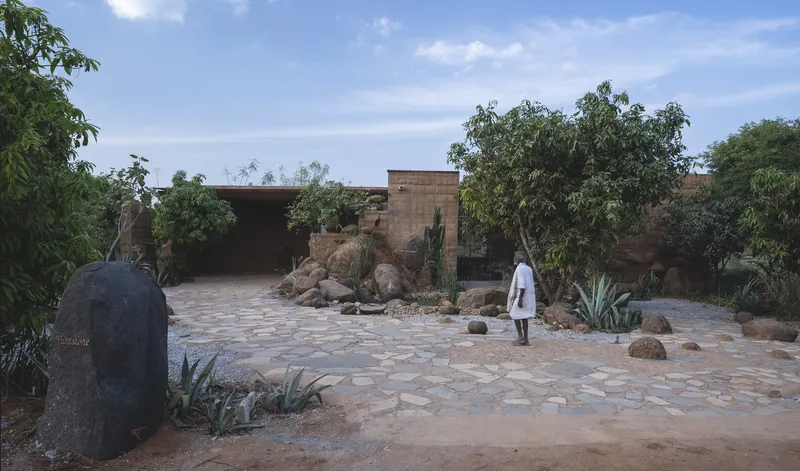
The Flintstone6 House, designed by Mitti and led by architect Fawaz Thengilan, is a sustainable retreat located in Kodiga Timmanapalli, India. Built in 2022, this 180 m² home blends eco-conscious design principles with modern architecture. Situated within the Sanctity Ferme farming community near Bangalore, it reflects a deep commitment to harmonizing with nature.
In this article, we explore how the Flintstone6 House serves as a beacon of sustainable design, incorporating innovative construction techniques and materials to create an environmentally integrated masterpiece.
Sustainable Architecture: The Vision Behind Flintstone6 House
Responding to COVID-19 Challenges
The COVID-19 pandemic changed how people perceive urban life, prompting Mr. Abhishek Ubale and Mrs. Sunaina from Bangalore to move closer to nature. They found a home in Sanctity Ferme, a community practicing organic farming and promoting sustainable living.
The Flintstone6 House was envisioned as a structure that would seamlessly integrate into its natural surroundings while using eco-friendly building methods.

Key Design Features of Flintstone6 House
1. Debris Wall Construction: A Sustainable Innovation
- The construction process used soil and waste materials, implementing the innovative Debris Wall Construction technique to minimize the need for external resources.
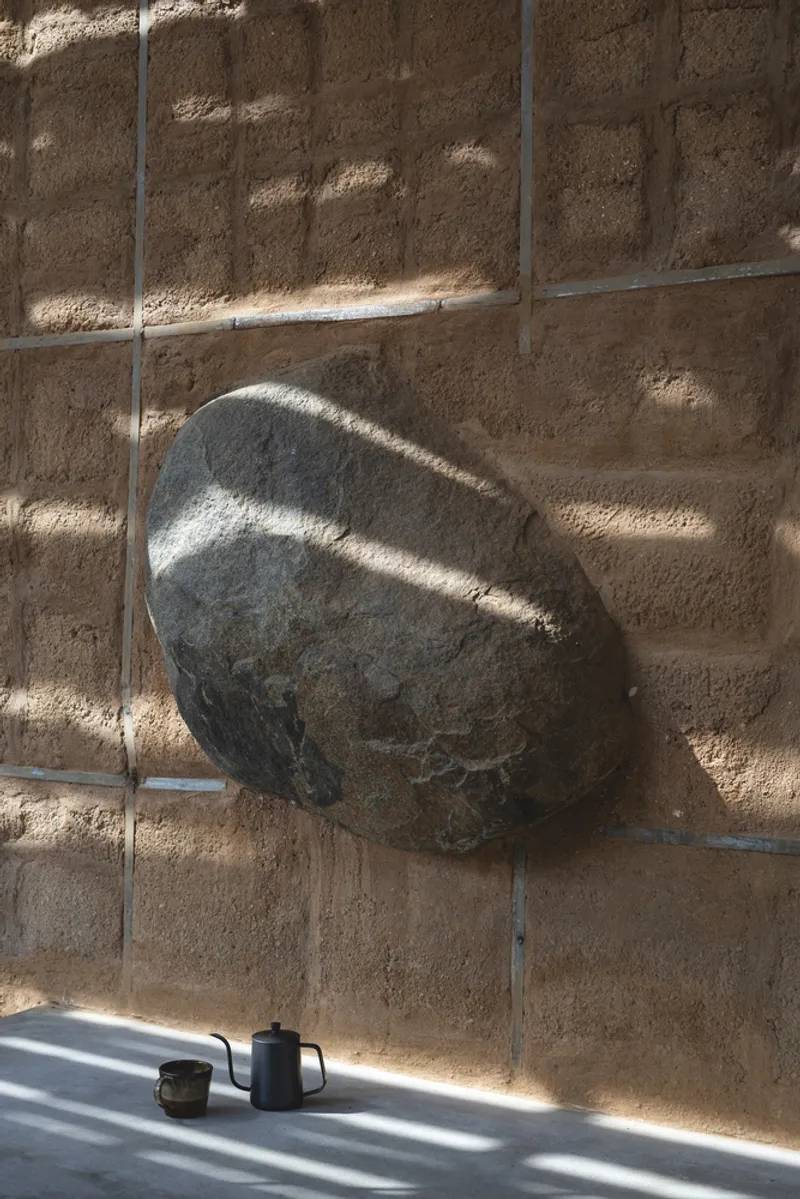
- This method not only reduces environmental impact but also helps the house blend harmoniously into the arid landscape of the Cauvery basin.

2. Camouflaged Aesthetic Design
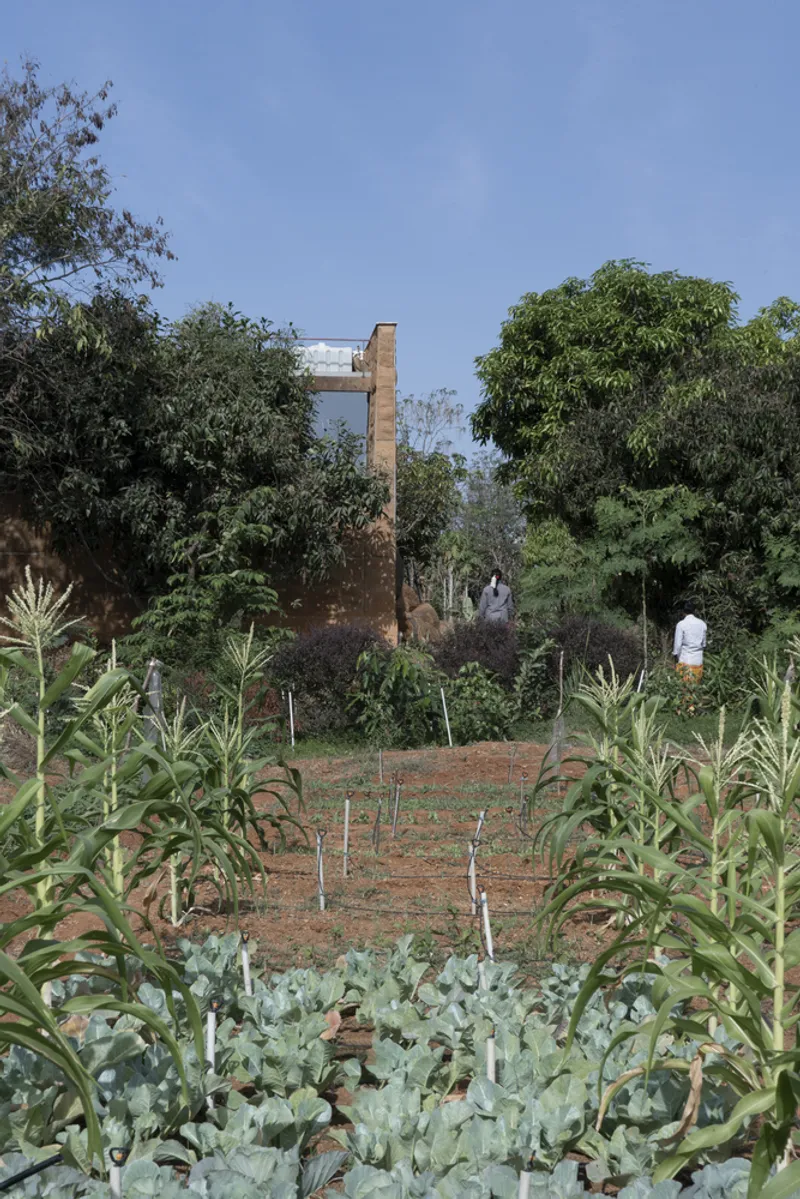
- The house mimics the rocky terrain with parallel debris walls on its northern and southern sides, ensuring it does not disrupt the scenic beauty of the area.
- Surrounded by a mango grove, the house feels like a natural extension of its environment.
3. Innovative Roof Features
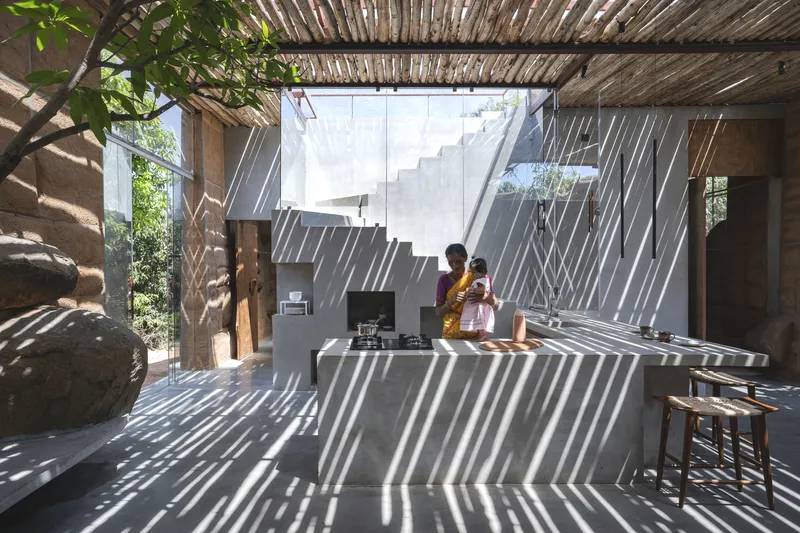
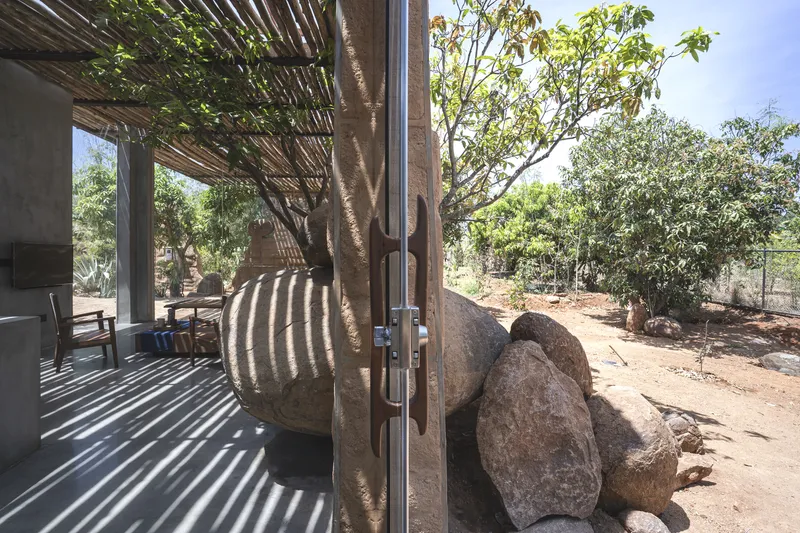
- The Casuarina-glazed roof functions as a sundial, while the composite Casuarina-ferrocement roof serves as a party terrace, maximizing utility without adding an upper story.
4. Reclaimed and Recycled Materials
- The interiors feature sustainable materials:A rock bed in the master bedroom made from quarry waste.Basins carved out of granite boulders retrieved from landfills.Furniture crafted from reclaimed wood, emphasizing a zero-waste approach.
- A rock bed in the master bedroom made from quarry waste.
- Basins carved out of granite boulders retrieved from landfills.
- Furniture crafted from reclaimed wood, emphasizing a zero-waste approach.
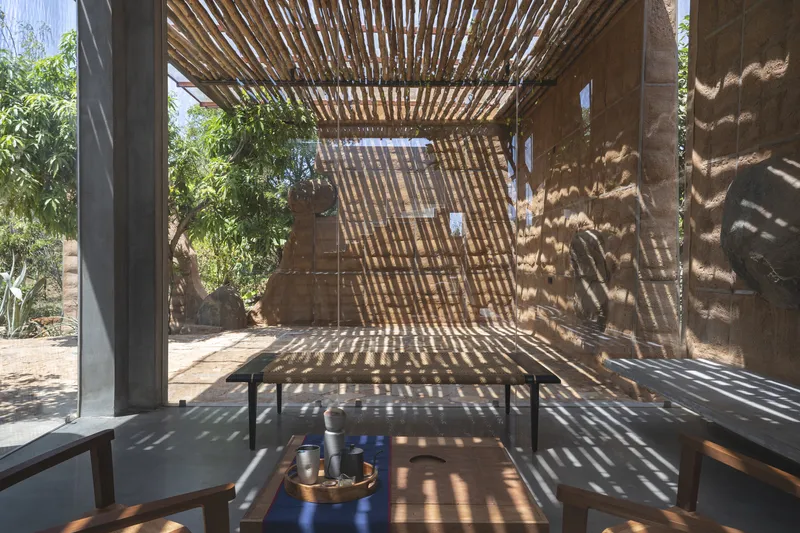
5. Eco-Friendly Landscaping
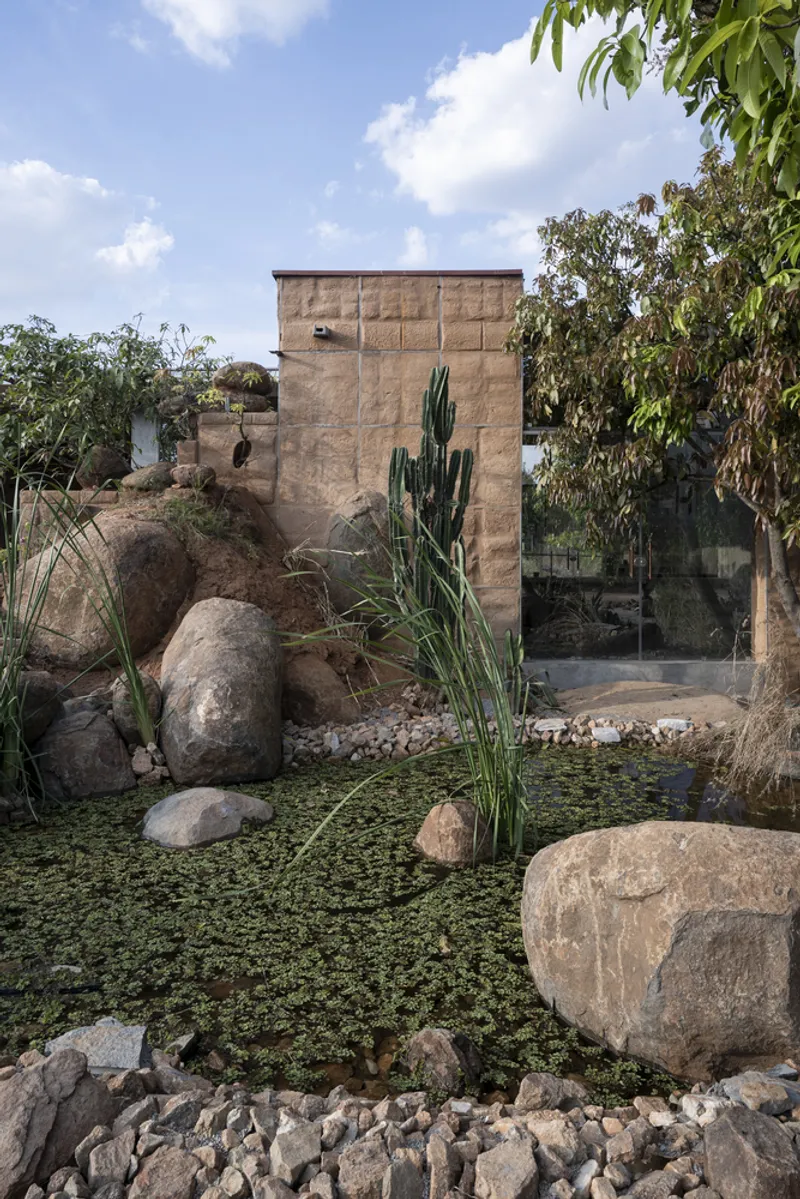
- Indigenous plants like cacti and granite quarry waste paving enhance the house’s connection to its arid surroundings.
- A koi pond lined with river stones adds a serene touch while preserving water-efficient principles.
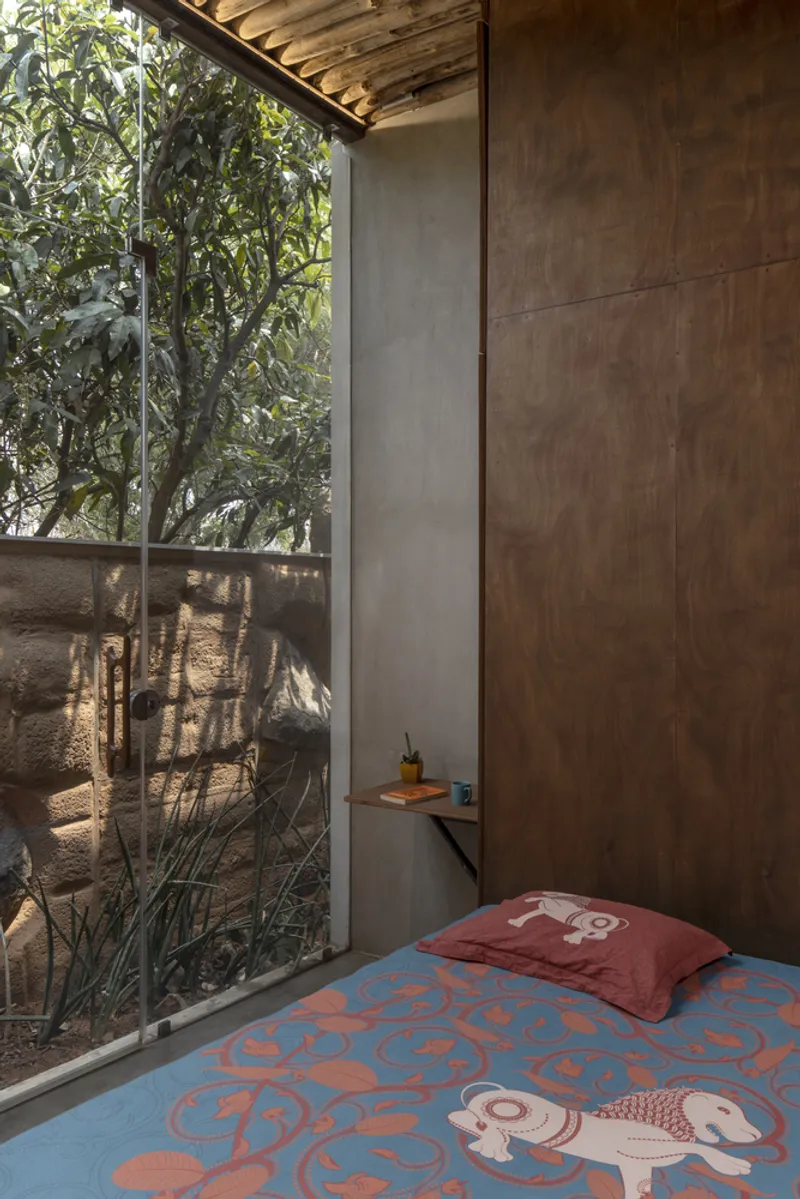
Interior Design: A Subtle and Minimalist Approach
Neutral Palette for Natural Harmony
The interiors are designed with a neutral material palette, allowing the debris walls to stand out as the primary feature. This minimalist approach creates a warm and inviting atmosphere without overshadowing the house’s sustainable essence.
Functional Layout for Everyday Living
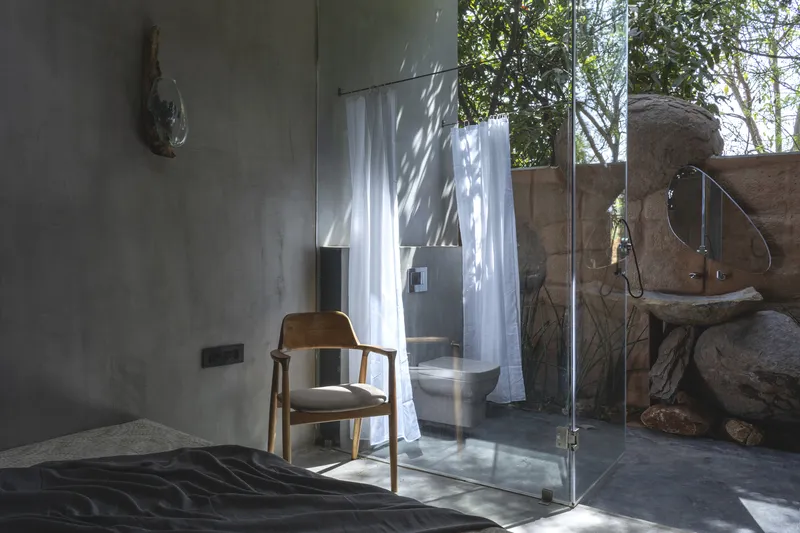
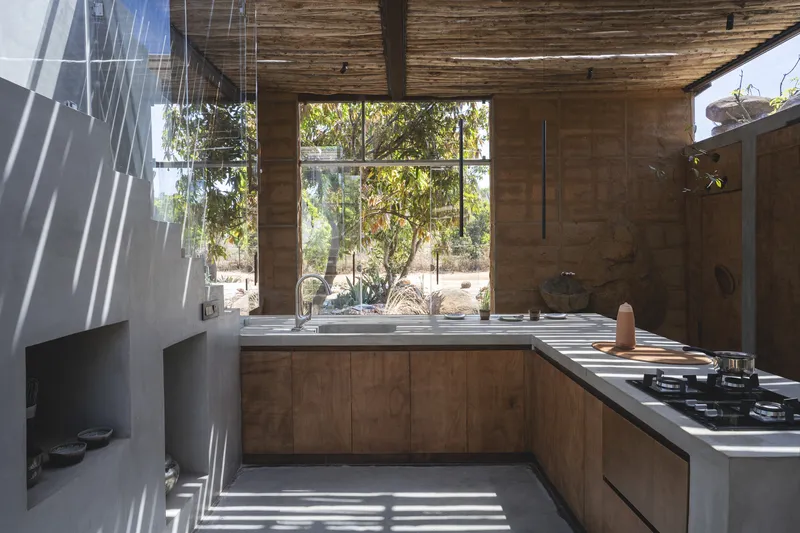
The Flintstone6 House includes:
- Two bedrooms, offering cozy and functional private spaces.
- A multi-functional hall with an open kitchen, ideal for communal living and entertaining.
Impact of Flintstone6 House on Sustainable Living
Promoting Sustainable Construction
By using reclaimed and locally sourced materials, the Flintstone6 House demonstrates how sustainability can be seamlessly integrated into modern architecture. It sets an example for future housing developments aiming to minimize their environmental footprint.

Blending Architecture with Nature
The house is a testament to the possibilities of building homes that respect their natural surroundings. Its design philosophy of “camouflage and coexistence” ensures it does not disrupt the landscape while enhancing the aesthetic of the region.
The Flintstone6 House by Mitti is a shining example of sustainable architecture. With its innovative use of debris wall construction, reclaimed materials, and eco-friendly landscaping, it offers a blueprint for environmentally conscious living.
All Photographs are work of Syam Sreesylam, Roshan Satish Paliath


Popular Articles
Popular articles from the community


GROUP A Strips a 1969 Rotterdam Harbor Headquarters to Its Frame and Wraps It in Timber Louvers
In Rotterdam's M4H harbor district, Ferro Offices reuses a 1969 frame, adds one timber storey and reaches BREEAM-NL Outstanding.

Jaramillo Van Sluys Arquitectura and Urbanismo Turn a Demolished Registry Lot in Quito into an Orchard Plaza
In Quito's Centro Histórico, a 2,800 m² plaza exposes the San Agustín convent wall and redraws its lost Augustinian orchard in volcanic stone.

Juan García Correa, John González and Claudia Rueda Sink a Circular Amphitheater into a Manizales Engineering Building
On the La Nubia campus in Manizales, Colombia, the S1 Building folds labs and offices into a hillside of ramped lawns that double as a campus route.

David Ortega Stacks a Two-Story Mexico City Penthouse Around a Steel Stair and a Pergola-Shaded Roof Terrace
In Colonia Roma, a 300 m² penthouse uses oak joinery, a planted steel stair and a slatted roof pergola to make a new-build apartment feel like a house.

Similar Reads
You might also enjoy these articles


Hodi-Mandai Geram
Project Function: Preservation and revitalization of the Intangible heritage and socio-spatial identity of the Hodi by Housing, Cultural Memory Center, Sacred Grove, landscape, local tourism economy


Olio Towers: A Mid-Rise for Performers That Fuses Housing, Rehearsal, and Stage
Located blocks from Houston's Theater District, this modular tower stacks living units around a central performance atrium.

Oasis: Modular Green Housing Carved into Dhaka's Urban Fabric
A shortlisted Plugin Housing entry reclaims unauthorized settlements in Dhaka with stepped concrete volumes, green roofs, and ventilation-driven design.

Black Hole: A Floating Megastructure for the Post-Physical Era
Emiliano Mazzarotto envisions a spherical, self-scaling arena where e-sports, digital hotels, and holographic stadiums replace traditional public space.

Explore Sustainable Features Competitions
Discover active competitions in this discipline

Challenge to reimagine the Iron Throne

Photograph architecture without architects

Illustrate the lost glory of Angkor Wat - Render Challenge

Design challenge to reuse E-waste
Comments (0)
Please login or sign up to add comments
No comments yet. Be the first to comment!