
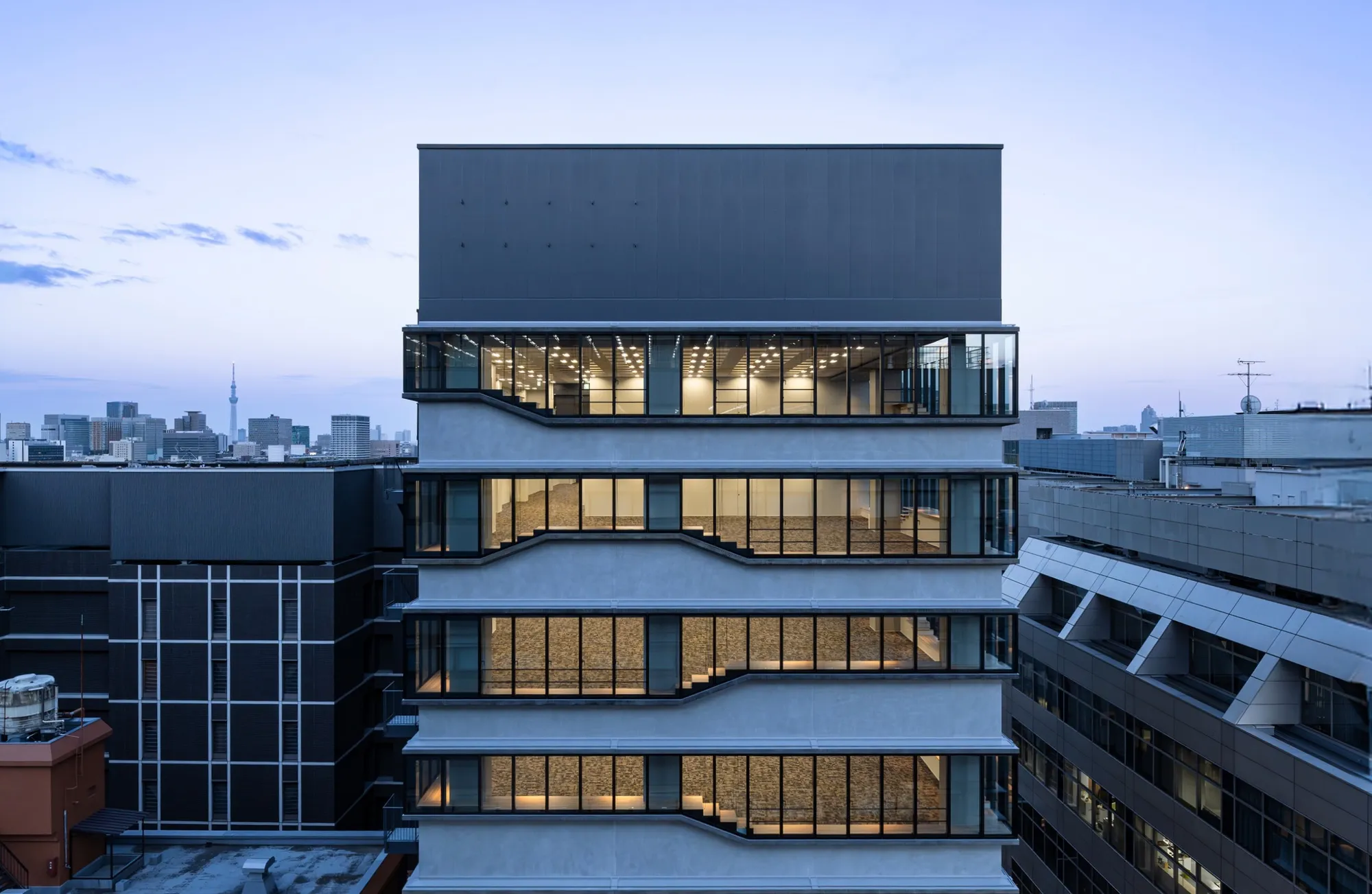
Front Place Chiyoda Ichibancho: A Landmark Tenant Office Building Redefining Urban Workspace in Tokyo
Front Place Chiyoda Ichibancho blends historic inspiration with modern bay-window design, creating flexible, sustainable office spaces that connect seamlessly with Tokyo’s urban streetscape.


Front Place Chiyoda Ichibancho, designed by Mitsubishi Jisho Design Inc., stands as a forward-thinking tenant office building located just steps from the subway station in Tokyo’s culturally rich Ichibancho district. Positioned near the Imperial Palace—formerly Edo Castle—the project honors the area’s historical roots while introducing a modern architectural identity that enhances the urban fabric.
This innovative building challenges the norms of conventional tenant office structures, which typically accommodate multiple companies but rarely reflect their internal diversity or contribute meaningfully to the neighborhood's visual character. Front Place Chiyoda Ichibancho addresses this gap by creating an environment that connects people to their surroundings while supporting today’s increasingly diverse work styles.
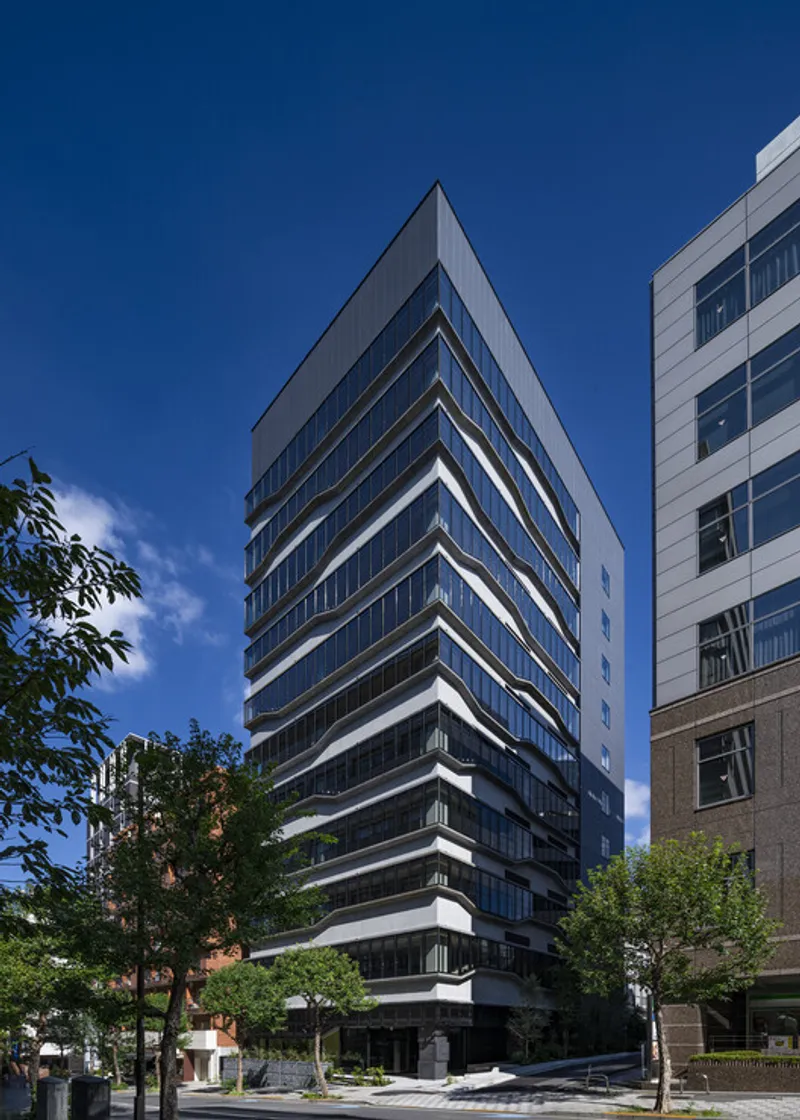

A Facade Inspired by History: “Piled Stones” and Bay Windows
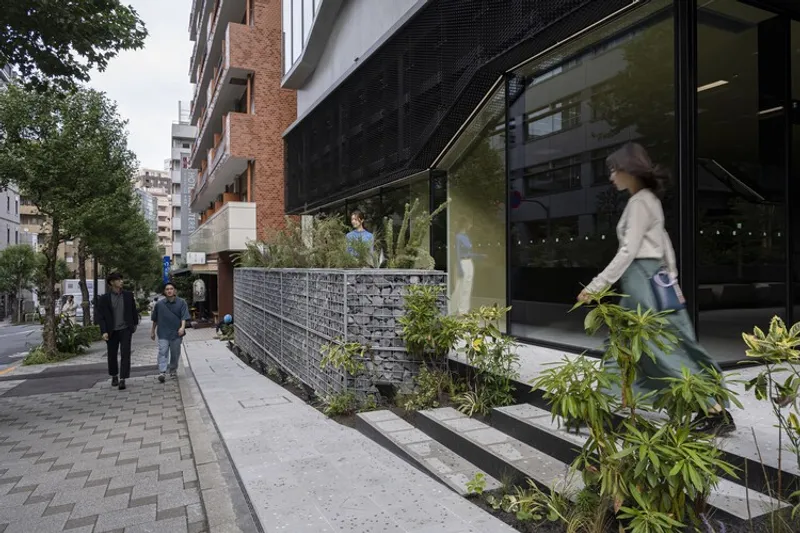
The architectural concept centers on a dynamic façade formed by bay windows stacked floor-by-floor, each with varying geometries. This design draws inspiration from the stone walls of the historic castle moat nearby, translating the idea of “piled stones” into a contemporary architectural language.
These projecting bay windows become expressive elements that symbolize the varied activities of tenant companies and employees. Their sculptural presence activates the streetscape, making the building feel alive and connected to its urban context.
To balance design ambition with economic efficiency, the façade combines standard aluminum window frames with precast concrete U-shaped slabs in four variations. The result is a visually rich exterior that remains cost-effective and technically efficient.
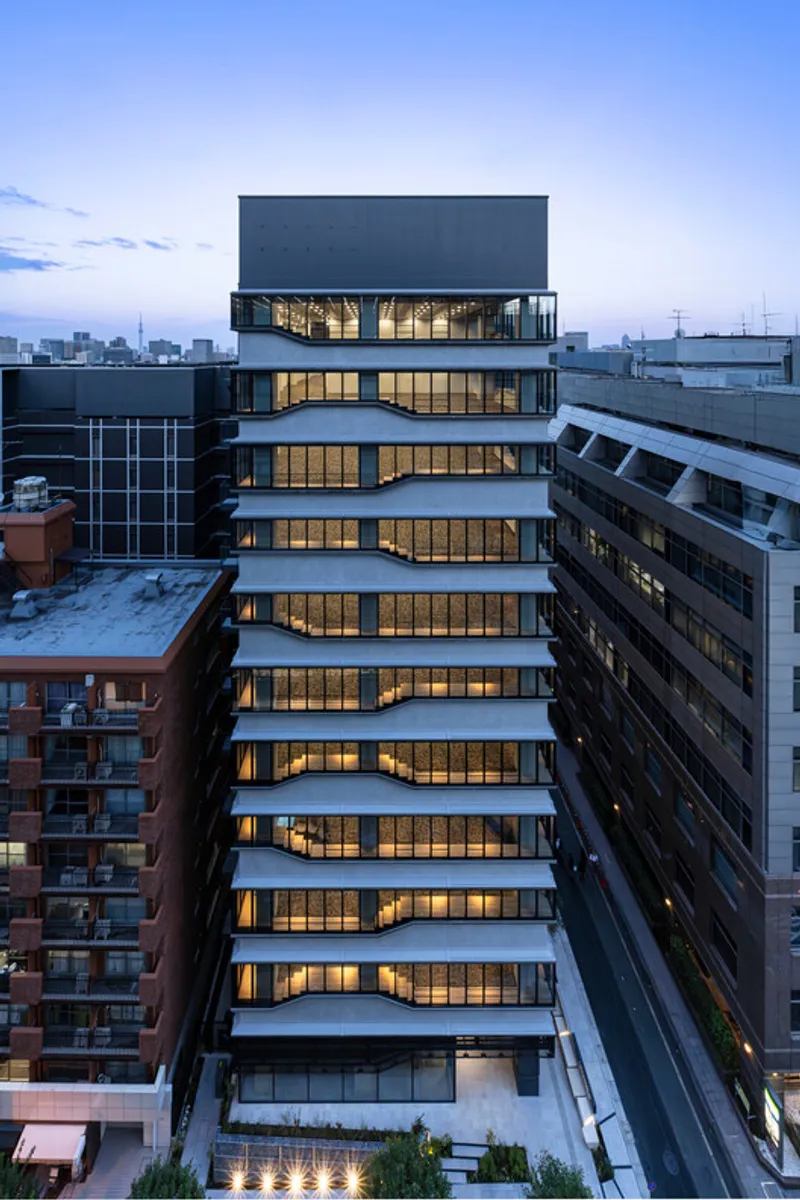
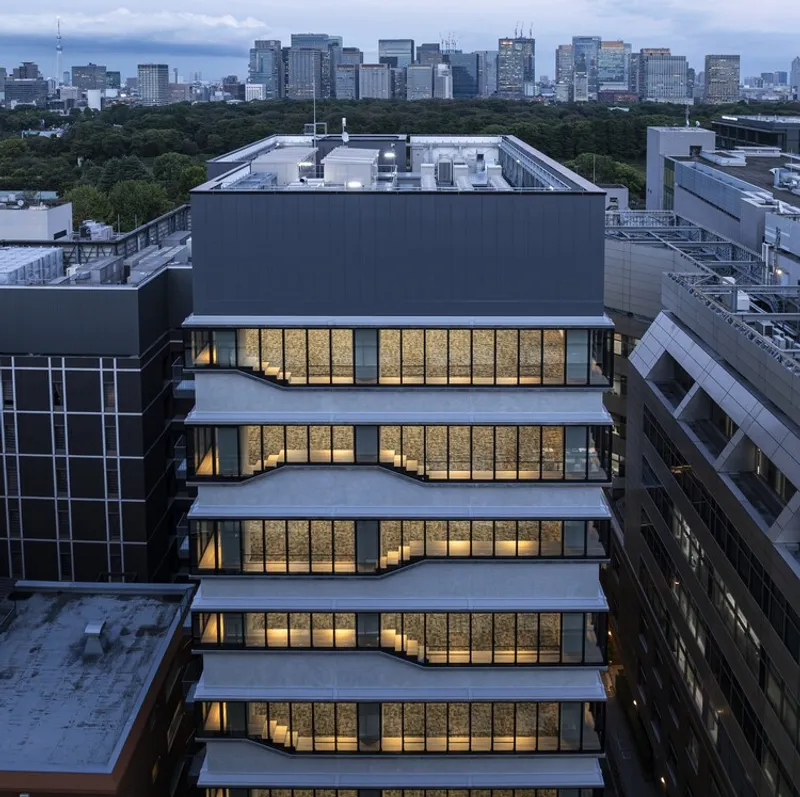
Flexible, Light-Filled Interiors Created by Bay Window Spaces
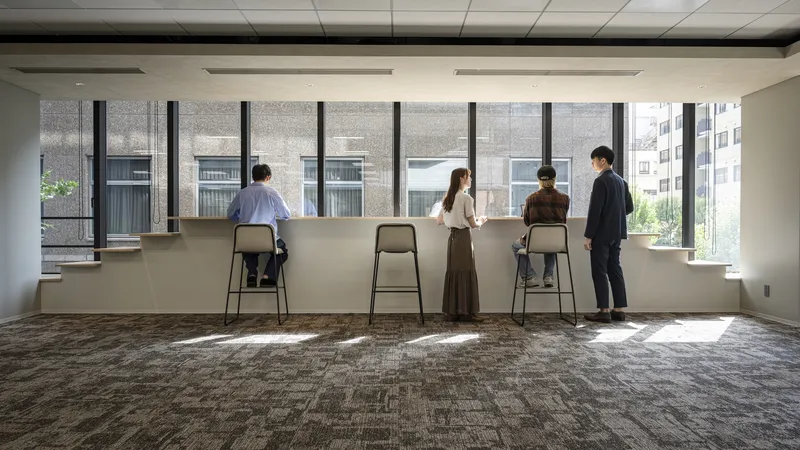
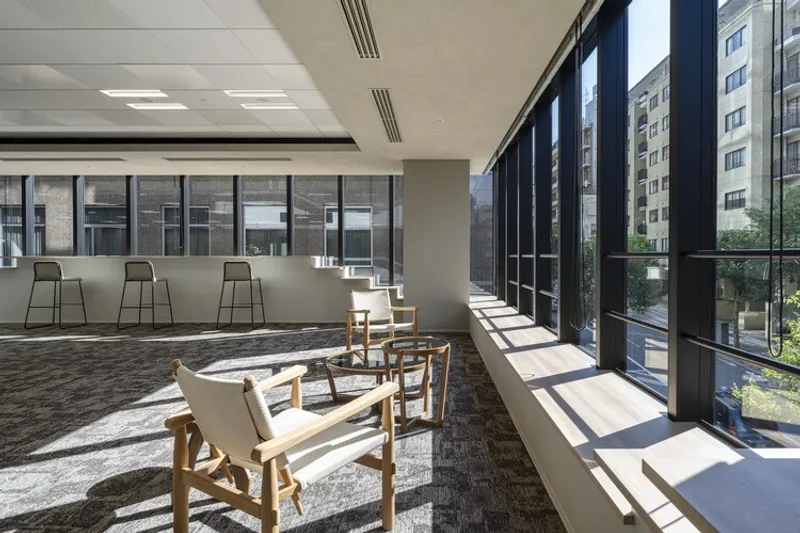
Inside, the bay windows do more than shape the façade—they redefine the way office interiors function. The projecting spaces integrate seamlessly with the building envelope and vary in height, enabling everything from counter seating to desk-level work areas.
Crucially, under building code exemptions, these bay window zones are excluded from floor area calculations, effectively increasing the usable workspace without expanding the building’s official volume. This creates both economic and experiential benefits.
These light-filled nooks transform typically underutilized window perimeters into high-activity zones, encouraging flexible layouts, casual meetings, focused work, and creative furniture arrangements. The bay window becomes the centerpiece of each office floor, shaping a modern workplace that adapts to diverse working styles.

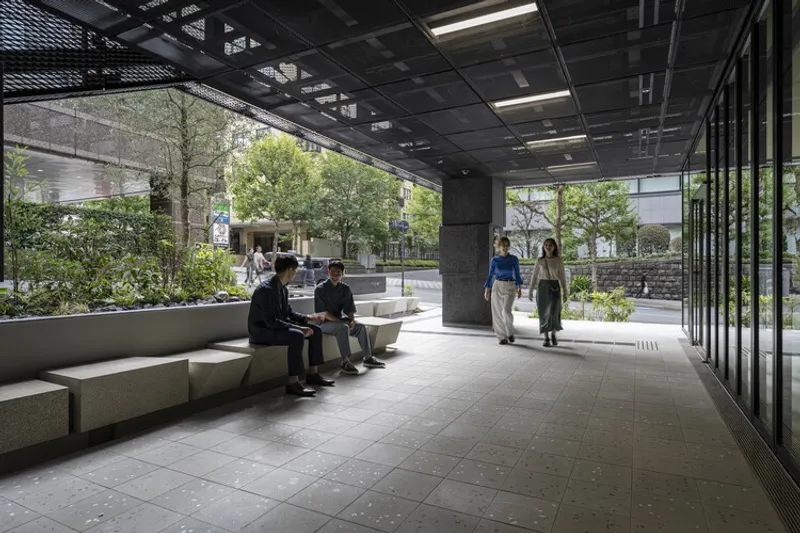
A Public-Facing Ground Floor That Connects City, Café, and Office
Capitalizing on the site’s natural slope, the design incorporates outdoor terraces and integrated seating at the building entrance. This tiered approach softens the transition between public street and private workplace.
The ground-floor café further enhances the building’s openness. Its retractable window frames allow the café, piloti space, and office entry to merge seamlessly, creating a vibrant, community-oriented environment. This design invites local residents, office tenants, and café visitors to mingle—strengthening the building’s relationship with the neighborhood.


High Environmental Performance: Sustainable and Human-Centric
Every office level is equipped with an air-based radiant cooling system and operable windows to promote natural ventilation. A DALI lighting control system ensures energy-efficient tenant fit-outs, reducing operational impact.
Through these sustainable strategies, Front Place Chiyoda Ichibancho achieves:
- Over 40% reduction in annual primary energy consumption
- BEI score of 0.58
- Equivalent to BELS 5-star and ZEB-oriented standards
In its common areas, multiple WELL Building Standard concepts elevate user well-being. Each floor incorporates a unique color scheme, intuitive signage encourages stair use, and the “piled stones” motif continues throughout the interior. As a result, the building became the first tenant office building in Japan to secure WELL Core v2 pre-certification.


A New Hub for Diverse, Design-Forward Tenants
Front Place Chiyoda Ichibancho attracts a wide range of businesses, from long-established companies to foreign-affiliated firms, digital creatives, and jewelry brands. These tenants value design innovation, environmental performance, and wellness-oriented work environments.
The building has quickly evolved into a hub where diverse industries meet, collaborate, and grow—offering a model for the future of mid-scale tenant office design in Tokyo.

All the photographs are works of Katsuhisa Kida / FOTOTECA



Popular Articles
Popular articles from the community


Play: Fragments of Their World
Familiar architecture becomes modular playground design, creating safe spaces where displaced children can learn, connect, imagine and play.

Co-Life: Senior Housing Design That Reconnects Older Adults With the City
Co-Life reimagines senior housing design through healing gardens, shared streets, workshops, and a sustainable community across generations.

The Musturak Paradise: Senior Living Architecture for a Connected Future in Temara, Morocco
The Musturak Paradise reimagines senior living architecture in Temara via private homes, social spaces, culture, community, and shared care.

The Earth Pod: 3D Printed Homes for Resilient Refugee Communities
The Earth Pod reimagines refugee housing through 3D printed homes made from clay, combining resilience, self-sufficiency, and rapid shelter.


Similar Reads
You might also enjoy these articles


Hodi-Mandai Geram
Project Function: Preservation and revitalization of the Intangible heritage and socio-spatial identity of the Hodi by Housing, Cultural Memory Center, Sacred Grove, landscape, local tourism economy


Olio Towers: A Mid-Rise for Performers That Fuses Housing, Rehearsal, and Stage
Located blocks from Houston's Theater District, this modular tower stacks living units around a central performance atrium.

Oasis: Modular Green Housing Carved into Dhaka's Urban Fabric
A shortlisted Plugin Housing entry reclaims unauthorized settlements in Dhaka with stepped concrete volumes, green roofs, and ventilation-driven design.

Black Hole: A Floating Megastructure for the Post-Physical Era
Emiliano Mazzarotto envisions a spherical, self-scaling arena where e-sports, digital hotels, and holographic stadiums replace traditional public space.

Explore Office Building Competitions
Discover active competitions in this discipline



Challenge to reimagine the Iron Throne


Photograph architecture without architects


Illustrate the lost glory of Angkor Wat - Render Challenge


Design challenge to reuse E-waste
Comments (0)
Please login or sign up to add comments
No comments yet. Be the first to comment!