
Hexagonal Modular Design in Industrial Architecture: Almazara Acesur by Mollinedo Arquitectura
A sustainable olive oil facility in Spain utilizing hexagonal modular design to harmonize industrial function with natural beauty.


A Harmonious Blend of Nature and Industry
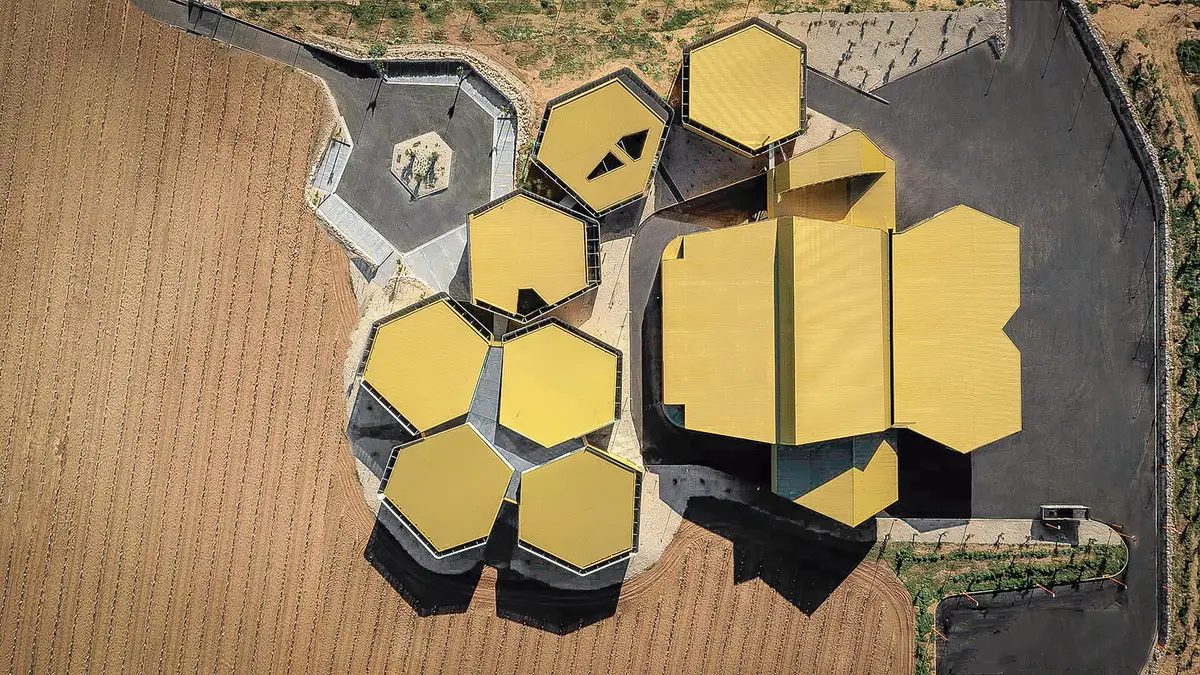
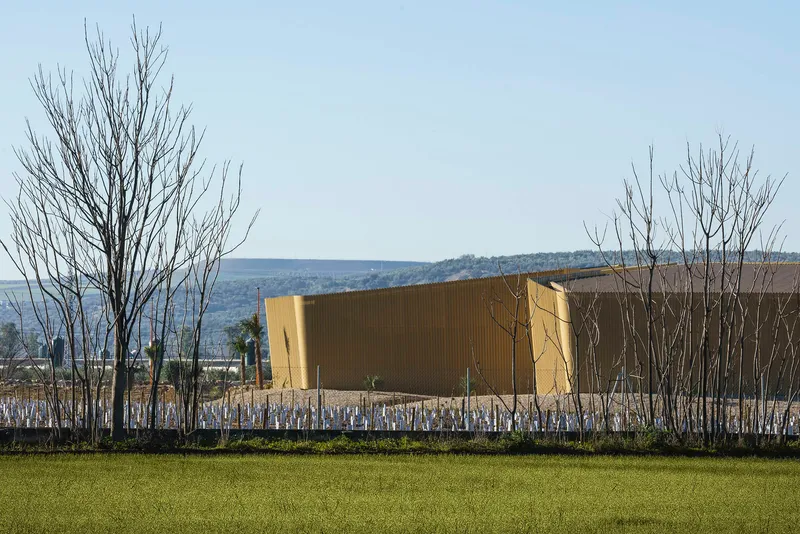
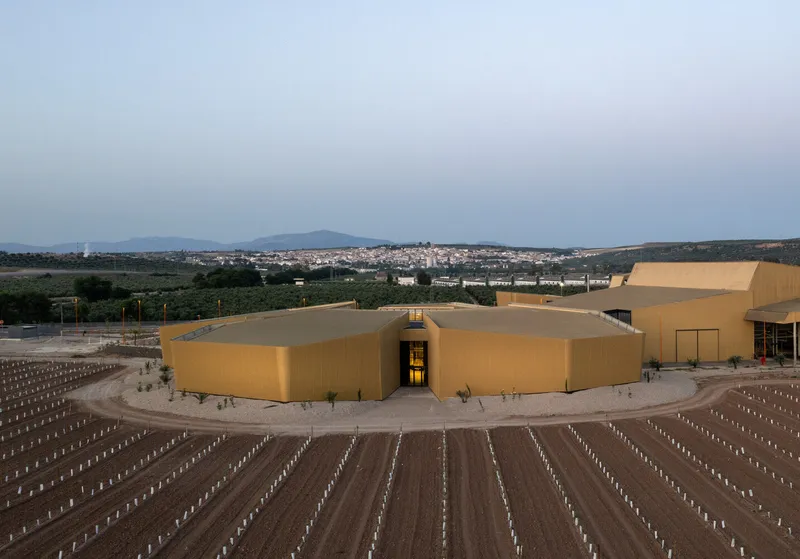
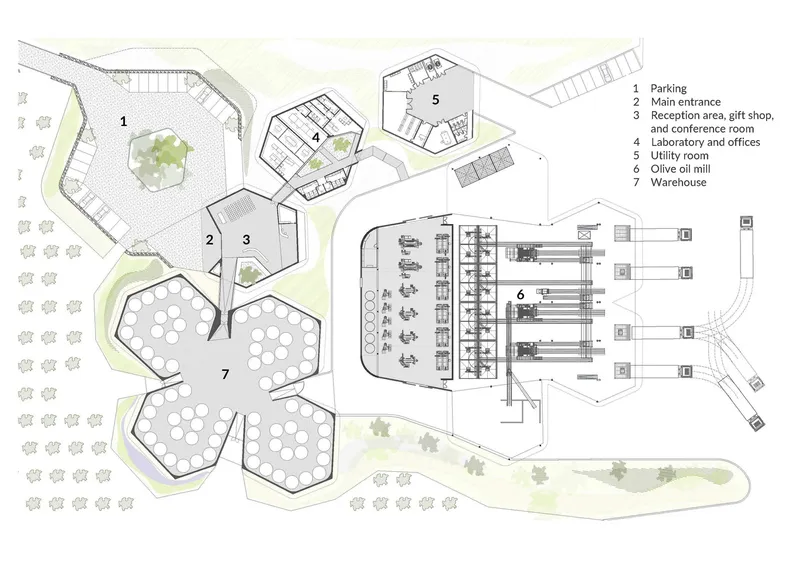
Located in Spain, Almazara Acesur, designed by Mollinedo Arquitectura, redefines industrial architecture with its innovative hexagonal modular design. The 4,000 m² olive oil production facility seamlessly integrates with its natural surroundings, celebrating the organic interplay between form, function, and environment.

Hexagonal Geometry Inspired by Nature
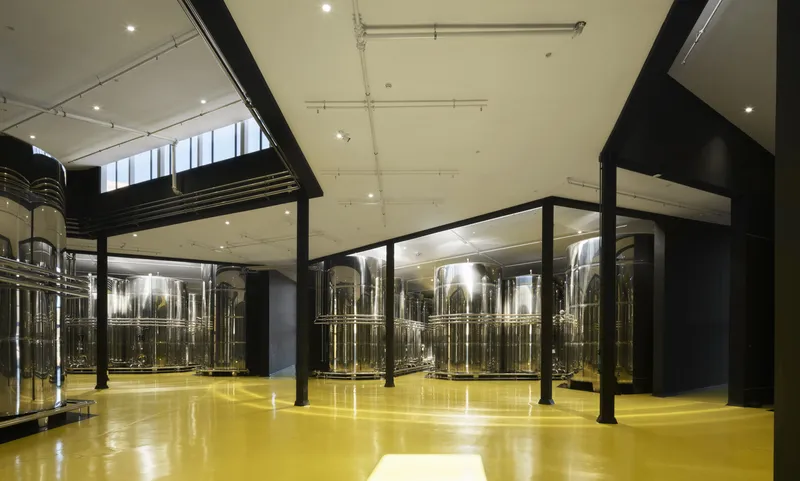
Drawing inspiration from the randomness of olives scattered on the ground, the design employs hexagonal modules to create an organic, flexible layout. These modules house essential utilities, including:
- Olive Oil Extraction Warehouse
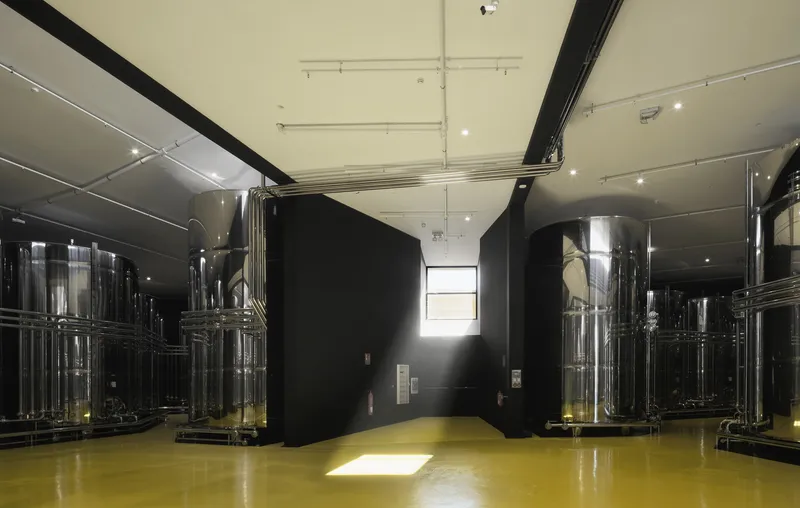
- Oil Cellar and Auxiliary Facilities
- Reception Area and Shop
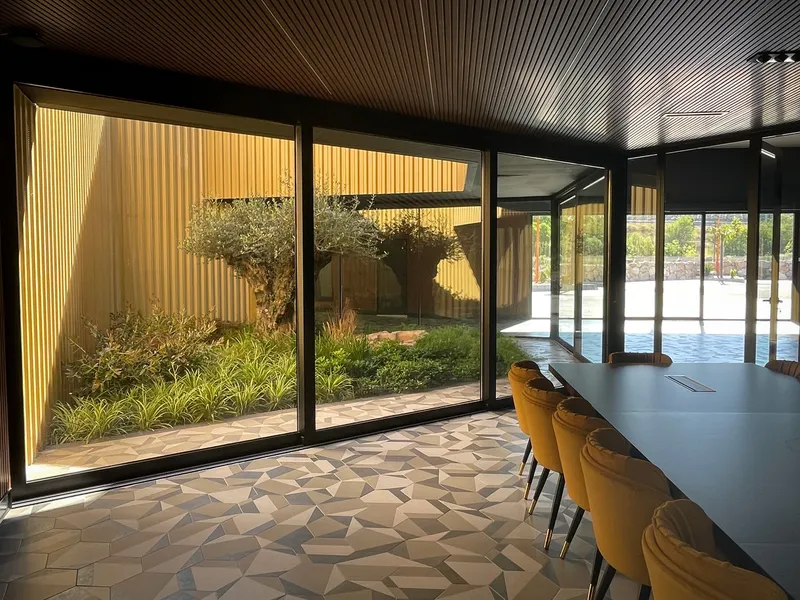
- Conference Room, Office, and Laboratory Spaces
The hexagonal form mirrors the olive flower’s structure, creating a visually cohesive and functional design.
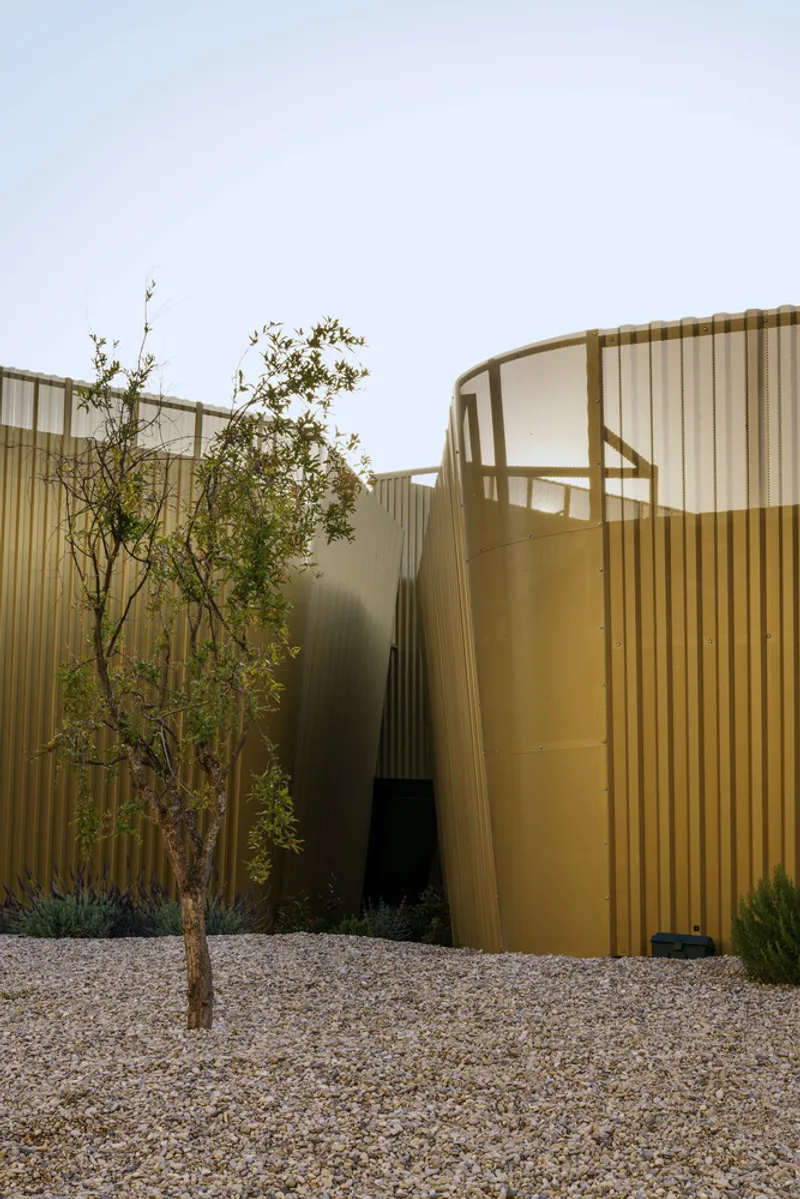

Materiality and Integration with the Landscape
Mollinedo Arquitectura prioritizes architectural and landscape camouflage by:
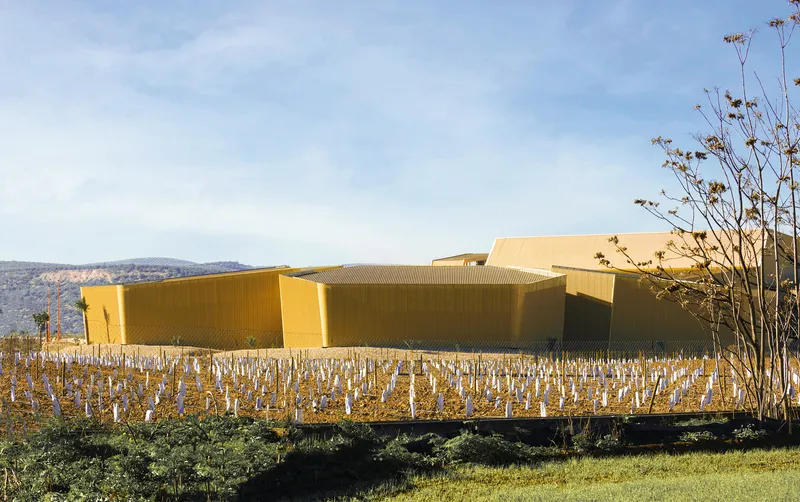
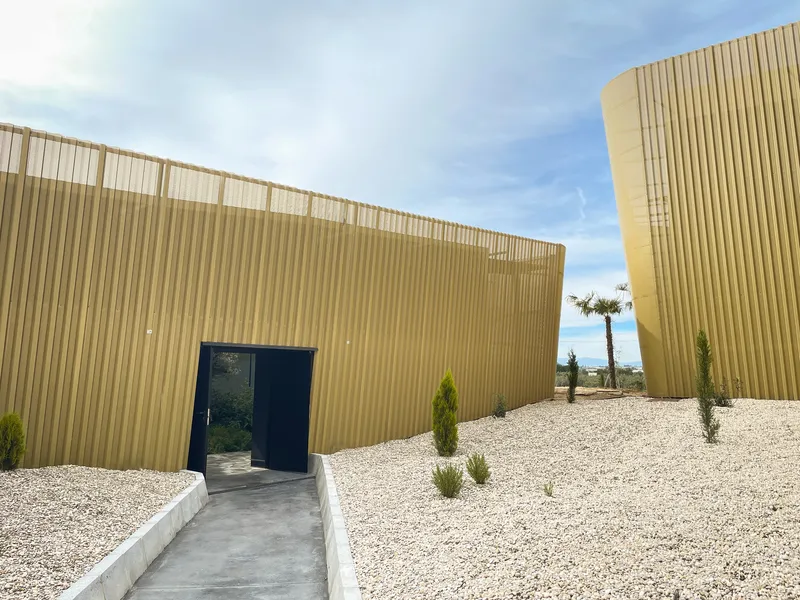
- Using earth-toned coatings on facades and roofs, blending the structure with the olive orchards.
- Semi-burying modules, creating landscaped mounds that promote environmental harmony.
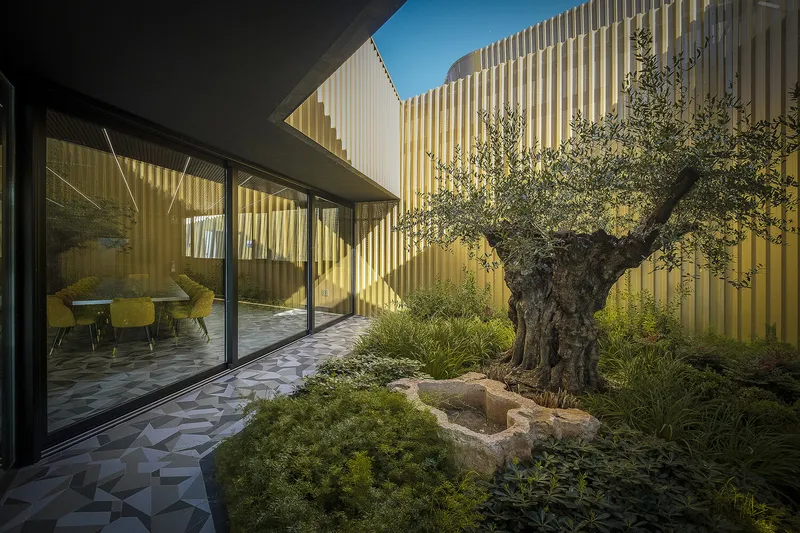
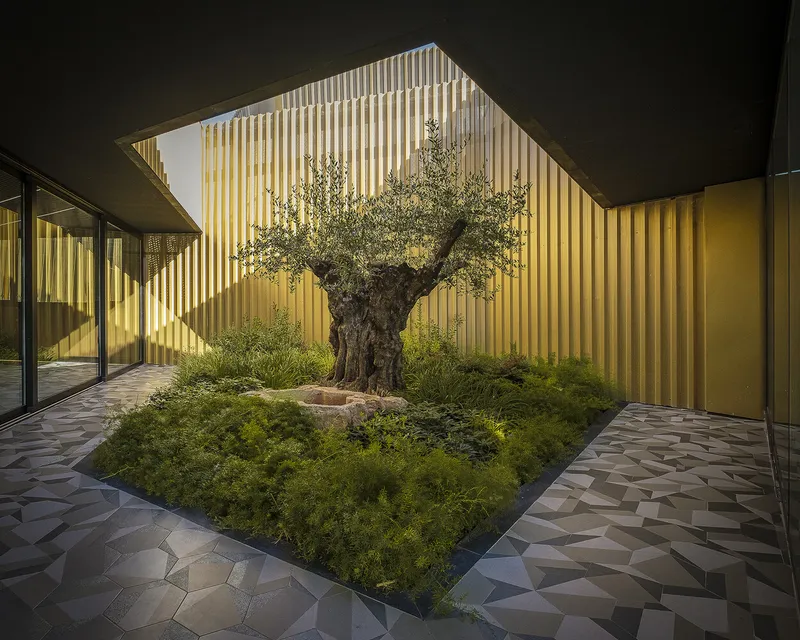
- Planting native vegetation around the modules to enhance ecological integration.
This approach ensures the facility belongs to the terrain, offering an immersive experience of the region's natural beauty.
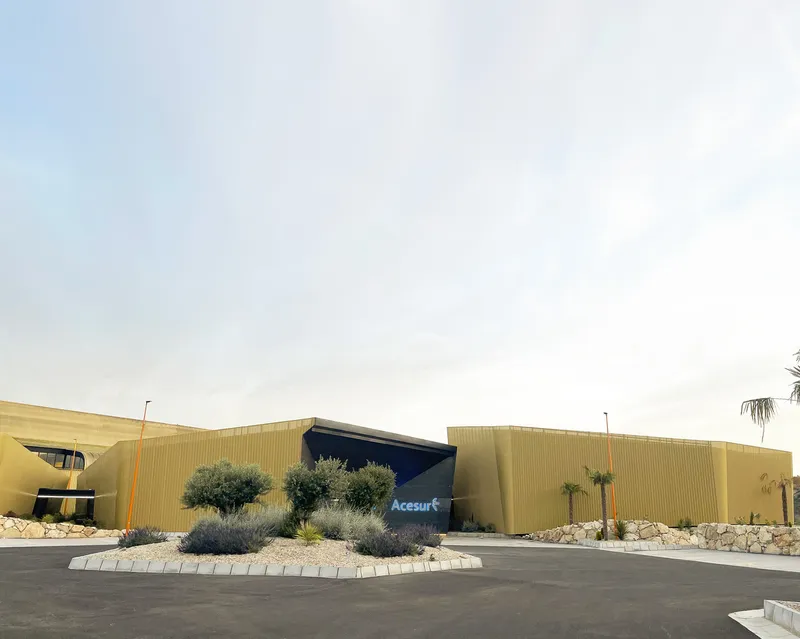
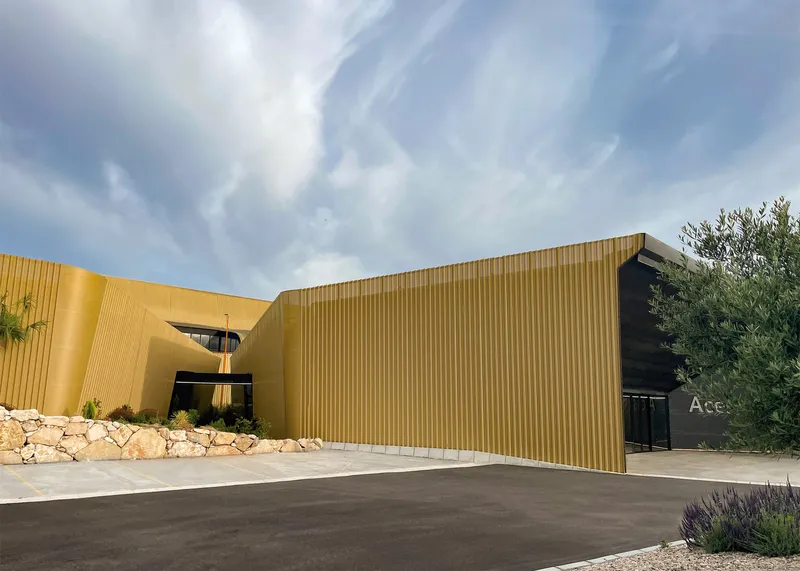
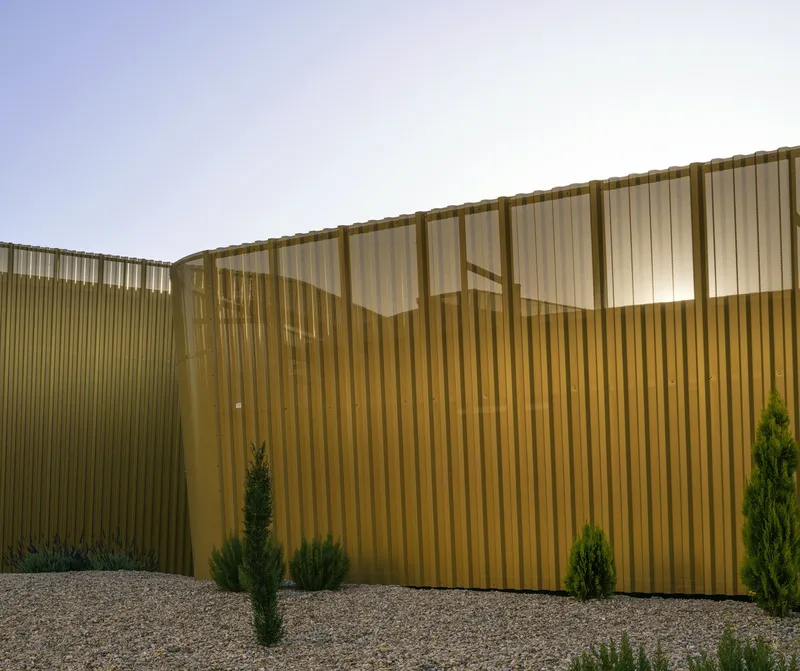
Functional Spaces Designed for Accessibility
The entrance greets visitors with a landscaped hexagonal plaza, facilitating public and private vehicle parking. Key features include:
- A tree-lined access route leading to the reception.
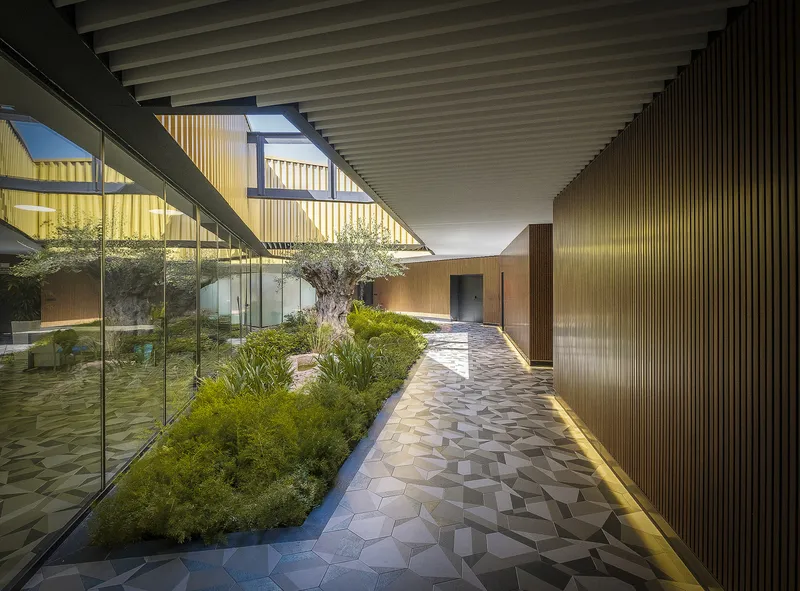
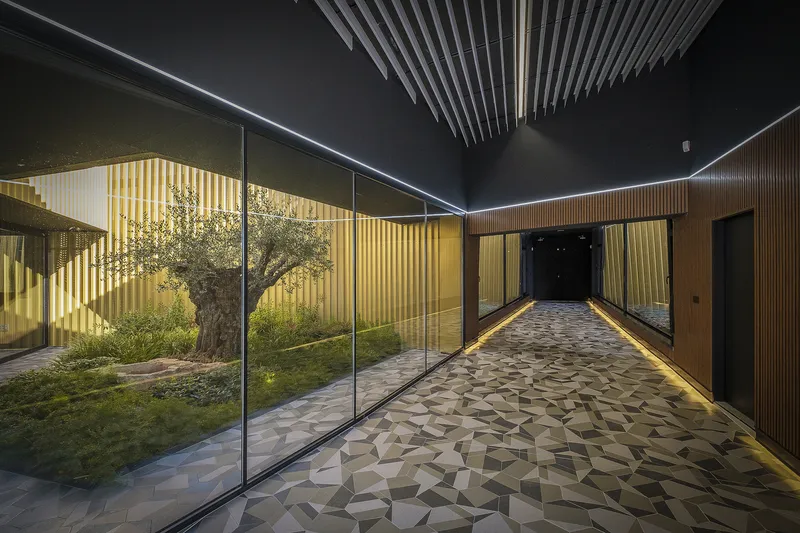
- Glass walkways connecting reception, administrative areas, and gardens.
- Semi-buried wineries, accessible for maintenance and guided tours, promoting oil tourism.
These thoughtful design elements emphasize functionality and accessibility while maintaining visual appeal.

Sustainable and Scenic Design Principles
Almazara Acesur incorporates sustainable architectural techniques, such as:
- Leveraging natural light through open courtyards and glass walkways.
- Minimizing environmental impact with green roofs and local materials.
- Promoting eco-tourism by integrating production facilities with public spaces.
This commitment to sustainability aligns the industrial processes with environmental stewardship.
A Gateway to Oil Tourism
The project blends industrial productivity with cultural engagement, enhancing oil tourism in the province. Visitors can explore:
- Landscaped gardens.
- Olive oil production processes.
- Conference facilities for educational and promotional events.
The integration of architecture, industry, and nature fosters a unique visitor experience.
A Masterpiece of Modern Industrial Architecture
Almazara Acesur showcases the transformative potential of hexagonal modular design in industrial architecture. Mollinedo Arquitectura has successfully bridged the gap between functionality, aesthetics, and sustainability, creating a landmark that celebrates the heritage of olive oil production.

All Photographs are work of Francisco Sánchez, Alfonso Mollinedo, Jesús Granada,


Popular Articles
Popular articles from the community


Conexión: Biophilic Design Reimagines High-Rise Living in Hong Kong
Conexión reimagines high-rise living in Hong Kong through biophilic design, green facades, shared spaces, daylight, water and nature within.

Play: Fragments of Their World
Familiar architecture becomes modular playground design, creating safe spaces where displaced children can learn, connect, imagine and play.

Little Red Riding Hood: Architectural Design as a Journey Through Fear, Light, and Storytelling
Little Red Riding Hood reimagines the fairy tale through architectural design shaped by fear, light, scale, memory, uncertainty, and choice.

Co-Life: Senior Housing Design That Reconnects Older Adults With the City
Co-Life reimagines senior housing design through healing gardens, shared streets, workshops, and a sustainable community across generations.

Similar Reads
You might also enjoy these articles

FAMM Arquitectura Organizes Ten Villas Around Courtyards and Jungle in Nosara, Costa Rica
El Molino pairs two elongated volumes with deep overhangs and timber louvers to build a compact coastal community five minutes from the beach.
Oscar Niemeyer's Ibirapuera Park Pavilions Define São Paulo's Cultural Identity in Concrete and Curve
A constellation of modernist volumes set within São Paulo's most important urban park, conceived for the city's 400th anniversary in 1954.
Sanjay Puri Architects Wraps a Jaipur Office Tower in Capsule-Shaped Green Buffers
A nine-level climate-responsive workplace near Jaipur Airport uses stacked planter terraces and aluminium screens to fight 40°C heat.
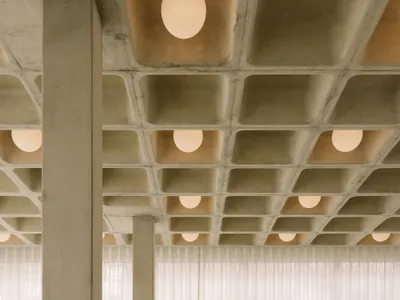
RHO Converts a Berlin Spree-Side Industrial Courtyard into Enkime's 1,000 m² Agency Headquarters
A social media agency's new home in Charlottenburg trades glossy branding for concrete waffle ceilings, glazed tile, and sheer curtains.

Explore Architecture Competitions
Discover active competitions in this discipline

Challenge to reimagine the Iron Throne

Photograph architecture without architects

Illustrate the lost glory of Angkor Wat - Render Challenge

Design challenge to reuse E-waste
Comments (0)
Please login or sign up to add comments
No comments yet. Be the first to comment!