
Sam Crawford Architects Anchors a Sports Pavilion in 10,000 Years of Indigenous History
A V-shaped brick and steel pavilion in southwest Sydney translates ancient clay ovens and gathering traditions into civic architecture.


South of Sydney's forthcoming Western Sydney Airport, suburbs are multiplying fast. The land they occupy, however, carries a longer story. Archaeological investigations at the Willowdale site revealed evidence of more than 10,000 years of habitation by the Darug and Dharawal peoples, including ancient clay ovens and baked clay cooking beads traded along the creek line that threads through the precinct. Sam Crawford Architects was tasked with building a new sports pavilion here, and rather than treat the Indigenous heritage as a footnote in a planning report, the firm made it the organizing principle of the building's materiality, pattern language, and spatial character.
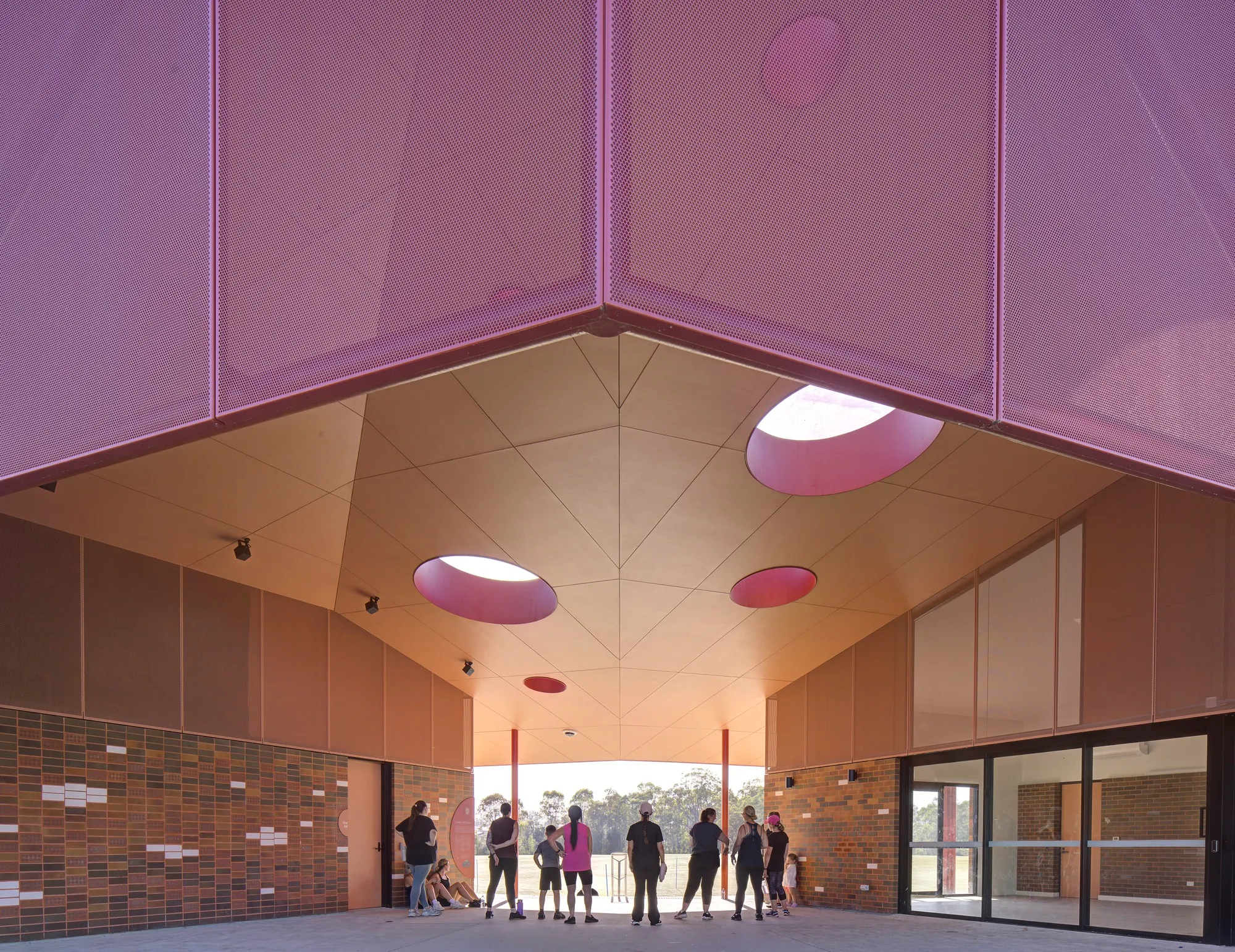
The result, completed in 2025, is a low, angular structure that simultaneously reads as a familiar Australian sports shed and as something far more deliberate. Its V-shaped plan pivots at the main entry and drop-off point, sending two separate volumes along the northwestern edge of a cricket field sized to match the MCG. One wing holds the clubroom and changing facilities; the other contains public bathrooms. Between them stretches an expansive external terrace that steps down into spectator seating on one side and a barbecue area on the other. Every surface carries intention: the variegated brickwork references fire, clay, and ash; the circular skylights evoke the round clay beads once manufactured and traded on the site; and the deep eaves answer a community that told the architects it was simply too hot outside.
Reading the Landscape from Above
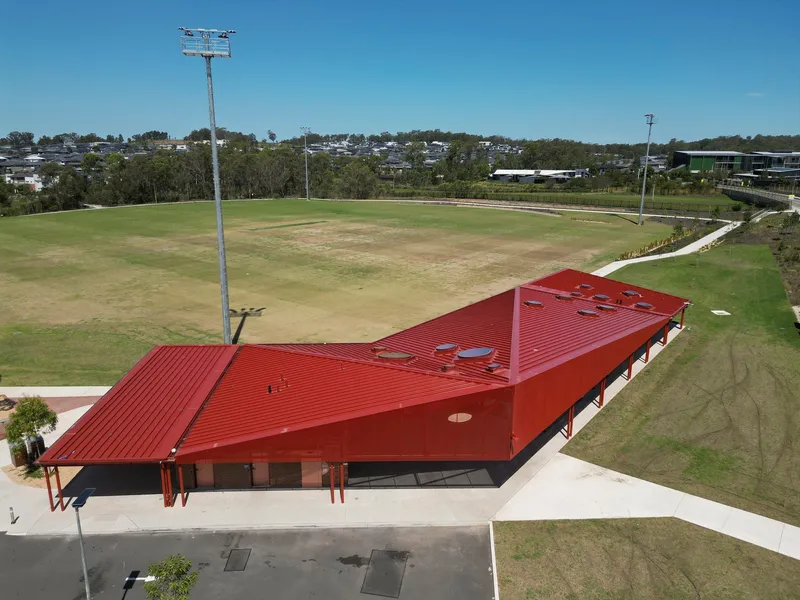
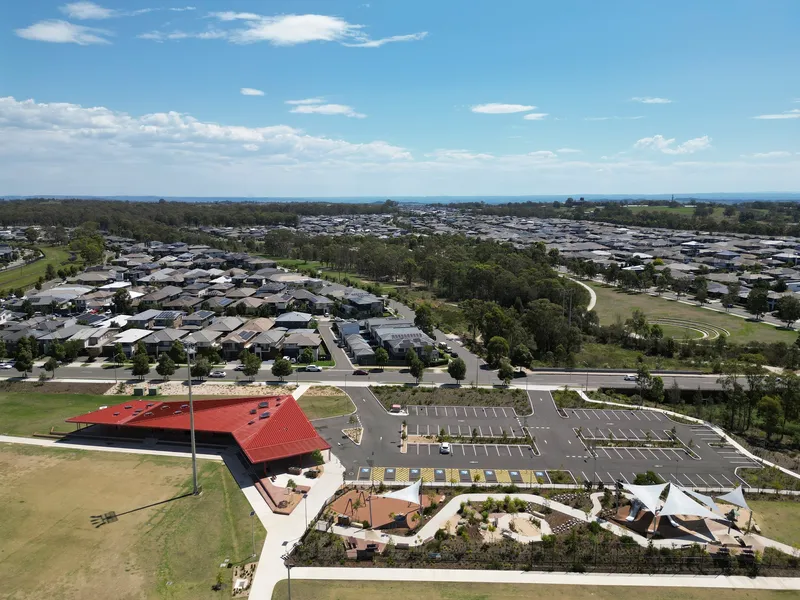
From the air, the corrugated steel roof is an unmistakable terracotta signal against the green ovals and grey residential fabric. The V-shaped footprint is legible immediately: two volumes angled to hug the northwest corner of the main sports field, with parking and a secondary training pitch to the east. The 5.5-hectare site includes a sensitive riparian corridor along the creek, and walking paths stitch the pavilion into that ecological seam rather than turning its back on it.
What the aerial views also reveal is the roof's descending pitch. Facing the street, the building's profile mimics the traditional gable roofs of nearby houses, easing the transition for a community used to suburban domesticity. Toward the sports pitch, it drops to the long, low verandah line of a rural shearing shed. The dual reading is quietly smart: civic enough to anchor a new precinct, familiar enough to avoid the intimidating blankness of many municipal sports buildings.
Brick as Cultural Record
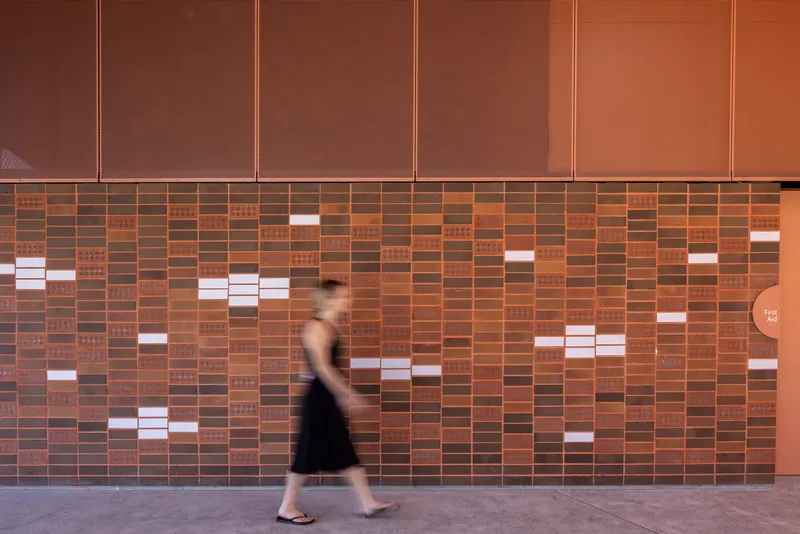
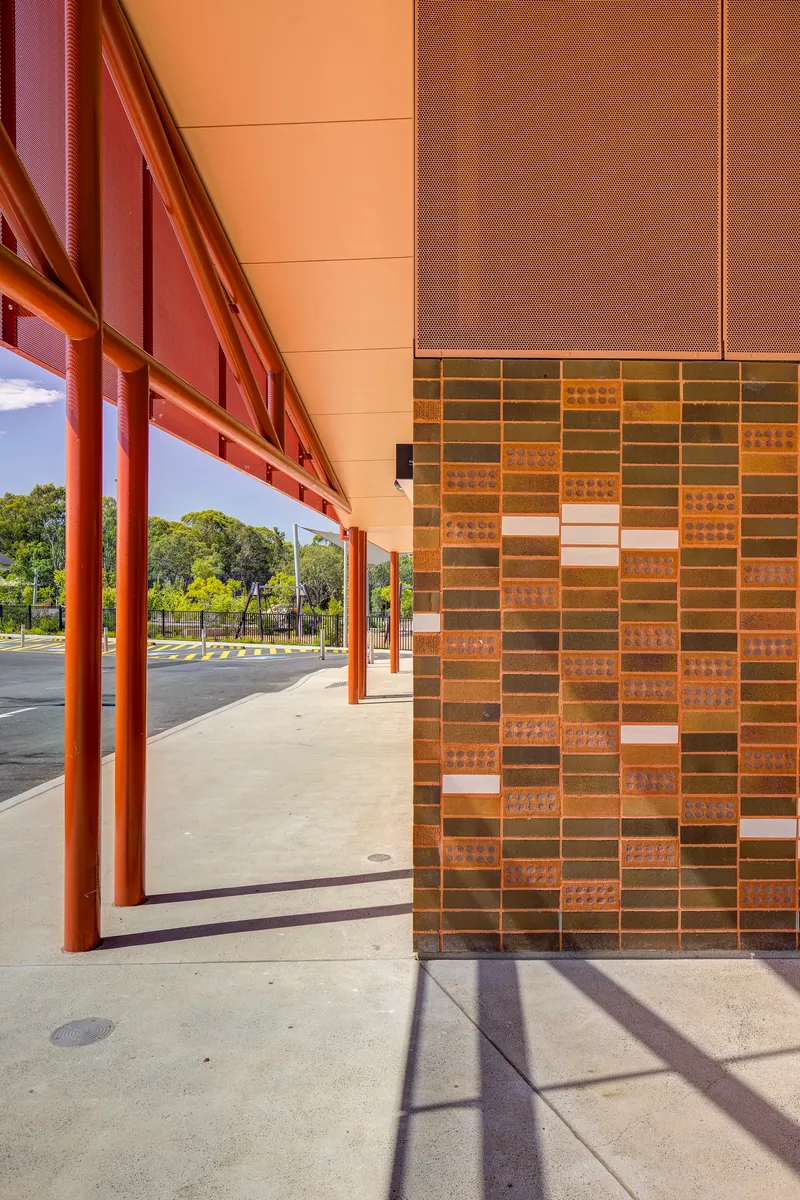
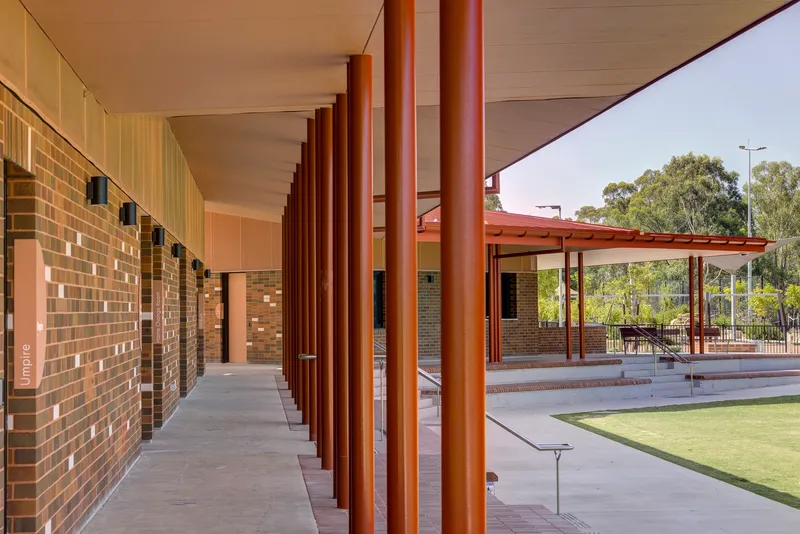
The most charged surface in the project is the brickwork. Designed by Lymesmith in consultation with Darug and Dharawal peoples, the walls use multiple brick colors, ranging through tones of fire, clay, and ash, to form patterns that reference the ground ovens discovered on the site. Scattered white ceramic tiles punctuate the composition like the clay cooking beads that Indigenous communities manufactured, traded, and used for millennia. Walk past quickly and the wall registers as textured and warm. Slow down and the arrangement starts to communicate something specific: a material memory embedded in the building's skin.
It is worth noting that the brickwork is not decorative appliqué. The columns and walls are load-bearing participants in the building's structure, so the cultural narrative is literally holding the building up. The variegated palette also ages well in the harsh western Sydney sun, avoiding the bleached uniformity that plagues many suburban civic buildings within a few years of completion.
The Deep Eave as Social Infrastructure
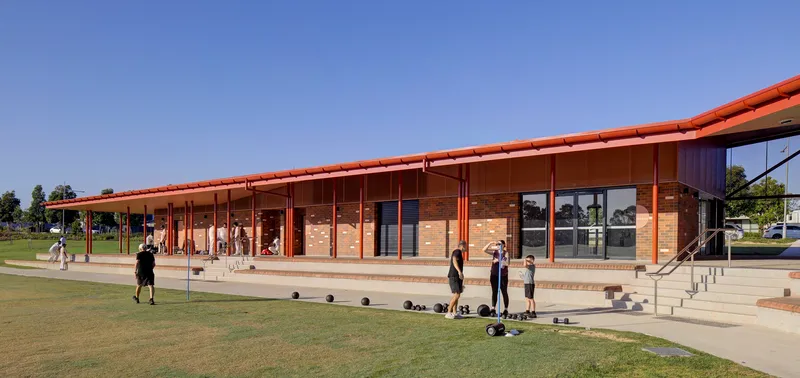
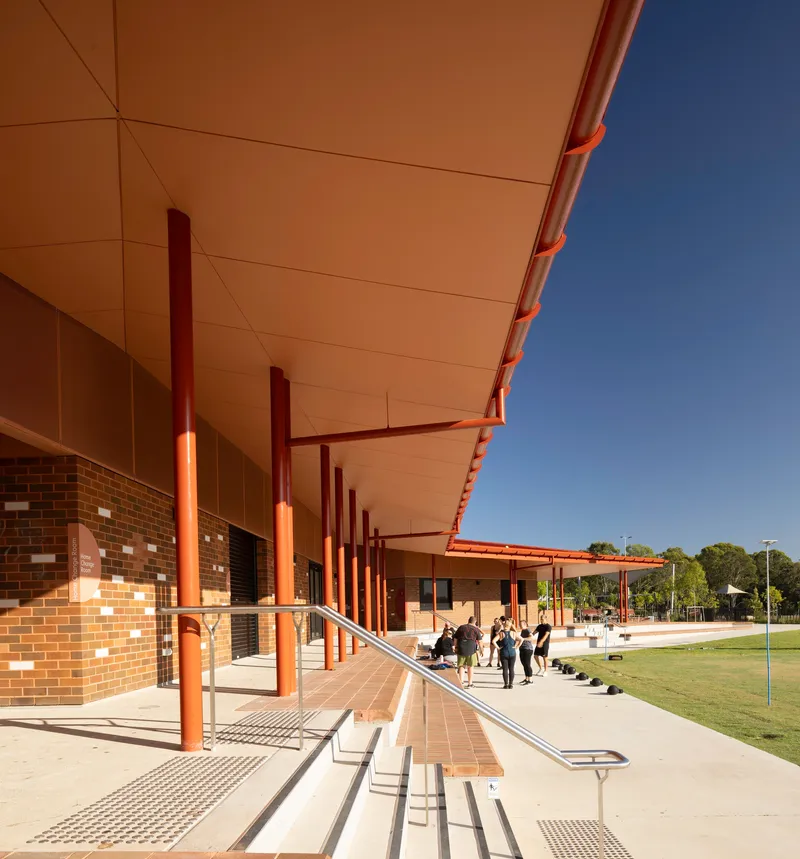
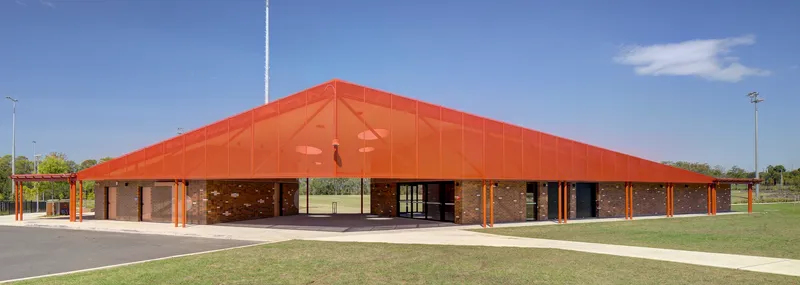
Community consultation for the project surfaced a blunt complaint: the heat is unbearable. Sam Crawford Architects responded by increasing the covered area and deepening the eaves to create what are essentially outdoor rooms. A colonnade of slender red-painted steel columns rings the building's edge, supporting overhangs generous enough to shade spectator seating, walkways, and gathering areas simultaneously. The roof does not merely protect the interior; it extends the usable precinct well beyond the building's walls.
The verandah facing the oval doubles as tiered concrete seating, a simple but effective move that eliminates the need for a separate grandstand. On a Saturday afternoon, you can imagine the entire social life of a local cricket match unfolding under this canopy: families eating, kids running, spectators half-watching from the shade. The architecture does not demand attention; it provides the infrastructure for attention to be directed elsewhere, toward the game, the food, the conversation.
Circles of Light
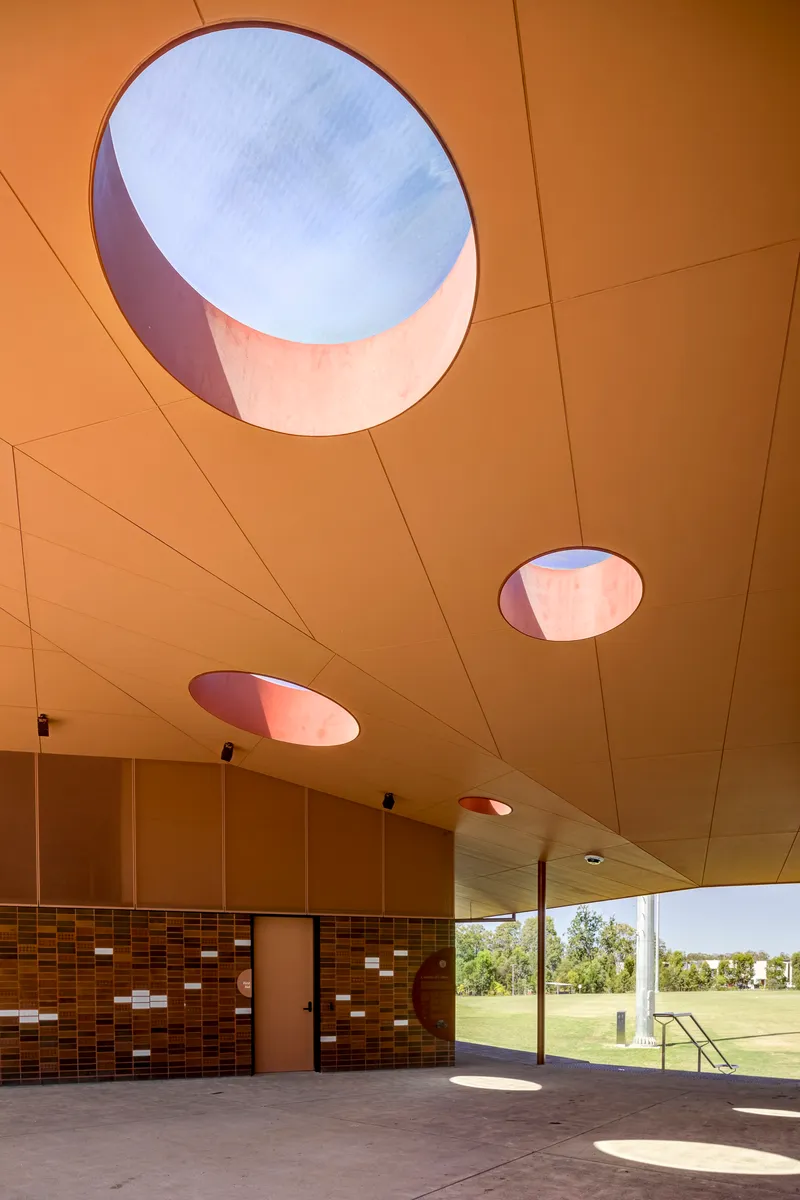
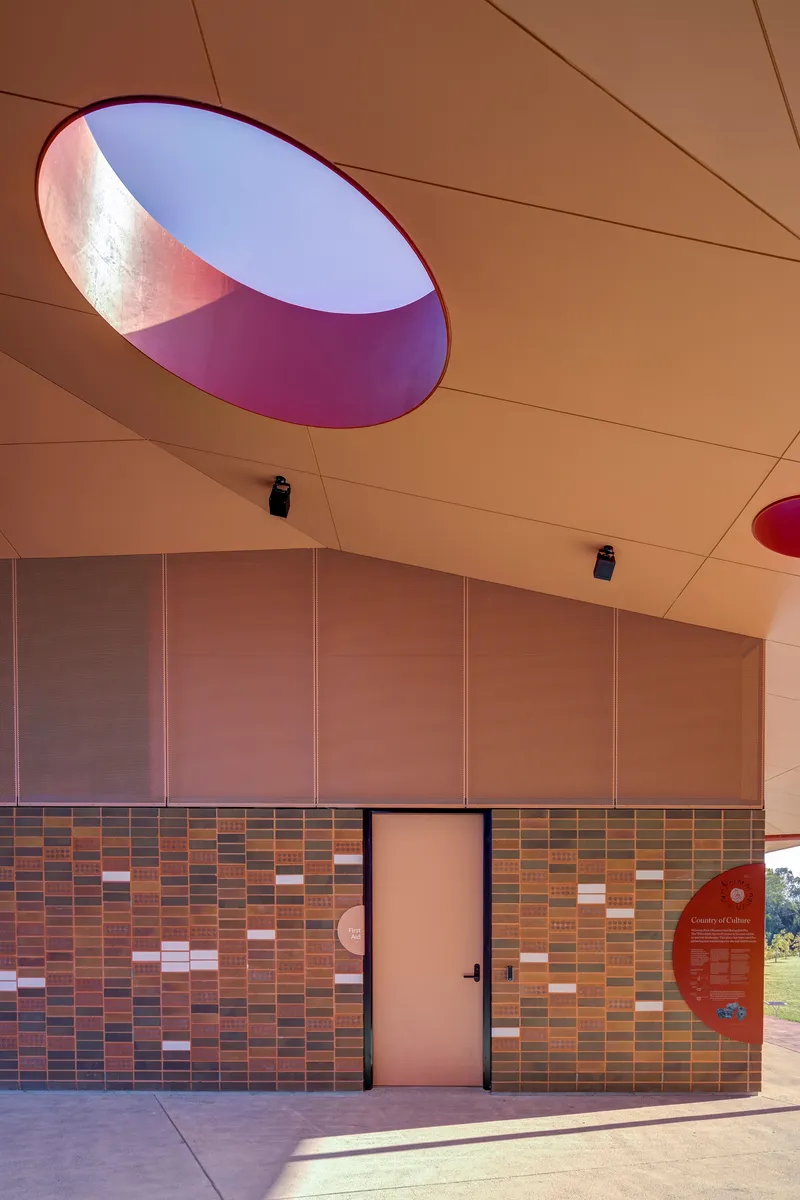
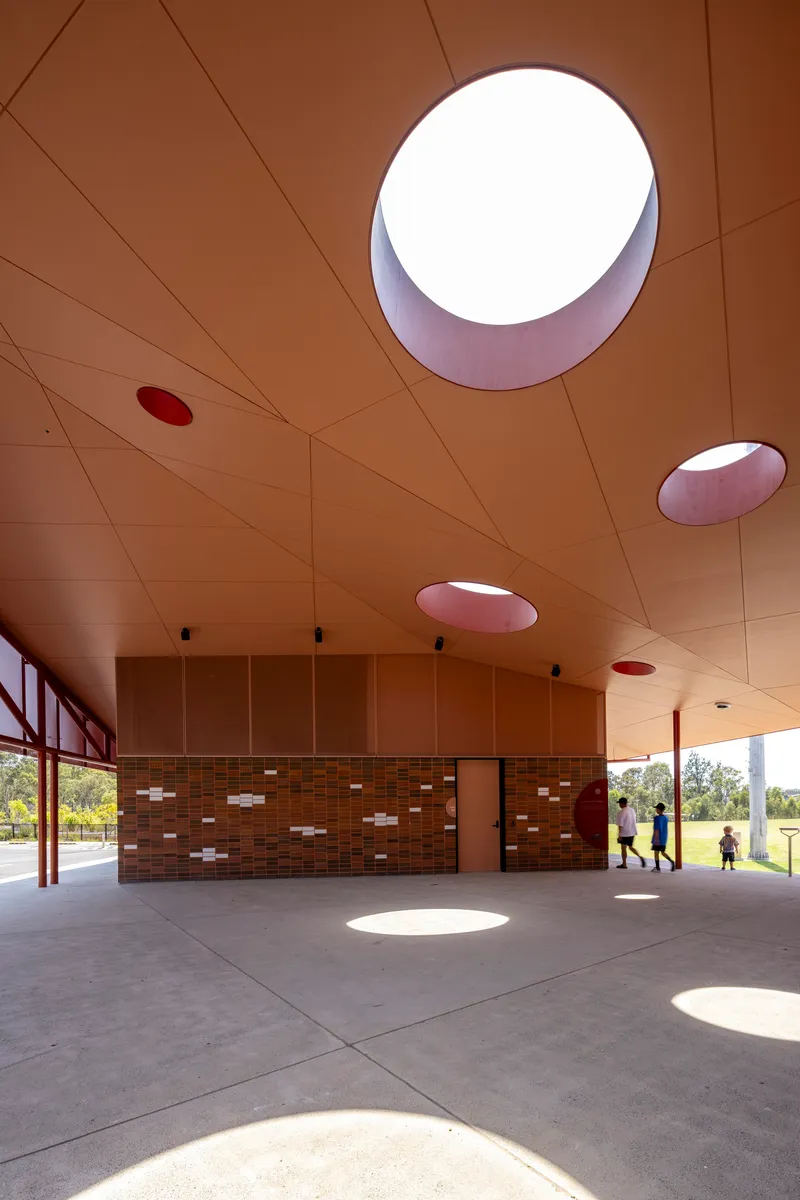
The circular skylights are the pavilion's most photogenic detail, but they are also its most conceptually loaded. Punched through the timber-paneled ceiling, they recall the round clay beads central to Dharawal and Gandangara cooking practices. During the day, they cast pools of light that shift across the concrete floor as the sun moves. At night, they glow pink and purple, transforming the pavilion into what the architects describe as a beacon or welcoming lantern visible from the surrounding streets.
The color is unexpected for a sports building. The pink and purple rims of the skylights push the interior away from the functional palette of most municipal facilities and toward something more atmospheric, even celebratory. Inside the clubroom, visitors are silhouetted beneath a vaulted ceiling pierced by these luminous apertures, and the effect is closer to a gathering hall than a changing room annex.
Perforated Screens and the In-Between
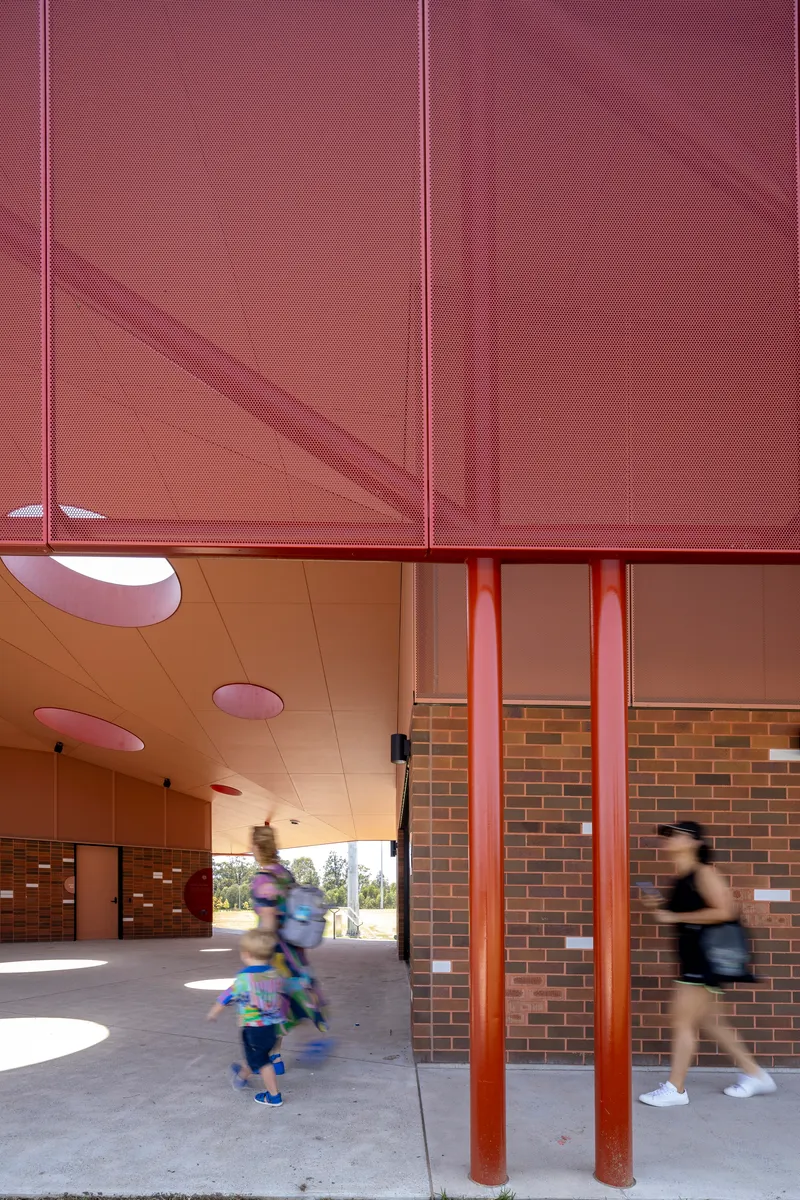
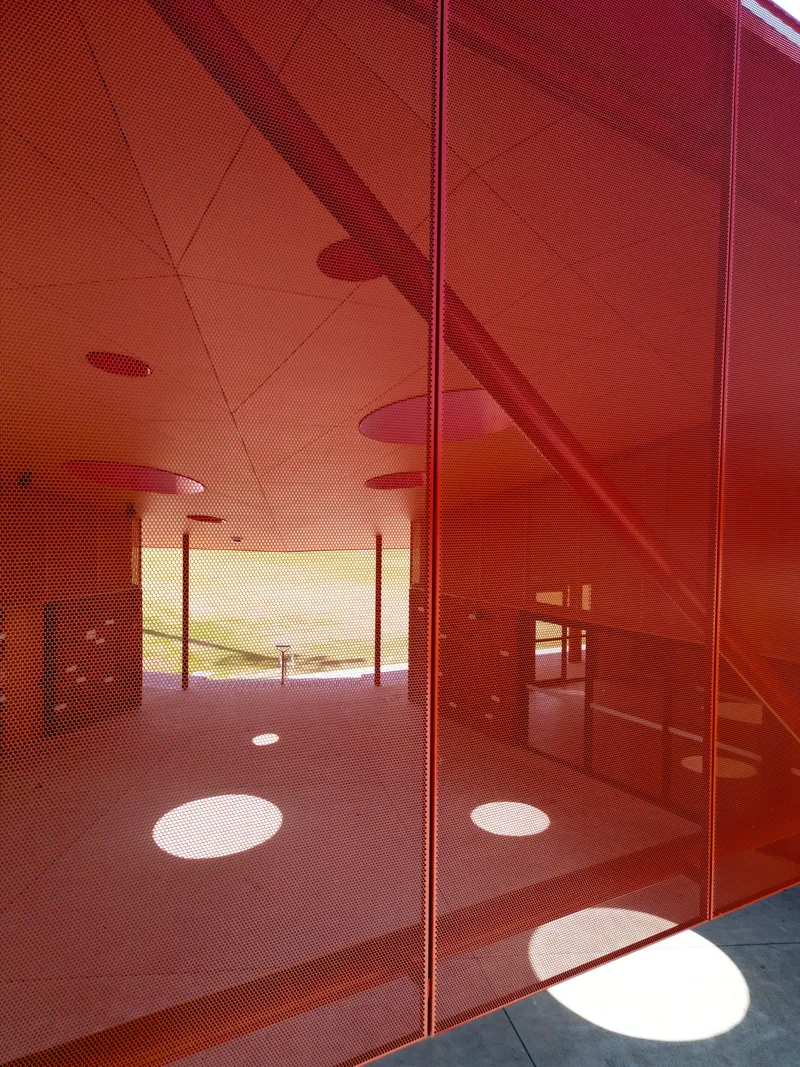
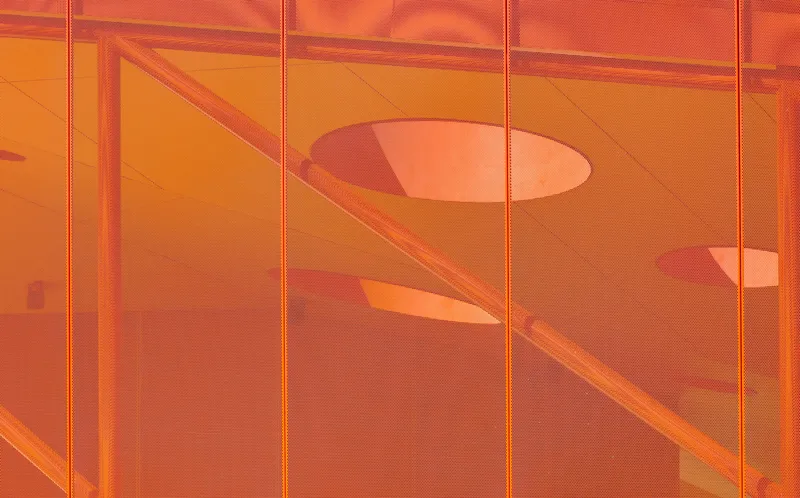
Perforated metal appears throughout the project in two patterns: a round hole P239 pattern on the exterior facade and a hexagonal Electra pattern in the interiors. These panels do real climatic work, filtering breeze and providing shade, but they also dissolve the boundary between inside and outside. The translucent orange panels pick up shadows of handrails and skylights, creating layered compositions that change with the angle of the sun. At the gable end, a large perforated screen turns the building's profile into a semi-transparent veil rather than a solid wall.
The panels are fabricated with folded edges for structural rigidity and clean lines, a small construction detail that prevents the flimsiness that often plagues perforated metal installations in public buildings. The result is a surface that reads as both industrial and refined, appropriate for a building that must withstand weekend sports crowds and the occasional stray cricket ball.
Ground Plane and Arrival
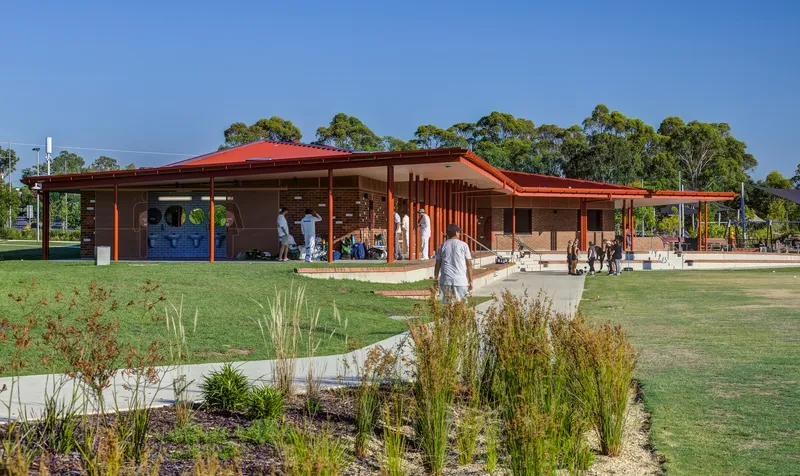
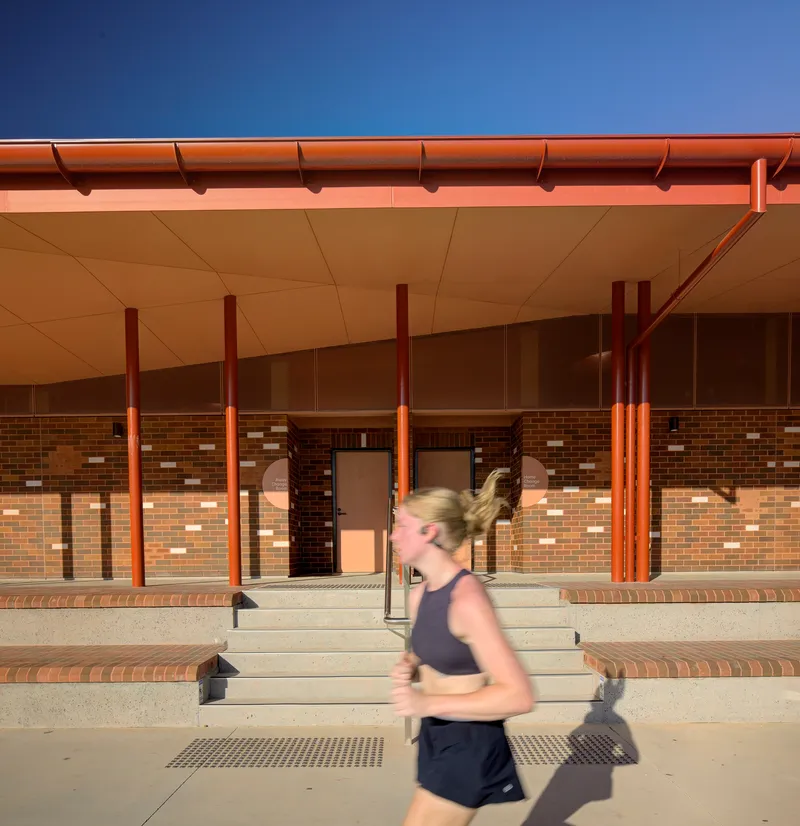
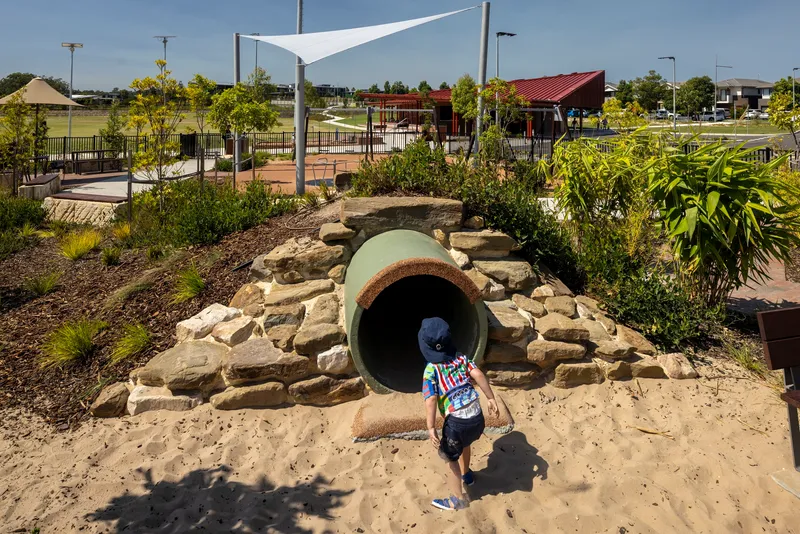
Landscape architect ASPECT Studios shaped the ground plane with the same care applied to the building. Native grasses line the approach paths, young trees will eventually provide a secondary canopy, and a sandstone-boulder tunnel near the playground draws children into the precinct with the primal appeal of a cave. The playground itself includes a 2.5-metre gradual transition to adjacent pathways, prioritizing accessibility without the usual abrupt grade changes.
At dusk, the entry sequence becomes theatrical. A blurred runner passes under the red eave in fading light; the overhangs glow from within. The pavilion announces itself not through signage or scale but through the warmth of its lit interior spilling outward. For a suburb still finding its identity amid rapid densification, that glow functions as a kind of civic hearth.
Interior Details
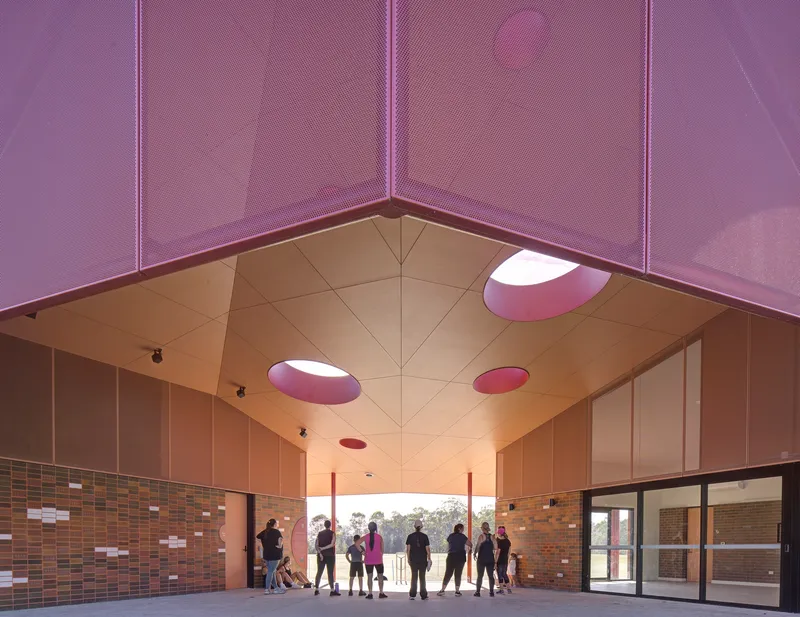
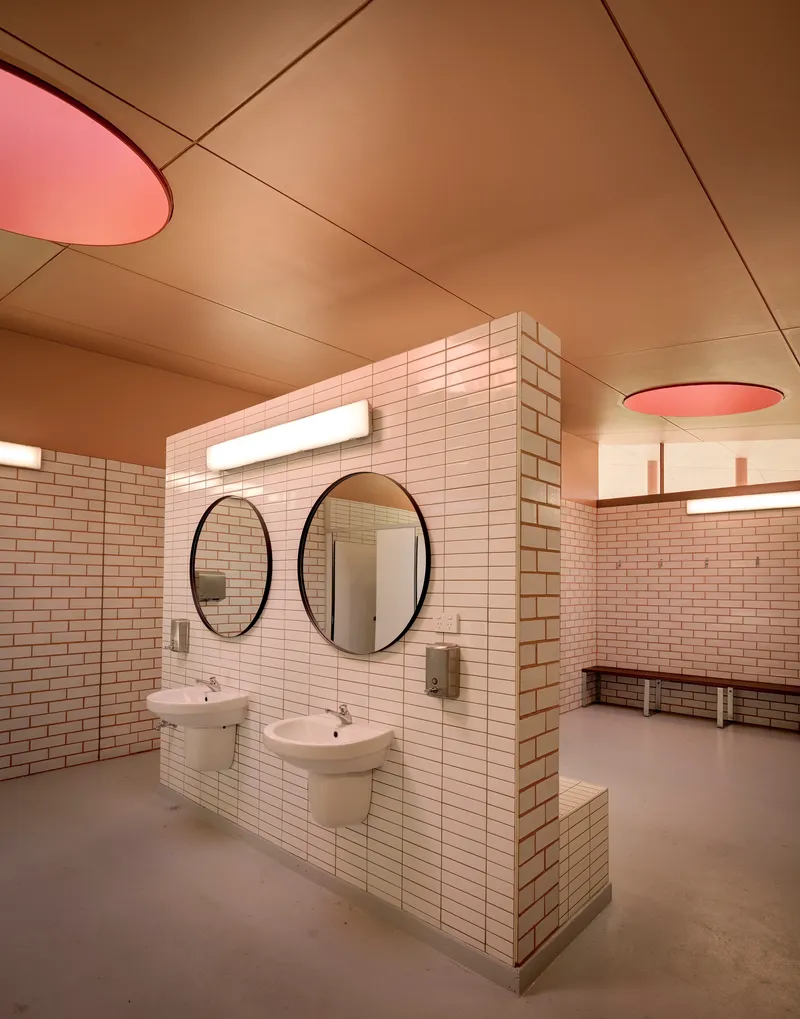
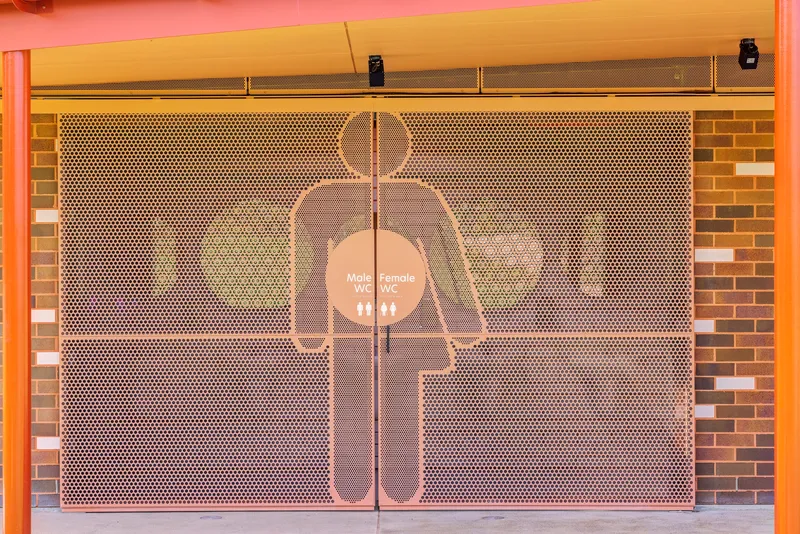
The interior program is straightforward: clubroom, kiosk, changing rooms, toilets. What elevates it is the consistency of the material and color language. The amenities block features freestanding tiled washbasin walls with round mirrors beneath pink ceiling light fixtures, continuing the circular motif from the skylights. Restroom signage is silhouetted against perforated metal screens backed by brick, turning even a wayfinding moment into an exercise in layered materiality.
The clubroom, visible in the silhouetted interior shot, reads as genuinely inviting. The vaulted ceiling lifts the space beyond the single-storey datum, and the purple-rimmed skylights create a quality of light that most community facilities never achieve. These are not expensive moves. They are careful ones, and they suggest a design team that understood the difference between a building that serves a program and one that hosts a community.
Street Presence
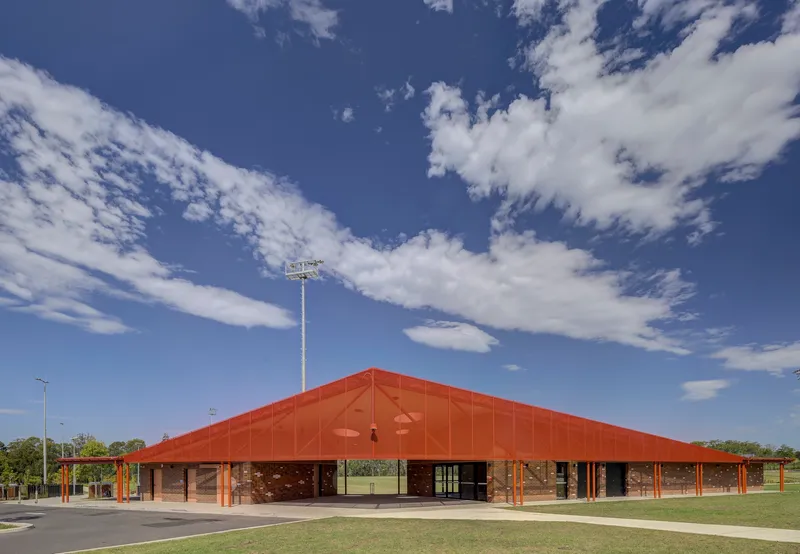
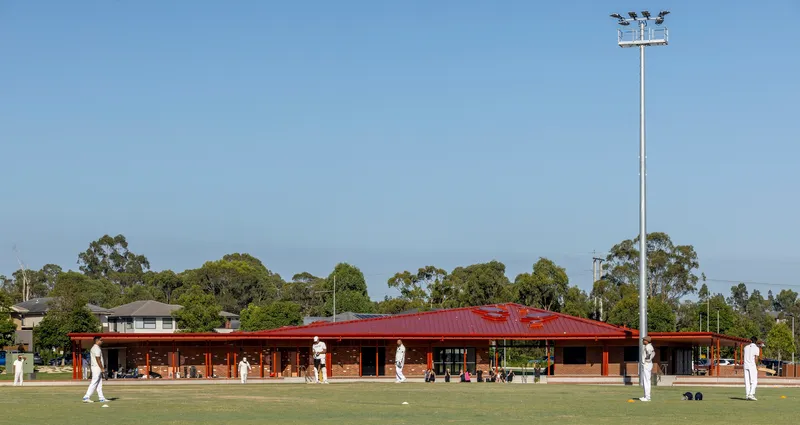
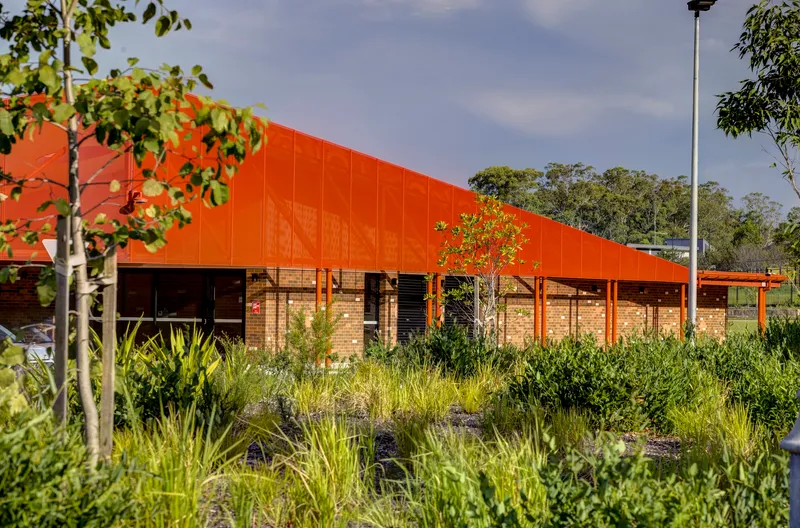
From across the playing fields, the pavilion sits long and low under a wide sky. The red roof catches afternoon light and reads as a single confident gesture against the green turf. The building's profile never exceeds the tree canopy, a deliberate restraint that keeps it grounded in its suburban context. The pitched form toward the street and the elongated shed form toward the field work in tandem to make the pavilion legible from multiple distances and directions.
The choice of corrugated steel for the roof is pragmatic but also evocative. In Australian vernacular architecture, corrugated metal is as loaded as timber cladding is in Scandinavia. Here it is rendered in a deep terracotta that avoids the default grey of most sports sheds, aligning the roof with the brick tones below and with the warm earth palette of the broader design concept.
Plans and Drawings
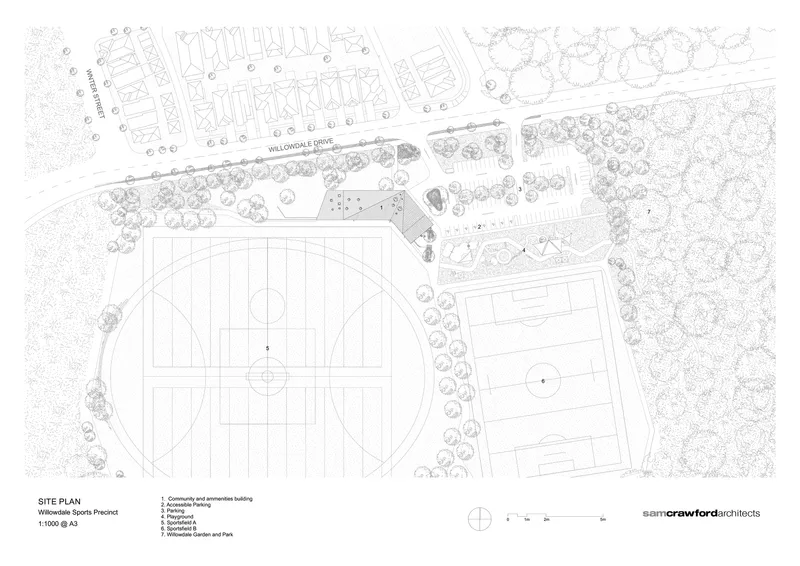
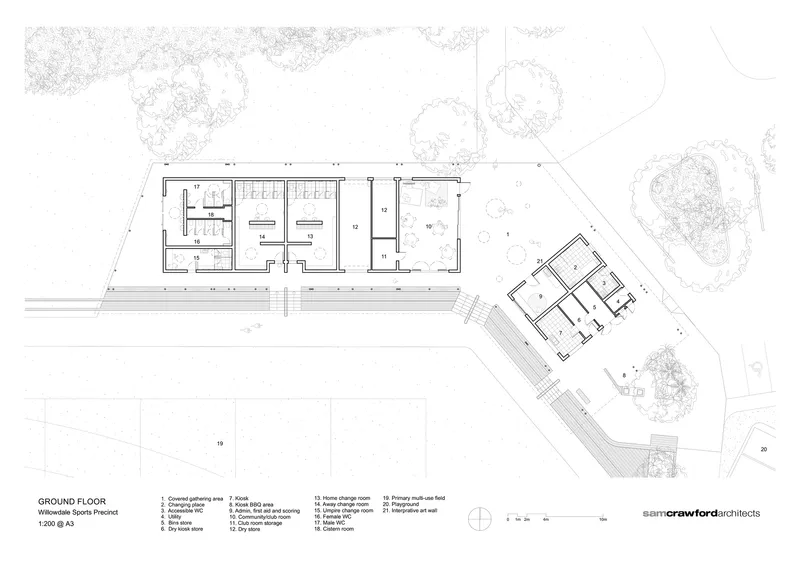
The site plan reveals the full ambition of the precinct: two sports fields, the pavilion at their nexus, parking buffered by the playground, and a riparian corridor preserved along the creek to the west. The ground floor plan makes the V-shaped organization explicit, with the pivot point at the main entry and the two wings diverging to frame the terrace between them. Each wing is a simple rectangular volume, keeping the plan efficient and the construction straightforward.
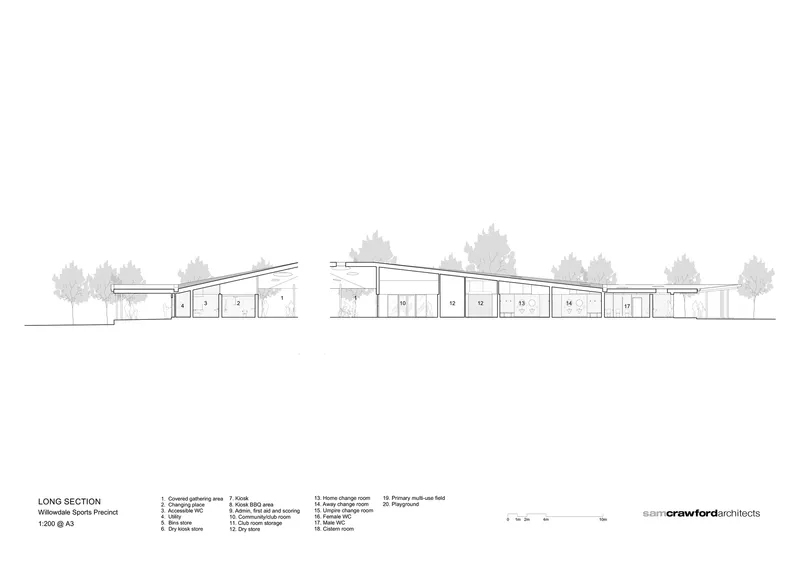
The long section is the most instructive drawing. It shows the roof descending from a domestic-scaled gable at one end to the low verandah at the other, with interior ceiling heights varying to accommodate the clubroom's vaulted space. The trees drawn in silhouette are not decorative: they represent the mature canopy that will eventually integrate the building into a treed landscape, softening its presence further as the suburb matures around it.
Why This Project Matters
Sports pavilions are among the most utilitarian briefs in architecture. They are frequently delivered as generic steel sheds with a kiosk bolted on, justified by tight budgets and the assumption that nobody looks at them twice. Willowdale Sports Precinct dismantles that assumption. By grounding the project in a specific cultural narrative, derived from genuine archaeological findings and developed in consultation with Traditional Custodians, Sam Crawford Architects transforms a standard community facility into something with real depth. The brickwork patterns, circular skylights, and earth-toned palette are not aesthetic whims; they are a coherent translation of site history into built form.
The project also demonstrates that passive climate design and civic generosity are not separate agendas. The deep eaves that answer the community's heat complaints also create the social spaces where the precinct's public life will happen. The perforated screens that provide ventilation also dissolve the threshold between building and landscape. In a rapidly densifying area that will soon be defined by the roar of international flights overhead, this pavilion offers something increasingly rare: a place that knows where it is and remembers what came before.
Willowdale Sports Precinct by Sam Crawford Architects, with landscape architecture by ASPECT Studios and cultural design consultation by Lymesmith. Denham Court, Australia, 2025. Site area: 5.5 hectares. Photography by Brett Boardman.
About the Studio
Share Your Own Work on uni.xyz
If projects like this are the kind of work you want to make, uni.xyz is a place to publish your own, find collaborators, and enter design competitions.



Popular Articles
Popular articles from the community


Co-life: Sustainable Architecture for Age-Friendly Community Living
Co-life reimagines sustainable architecture for seniors through courtyards, rammed earth, shared gardens, and spaces designed for belonging.

Co-Life: Senior Housing Design That Reconnects Older Adults With the City
Co-Life reimagines senior housing design through healing gardens, shared streets, workshops, and a sustainable community across generations.

Riyadh For All: Intergenerational Urban Design for Active Aging in Rabat
Riyadh For All reimagines urban design in Rabat with intergenerational co-living, adaptive courtyards, and Moroccan cultural exchange today.

The Ocean Hive: Sustainable Architecture for a Self-Sufficient Civilization at Sea
The Ocean Hive imagines sustainable architecture at sea, where modular habitats, algae, wave power and ocean waste sustain a growing colony.


Similar Reads
You might also enjoy these articles

Bao Huynh Watercolor Atelier: A Serene Art Retreat in Hội An
Bao Huynh Watercolor Atelier in Hội An blends multifunctional art spaces, sustainable design, local materials, and family-friendly living in a serene environment.

Atelier Macri Concept Store Interior Design by CASE-REAL
Atelier Macri store features a "ko" counter, walnut wood details, cork displays, blending retail, gallery, and seamless customer experiences.

Manuel Vargas Izquierdo Stadium and High-Performance Sports Center: Architectural Excellence in Jalpa de Méndez
The Manuel Vargas Izquierdo Stadium blends sustainable design, inclusive sports facilities, and cultural-inspired architecture, revitalizing Jalpa de Méndez’s public spaces.

KAKR Buluh Awar Hall: Revitalizing Community and Ecology Through Bamboo Architecture
Community built bamboo hall revitalizes Buluh Awar village, empowering youth, restoring ecology, celebrating vernacular craftsmanship through sustainable architecture and culture.


Explore Installations Competitions
Discover active competitions in this discipline


Challenge to design a portable theatre

Challenge to design a portable music platform

Challenge to design an open learning module for the elderly
Comments (0)
Please login or sign up to add comments
No comments yet. Be the first to comment!