

Hillside House by RS+ Robert Skitek: A Contemporary Barn-Inspired Home in the Rolling Landscape of Lesser Poland
A modern hillside home in Poland blending barn-inspired forms, natural materials, and panoramic views, designed by RS+ Robert Skitek.


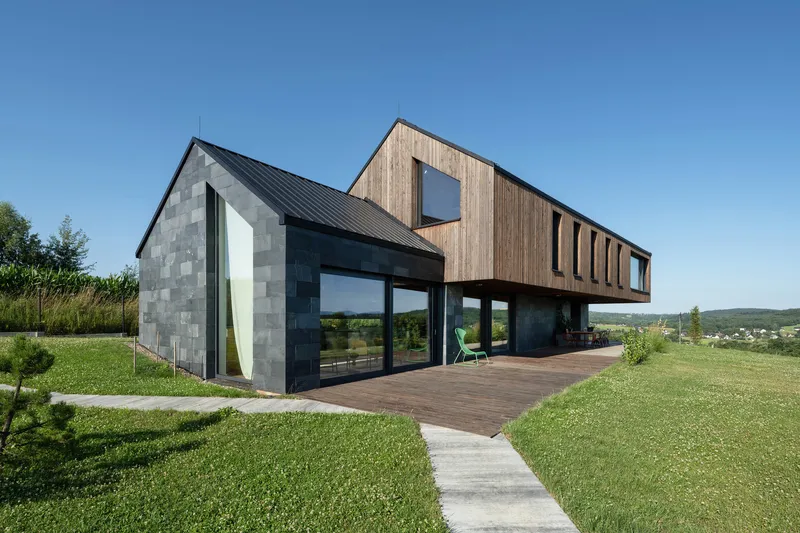
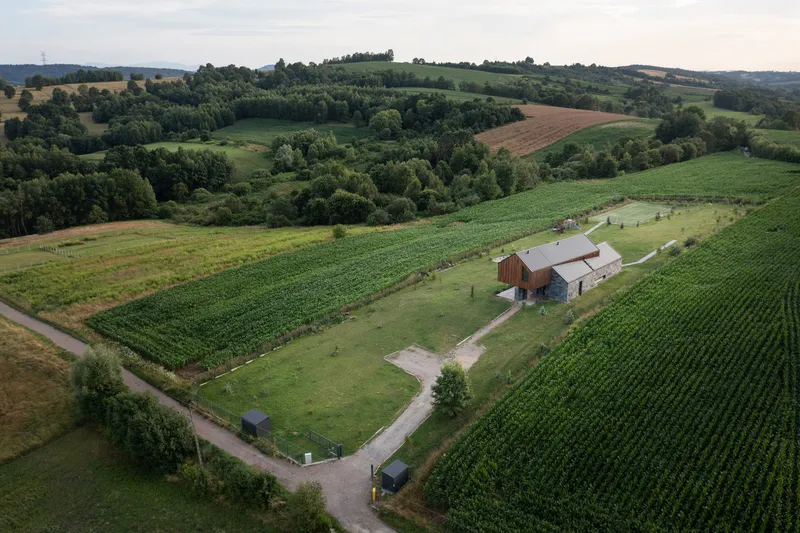
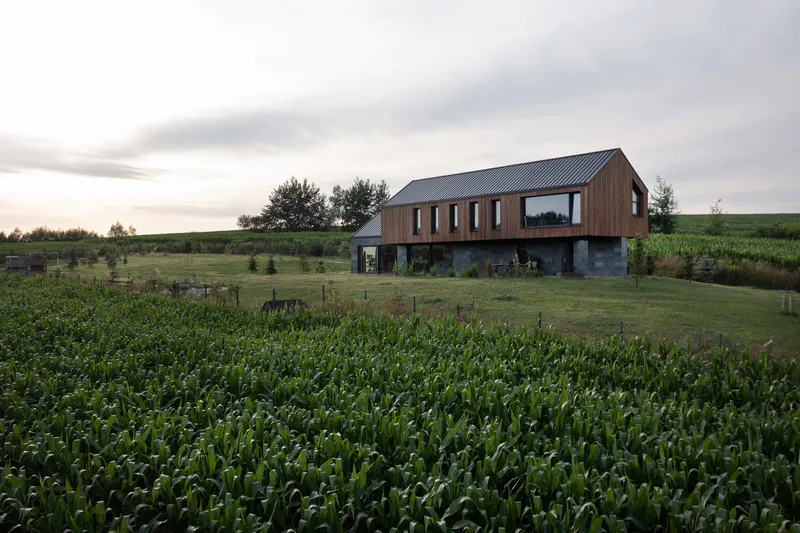
Nestled in the idyllic countryside of Radziszów, in the Lesser Poland region, Hillside House by RS+ Robert Skitek is a masterful response to topography, climate, and rural context. Completed in 2022 and spanning 217 square meters, the house is perched on a small hill amid gently rolling landscapes and golden cornfields—a setting that defines both its spatial organization and architectural expression.
Harmonizing Architecture with Topography and Views
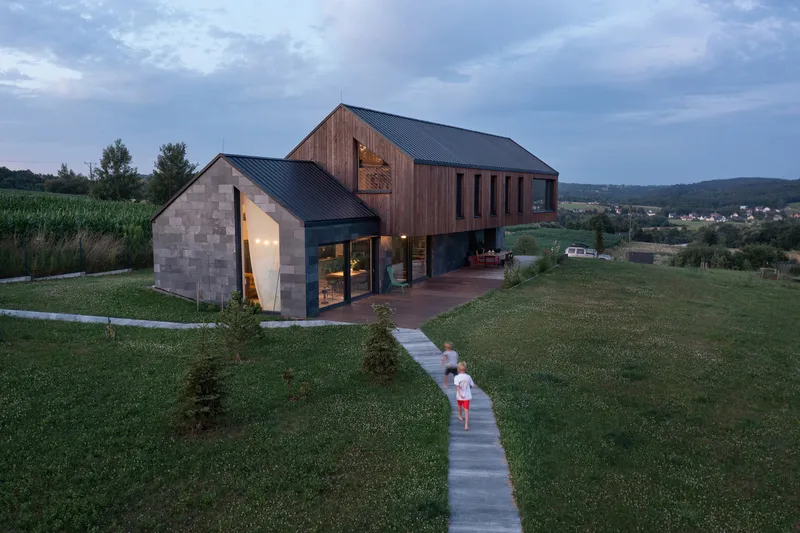
The architects made strategic use of the sloping site, positioning the home along the natural contours in the plot’s northern section. This siting maximizes exposure to sunlight while orienting the home’s main living spaces toward panoramic southern views. Floor-to-ceiling windows open up to the surrounding hills, seamlessly connecting the interiors with the vibrant outdoors and ensuring optimal solar gain throughout the day.
A Dual-Barn Composition Rooted in Tradition and Modernity
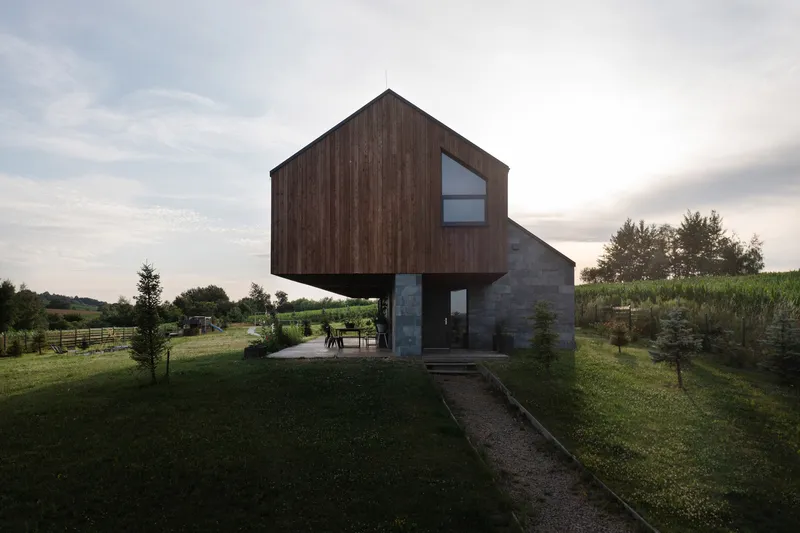
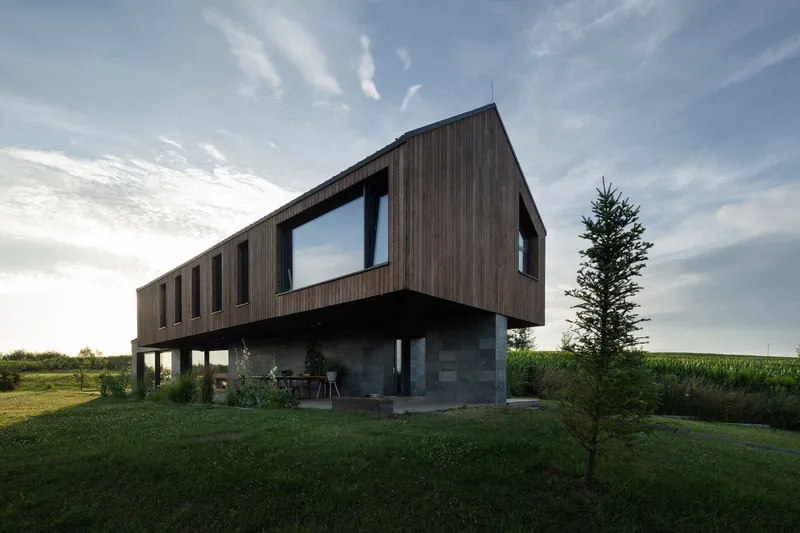
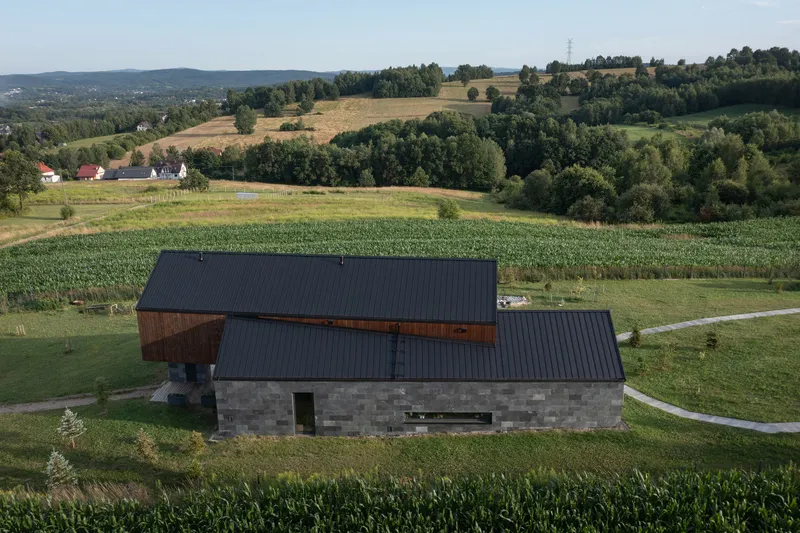
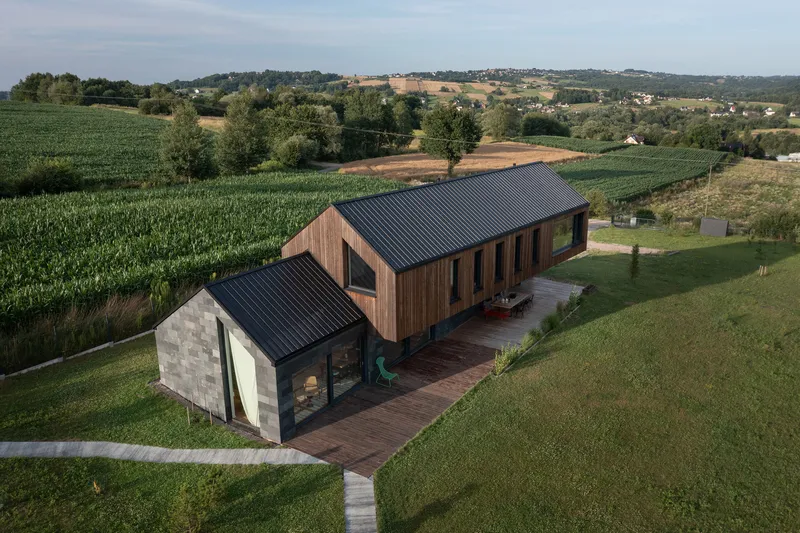
At first glance, Hillside House recalls the traditional barn structures typical of the Polish countryside. However, the design elevates these vernacular forms through a contemporary lens. The residence consists of two interlocking volumes, both resembling archetypal barns. These masses are subtly offset both vertically and horizontally, and slightly rotated to generate dynamic spatial interplay.
Externally and internally, these two volumes intersect and weave together, establishing a cohesive yet layered architectural identity. The material palette—comprising natural stone, timber cladding, and standing seam metal roofing—reinforces this sense of rustic refinement. The contrast between the heavy stone base and the lighter wooden upper volume accentuates the house’s stratified composition, anchoring it into the landscape while offering warmth and visual tactility.
Spatial Organization: Living, Resting, and Growing
The home is organized over two levels. The ground floor is dedicated to a bright and open day zone, which includes a living room, kitchen, and dining area. Large glazed openings face south, opening onto a terrace shaded by the cantilevered upper volume—creating a comfortable indoor-outdoor transition and shelter from summer sun.
The upper floor contains the night zone, including the main bedroom and a flexible children’s space currently designed as a shared room. This area has been thoughtfully planned for future adaptability: as the children grow older, the space can be divided into separate rooms, allowing the home to evolve with the family’s needs.
Natural Materials and Rural Integration
One of the house’s most striking features is its honest use of natural materials that reflect the surrounding environment. The facade’s subdued tones—from the earthy greys of the stone base to the warm wood and soft metallic hues of the roof—complement the site’s agricultural character.
Importantly, the landscaping was designed and implemented by the owners themselves. Their approach aimed to preserve the plot’s natural feel, reinforcing the home’s subtle integration into its rural surroundings. The result is a residence that feels both contemporary and timeless—innovative in design yet deeply respectful of place.
All Photographs are works of Tomasz Zakrzewski


Popular Articles
Popular articles from the community


Cube Design Draws an Ecological Corridor Between Two Shenzhen Hills with the Nankai Building
Beside Shenzhen's container docks, the Nankai Building pairs stacked balconies with a climbing green screen to connect two hillsides across its height.

Jaramillo Van Sluys Arquitectura and Urbanismo Turn a Demolished Registry Lot in Quito into an Orchard Plaza
In Quito's Centro Histórico, a 2,800 m² plaza exposes the San Agustín convent wall and redraws its lost Augustinian orchard in volcanic stone.

Juan García Correa, John González and Claudia Rueda Sink a Circular Amphitheater into a Manizales Engineering Building
On the La Nubia campus in Manizales, Colombia, the S1 Building folds labs and offices into a hillside of ramped lawns that double as a campus route.

U.GA Architects Wraps an Oval Rooftop Pool in Curved Board-Formed Concrete on Busan's Jeollidan-gil
In Busan's Jeonpo-dong, a 454 m² mixed-use block stacks a neighborhood facility, guest rooms and an oval rooftop pool inside spiraling concrete walls.

Similar Reads
You might also enjoy these articles


Hodi-Mandai Geram
Project Function: Preservation and revitalization of the Intangible heritage and socio-spatial identity of the Hodi by Housing, Cultural Memory Center, Sacred Grove, landscape, local tourism economy


Olio Towers: A Mid-Rise for Performers That Fuses Housing, Rehearsal, and Stage
Located blocks from Houston's Theater District, this modular tower stacks living units around a central performance atrium.

Oasis: Modular Green Housing Carved into Dhaka's Urban Fabric
A shortlisted Plugin Housing entry reclaims unauthorized settlements in Dhaka with stepped concrete volumes, green roofs, and ventilation-driven design.

Black Hole: A Floating Megastructure for the Post-Physical Era
Emiliano Mazzarotto envisions a spherical, self-scaling arena where e-sports, digital hotels, and holographic stadiums replace traditional public space.

Explore Housing Competitions
Discover active competitions in this discipline

Challenge to reimagine the Iron Throne

Photograph architecture without architects

Illustrate the lost glory of Angkor Wat - Render Challenge

Design challenge to reuse E-waste
Comments (0)
Please login or sign up to add comments
No comments yet. Be the first to comment!