

House EK by WE-S architecten: A Sensitive Adaptive Reuse in the Flemish Ardennes
House EK transforms a former school into minimalist residences, blending brick and glass with adaptive reuse and thoughtful spatial design.


Location: Zwalm, Belgium Architects: WE-S architecten Year Completed: 2022 Typology: Residential Architecture, Adaptive Reuse Photography: © Nicolas da Silva Lucas
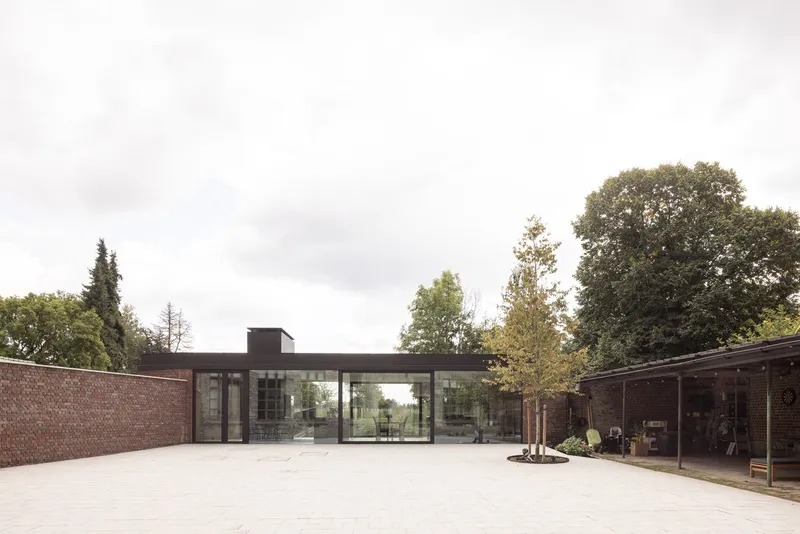
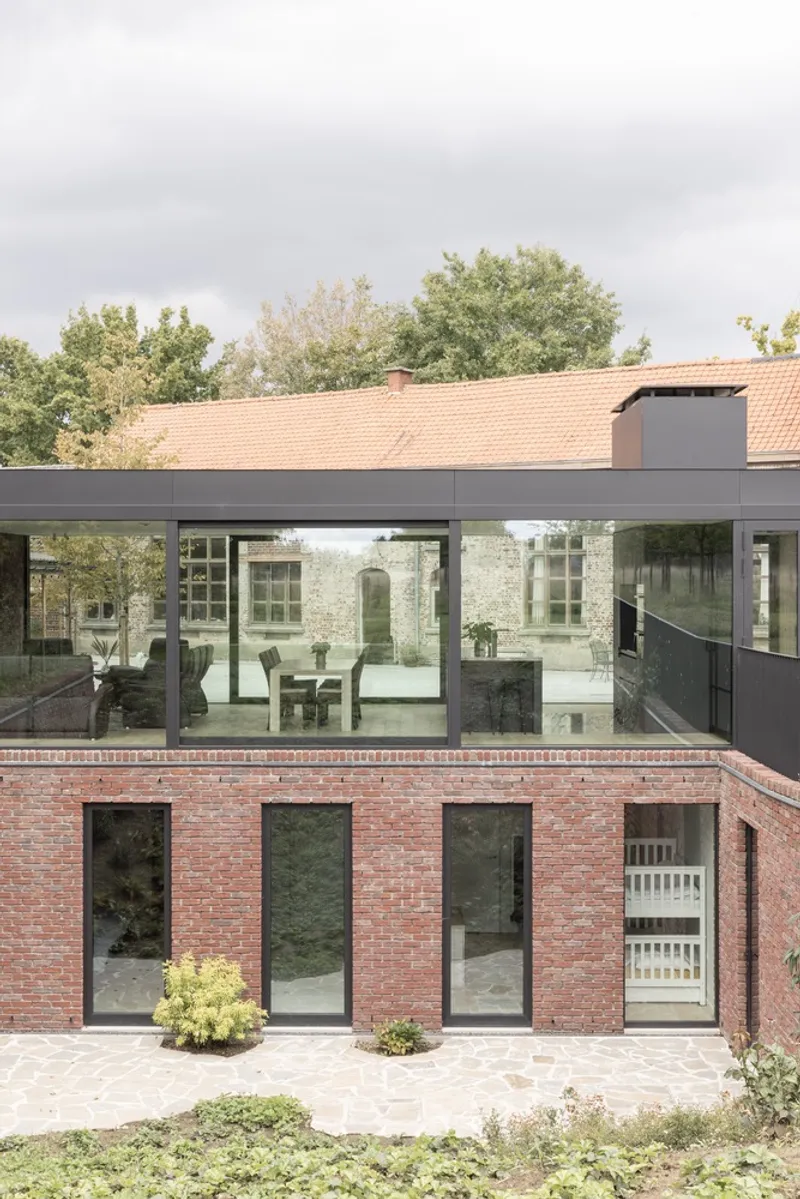
In the heart of the Flemish Ardennes, House EK by WE-S architecten reimagines a former municipal school as a contemporary residential compound. Through a refined and context-aware transformation, the project honors the site's historical character while introducing a minimalist and spatially efficient living environment.
A Dual-Dwelling Transformation Rooted in Heritage
The architectural intervention involves converting the school premises into a multipurpose common space flanked by two distinct housing units. One residence is housed within the existing teacher’s house, maintaining its original structural integrity. The second, a new single-family home, is discreetly nestled at the rear of the property, adjacent to the former school playground.
This careful placement ensures privacy and spatial clarity while respecting the plot’s heritage layout and surrounding natural topography.
Brick, Glass, and Spatial Dialogue
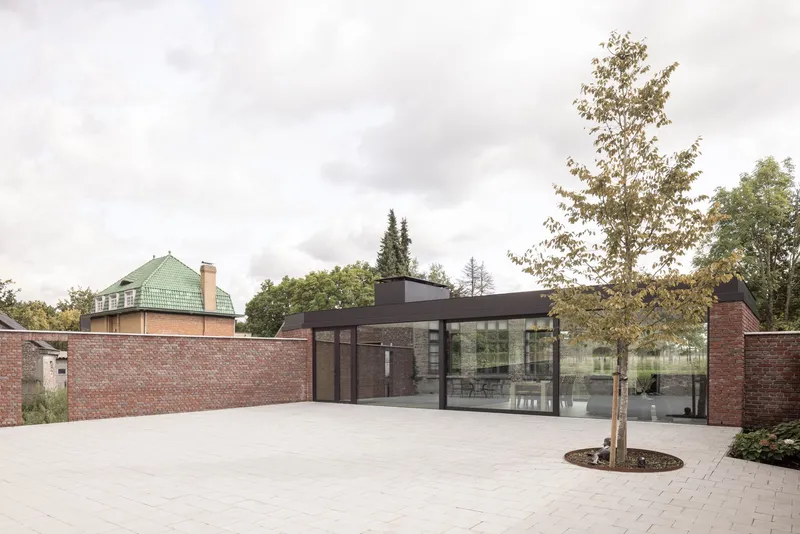
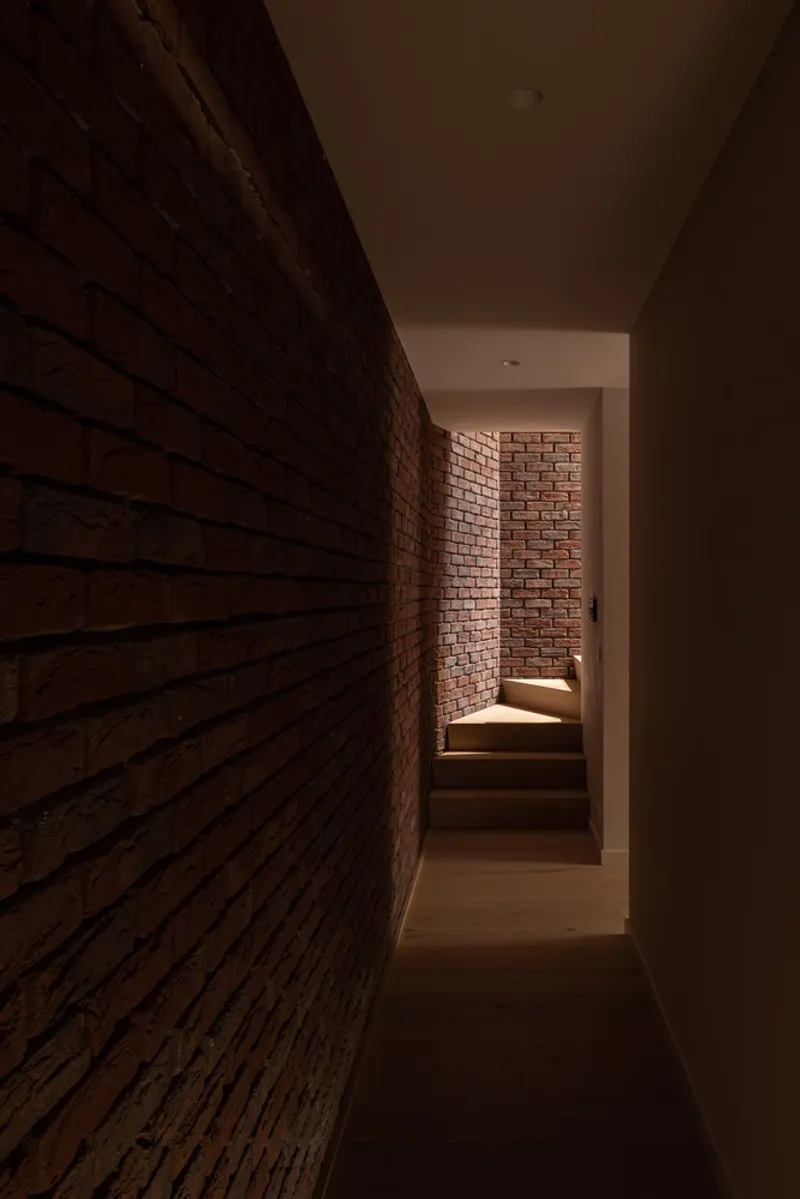
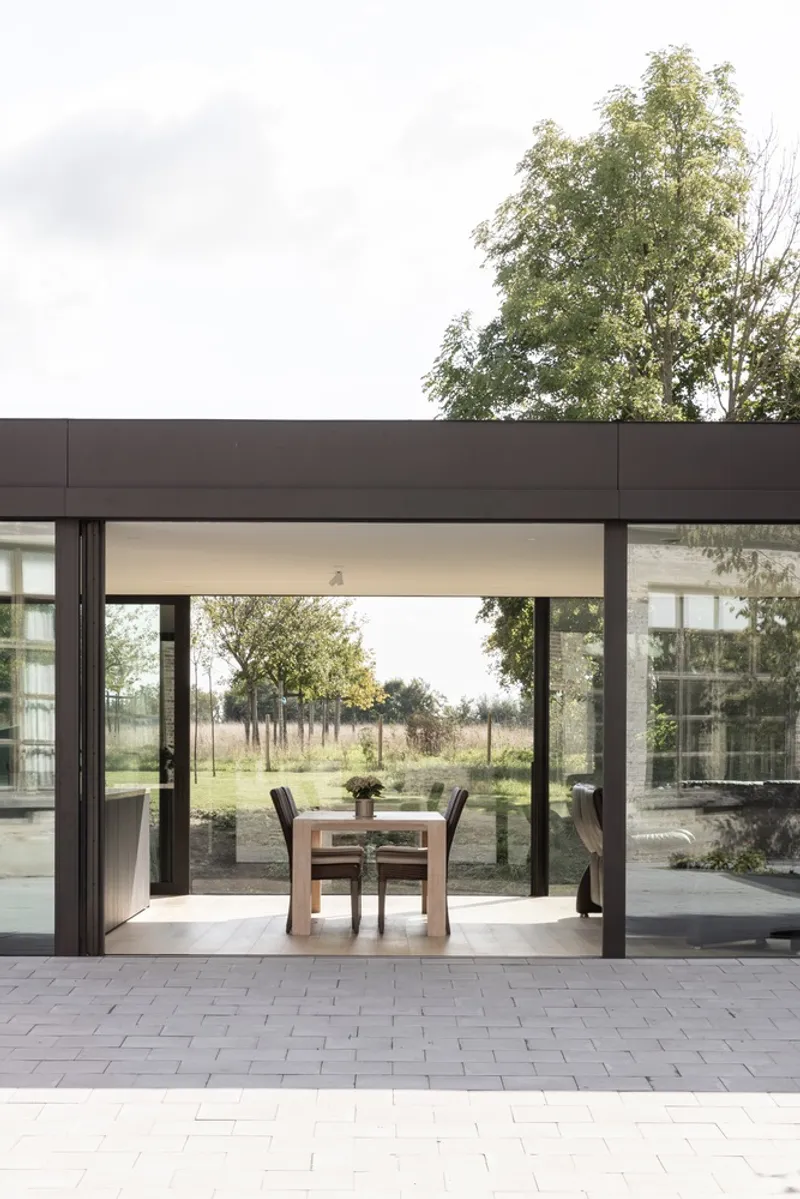
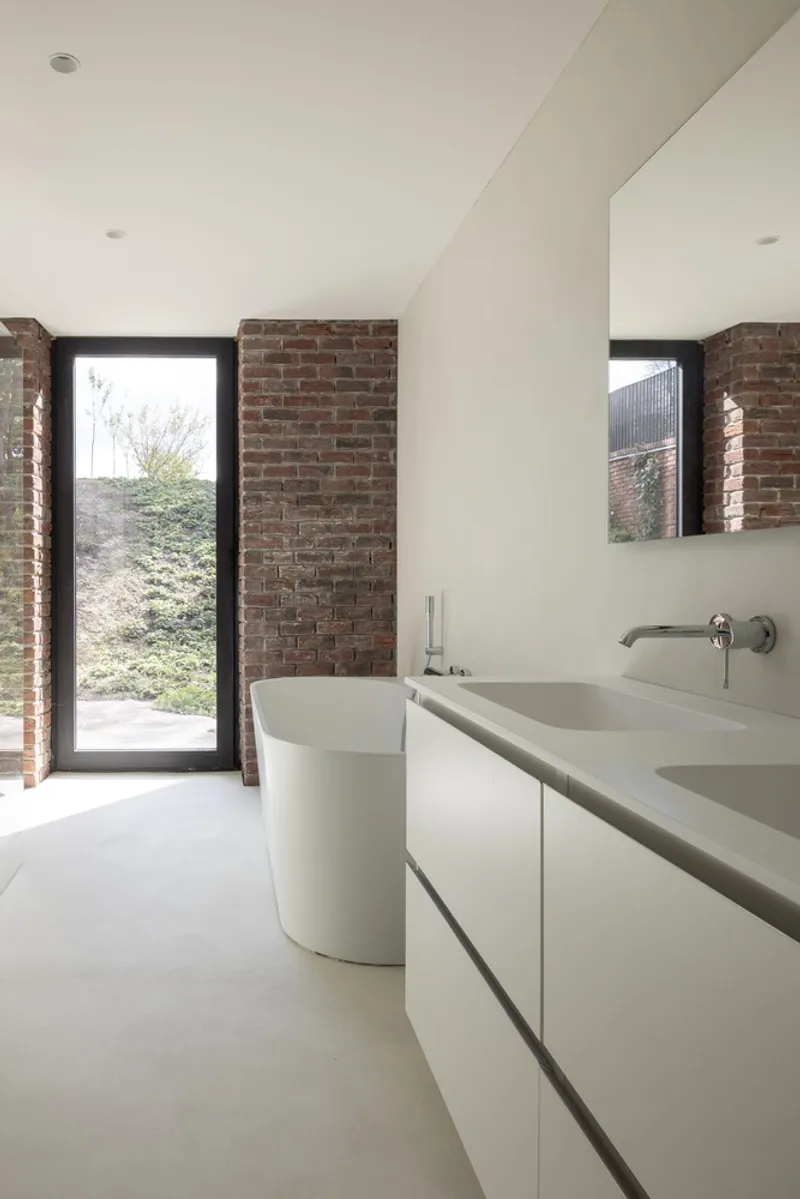
The design hinges on a sophisticated material palette and bold spatial clarity. A transparent glass volume is seemingly “inserted” between the site's original brick garden walls, forming a subtle yet powerful juxtaposition between old and new. The architects emphasized cohesion by matching the interior walls with similar brickwork, creating continuity between existing and new constructions.
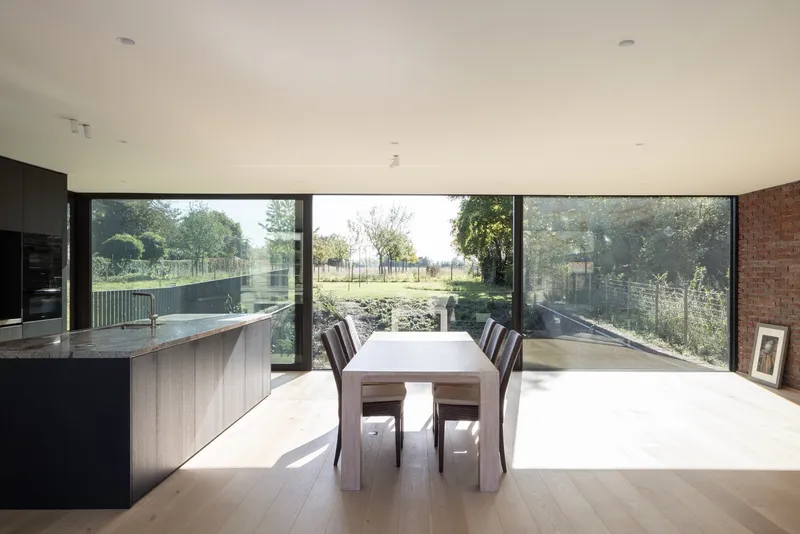
In a gesture of material and historical sensitivity, the glass structure replaces a former sanitary facility and becomes a delicate spatial divider between the garden and playground. Its transparency is strategically maximized by limiting load-bearing elements to the sidewalls, creating a sense of openness and fluidity in the core living areas.
A Thoughtful Interior Organization
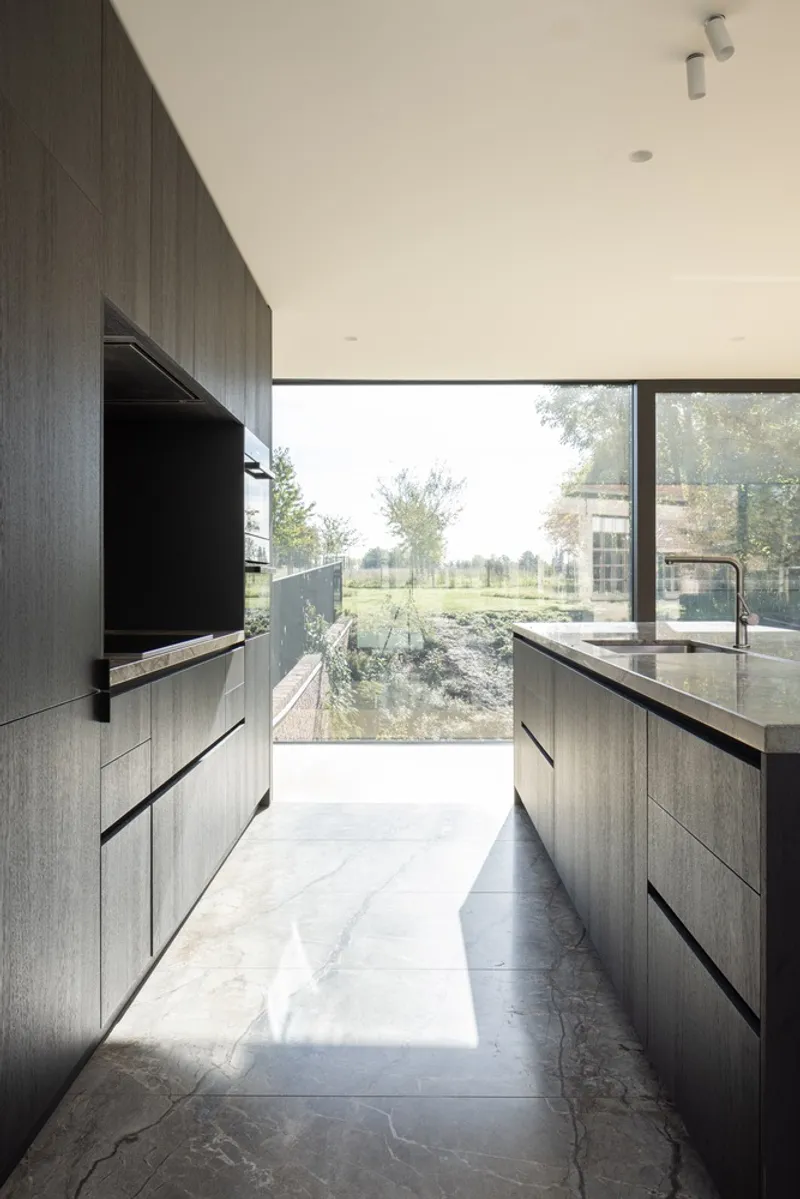
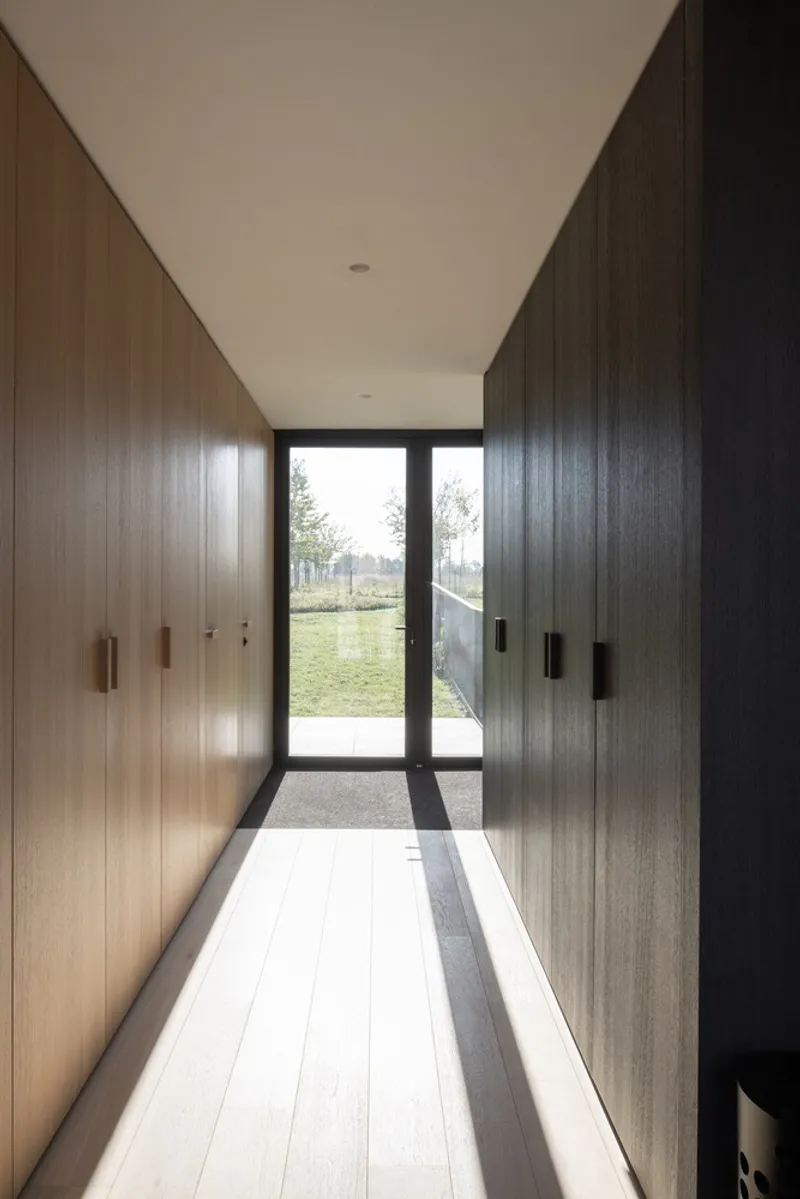
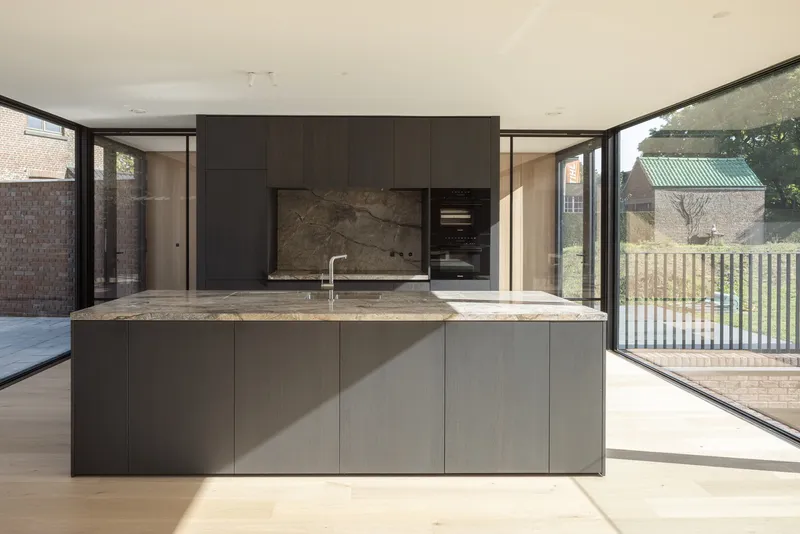
At the heart of the layout, a central kitchen block serves as both the technical core and a functional partition. This volume separates the day hall from the living room, enabling distinct yet connected zones within a relatively compact footprint.




Popular Articles
Popular articles from the community


Conexión: Biophilic Design Reimagines High-Rise Living in Hong Kong
Conexión reimagines high-rise living in Hong Kong through biophilic design, green facades, shared spaces, daylight, water and nature within.

AL-JANNAH: Sustainable Architecture and Permaculture for Afghan Widows
AL-JANNAH uses sustainable architecture and permaculture to create resilient oasis of housing, learning, work and renewal for Afghan widows.

Hill & Cross Opera: Sculptural Opera House Architecture Shaped by Tallinn’s Landscape and Identity
Hill & Cross Opera reimagines opera house architecture in Tallinn through its sculptural hill, civic plaza, glass wave and a luminous cross.
EW PARK: Sustainable Architecture Reimagines the Future of Urban Parking
EW PARK reimagines city parking as a modular wooden tower combining automation, solar energy, electric mobility, and adaptable urban design.


Similar Reads
You might also enjoy these articles


Hodi-Mandai Geram
Project Function: Preservation and revitalization of the Intangible heritage and socio-spatial identity of the Hodi by Housing, Cultural Memory Center, Sacred Grove, landscape, local tourism economy


Olio Towers: A Mid-Rise for Performers That Fuses Housing, Rehearsal, and Stage
Located blocks from Houston's Theater District, this modular tower stacks living units around a central performance atrium.

Oasis: Modular Green Housing Carved into Dhaka's Urban Fabric
A shortlisted Plugin Housing entry reclaims unauthorized settlements in Dhaka with stepped concrete volumes, green roofs, and ventilation-driven design.

Black Hole: A Floating Megastructure for the Post-Physical Era
Emiliano Mazzarotto envisions a spherical, self-scaling arena where e-sports, digital hotels, and holographic stadiums replace traditional public space.

Explore Geurst & Schulze Architecten Competitions
Discover active competitions in this discipline



Challenge to reimagine the Iron Throne


Photograph architecture without architects


Illustrate the lost glory of Angkor Wat - Render Challenge


Design challenge to reuse E-waste
Comments (0)
Please login or sign up to add comments
No comments yet. Be the first to comment!