
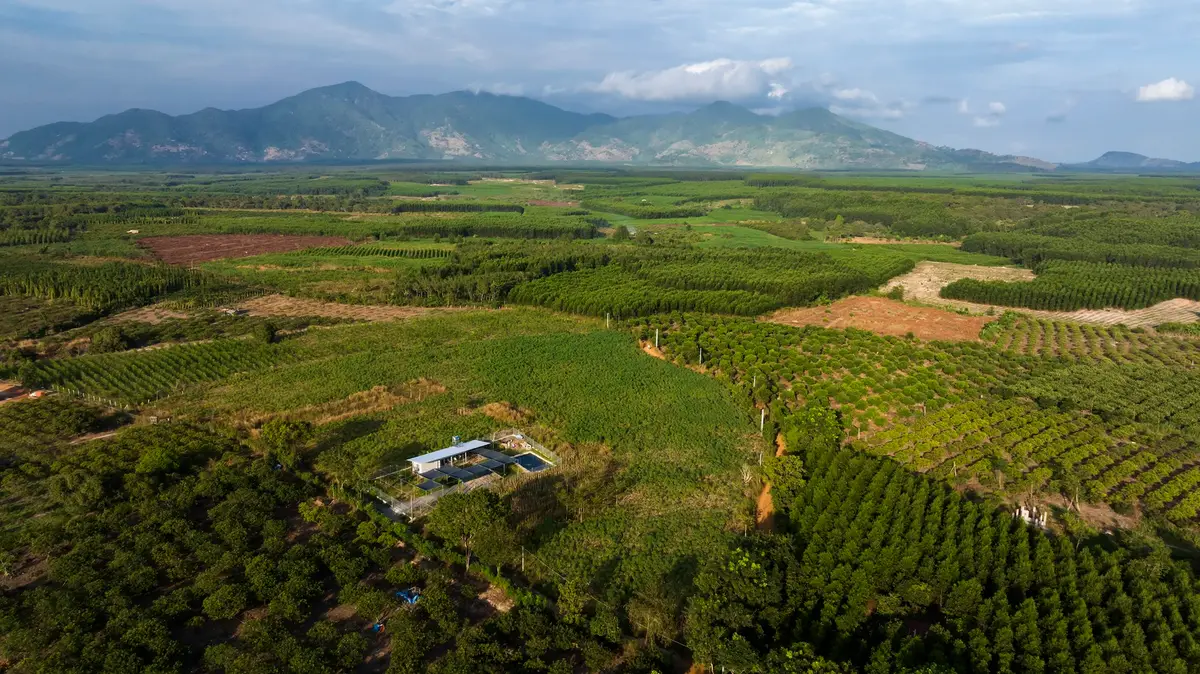
House in Ba Ria Vung Tau by studio anettai
Minimal suburban house in Vietnam uses local materials, steel roofs, and flexible boundaries to transform landscape into climate-responsive living space.


Architects: studio anettai
Located in the agricultural outskirts of Bà Rịa: Vũng Tàu, this modest yet radical residential project by studio anettai rethinks suburban living through restraint, ordinariness, and environmental generosity. Built on an expansive 1,000-square-meter plot in Hòa Hiệp, Vietnam, the house occupies only 62 square meters of enclosed space, demonstrating how minimal architecture can unlock maximum spatial potential.
Completed in 2023 with a remarkably limited construction budget of approximately 19,000 USD, the house responds directly to its context at the “outer fringe of suburbia,” a territory increasingly shaped by rapid urban expansion. Rather than resisting this condition, the project embraces it, drawing on locally available materials, construction techniques, and labor networks to form what the architects describe as a contemporary suburban industrial vernacular.
Learning from the Ordinary Landscape
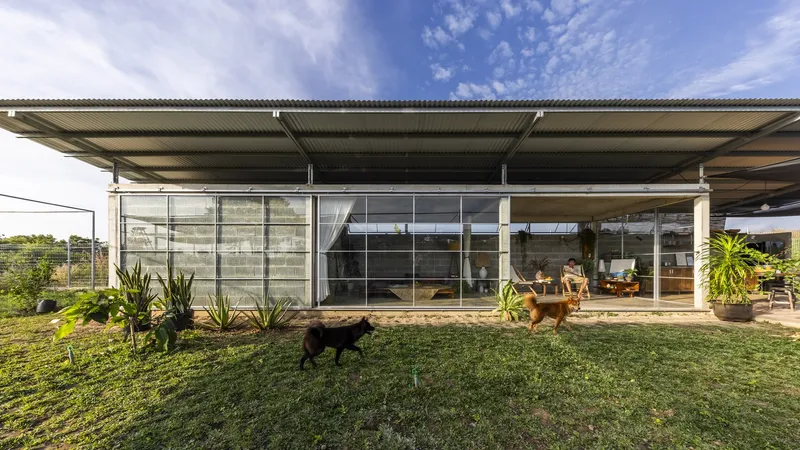
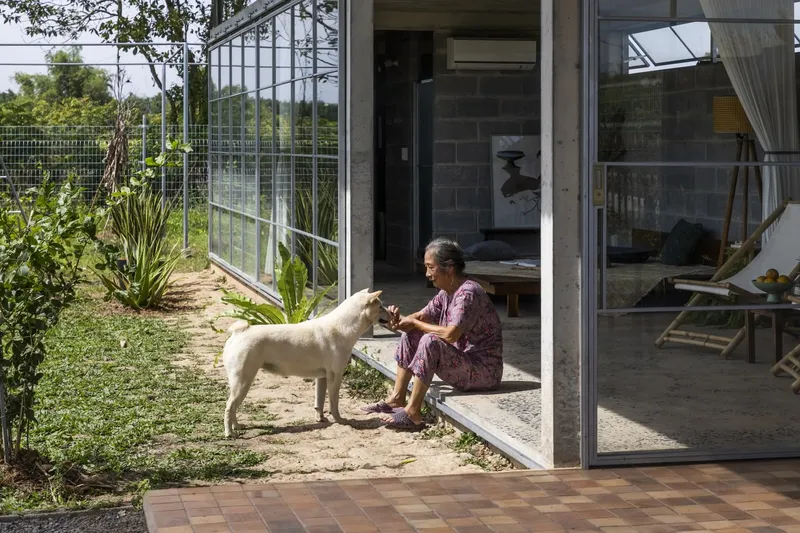
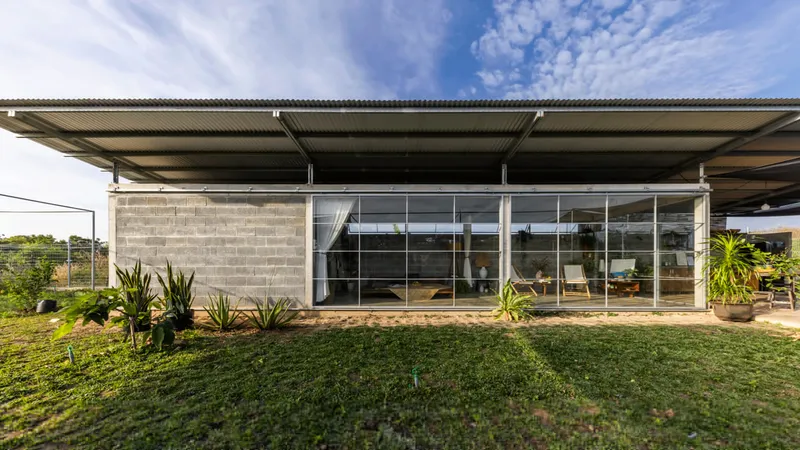
Surrounded by plantations and low-density developments, the project is informed by the everyday logic of neighboring suburban houses. These structures typically sit deep within large, affordable plots, defined by compact concrete volumes sheltered beneath oversized horizontal steel roofs. This familiar typology, shaped by necessity rather than aesthetics, became a critical reference point.
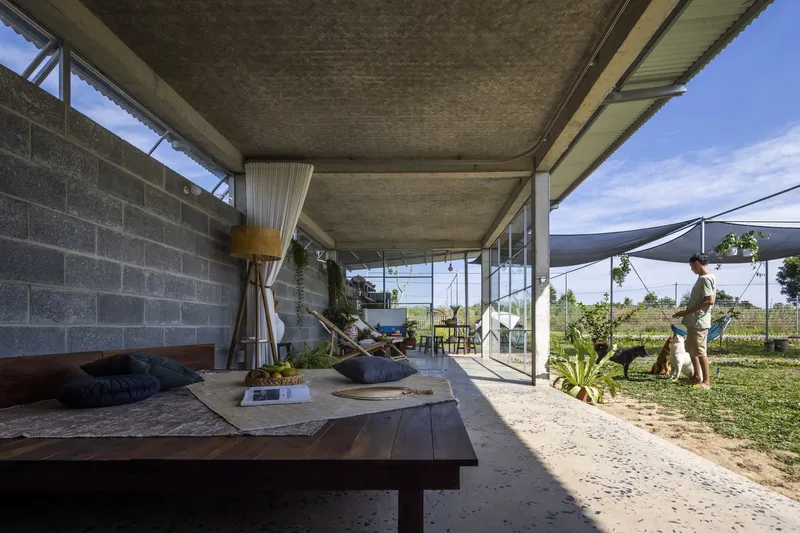
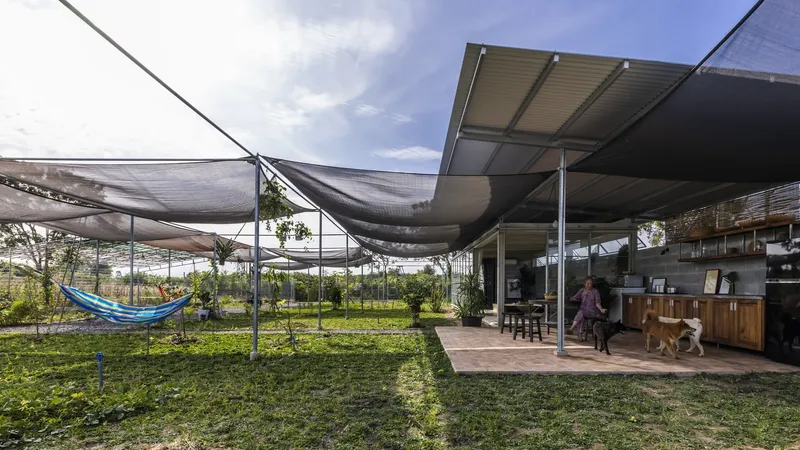
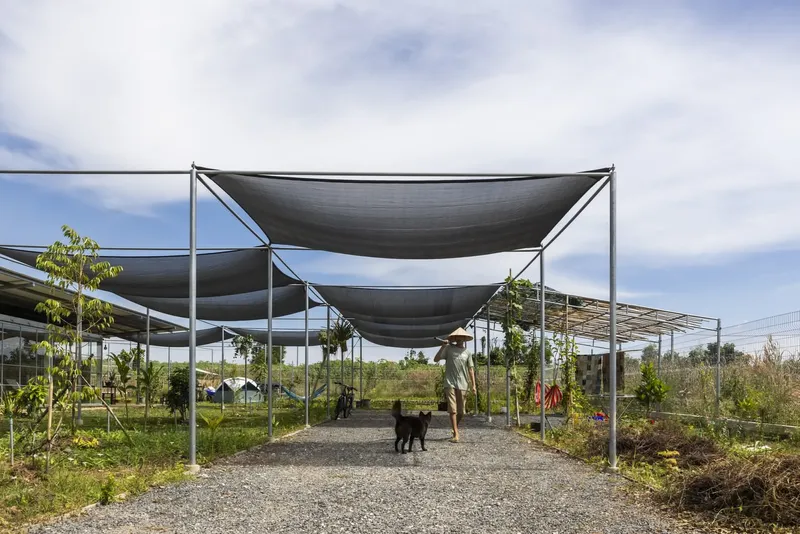
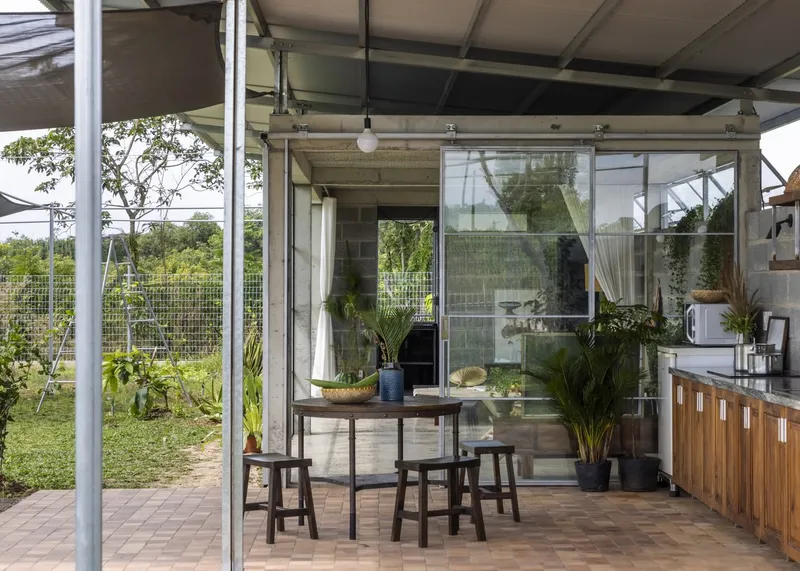
Studio anettai distilled these observations into a simple architectural strategy: combine ordinary materials in an intelligent way to produce a flexible, climate-responsive living environment. Concrete block walls and a minimal structural frame define the essential interior spaces, while a generous steel roof extends far beyond, casting deep shadows and creating expansive semi-outdoor zones.
A House That Is Mostly Landscape
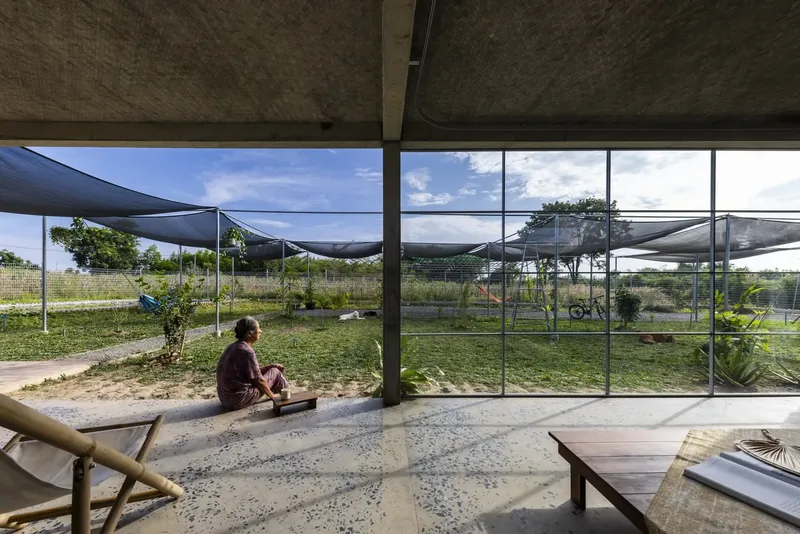
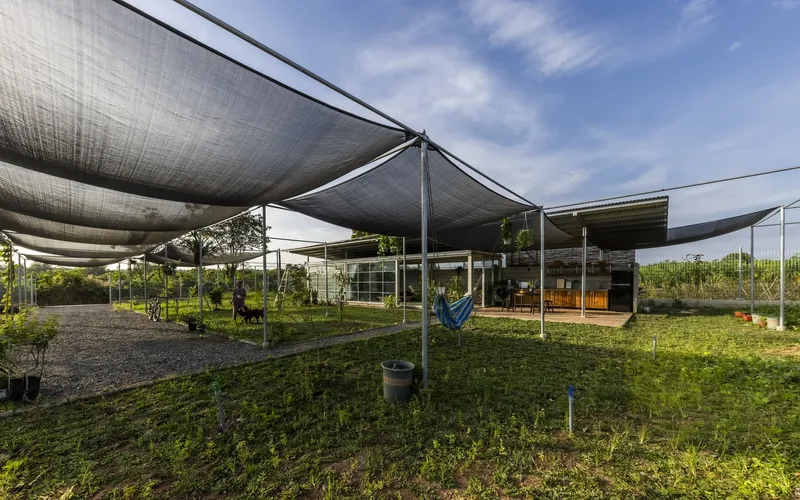
Instead of treating the remaining 95 percent of the site as leftover land, the architects envisioned the entire plot as part of the house. The result is what the client describes as “1,000 square meters of house, instead of 100 square meters and leftover.” Living unfolds across shaded outdoor kitchens, dining areas, resting spaces, and cultivated gardens that continuously evolve with seasonal changes.
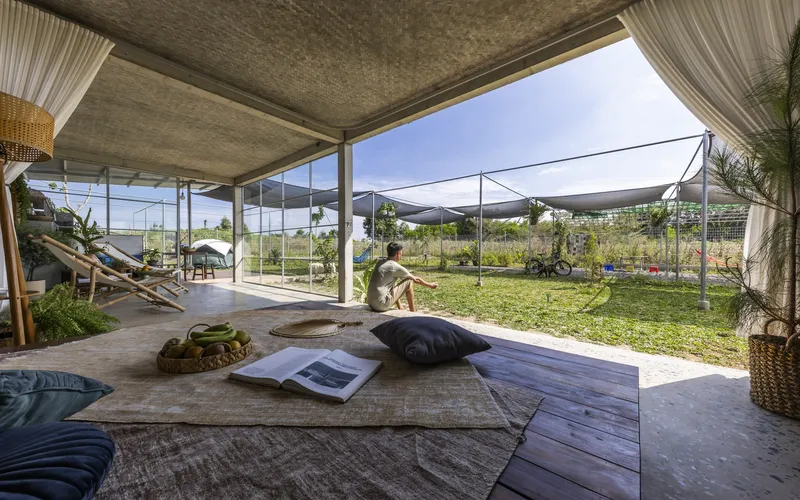
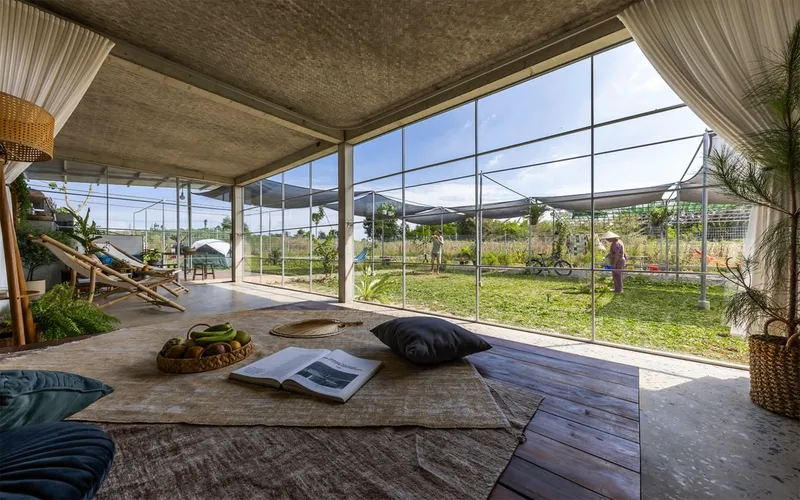
A double-roof system plays a crucial environmental role. The floating steel roof, separated from the concrete structure below, significantly reduces solar heat gain while encouraging natural ventilation between layers. This passive design approach mitigates the harsh tropical climate without relying on mechanical systems, reinforcing the project’s sustainable and low-cost ethos.
Flexible Structure and Weak Boundaries
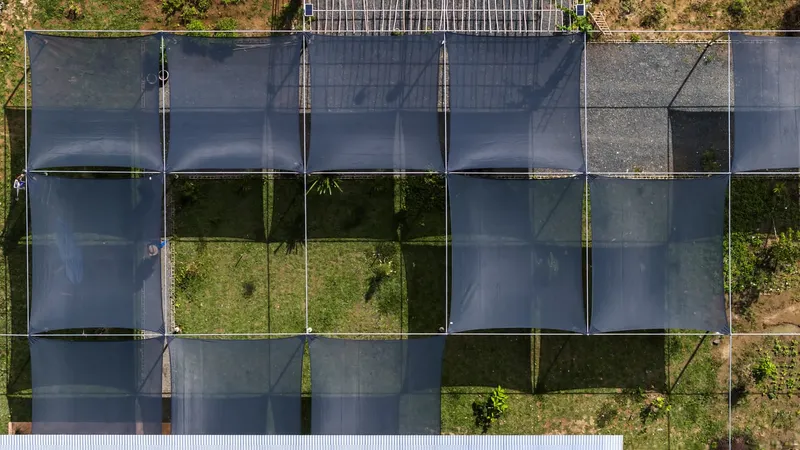
A modular structural grid based on concrete block dimensions extends across the entire site, supporting a forest of slender steel columns. These mass-produced steel pipes are embedded directly into deep concrete footings, eliminating the need for ground beams. Threaded connections at the top allow translucent tarps to be easily installed, removed, or repositioned by hand.
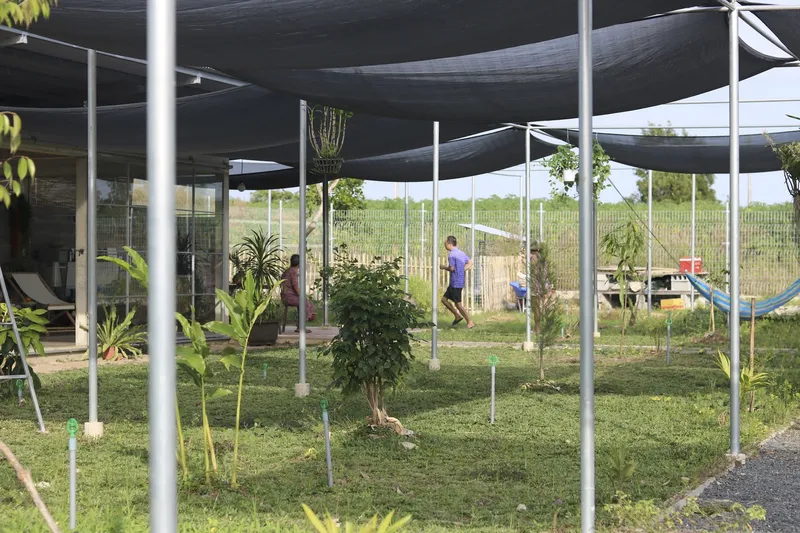
This adaptability enables residents to respond to shifting sun angles between dry and wet seasons, adjusting shade as needed. Over time, the structure becomes increasingly inhabited by greenery, bamboo louvers, hammocks, and edible plants, blurring the line between architecture and landscape.
In response to Vietnam’s hot and humid climate, the project rejects rigid enclosure in favor of layered, imperfect boundaries. Spatial definition is achieved not through solid walls alone, but through overlapping elements such as roofs, fabrics, shadows, vegetation, ground textures, and airflow. This resilient and open-ended approach challenges conventional notions of domestic comfort and enclosure.
Toward a Resilient Suburban Future
The House in Ba Ria Vung Tau proposes an alternative vision for suburban housing at the frontline of urbanization. By accepting imperfection, leveraging local resources, and prioritizing environmental responsiveness, the project offers a compelling model for sustainable, low-cost living in rapidly transforming landscapes. It demonstrates that architecture does not need to be large, expensive, or sealed to be generous, sometimes, it only needs to be thoughtfully ordinary.
All photographs are works of
Hiroyuki Oki


Popular Articles
Popular articles from the community


Hill & Cross Opera: Sculptural Opera House Architecture Shaped by Tallinn’s Landscape and Identity
Hill & Cross Opera reimagines opera house architecture in Tallinn through its sculptural hill, civic plaza, glass wave and a luminous cross.

Play: Fragments of Their World
Familiar architecture becomes modular playground design, creating safe spaces where displaced children can learn, connect, imagine and play.

Lunar Spiral: Space Architecture Shaped by the Mathematics of the Universe
Lunar Spiral reimagines space architecture through Fibonacci geometry, lunar regolith, levitating habitats, and self-sustaining Moon living.

Conexión: Biophilic Design Reimagines High-Rise Living in Hong Kong
Conexión reimagines high-rise living in Hong Kong through biophilic design, green facades, shared spaces, daylight, water and nature within.

Similar Reads
You might also enjoy these articles

FAMM Arquitectura Organizes Ten Villas Around Courtyards and Jungle in Nosara, Costa Rica
El Molino pairs two elongated volumes with deep overhangs and timber louvers to build a compact coastal community five minutes from the beach.
Oscar Niemeyer's Ibirapuera Park Pavilions Define São Paulo's Cultural Identity in Concrete and Curve
A constellation of modernist volumes set within São Paulo's most important urban park, conceived for the city's 400th anniversary in 1954.
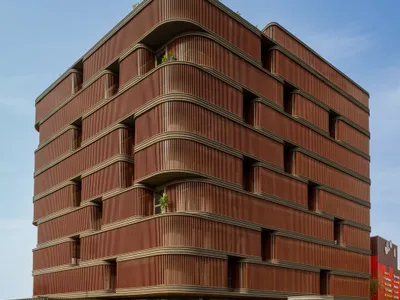
Sanjay Puri Architects Wraps a Jaipur Office Tower in Capsule-Shaped Green Buffers
A nine-level climate-responsive workplace near Jaipur Airport uses stacked planter terraces and aluminium screens to fight 40°C heat.
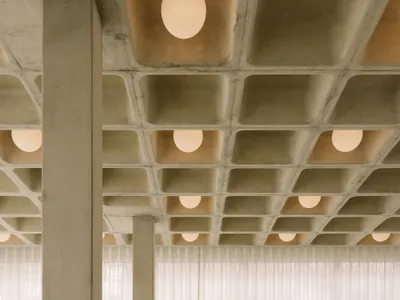
RHO Converts a Berlin Spree-Side Industrial Courtyard into Enkime's 1,000 m² Agency Headquarters
A social media agency's new home in Charlottenburg trades glossy branding for concrete waffle ceilings, glazed tile, and sheer curtains.

Explore Architecture Competitions
Discover active competitions in this discipline

Challenge to reimagine the Iron Throne

Photograph architecture without architects

Illustrate the lost glory of Angkor Wat - Render Challenge

Design challenge to reuse E-waste
Comments (0)
Please login or sign up to add comments
No comments yet. Be the first to comment!