

House in Rörum: A Contemporary Barn Reinterpreting Swedish Rural Architecture
Swedish barn-inspired home in Rörum featuring pitched zinc roof, sliding timber doors, multi-generational layout, orchard views, and Nordic minimalism.


The House in Rörum, designed by Fors Arkitekter, is a refined example of contemporary Scandinavian residential architecture rooted in landscape, heritage, and functionality. Completed in 2025, the 160-square-meter home is located in southern Sweden on a former apple orchard surrounded by traditional agricultural buildings.
Rather than imposing a modern object onto a rural site, the project carefully reinterprets the classic barn typology: bridging vernacular architecture and contemporary living through form, materiality, and spatial organization.

Rooted in Agricultural Heritage
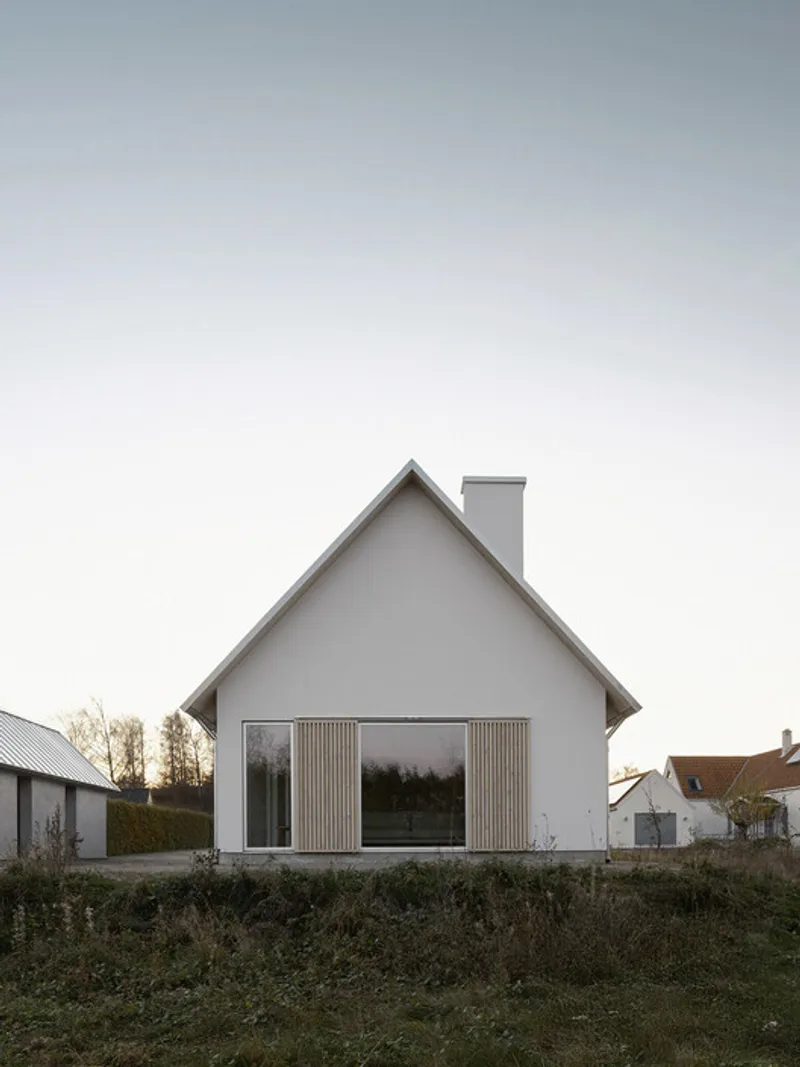
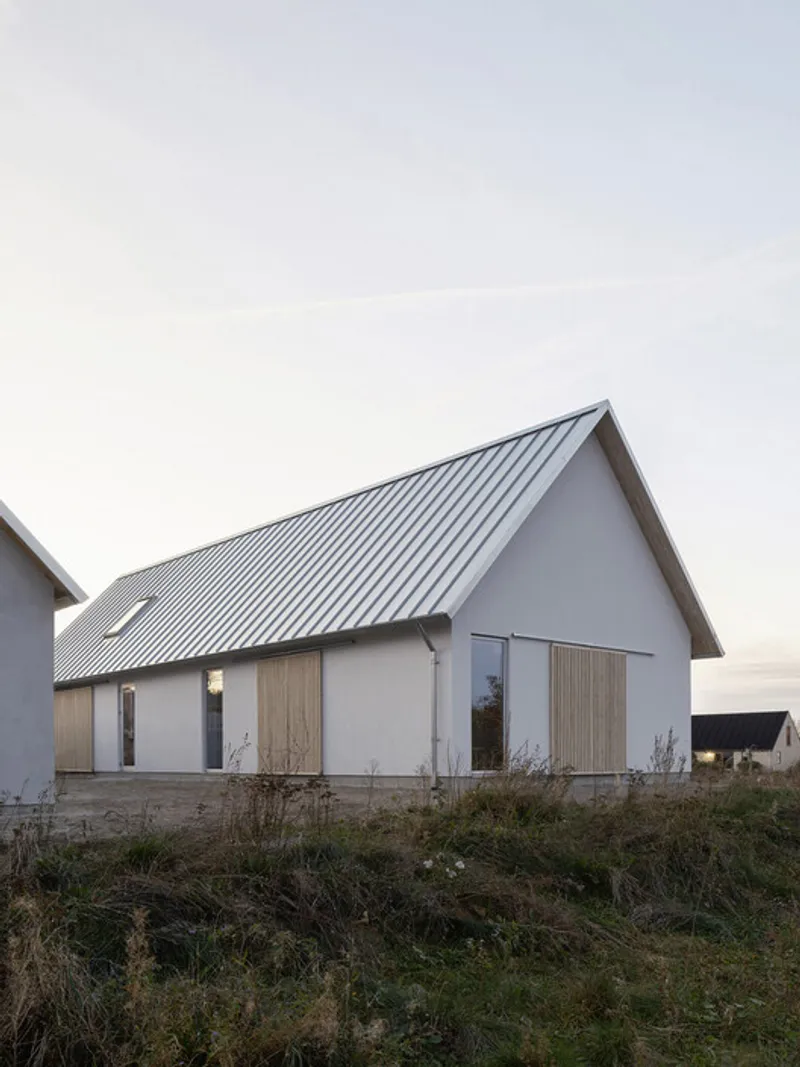
Set within a landscape defined by farm structures and open fields, the house draws inspiration from the region’s agricultural character. Its simple, legible volume and pitched zinc roof echo the logic of surrounding barns, reinforcing visual continuity within the rural setting.
White rendered façades reference traditional Scandinavian farmhouses, while timber detailing, particularly the sliding wooden doors, reimagines classic barn doors in a modern context. These movable wooden screens provide solar shading, privacy, and filtered daylight, allowing the façade to shift subtly throughout the day and across seasons.
The restrained material palette and balanced proportions ensure the home feels both contemporary and timeless.

Designed for Multi-Generational Living
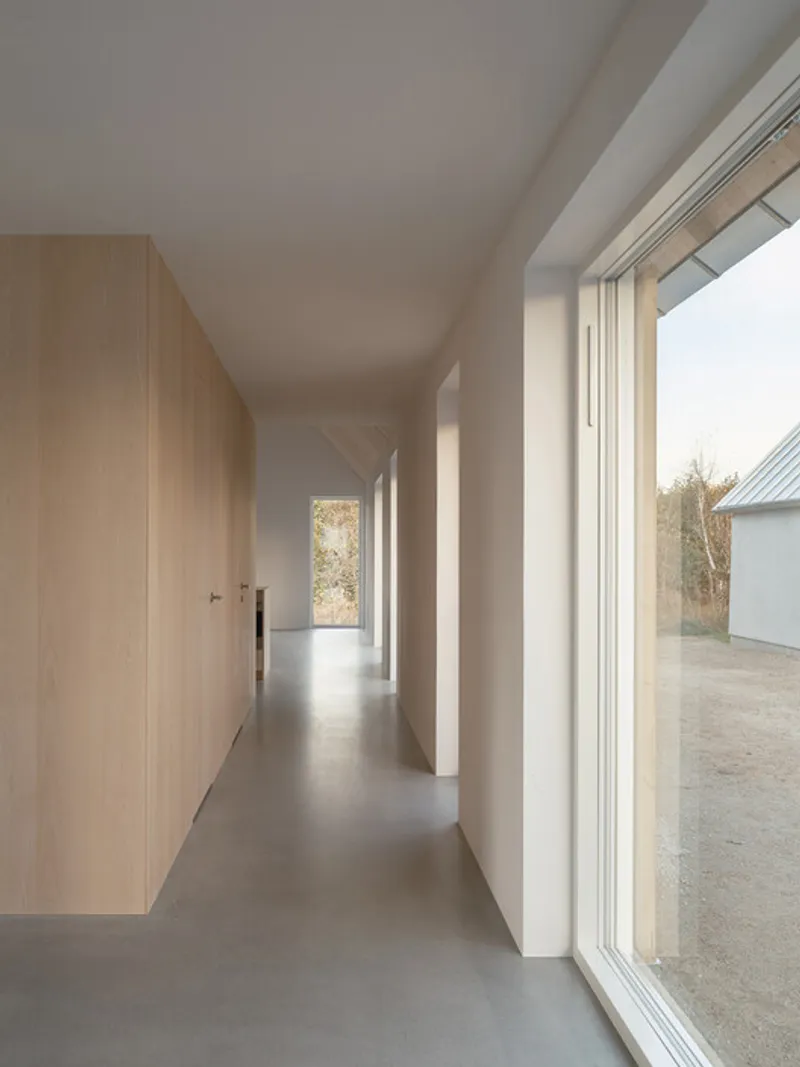
The House in Rörum is carefully organized to support multi-generational living, addressing evolving family dynamics and long-term flexibility. At its heart, a central functional core divides shared and private areas while establishing clear circulation throughout the home.
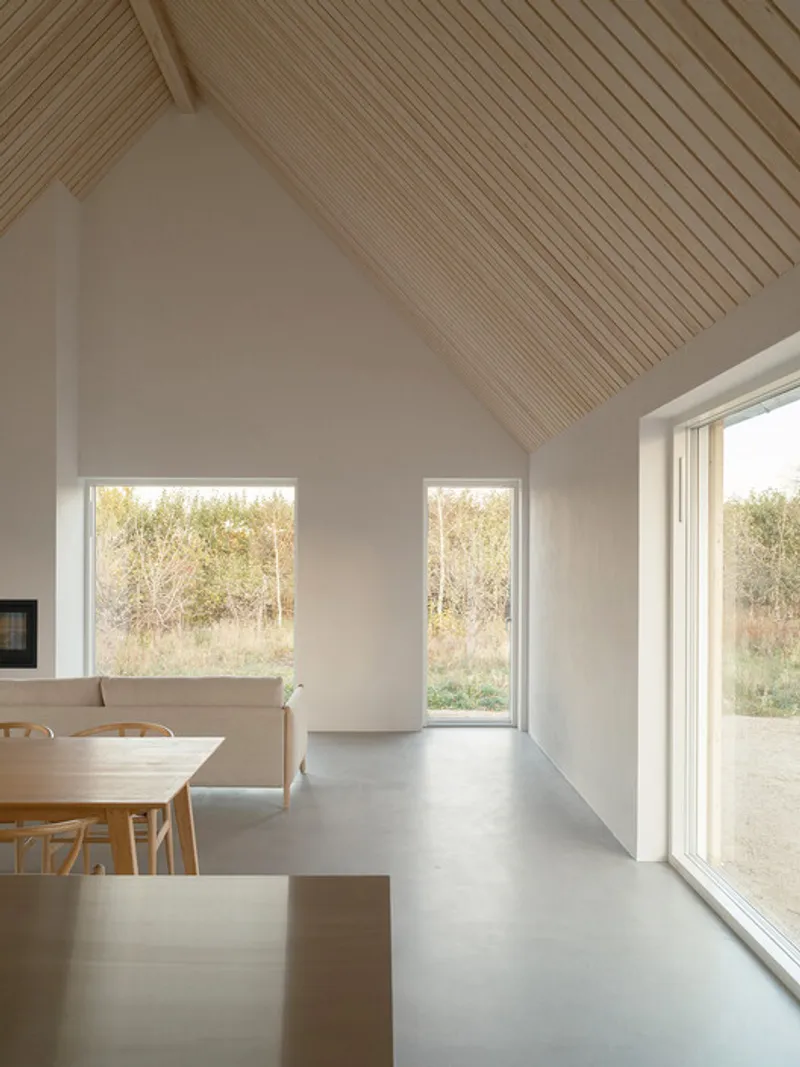
Movement along this core transitions from intimate, enclosed rooms toward expansive communal spaces. The spatial sequence culminates in a dramatic double-height living room, dining area, and kitchen, the social heart of the house.
This layout creates a natural gradient between privacy and openness, ensuring comfort for multiple generations under one roof.
Light, Landscape, and Spatial Connection
Full-height openings draw abundant daylight deep into the interior, strengthening visual and physical connections to the surrounding orchard. Large glazed sections frame views of fields and sky, reinforcing the relationship between indoor living and the rural environment.
Given the exposed countryside location, the design carefully balances transparency with protection. Sliding timber elements and deep roof overhangs moderate sunlight, shield against wind, and provide adaptable privacy without compromising openness.
The result is a climate-responsive Scandinavian house that embraces its landscape while maintaining robustness and durability.

Natural Materials and Interior Warmth
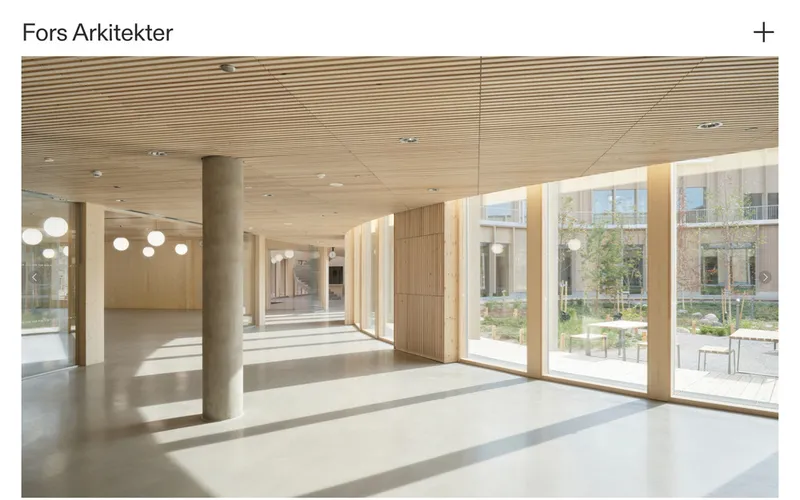
Inside, the architecture is defined by simplicity, tactility, and longevity. Concrete floors and white rendered walls form a neutral and durable foundation, reflecting Nordic minimalism.
Bespoke ash carpentry introduces warmth and craftsmanship, while a custom pine acoustic ceiling spans the communal spaces. This timber ceiling enhances sound comfort, reinforces spatial clarity, and supports flexible gatherings, whether intimate family dinners or larger social events.
The material strategy prioritizes sustainability, local building traditions, and long-term resilience, key principles in contemporary Swedish residential design.
A Modern Interpretation of Scandinavian Rural Living
The House in Rörum demonstrates how modern architecture can respectfully reinterpret vernacular forms without mimicry. Through barn-inspired massing, natural materials, multi-generational planning, and strong landscape integration, Fors Arkitekter creates a home that is both deeply contextual and forward-looking.
Anchored in its orchard setting and agricultural heritage, the project stands as a model for sustainable rural housing in Sweden: where tradition, adaptability, and contemporary design coexist harmoniously.


All the photographs are works of
Markus Linderoth




Popular Articles
Popular articles from the community


Conexión: Biophilic Design Reimagines High-Rise Living in Hong Kong
Conexión reimagines high-rise living in Hong Kong through biophilic design, green facades, shared spaces, daylight, water and nature within.

The Musturak Paradise: Senior Living Architecture for a Connected Future in Temara, Morocco
The Musturak Paradise reimagines senior living architecture in Temara via private homes, social spaces, culture, community, and shared care.
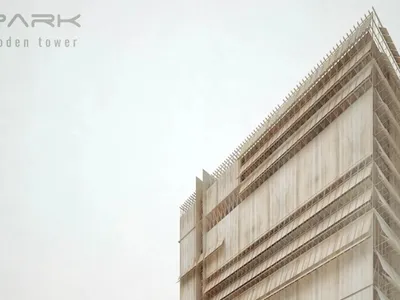
EW PARK: Sustainable Architecture Reimagines the Future of Urban Parking
EW PARK reimagines city parking as a modular wooden tower combining automation, solar energy, electric mobility, and adaptable urban design.

Hill & Cross Opera: Sculptural Opera House Architecture Shaped by Tallinn’s Landscape and Identity
Hill & Cross Opera reimagines opera house architecture in Tallinn through its sculptural hill, civic plaza, glass wave and a luminous cross.


Similar Reads
You might also enjoy these articles

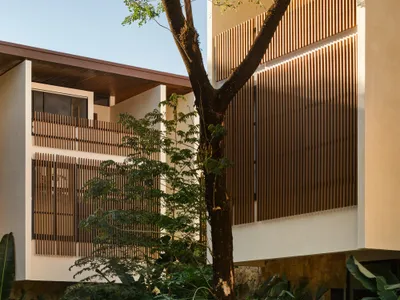
FAMM Arquitectura Organizes Ten Villas Around Courtyards and Jungle in Nosara, Costa Rica
El Molino pairs two elongated volumes with deep overhangs and timber louvers to build a compact coastal community five minutes from the beach.
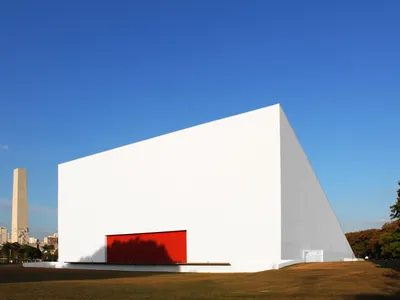
Oscar Niemeyer's Ibirapuera Park Pavilions Define São Paulo's Cultural Identity in Concrete and Curve
A constellation of modernist volumes set within São Paulo's most important urban park, conceived for the city's 400th anniversary in 1954.
How Henri Picq's 1889 Paris Pavilion Traveled 11,000 Kilometers to Become Santiago's Artequín Museum
A prefabricated iron and glass pavilion built for the Paris Universal Exposition found a second life as a children's art museum in Chile.
Sanjay Puri Architects Wraps a Jaipur Office Tower in Capsule-Shaped Green Buffers
A nine-level climate-responsive workplace near Jaipur Airport uses stacked planter terraces and aluminium screens to fight 40°C heat.

Explore Blocs Competitions
Discover active competitions in this discipline



Challenge to reimagine the Iron Throne


Photograph architecture without architects


Illustrate the lost glory of Angkor Wat - Render Challenge


Design challenge to reuse E-waste
Comments (0)
Please login or sign up to add comments
No comments yet. Be the first to comment!