
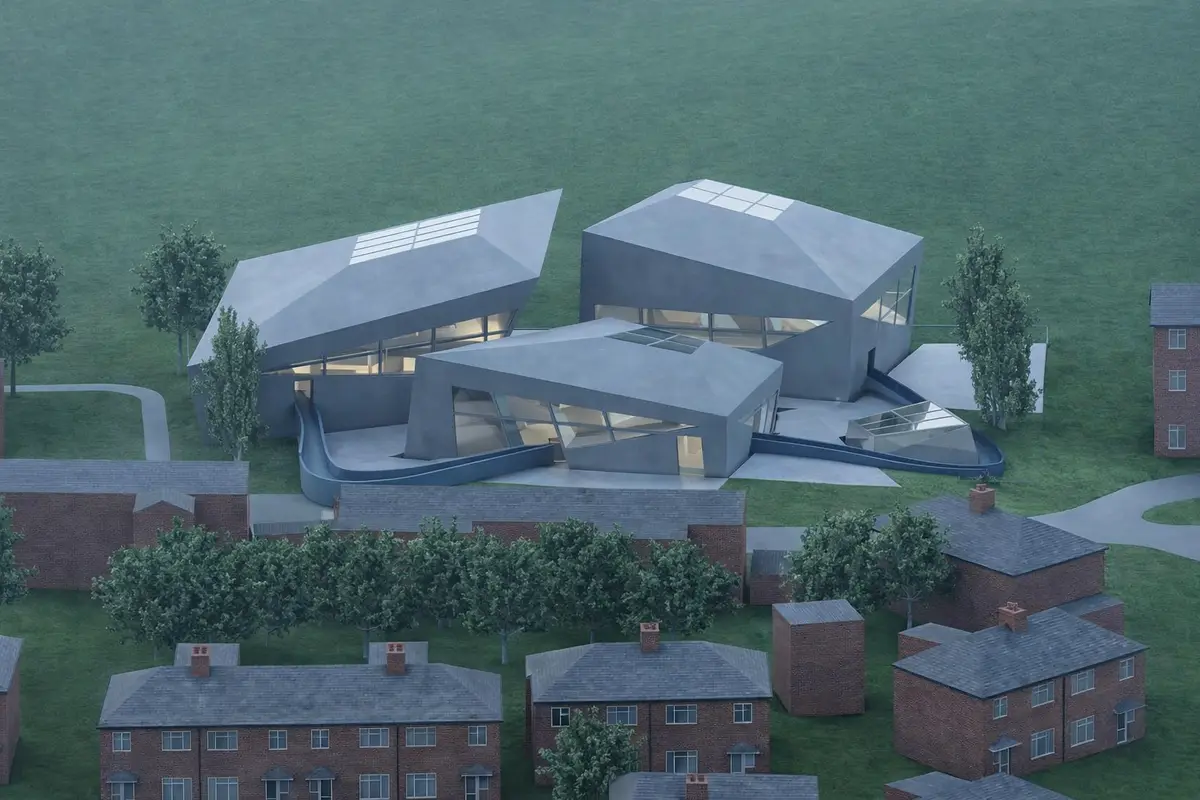
Filtering Space: A Gradual Spatial Experience
From urban intensity to spatial calm.

This project journal was developed collaboratively with Şevval Neva Durmuş, Nehir Reyhan Boyacı, and Zeynep Yıldırım.
The project began with an exploration of the physical and atmospheric qualities of the British landscape, particularly its iconic coastal rock formations. These formations are not only visually striking but also embody a gradual transformation shaped by natural forces such as wind, water, and time. Rather than presenting abrupt boundaries, they reveal a layered and filtered spatial condition. This observation became the conceptual starting point of the project.
Inspired by this natural process, the design adopts filtering as its primary spatial strategy. In contrast to the fast-paced, fragmented, and overstimulating nature of contemporary urban life, the project aims to reconstruct the relationship between body, mind, and nature. Instead of exposing the user to immediate and overwhelming spatial experiences, the design introduces a gradual immersion. Space is not given instantly; it unfolds progressively.
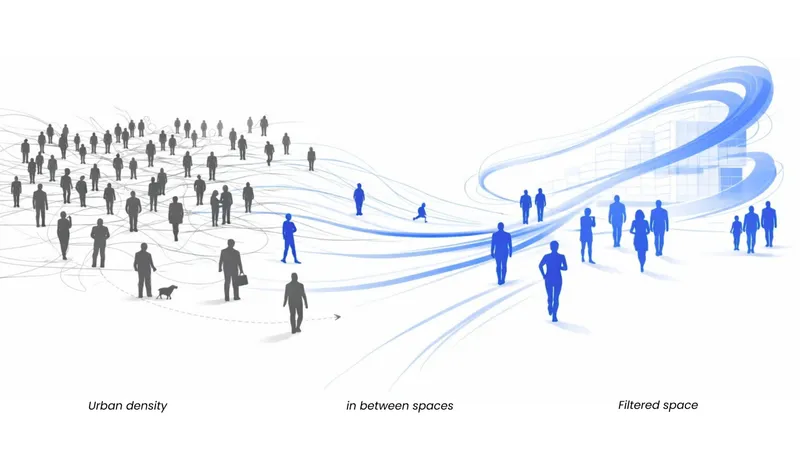
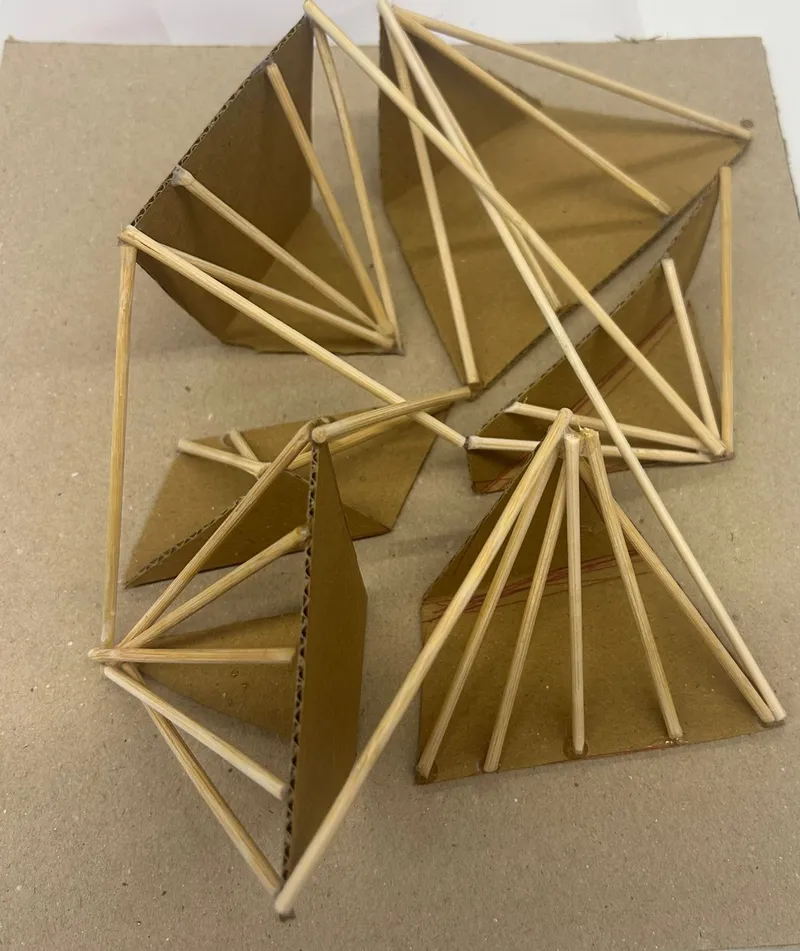
The initial phase of the design process involved extensive sketching and diagrammatic explorations. These sketches focused on translating the idea of filtering into spatial sequences—investigating how thresholds, transitions, and layered zones could be articulated architecturally. Rather than defining spaces as fixed entities, the design process explored how spaces could emerge through movement and perception.
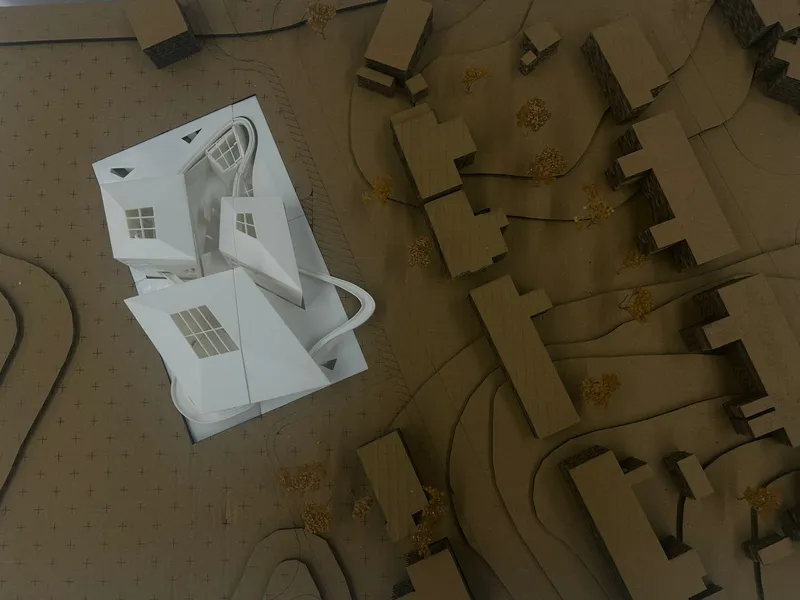
As the concept developed, the project evolved into a spatial system that guides the user through a series of interconnected experiences. Circulation plays a central role in this system. The ramp, as a continuous and directional element, becomes the primary tool that draws the user into the space. It does not simply connect different levels; it orchestrates the experience itself.
Through this movement, the user encounters spaces with varying degrees of intensity and openness. Transitions between units are not abrupt but carefully mediated. Each spatial layer acts as a filter—controlling light, sound, density, and interaction. This creates a gradient of experiences, ranging from more introspective and controlled environments to more open and collective ones.
The project therefore shifts the role of architecture from a static container to an active mediator. Space becomes a tool that structures experience, guides perception, and enables a continuous negotiation between the individual and the environment.
Ultimately, the design proposes an alternative way of inhabiting space—one that resists fragmentation and instead emphasizes continuity, gradual transformation, and experiential depth.


Popular Articles
Popular articles from the community


Cube Design Draws an Ecological Corridor Between Two Shenzhen Hills with the Nankai Building
Beside Shenzhen's container docks, the Nankai Building pairs stacked balconies with a climbing green screen to connect two hillsides across its height.

FCC Arquitectura Expands a Portuguese Granite House with a Board-Marked Concrete Wing
In Portugal, JV House pairs a cleaned-up whitewashed and granite dwelling with a timber-shuttered concrete extension, courtyards and a garden pool.

ETEH Reworks the Shared Spaces of São Domingos School in Brazil Around Timber, Color and Hanging Plants
At São Domingos School in Brazil, 436 m² of hall, refectory and library are recast with timber joinery, a yellow and blue code and trailing greenery.


Aquadapt: An Underwater Habitat That Rewrites Its Rooms by the Hour
Curved modules ring the seabed while one shell shifts from breakfast room to cinema, farm and football pitch as residents' needs change.

Similar Reads
You might also enjoy these articles

Vereda Arquitetos Renovates a 40-Square-Meter Apartment Inside Niemeyer's Copan Building
A compact unit in São Paulo's most iconic residential tower gets a material overhaul that pairs exposed concrete with bold blue Formica.

Shakur's House: Exposed Brick as an Interior Organiser in a 168 m² Mashhad Residence
Brick moves indoors in this Mashhad residence, where masonry walls, glass partitions and teal planes sequence a compact home without closing it off.

Day and Night Park: A Time-Based Urban Newsstand in Beijing
A temporary urban newsstand in Beijing blending travel, light, and reading through poetic colors, compact form, and community-focused design.

Modernist Patio Renovation in El Masnou, Barcelona by Oliver Segura Arquitectura + Cebrià Arquitectura
Modernist patio renovation blending tradition and innovation with a movable pool, leveled floors, and Catalan materials in El Masnou.

Comments (0)
Please login or sign up to add comments
No comments yet. Be the first to comment!