
Longbranch Residence: A Forest-Integrated Contemporary Home in Key Center, Washington
Forest-integrated Washington residence blending concrete, cedar, and meadow roof to restore landscape continuity and celebrate sustainable contemporary living.


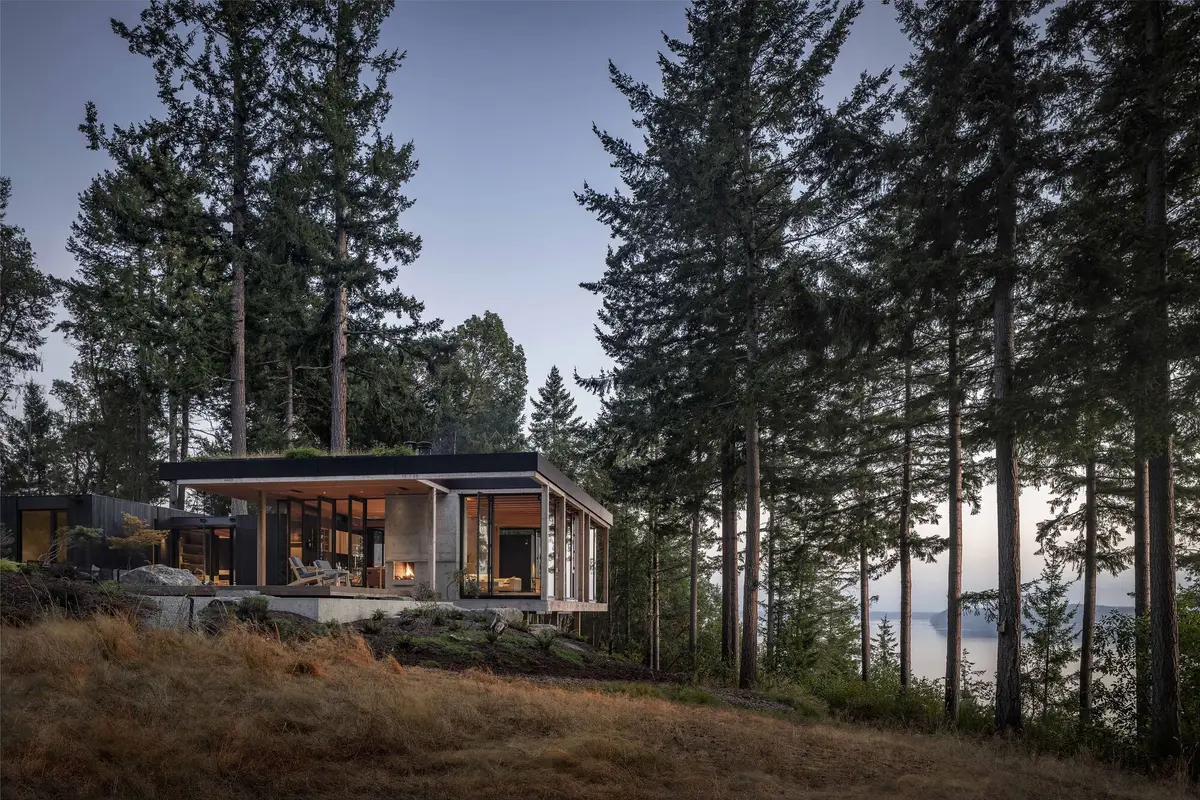
The Longbranch Residence, designed by mwworks, is a carefully articulated response to a once-fragmented landscape on Washington’s Key Peninsula. Over decades, the rural property had been altered significantly: its forest partially cleared, slopes interrupted by retaining walls, and its natural terrain restrained by engineered interventions. An aging suburban structure occupied the promontory, disconnected from both the land and its ecological rhythms.


The new residence replaces that condition with a regenerative architectural strategy, one that restores continuity between forest and meadow while introducing a contemporary home deeply rooted in place. The clients, having developed a 35-year relationship with the peninsula through visits to a nearby beach cabin, sought a permanent residence that could host family gatherings, foster dogs, horses, and friends. The result is a 3,900-square-foot dwelling that balances privacy, hospitality, and environmental stewardship.

Architecture Designed to Recede into the Landscape
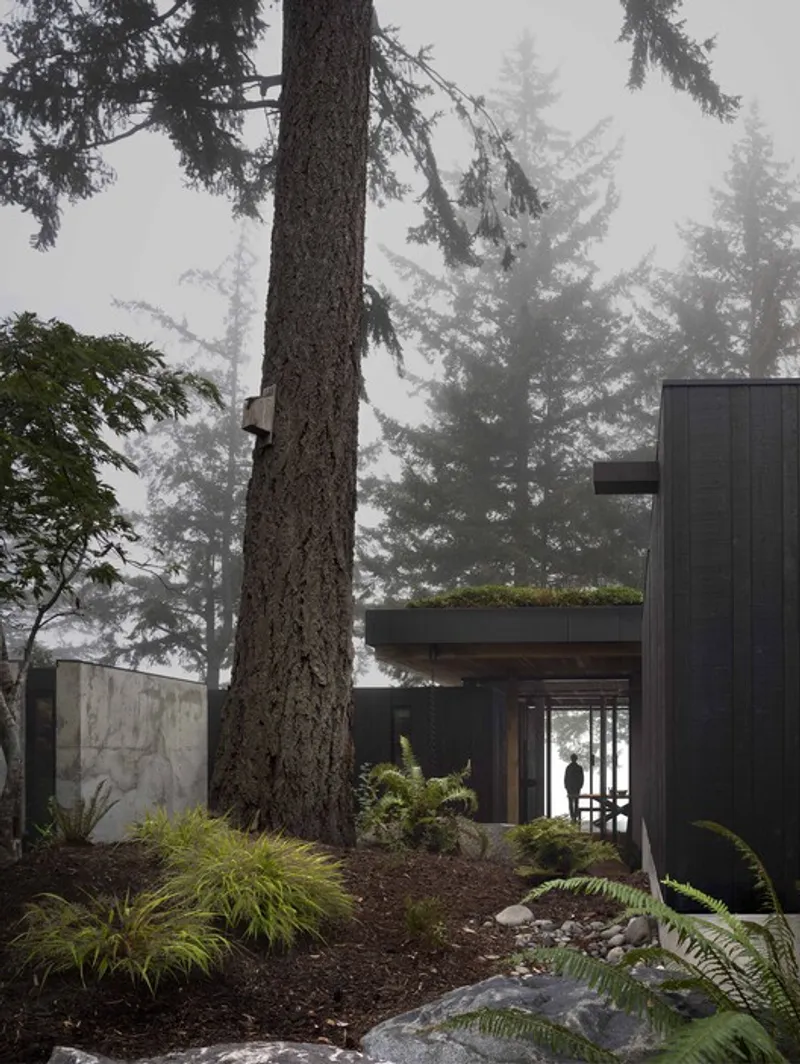
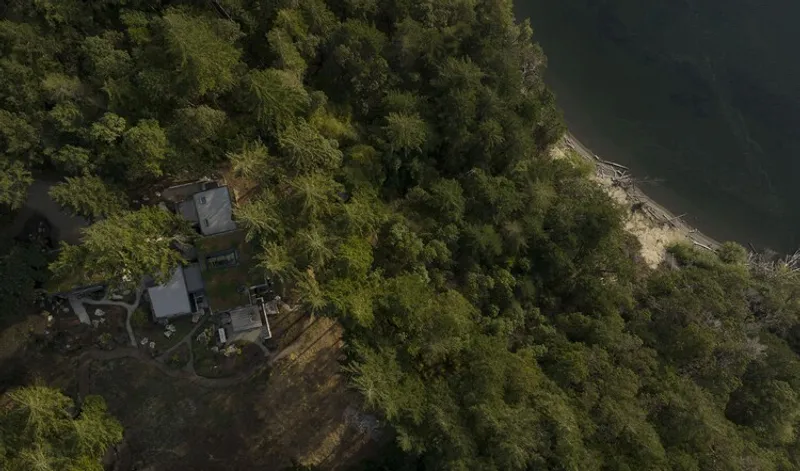
Rather than asserting itself prominently, Longbranch Residence is intentionally subdued. From the country road, a gravel driveway gently approaches the property, first encountering a modest barn structure. The house itself remains largely concealed. Only as the terrain falls away does a subtle glimpse of the structure appear.
The planted roof plays a critical role in this quiet integration. Functioning as an extension of the meadow, the living roof merges architecture with topography. Native grasses have already begun to support microhabitats, frogs and birds inhabiting what appears less as a roof and more as reclaimed ground.
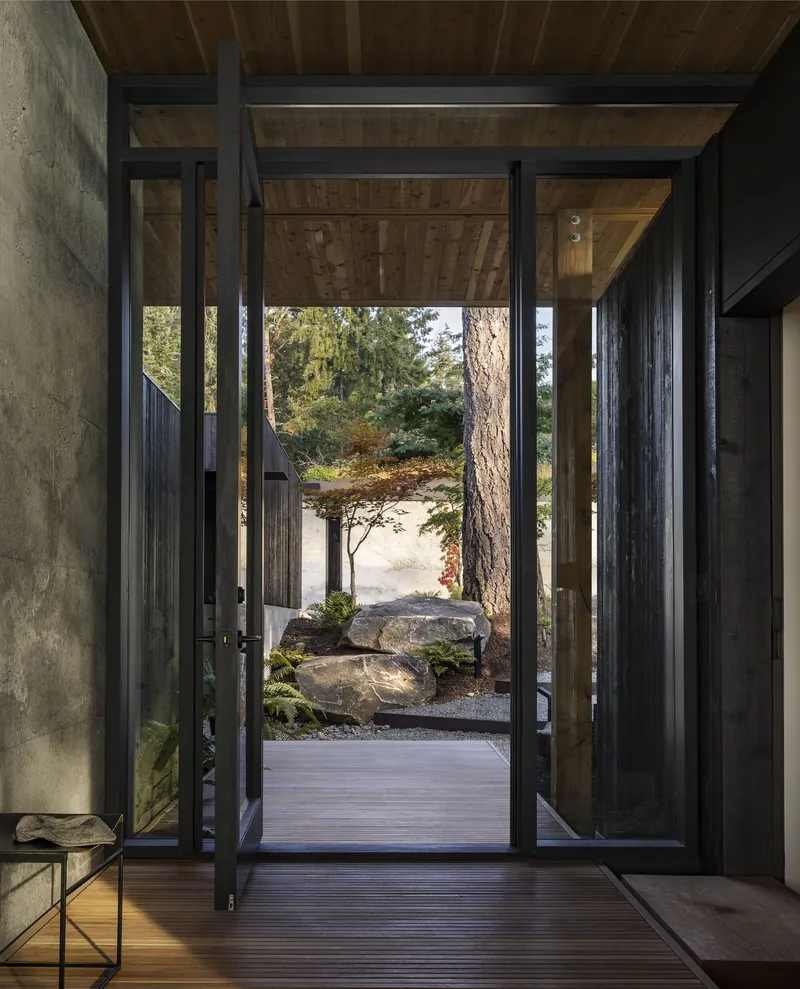

Towering fir trees frame the approach, acting as natural columns at the threshold. Structural pin piles and grade beams are strategically positioned above sensitive root systems, allowing the forest to remain undisturbed. A bridging element extends toward the entrance, spanning an ambiguous zone where nature and architecture converge. These transitions blur distinctions between built form and terrain, reinforcing continuity rather than contrast.

Spatial Transparency and Framed Views
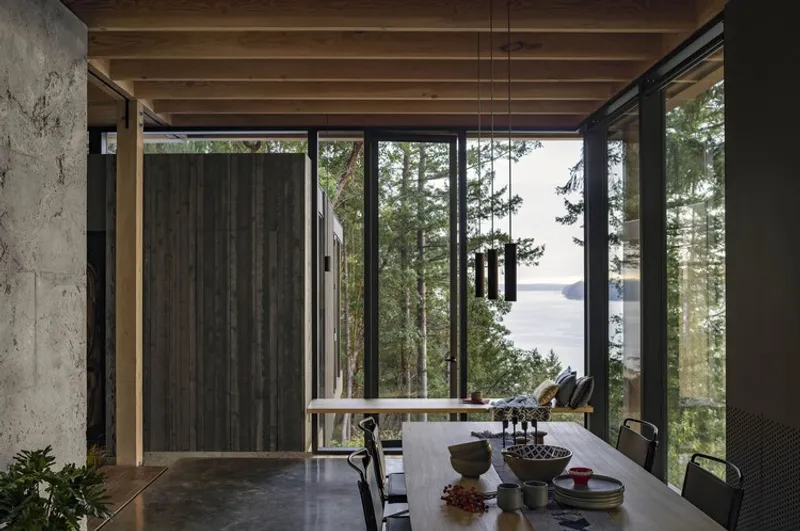
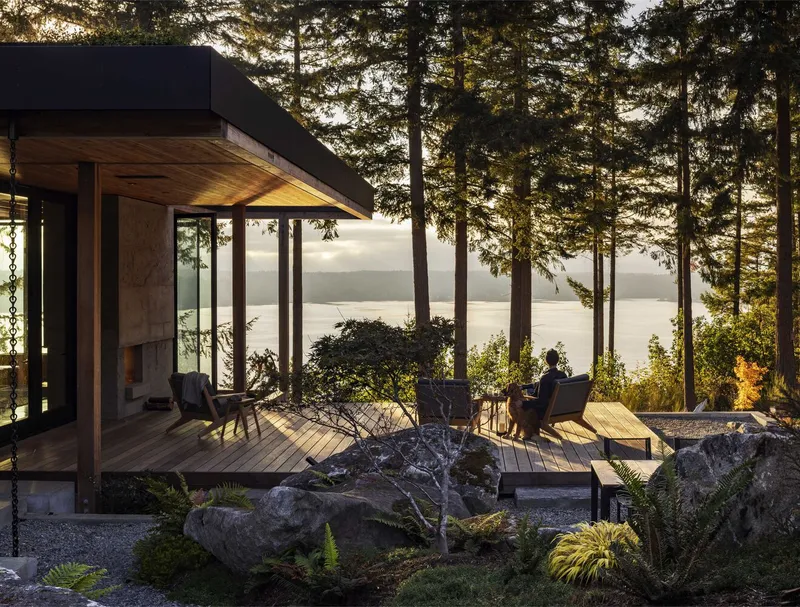
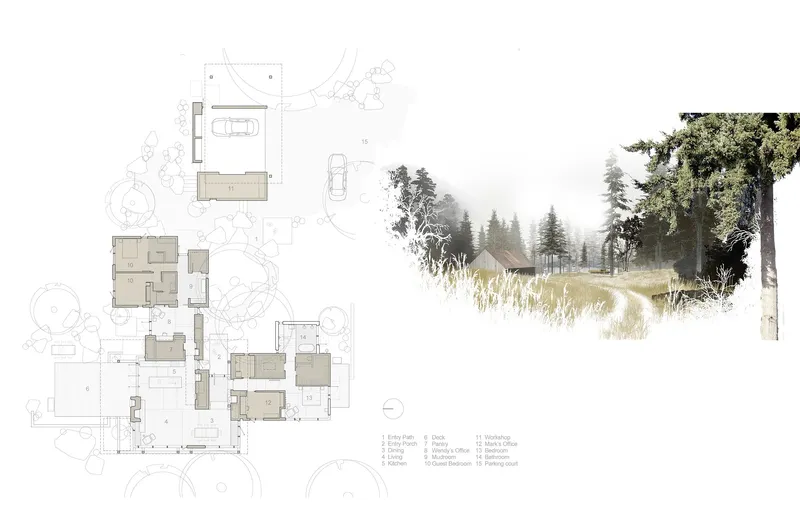
The spatial organization emphasizes visual permeability. Upon opening the front door, one immediately experiences a framed vista extending through the home toward the promontory and the waters of Case Inlet below. The architecture reveals its structure honestly while simultaneously directing attention outward.

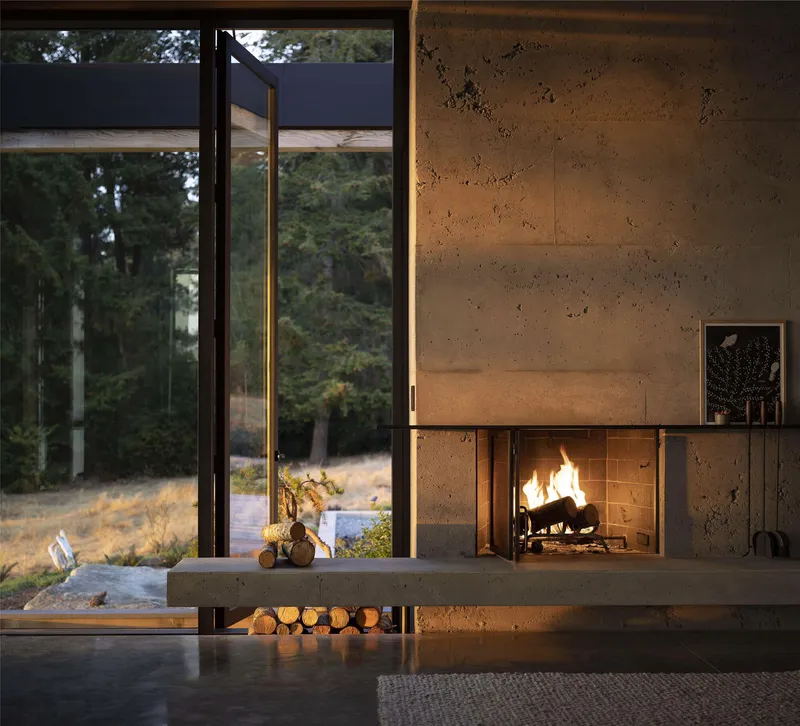
Each interior space establishes a unique relationship with the landscape. Some rooms create intimate encounters with tree canopies and filtered light; others open expansively to distant water views. This interplay between compression and release mirrors the forest’s own rhythm, dense groves punctuated by clearings.
Material Expression and Structural Clarity
Materiality at Longbranch Residence reinforces its environmental sensitivity and tectonic clarity.
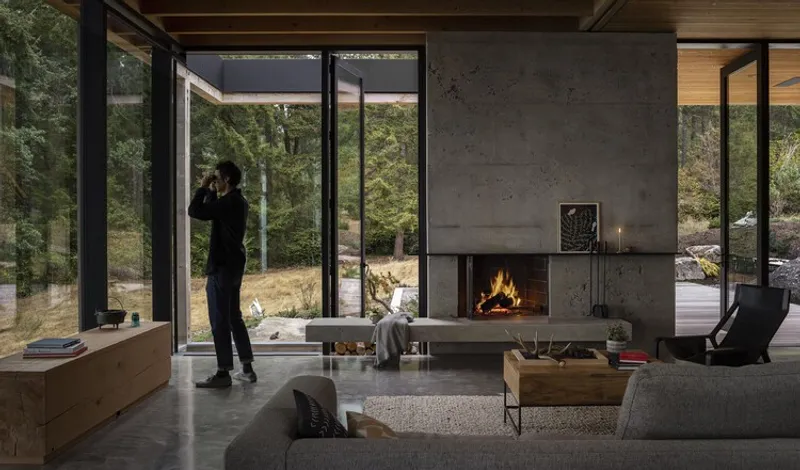
- Cast-in-place concrete volumes form primary structural masses. The loose mix composition expresses the fluid nature of concrete, contrasting with exposed aggregate textures that echo the rugged terrain.
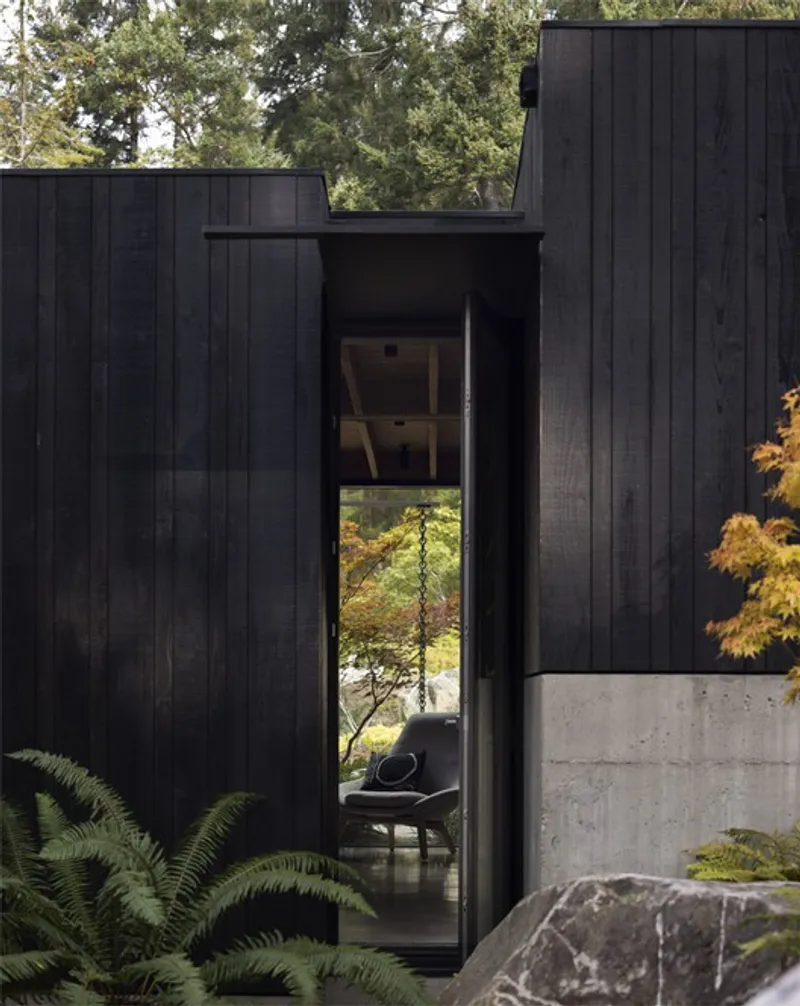
- Dark-stained cedar cladding envelops private program areas, allowing the building to visually recede into the wooded backdrop.
- Locally sourced Douglas Fir beams define a timber-frame pavilion that floats between the heavier concrete masses, creating warmth and structural legibility.
- Delicate glazing systems are held slightly apart from the timber frame, minimizing enclosure and emphasizing assembly articulation.


The building’s language of solids and voids, columns and clearings, parallels the surrounding forest structure. Architecture becomes an extension of ecological form rather than an imposed object.
Reintegrating Forest and Meadow
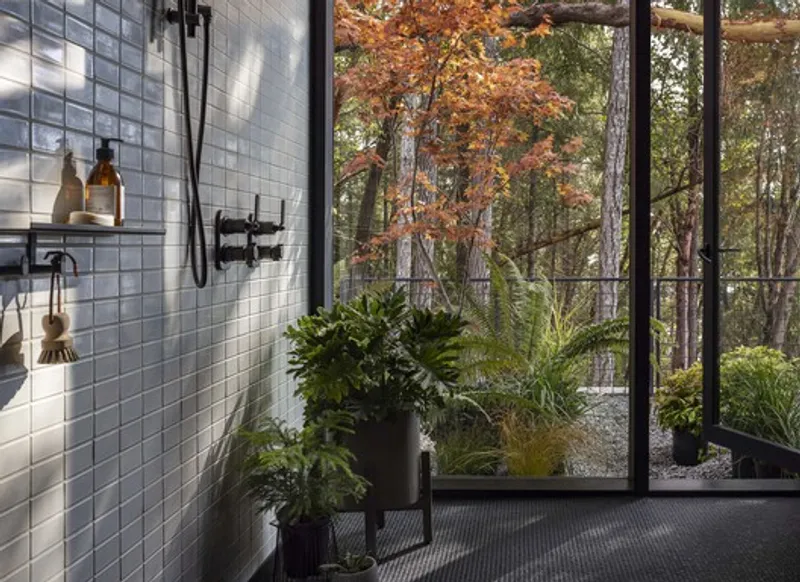
Perhaps the project’s most compelling achievement lies in its ecological reintegration. Where retaining walls once severed the slope and fragmented the land, forest and meadow now coexist in restored continuity. The residence participates in shaping the terrain gently, like stones settled within a streambed, without overpowering it.
Longbranch Residence embodies serenity through craft, authenticity, and respect for place. Its timelessness arises not from stylistic gestures but from a deep alignment between material, structure, and landscape.
In doing so, mwworks demonstrates how contemporary residential architecture in the Pacific Northwest can be environmentally responsive, structurally expressive, and experientially profound.
All the Photographs are works of Andrew Pogue


Popular Articles
Popular articles from the community


Singing Woman: An Opera House That Performs Before the Curtain Rises
Ovidiu Cristian Pavel's conceptual opera house translates Estonia's choral identity into a sculpted waterfront landmark facing the Baltic Sea.

The Amber Palace Opera: A Geological Fiction Surfaces on Tallinn's Baltic Waterfront
Pierre Brillard reimagines a Baltic legend as a public landscape, opera house, and waterfront promenade rooted in Tallinn's coastal identity.
Extended Shell: Retrofitting Kolkata's Balconies as Living Urban Thresholds
A modular retrofit system recovers the social and environmental intelligence of Kolkata's historic verandas for contemporary Park Street residents.
Tsunami Convergenics: Turning Catastrophic Ocean Forces into Underwater Housing Infrastructure
A speculative underwater settlement off the coast of Onagawa, Japan, treats tsunamis and typhoons as energy sources rather than threats.

Similar Reads
You might also enjoy these articles


Hodi-Mandai Geram
Project Function: Preservation and revitalization of the Intangible heritage and socio-spatial identity of the Hodi by Housing, Cultural Memory Center, Sacred Grove, landscape, local tourism economy


Olio Towers: A Mid-Rise for Performers That Fuses Housing, Rehearsal, and Stage
Located blocks from Houston's Theater District, this modular tower stacks living units around a central performance atrium.

Oasis: Modular Green Housing Carved into Dhaka's Urban Fabric
A shortlisted Plugin Housing entry reclaims unauthorized settlements in Dhaka with stepped concrete volumes, green roofs, and ventilation-driven design.

Black Hole: A Floating Megastructure for the Post-Physical Era
Emiliano Mazzarotto envisions a spherical, self-scaling arena where e-sports, digital hotels, and holographic stadiums replace traditional public space.

Explore Landscape Revival Competitions
Discover active competitions in this discipline

Challenge to reimagine the Iron Throne

Photograph architecture without architects

Illustrate the lost glory of Angkor Wat - Render Challenge

Design challenge to reuse E-waste
Comments (0)
Please login or sign up to add comments
No comments yet. Be the first to comment!