
Not All Architecture Grounds a Timber Retreat in Victoria's Coastal Bushland
Ironbark House stretches low beneath eucalyptus canopy, threading a quiet domestic life between courtyard, deck, and landscape.

There is a particular restraint required to build in Australian bushland without turning the house into a spectacle of itself. Not All Architecture, the practice led by Phoebe Clarke, Timothy Stelzer, and Claudio Torres, seems to understand this instinctively. Their Ironbark House in coastal Victoria does not announce itself. It settles. At 240 square meters, it occupies a narrow band between native grasses and a canopy of eucalyptus, reading less as an object in the landscape than as a thickened edge of it.
What makes the project worth studying is its insistence on linearity as an organizational and experiential strategy. The house is essentially a long, low bar, its volumes flanking a central living core, with clerestory windows pulling light deep into the plan without opening the walls wholesale to the bush. This is not a glass pavilion. It is a timber-clad enclosure that negotiates carefully between shelter and exposure, toggling between intimate corridor views and wide, generous moments where the landscape floods in.
A Facade That Belongs to the Ground
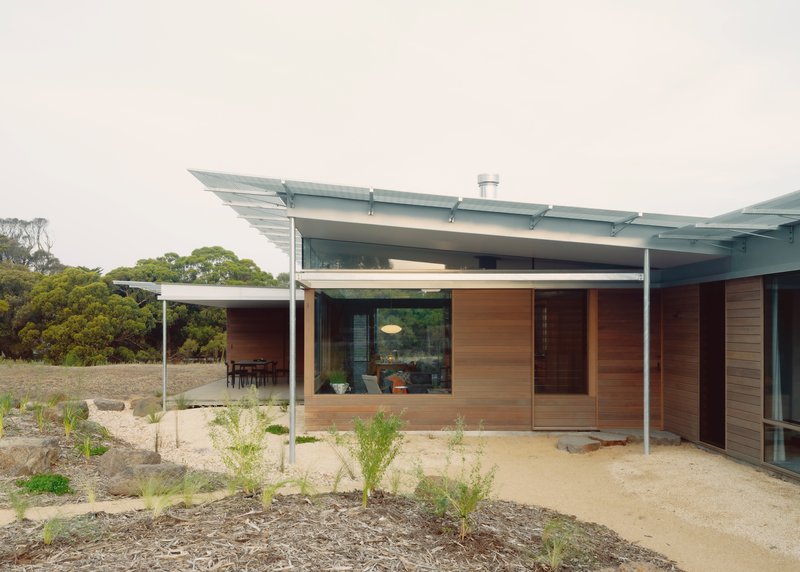
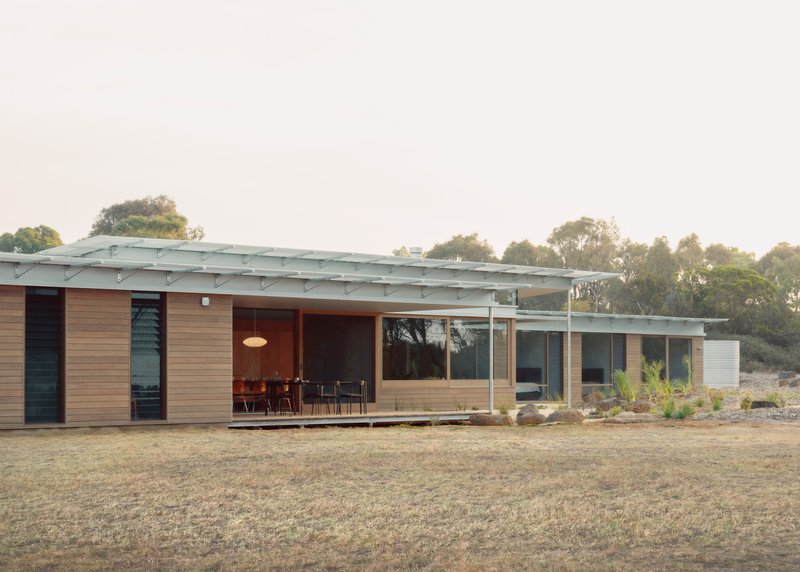
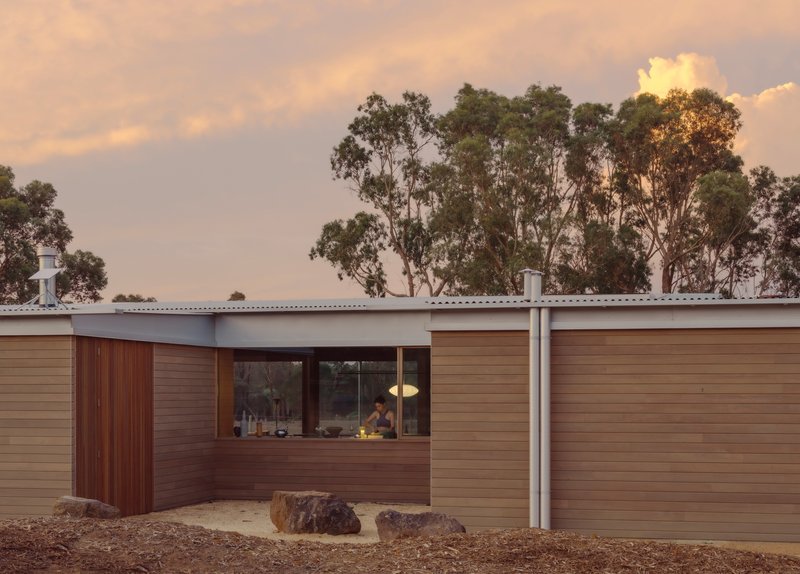
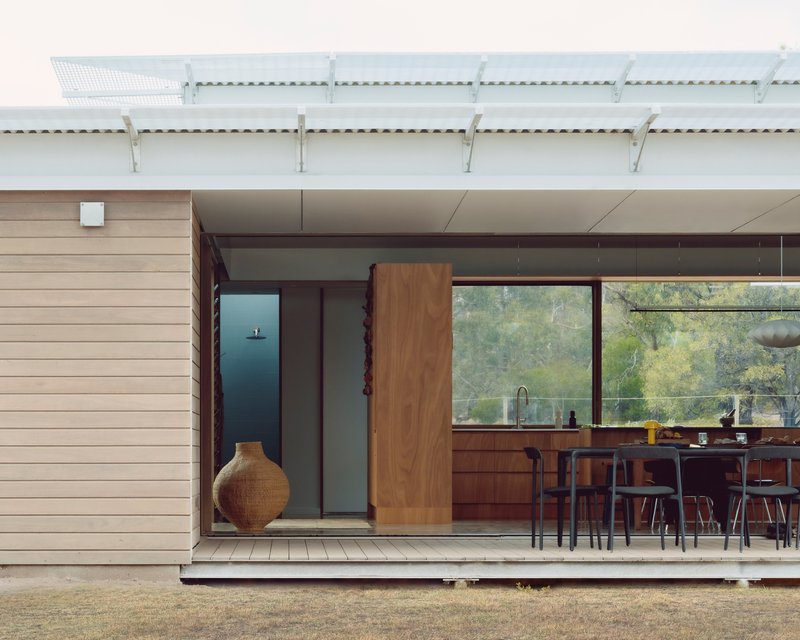
The horizontal timber cladding wraps the house in a continuous grain that echoes the layered bark of the ironbarks around it. There is no material gymnastics here: pale boards, a low-pitched metal roof, slender steel framing at the porch. The building's proportions are deliberately suppressed, hugging the terrain so the roofline never breaks the tree canopy. At dusk, the volumes recede further, their silhouettes flattening into the darkening scrub.
The covered porch and steel-framed entry create a threshold that is generous without being grandiose. You arrive under shelter, beside gravel beds planted with native species that will, in a few seasons, blur the distinction between garden and bush entirely. It is the kind of facade that rewards patience.
Courtyards and Thresholds
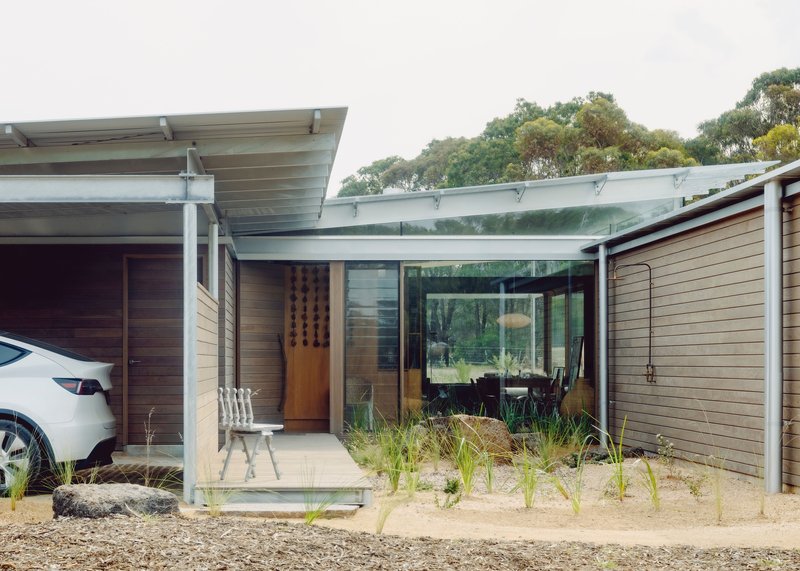
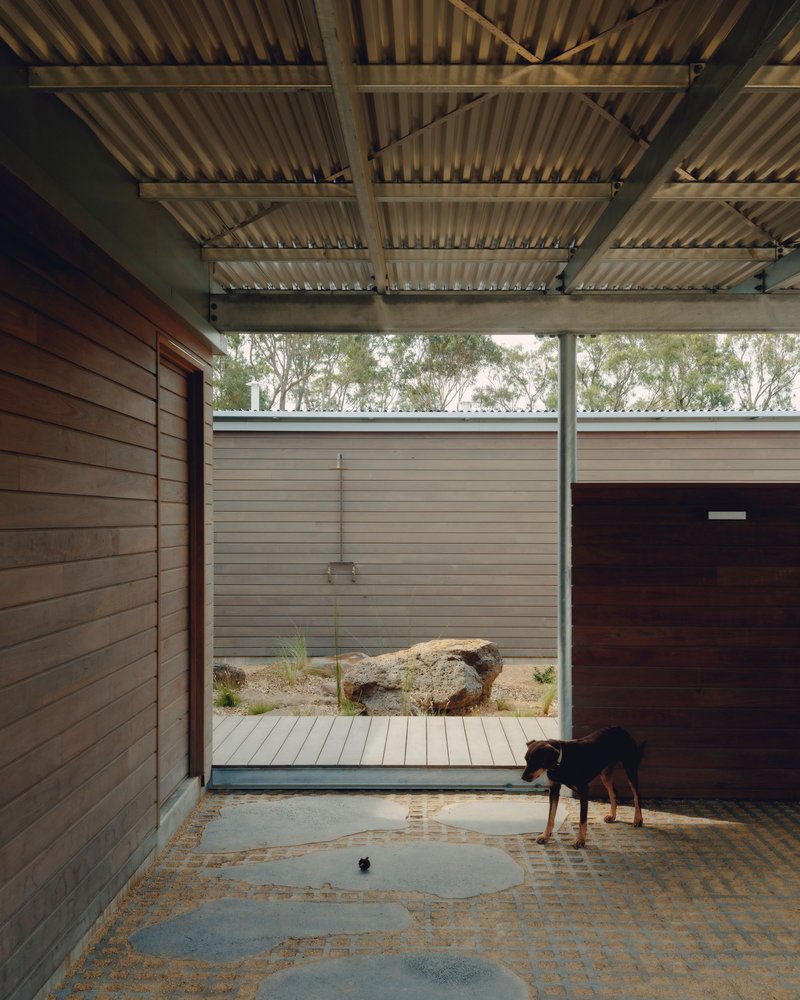
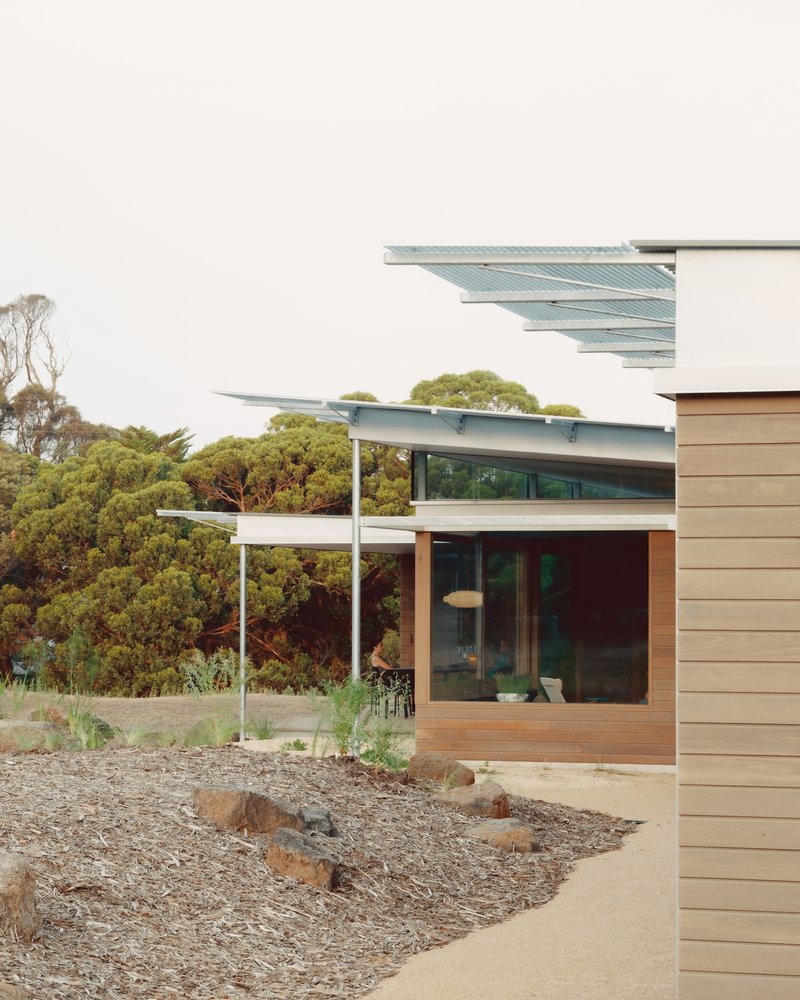
The entry courtyard is the hinge of the plan. Circular pavers, a rock garden, timber walls on three sides, and a translucent canopy overhead create an outdoor room that mediates between the car and the living spaces. It is a decompression chamber, a place where the tempo of arrival slows before you step through glass into the interior. The presence of a dog in one photograph is a telling detail: this is a house designed for daily life, not magazine shoots.
Secondary thresholds recur throughout. The timber deck between kitchen and exterior wall, the perforated metal canopy over the gravel garden: each is a zone of ambiguity, neither fully inside nor fully out. Not All Architecture uses these in-between spaces to extend the house's footprint perceptually well beyond its modest square meters.
The Central Living Core
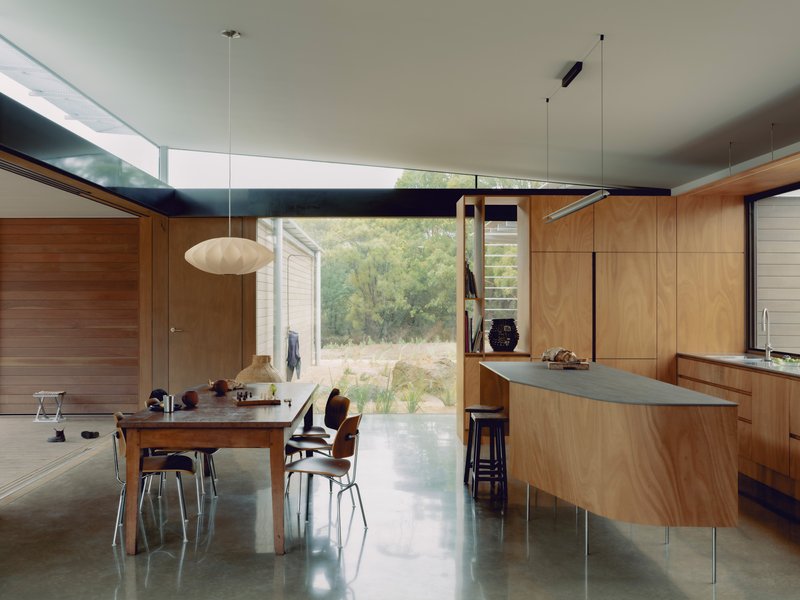
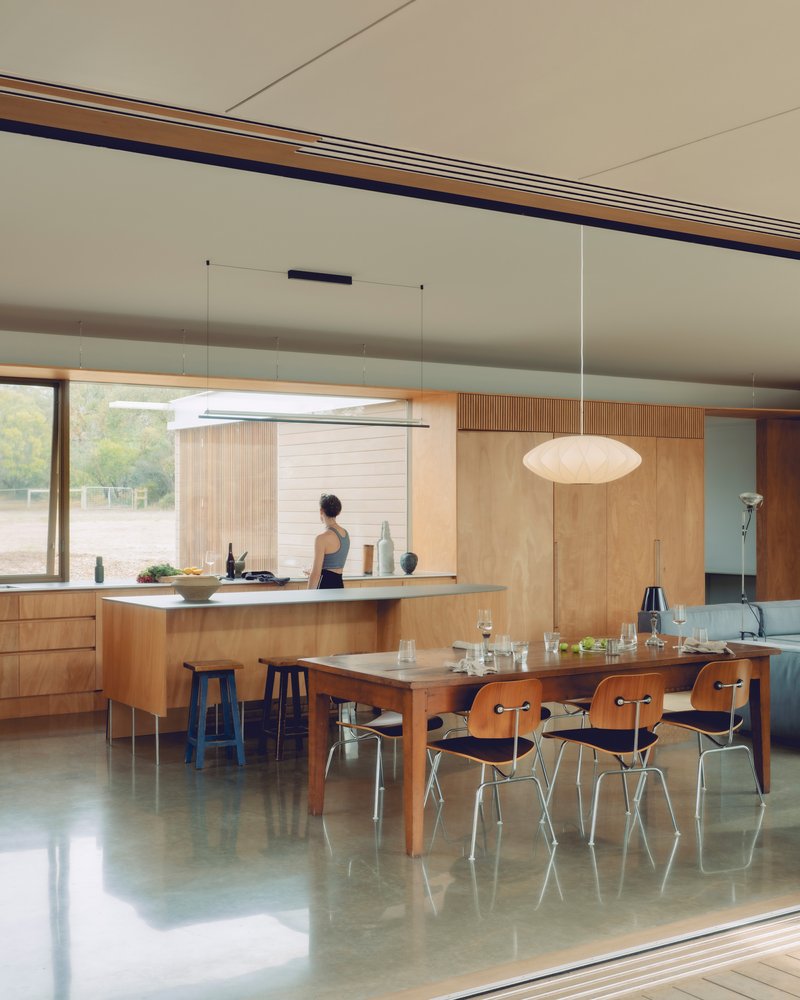
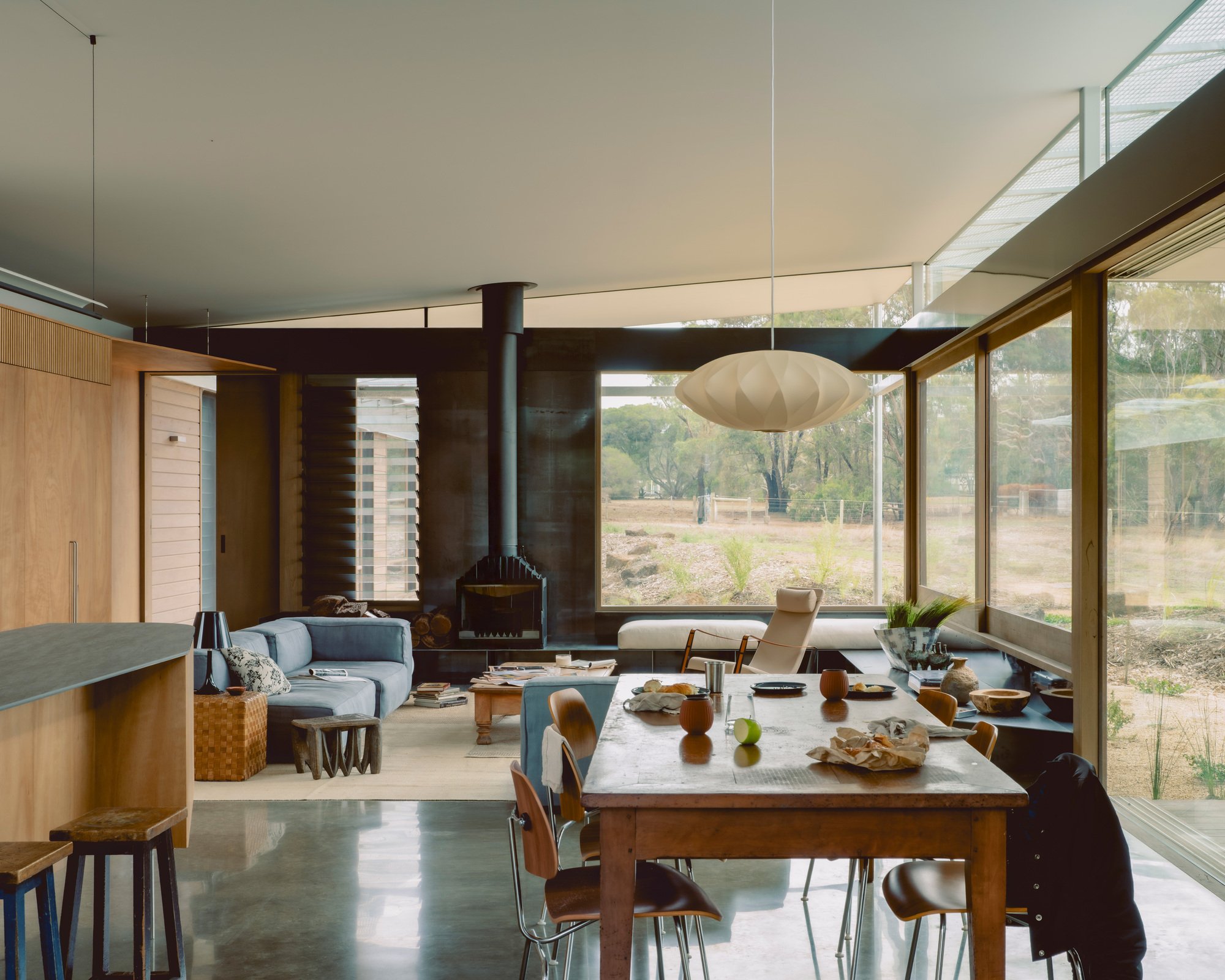
The open-plan kitchen and dining area is the gravitational center of the plan. Timber cabinetry, polished concrete floors, and a horizontal clerestory window that runs the length of the room define it. The clerestory is the critical move: it admits a wash of indirect light from above while keeping the lower walls relatively solid, anchoring the room to its immediate surroundings rather than dissolving into panorama.
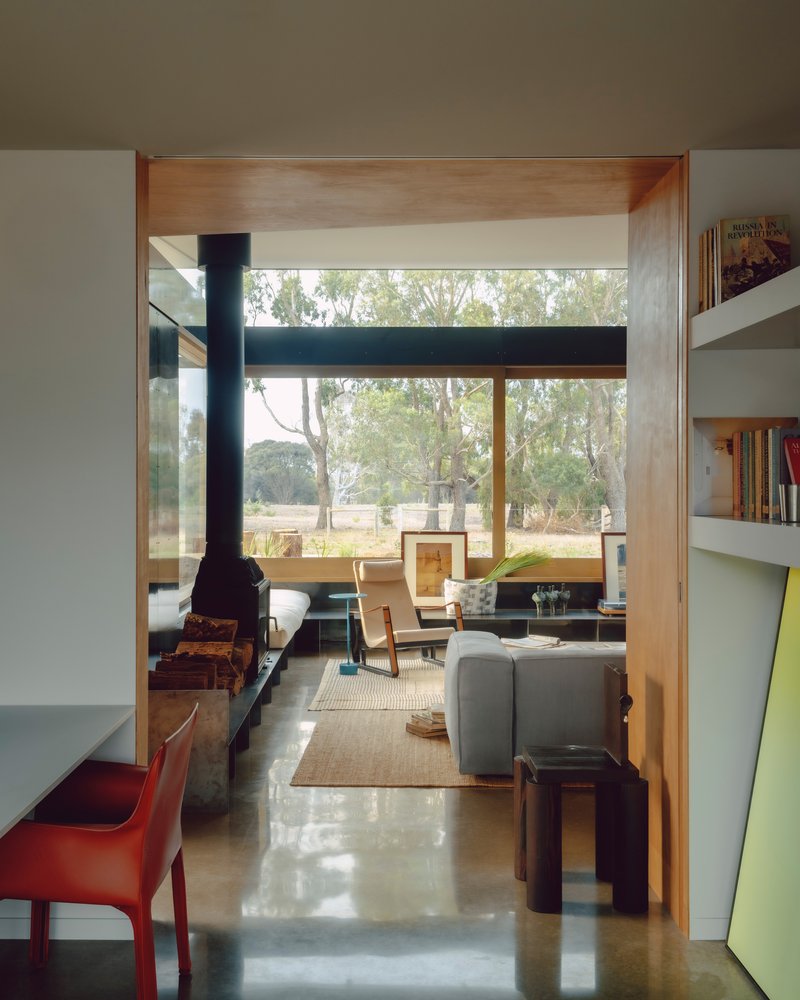
An axial view through the living room reveals a timber-lined ceiling portal that frames the freestanding wood stove as a near-sculptural element on the concrete slab. The stove is not decorative; in a coastal Victorian winter it is essential. Its cylindrical form recurs in the bedroom wing, providing a visual continuity between communal and private zones.
Framing the Landscape from Within
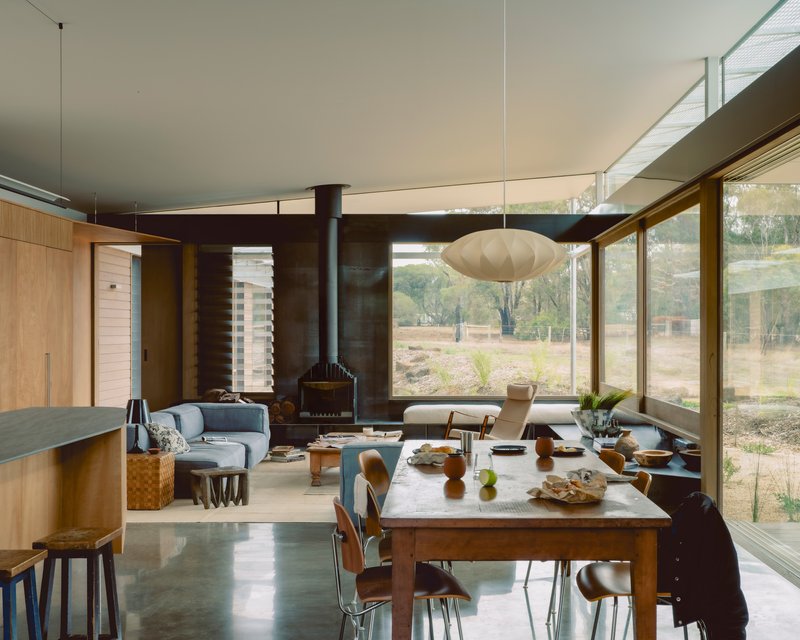
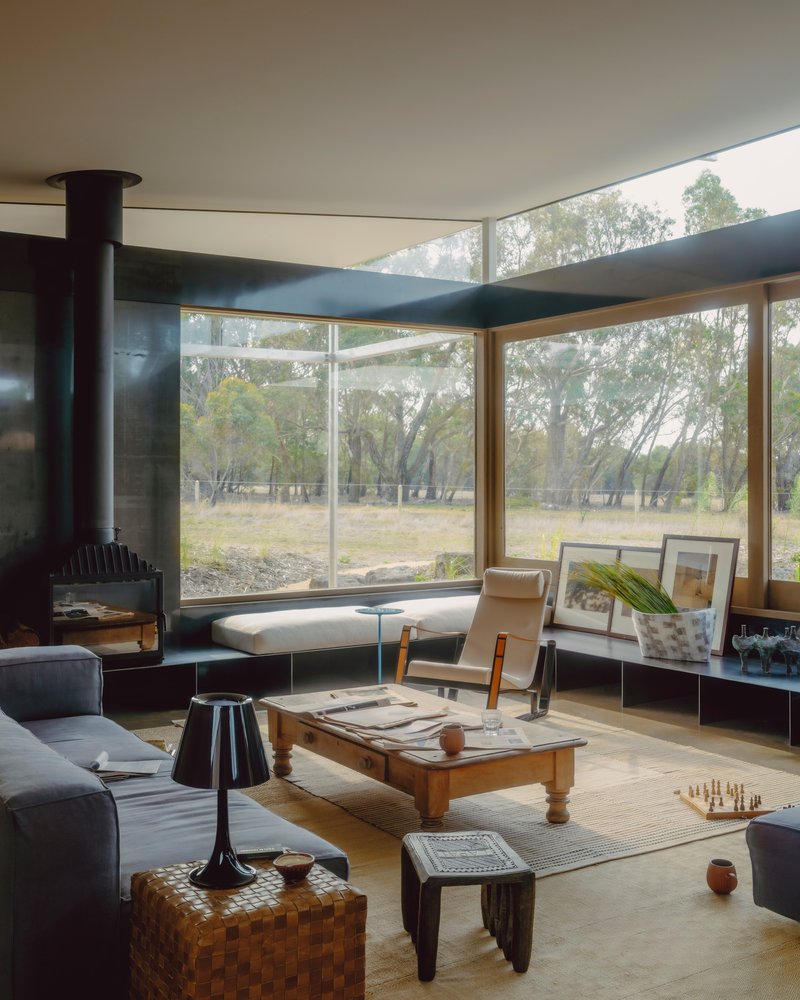
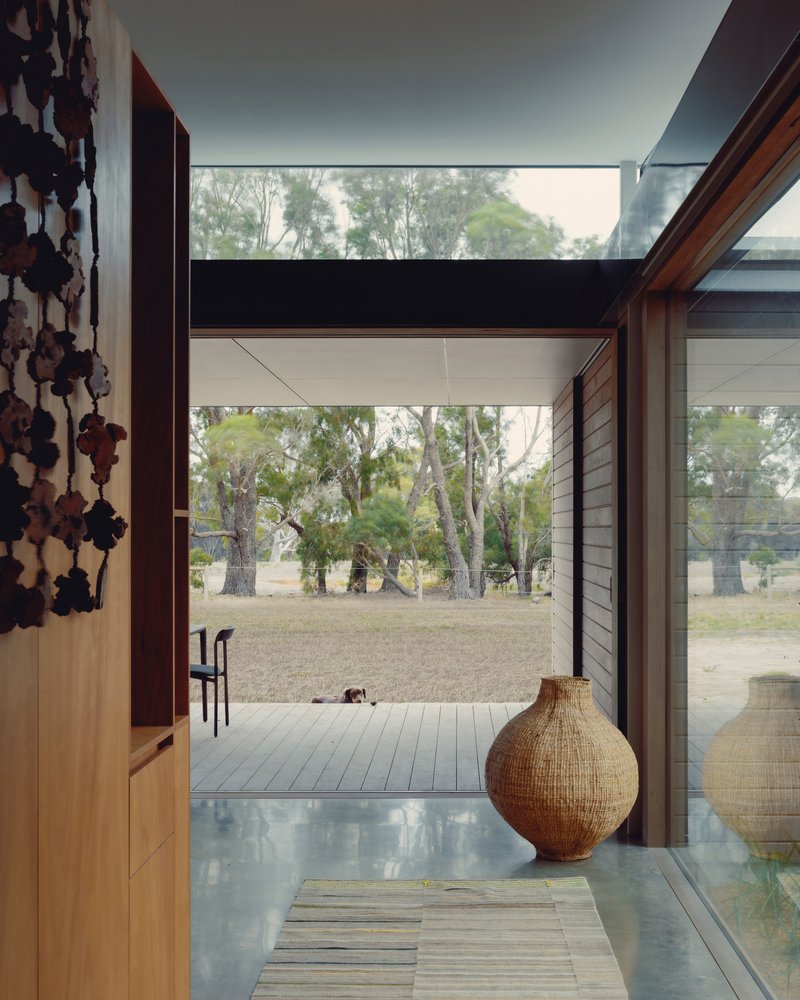
Where the house does open up, it does so with conviction. The living room's full-height glazing faces directly into native landscape, with the wood stove positioned as a warm counterpoint to the cool bush beyond the glass. The corner seating nook is perhaps the best seat in the house: a window seat arrangement where two walls of floor-to-ceiling glass meet, placing you almost inside the eucalyptus canopy.
The entry corridor offers a different kind of framing. Polished concrete underfoot, clerestory glazing overhead, and a narrow aperture at the end that captures a single stand of distant trees. It is a consciously cinematic sequence, borrowing from the long-take logic of Australian landscape photography without descending into sentimentality.
Outdoor Rooms and Filtered Light
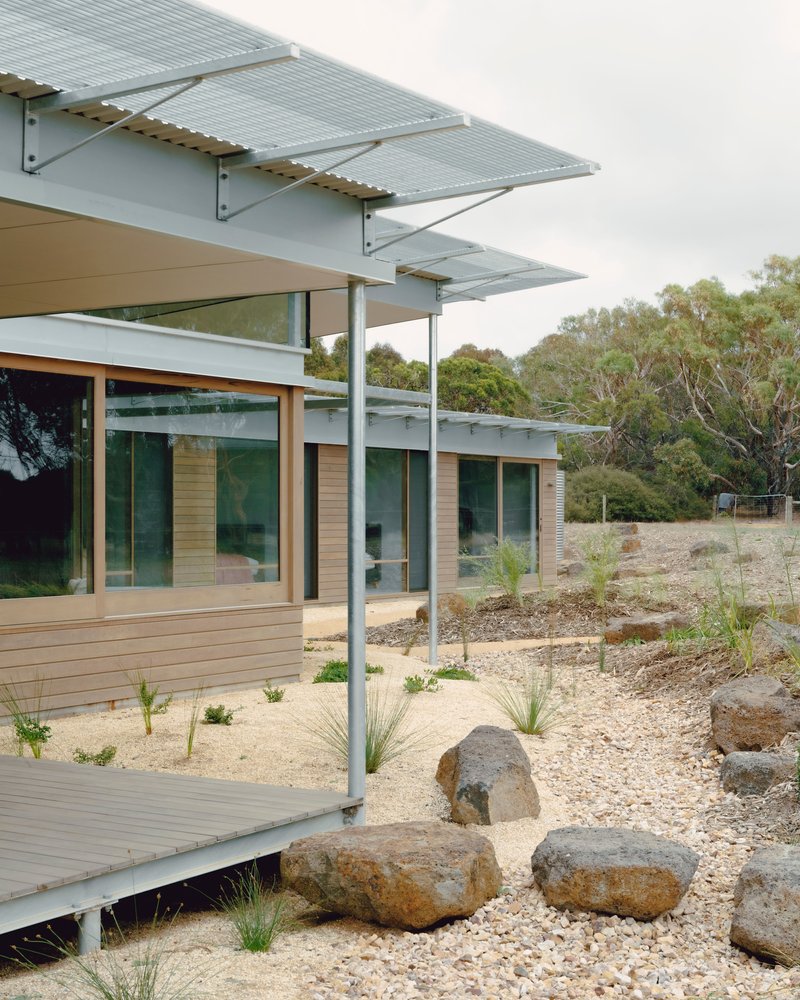
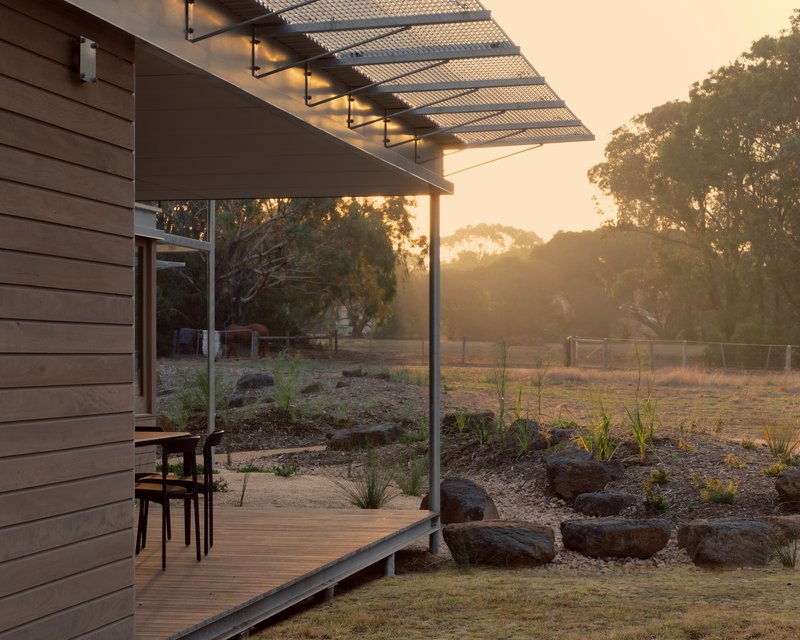
The deck and pergola structures are more than decorative extensions. The perforated metal canopy supported by slender steel columns creates a dappled light condition that mimics the eucalyptus canopy overhead. At golden hour, the planted rock garden beneath the pergola becomes the most atmospheric part of the site, its gravel and native planting glowing against the darkening timber.
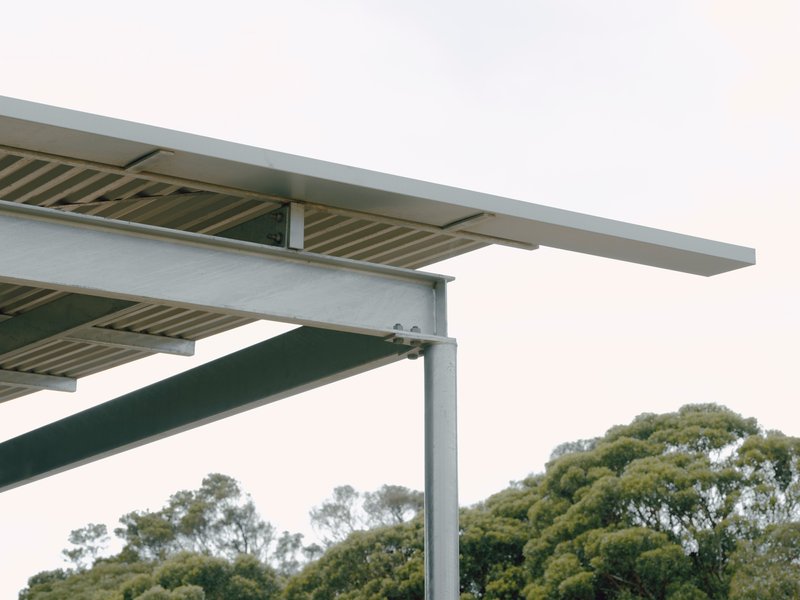
A detail shot of the steel beam and timber slat canopy against an overcast sky reveals the construction logic: thin, precise steel members supporting a lightweight screen of timber battens. The structure is intentionally legible, each connection visible. There is no attempt to conceal the making of the building, and the house is better for it.
Private Rooms, Quietly Done
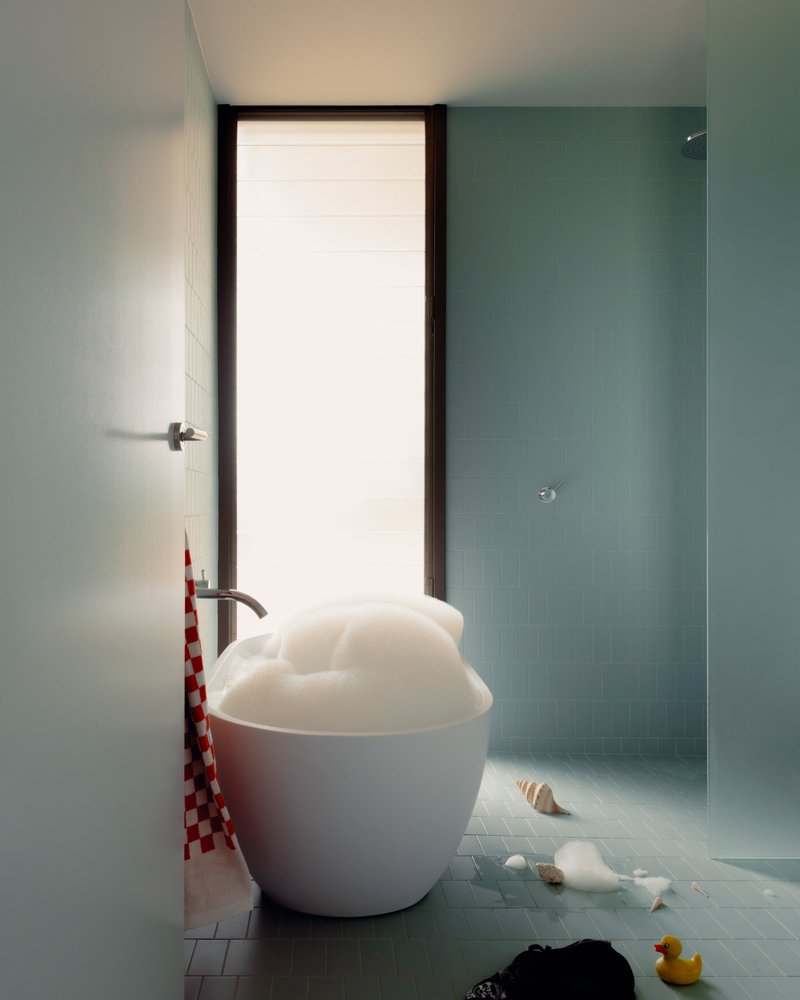
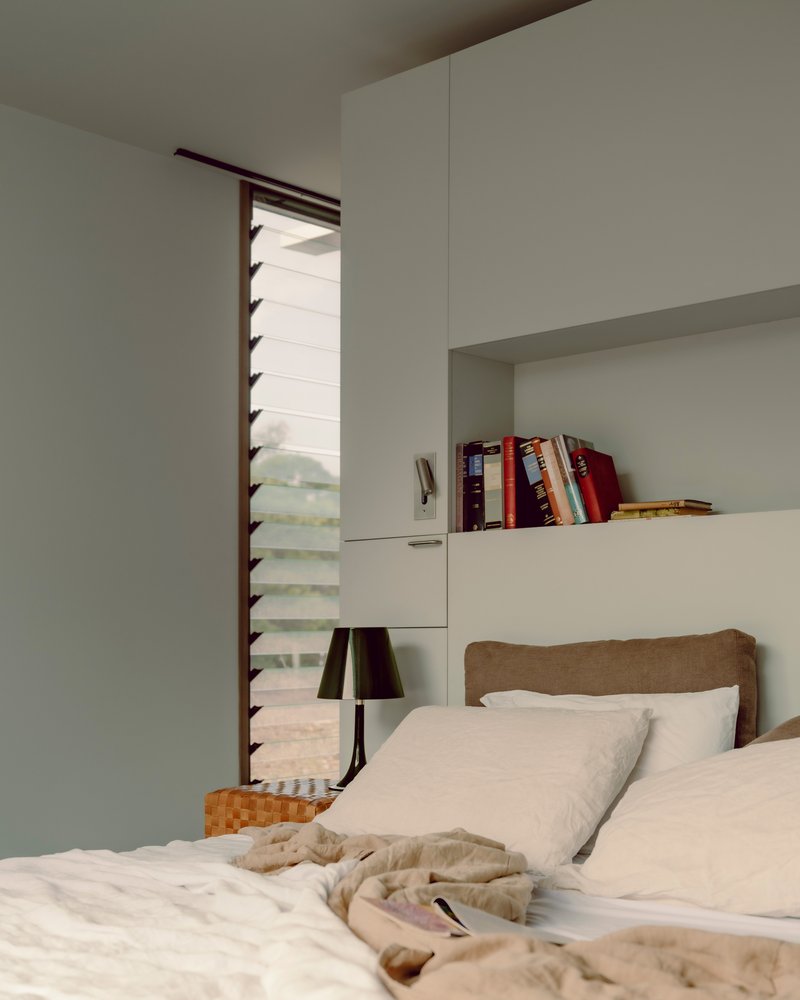
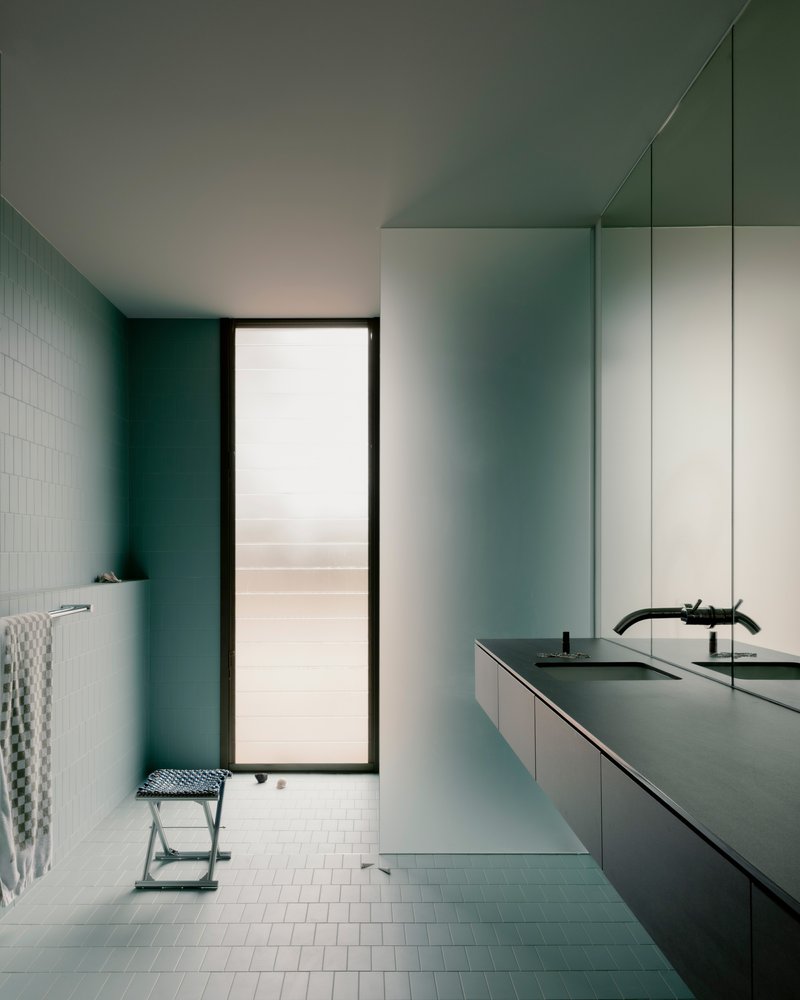
The bedrooms and bathrooms are handled with a lighter palette: pale blue mosaic tiles, white subway tiles, frosted glass, louvered windows. A spherical tub in the main bathroom is the single indulgence, its form softening a room otherwise composed of rectilinear surfaces. The bedroom's recessed shelving and louvered openings filter daylight to a gentle glow, prioritizing rest over spectacle.
These spaces read as deliberate counterpoints to the expansive living zones. Where the kitchen and living room celebrate openness and connection to the landscape, the private rooms turn inward, offering enclosure and quiet. The shift in material register, from concrete and timber to tile and glass, signals the transition clearly.
Interior Details and Atmosphere
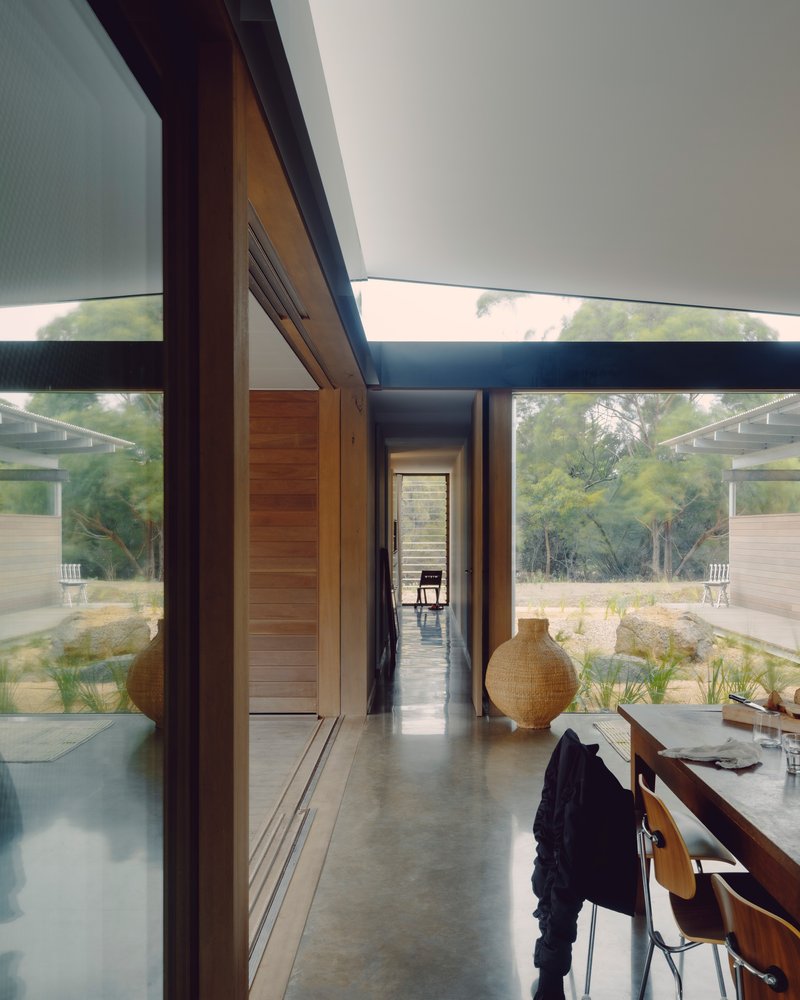
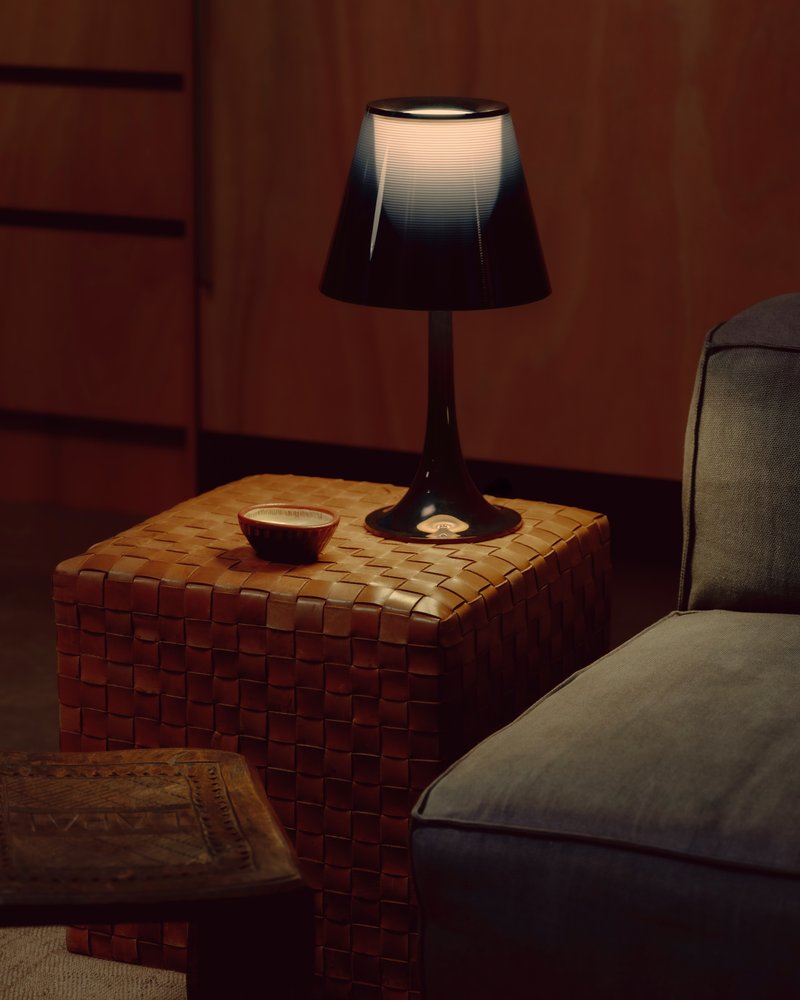
A corridor lined in timber with clerestory windows opening to a courtyard of native grasses distills the house's entire spatial logic into a single frame: warm enclosure below, diffused light above, landscape glimpsed through controlled apertures. The woven leather side table and ceramic bowl against a timber panel suggest a curated domestic life, but one that leans toward craft rather than luxury.
The threshold between kitchen and exterior deck, where interior polished concrete gives way to outdoor timber boards, is handled without ceremony. A single step, a shift in material, a change in overhead condition. These transitions accumulate across the plan, giving the house a rhythm of compression and release that makes 240 square meters feel considerably larger.
Plans and Drawings
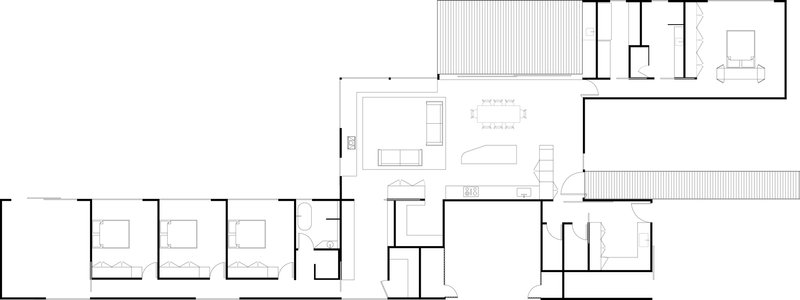

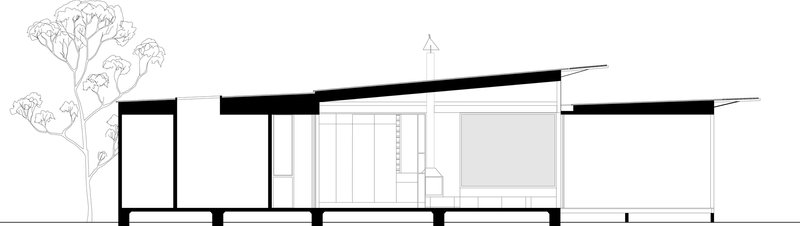
The floor plan confirms what the photographs suggest: a linear arrangement of bedrooms to one end, an open living, kitchen, and dining sequence to the other, with the deck extending the plan into the landscape. The section drawing is the most revealing, showing the pitched roof structure over the central living space with flanking volumes at lower heights. This stepped section is what allows the clerestory windows to work, pulling light into the center of the plan where it would otherwise be darkest.
The elevation drawing emphasizes the house's commitment to horizontality. The single tree drawn beside the building provides scale and context: the roofline sits well below the canopy, deferring to the existing landscape rather than competing with it. It is a drawing that communicates ambition through subtlety, which is an increasingly rare quality.
Why This Project Matters
Ironbark House matters because it demonstrates that a retreat from complexity does not require a retreat from rigor. Not All Architecture has produced a house where every decision, from the clerestory strategy to the material palette to the positioning of a wood stove, serves a clear spatial and experiential purpose. There are no wasted moves. In a residential market saturated with glass boxes claiming transparency and farmhouse pastiches claiming authenticity, this house earns both qualities through careful, disciplined work.
It also offers a compelling model for building in ecologically sensitive landscapes. The house does not impose; it negotiates. Its linear footprint minimizes site disturbance, its plantings are native, and its material choices will weather gracefully alongside the ironbark forest that gives it its name. As coastal Australian environments come under increasing pressure from development, projects like this set a standard for how architecture can occupy the bush without consuming it.
Ironbark House by Not All Architecture (Phoebe Clarke, Timothy Stelzer, Claudio Torres). Victoria, Australia. 240 m². Completed 2025.
About the Studio
Share Your Own Work on uni.xyz
If projects like this are the kind of work you want to make, uni.xyz is a place to publish your own, find collaborators, and enter design competitions.




Popular Articles
Popular articles from the community

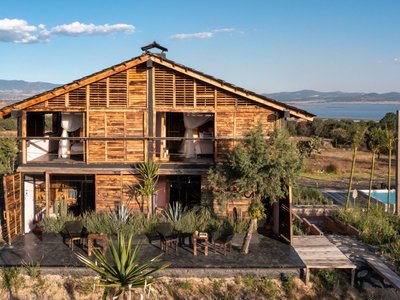
Fausto Terán and Toro Fuse Japanese Craft with Mexican Tradition in a Lakeside Retreat
Nakamura House pairs Shou-Sugi-Ban charred pine with handmade clay tile at the foot of Atlangatepec Lagoon in Mexico.
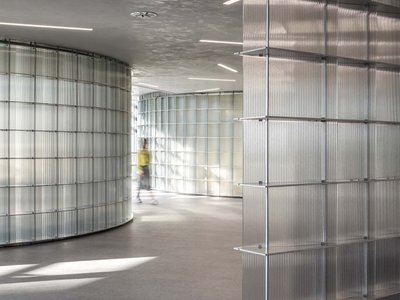
HCCH Studio Wraps a Shanghai High-Rise Office in Curved Walls of Translucent Glass
A 1,000 square meter fit-out in Lujiazui replaces the typical tech-office palette with layered glass, micro-cement, and quiet rigor.
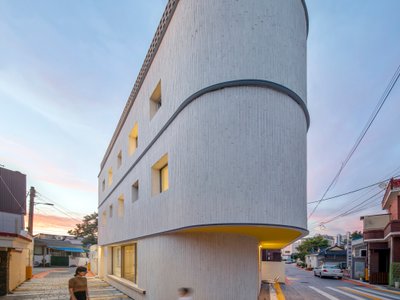
YOAP Architects Round a Corner in Yeongcheon with a Cylindrical Community Hub
A 197-square-meter brick and ribbed-clad tower turns a forgotten alley corner in South Korea into a public garden with a low threshold.
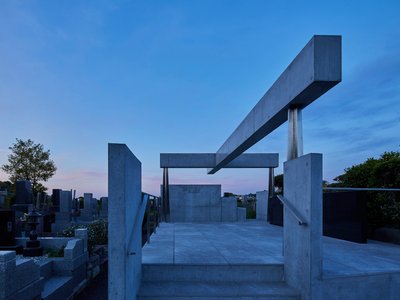
Takeshi Hosaka Architects Suspends a Concrete Cross Above a Yokohama Cemetery
A 28-square-meter burial renovation in Yokohama lifts the symbol of resurrection into the sky so mourners see it against heaven.


Similar Reads
You might also enjoy these articles

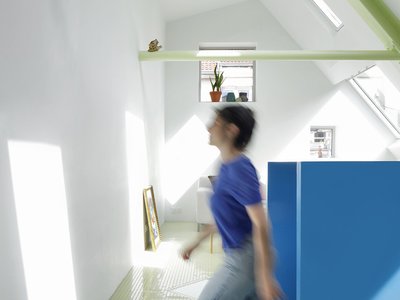
127af Flips a Tiny Bagnolet Rowhouse Upside Down with a Handcrafted Roof Extension
A 55-square-meter terraced house on the edge of Paris gains a luminous upper living floor through lightweight timber and steel.
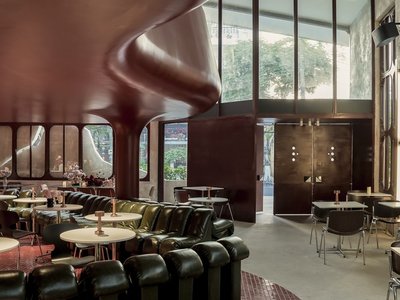
1.61 Design Workshop Wraps a 600-Square-Meter Café in Vietnam in Sculptural Burgundy Drama
Reden Café & Bistro pairs a helical staircase, mosaic floors, and deep red interiors to rethink Vietnamese hospitality space.

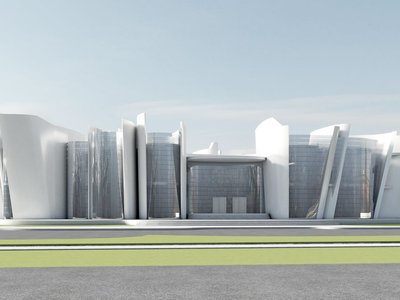
The Unbound Brain: A School Shaped by Cognitive Architecture
Cylindrical learning pods radiate like neurons from a central cortex, turning the floor plan into a spatial model of human thought.
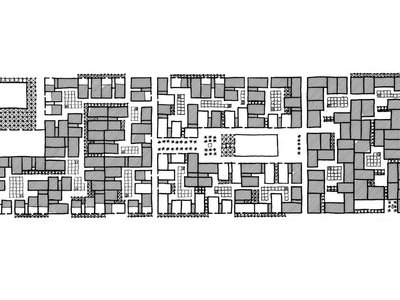
Revival Vernacular Architecture: Rammed Earth Settlements for the Sahara
A modular desert community in Mauritania that fuses passive cooling techniques with earthen construction and local craftsmanship.


Explore Residential Building Competitions
Discover active competitions in this discipline




The Global Benchmark for Architecture Dissertation Awards


Challenge to design a portable theatre


Challenge to design a portable music platform


Challenge to design an open learning module for the elderly
Comments (0)
Please login or sign up to add comments
No comments yet. Be the first to comment!