

House WBVD by BASIL Architecture: A Striking Townhouse Renovation in Bruges
A bold and sustainable renovation transforms a historic Bruges townhouse into a luminous, multi-level home celebrating light and heritage.


A Contemporary Transformation Behind a Historic Façade
At first glance, House WBVD appears to be a typical 19th-century townhouse nestled in the historic heart of Bruges. The original façade, dating back to the 1870s, was intentionally preserved to maintain the urban fabric. But upon entering through the tall entry door, a modern and light-filled architectural world is revealed—an innovative renovation that blends heritage with contemporary design, led by BASIL architecture.


Respecting History While Reimagining Space
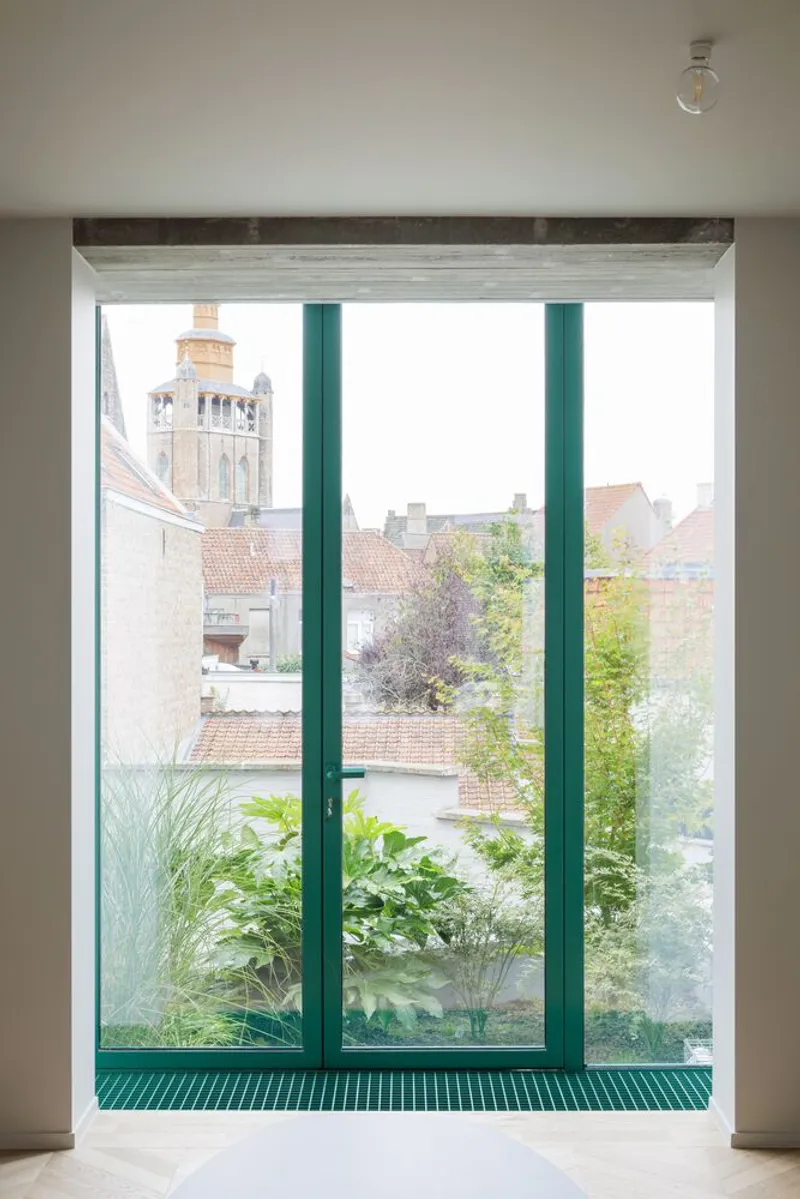
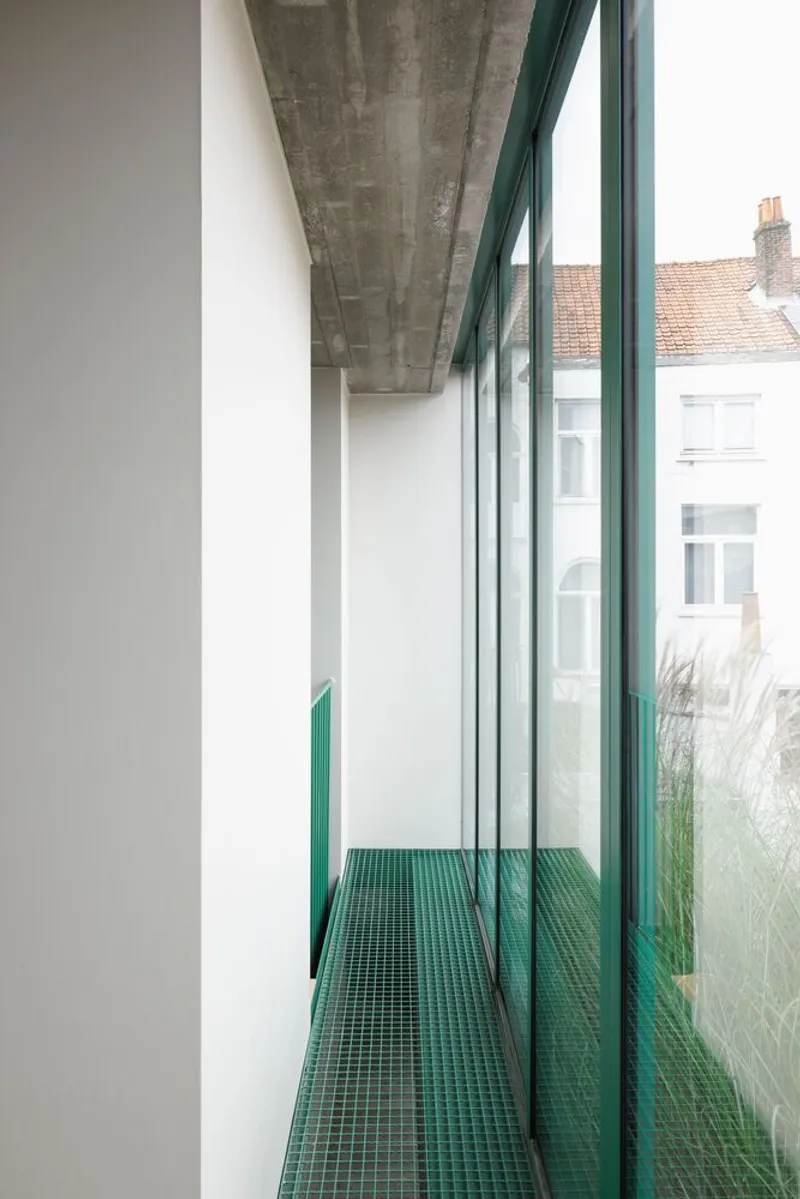
Rather than demolishing the structure, the architects retained the original main volume and emphasized their interventions with strong architectural gestures. A series of diagonally stacked glass volumes were added to the rear, introducing dramatic openness and a striking visual identity. These new volumes contrast yet harmonize with the existing shell, celebrating the intersection between old and new.


Maximizing Natural Light and Vertical Interaction
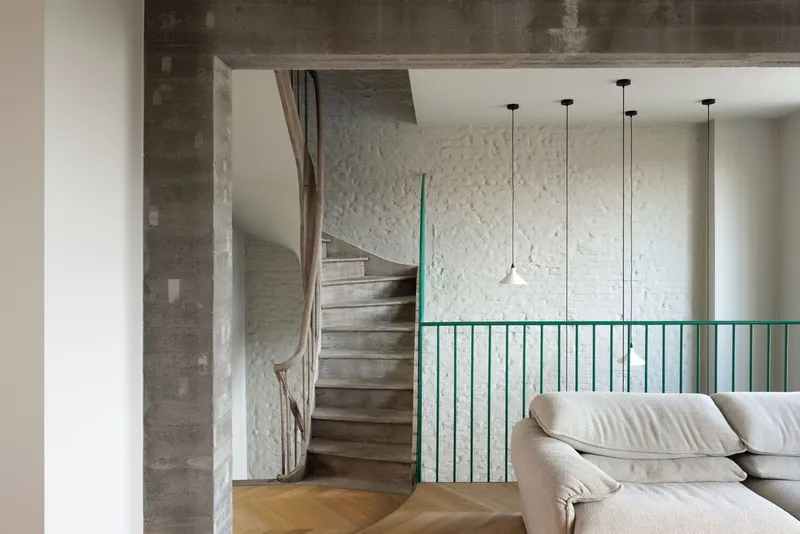
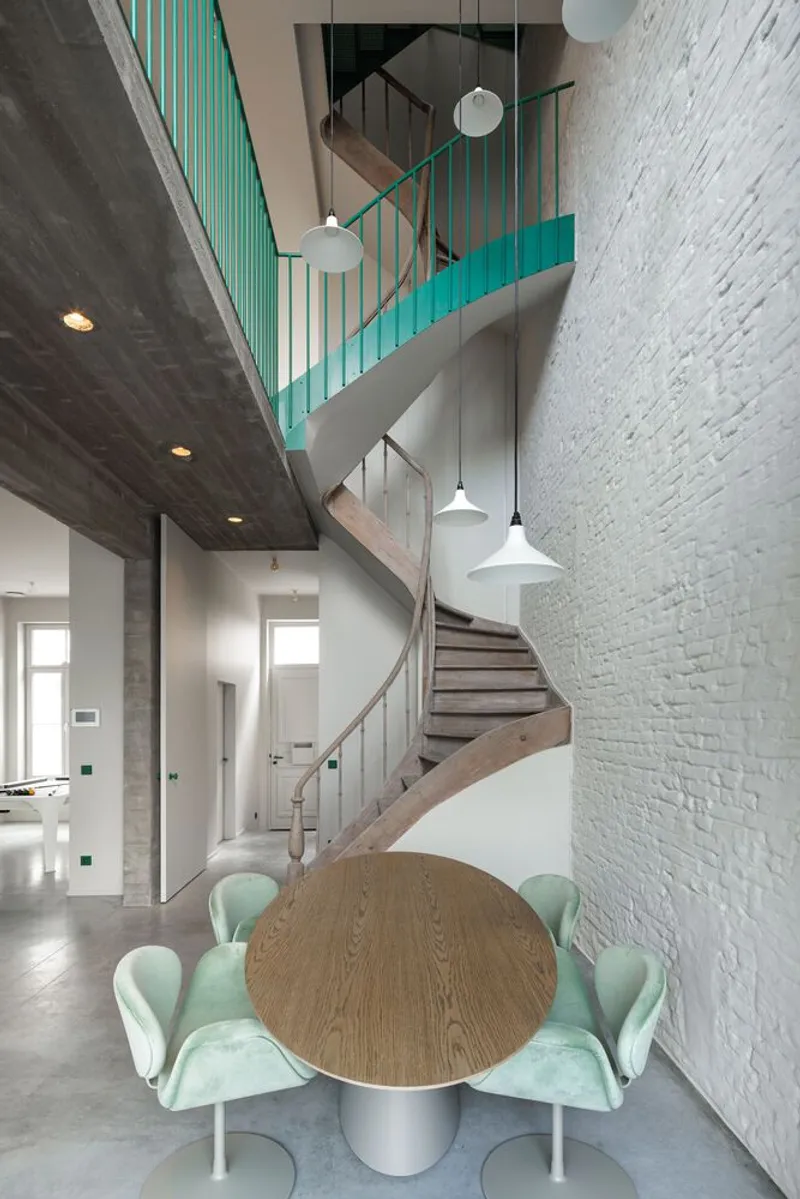
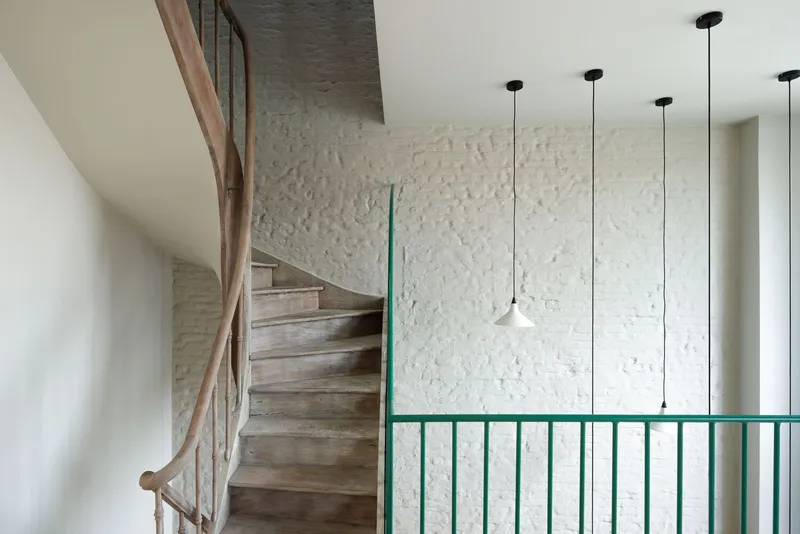
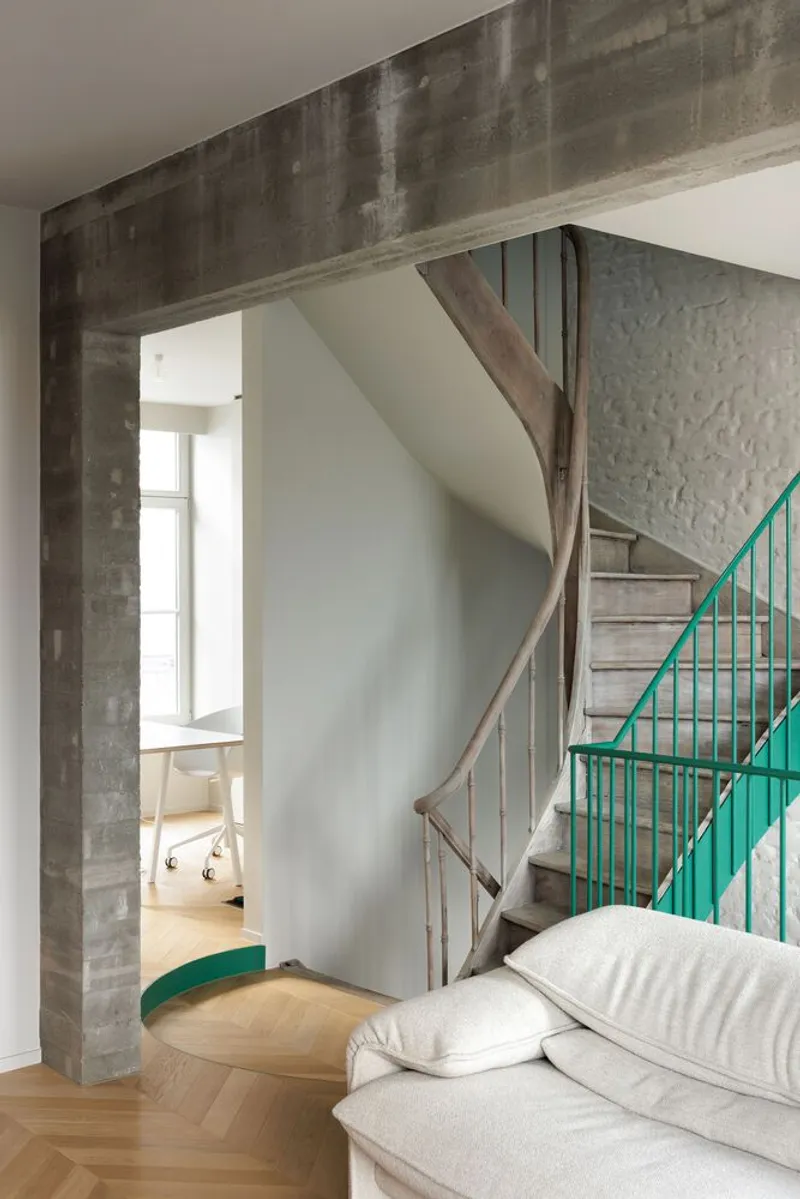
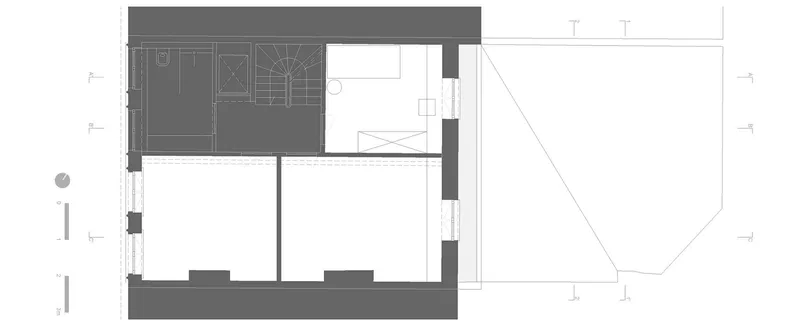
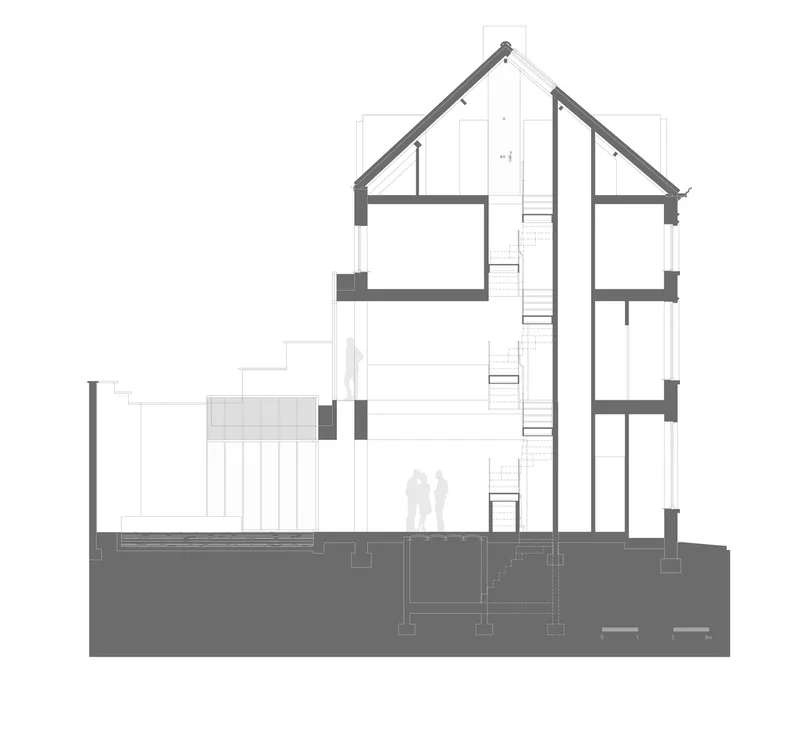
The heart of the home is the void—a central light well that spans the height of the house and is paired with a sculptural green staircase. The first floor was opened up to establish interaction between levels, enabling daylight to penetrate deep into the plan. The stairwell, enclosed in the original layout, was transformed into a vertical connection that visually links all floors. A ridge rooflight further enhances this light flow, turning what was once a dark core into a dynamic and bright spatial experience.


Architectural Details That Speak to the Era
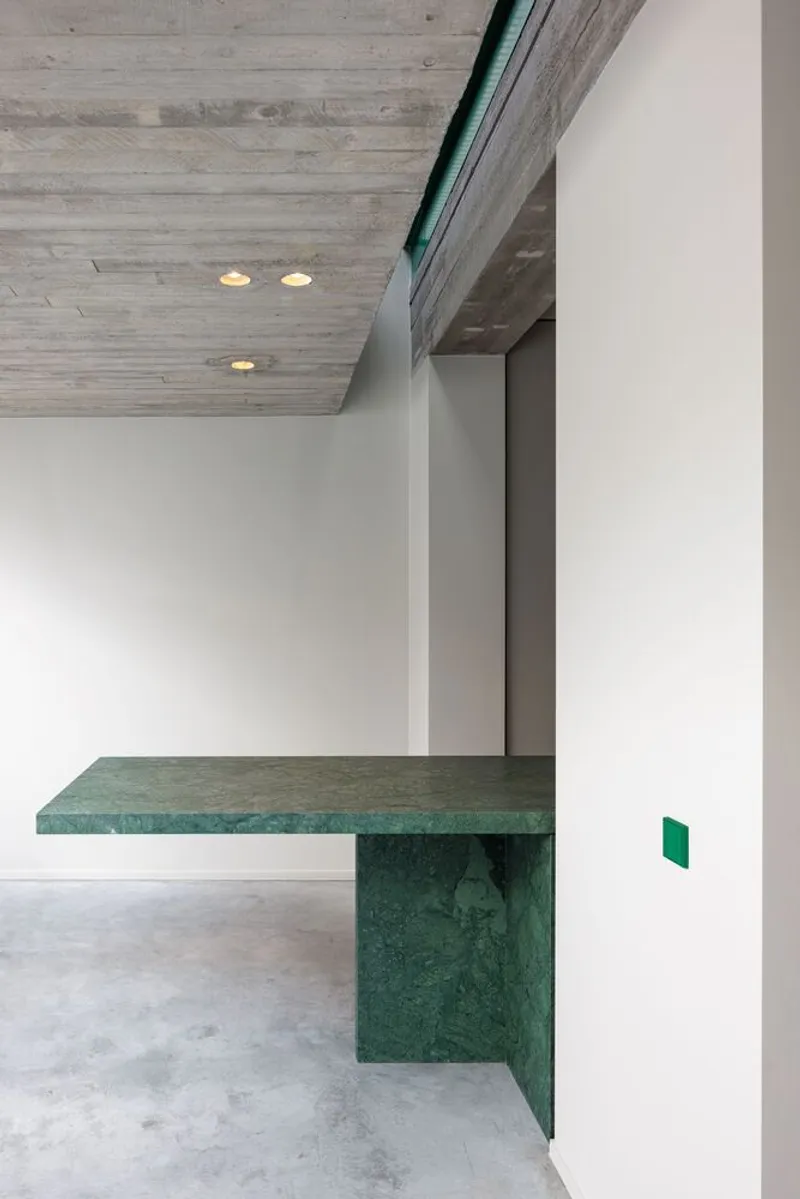
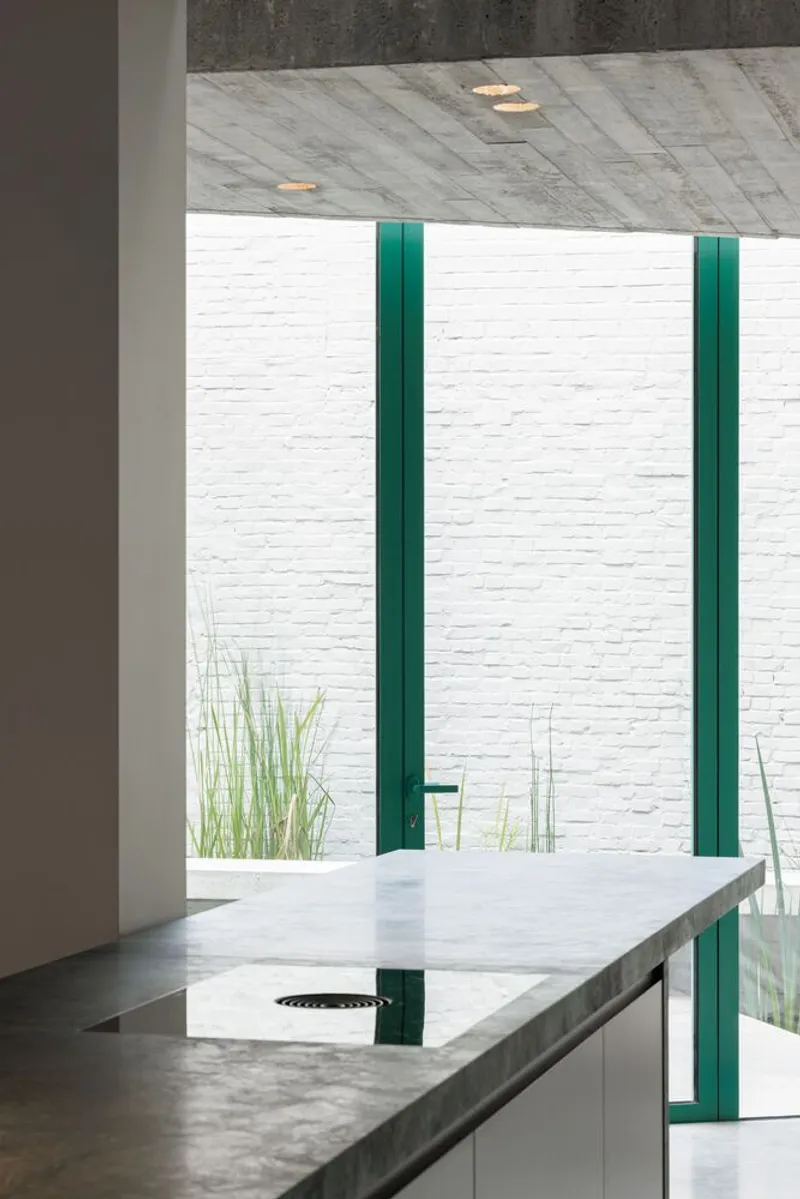
Structural beams within the retained volume subtly reflect the historical room divisions typical of 1870s townhouses. Simultaneously, exposed concrete interventions clearly mark what is new—an honest expression of material and method. These concrete elements, made entirely on-site, emphasize sustainability through local construction techniques.


Sustainability Through Preservation and Purposeful Construction
By reusing the main volume and limiting new materials, the project takes a sustainable stance rooted in conservation. The approach not only reduces waste but also celebrates the embodied energy of the existing structure. Every new component was fabricated on site, minimizing transport and reinforcing the environmentally conscious design strategy.



Green Accents and Functional Elegance
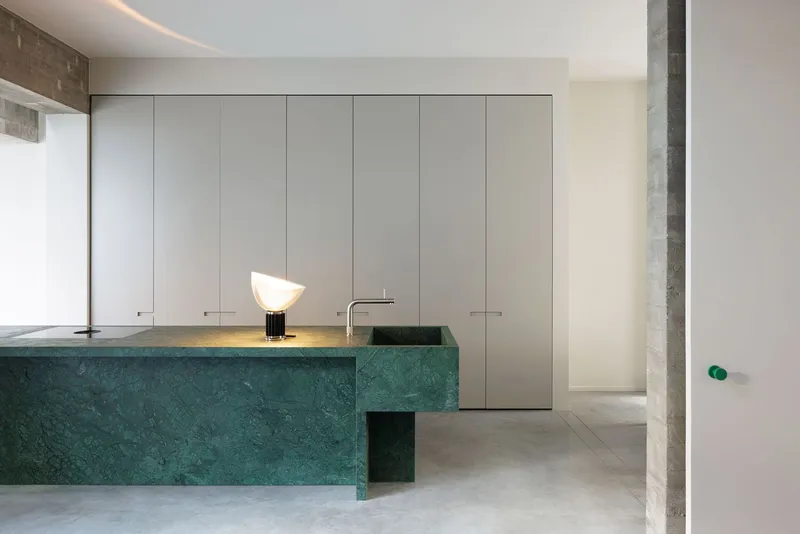
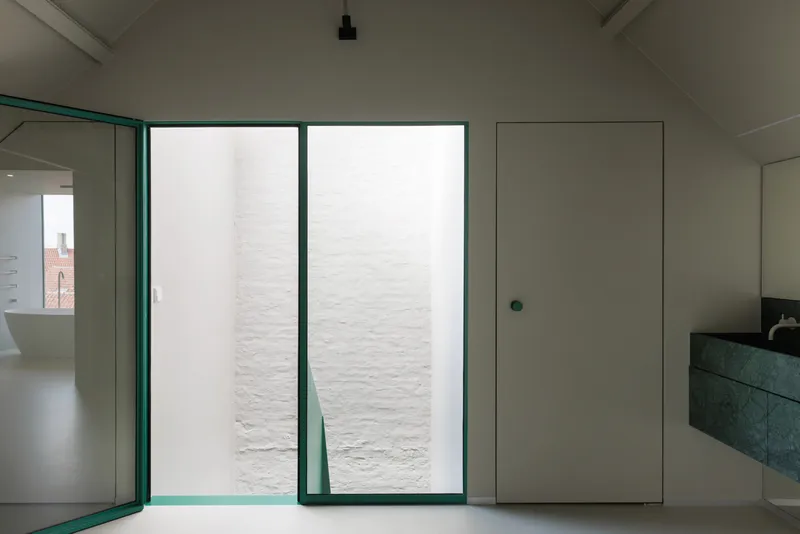
The project's contemporary identity is further enriched by its green accents—a signature of the renovation. From the staircase and kitchen cabinetry to switches and door handles, the olive-toned elements unify the design and add vibrancy. Functionally, the home is prepared for lifelong living, with a lift shaft incorporated to provide access across all four levels.



A Floating Terrace and Water Garden Oasis
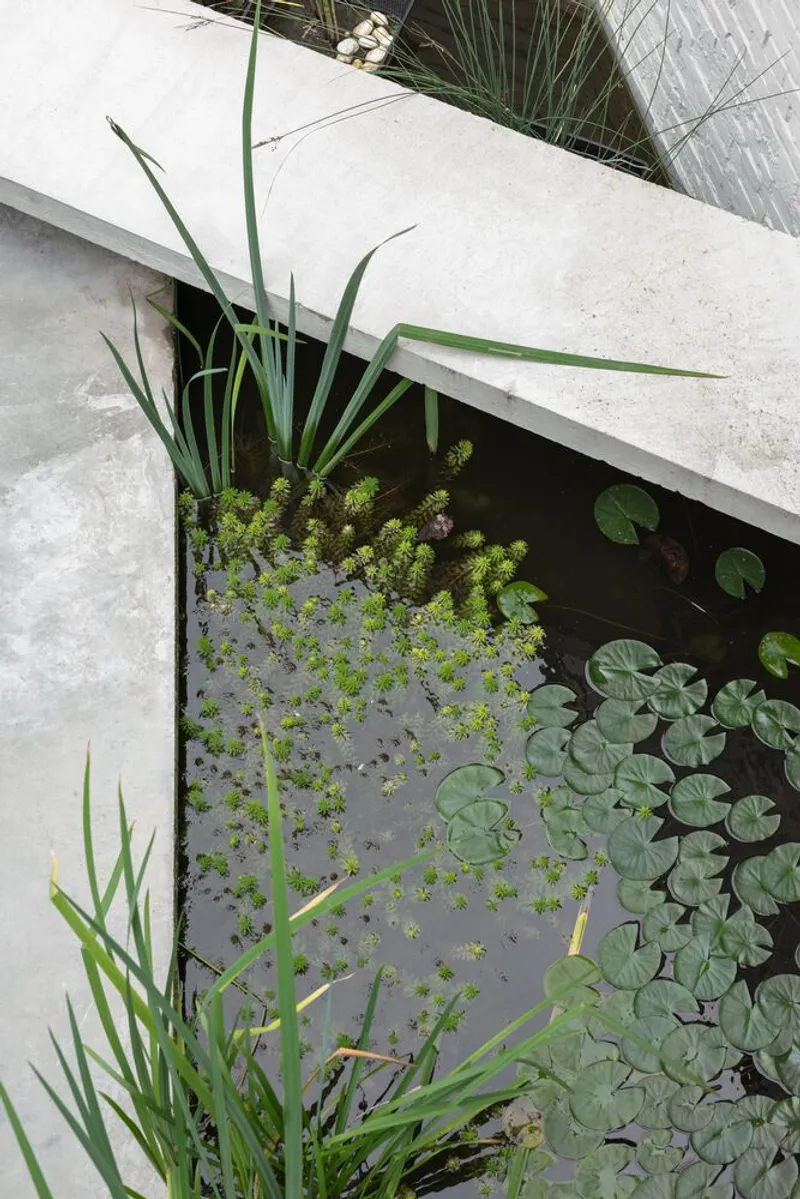
The rear outdoor space complements the architectural clarity of the interior. A 'floating' terrace hovers above a serene water garden, which serves dual functions: as a reflective pool that bounces light back into the house and a rainwater buffer enhancing environmental responsiveness. This courtyard, freed by demolishing obstructive rear additions, becomes a tranquil retreat within the dense urban context.


A Bathroom With a View
The attic space, once a closed-off roof volume, was reimagined through the addition of a pronounced dormer. This intervention houses the bathroom and provides sweeping views over the Bruges skyline, reinforcing the connection between architecture and place. The master bedroom shares this elevated perspective, receiving daylight and an expanded sense of spatial luxury.


Redefining Urban Townhouse Living
House WBVD by BASIL architecture redefines what a historic urban townhouse can be. Through surgical interventions, strategic voids, material expression, and an unwavering commitment to sustainability, the project elevates the quality of life while respecting the layered history of Bruges. It stands as a model of how old buildings can be adapted to contemporary standards without erasing their past.
All Photographs are works of Evenbeeld


Popular Articles
Popular articles from the community


Architekt Andreas Gruber Scatters 23 Dark Timber Chalets Across a South Tyrolean Forest Edge
In Molini di Tures, Amonti Chalets breaks a resort into a hamlet of gabled timber houses, with parking, storage and services pushed into the slope.

David Ortega Stacks a Two-Story Mexico City Penthouse Around a Steel Stair and a Pergola-Shaded Roof Terrace
In Colonia Roma, a 300 m² penthouse uses oak joinery, a planted steel stair and a slatted roof pergola to make a new-build apartment feel like a house.

GROUP A Strips a 1969 Rotterdam Harbor Headquarters to Its Frame and Wraps It in Timber Louvers
In Rotterdam's M4H harbor district, Ferro Offices reuses a 1969 frame, adds one timber storey and reaches BREEAM-NL Outstanding.

LT2A and OPEN Architectes Thread a Brick and Glass High School Through a Wooded Belgian Campus
In Braine-l'Alleud, a 3,000 m² wing for Collège Cardinal Mercier pairs pale brick with a glazed colonnade, deferring to a small chapel and a dense wood.

Similar Reads
You might also enjoy these articles

Bamboo Housing Challenge 2026: Design Affordable, Sustainable Homes Using Bamboo
An international design competition by Bamboo U and IBUKU inviting architects and designers to reimagine affordable housing using bamboo — with the winning design built full-scale in Bali.

Computational Design & Education: Beegraphy Design Awards Introduces 7th Category (Featuring Jiyun's Innovative Approach)
Dive into Beegraphy’s 7th Design Awards category, where computational design meets education to create immersive, interactive learning tools, inspired by Jiyun’s work.

From Parametric Lighting to Urban Furniture: Join the 2nd Workshop in Beegraphy’s Computational Design Series
Dive into Cutting-Edge Design Techniques and Practical Applications with Industry Experts

Last Call: Unleash Your Architectural Genius in SHAK's Kindergarten Design Competition
Urgent call for architects to join SHAK's kindergarten design competition before the looming deadline

Explore Architecture Competitions
Discover active competitions in this discipline

Challenge to reimagine the Iron Throne

Photograph architecture without architects

Illustrate the lost glory of Angkor Wat - Render Challenge

Design challenge to reuse E-waste
Comments (0)
Please login or sign up to add comments
No comments yet. Be the first to comment!