
Husene i Skogen: A Landmark in Mass Timber Residential Architecture
This article explores Husene i Skogen, a mass timber residential project in Norway that redefines sustainable living through innovative architectural strategies.


A New Vision for Sustainable Living in Norway
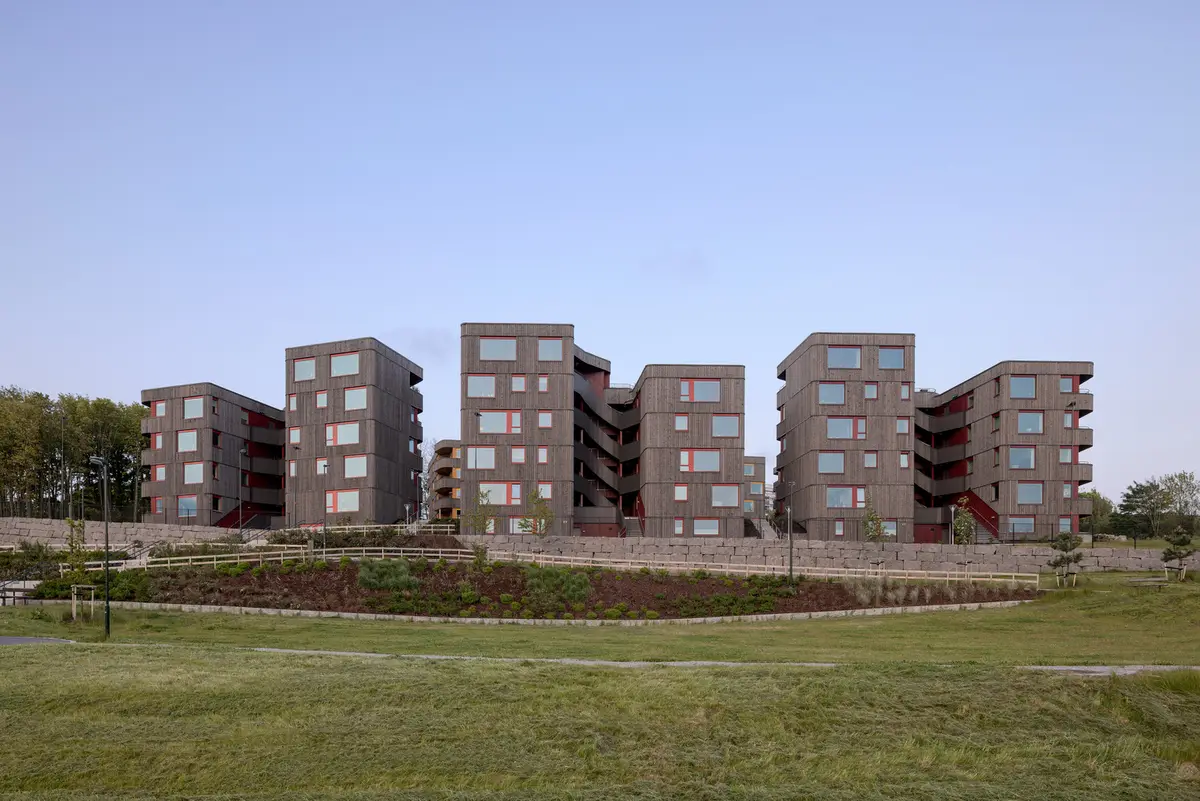
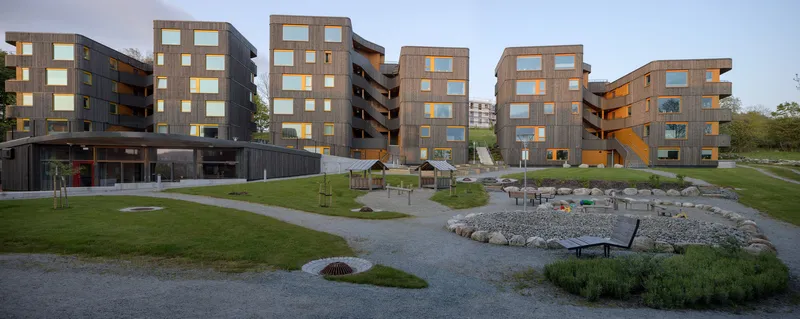
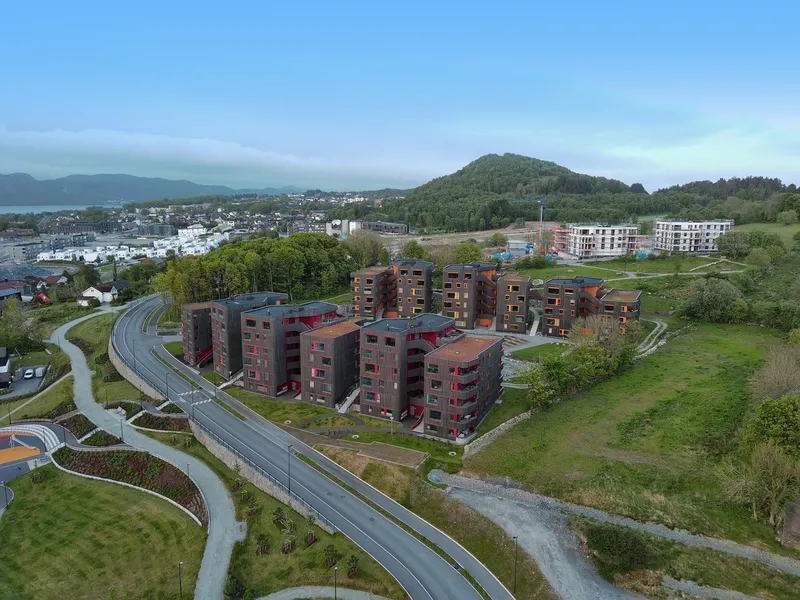
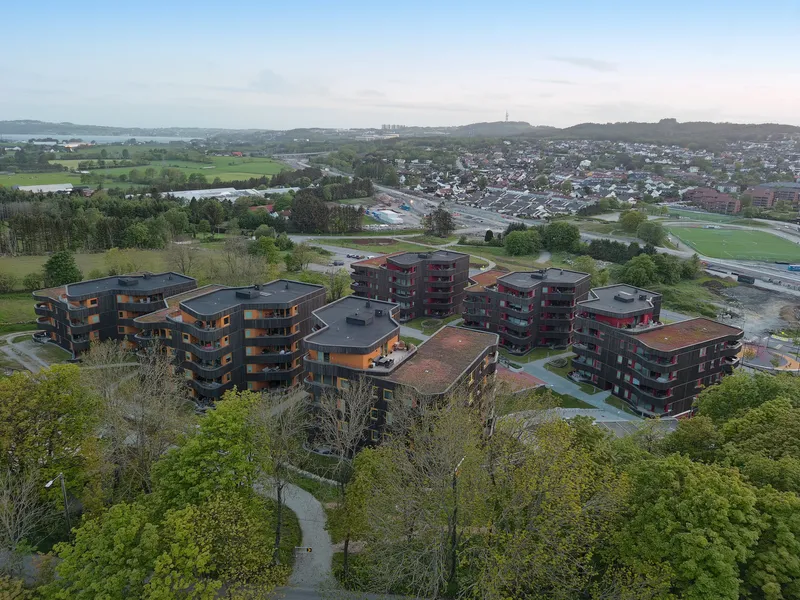
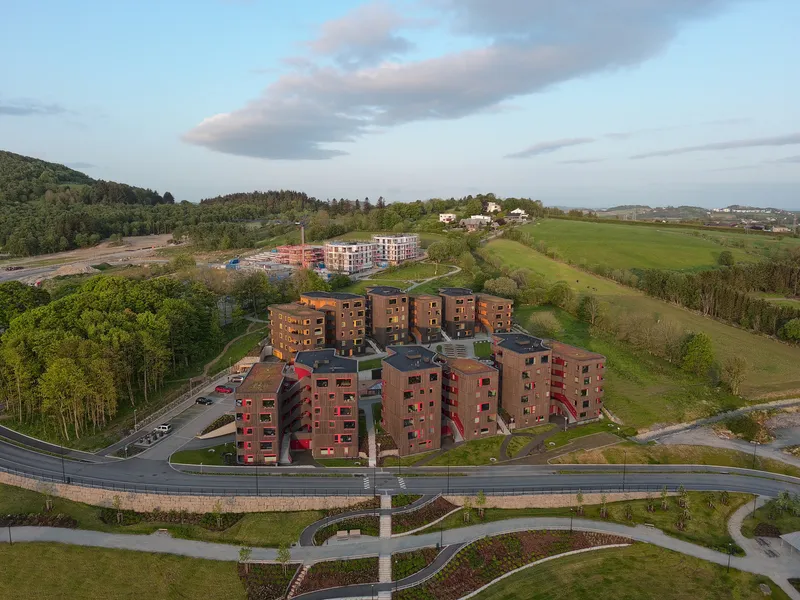
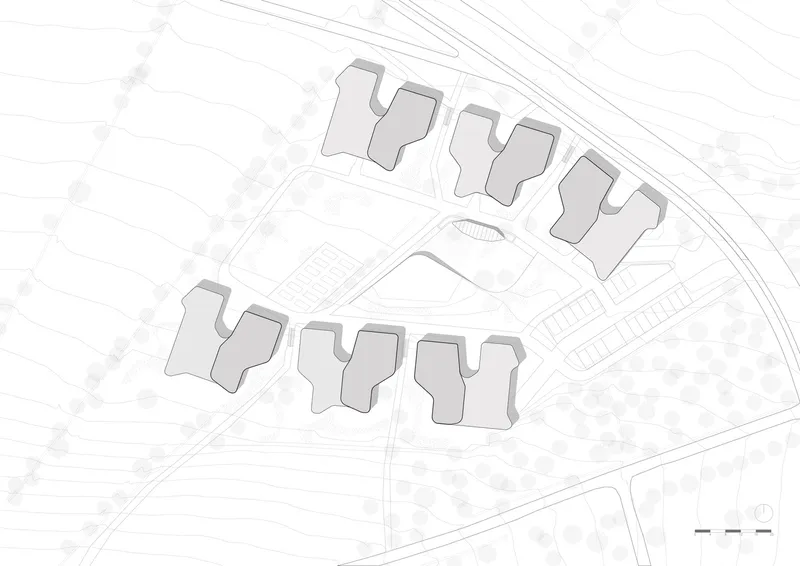
Husene i Skogen, designed by Helen & Hard, reimagines mass timber residential architecture with an innovative approach to site-sensitive design and sustainable materials. Nestled in the Norwegian landscape, the development consists of six timber-built residential buildings carefully integrated into a steeply sloping terrain. By prioritizing both environmental considerations and human-centered design, the project establishes a new standard for sustainable living.
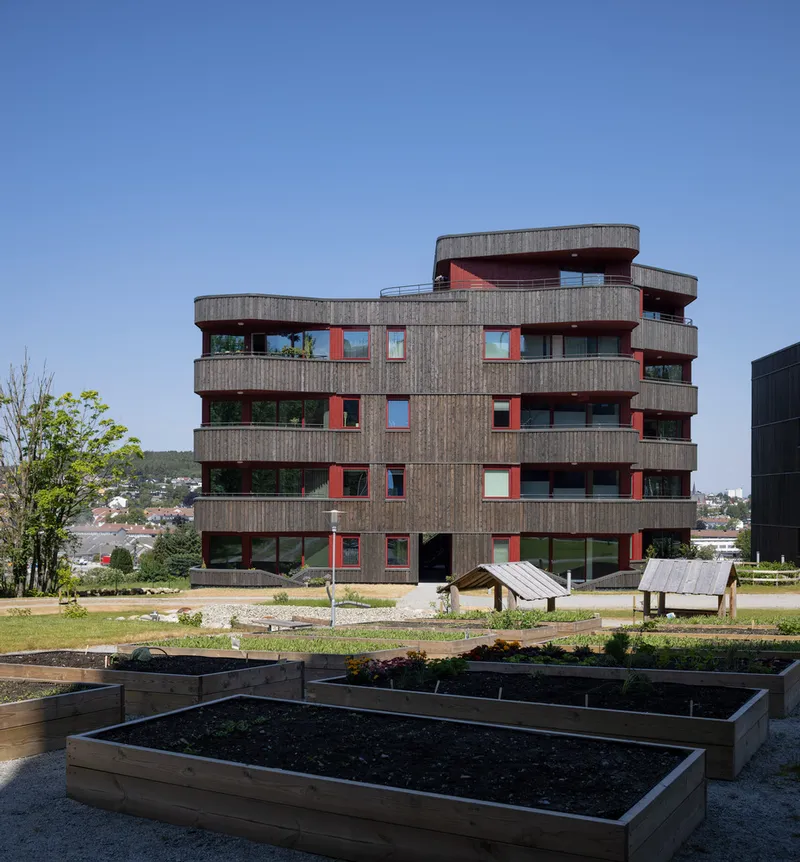
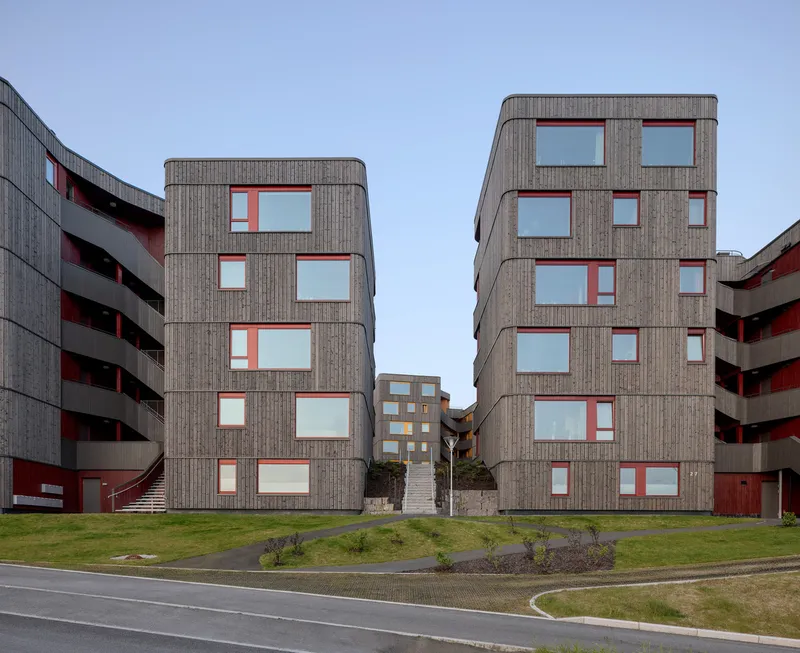
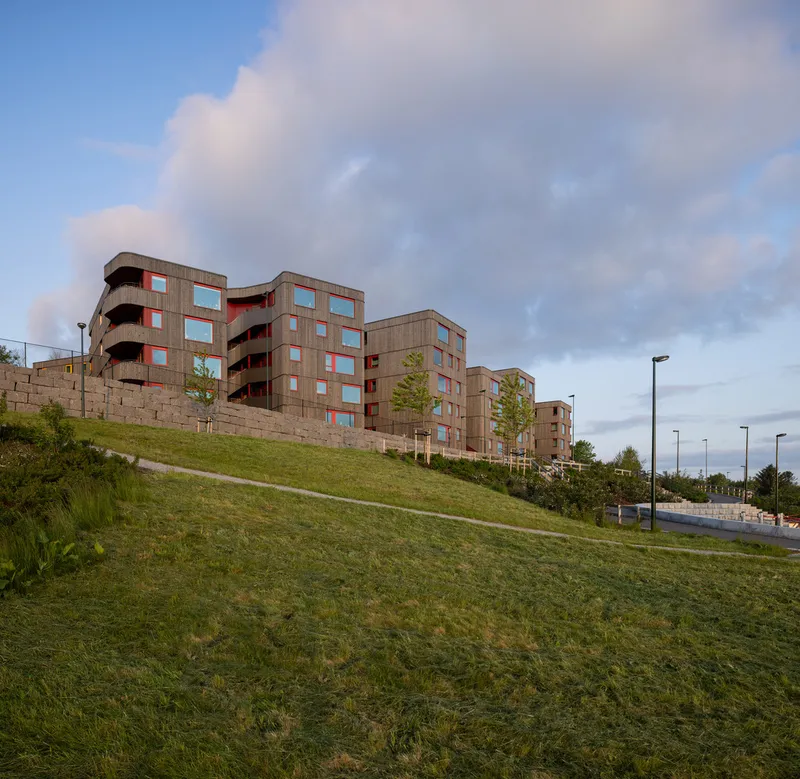
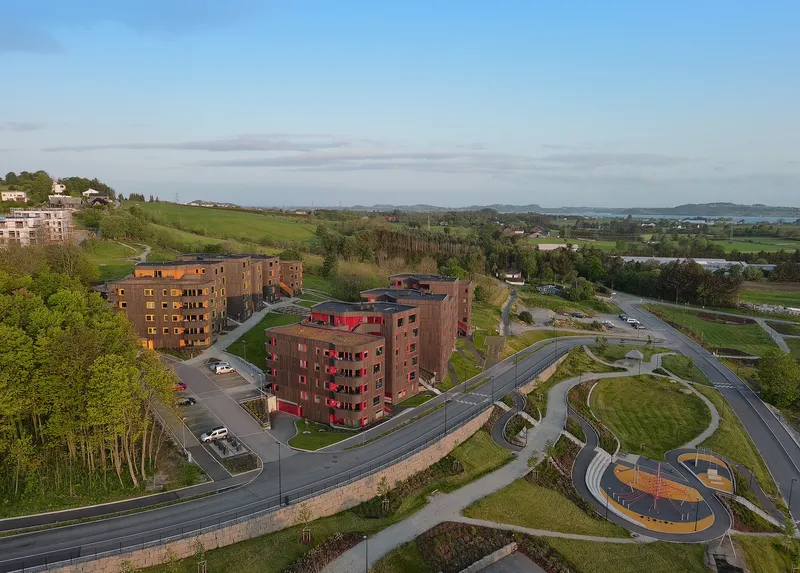
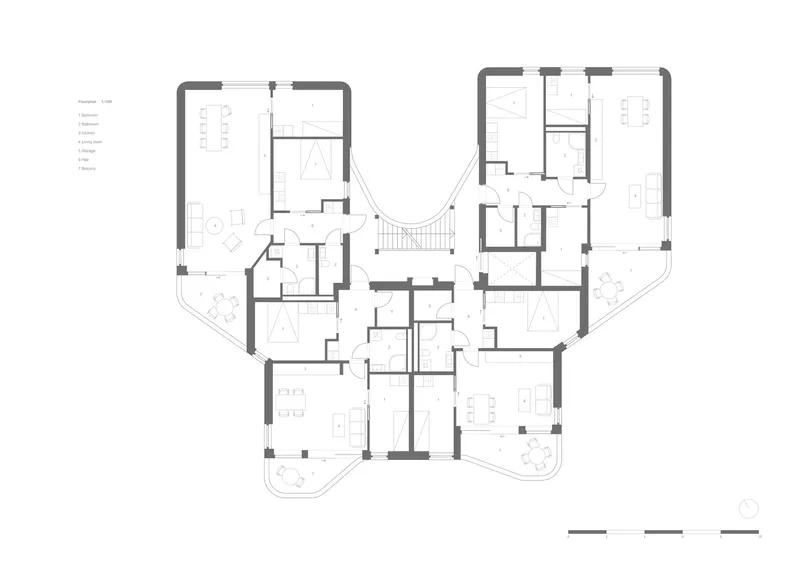
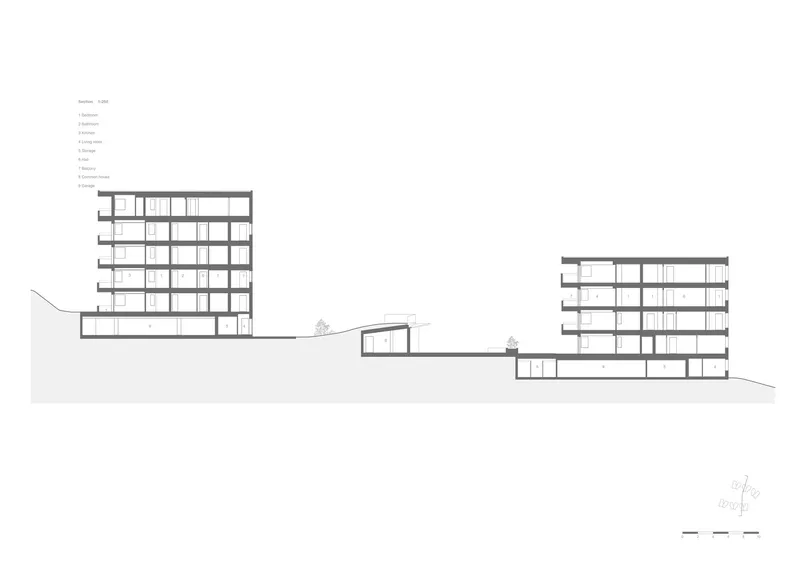
The layout of the buildings follows the natural topography, ensuring that each unit benefits from optimal sunlight, views, and privacy. Positioned in two rows, the rear buildings are elevated above the front, creating a cascading effect that maximizes the connection between residents and the surrounding forested landscape. The residential floors extend over the front of the parking garages, allowing the living spaces to reach ground level while discreetly concealing the parking structure.
Structural Innovation with Mass Timber
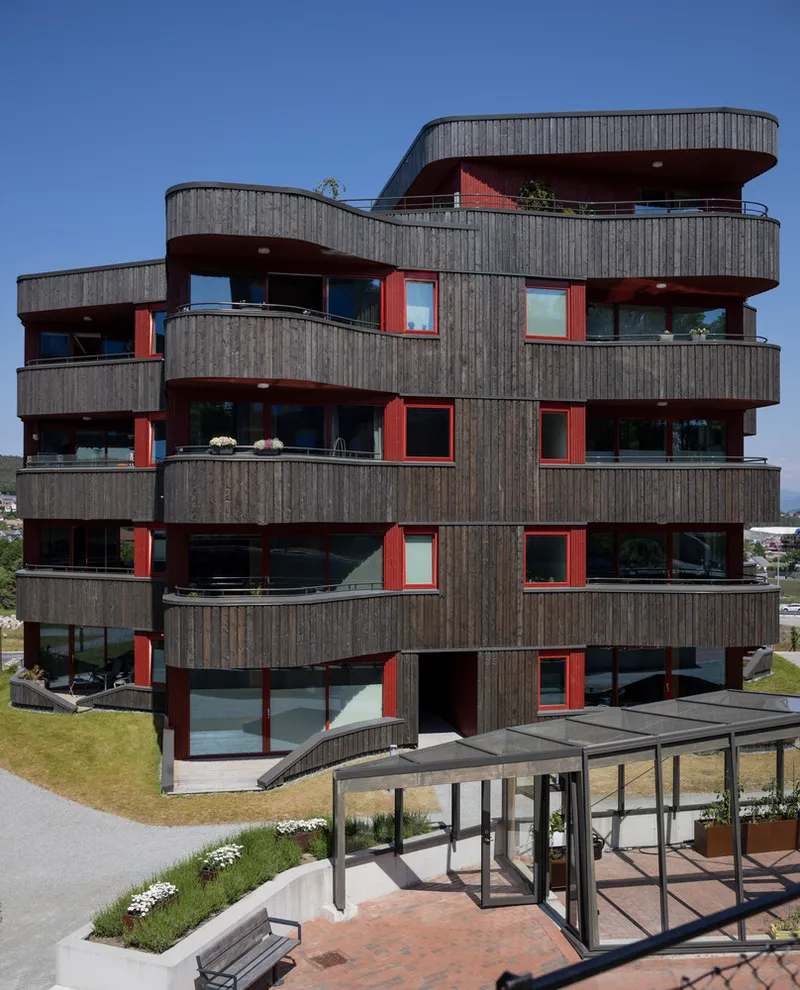
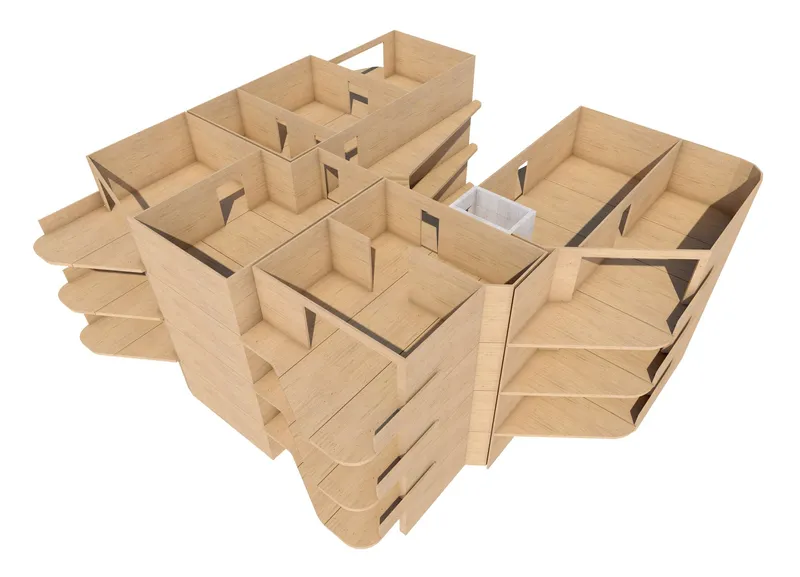
The buildings are constructed using a sophisticated mass timber system, with load-bearing interior walls made of solid timber elements. Floors, roofs, and facades incorporate a timber-frame system that enhances both structural integrity and aesthetic appeal. Prefabricated wall elements, complete with windows and cladding, streamline the construction process while ensuring high levels of precision and quality.
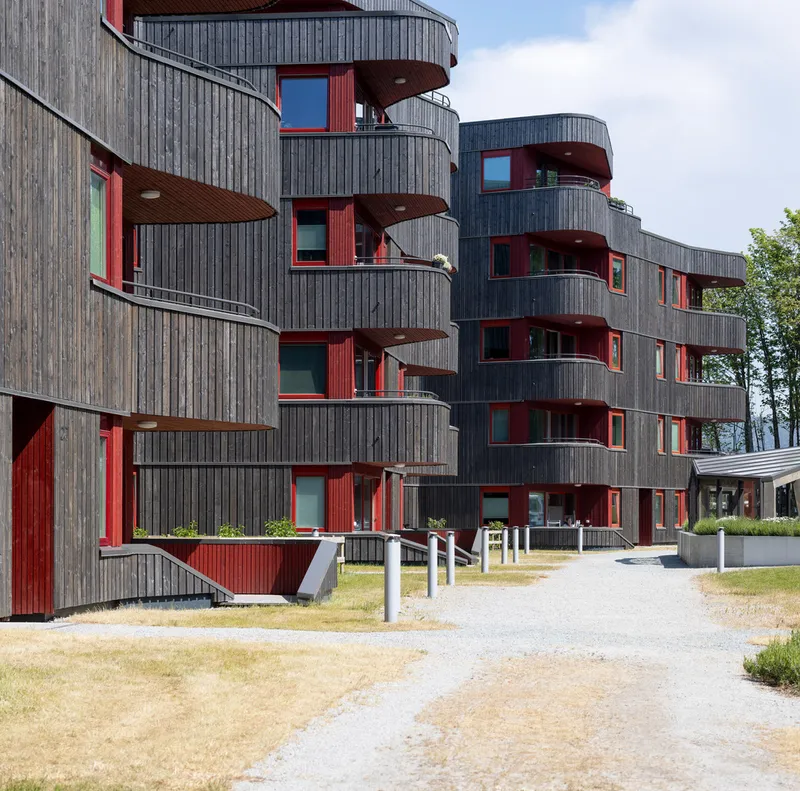
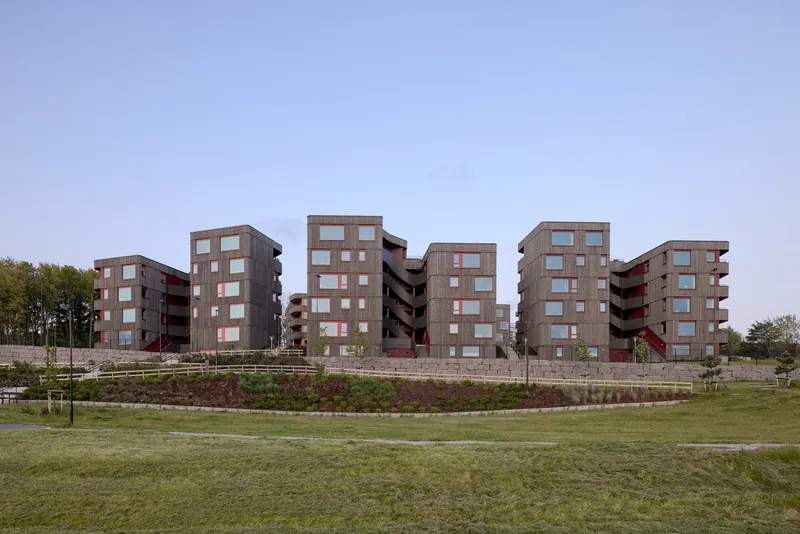
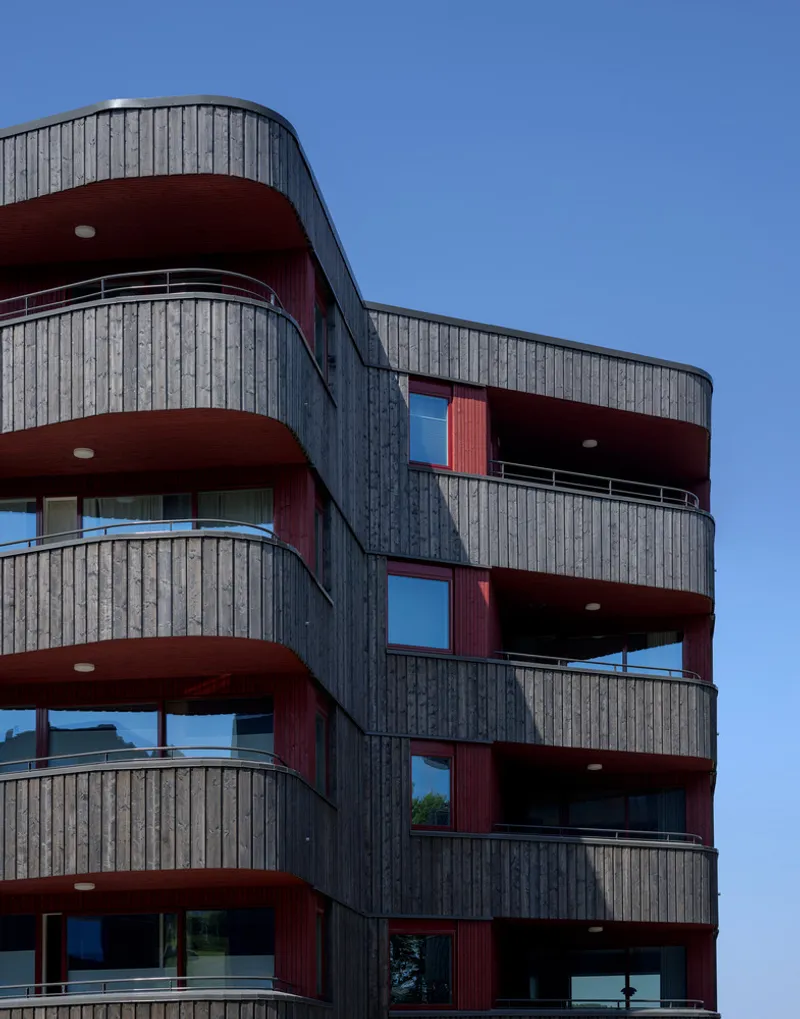
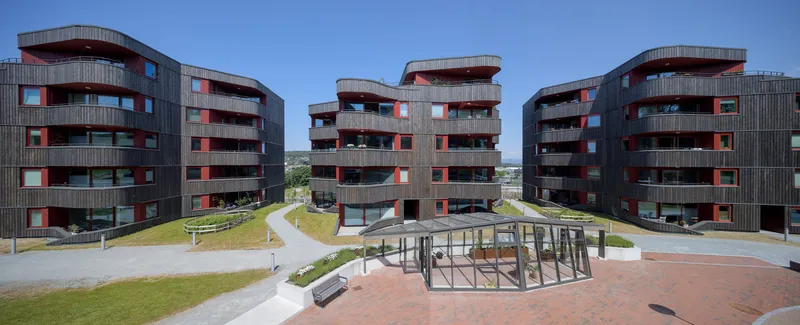
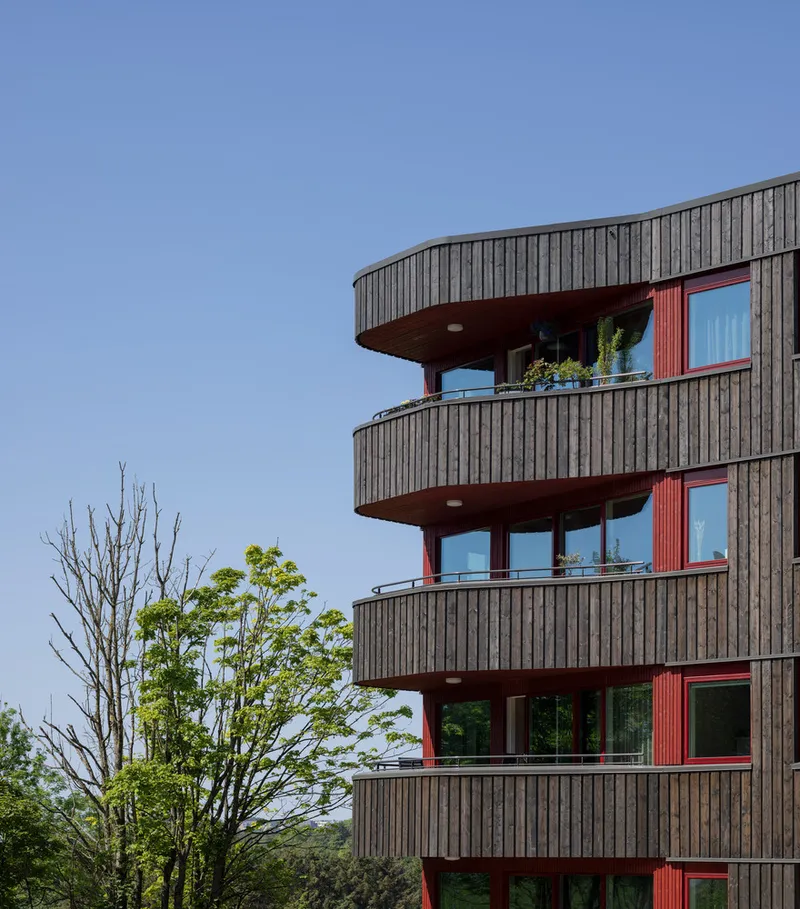
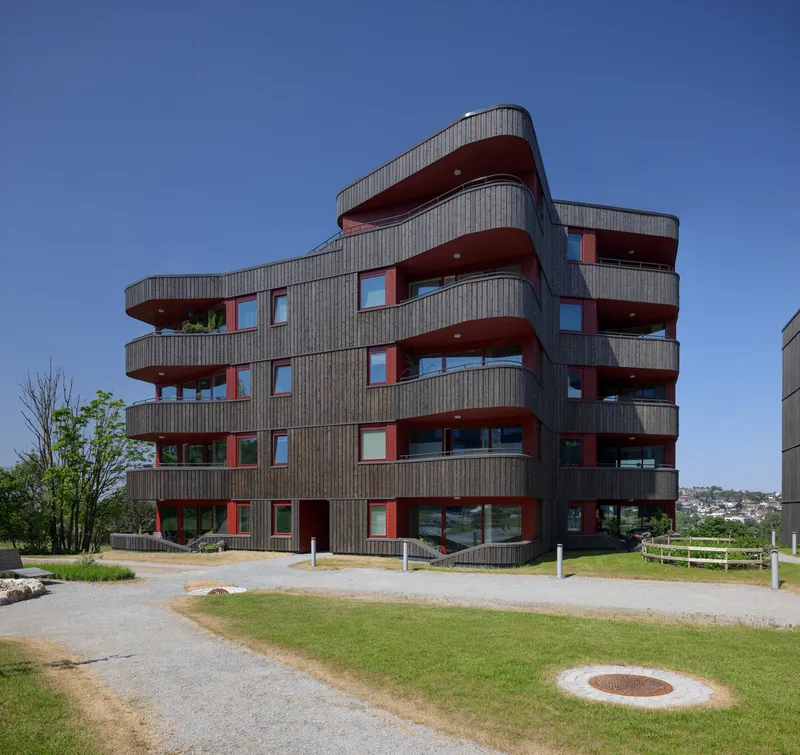
The design introduces organic, curved elements in the balcony railings and facade transitions, softening the overall expression of the structures. While the primary climate shell consists of straight surfaces, the crafted detailing of the balconies adds an architectural identity that resonates with the surrounding woodland. The interplay between contemporary mass timber technology and traditional craftsmanship results in a residential complex that is both functional and visually engaging.
A Community-Oriented Approach to Urban Living
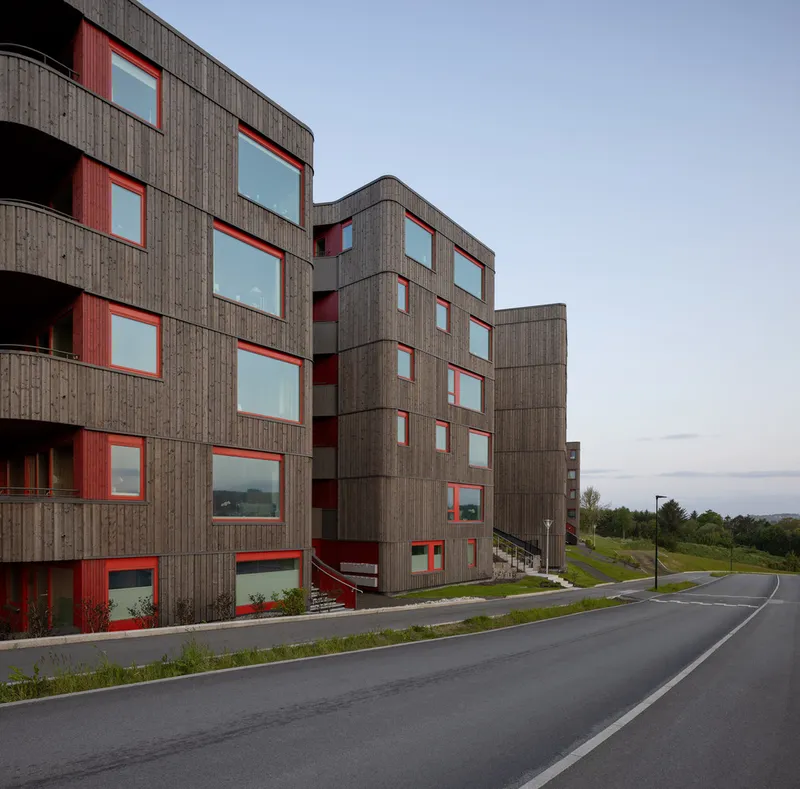
The name "Husene i Skogen," meaning "The Houses in the Forest," reflects the project's deep connection to nature. The development is located along a protected avenue adjacent to small woodlands, influencing both its architectural character and communal spaces. A key aspect of the project is its integration of shared outdoor amenities that foster a sense of community among residents.
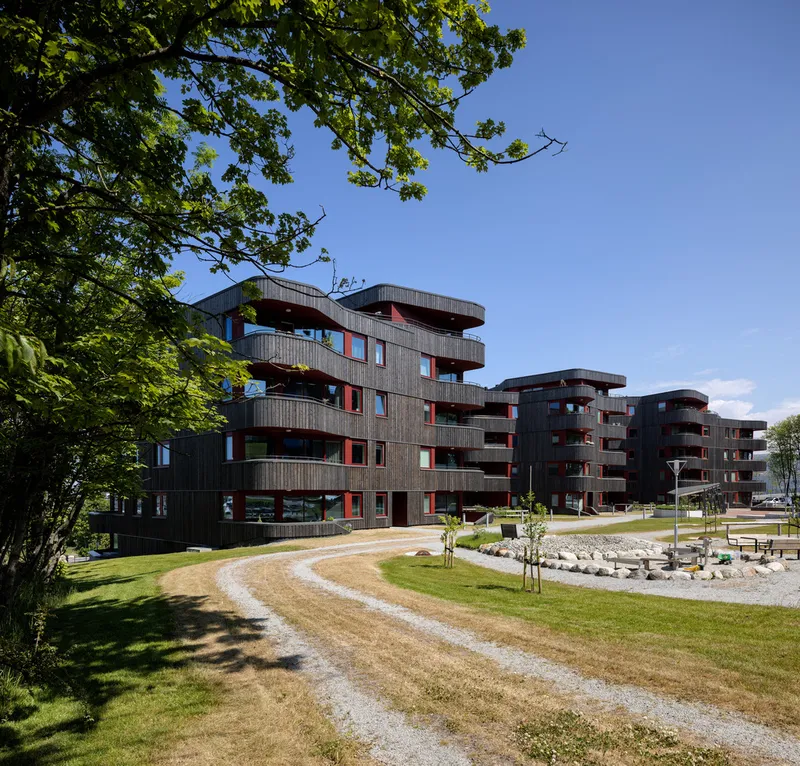
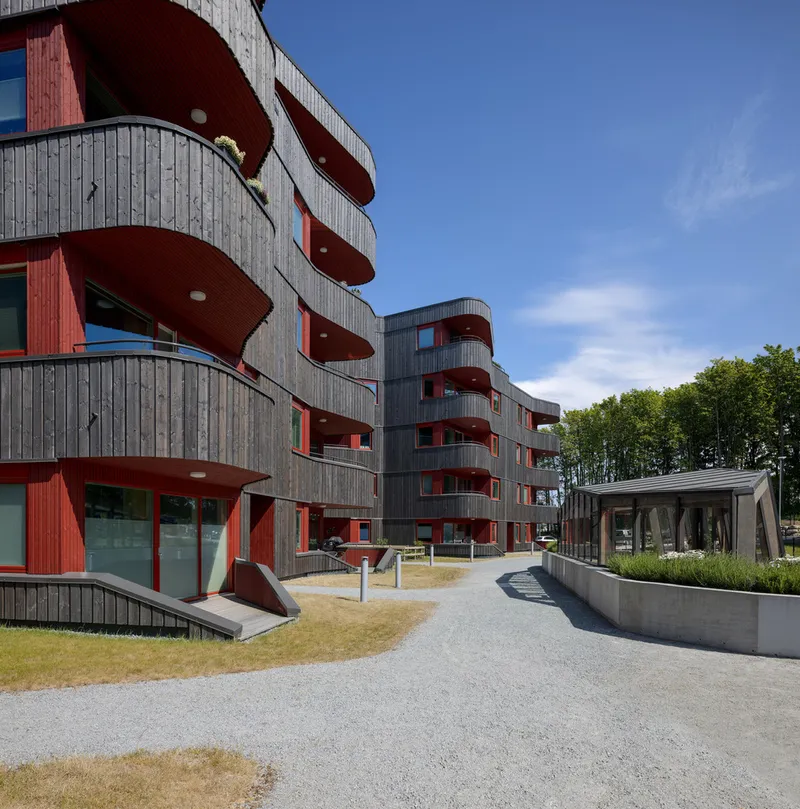
Between the two rows of buildings lies a spacious, sunlit communal area featuring a greenhouse, a cultivation zone, and a shared community house. The community house is strategically positioned within the site's elevation changes, incorporating a glass facade that strengthens its relationship with the outdoors. The landscape design avoids conventional urban elements such as asphalt and curbstones, reinforcing a rural aesthetic that blends seamlessly with the forested surroundings.
Sustainability and Environmental Responsibility
As a mass timber residential project, Husene i Skogen embodies the principles of sustainability and environmental stewardship. Timber construction offers significant carbon sequestration benefits, reducing the project's overall environmental impact. The use of prefabrication not only improves efficiency but also minimizes construction waste and on-site disturbances.
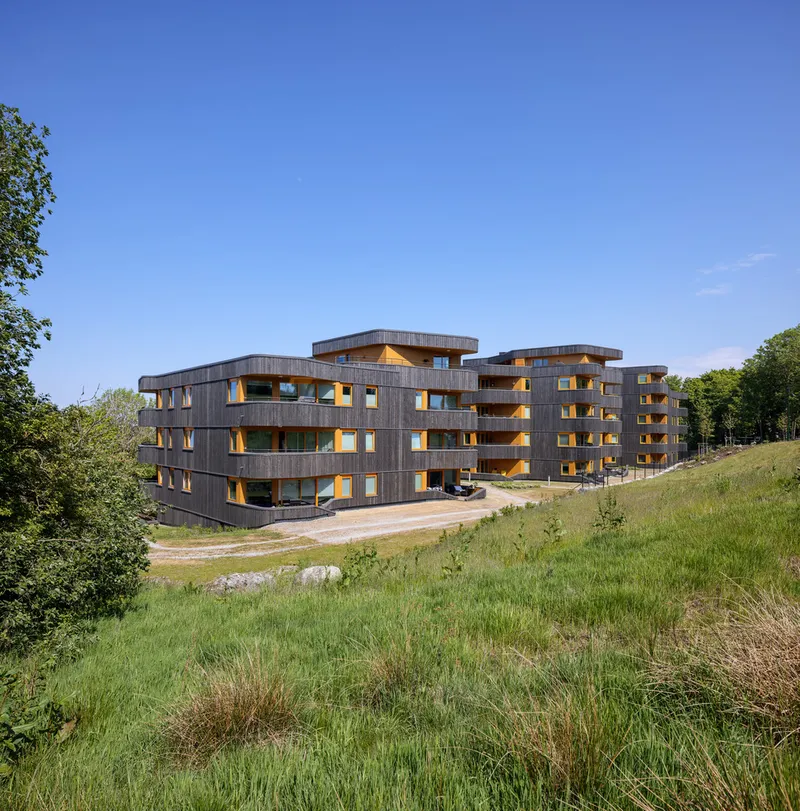
Beyond material sustainability, the project's design enhances energy efficiency through passive strategies. The orientation of the buildings ensures optimal solar exposure, reducing reliance on artificial heating and lighting. Natural ventilation and well-insulated timber walls contribute to a comfortable indoor environment with minimal energy consumption.
Redefining the Future of Residential Timber Architecture
Husene i Skogen represents a forward-thinking approach to mass timber residential architecture, balancing ecological sensitivity with contemporary living standards. The project demonstrates how timber can be leveraged not just for structural efficiency, but also to create spaces that foster well-being and community connection.
By embracing the natural characteristics of its site, integrating sustainable building techniques, and prioritizing shared spaces, Husene i Skogen sets a precedent for future residential developments. As cities worldwide seek greener solutions for housing, this project stands as an inspiring model of how architecture can harmonize with nature while offering high-quality living environments.
All Photographs are works of Sindre Ellingsen


Popular Articles
Popular articles from the community


Architekt Andreas Gruber Scatters 23 Dark Timber Chalets Across a South Tyrolean Forest Edge
In Molini di Tures, Amonti Chalets breaks a resort into a hamlet of gabled timber houses, with parking, storage and services pushed into the slope.

David Macias Steps a Doorless Stone and Plaster House Down a Tropical Colombian Hillside
In the humid hills of Colombia, Threshold House replaces the front door with an open void and terraces its 850 m² down the slope instead of fighting it.

U.GA Architects Wraps an Oval Rooftop Pool in Curved Board-Formed Concrete on Busan's Jeollidan-gil
In Busan's Jeonpo-dong, a 454 m² mixed-use block stacks a neighborhood facility, guest rooms and an oval rooftop pool inside spiraling concrete walls.

Juan García Correa, John González and Claudia Rueda Sink a Circular Amphitheater into a Manizales Engineering Building
On the La Nubia campus in Manizales, Colombia, the S1 Building folds labs and offices into a hillside of ramped lawns that double as a campus route.

Similar Reads
You might also enjoy these articles


Hodi-Mandai Geram
Project Function: Preservation and revitalization of the Intangible heritage and socio-spatial identity of the Hodi by Housing, Cultural Memory Center, Sacred Grove, landscape, local tourism economy


Olio Towers: A Mid-Rise for Performers That Fuses Housing, Rehearsal, and Stage
Located blocks from Houston's Theater District, this modular tower stacks living units around a central performance atrium.

Oasis: Modular Green Housing Carved into Dhaka's Urban Fabric
A shortlisted Plugin Housing entry reclaims unauthorized settlements in Dhaka with stepped concrete volumes, green roofs, and ventilation-driven design.

Black Hole: A Floating Megastructure for the Post-Physical Era
Emiliano Mazzarotto envisions a spherical, self-scaling arena where e-sports, digital hotels, and holographic stadiums replace traditional public space.

Explore Nordic Sustainable Architecture Competitions
Discover active competitions in this discipline

Challenge to reimagine the Iron Throne

Photograph architecture without architects

Illustrate the lost glory of Angkor Wat - Render Challenge

Design challenge to reuse E-waste
Comments (0)
Please login or sign up to add comments
No comments yet. Be the first to comment!