

Innovative Learning Architecture at Koganei’s Welcome Center by VUILD
The Learning Architecture Welcome Center by VUILD combines CLT, CNC fabrication, and parametric design, creating a flexible, experimental educational pavilion in Japan.


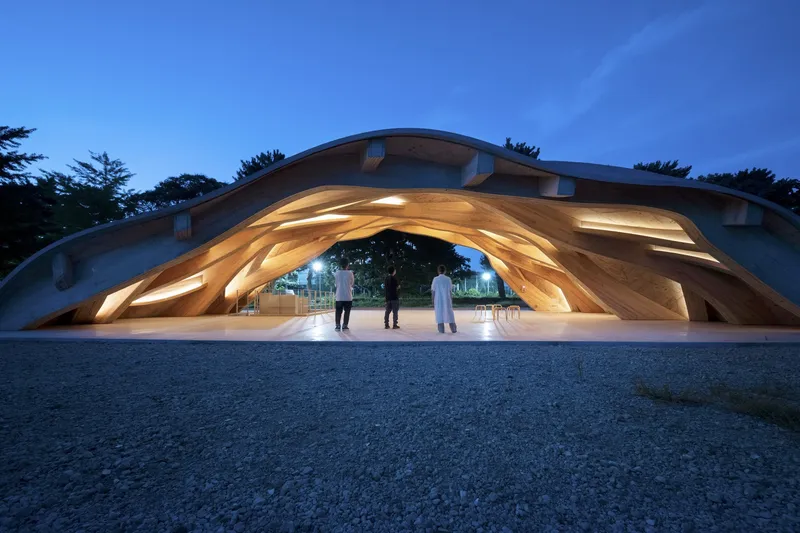
The Learning Architecture for Learners Welcome Center, designed by VUILD Inc., is a cutting-edge cultural and educational pavilion located in Koganei, Japan. Completed in 2023, this 295 m² facility serves as a hub for collaborative learning under Tokyo Gakugei University’s Educational Incubation Center ‘Explayground’, promoting synergy between industry, government, and academia.

Pioneering Concrete and CLT Construction
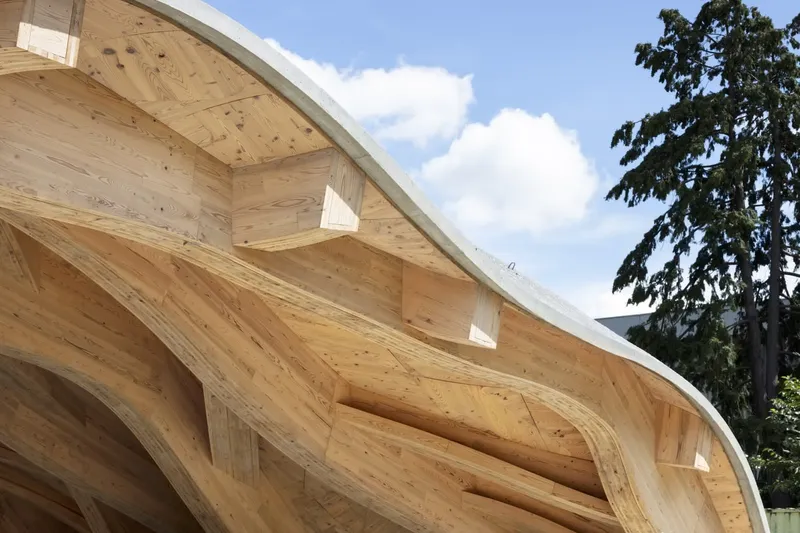
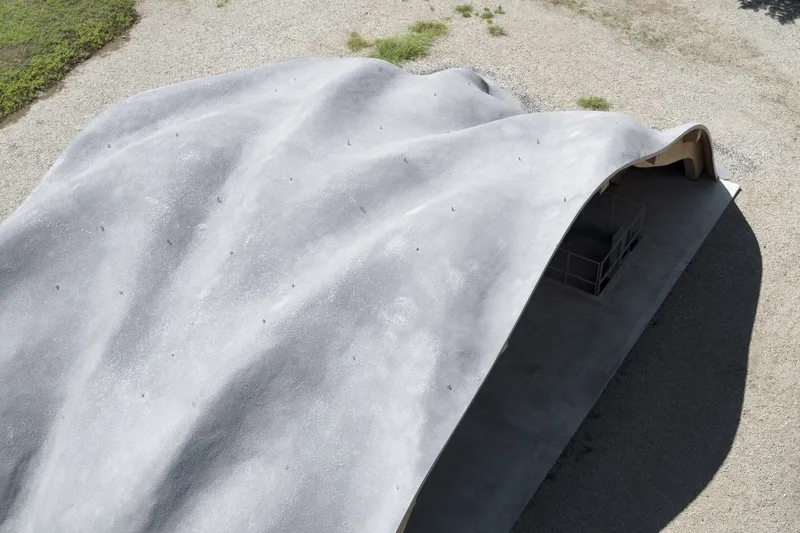
The structure employs an unprecedented construction method in Japan, combining reinforced concrete with CLT (Cross-Laminated Timber) panels as formwork. Using CNC-machined wooden beams and panels, the concrete slab retains the residual formwork as the finished surface, merging aesthetic and structural innovation.
A geometric algorithm generated a precise CAD model, which was translated into a 5-axis CNC machining path by VUILD’s parametric team. All components were pre-cut in VUILD’s in-house factory, ensuring precision, efficiency, and cost reduction. The CNC machine used for fabrication is permanently installed in the pavilion, allowing visitors to experience advanced digital manufacturing firsthand.

Open, Adaptive, and Experimental Learning Spaces
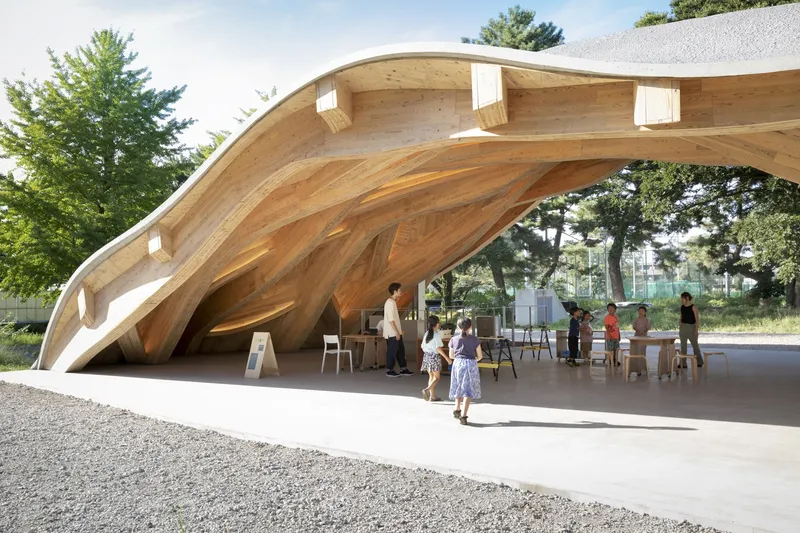
VUILD’s design challenge was to create a flexible, open environment suitable for next-generation public education. The pavilion functions as an expandable, unfinished space, where architecture itself becomes a learning tool.
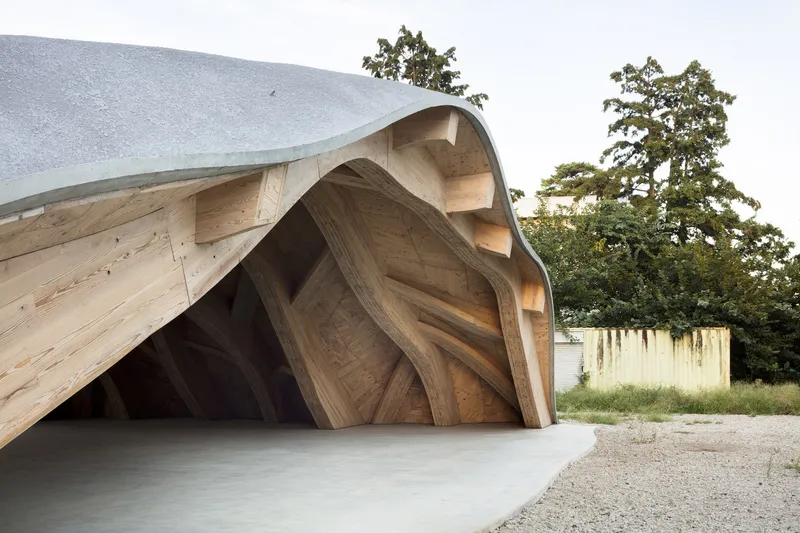
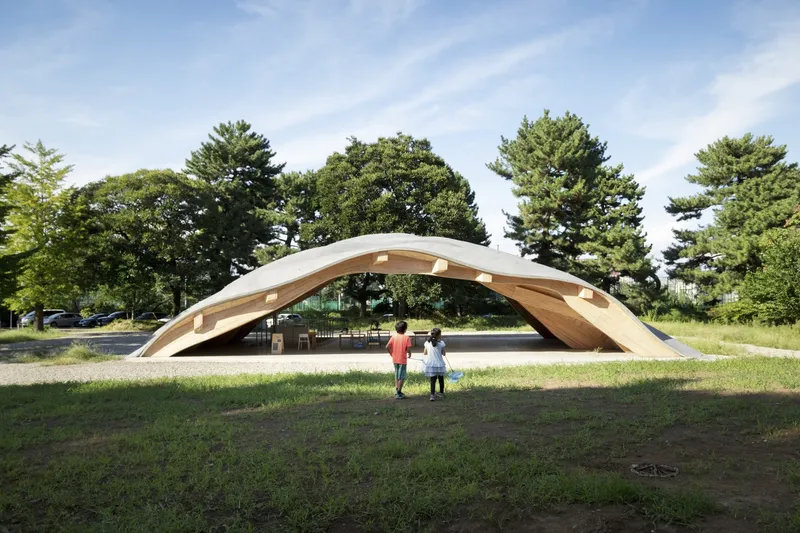
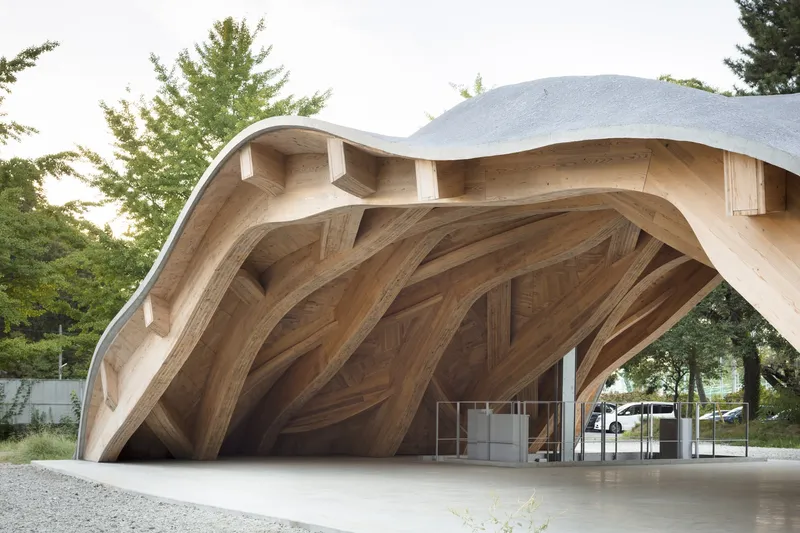
To achieve this, VUILD constructed a large-span versatile shell using CLT beams shaped with sine curves, layered in a zigzag pattern that mimics leaf veins in nature. These beams span 25 meters, supporting an 8 cm thick concrete slab, achieving structural integrity with minimal material usage. This innovative unit construction method, patented as JP 2021-042568, reduces costs by 40% compared to traditional shell construction.


Integration of Parametric Design and Structural Optimization
The pavilion leverages parametric design to streamline the workflow. Three-dimensional data was shared with structural engineers for rapid analysis and error reduction. The CAD and CAM integration enabled precise panel placement, thickness optimization, and free-form surface generation, resulting in 360 machined CLT panels forming a 963-part formwork.
Different CLT panel thicknesses, ranging from 60 mm to 210 mm, were color-coded in 3D diagrams for efficient on-site assembly. This method not only enhances construction efficiency but also allows for structural and material optimization, making it a model of sustainable and digital fabrication in architecture.
A Hub for Learning and Innovation
The Welcome Center is more than an architectural landmark, it is a hands-on educational space. Visitors can observe and engage with CNC milling technology, exploring the intersection of architecture, digital fabrication, and collaborative learning. The pavilion embodies experimental, adaptive, and environmentally conscious design, setting a new standard for educational architecture in Japan and beyond.
All photographs are works of
Takumi Ota



Popular Articles
Popular articles from the community


Riyadh For All: Intergenerational Urban Design for Active Aging in Rabat
Riyadh For All reimagines urban design in Rabat with intergenerational co-living, adaptive courtyards, and Moroccan cultural exchange today.

Conexión: Biophilic Design Reimagines High-Rise Living in Hong Kong
Conexión reimagines high-rise living in Hong Kong through biophilic design, green facades, shared spaces, daylight, water and nature within.

The Earth Pod: 3D Printed Homes for Resilient Refugee Communities
The Earth Pod reimagines refugee housing through 3D printed homes made from clay, combining resilience, self-sufficiency, and rapid shelter.

The Musturak Paradise: Senior Living Architecture for a Connected Future in Temara, Morocco
The Musturak Paradise reimagines senior living architecture in Temara via private homes, social spaces, culture, community, and shared care.
Similar Reads
You might also enjoy these articles

FAMM Arquitectura Organizes Ten Villas Around Courtyards and Jungle in Nosara, Costa Rica
El Molino pairs two elongated volumes with deep overhangs and timber louvers to build a compact coastal community five minutes from the beach.
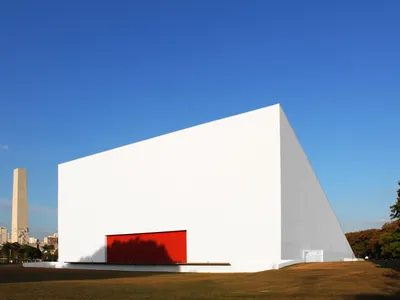
Oscar Niemeyer's Ibirapuera Park Pavilions Define São Paulo's Cultural Identity in Concrete and Curve
A constellation of modernist volumes set within São Paulo's most important urban park, conceived for the city's 400th anniversary in 1954.
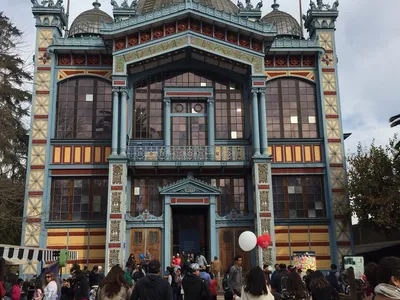
How Henri Picq's 1889 Paris Pavilion Traveled 11,000 Kilometers to Become Santiago's Artequín Museum
A prefabricated iron and glass pavilion built for the Paris Universal Exposition found a second life as a children's art museum in Chile.
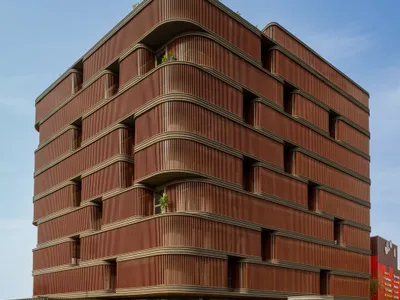
Sanjay Puri Architects Wraps a Jaipur Office Tower in Capsule-Shaped Green Buffers
A nine-level climate-responsive workplace near Jaipur Airport uses stacked planter terraces and aluminium screens to fight 40°C heat.


Explore Architecture Competitions
Discover active competitions in this discipline



Challenge to reimagine the Iron Throne


Photograph architecture without architects


Illustrate the lost glory of Angkor Wat - Render Challenge


Bring back Drive In's
Comments (0)
Please login or sign up to add comments
No comments yet. Be the first to comment!