
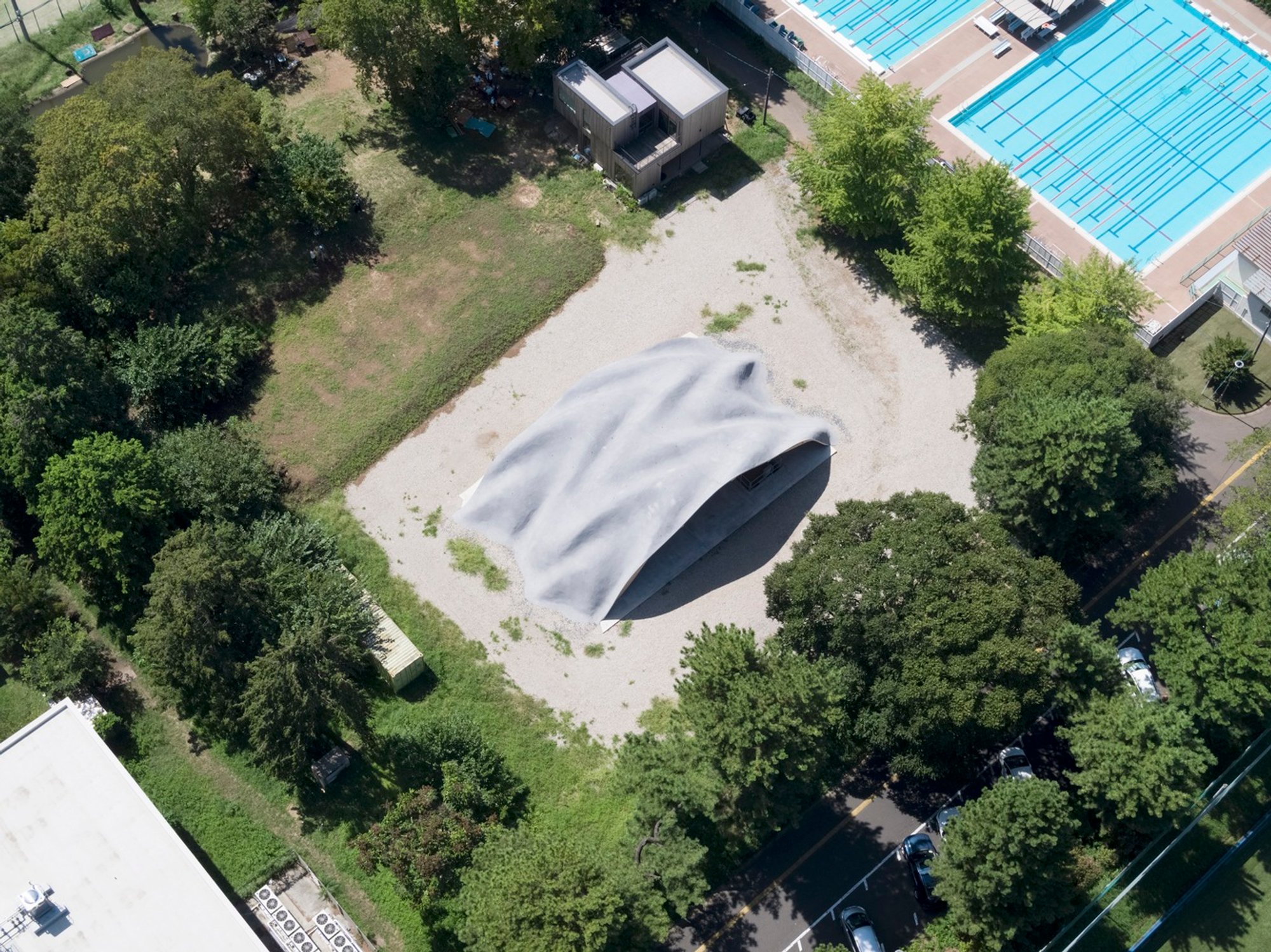
Innovative Learning Architecture at Koganei’s Welcome Center by VUILD
The Learning Architecture Welcome Center by VUILD combines CLT, CNC fabrication, and parametric design, creating a flexible, experimental educational pavilion in Japan.

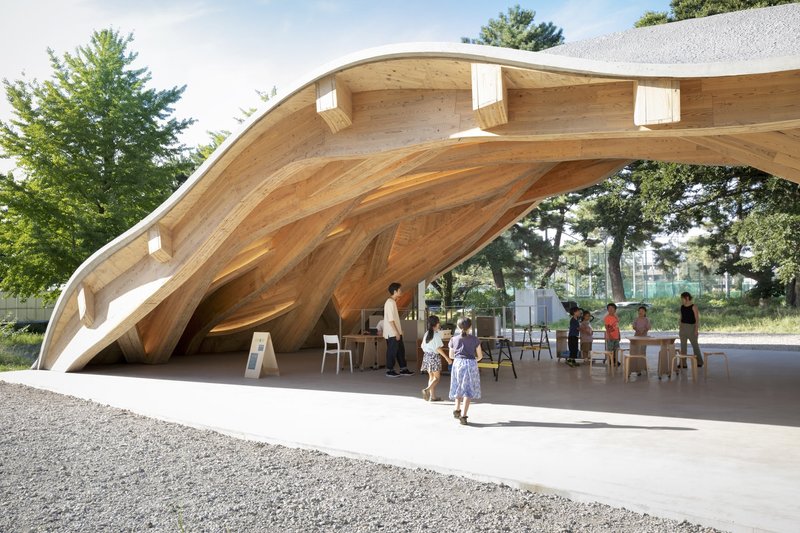
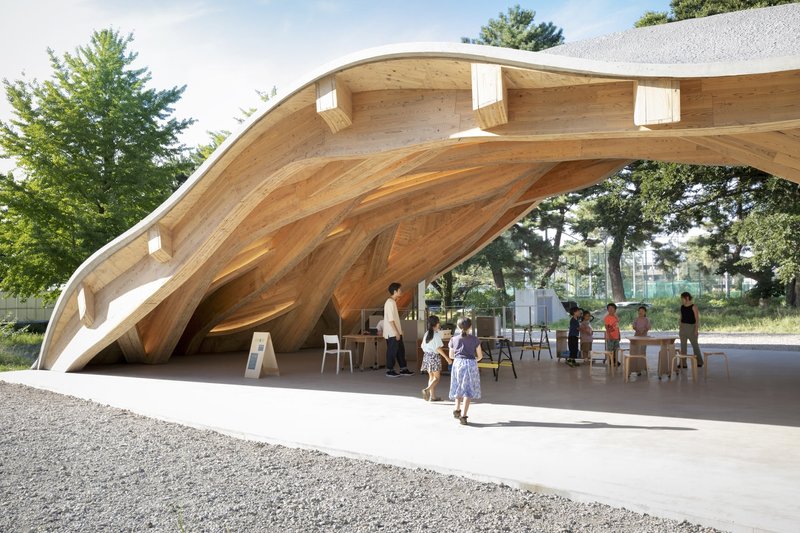
The Learning Architecture for Learners Welcome Center, designed by VUILD Inc., is a cutting-edge cultural and educational pavilion located in Koganei, Japan. Completed in 2023, this 295 m² facility serves as a hub for collaborative learning under Tokyo Gakugei University’s Educational Incubation Center ‘Explayground’, promoting synergy between industry, government, and academia.
Pioneering Concrete and CLT Construction
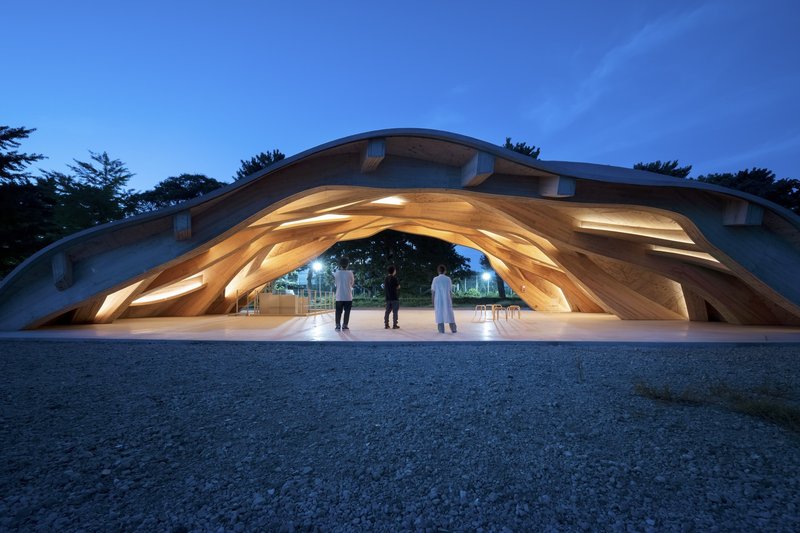
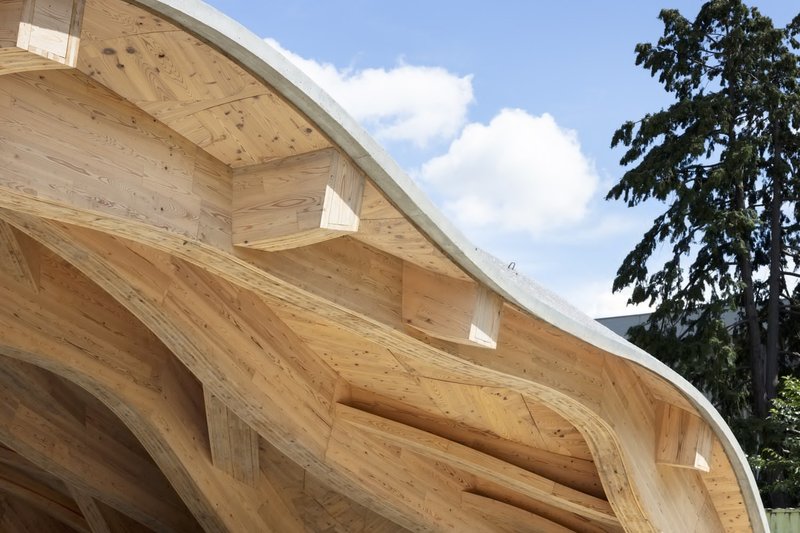
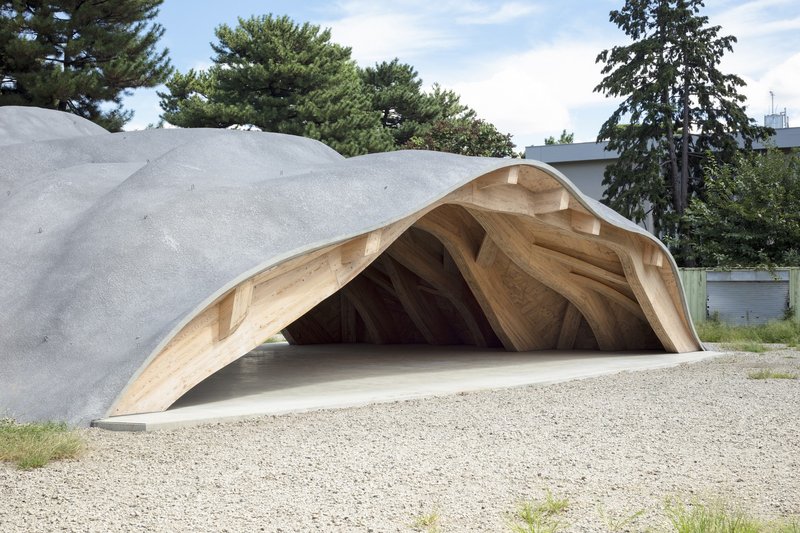
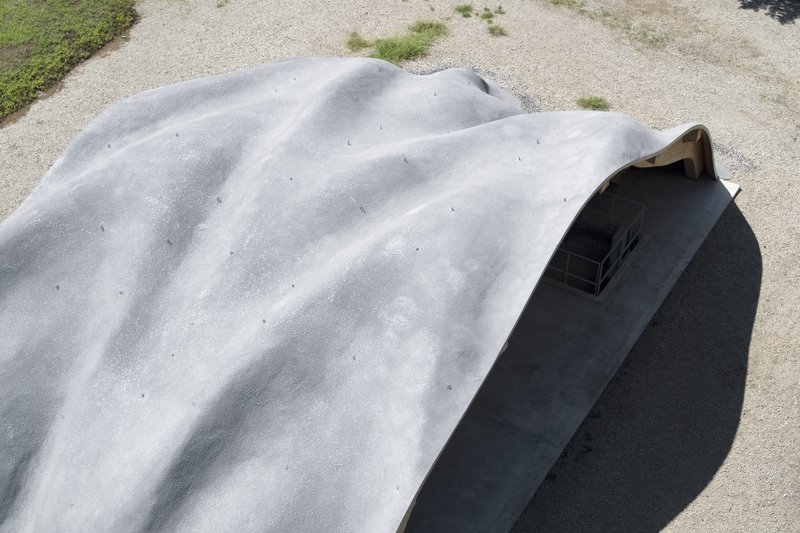
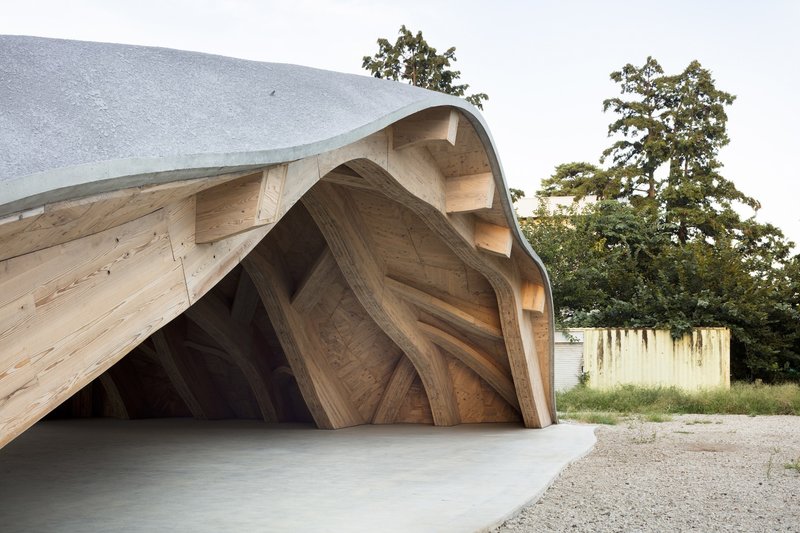
The structure employs an unprecedented construction method in Japan, combining reinforced concrete with CLT (Cross-Laminated Timber) panels as formwork. Using CNC-machined wooden beams and panels, the concrete slab retains the residual formwork as the finished surface, merging aesthetic and structural innovation.
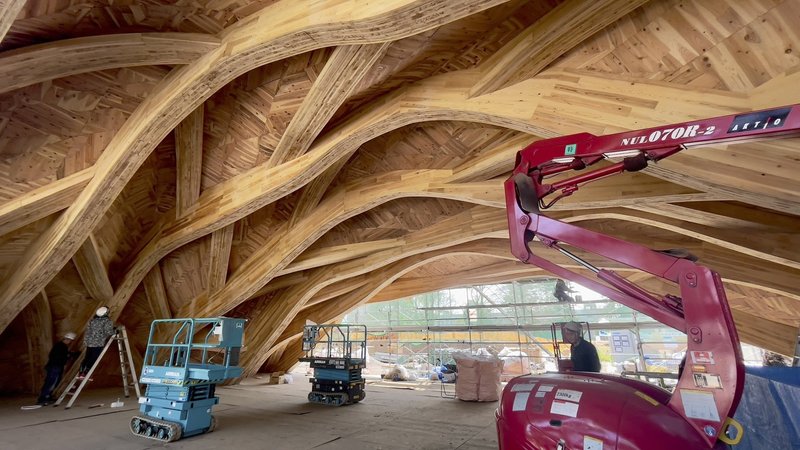
A geometric algorithm generated a precise CAD model, which was translated into a 5-axis CNC machining path by VUILD’s parametric team. All components were pre-cut in VUILD’s in-house factory, ensuring precision, efficiency, and cost reduction. The CNC machine used for fabrication is permanently installed in the pavilion, allowing visitors to experience advanced digital manufacturing firsthand.
Open, Adaptive, and Experimental Learning Spaces
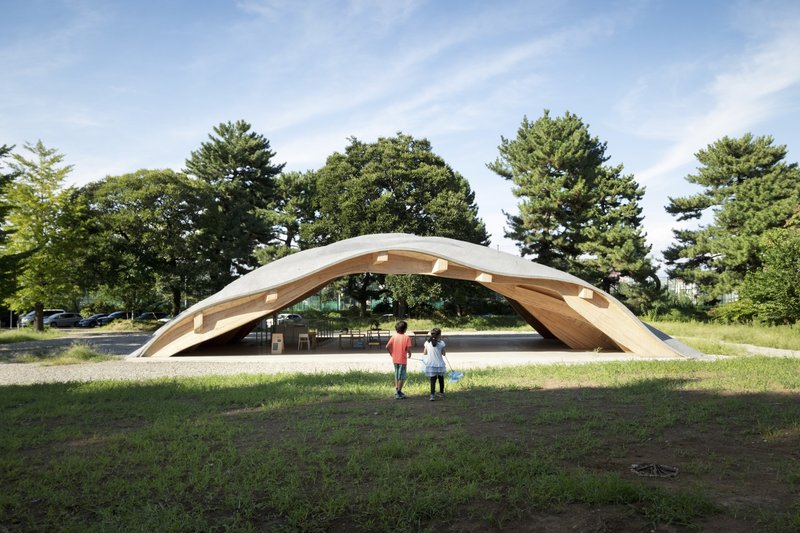
VUILD’s design challenge was to create a flexible, open environment suitable for next-generation public education. The pavilion functions as an expandable, unfinished space, where architecture itself becomes a learning tool.
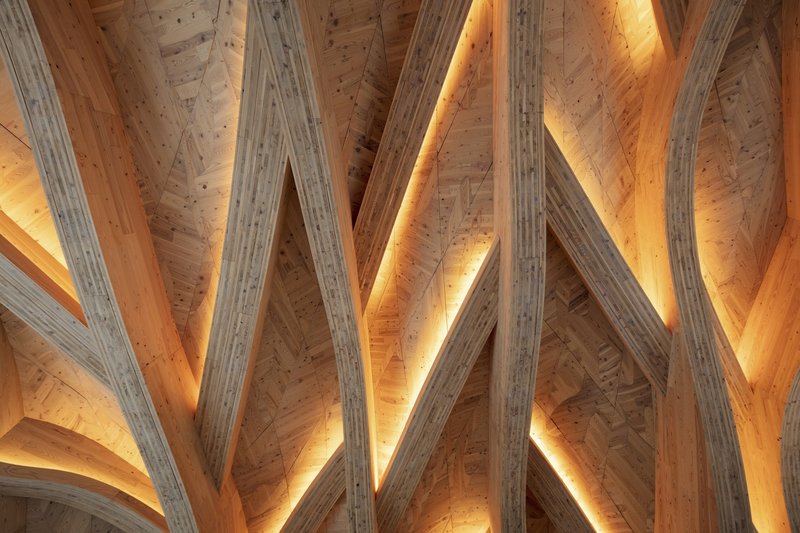
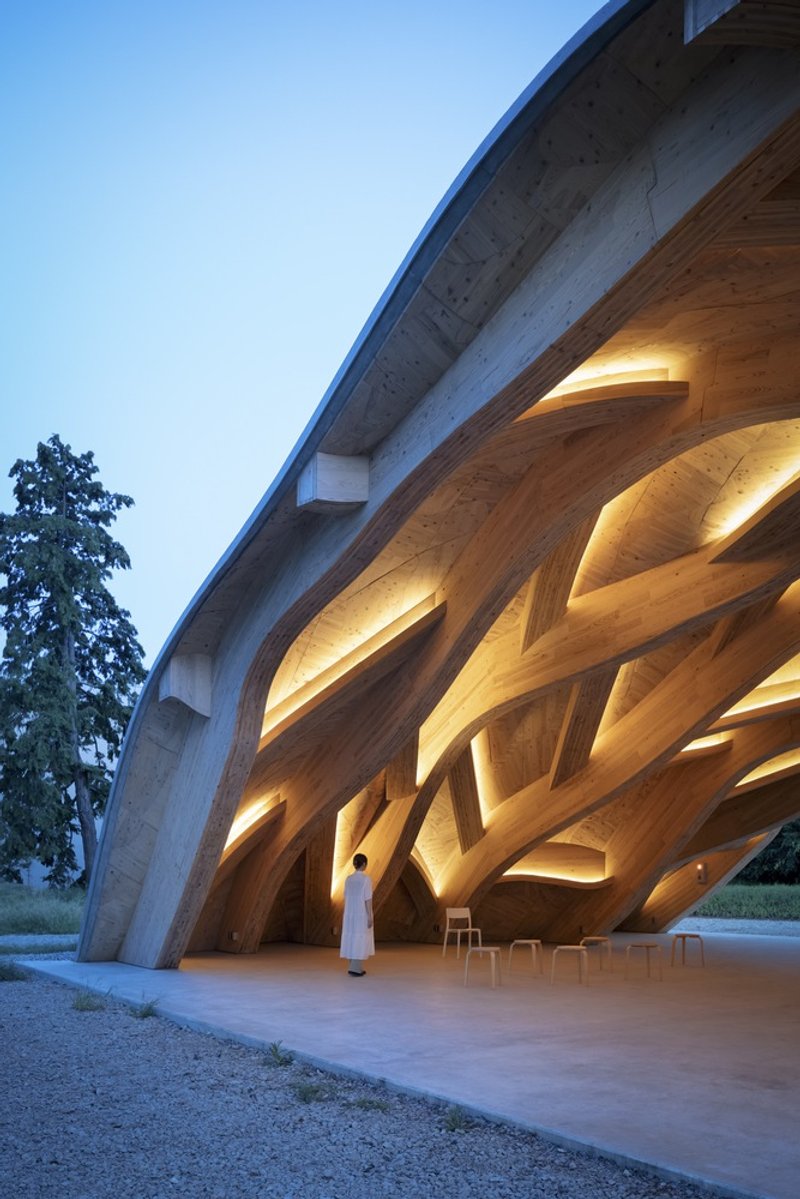
To achieve this, VUILD constructed a large-span versatile shell using CLT beams shaped with sine curves, layered in a zigzag pattern that mimics leaf veins in nature. These beams span 25 meters, supporting an 8 cm thick concrete slab, achieving structural integrity with minimal material usage. This innovative unit construction method, patented as JP 2021-042568, reduces costs by 40% compared to traditional shell construction.
Integration of Parametric Design and Structural Optimization
The pavilion leverages parametric design to streamline the workflow. Three-dimensional data was shared with structural engineers for rapid analysis and error reduction. The CAD and CAM integration enabled precise panel placement, thickness optimization, and free-form surface generation, resulting in 360 machined CLT panels forming a 963-part formwork.
Different CLT panel thicknesses, ranging from 60 mm to 210 mm, were color-coded in 3D diagrams for efficient on-site assembly. This method not only enhances construction efficiency but also allows for structural and material optimization, making it a model of sustainable and digital fabrication in architecture.
A Hub for Learning and Innovation
The Welcome Center is more than an architectural landmark, it is a hands-on educational space. Visitors can observe and engage with CNC milling technology, exploring the intersection of architecture, digital fabrication, and collaborative learning. The pavilion embodies experimental, adaptive, and environmentally conscious design, setting a new standard for educational architecture in Japan and beyond.
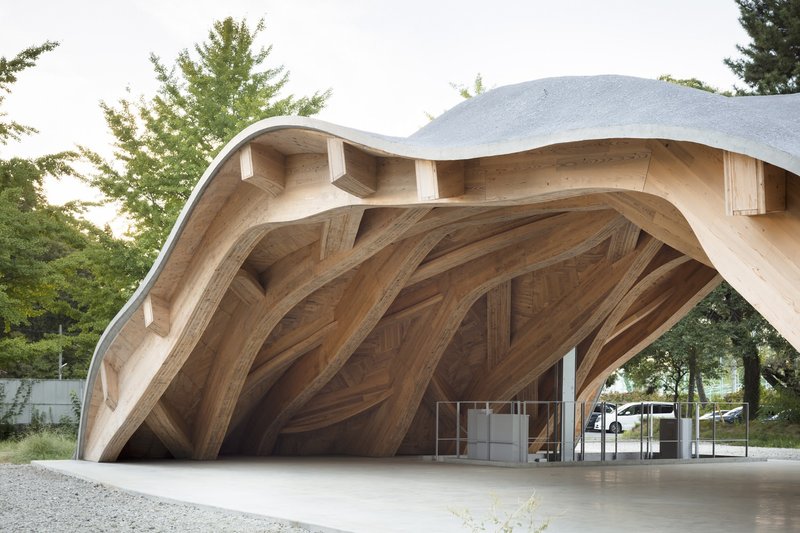
All photographs are works of
Takumi Ota




Popular Articles
Popular articles from the community

Split House: A Compact Urban Home Blending Privacy, Light, and Flexible Living in Japan
Compact Japanese home featuring DOMA space, flexible café potential, passive lighting, privacy zoning, and sustainable urban living design.
Gads Hill Early Learning Center by JGMA: Adaptive Reuse Shaping Community-Focused Educational Architecture
Adaptive reuse transforms fragmented structure into vibrant early learning center with playful façade, natural light, and community-focused sustainable design.

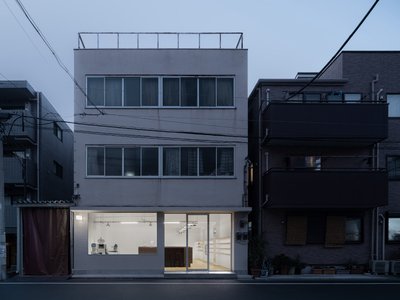
Atelier Macri Concept Store Interior Design by CASE-REAL
Atelier Macri store features a "ko" counter, walnut wood details, cork displays, blending retail, gallery, and seamless customer experiences.


Similar Reads
You might also enjoy these articles

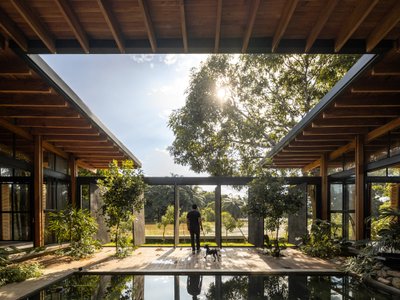
The House of Time: A Slow Architecture in Ecuador
Natura Futura built a 180 m² mixed-use house in Babahoyo, Ecuador that treats time as a material. River, craft, and community keep it.
Free Architecture Competitions You Can Enter Right Now
No entry fees, real prizes. Here are the best free architecture competitions open for submissions in 2026.

Top 15 Architecture Competitions to Enter in 2026
From student-friendly idea competitions to prestigious international awards, here are the best architecture competitions open for entries in 2026. Updated regularly.

DIY & Engineering in Computational Design : Enter the BeeGraphy Design Awards
Showcase Your Creativity with Computational Design and Open Source Projects


Explore Architecture Competitions
Discover active competitions in this discipline




The International Standard for Design Portfolios


The Global Benchmark for Architecture Dissertation Awards


The Global Benchmark for Graduation Excellence


Challenge to design an urban locus of culture and heritage
Comments (0)
Please login or sign up to add comments
No comments yet. Be the first to comment!