
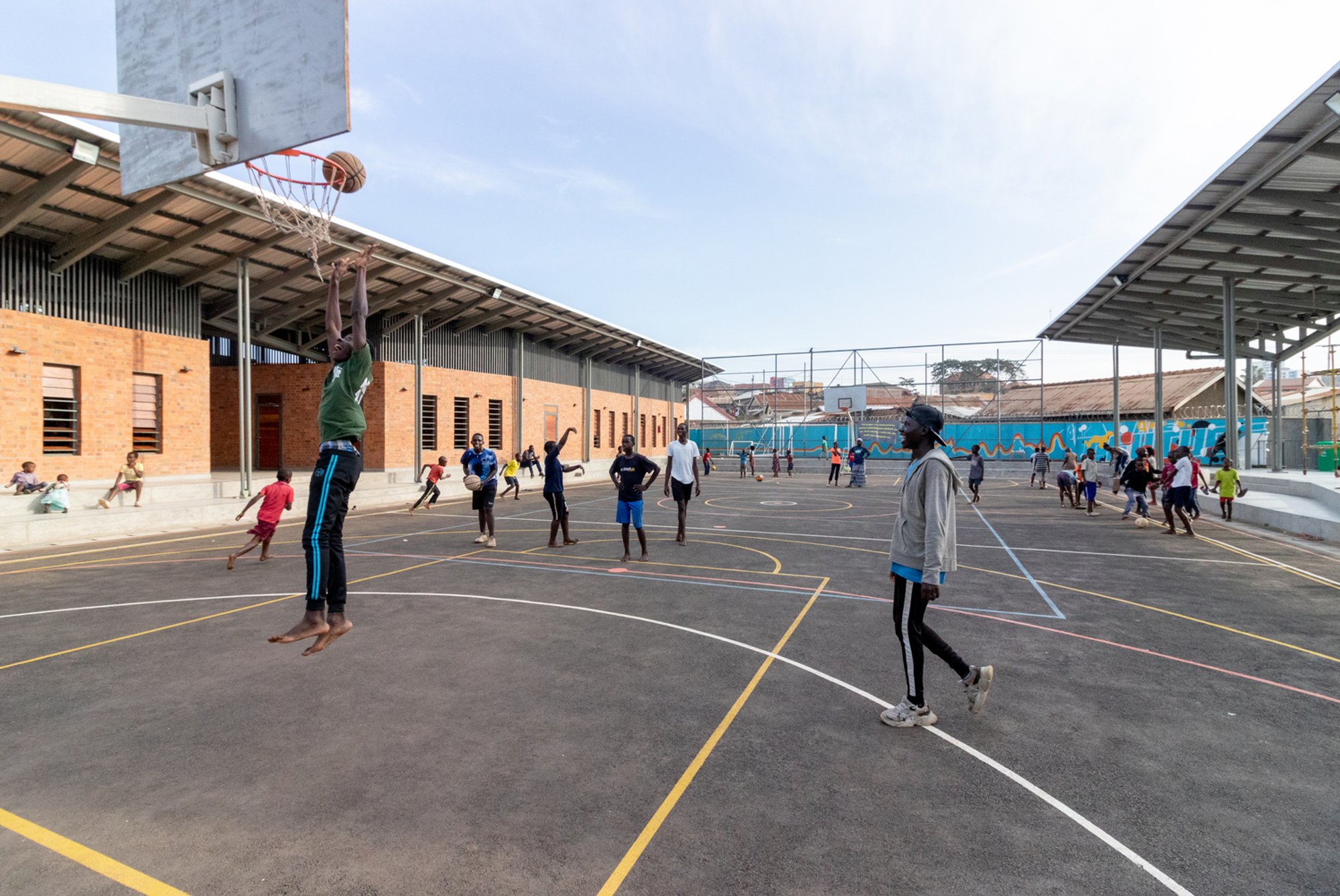
Kamwokya Community Center: A Benchmark in Community Center Architecture Design
Exploring the Kamwokya Community Center's innovative architecture, blending sustainability and functionality to transform and empower underserved communities.

The Kamwokya Community Center in Kampala, Uganda, is an exemplary achievement in community-focused architectural design. Designed by the renowned Kéré Architecture, the center merges practicality, sustainability, and beauty, addressing the needs of one of the most underserved areas in Uganda’s capital. This facility, completed in 2022, is not just a space—it’s a catalyst for transformation, fostering pride and a sense of belonging within the Kamwokya community.
A Vision Rooted in Community Needs
The Kamwokya Community Centre was conceptualized as a partnership between the Kamwokya Christian Caring Community and the Ameropa Foundation. Together, they envisioned a hub that would elevate local sports, arts, and social activities while preserving the public and free character of the site.
By offering spaces for sports matches, workshops, music lessons, and informal gatherings, the center aligns with its goal to inspire and empower residents without imposing external designs that might alienate them.
Innovative Features in Community Center Architecture Design
1. Elevated Platform for Resilience
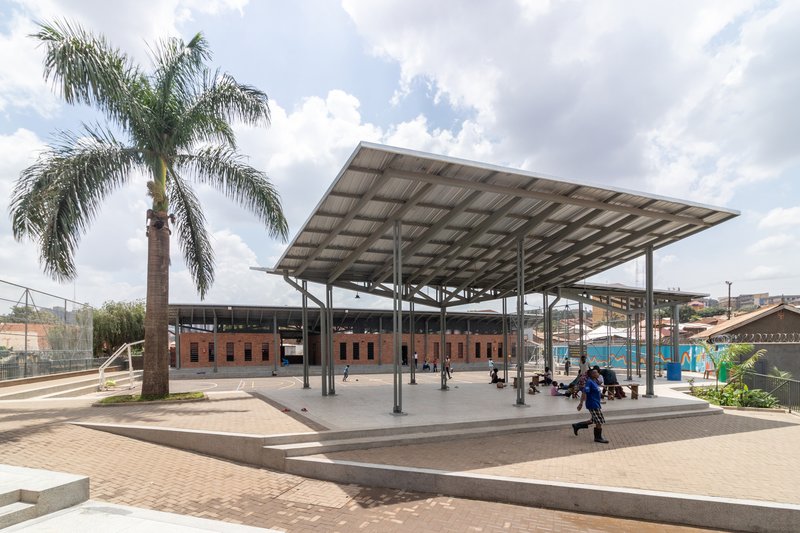
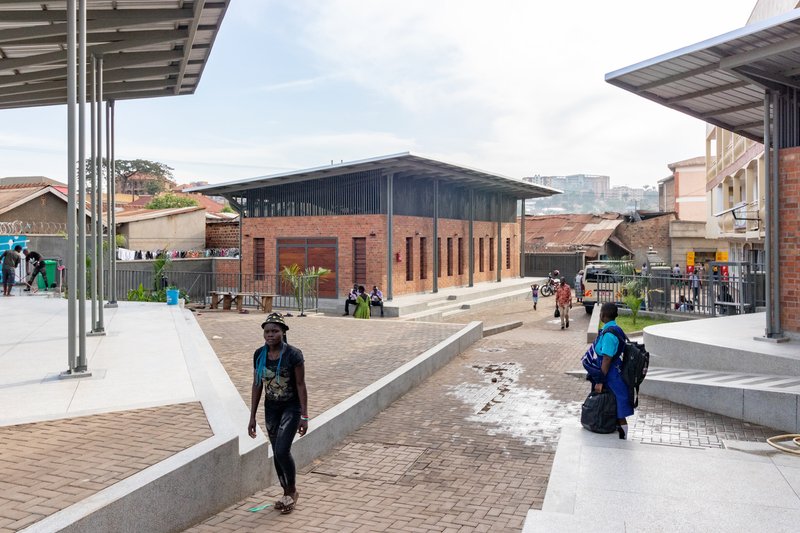
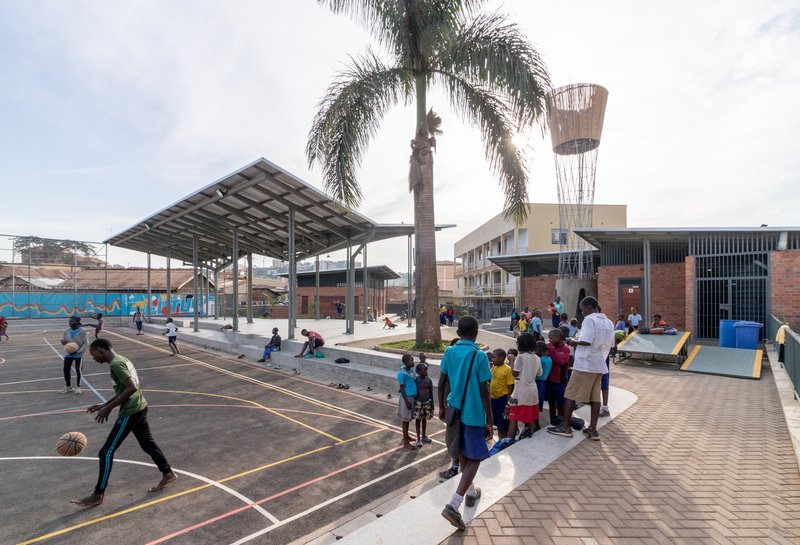
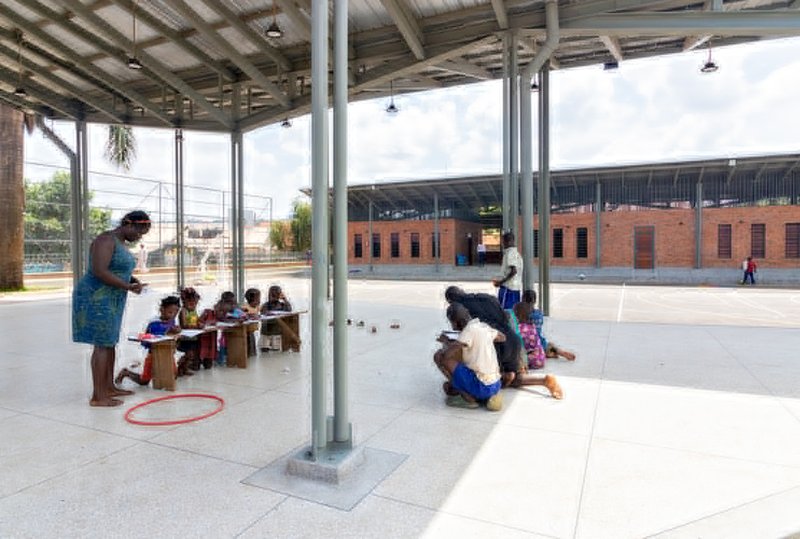
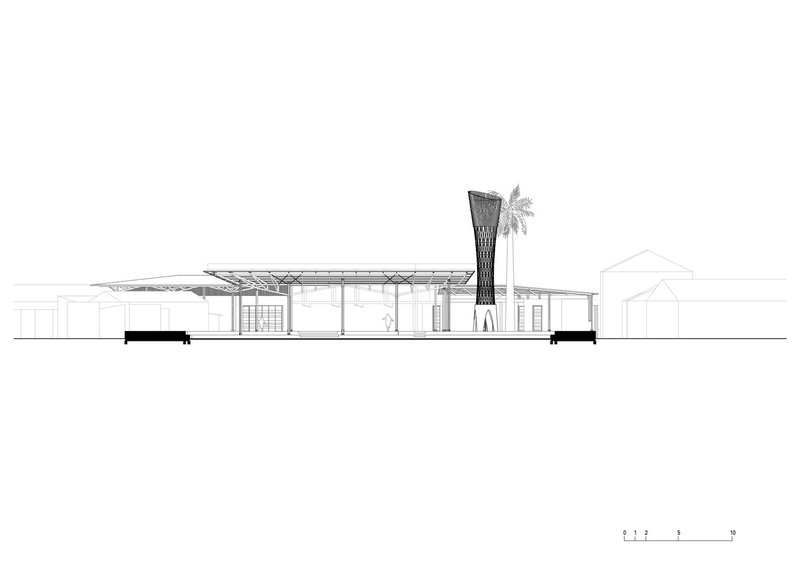
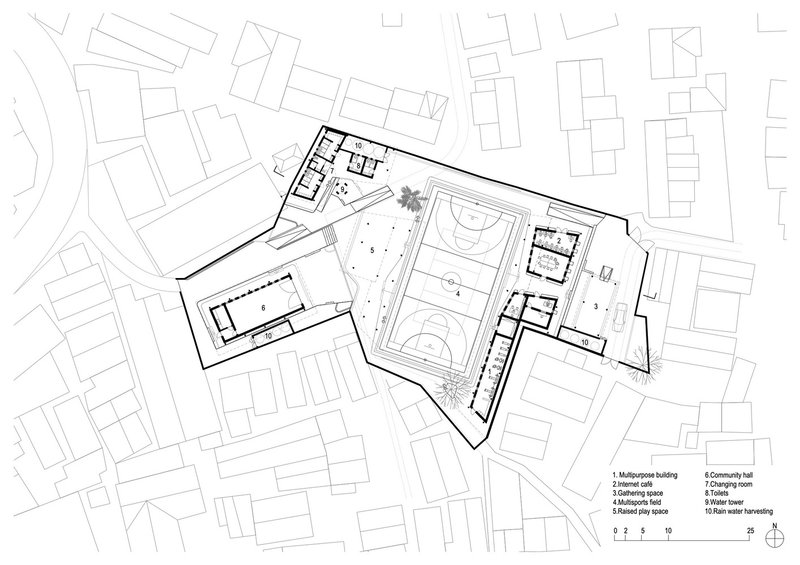
One of the standout features of the Kamwokya Community Center is its elevated platform, an essential solution for the region’s susceptibility to flooding. This raised structure not only ensures the center’s durability but also separates various activity zones, enabling multiple functions to coexist harmoniously.
The platform includes:
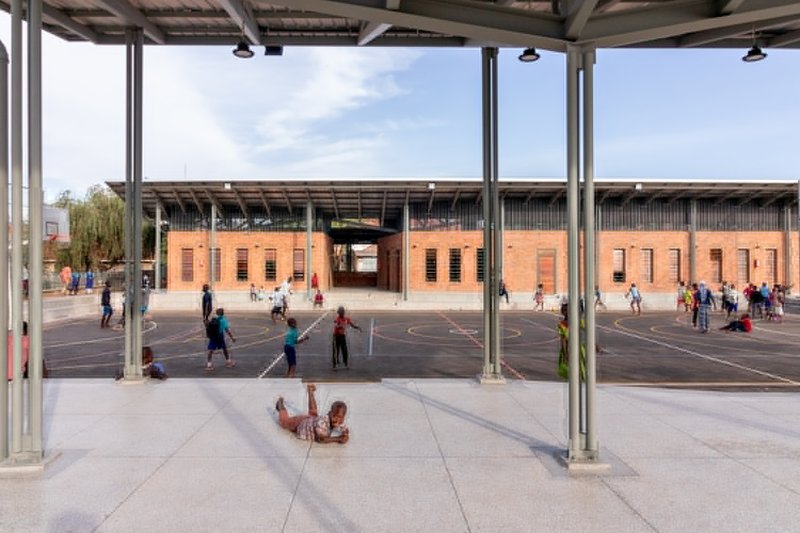
- A shaded sports field with excellent drainage.
- Tribune-like seating for spectators and casual gatherings.
- Multi-level design to demarcate activity areas subtly.
2. Sustainable Building Practices
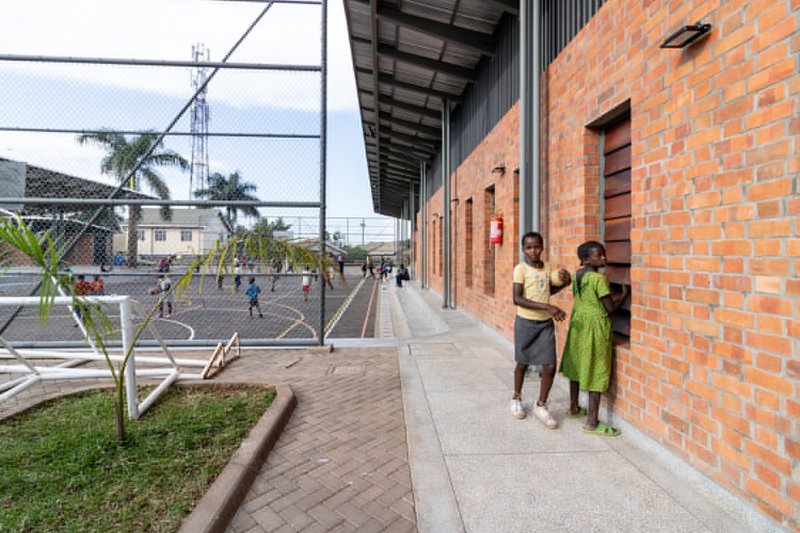
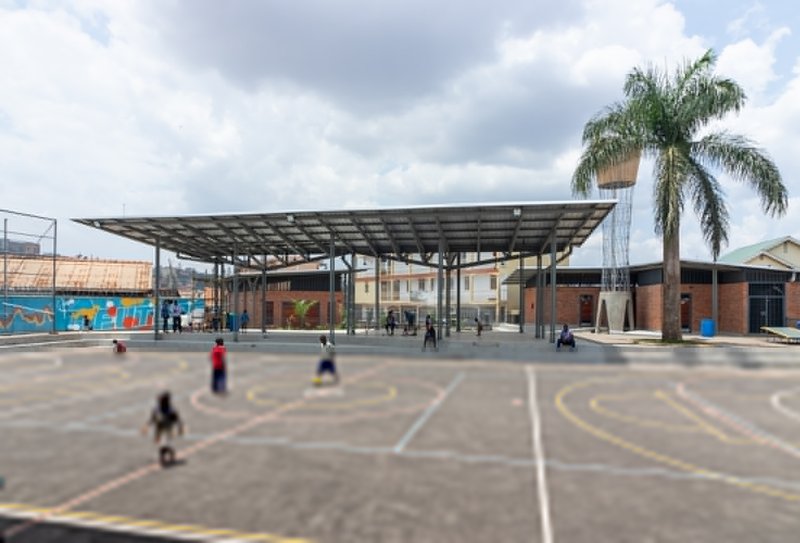
The design incorporates sustainable and locally adapted strategies, setting a precedent in community center architecture. The two buildings on the platform feature butterfly roofs supported by steel structures. These roofs serve dual purposes:
- Enhanced Ventilation: Facilitates natural airflow to combat the region’s heat.
- Visual Identity: The roof design lends a modern yet contextual character to the community center.
3. Multi-Functional Spaces
Catering to a wide range of community needs, the Kamwokya Community Center houses:
- A small gym for fitness activities.
- An internet café to bridge the digital divide.
- Multi-purpose rooms for workshops and training sessions.
- A music studio fostering creativity and self-expression.
- Administrative offices and sanitary facilities.
Designing for Community Engagement
An Inclusive Playground
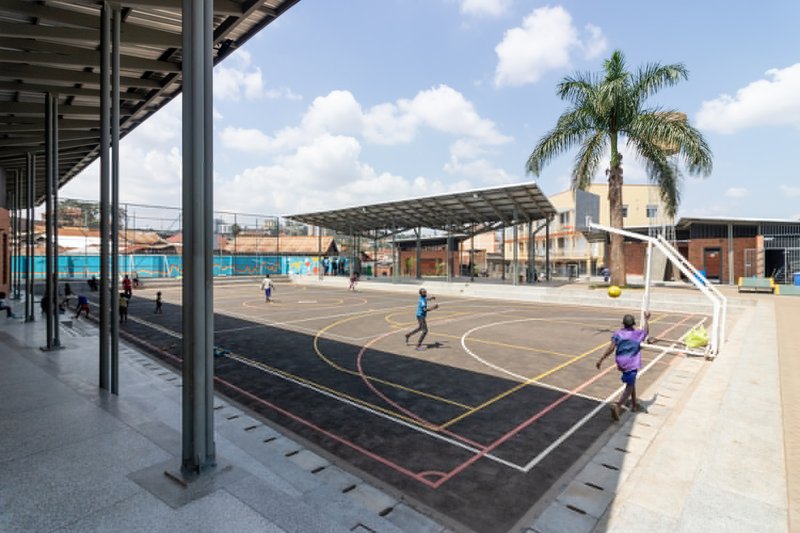
The playground serves as a central hub for activities such as sports, impromptu gatherings, and cultural events. By designing this space to be welcoming and inclusive, the architects ensure it becomes a vibrant focal point for all age groups.
Blending Form and Function
The tribune-style seating surrounding the main field is not only functional for spectators but also encourages informal community bonding. This seamless integration of form and utility is a hallmark of Kéré Architecture’s approach.
Transforming Communities Through Architecture
The Kamwokya Community Center’s impact extends beyond its physical structure. It serves as a source of pride and empowerment for the residents of Kamwokya. By prioritizing accessibility, functionality, and local relevance, the project demonstrates how architecture can transform lives.
Inspiration for Future Projects
This project is a prime example of how thoughtful community center architecture design can create a ripple effect of positive change. It inspires communities to take ownership of their surroundings while setting a standard for similar initiatives globally.
The Kamwokya Community Center exemplifies how architecture can transcend mere construction to become a tool for social transformation. With its sustainable design, multifunctional spaces, and community-centric approach, it is a beacon for modern community center architecture design.
By prioritizing local needs and embracing innovation, the center highlights the power of design to uplift marginalized communities. It stands as a reminder that architecture is not just about buildings but about creating spaces that inspire and empower.
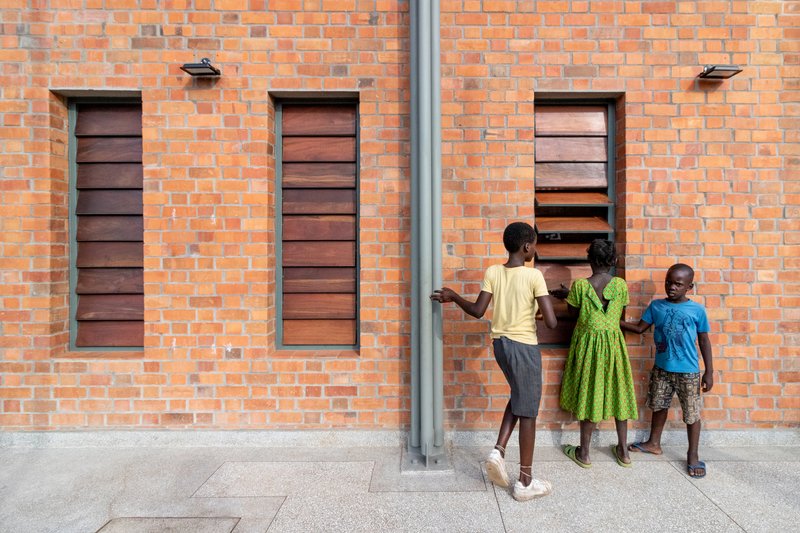
All the photographs are work of Jaime Herraiz



Popular Articles
Popular articles from the community

Healing Façade: Sustainable Architecture for Reforestation, Community, and Sacred Ecology in Ethiopia
Healing Façade reimagines sustainable architecture as a living wall that restores soil, catches water and renews Ethiopia's forest churches.
Etea and Ghostframe Carve a Surreal Domestic World from Arches and Circles in Mérida
Casa Eclipse wraps 385 square meters of sculptural living space around a lush courtyard pool in Mexico's Yucatán Peninsula.
Kaffeebühnen: Coffee Shop Architecture Designed as a Civic Stage Between Vienna’s City and Park
Kaffeebühnen turns coffee shop architecture into a civic stage, linking Vienna’s park edge, urban life, warm timber yards, and coffee craft.
Inside a Timeless Mumbai Residence by Aether Studio
Aether Studio's 2,250 sq ft apartment in Malad, Mumbai uses marble, brass, boucle, and disciplined restraint to build a quiet retreat from the city.


Similar Reads
You might also enjoy these articles

Olio Towers: A Mid-Rise for Performers That Fuses Housing, Rehearsal, and Stage
Located blocks from Houston's Theater District, this modular tower stacks living units around a central performance atrium.
Oasis: Modular Green Housing Carved into Dhaka's Urban Fabric
A shortlisted Plugin Housing entry reclaims unauthorized settlements in Dhaka with stepped concrete volumes, green roofs, and ventilation-driven design.

Black Hole: A Floating Megastructure for the Post-Physical Era
Emiliano Mazzarotto envisions a spherical, self-scaling arena where e-sports, digital hotels, and holographic stadiums replace traditional public space.
Compact & Sustainable Living in Piraeus: A Four-Level Family Home Built Around Light and Air
A narrow townhouse in one of Greece's densest port cities uses a central atrium and passive strategies to house three generations under one roof.

Explore Public Building Competitions
Discover active competitions in this discipline




The International Standard for Design Portfolios


The Global Benchmark for Architecture Dissertation Awards


The Global Benchmark for Graduation Excellence


Challenge to design locus for the upliftment of human rights
Comments (0)
Please login or sign up to add comments
No comments yet. Be the first to comment!