
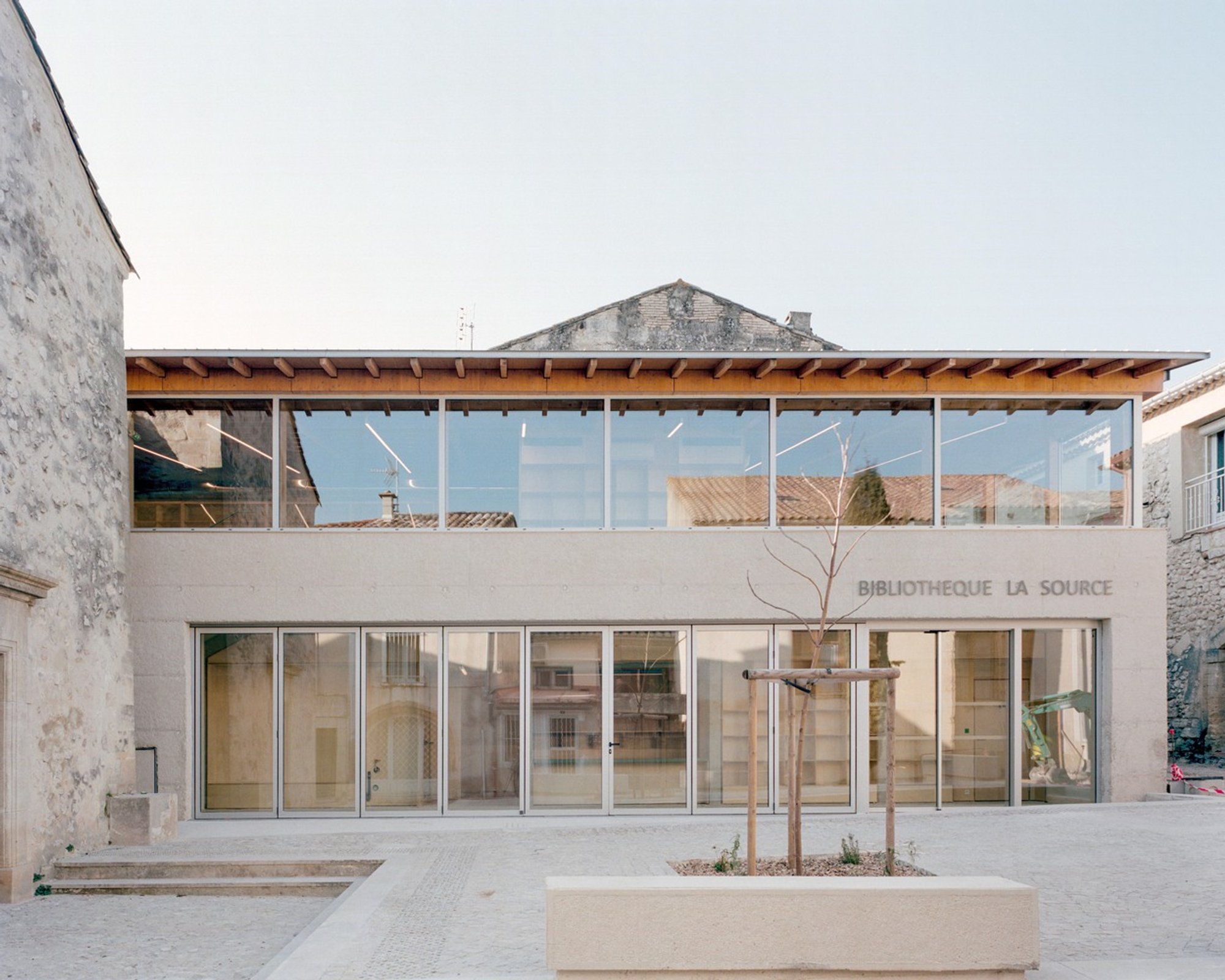
La Source Third-Place Library by NAS Architecture: Revitalizing Rochefort-du-Gard’s Cultural Heritage
La Source Third-Place Library revitalizes Rochefort-du-Gard’s historic Saint-Joseph Chapel, blending heritage preservation, modern design, community engagement, and cultural accessibility.

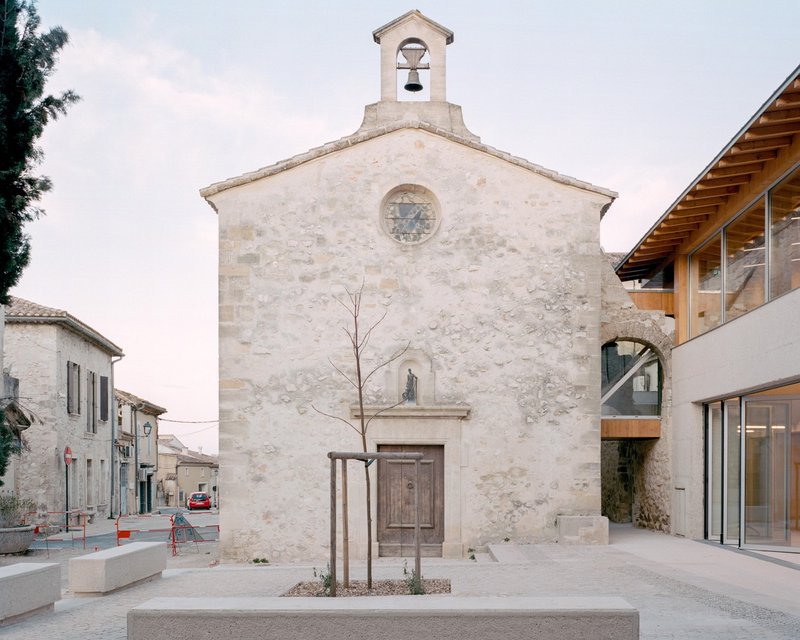
The La Source Third-Place Library is a transformative architectural project in the historic center of Rochefort-du-Gard, France. Originally the Saint-Joseph Chapel, constructed between 1638 and 1734 using stones from the destroyed Castellas Castle, the building has served multiple civic roles—from a town hall to a school—before being closed in 2017 due to structural risks. NAS Architecture reimagined this heritage site, extending it into a modern third-place library, blending historic preservation, community engagement, and contemporary design.
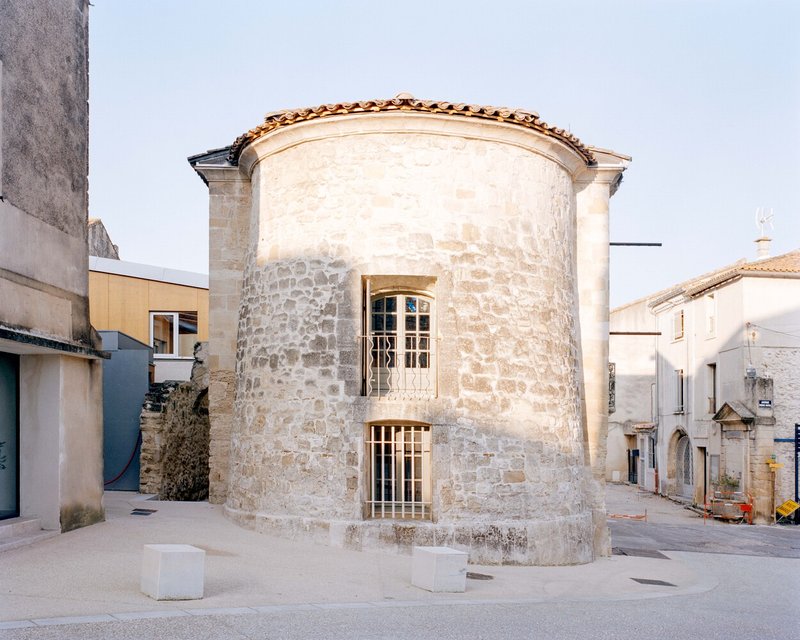
Preserving Heritage, Activating Public Space
The project revitalizes a previously underutilized square created in 1995 after the demolition of an adjacent residential building. Located at the intersection of Rue de l'Église and Rue du Grand Pont, the library sits beside the historic chapel and a derelict barn, forming a vibrant urban node in Rochefort-du-Gard’s dense village fabric.
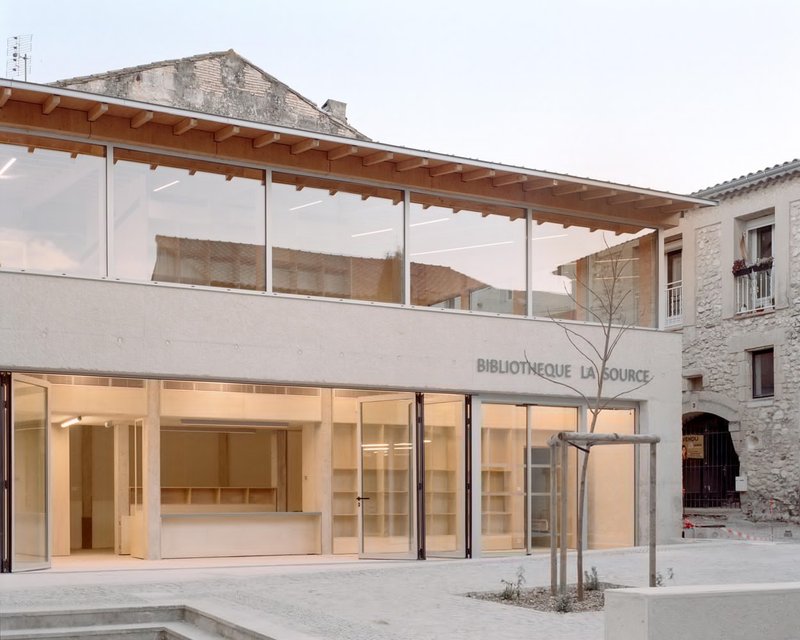
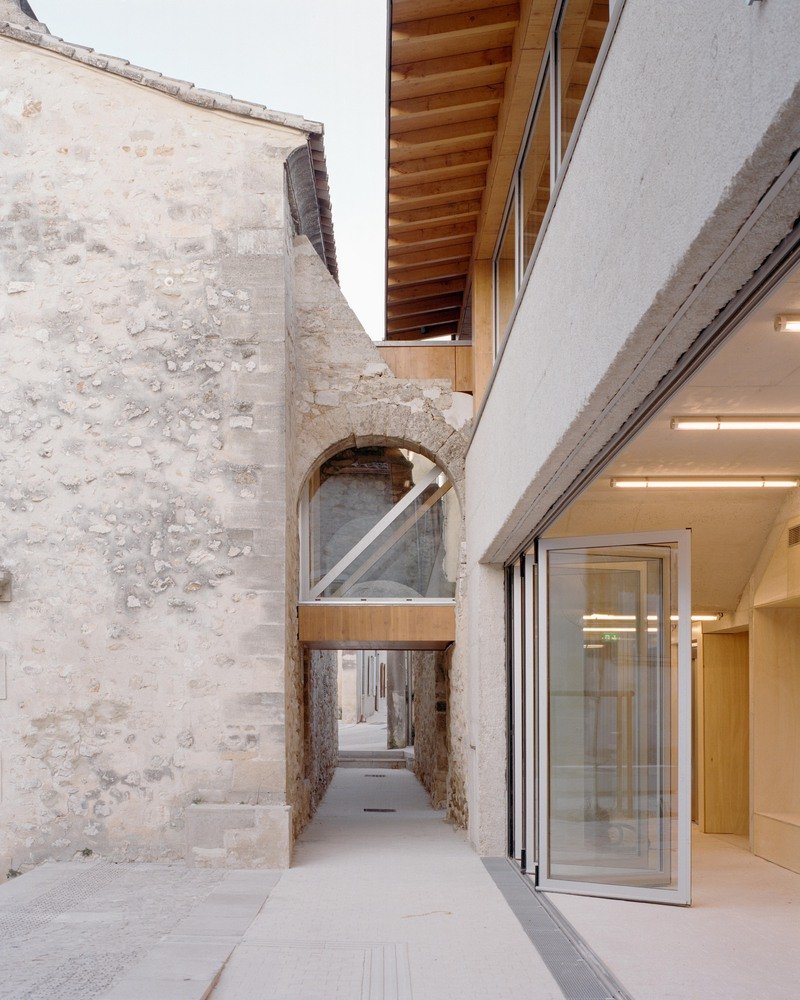
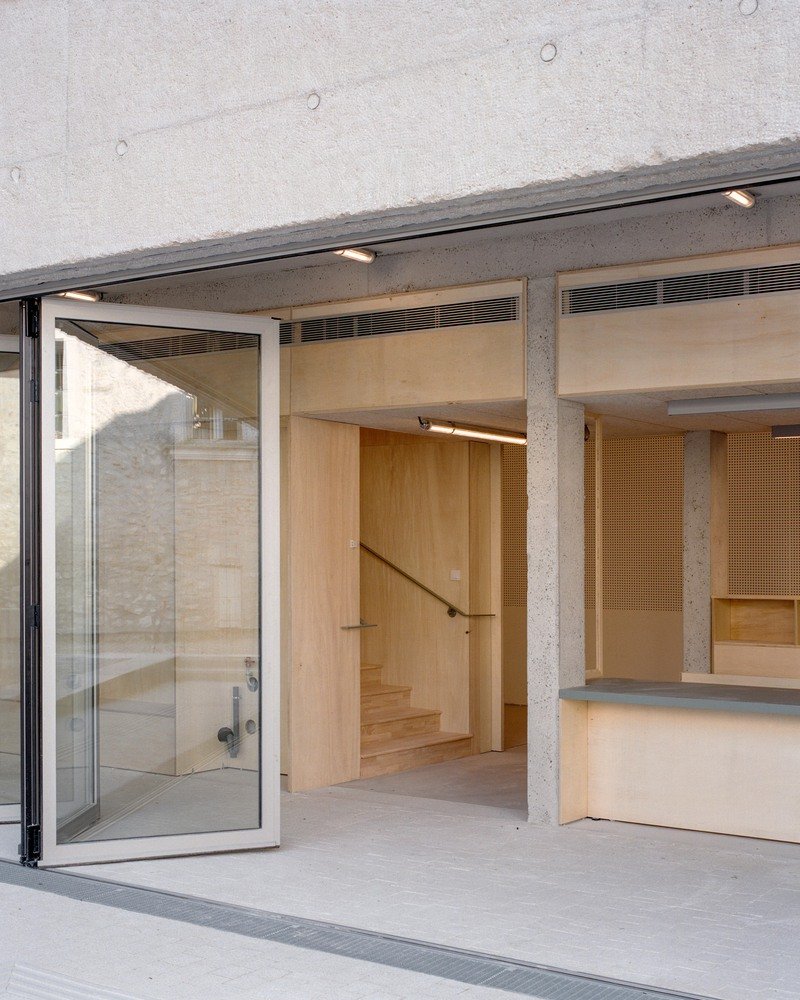
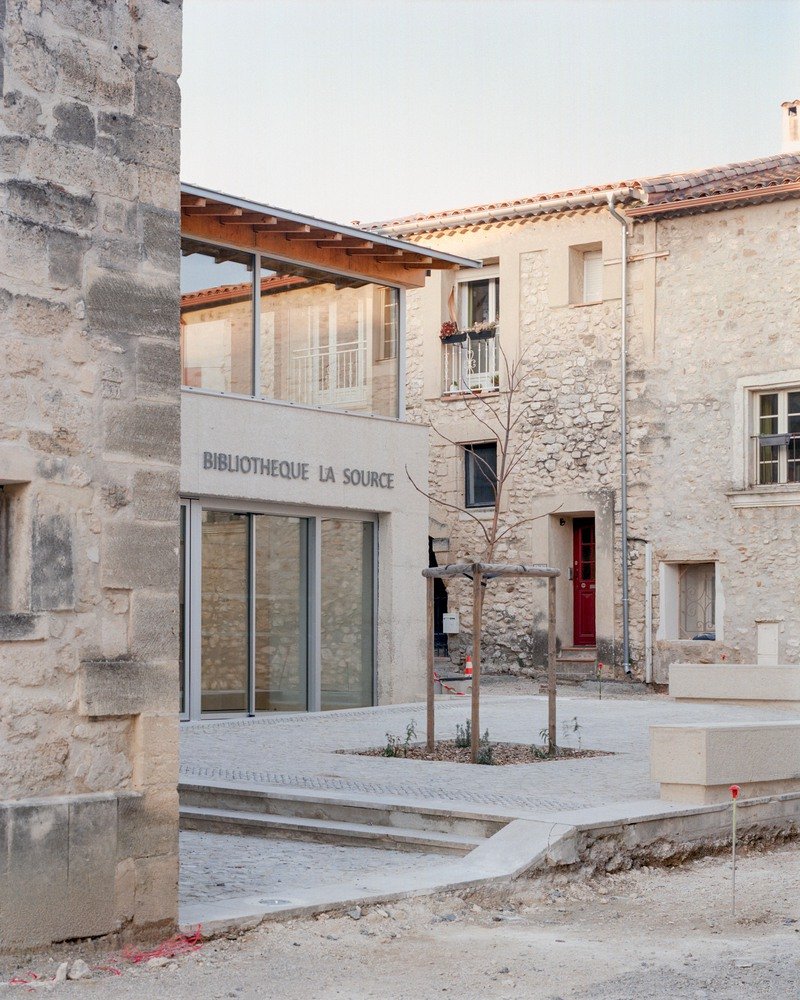
The library’s design promotes social interaction, turning the square into a gathering space for cultural events. The ground floor integrates with the public square through accordion-style folding glass doors, blurring the boundary between indoor and outdoor spaces. A connecting bridge links the modern extension to the rehabilitated chapel, now housing a digital museum with year-round educational workshops focusing on cultural themes.
Materiality and Architectural Expression
The architectural language of La Source reflects a careful balance between tradition and innovation.
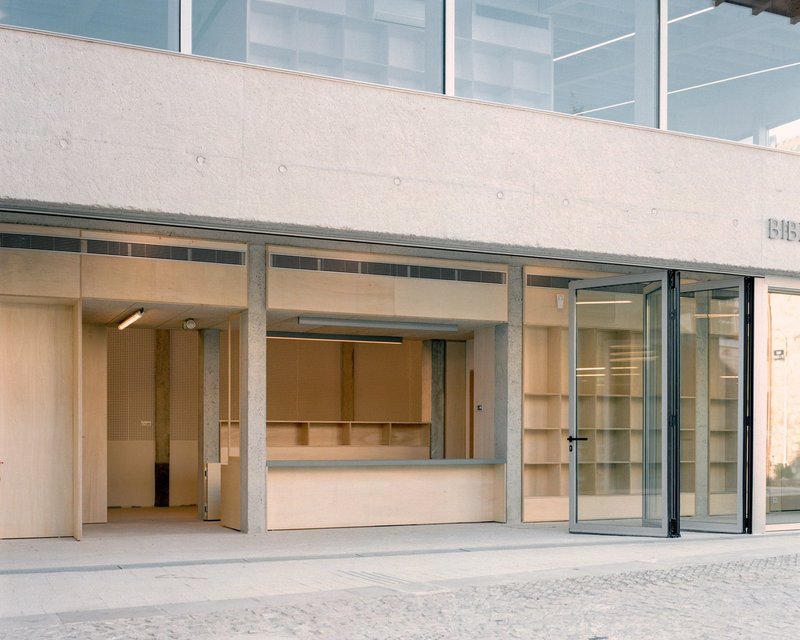
- Ground Floor: The solid bush-hammered concrete base references the village’s historic stone architecture while providing structural strength. It spans over 15 meters, allowing the library’s boundaries to disappear when the folding doors are fully opened, creating a seamless connection with the square.
- Upper Level: Constructed with a wooden post-and-beam system, the upper floor introduces lightness and overhangs while accommodating discreet rainwater management. The metal roof slopes toward the square, minimizing the building’s scale in relation to the historic chapel.
This contrast between opaque historic masonry and the library’s transparent, horizontal fenestration emphasizes openness, inviting residents to participate in the village’s renewed cultural life.
Interior Design and Functional Clarity
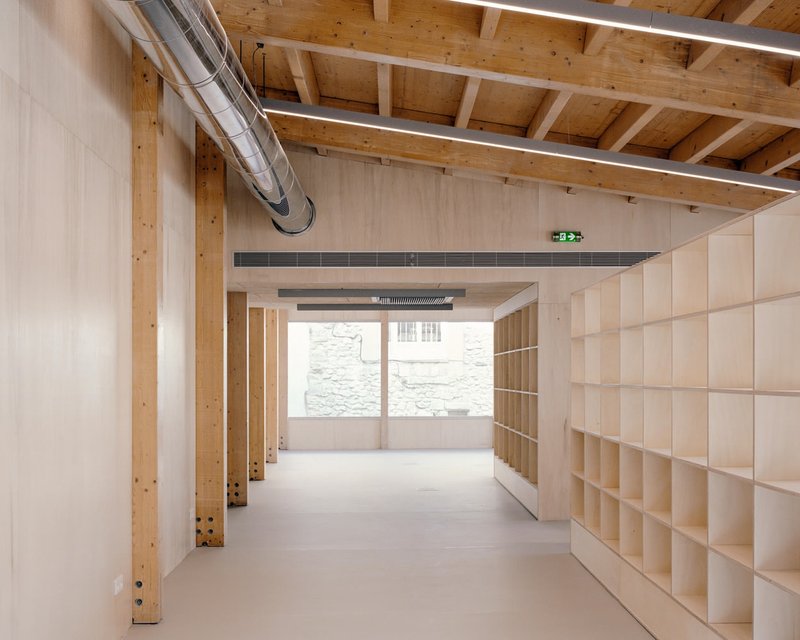
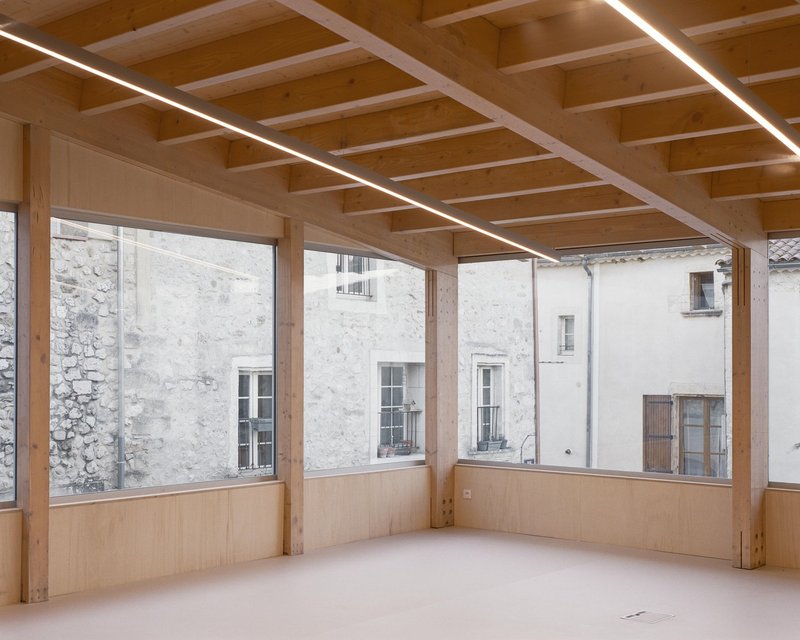
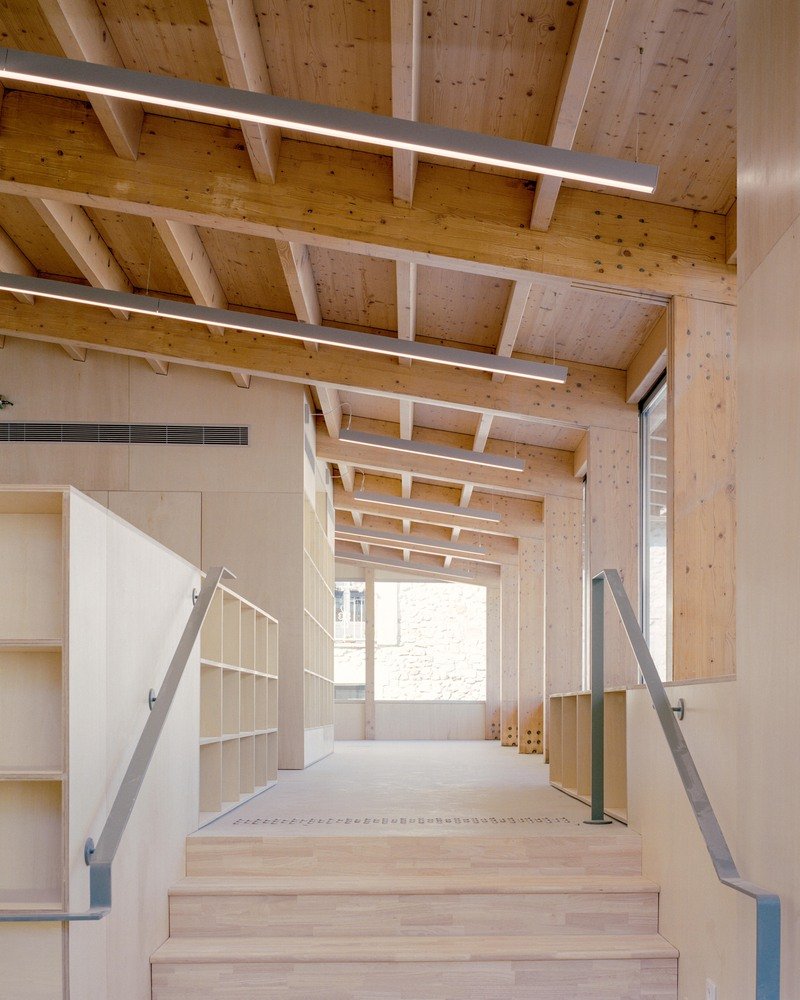
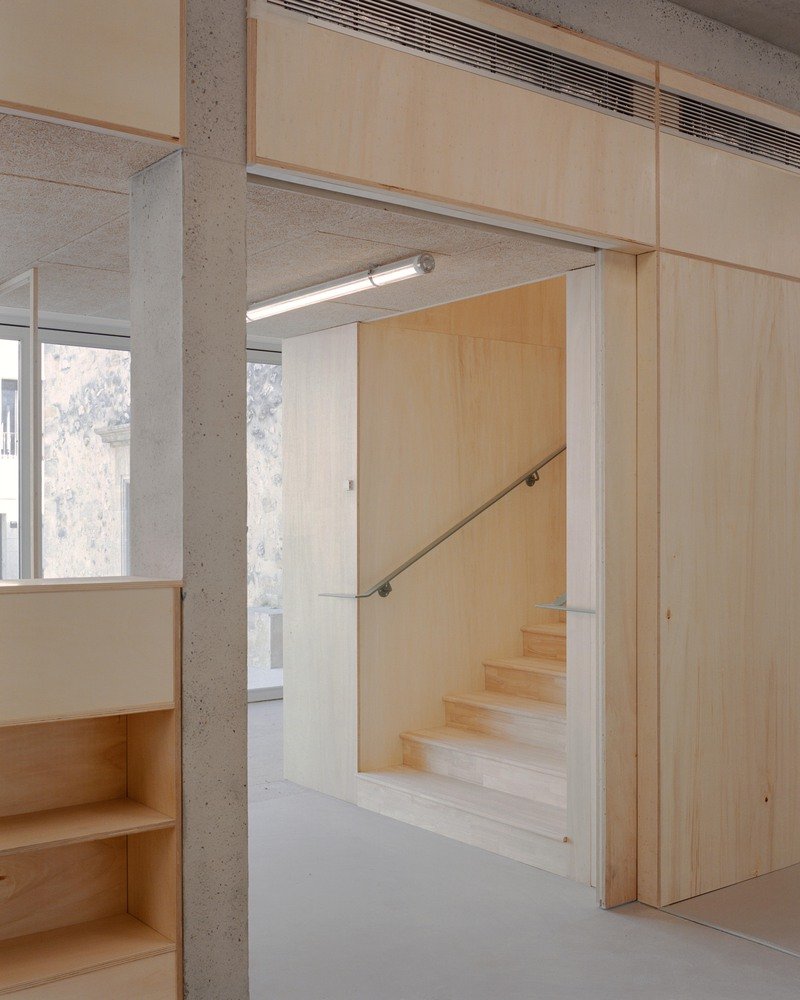
Inside, the library is designed with clarity, modularity, and material honesty. Raw materials define its character: concrete columns, timber portals, and wooden infill create an alternating rhythm that structures circulation, utility spaces, and flexible reading areas.
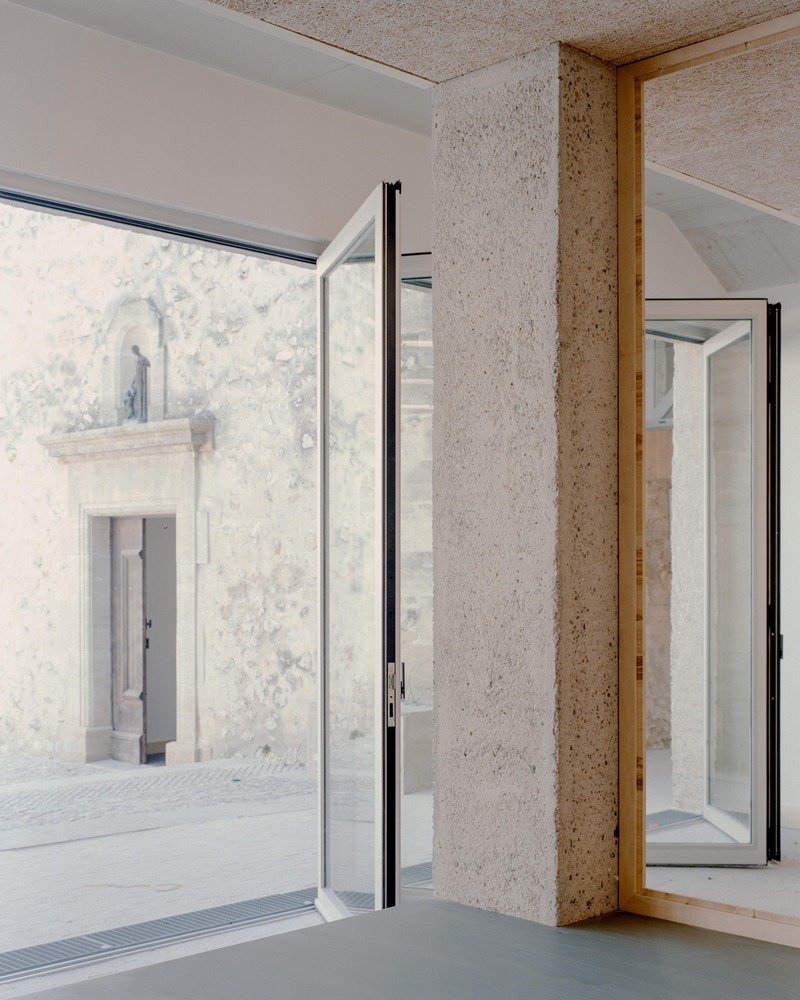
The ground floor continues the exterior paving indoors, guiding visitors to a central service spine containing reception, restrooms, vertical circulation, and technical rooms. Upstairs, timber portals align with window frames, directing views toward the square below. The ceiling, composed of pine rafters and panels, forms a calm reading environment.
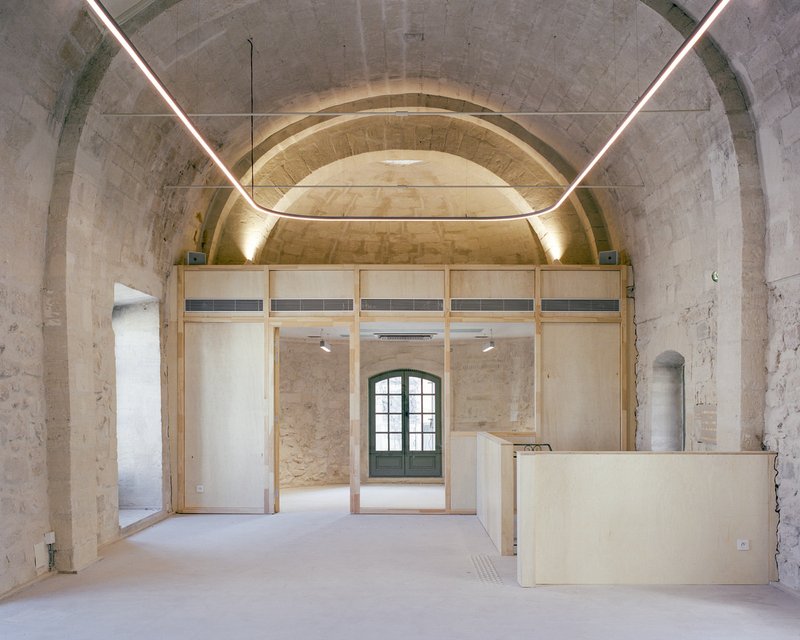
New wooden furniture accommodates digital museum equipment, delineates administrative spaces, and maintains the chapel’s spatial integrity. A large pendant light subtly complements the interior, maintaining a contemporary yet understated aesthetic.
A Cultural Hub for the Community
La Source Third-Place Library exemplifies adaptive reuse, heritage preservation, and community-centered cultural architecture. By connecting Rochefort-du-Gard’s historical legacy with modern functionality, NAS Architecture created a public space that fosters social engagement, learning, and cultural participation. This project demonstrates how architecture can revitalize villages, strengthen cultural identity, and provide inclusive access to knowledge and creativity.
All photographs are works of
Severin Malaud



Popular Articles
Popular articles from the community

Milan Crossover: Sustainable Architecture for a New Fashion Culture in Milan
Milan Crossover transforms fashion culture through sustainable architecture, linking material libraries, remake studios, and public runways.
The Faith: Modular Architecture for Play, Learning, and Hope in Kutupalong Refugee Camp
A modular playground architecture project in Bangladesh where play, learning, safety, and hope rebuild childhood inside a refugee camp anew.
CRACK: Winery Architecture Carved Into the Landscape
CRACK reimagines winery architecture as a buried path through vineyard terrain, linking production, tasting, lodging, landscape and culture.

Eco Chapel: A Green Architecture Pavilion Designed in Symbiosis with the Forest
Eco Chapel uses green architecture to weave prayer, learning and reuse into a forest pavilion shaped by modular hexagonal canopies for life.


Similar Reads
You might also enjoy these articles

Olio Towers: A Mid-Rise for Performers That Fuses Housing, Rehearsal, and Stage
Located blocks from Houston's Theater District, this modular tower stacks living units around a central performance atrium.
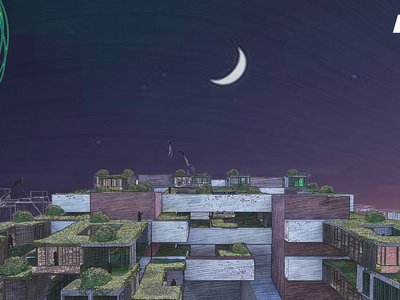
Oasis: Modular Green Housing Carved into Dhaka's Urban Fabric
A shortlisted Plugin Housing entry reclaims unauthorized settlements in Dhaka with stepped concrete volumes, green roofs, and ventilation-driven design.

Black Hole: A Floating Megastructure for the Post-Physical Era
Emiliano Mazzarotto envisions a spherical, self-scaling arena where e-sports, digital hotels, and holographic stadiums replace traditional public space.
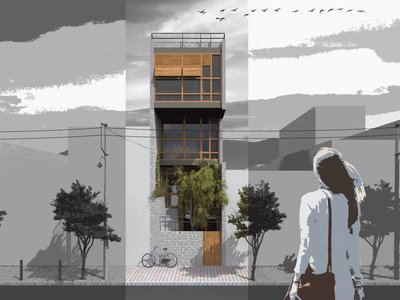
Compact & Sustainable Living in Piraeus: A Four-Level Family Home Built Around Light and Air
A narrow townhouse in one of Greece's densest port cities uses a central atrium and passive strategies to house three generations under one roof.


Explore Cultural Architecture Competitions
Discover active competitions in this discipline




The International Standard for Design Portfolios


The Global Benchmark for Architecture Dissertation Awards


The Global Benchmark for Graduation Excellence


Challenge to reimagine the Iron Throne
Comments (0)
Please login or sign up to add comments
No comments yet. Be the first to comment!