

Laguna Gallery by Estúdio 41: A Luminous Urban Landmark in Curitiba
Laguna Gallery by Estúdio 41 showcases translucent polycarbonate design, blending natural light and modern architecture in Curitiba’s urban setting.


A Gallery Where Light Becomes Architecture
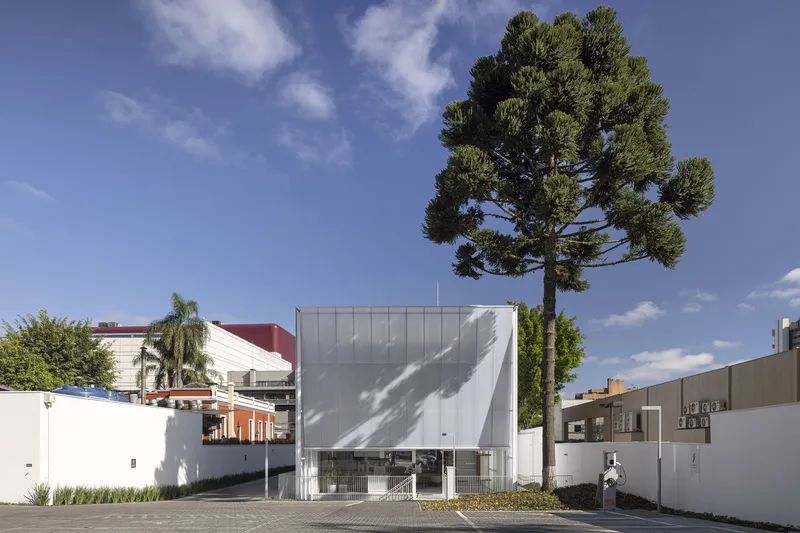
The Laguna Gallery, designed by the renowned Brazilian firm Estúdio 41, stands as a beacon of light and architecture in the urban fabric of Curitiba. More than just a sales showroom for Incorporadora Laguna, the building is a multifunctional cultural and commercial space where architecture elevates the everyday experience. It offers a welcoming, tranquil environment meant to encourage human connection, contemplation, and meaningful decision-making—particularly in the realm of real estate.
At its core, this project explores how natural light and spatial clarity can transform a building into an inviting refuge, even when set within a narrow, constrained plot surrounded by vehicular chaos.
Spatial Strategy: Translucence and Topography
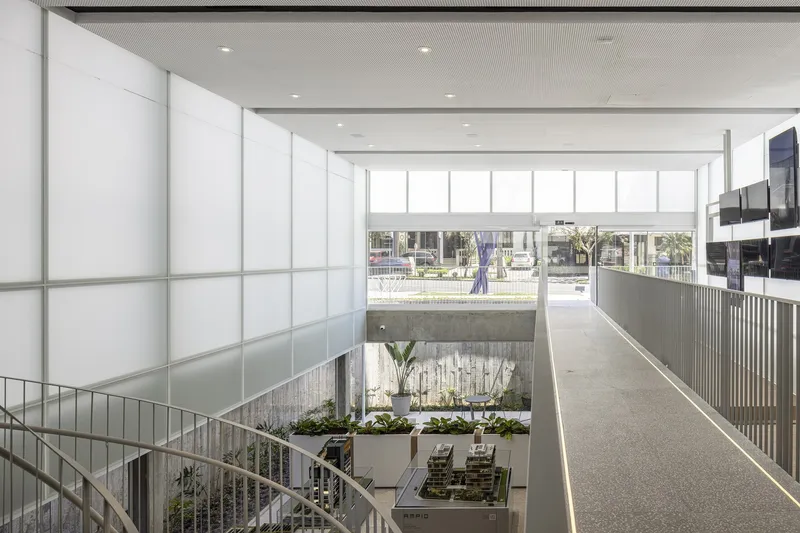
One of the project's most challenging design questions was: How do you create desirable views and generous space on a narrow, walled urban site? Estúdio 41 responds with two bold strategies:
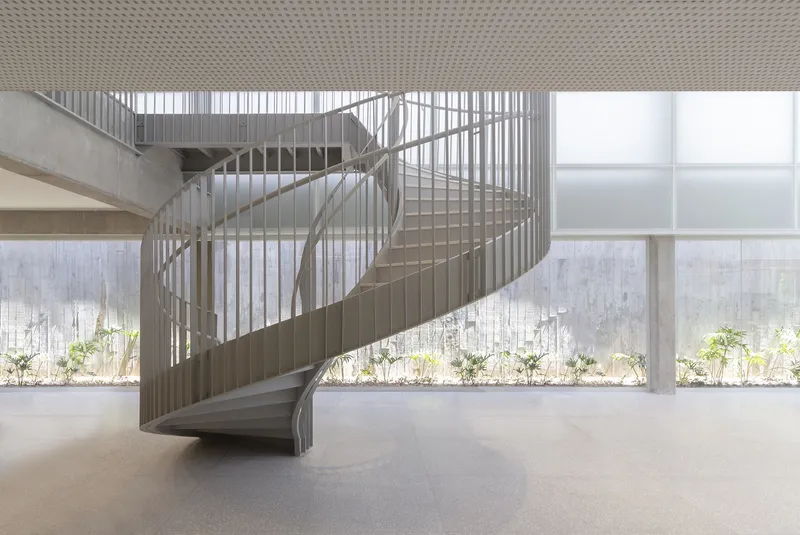
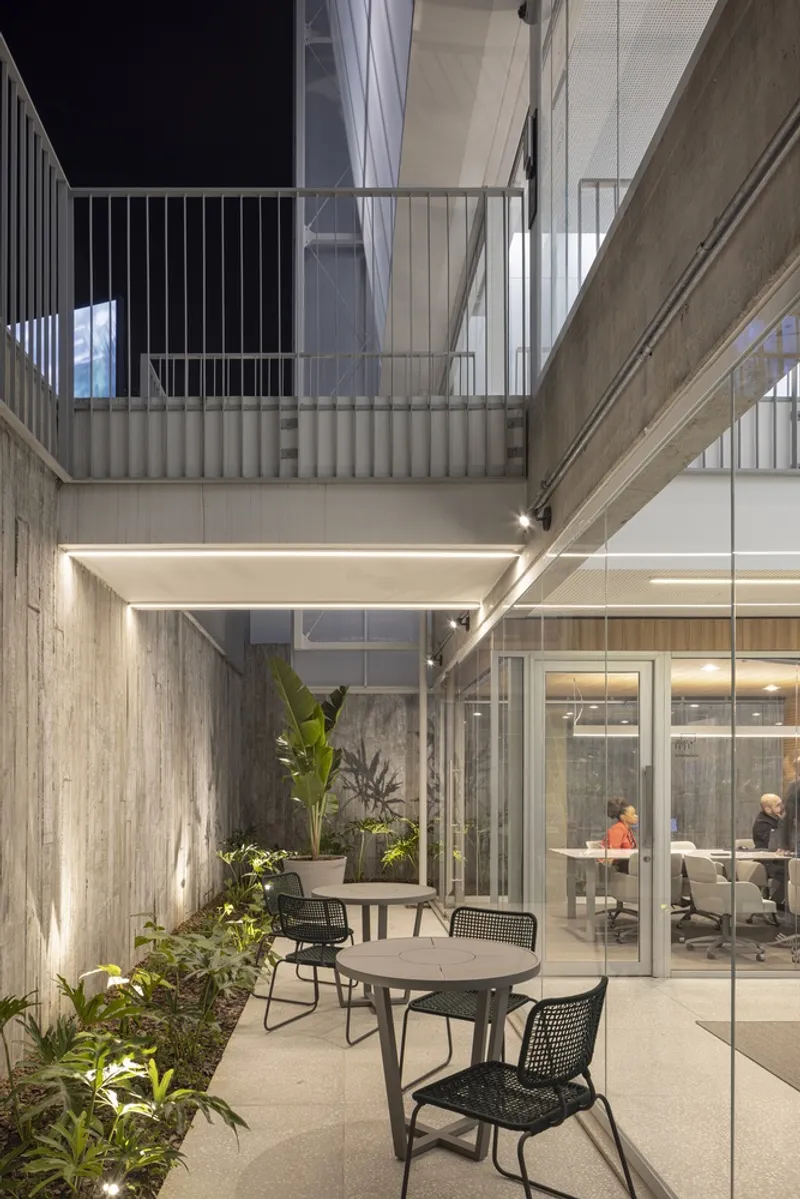
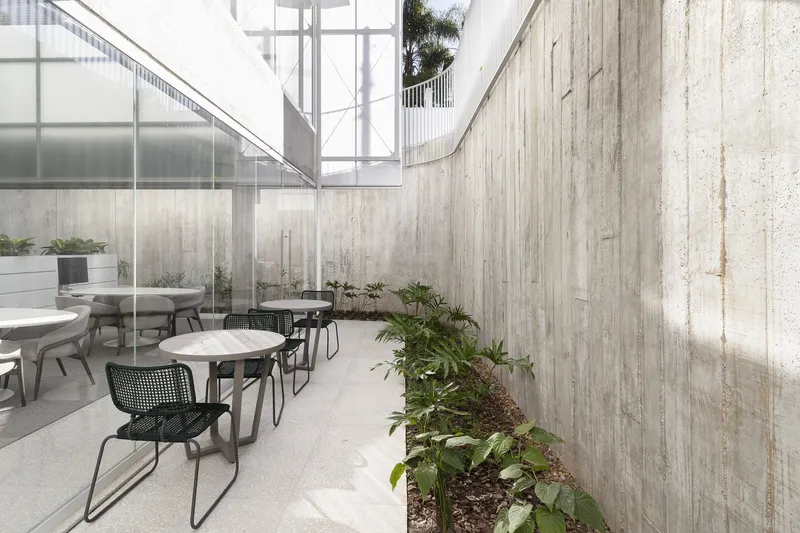
- Excavation of a perimeter garden at the basement level—introducing natural light and greenery into subterranean spaces.
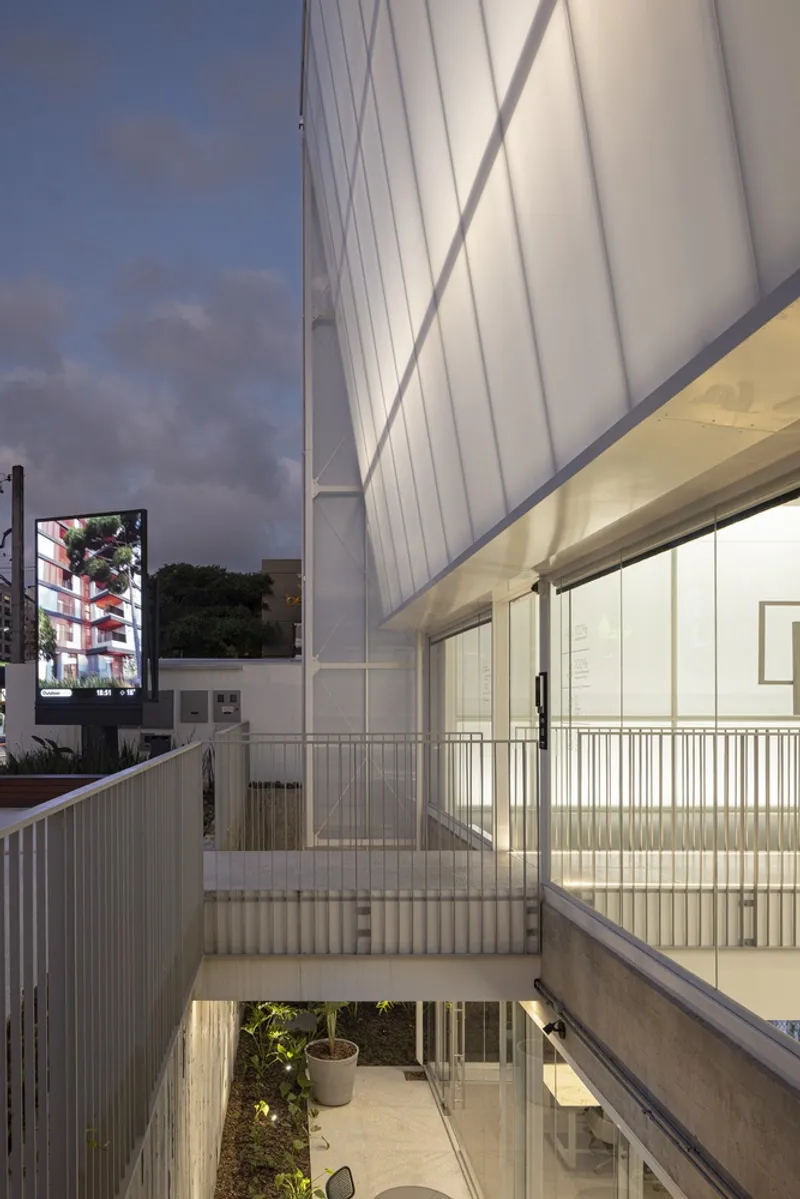
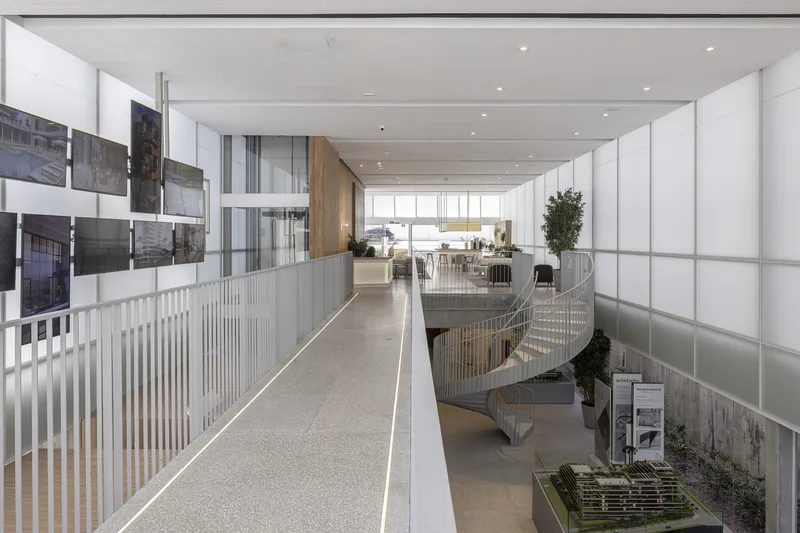
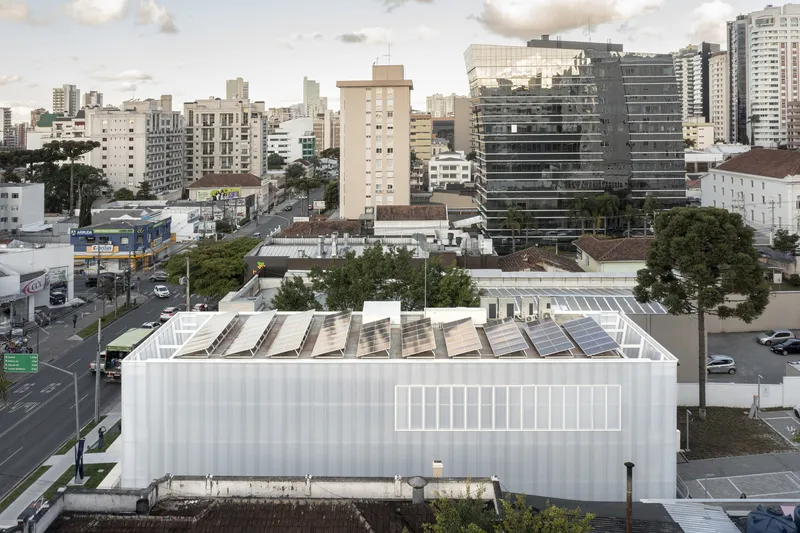
- Use of a translucent façade material—white alveolar polycarbonate—that captures light but maintains visual privacy. This creates an architectural language where luminosity replaces transparency, allowing the building to act as a soft urban lantern both day and night.
Architectural Program and Flow
The Laguna Gallery is distributed across three functional levels:
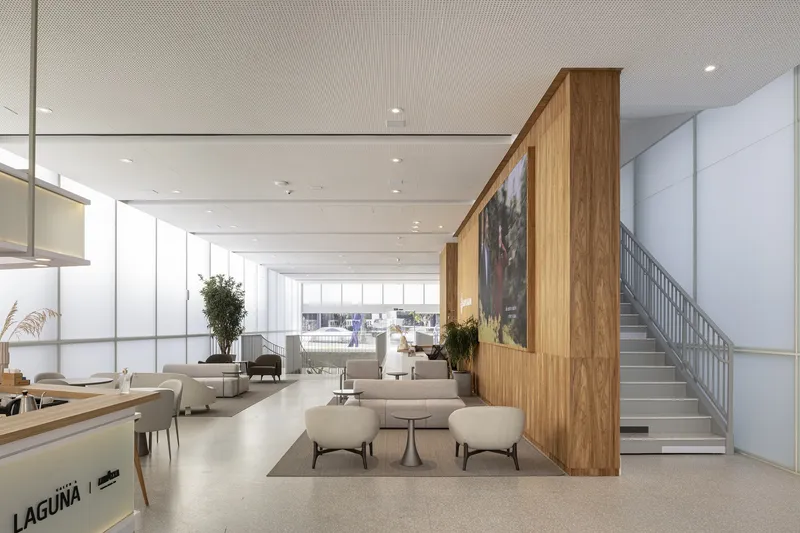
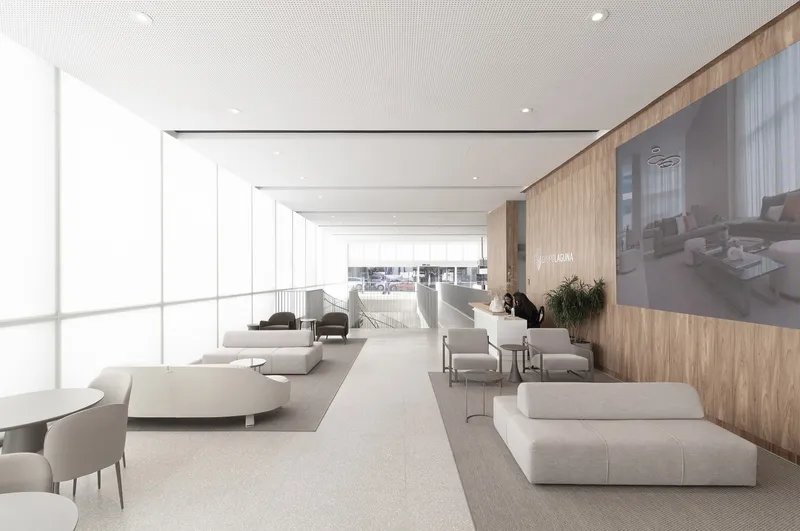
- Ground Floor: Serves as the welcoming point for visitors, featuring a café/bar and reception area that foster social engagement.
- Basement Level: Houses model units, private meeting spaces, and workstations for real estate brokers—all bathed in subdued, ambient light from the light wells and perimeter garden.
- Top Floor: Reserved for decorated apartment units, giving potential buyers an immersive preview of future living scenarios.
This clear spatial hierarchy not only supports operational functionality but also enhances the visitor experience by encouraging a sense of discovery and progression.
Materiality and Construction Logic
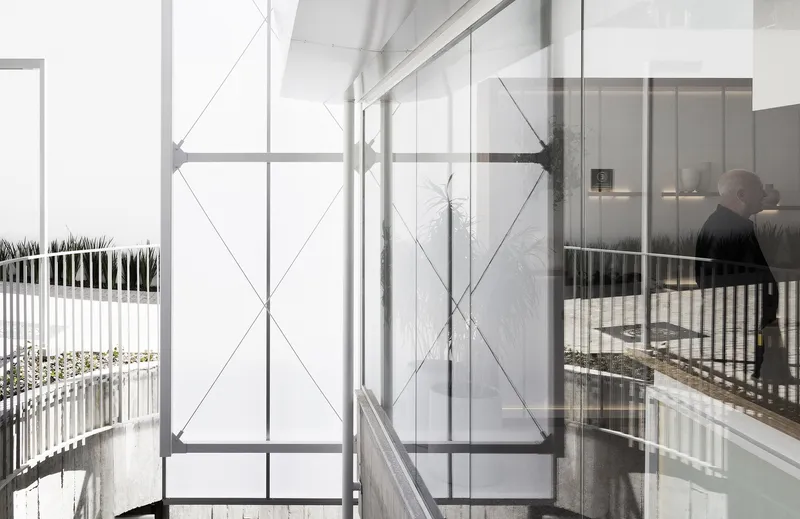
The building envelope is constructed as a double-skin façade system. The outer layer features lightweight white polycarbonate panels, chosen for their translucency and lightweight performance. The inner envelope is crafted with aluminum framing and acid-etched glass, providing thermal and acoustic comfort while reinforcing the building's restrained visual language.
Supporting this envelope is a prefabricated concrete structure, chosen for its economy, modularity, and speed of assembly. Rather than dominate the space, the structure quietly defines it, allowing the focus to remain on atmosphere, material texture, and natural light.
Urban Role and Sensory Experience
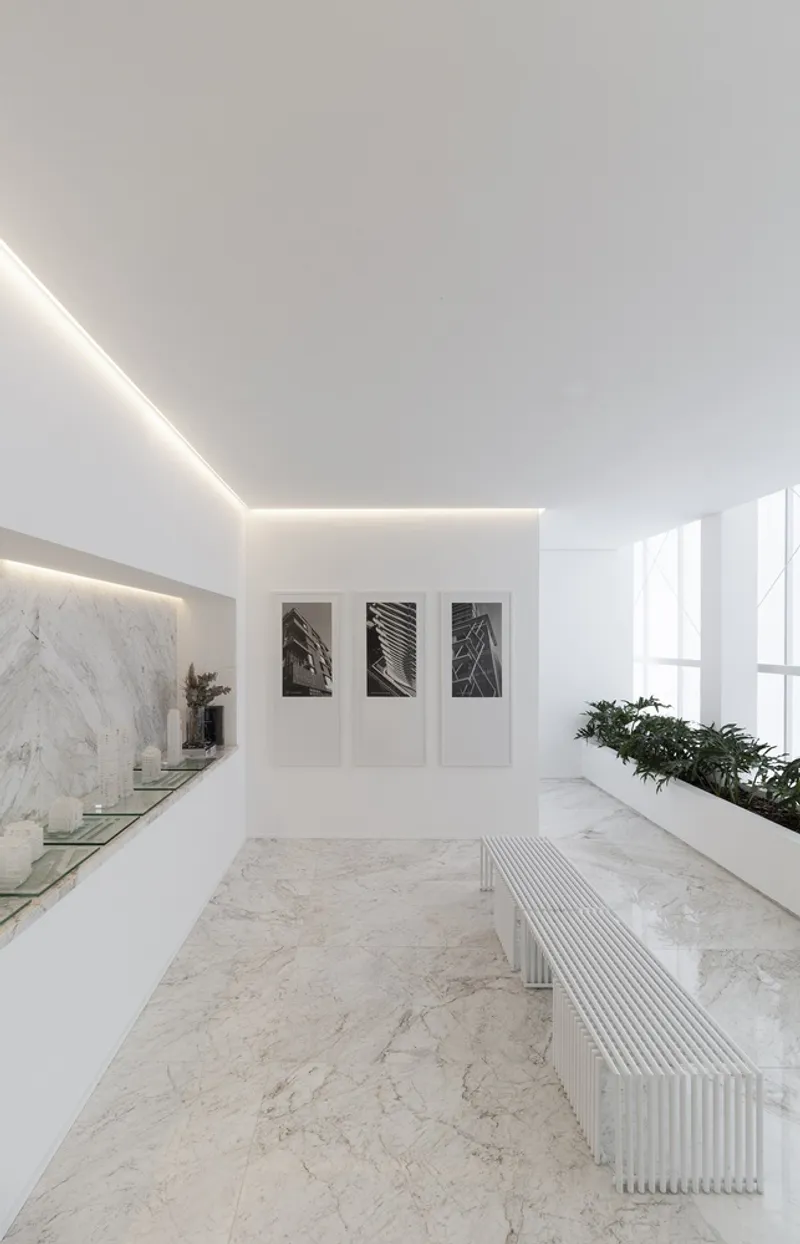
The Laguna Gallery transcends its commercial role by acting as an urban lamp—an elegant, glowing volume that enriches its street presence at night while blending respectfully into the cityscape by day. The interior ambiance is one of softness and silence, designed to encourage reflective decision-making for future homeowners.
This design exemplifies Estúdio 41’s ethos of creating contemporary Brazilian architecture that is environmentally responsive, spatially refined, and deeply attuned to human behavior.
All Photographs are works of Joana França, Eron Costin


Popular Articles
Popular articles from the community


LT2A and OPEN Architectes Thread a Brick and Glass High School Through a Wooded Belgian Campus
In Braine-l'Alleud, a 3,000 m² wing for Collège Cardinal Mercier pairs pale brick with a glazed colonnade, deferring to a small chapel and a dense wood.

U.GA Architects Wraps an Oval Rooftop Pool in Curved Board-Formed Concrete on Busan's Jeollidan-gil
In Busan's Jeonpo-dong, a 454 m² mixed-use block stacks a neighborhood facility, guest rooms and an oval rooftop pool inside spiraling concrete walls.

Juan García Correa, John González and Claudia Rueda Sink a Circular Amphitheater into a Manizales Engineering Building
On the La Nubia campus in Manizales, Colombia, the S1 Building folds labs and offices into a hillside of ramped lawns that double as a campus route.

David Macias Steps a Doorless Stone and Plaster House Down a Tropical Colombian Hillside
In the humid hills of Colombia, Threshold House replaces the front door with an open void and terraces its 850 m² down the slope instead of fighting it.

Similar Reads
You might also enjoy these articles


Hodi-Mandai Geram
Project Function: Preservation and revitalization of the Intangible heritage and socio-spatial identity of the Hodi by Housing, Cultural Memory Center, Sacred Grove, landscape, local tourism economy


Olio Towers: A Mid-Rise for Performers That Fuses Housing, Rehearsal, and Stage
Located blocks from Houston's Theater District, this modular tower stacks living units around a central performance atrium.

Oasis: Modular Green Housing Carved into Dhaka's Urban Fabric
A shortlisted Plugin Housing entry reclaims unauthorized settlements in Dhaka with stepped concrete volumes, green roofs, and ventilation-driven design.

Black Hole: A Floating Megastructure for the Post-Physical Era
Emiliano Mazzarotto envisions a spherical, self-scaling arena where e-sports, digital hotels, and holographic stadiums replace traditional public space.
Explore Architecture Competitions
Discover active competitions in this discipline

Challenge to reimagine the Iron Throne

Photograph architecture without architects

Illustrate the lost glory of Angkor Wat - Render Challenge

Design challenge to reuse E-waste
Comments (0)
Please login or sign up to add comments
No comments yet. Be the first to comment!