
Life Path: Architecture for the Afterlife
A contemplative journey where memorial architecture transforms death into a sustainable, sacred experience.

In a world increasingly seeking sustainable solutions, memorial architecture is emerging as a profound intersection between environmental consciousness and spiritual legacy. Life Path, a visionary project by Polina, explores the transitions between life, death, and remembrance through architectural storytelling.
The Concept: Architecture of Transition
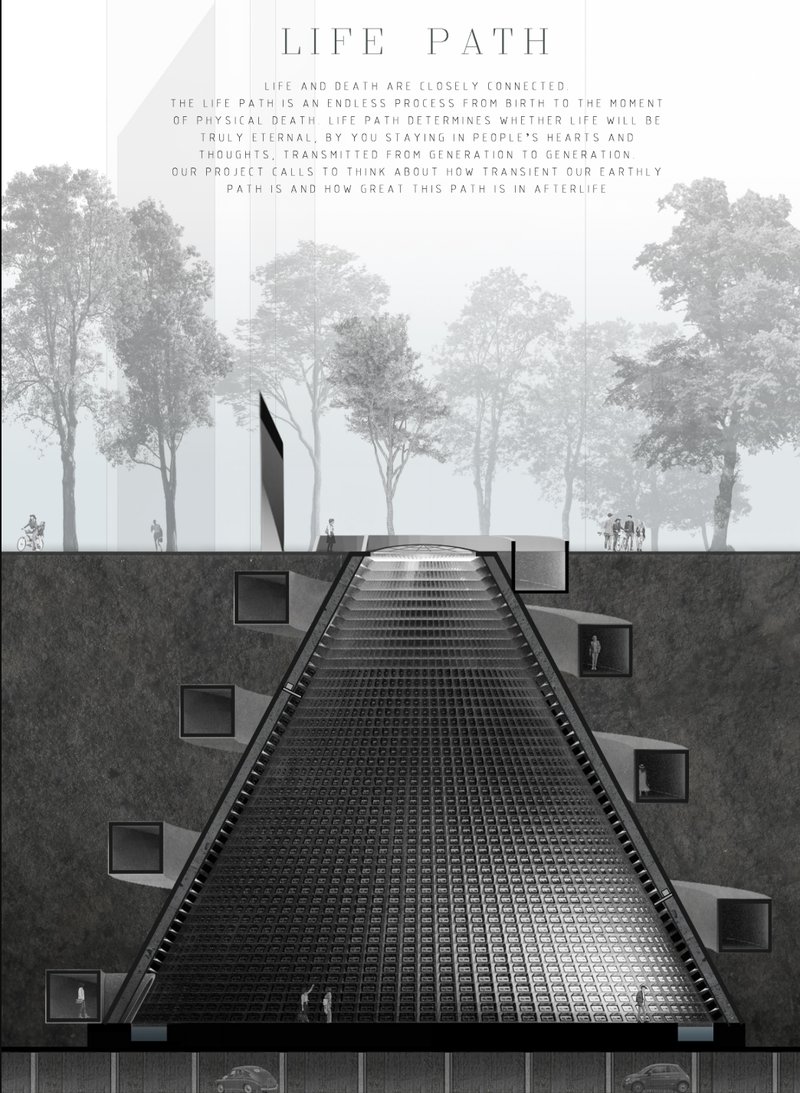
Life and death are closely connected. The life path is an endless process, flowing from birth to the moment of physical death. But what happens beyond? This project challenges us to consider how architecture can shape not only our experience of life, but also our understanding of the afterlife. The project encourages reflection on how transient our earthly existence is—and how meaningful and eternal our passage can become through spatial memory.
A Journey Through the Sacred
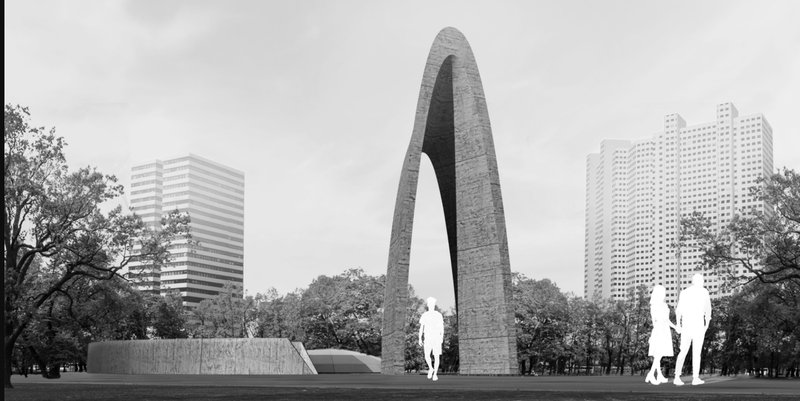
The journey begins in a tranquil park where life flows and flourishes. Each tree is dedicated to a person who lived meaningfully—creating a forest of memory. A monumental portal marks the boundary between two worlds: the world of the living and the world of the dead.
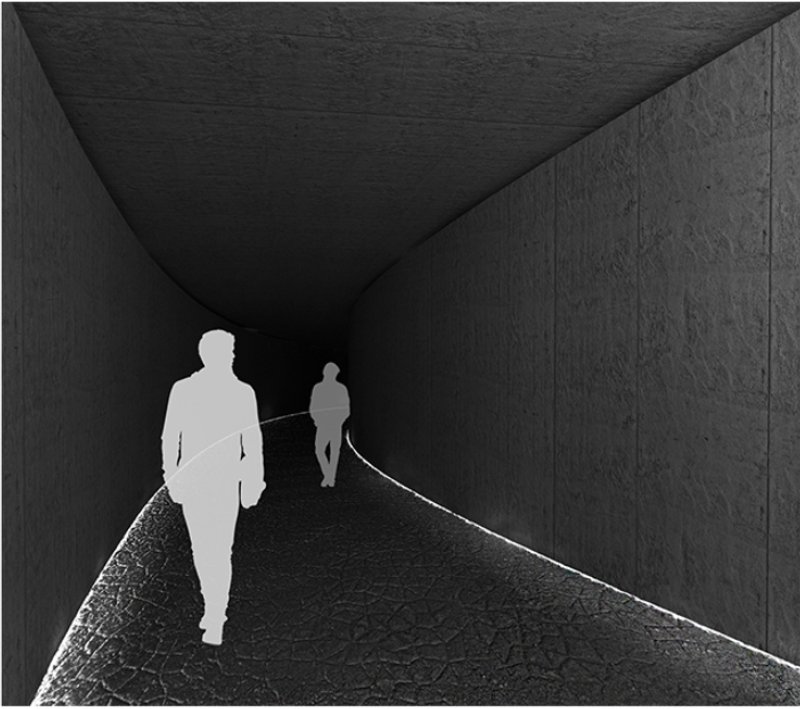
Descending a spiraling tunnel, visitors engage in a contemplative architectural experience. The raw concrete walls eliminate distraction, immersing individuals in meditation and self-awareness. This descent represents the path of self-discovery, mirroring the journey between life and afterlife.
Design for Sustainable Remembrance
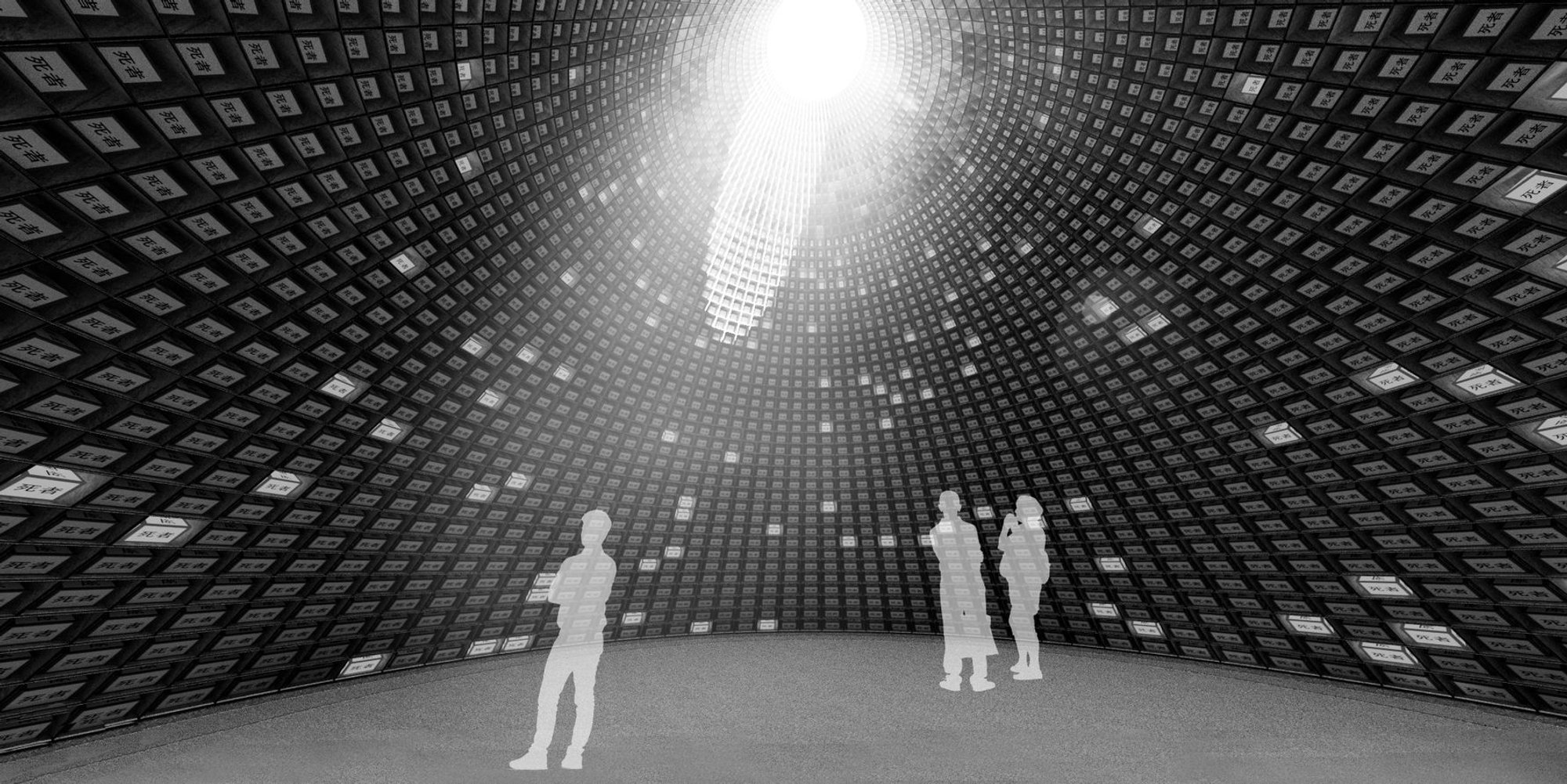
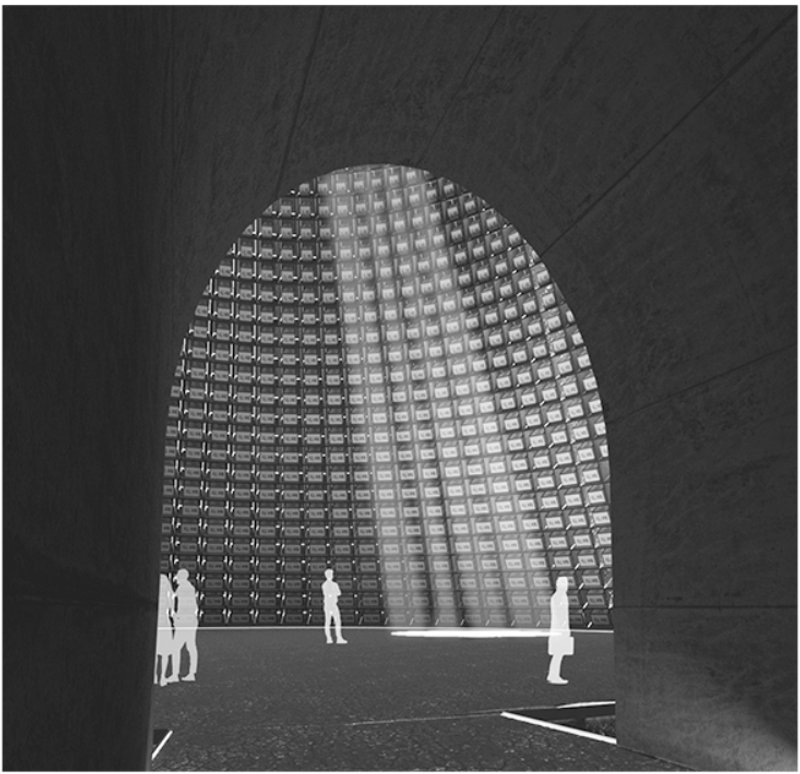
At the core of this memorial architecture is the practice of resomation, a water-based, eco-friendly alternative to cremation. The deceased are respectfully treated in specially designed resomation rooms. Ashes are preserved in personal urn boxes, stored in a vertical columbarium that fills from bottom to top. The frequency of visits and continued remembrance determines an urn’s location—forgotten souls gradually ascend to the top.
Private commemoration rooms offer an intimate moment to reflect. Here, QR-coded urn boxes allow family members to access memories, view photos and videos, and honor the deceased in a digital-physical hybrid space.
A Space Between Worlds
The architectural form reinforces the sacredness of separation. A symbolic “river” at the lower tier ensures visitors cannot physically interact with the resting place—reinforcing the boundary between realms. Light from above floods the monumental space, a visual metaphor for transcendence and eternal presence.
Key Principles of the Project:
- Immortality through Memory
- Interfaith Accessibility
- Environmental Sustainability through Resomation
- Scalability and Urban Integration
Life Path is more than a cemetery—it is an architectural experience of remembrance. It integrates spirituality, sustainability, and sacredness in a visionary way. Polina’s work redefines how we honor the departed and how architecture can embody the cycle of life and legacy.
In this innovative approach to memorial architecture, death is not the end—it is the beginning of a new, eternal design.




Popular Articles
Popular articles from the community


The Ken Roberts Memorial Delineation Competition (Krob)
As the most senior architectural drawing competition currently in operation anywhere in the world, it draws hundreds of entries each year, awarding the very best submissions in a series of medium-based categories.


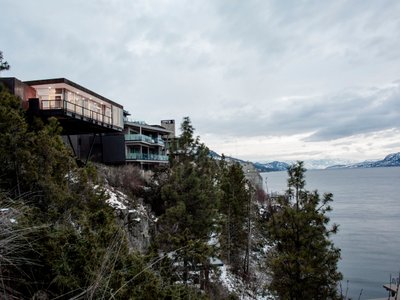
Alton Cliff House: A Harmonious Retreat by f2a Architecture in Lake Country, Canada
Alton Cliff House blends corten steel, prefabrication, and sustainable design, creating a luxurious, energy-efficient retreat perched on Canadian cliffs.

Inverted Architecture Installation by Studio Link-Arc: Exploring the Intersection of Architecture and Living Organisms
Inverted Architecture Installation by Studio Link-Arc blends mycelium, sustainability, inverted design, ecological cycles, and urban adaptive architecture in Shenzhen.


Similar Reads
You might also enjoy these articles
The Ken Roberts Memorial Delineation Competition (Krob)
As the most senior architectural drawing competition currently in operation anywhere in the world, it draws hundreds of entries each year, awarding the very best submissions in a series of medium-based categories.


Waterfront Redevelopment and Urban Revitalization in Mumbai: Forging a New Dawn for Darukhana
A transformative waterfront redevelopment project reimagining Darukhana’s shipbreaking heritage into an inclusive urban future.

OUT-OF-MAP: A Call for Postcards on Feminist Narratives of Public Space
Rhizoma Design and Research Lab invites artists, designers, architects, researchers, and students to reflect on how feminist perspectives can reshape public space. Selected works will be exhibited in Barcelona, October 2026. Submissions open until 15 April 2026.


Documentation Work on Buddhist Wooden Temple
Architectural syncretism and cultural hybridity: A comparative study of the Buddhist temples in Chattogram Hill tracks
Explore Interaction Design Competitions
Discover active competitions in this discipline





Comments (0)
Please login or sign up to add comments
No comments yet. Be the first to comment!