
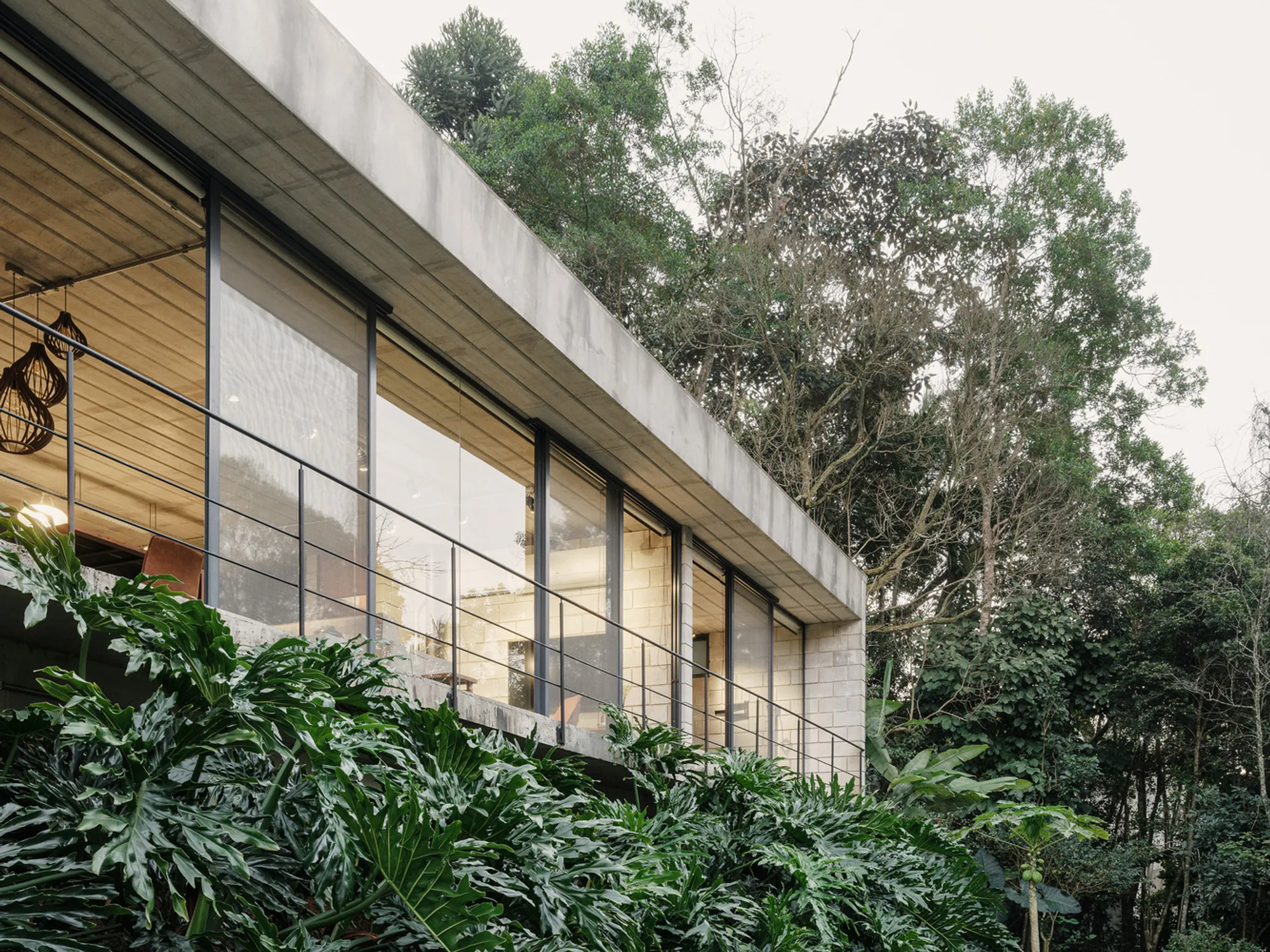
Lírio House by Terra e Tuma Arquitetos Associados: A Concrete Sanctuary in the Atlantic Rainforest
Lírio House blends concrete, glass, and nature on a Brazilian hillside, offering sustainable design, natural light, and seamless indoor-outdoor harmony.


A Modern Home in Harmony with Nature
Nestled on a lush hillside in Santo André, Brazil, the Lírio House designed by Terra e Tuma Arquitetos Associados stands as a striking example of contemporary Brazilian residential architecture. Completed in 2021, this 180 m² home blends raw materials, clean lines, and natural light to create a perfect dialogue between structure and landscape.
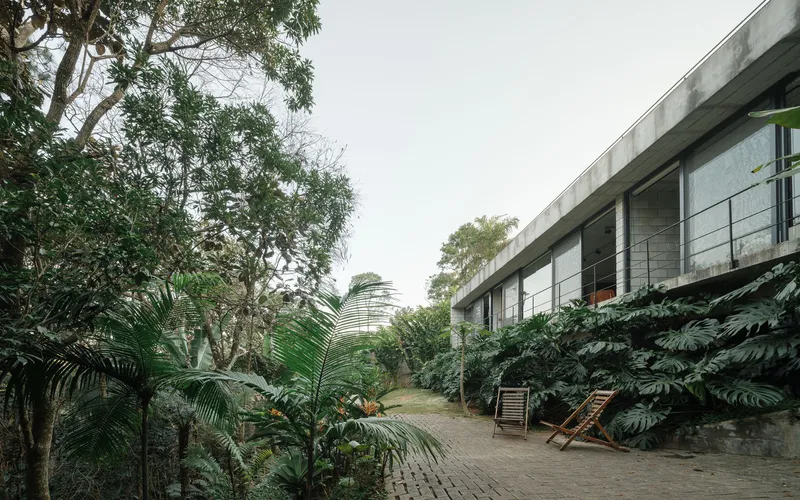
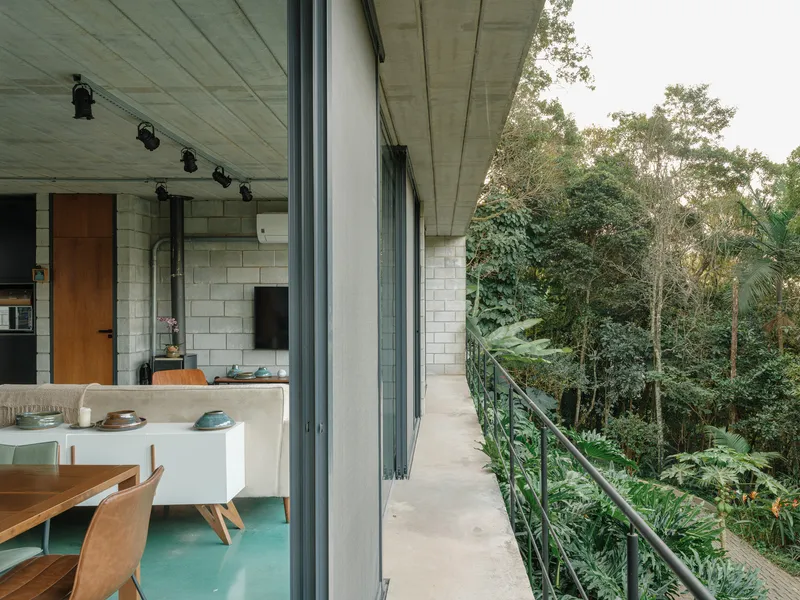
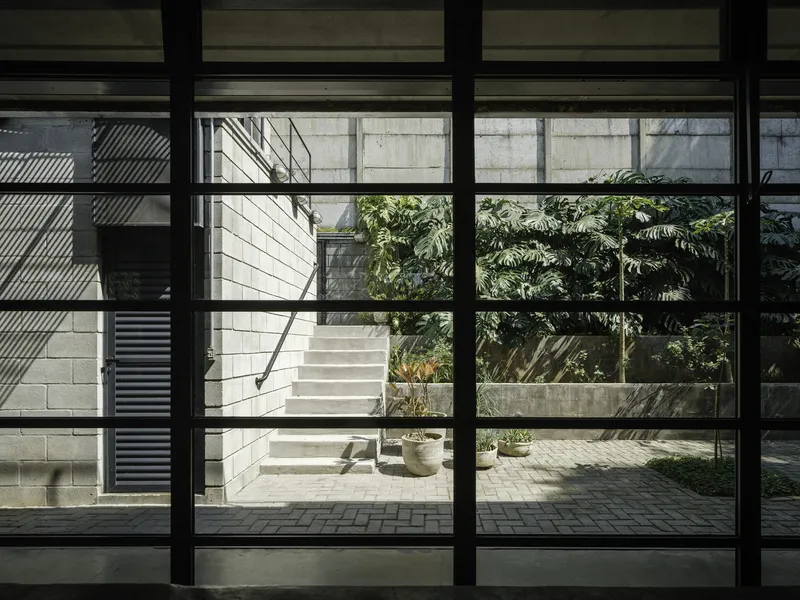
Built on the uppermost part of the site—where access to the property is located—the house embraces the challenges of its steep topography through a thoughtful combination of reinforced concrete, structural masonry, and glass. These materials together form a solid yet transparent architectural language that integrates the home seamlessly into its Atlantic rainforest surroundings.
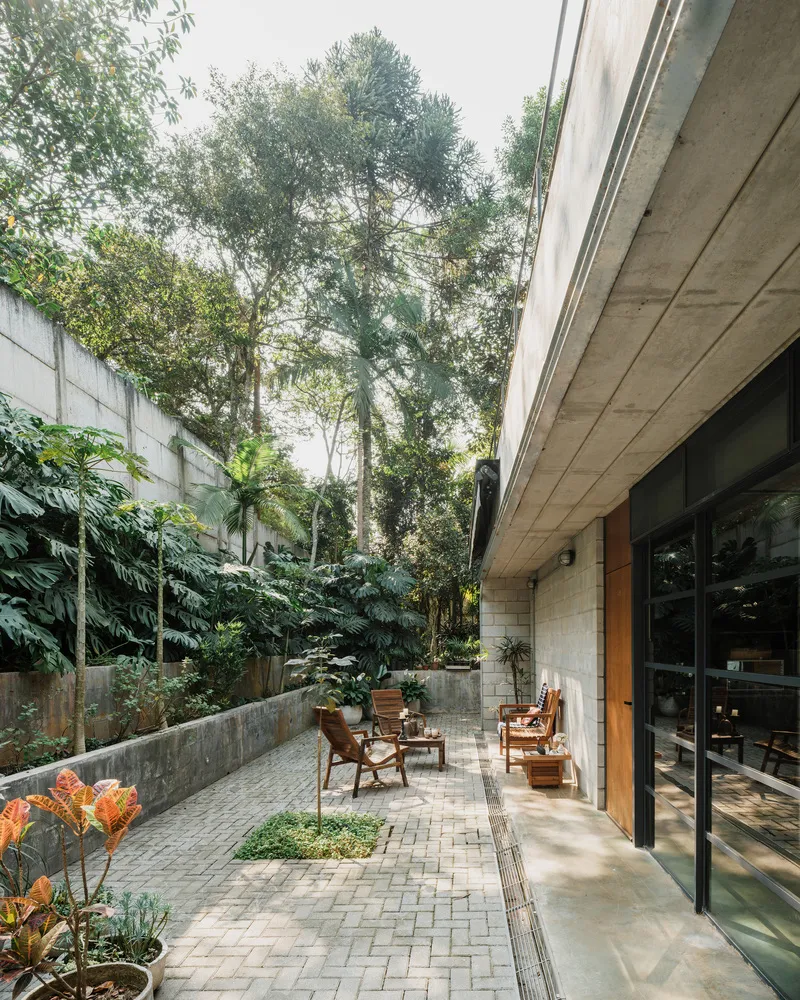
Architecture That Connects Structure and Landscape
The defining feature of Lírio House is its extensive use of glass, which opens the interior to the breathtaking landscape. Large glass panels and sliding doors allow for uninterrupted views of the surrounding greenery, immersing residents in nature while ensuring the spaces are filled with abundant natural light.
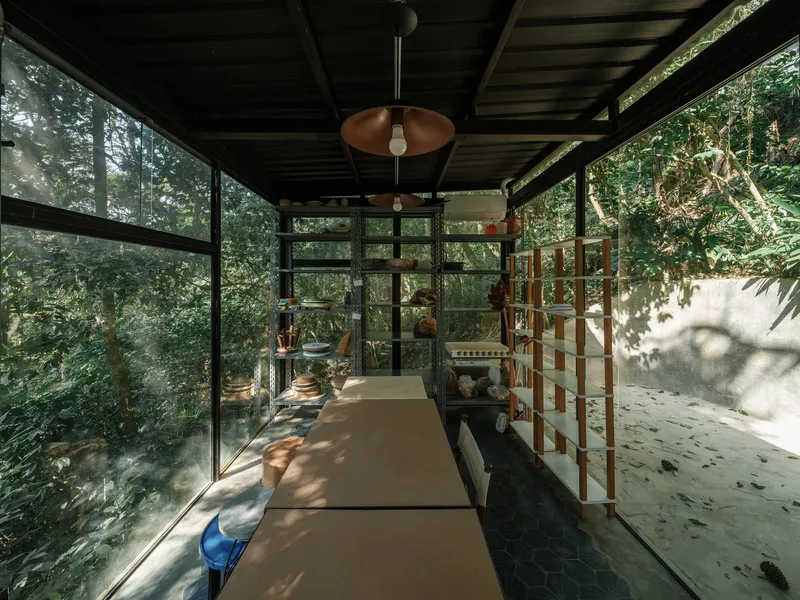
The exposed concrete structure, a hallmark of Terra e Tuma’s architectural identity, provides both strength and visual simplicity. Its rough texture contrasts beautifully with the soft tones of the forest, while also regulating interior temperature and reducing the need for maintenance.
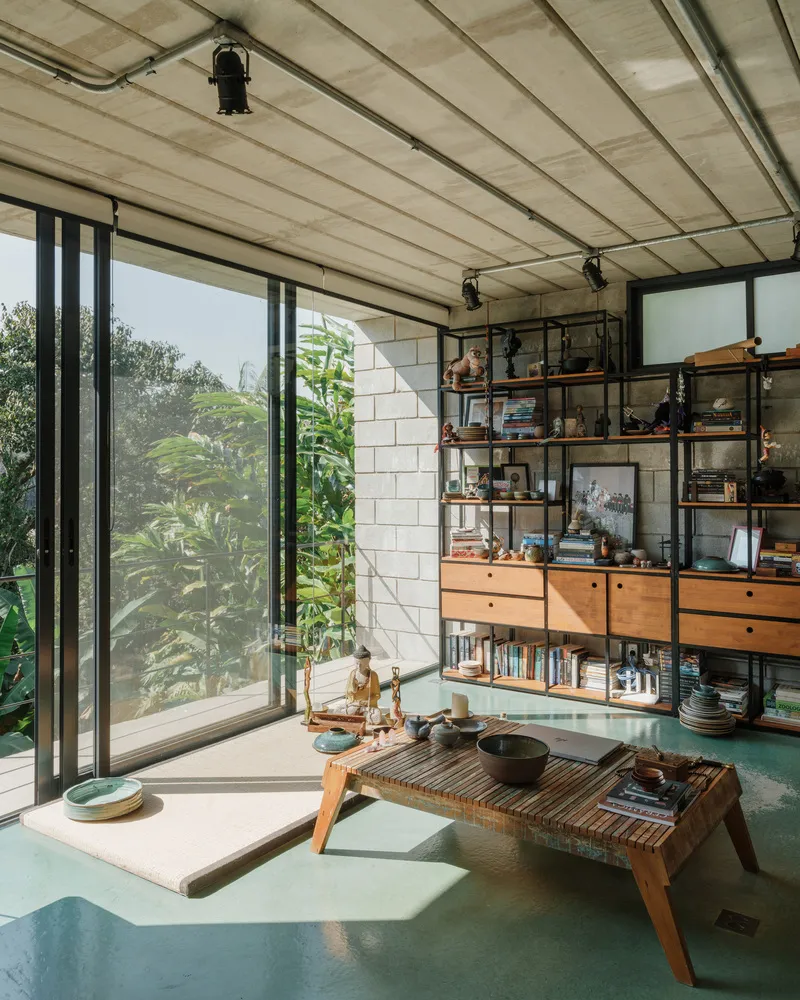
Open Interiors and Natural Ventilation
Inside, Lírio House embraces an open floor plan designed to promote fluid circulation, cross-ventilation, and a strong connection between indoor and outdoor living. Wooden finishes and minimalist furniture add warmth to the otherwise industrial palette of concrete and glass, striking a balance between comfort and modernity.
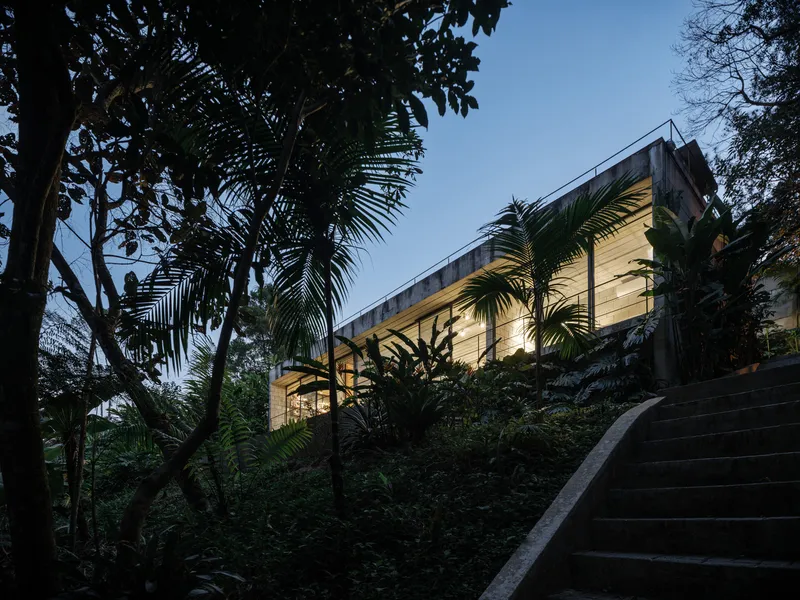
Spaces such as the living and dining areas are positioned to take full advantage of the panoramic views, while the bedrooms and private areas enjoy privacy without losing their link to the natural environment. Every angle of the home reveals the architects’ intent to make nature a permanent and living part of the interior experience.
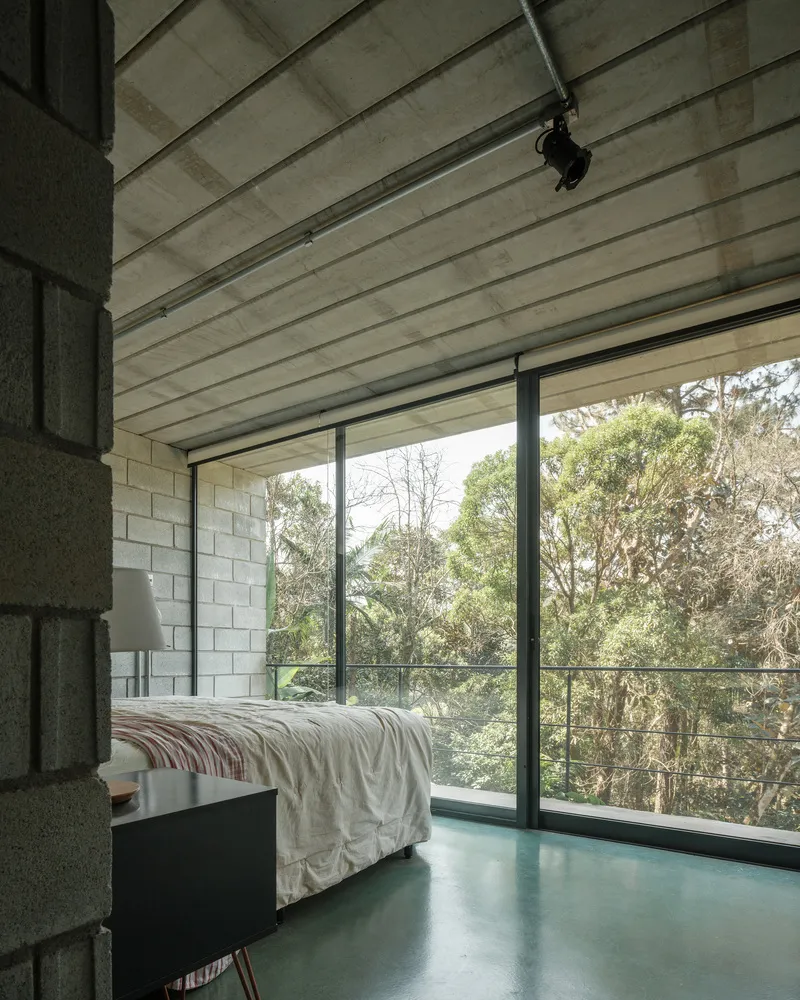
Sustainable and Contextual Design
Beyond aesthetics, Lírio House exemplifies sustainable architectural design. By maximizing natural lighting and ventilation, the residence minimizes energy consumption and creates a comfortable microclimate without relying heavily on artificial systems. The combination of local materials, passive design strategies, and minimal earthwork showcases Terra e Tuma’s commitment to responsible and context-sensitive construction.
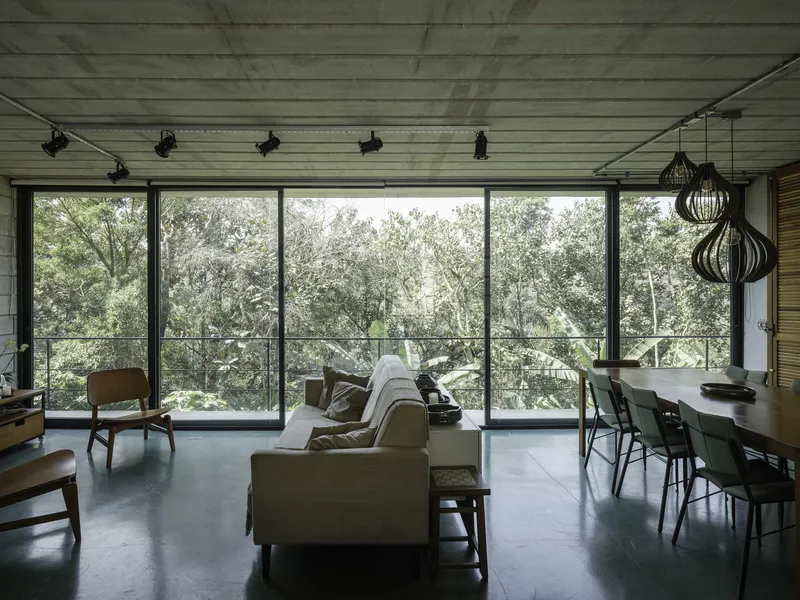
A Dialogue Between Architecture and Nature
With Lírio House, Terra e Tuma Arquitetos Associados once again demonstrate their mastery in crafting spaces that respect topography, climate, and context. The home’s design is not only about shelter but about celebrating the intimate relationship between human life and the natural landscape.
Through simple materials and thoughtful spatial composition, Lírio House becomes more than just a building—it transforms into a living extension of the rainforest.
Project Information
- Project Name: Lírio House
- Architects: Terra e Tuma Arquitetos Associados
- Lead Architects: Bárbara Fernandes, Danilo Terra, Fernanda Sakano, Pedro Tuma
- Location: Santo André, Brazil
- Area: 180 m²
- Year: 2021
- Photography: Pedro Kok
All photographs are works of Pedro Kok


Popular Articles
Popular articles from the community


Conexión: Biophilic Design Reimagines High-Rise Living in Hong Kong
Conexión reimagines high-rise living in Hong Kong through biophilic design, green facades, shared spaces, daylight, water and nature within.

Hill & Cross Opera: Sculptural Opera House Architecture Shaped by Tallinn’s Landscape and Identity
Hill & Cross Opera reimagines opera house architecture in Tallinn through its sculptural hill, civic plaza, glass wave and a luminous cross.

The Musturak Paradise: Senior Living Architecture for a Connected Future in Temara, Morocco
The Musturak Paradise reimagines senior living architecture in Temara via private homes, social spaces, culture, community, and shared care.

Co-Life: Senior Housing Design That Reconnects Older Adults With the City
Co-Life reimagines senior housing design through healing gardens, shared streets, workshops, and a sustainable community across generations.

Similar Reads
You might also enjoy these articles


Hodi-Mandai Geram
Project Function: Preservation and revitalization of the Intangible heritage and socio-spatial identity of the Hodi by Housing, Cultural Memory Center, Sacred Grove, landscape, local tourism economy


Olio Towers: A Mid-Rise for Performers That Fuses Housing, Rehearsal, and Stage
Located blocks from Houston's Theater District, this modular tower stacks living units around a central performance atrium.

Oasis: Modular Green Housing Carved into Dhaka's Urban Fabric
A shortlisted Plugin Housing entry reclaims unauthorized settlements in Dhaka with stepped concrete volumes, green roofs, and ventilation-driven design.

Black Hole: A Floating Megastructure for the Post-Physical Era
Emiliano Mazzarotto envisions a spherical, self-scaling arena where e-sports, digital hotels, and holographic stadiums replace traditional public space.


Explore Residential Building Competitions
Discover active competitions in this discipline


Challenge to design mud housing for contemporary communities


Challenge to reimagine the Iron Throne


Photograph architecture without architects


Illustrate the lost glory of Angkor Wat - Render Challenge
Comments (0)
Please login or sign up to add comments
No comments yet. Be the first to comment!