
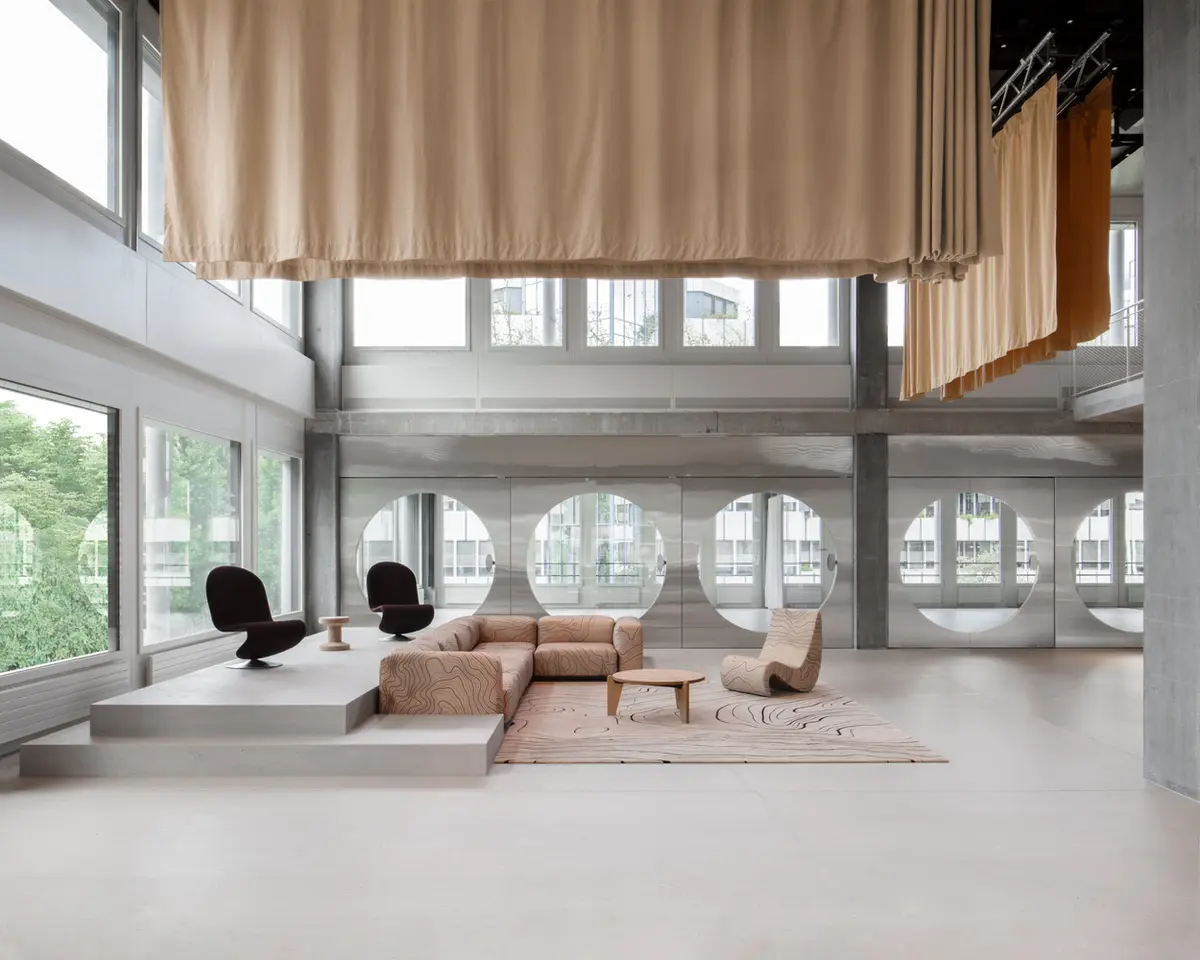
On Labs: New Global Headquarters for On Running: A Nature-Driven Workplace in Zürich
Nature-inspired headquarters blends movement, flexibility, and sustainability, creating an immersive workplace that enhances collaboration, well-being, and innovation across dynamic environments.


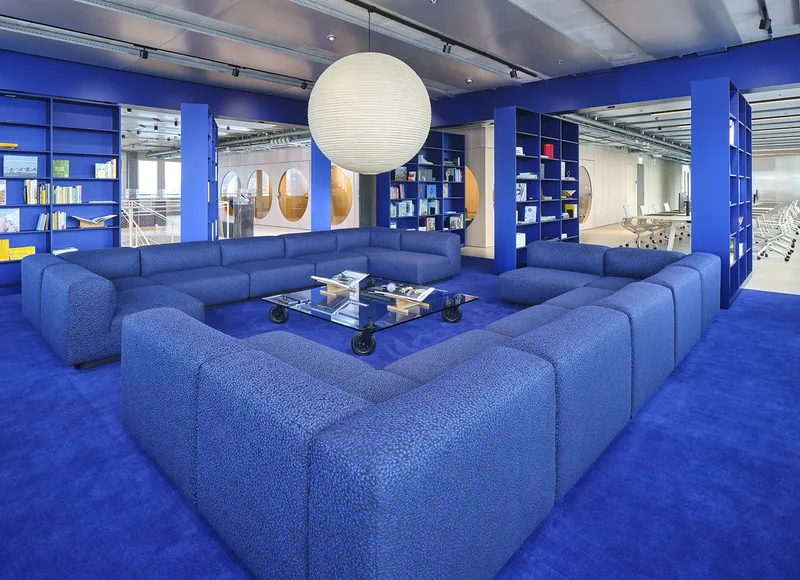
The new global headquarters for On Running in Zürich, designed by Specific Generic in collaboration with Spillmann Echsle Architekten, redefines the contemporary workplace through a powerful fusion of nature, technology, and human performance. Spanning 15,000 square meters, this innovative office building reflects the brand’s core philosophy: movement, exploration, and sustainability, while accommodating a rapidly growing workforce.
This next-generation office design goes beyond functionality, creating an immersive spatial experience that encourages interaction, creativity, and well-being. Developed closely with the in-house team, the project delivers a highly adaptable and brand-driven work environment.
Spatial Concept Inspired by Mountain Landscapes
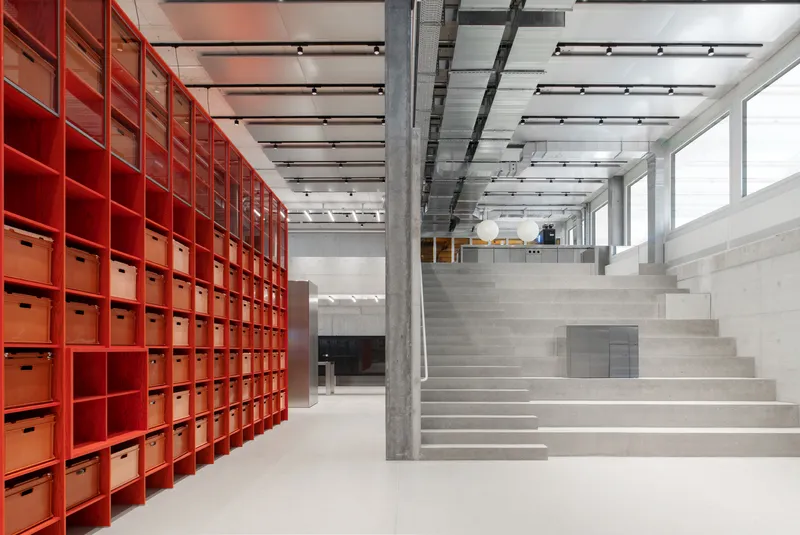
At the heart of the architectural concept lies a dynamic circulation system inspired by a mountain trail. This experiential pathway extends vertically across the 17-story building, symbolizing the journey of ascent. As employees move upward through the structure, the spatial narrative evolves, mirroring the physical and emotional progression of climbing a mountain.
Lower levels are grounded in earthy tones and solid forms, while upper floors transition into lighter, more atmospheric environments inspired by forests, lakes, clouds, and alpine air. This gradient of experiences transforms the office into a vertical landscape, reinforcing the connection between architecture and nature.
Flexible Workspaces and Collaborative Environments
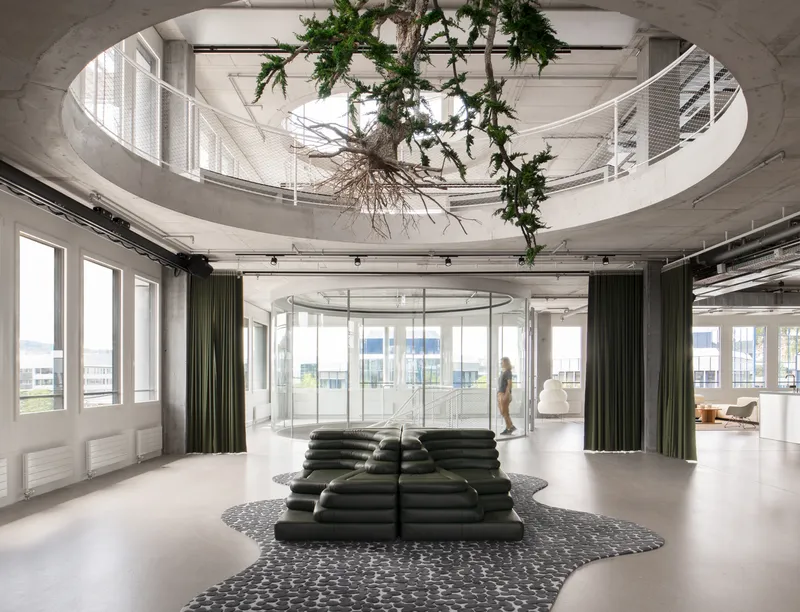
The headquarters is organized into “neighborhoods,” each spanning three floors and designed to foster community and collaboration. These zones allow employees to seamlessly transition between focused work, social interaction, and team-based activities.
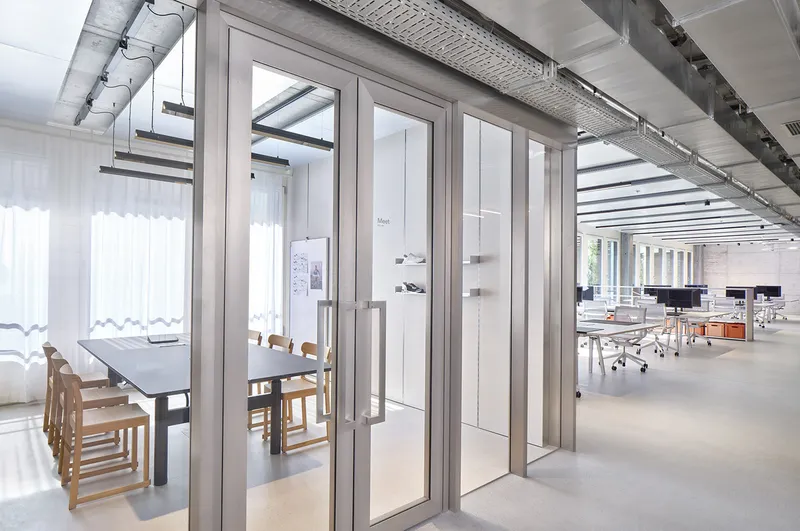
Flexibility is a key component of the design. Movable walls, adaptable furniture systems, and height-adjustable workstations, featured in 95% of meeting rooms, enable a fluid and responsive workspace. From quiet zones to open collaborative areas, the office supports diverse working styles and evolving organizational needs.
Wellness, Movement, and Employee Experience
Promoting physical and mental well-being is central to the design strategy. The building integrates features such as an in-house gym, hydration stations, and movement-oriented pathways that encourage activity throughout the day.
Additional amenities: including a conference center, workshops, design studios, library, exhibition spaces, and a rooftop garden, create a holistic workplace ecosystem. A greenhouse dining area and plant-based food offerings further reinforce the company’s commitment to health and sustainability.

Materiality and Raw Natural Expression
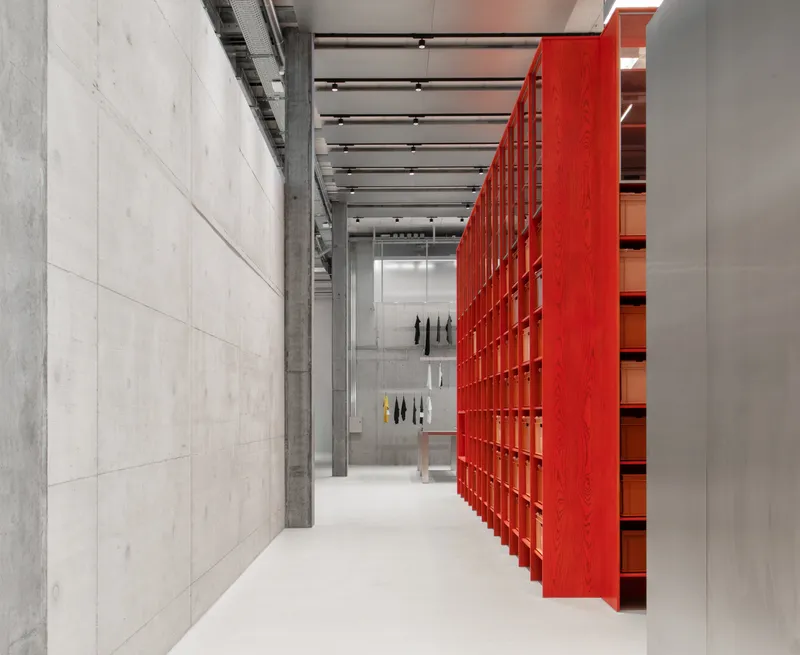
The material palette emphasizes authenticity and minimal processing, reflecting a deep respect for natural resources. Concrete, oak wood, stainless steel, and alpine stones are used in their raw state, creating a tactile and grounded environment.
Signature elements include a massive oak table carved from a single tree slab and a stone garden composed of rocks sourced from the surrounding Alps. These features blur the boundaries between interior architecture and the natural landscape, reinforcing the project’s biophilic design approach.
Innovative Interior Installations and Design Details
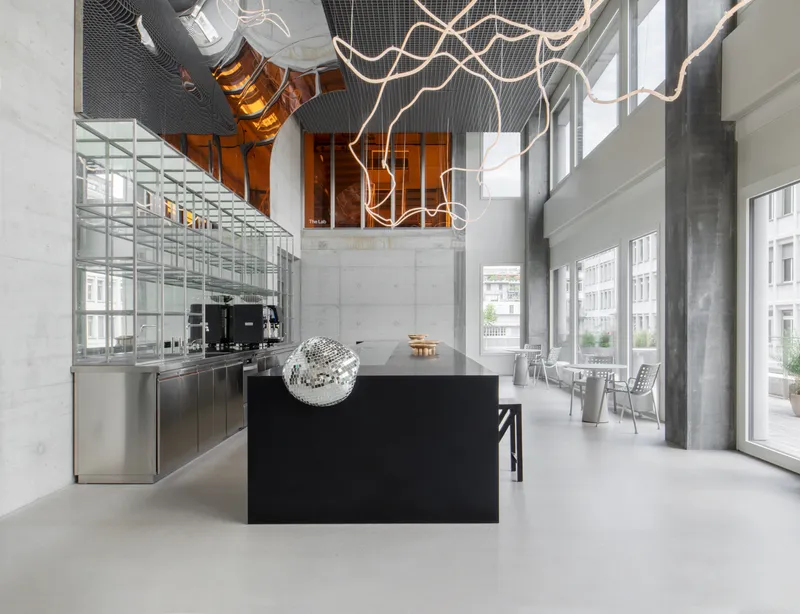
The headquarters incorporates a series of unique spatial interventions that enhance user experience and storytelling. A suspended pine tree installation connects two floors within the “forest” zone, while a neon light installation in the bar visualizes a mountain running trail in three dimensions.
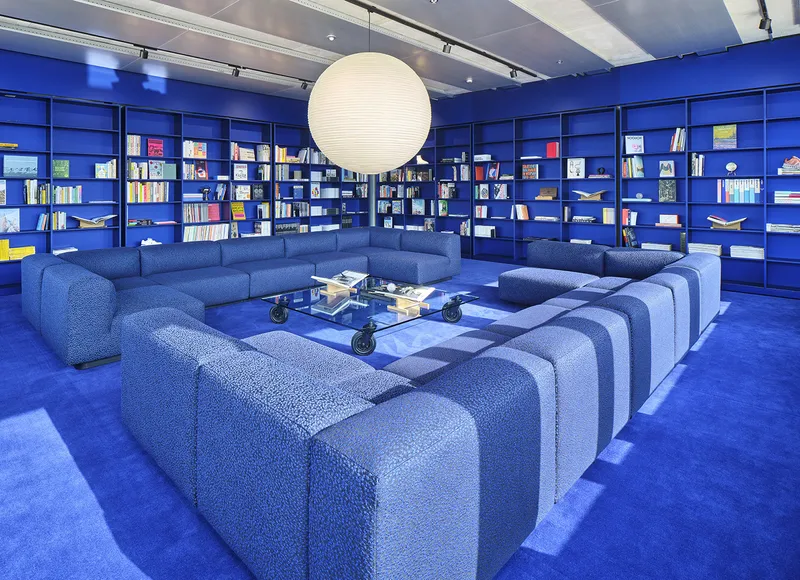
Topographic patterns derived from alpine maps are translated into custom carpets and upholstery, embedding geographic identity into the interior design. In the exhibition space, a traditional Japanese wood-burning technique (Shou Sugi Ban) is used to highlight the brand’s first shoe prototype, merging craftsmanship with innovation.

Creative Zones and Micro-Architectural Interventions
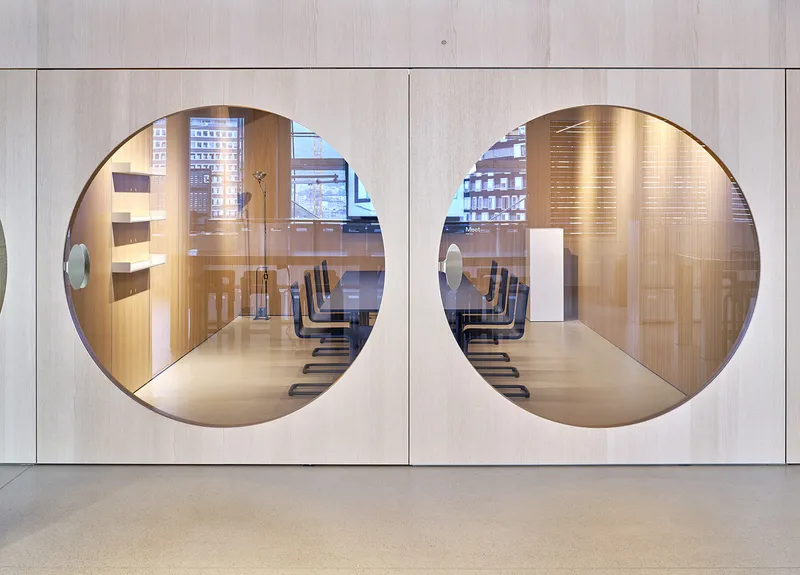
The design department features double-height spaces enriched with micro-architectural insertions, dedicated environments for experimentation and idea generation. Enclosed with diffused colored glass, these areas maintain visual connectivity while ensuring privacy and exclusivity.
The library exemplifies multifunctional design, where pivoting bookshelves double as spatial dividers, creating flexible meeting areas that also serve as knowledge hubs reflecting the company’s culture and values.

Sustainable Workplace Design and Biophilic Integration
Sustainability is embedded throughout the project, from material selection to spatial planning. The rooftop garden produces herbs, fruits, and berries, supporting a localized food ecosystem while enhancing biodiversity.
Biophilic elements: natural light, vegetation, organic materials, and landscape references, are seamlessly integrated to improve employee well-being and productivity. The result is a high-performance workplace aligned with contemporary environmental and social standards.

Redefining the Modern Office
On Labs represents a bold vision for the future of workplace architecture: where design is not only functional but experiential, sustainable, and deeply connected to human values. By merging natural inspiration with technological innovation, this headquarters sets a new benchmark for office design in the 21st century.

All photographs are works of
Mikael Olsson, Eduardo Perez


Popular Articles
Popular articles from the community


Co-life: Sustainable Architecture for Age-Friendly Community Living
Co-life reimagines sustainable architecture for seniors through courtyards, rammed earth, shared gardens, and spaces designed for belonging.

The Musturak Paradise: Senior Living Architecture for a Connected Future in Temara, Morocco
The Musturak Paradise reimagines senior living architecture in Temara via private homes, social spaces, culture, community, and shared care.

The Ocean Hive: Sustainable Architecture for a Self-Sufficient Civilization at Sea
The Ocean Hive imagines sustainable architecture at sea, where modular habitats, algae, wave power and ocean waste sustain a growing colony.

Little Red Riding Hood: Architectural Design as a Journey Through Fear, Light, and Storytelling
Little Red Riding Hood reimagines the fairy tale through architectural design shaped by fear, light, scale, memory, uncertainty, and choice.

Similar Reads
You might also enjoy these articles

Bamboo Housing Challenge 2026: Design Affordable, Sustainable Homes Using Bamboo
An international design competition by Bamboo U and IBUKU inviting architects and designers to reimagine affordable housing using bamboo — with the winning design built full-scale in Bali.
Computational Design & Education: Beegraphy Design Awards Introduces 7th Category (Featuring Jiyun's Innovative Approach)
Dive into Beegraphy’s 7th Design Awards category, where computational design meets education to create immersive, interactive learning tools, inspired by Jiyun’s work.
From Parametric Lighting to Urban Furniture: Join the 2nd Workshop in Beegraphy’s Computational Design Series
Dive into Cutting-Edge Design Techniques and Practical Applications with Industry Experts

Last Call: Unleash Your Architectural Genius in SHAK's Kindergarten Design Competition
Urgent call for architects to join SHAK's kindergarten design competition before the looming deadline

Explore Architecture Competitions
Discover active competitions in this discipline

Challenge to reimagine the Iron Throne

Photograph architecture without architects

Illustrate the lost glory of Angkor Wat - Render Challenge

Design challenge to reuse E-waste
Comments (0)
Please login or sign up to add comments
No comments yet. Be the first to comment!