
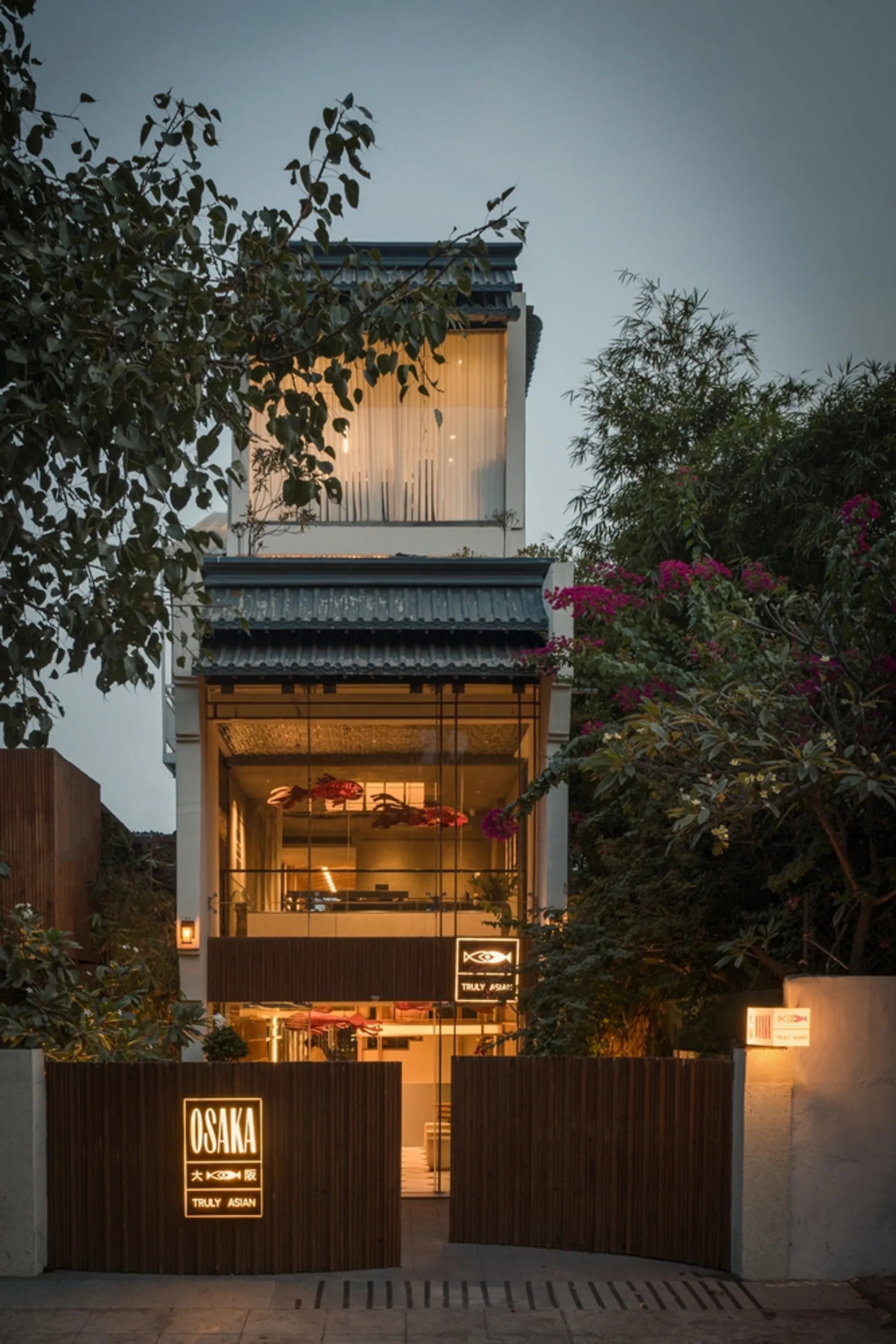
Osaka Pan Asian Restaurant by Fellow Yellow Design Studio
A three-level Pan-Asian restaurant in Hyderabad translating Japanese philosophy of flow into light-filled, refined interiors shaped by restraint and movement.


Located in Jubilee Hills, Hyderabad, Osaka Pan Asian Restaurant is a carefully choreographed interior transformation by Fellow Yellow Design Studio that turns a narrow, inward-looking former bakery into a layered, light-filled dining destination. Completed in 2024, the 6,000 sq ft restaurant unfolds across three levels and accommodates over 110 diners, offering a refined spatial experience that mirrors the subtlety and balance of Pan-Asian cuisine.
Translating Flow, Light, and Restraint into a Contemporary Dining Experience in Hyderabad
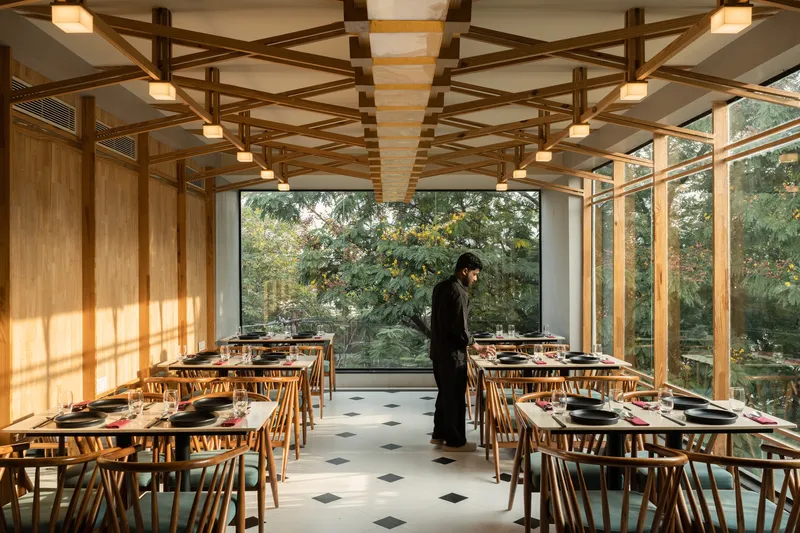
Rather than relying on overt cultural symbolism, the design draws from Japanese philosophical principles, translating ideas of flow, continuity, and restraint into architecture, light, and movement. The result is an interior that feels calm yet dynamic: an immersive environment where space, material, and atmosphere work in harmony.
Reimagining a Constrained Urban Shell
The original structure presented a clear challenge. Long, linear, and closed off on all sides, the former bakery lacked natural light, ventilation, and spatial generosity. The client’s brief called for a sophisticated yet approachable Pan-Asian restaurant, one that could shift seamlessly from a bright daytime dining space into an intimate evening bar, without falling into stereotypical Asian décor.
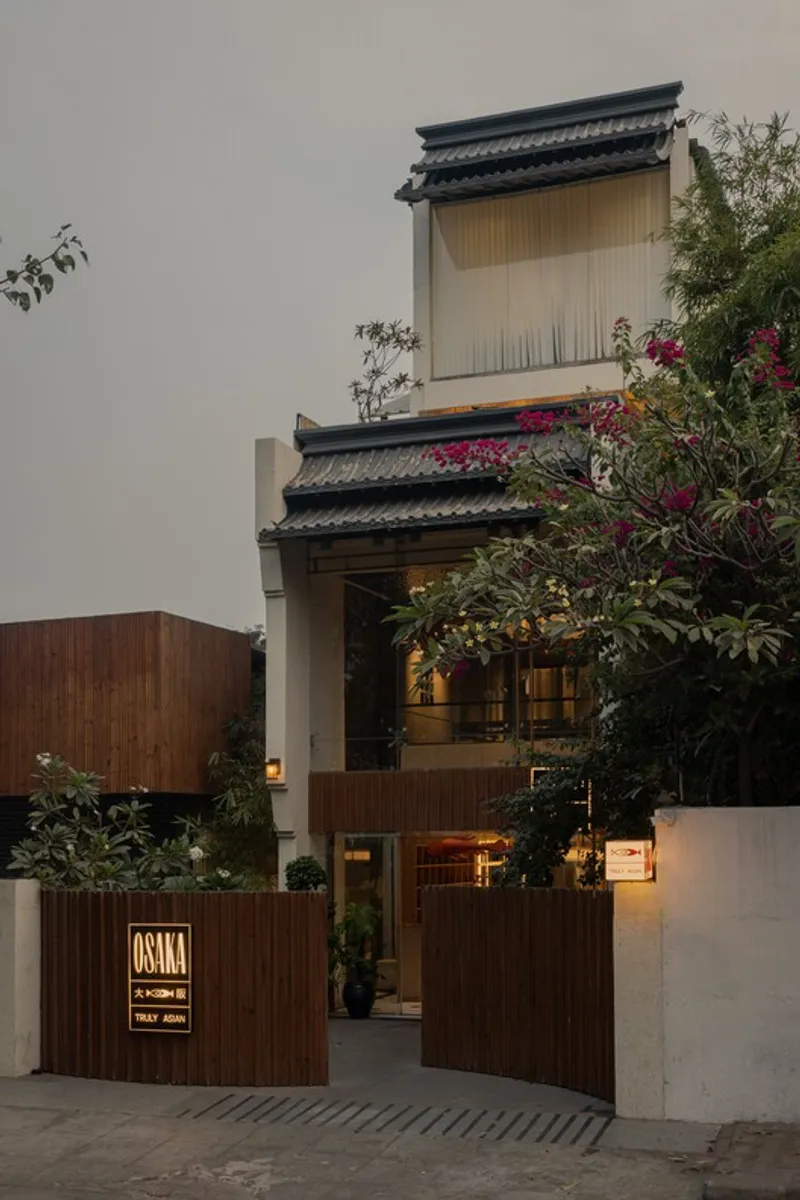
Fellow Yellow Design Studio approached the project not as a cosmetic redesign, but as a spatial reinvention. The core task was to dissolve the rigidity of the existing shell and replace it with a sense of openness, flow, and emotional engagement, while ensuring operational efficiency and a comfortable dining experience across multiple levels.
Nagare: Designing Through the Philosophy of Flow
The conceptual foundation of Osaka is rooted in Nagare, a Japanese philosophy that emphasizes flow, continuity, and natural progression. Rather than referencing Japanese imagery directly, the studio interpreted this idea architecturally: through spatial sequencing, vertical circulation, and environmental responsiveness.
To counter the building’s static nature, key structural interventions were introduced:
- Enlarged window openings to draw in daylight
- Skylights to bring light deep into the interior
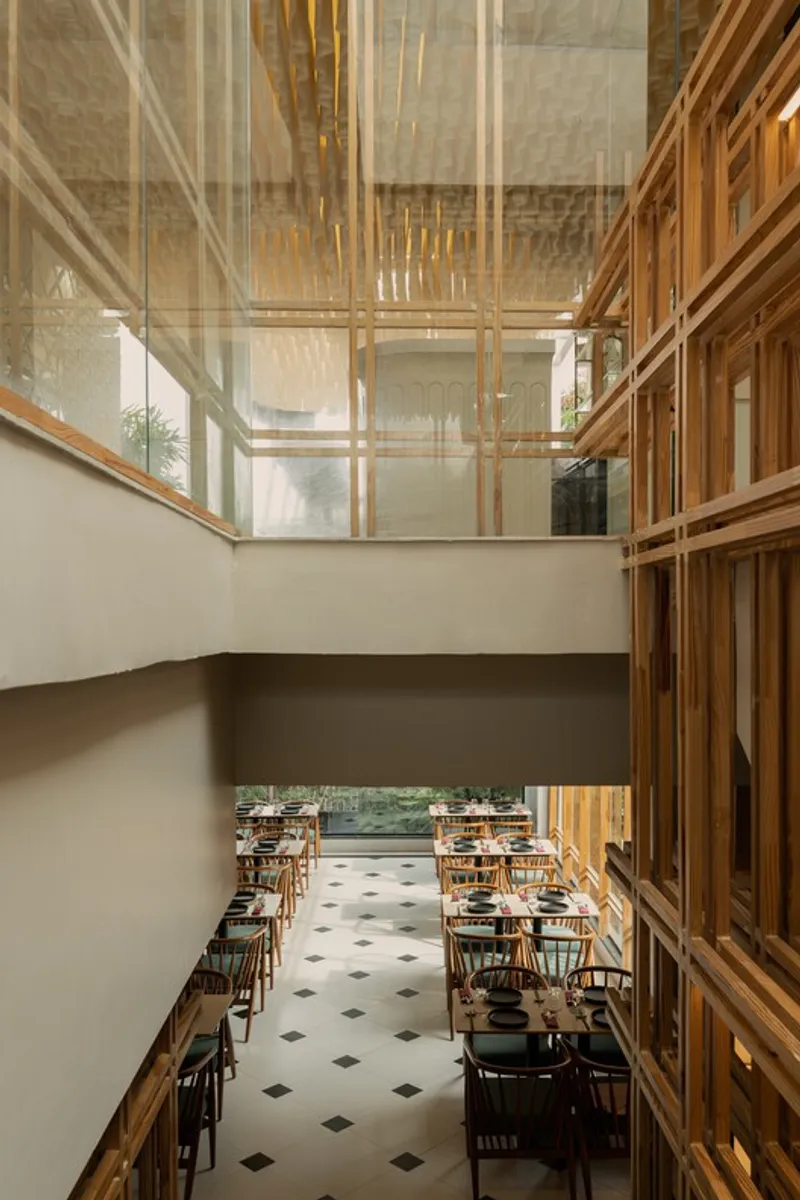
- A double-height entrance volume that visually and physically connects levels
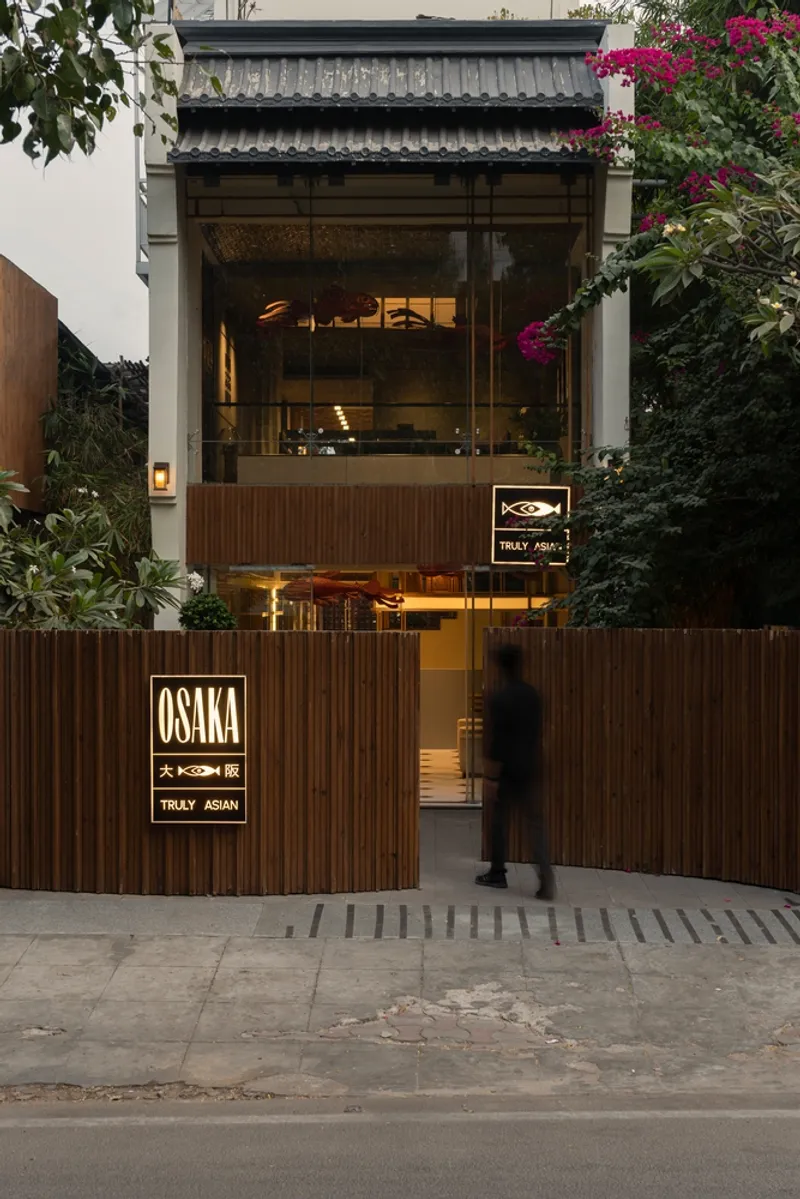
These moves allow light, air, and greenery to move freely through the building, transforming a once-enclosed structure into a living, evolving interior. The architecture encourages movement and discovery, allowing diners to experience the restaurant as a gradual unfolding rather than a single visual moment.
A Vertical Dining Narrative
Osaka is conceived as a vertical journey, with each level offering a distinct yet interconnected atmosphere.
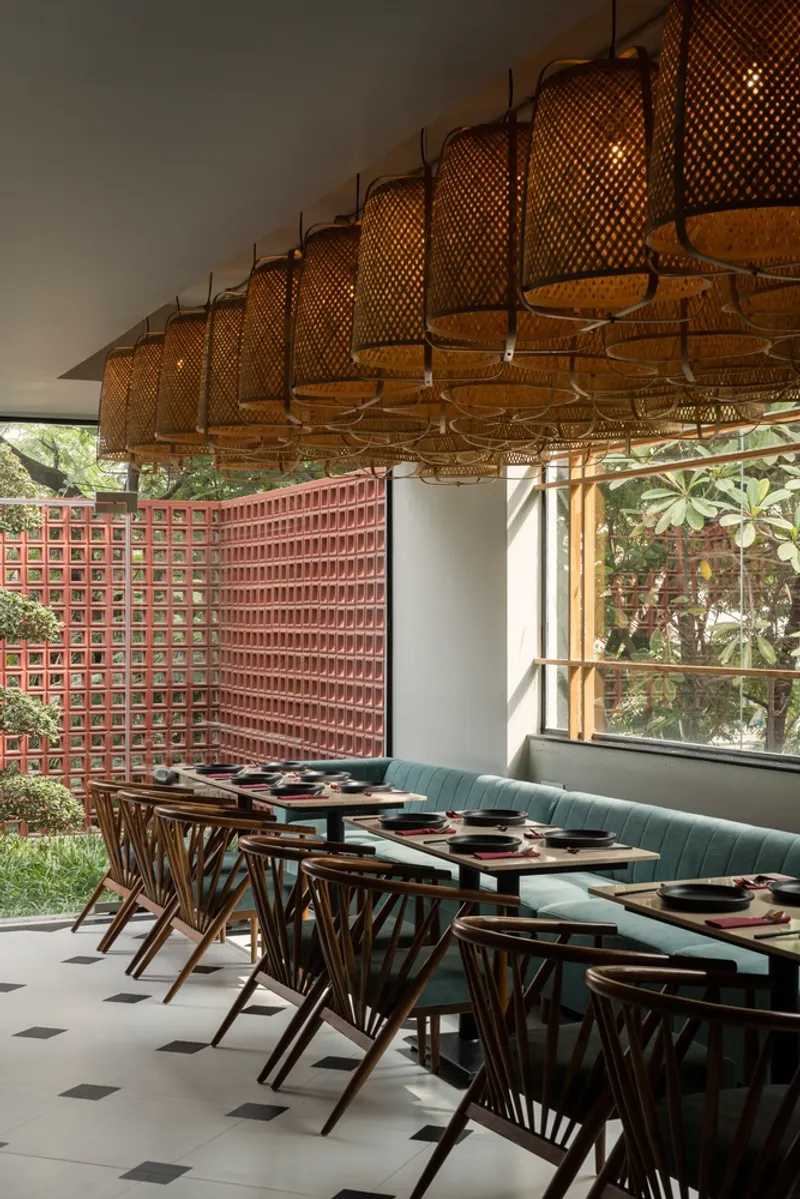
The ground floor establishes a calm, grounded arrival experience. Anchored by a live sushi counter, this level invites engagement and transparency, allowing diners to witness the craft of food preparation. A small Zen garden softens the transition between interior and exterior, introducing nature as an integral spatial element. Earthy materials and a restrained palette create a sense of balance and clarity, setting the tone for the experience ahead.
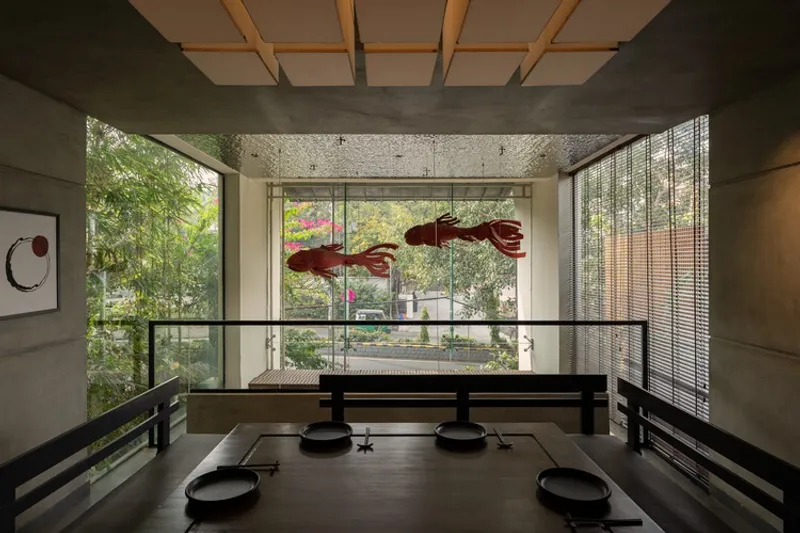
The first floor introduces a more intimate spatial character. Overlooking the double-height volume below, it maintains visual connection while offering a quieter dining environment. A private dining area draws inspiration from the spatial logic of traditional zashiki seating, reinterpreted in a contemporary manner to suit modern dining habits. This level balances privacy with openness, reinforcing the idea of continuity rather than separation.
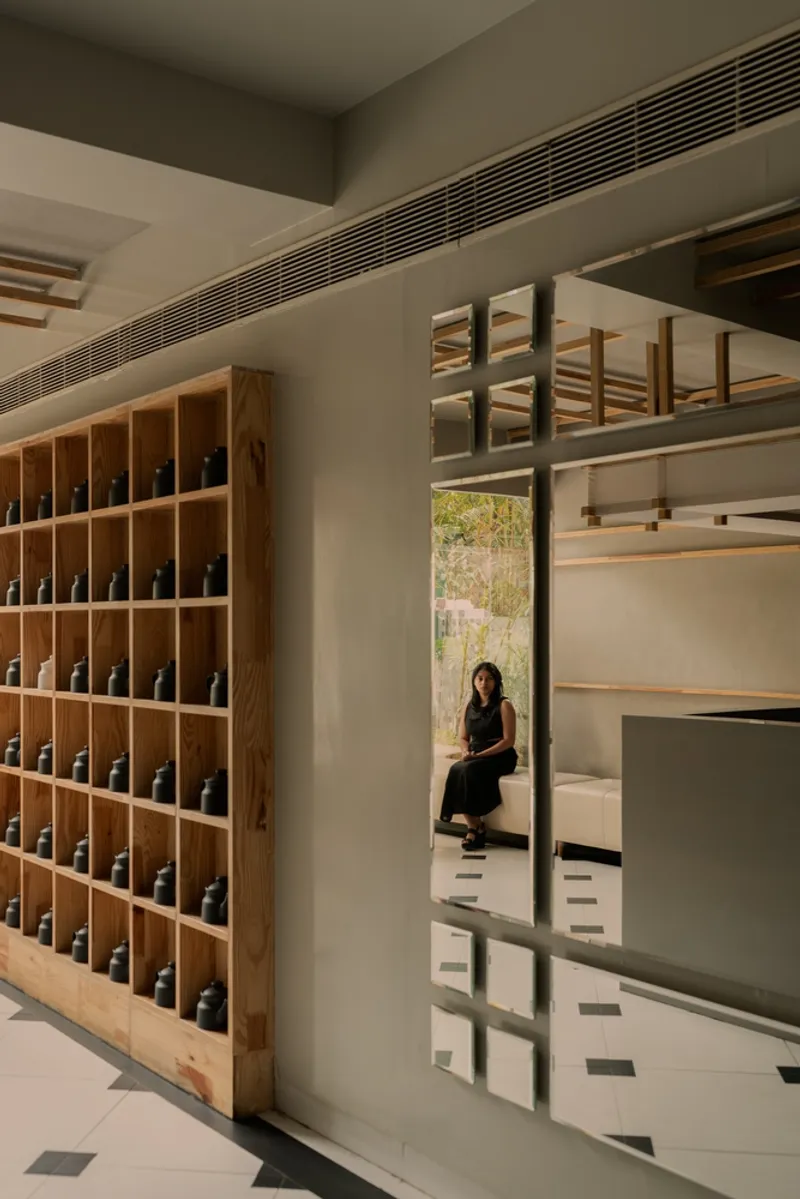
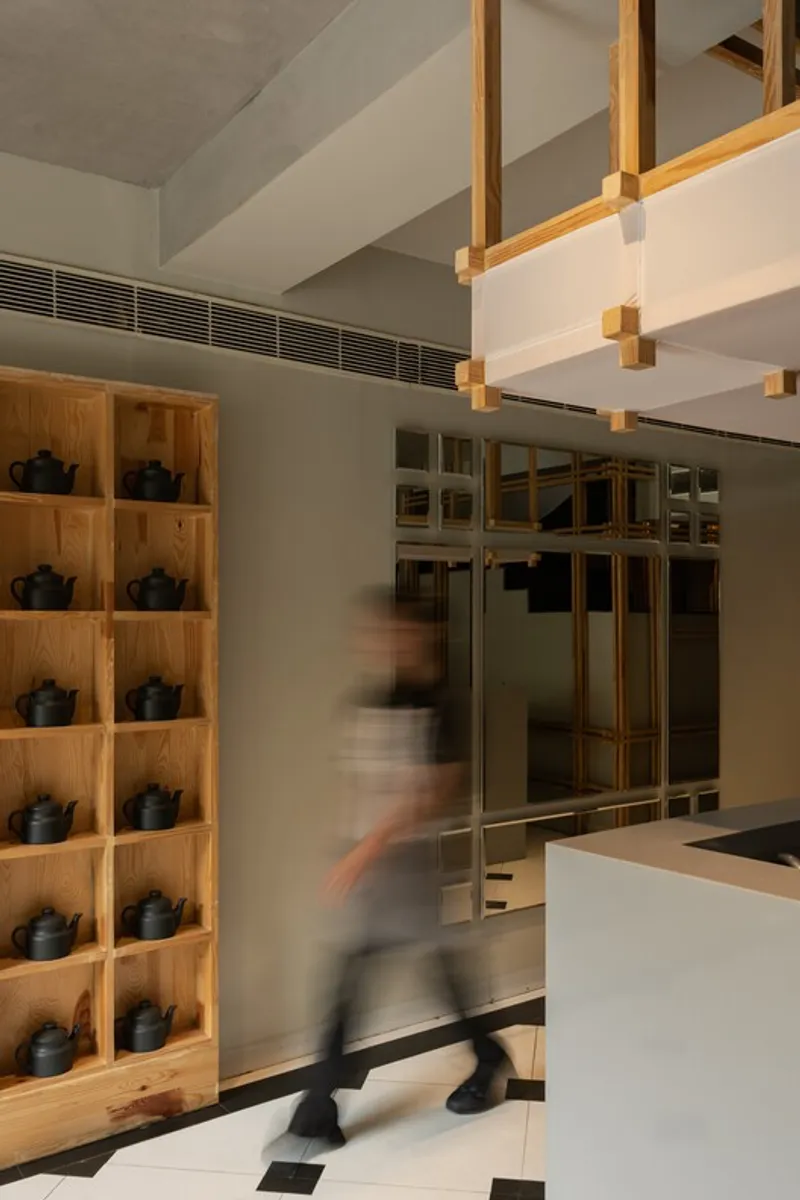
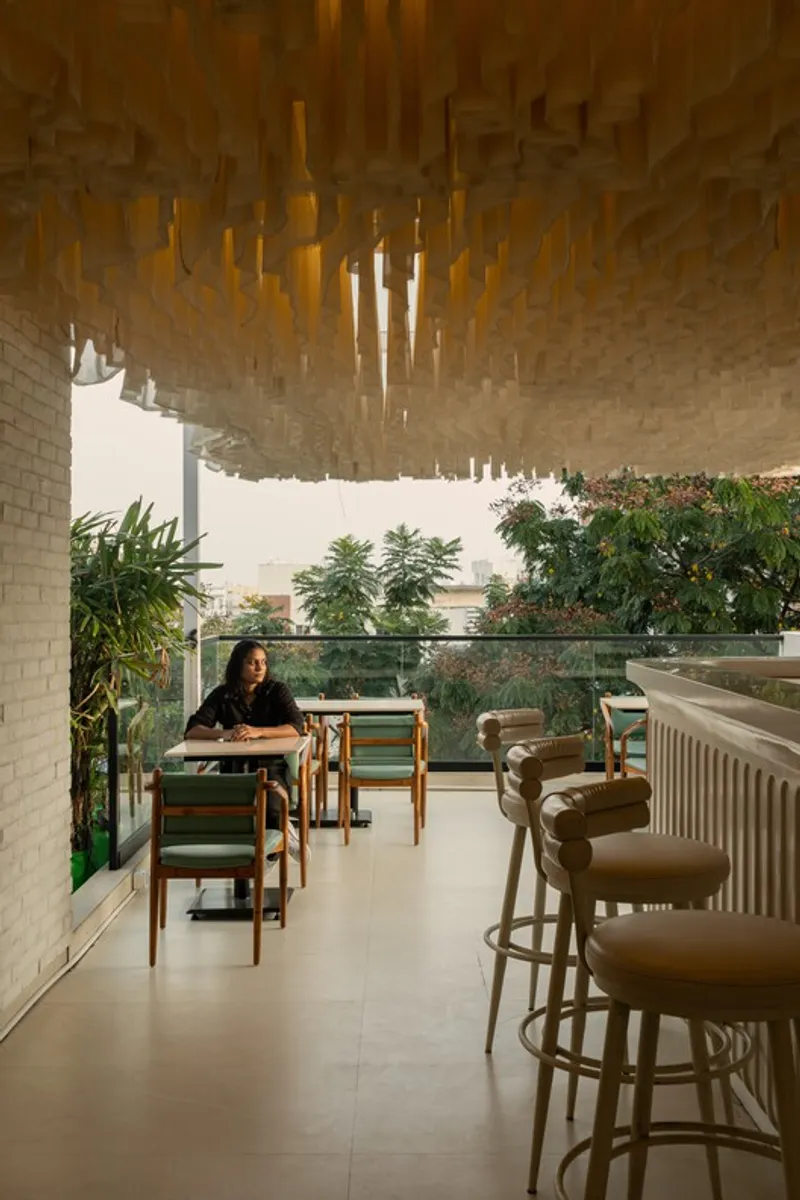
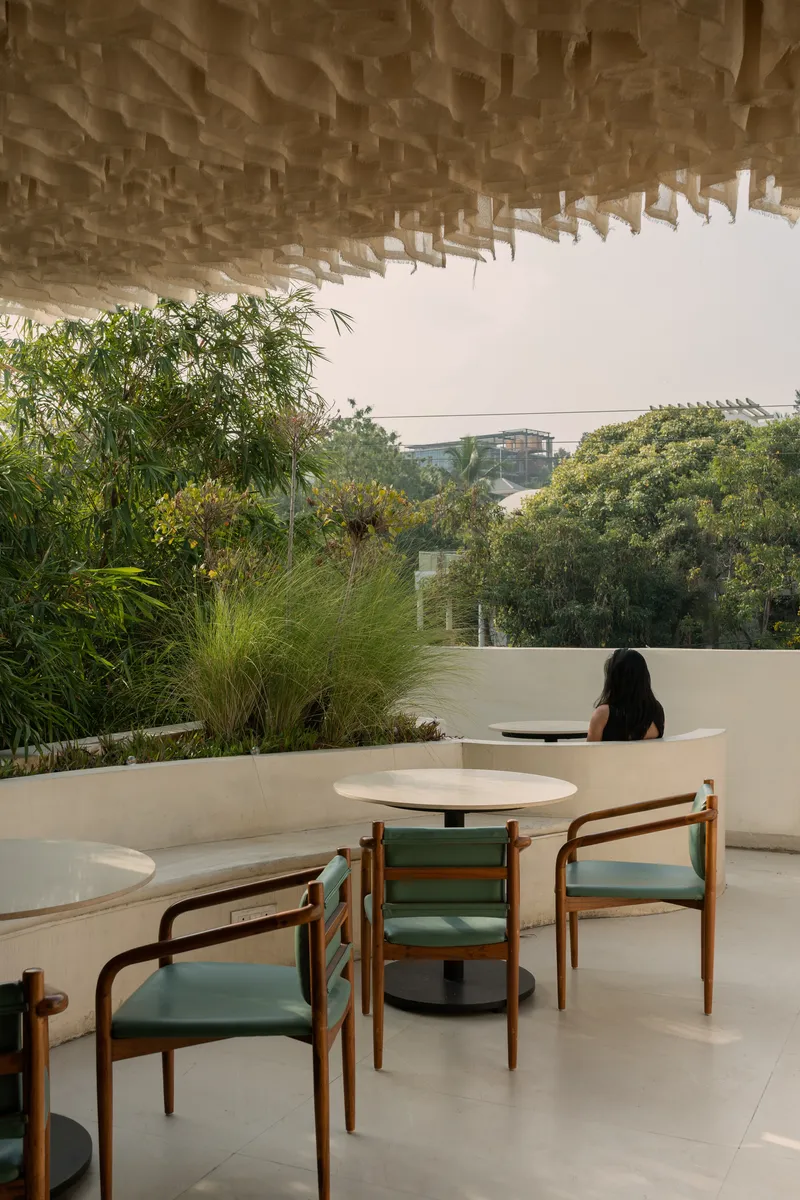
At the top, the terrace level opens into a semi-covered lounge with an open bar and outdoor seating. Here, the city becomes part of the experience. Flowing fabric installations respond to wind and changing light, animating the space throughout the day and evening. This level embraces informality and social energy, offering a relaxed contrast to the more contemplative spaces below.
Material Language and Structural Rhythm
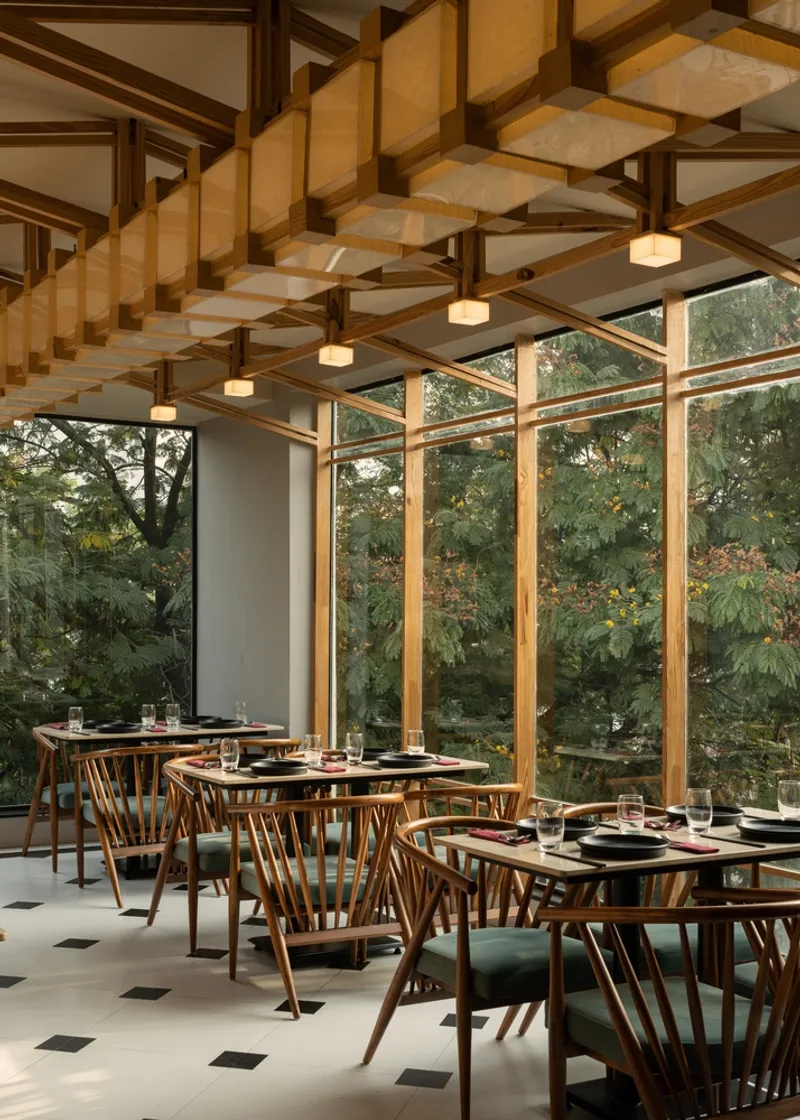
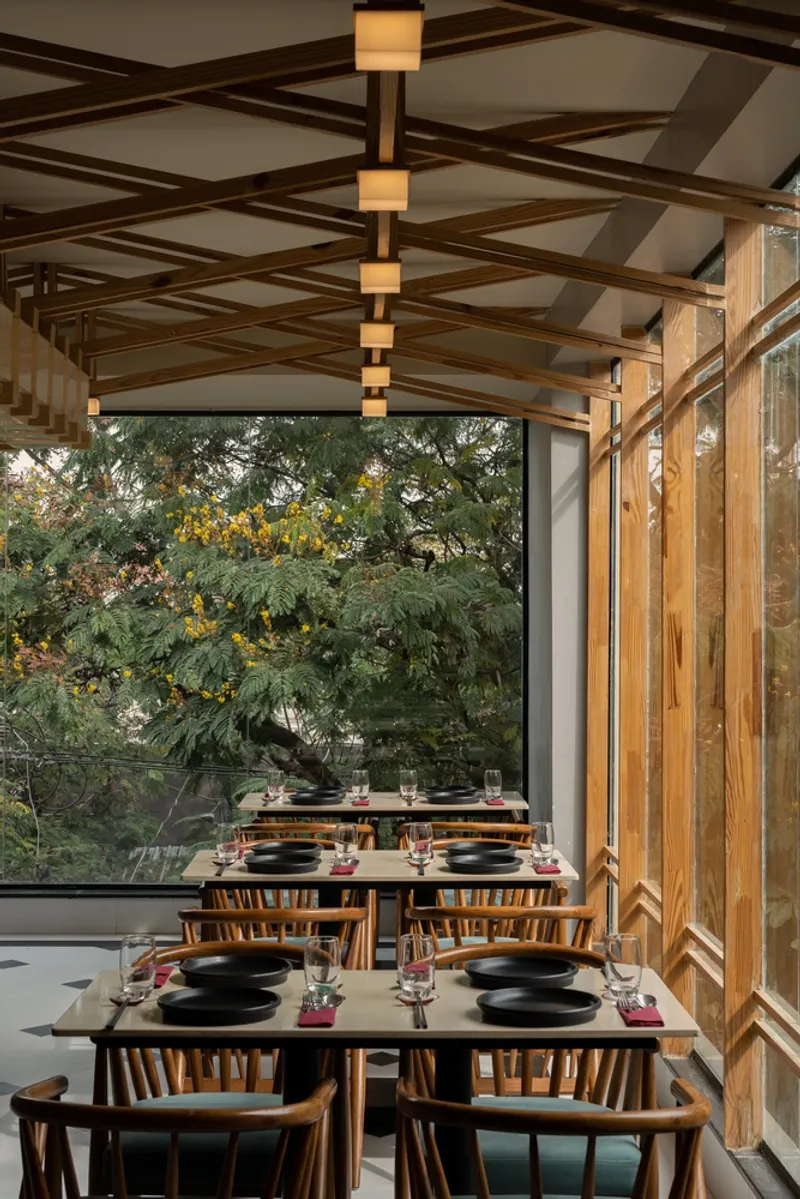
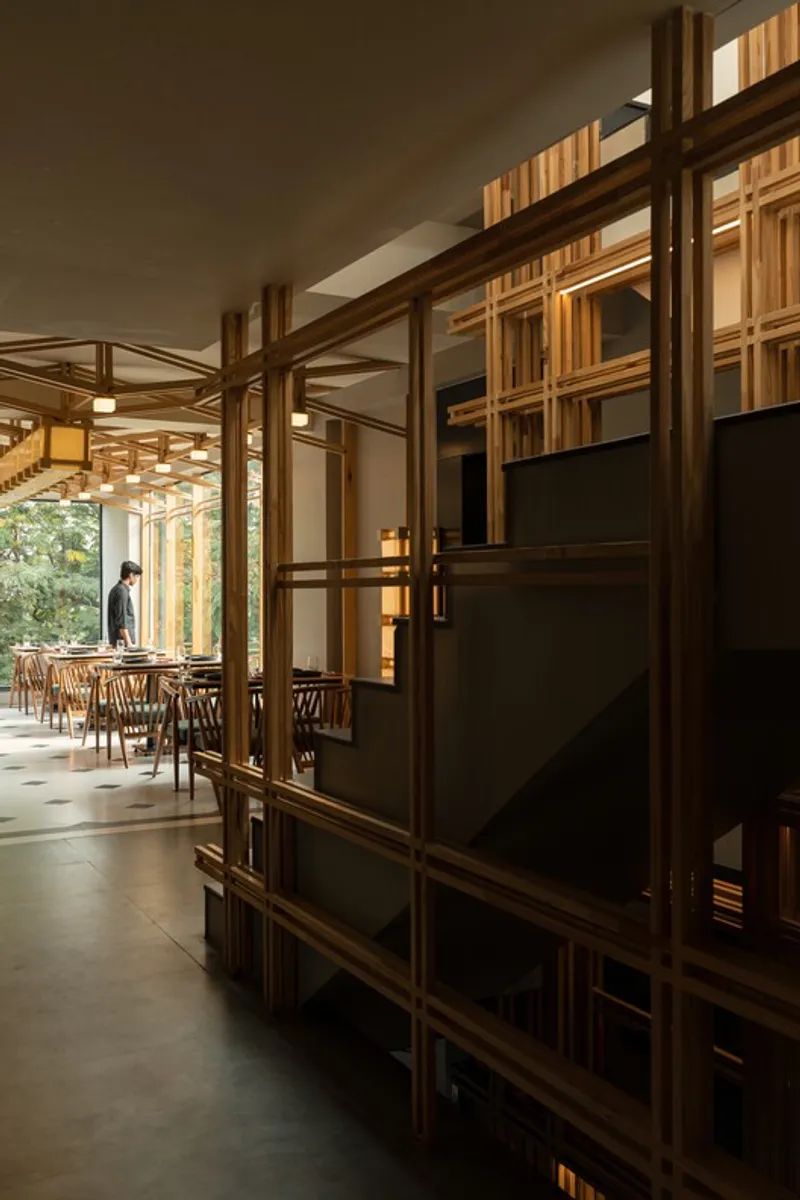
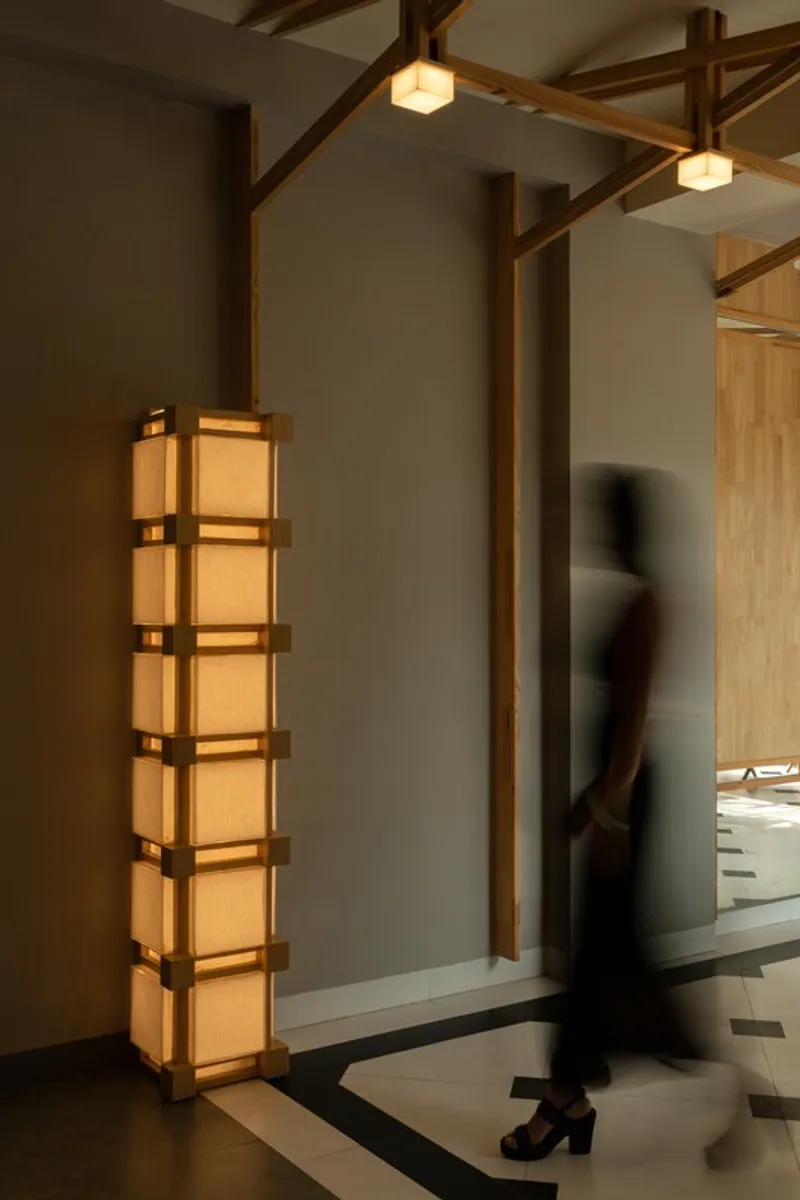
Material continuity is central to Osaka’s spatial coherence. The design draws inspiration from Kigumi, the traditional Japanese system of wood joinery, where structure and craft are inseparable. Timber grids extend beyond furniture to become an architectural framework: spanning ceilings, stair partitions, and custom lighting elements.
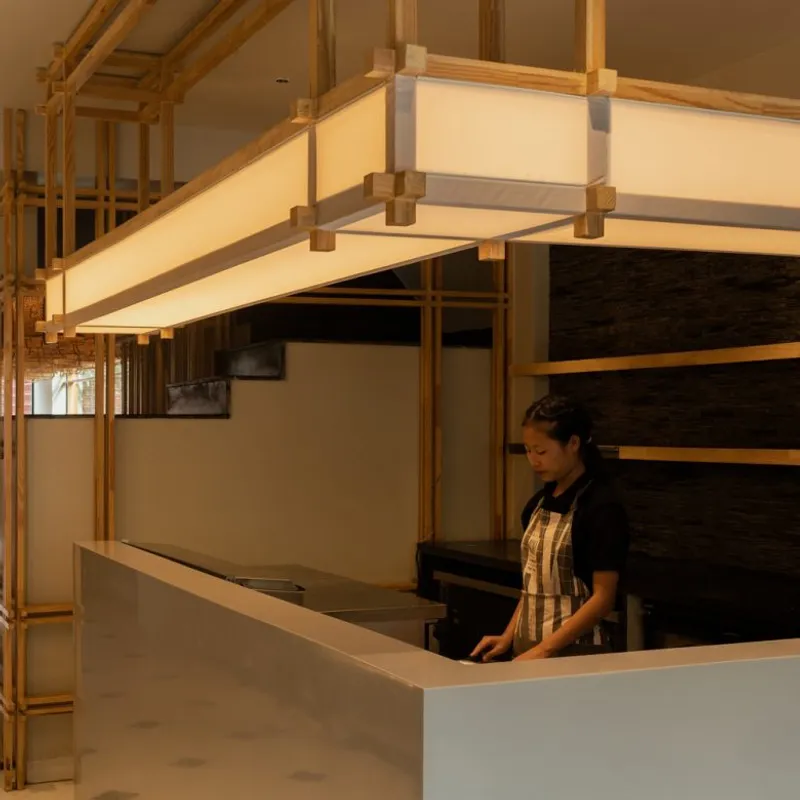
This approach introduces rhythm and order without visual heaviness. Timber elements guide movement, define zones, and soften the verticality of the space, ensuring that each level feels connected rather than isolated.
The curved roof, finished in grey tiles referencing traditional kawara clay roofing, offers a subtle cultural nod without becoming literal or decorative. Supported by corbelled details, it balances durability with elegance, an important consideration for a high-traffic restaurant environment.
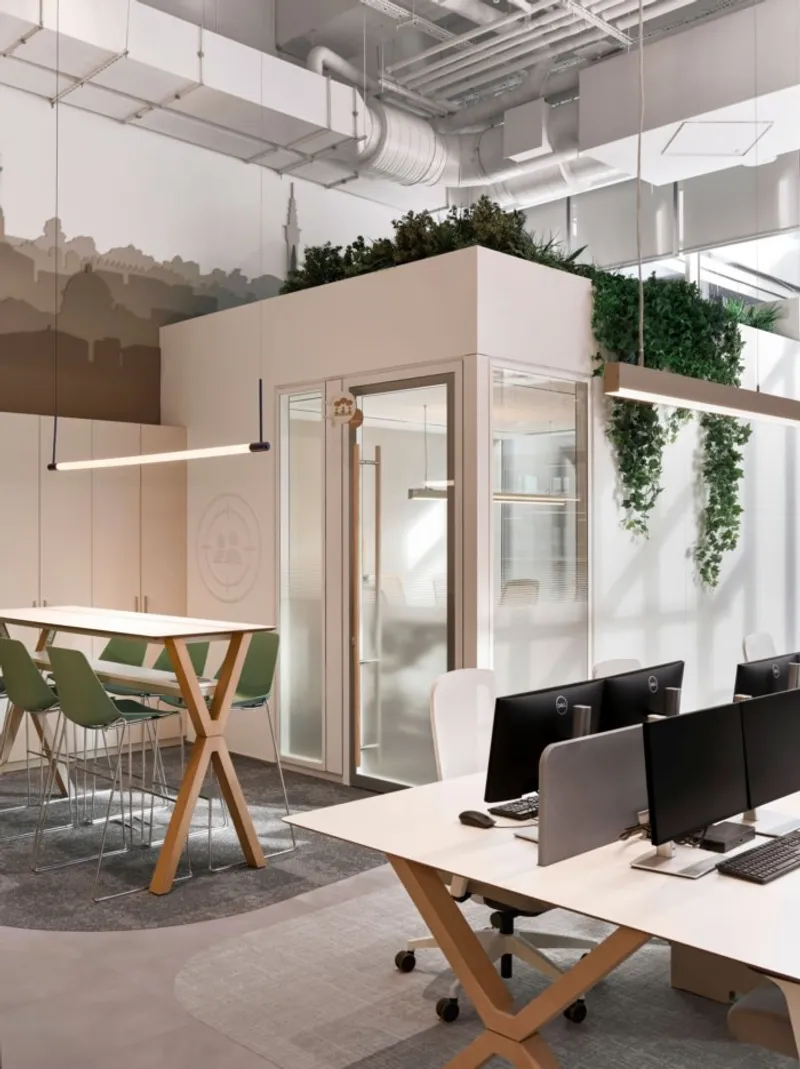
Palette, Art, and Atmosphere
The interior palette is deliberately muted, composed of beige, timber, grey, and white, allowing light and shadow to play a central role. Subtle blues and darker wood tones add depth without disrupting the overall calm. This restraint ensures that the architecture supports the dining experience rather than competing with it.
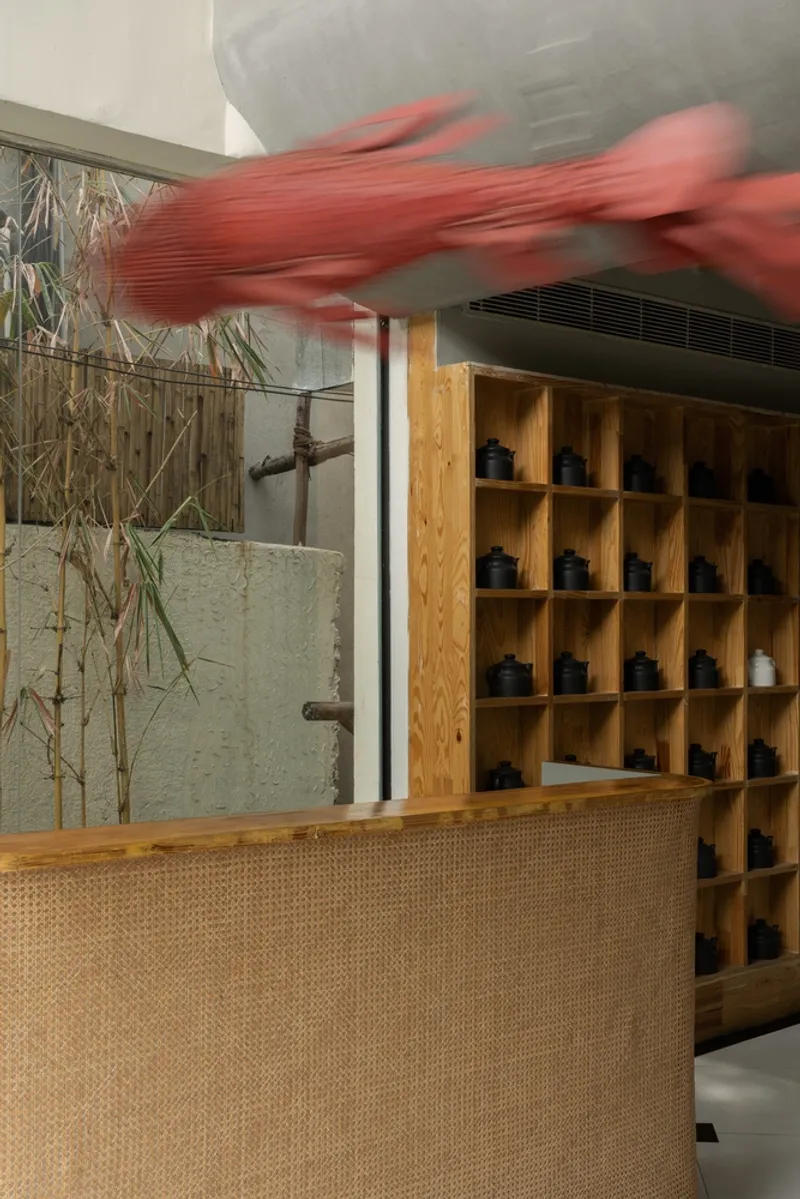
Art is integrated with intention. A suspended koi fish installation, visible across multiple levels, becomes a symbolic and spatial anchor. Representing perseverance and movement, it reinforces the project’s underlying narrative of flow. Complementing this are curated works by local Hyderabad-based artists, inspired by Japanese ink traditions and minimal line work, grounding the project in its local cultural context.
Dining as a Gradual Experience
Osaka’s design philosophy mirrors the structure of a thoughtfully composed meal. The space reveals itself gradually: through shifts in scale, texture, light, and proportion, allowing diners to settle into the experience rather than be overwhelmed by it. Food, conversation, and atmosphere remain central, with architecture acting as a quiet facilitator.
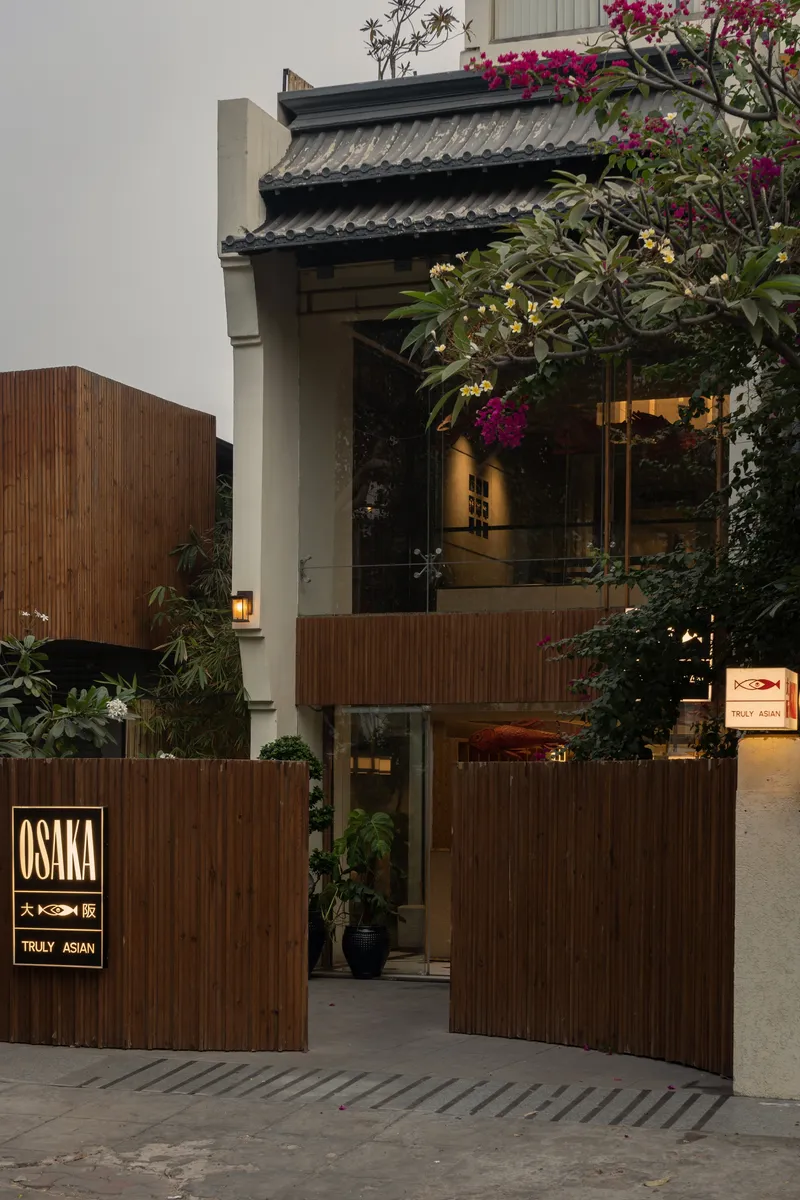
By translating Zen principles into a contemporary Pan-Asian restaurant, Fellow Yellow Design Studio demonstrates how spatial limitations can become opportunities for refinement. Osaka is not defined by spectacle, but by precision, restraint, and emotional resonance, qualities that leave a lasting impression on Hyderabad’s evolving culinary landscape.
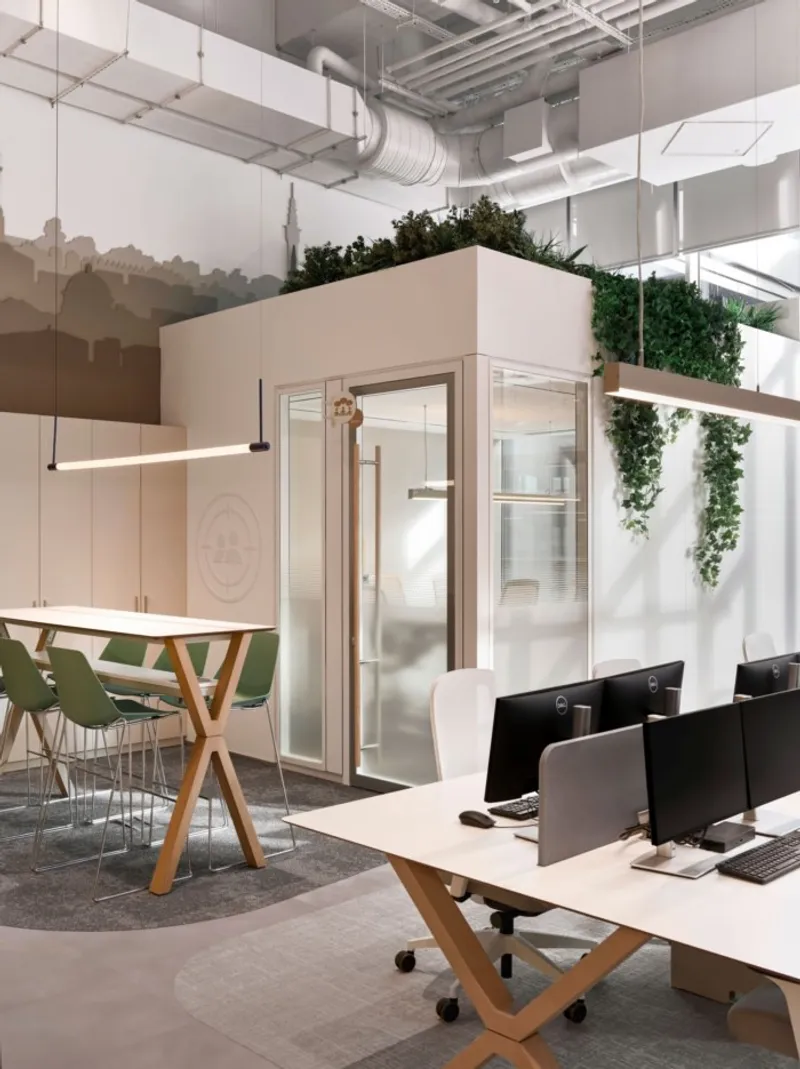
All the Photographs are works of Syam Sreesylam




Popular Articles
Popular articles from the community


Conexión: Biophilic Design Reimagines High-Rise Living in Hong Kong
Conexión reimagines high-rise living in Hong Kong through biophilic design, green facades, shared spaces, daylight, water and nature within.

Co-Life: Senior Housing Design That Reconnects Older Adults With the City
Co-Life reimagines senior housing design through healing gardens, shared streets, workshops, and a sustainable community across generations.

The Earth Pod: 3D Printed Homes for Resilient Refugee Communities
The Earth Pod reimagines refugee housing through 3D printed homes made from clay, combining resilience, self-sufficiency, and rapid shelter.

Lunar Spiral: Space Architecture Shaped by the Mathematics of the Universe
Lunar Spiral reimagines space architecture through Fibonacci geometry, lunar regolith, levitating habitats, and self-sustaining Moon living.


Similar Reads
You might also enjoy these articles


Hodi-Mandai Geram
Project Function: Preservation and revitalization of the Intangible heritage and socio-spatial identity of the Hodi by Housing, Cultural Memory Center, Sacred Grove, landscape, local tourism economy


Olio Towers: A Mid-Rise for Performers That Fuses Housing, Rehearsal, and Stage
Located blocks from Houston's Theater District, this modular tower stacks living units around a central performance atrium.

Oasis: Modular Green Housing Carved into Dhaka's Urban Fabric
A shortlisted Plugin Housing entry reclaims unauthorized settlements in Dhaka with stepped concrete volumes, green roofs, and ventilation-driven design.

Black Hole: A Floating Megastructure for the Post-Physical Era
Emiliano Mazzarotto envisions a spherical, self-scaling arena where e-sports, digital hotels, and holographic stadiums replace traditional public space.

Explore Hospitality Building Competitions
Discover active competitions in this discipline



Challenge to reimagine the Iron Throne


Photograph architecture without architects


Illustrate the lost glory of Angkor Wat - Render Challenge


Design challenge to reuse E-waste
Comments (0)
Please login or sign up to add comments
No comments yet. Be the first to comment!