
Ostra House by STUDIO PIPPA: A Contemporary Residential Renovation in Brasília
Ostra House by STUDIO PIPPA in Brasília blends flexible, light-filled spaces, natural materials, and modern design, creating intimate, fluid residential living.


Located in Brasília, Brazil, this 630 m² project by STUDIO PIPPA, led by Priscila Gabriel in 2024, combines contemporary design with functional elegance. Featuring refined materials from Docol, Mareli Esquadrias, Marmoraria Alvorada, and Paulete, the residence is captured beautifully by Larisa Sad – Urban Sadness, highlighting its sophisticated architectural presence.
Ostra House, a thoughtful residential renovation by STUDIO PIPPA, is located in a tranquil neighborhood of Brasília, Brazil. Designed to welcome the beginning of a new family chapter, this home combines flexible living spaces with a strong architectural identity, integrating indoor and outdoor environments while prioritizing comfort, functionality, and aesthetic precision. The project exemplifies modern Brazilian residential architecture with a focus on spatial fluidity, natural materials, and light-filled interiors.
Architectural Concept and Façade Design
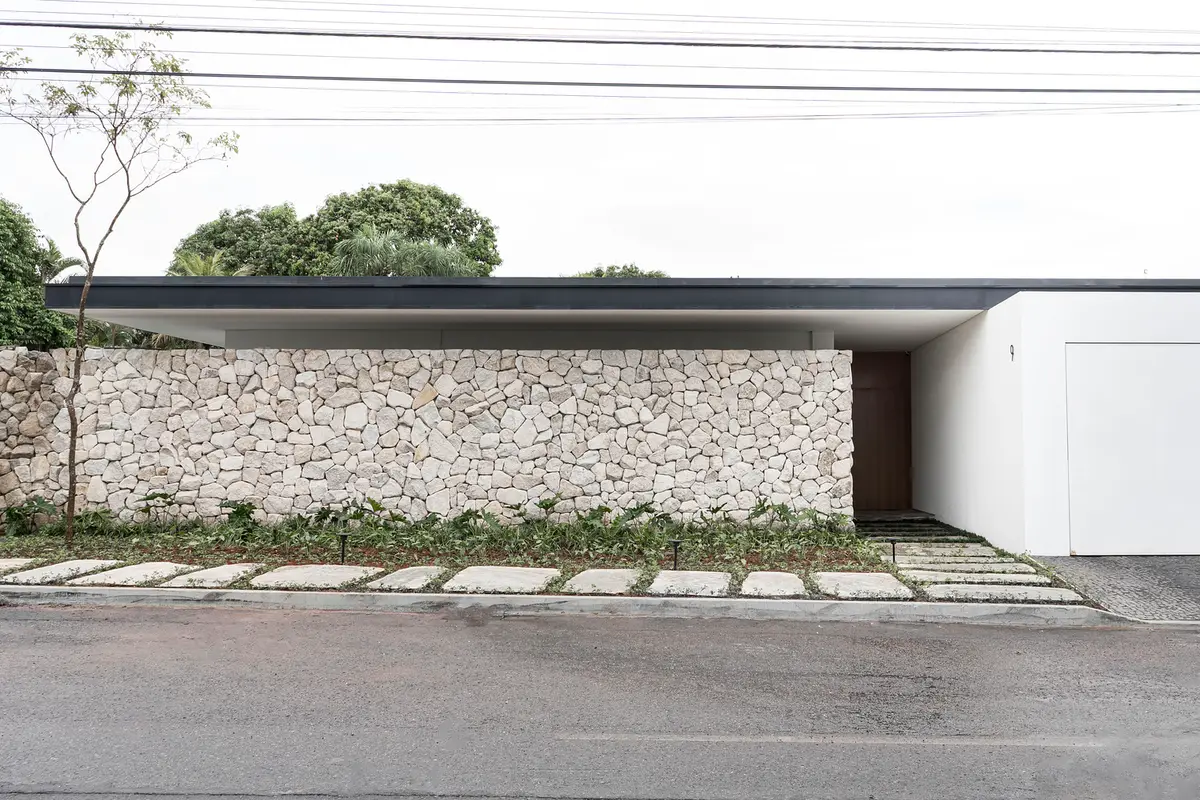
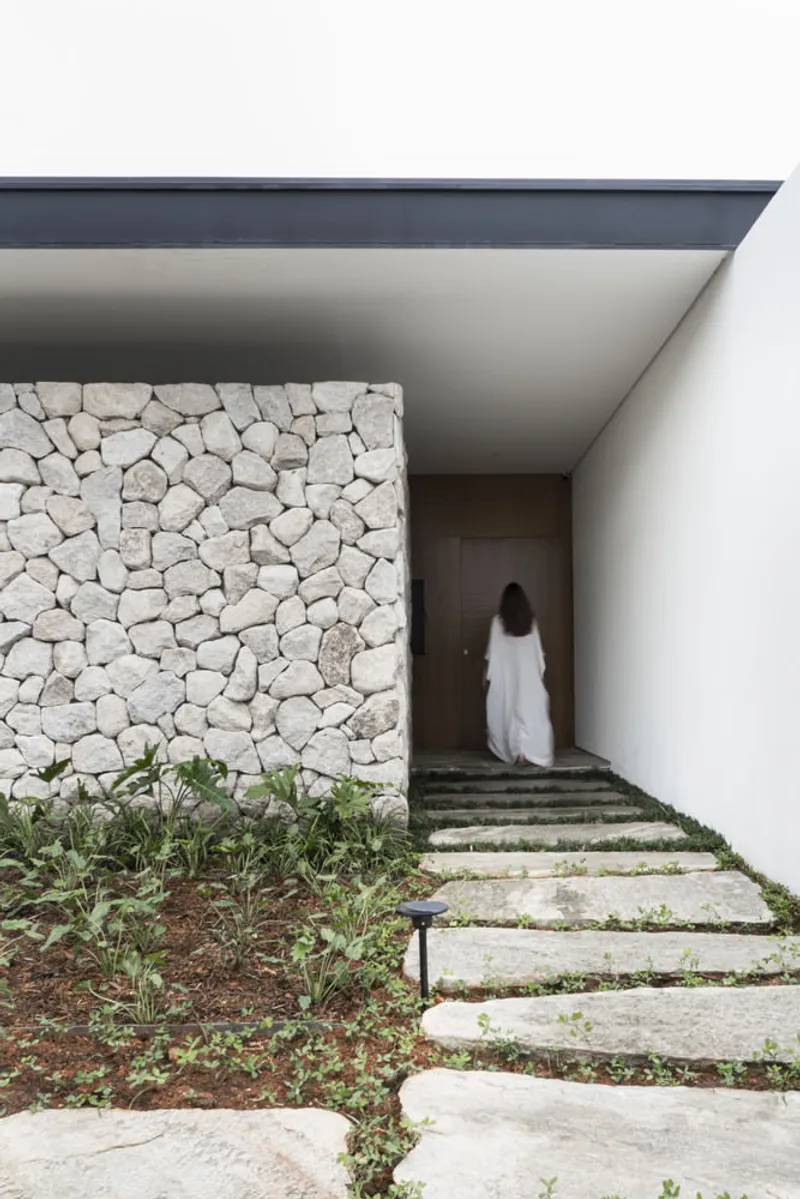
The front façade of Ostra House is defined by compositional precision and a sense of lightness. A distinctive roof beam line extends from the vertical front wall, creating a visual perception of structural floating. This horizontal emphasis contrasts with vertical stone cladding, which guides visitors toward the interior and provides a tactile anticipation of the spaces within.
The roof line extends seamlessly over the garage’s white volume, unifying the formal language of the house and establishing a balanced dialogue between line, plane, and volume. Low ceiling heights across the main volume enhance warmth and intimacy while reinforcing a horizontal architectural rhythm that subtly expands the perception of space.
Spatial Organization
Ostra House is organized on a single-level plan, making efficient use of the existing structural framework. The residence consists of two main blocks:
- Private Block: Contains three intimate suites with built-in closets, offering privacy and comfort for the family.
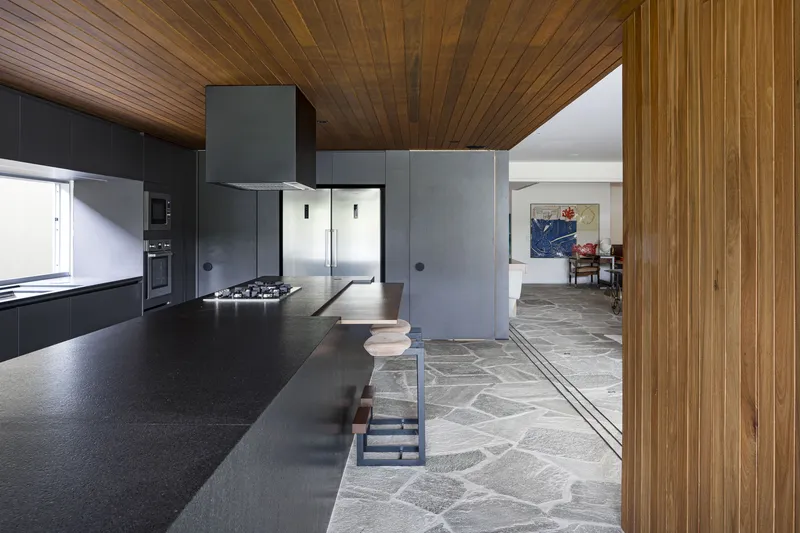
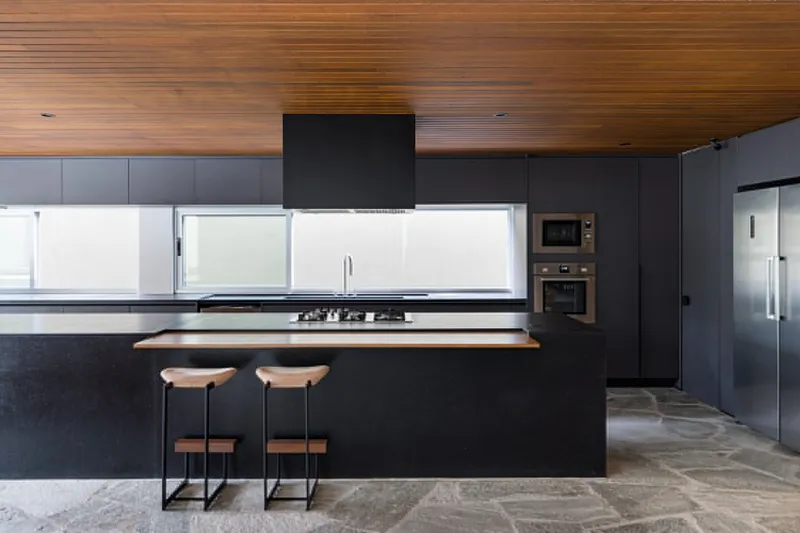
- Service Block: Houses the kitchen, gourmet area, laundry, and garage, designed for functionality and ease of movement.
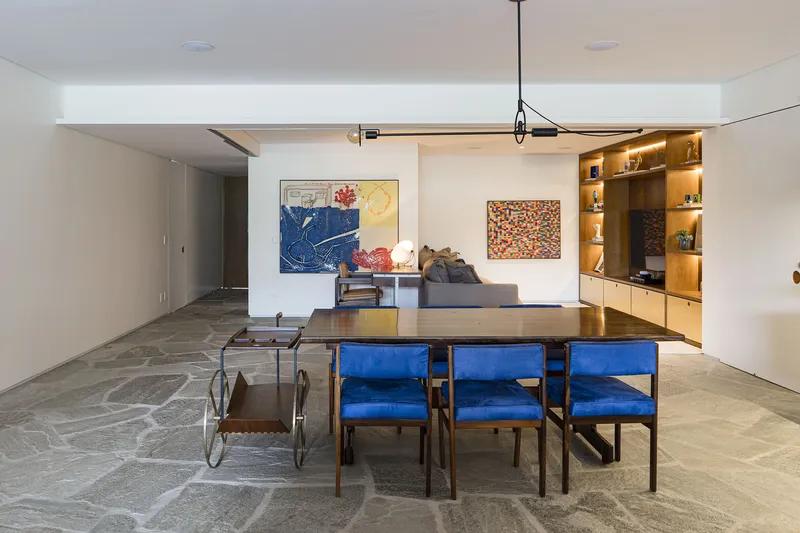
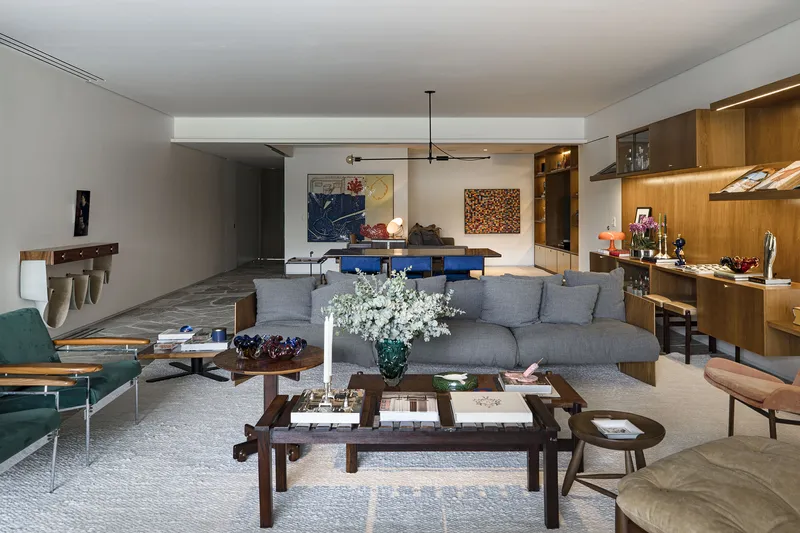
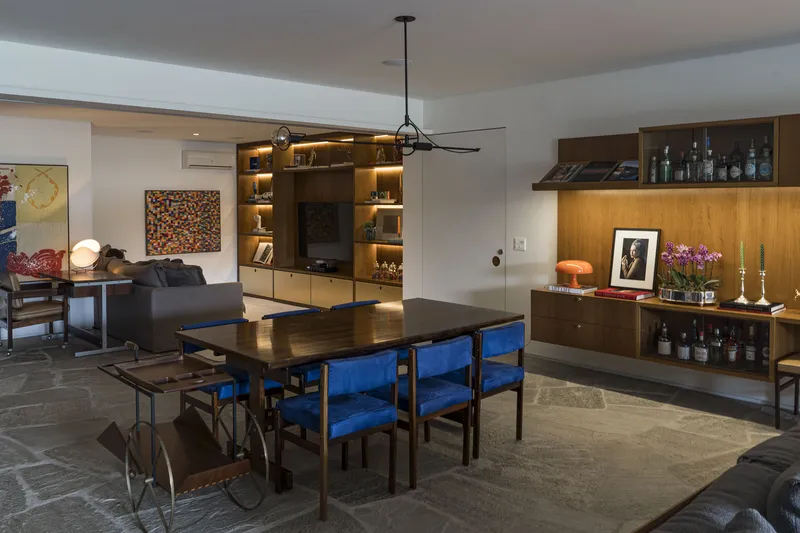
Between these blocks, the social areas—living room, dining room, and home office—flow seamlessly through continuous spaces. A dynamic system of sliding doors mediates the articulation of spaces, allowing a flexible interplay between openness and privacy. This fluidity, reminiscent of an oyster’s opening and closing, inspired the home’s name: Ostra.
Light, Transparency, and Connection with Nature
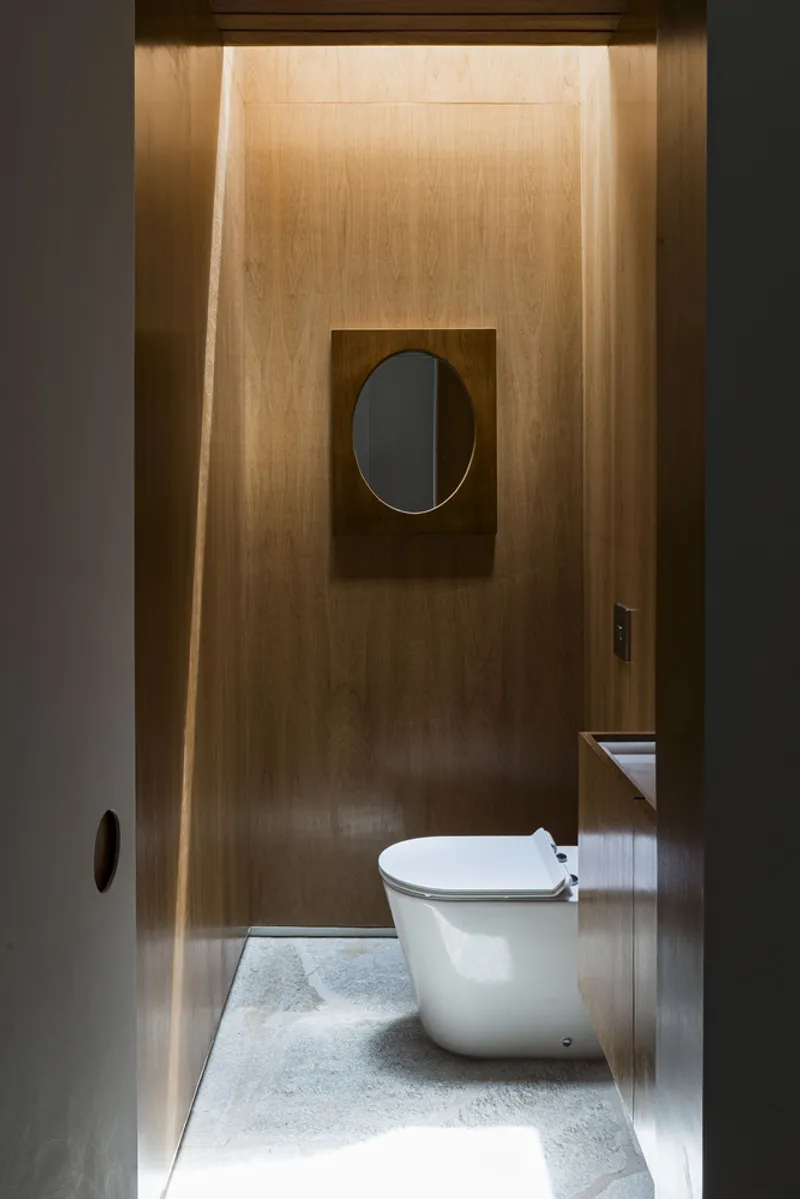
Natural light plays a crucial role in shaping the interior ambiance. Large sliding glass panels in the living and gourmet areas blur the boundaries between architecture and landscape, extending the garden visually into the home. Skylights in bathrooms and low-sill windows in bedrooms ensure daylight penetrates deeper into the intimate areas, fostering an airy and luminous atmosphere.
This thoughtful integration of light and nature reflects a commitment to biophilic design principles, creating spaces that feel both expansive and connected to the outdoors.
Interior Design and Materiality
Natural materials dominate the design palette, reinforcing warmth and continuity throughout the house. The interiors feature:
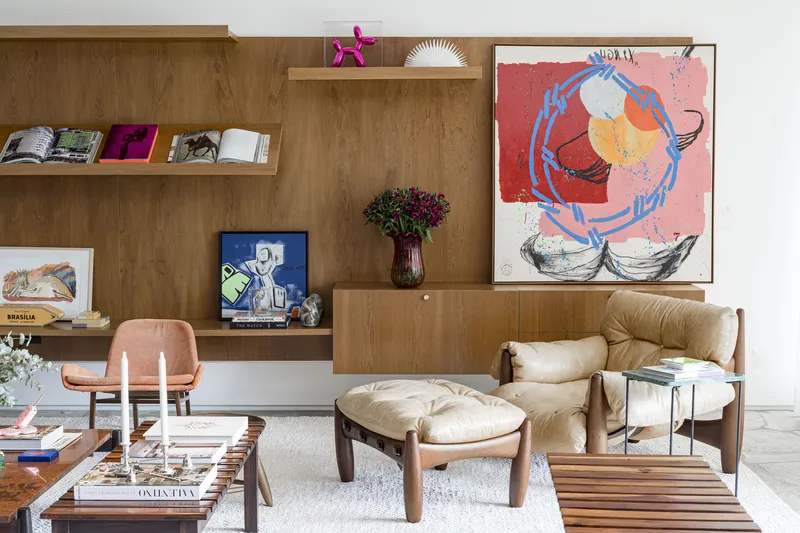
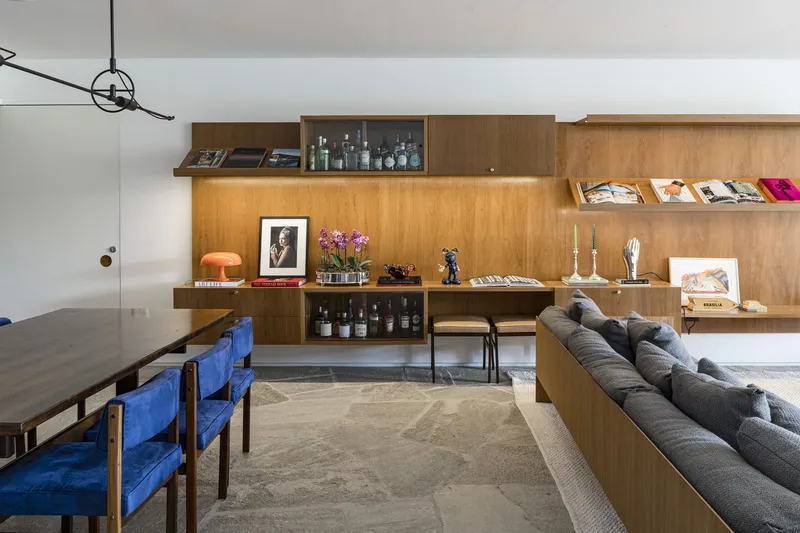
- Wood cabinetry and flooring in intimate areas, fostering a cozy, inviting environment.
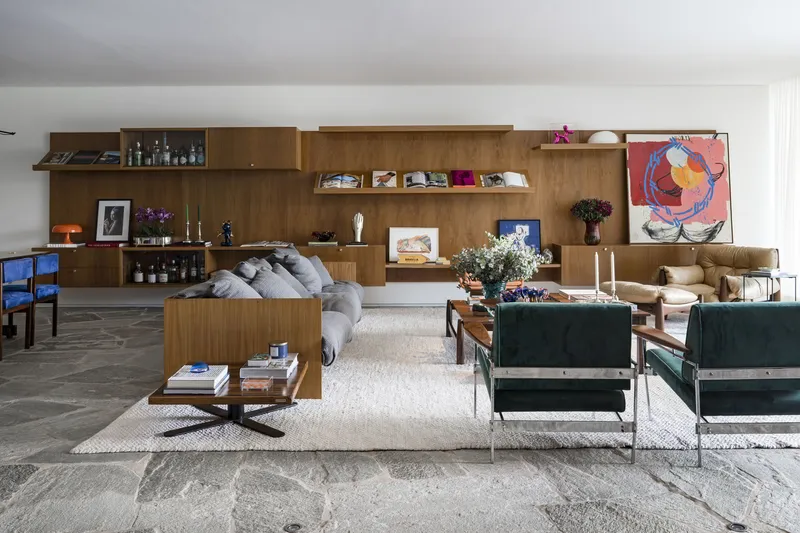
- Rough stone flooring with organic patterns linking living, dining, and gourmet spaces, extending seamlessly to the outdoor pool area.
- White walls and marble surfaces, reflecting natural light to enhance spatial perception.
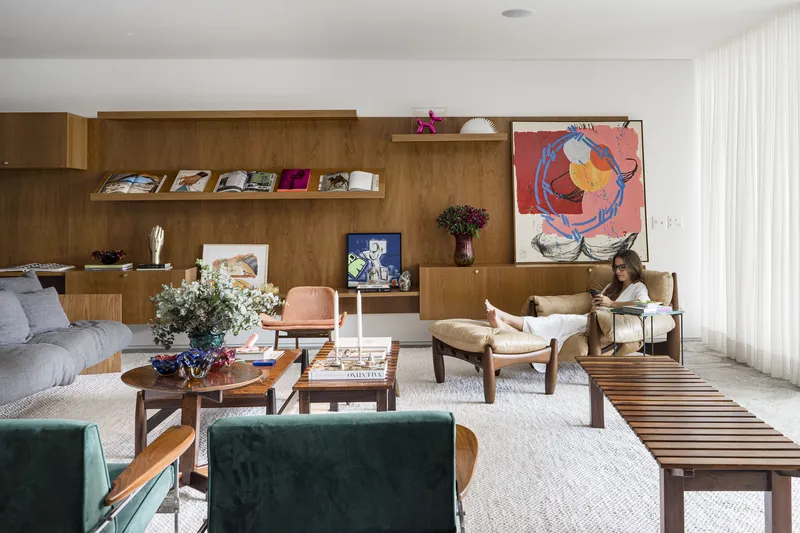
A signature feature is the suspended wooden shelf, designed by STUDIO PIPPA, running beneath the white horizontal plane. This element not only emphasizes horizontality but also serves as a personal display for books, artwork, and family memorabilia, weaving the residents’ identity into the architecture.
The interiors are further enriched with modernist and contemporary Brazilian furniture, adding cultural depth and visual interest to the living spaces.
Design Philosophy and Experiential Quality
Ostra House exemplifies a careful balance between functionality and architectural expression. By exploring formal composition, spatial boundaries, and the dynamics of everyday residential life, the project delivers a cohesive architectural experience. Fluidity, balance, and intimacy are central to the design, ensuring that each space—from private suites to social hubs—feels thoughtfully connected and human-centered.
This renovation demonstrates how residential architecture in Brasília can honor modernist principles while accommodating contemporary lifestyles, resulting in a home that is both timeless and adaptive.
Ostra House by STUDIO PIPPA stands as a remarkable example of contemporary Brazilian residential design. Through its careful orchestration of structure, materials, light, and landscape, the project achieves a serene, intimate, and dynamic living environment that responds to the family’s needs while celebrating modern architectural elegance.
All photographs are works of Larisa Sad - Urban Sadness


Popular Articles
Popular articles from the community


Co-life: Sustainable Architecture for Age-Friendly Community Living
Co-life reimagines sustainable architecture for seniors through courtyards, rammed earth, shared gardens, and spaces designed for belonging.

Little Red Riding Hood: Architectural Design as a Journey Through Fear, Light, and Storytelling
Little Red Riding Hood reimagines the fairy tale through architectural design shaped by fear, light, scale, memory, uncertainty, and choice.

Co-Life: Senior Housing Design That Reconnects Older Adults With the City
Co-Life reimagines senior housing design through healing gardens, shared streets, workshops, and a sustainable community across generations.

Conexión: Biophilic Design Reimagines High-Rise Living in Hong Kong
Conexión reimagines high-rise living in Hong Kong through biophilic design, green facades, shared spaces, daylight, water and nature within.

Similar Reads
You might also enjoy these articles


Hodi-Mandai Geram
Project Function: Preservation and revitalization of the Intangible heritage and socio-spatial identity of the Hodi by Housing, Cultural Memory Center, Sacred Grove, landscape, local tourism economy


Olio Towers: A Mid-Rise for Performers That Fuses Housing, Rehearsal, and Stage
Located blocks from Houston's Theater District, this modular tower stacks living units around a central performance atrium.

Oasis: Modular Green Housing Carved into Dhaka's Urban Fabric
A shortlisted Plugin Housing entry reclaims unauthorized settlements in Dhaka with stepped concrete volumes, green roofs, and ventilation-driven design.

Black Hole: A Floating Megastructure for the Post-Physical Era
Emiliano Mazzarotto envisions a spherical, self-scaling arena where e-sports, digital hotels, and holographic stadiums replace traditional public space.

Explore Housing Competitions
Discover active competitions in this discipline

Challenge to reimagine the Iron Throne

Photograph architecture without architects

Illustrate the lost glory of Angkor Wat - Render Challenge

Design challenge to reuse E-waste
Comments (0)
Please login or sign up to add comments
No comments yet. Be the first to comment!