
Porcelain Source Museum: A Cultural Landmark Rooted in History and Landscape
Riverfront museum in Huzhou blending traditional Chinese roof forms, preserved village fabric, courtyards, terraces, and contemporary cultural architecture.


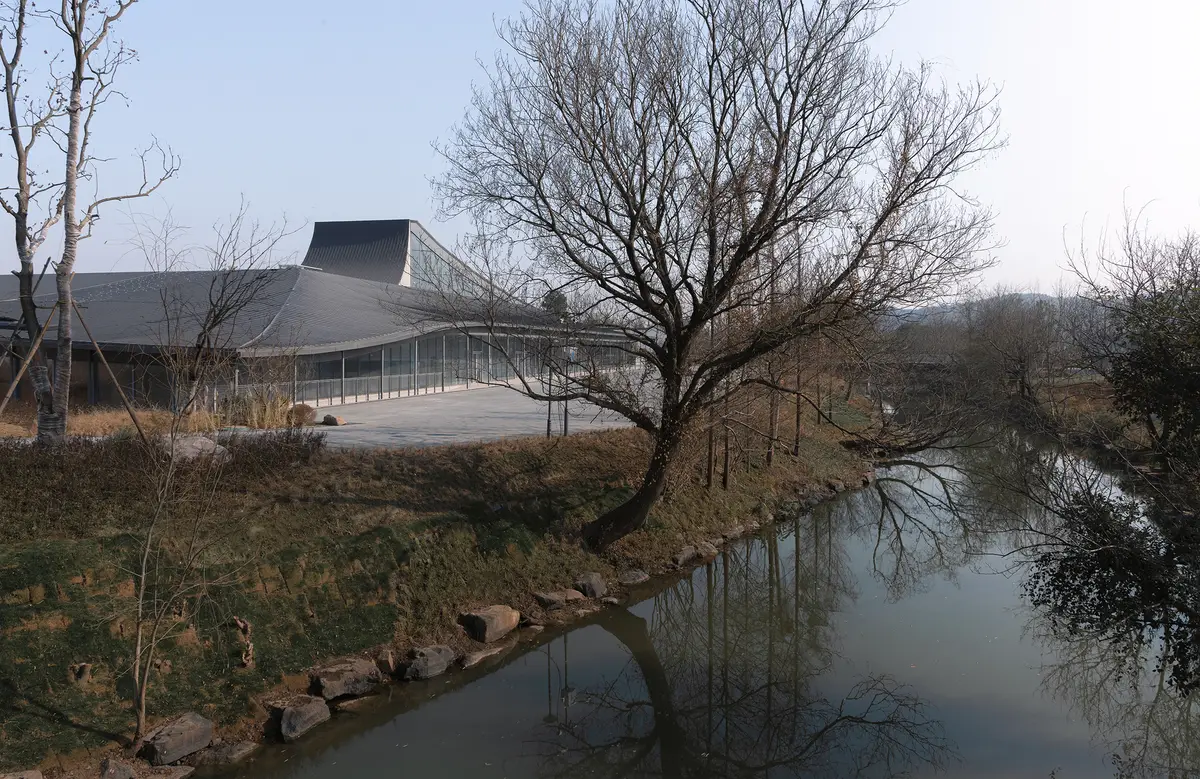
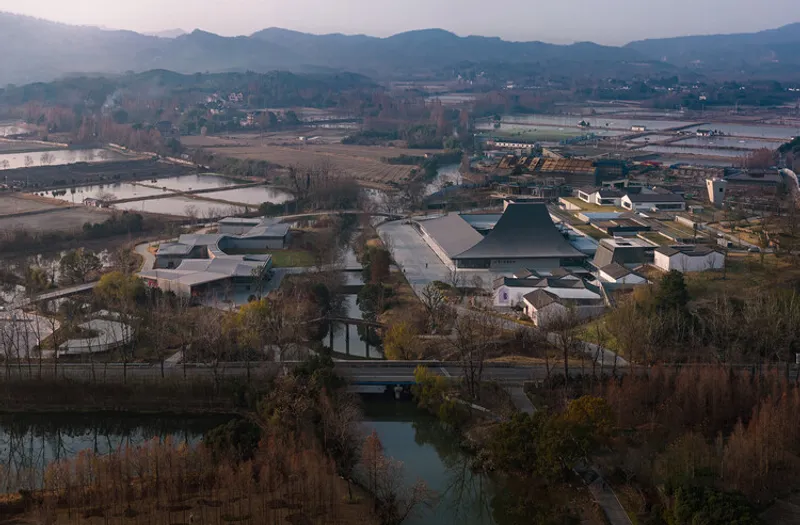
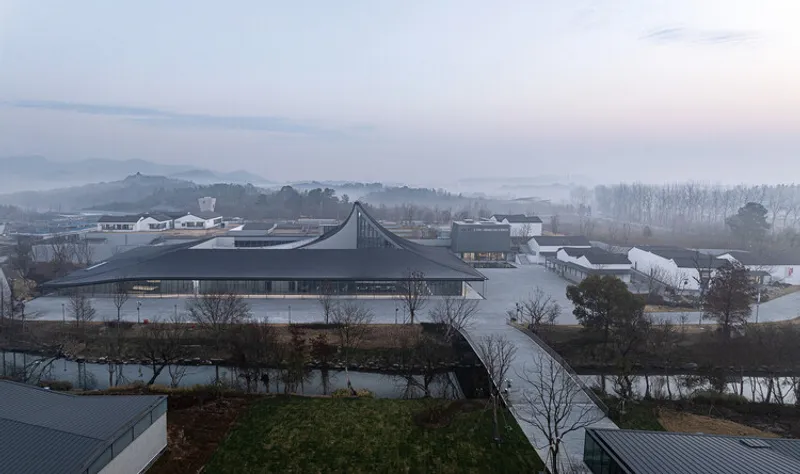
The Porcelain Source Museum, designed by Atelier Deshaus, is a monumental yet context-sensitive cultural institution located in Huzhou. Completed in 2025, the 17,206-square-meter museum stands on the historic grounds of Longsheng Village in Deqing County, Zhejiang Province, an area deeply connected to the origins of Chinese porcelain.
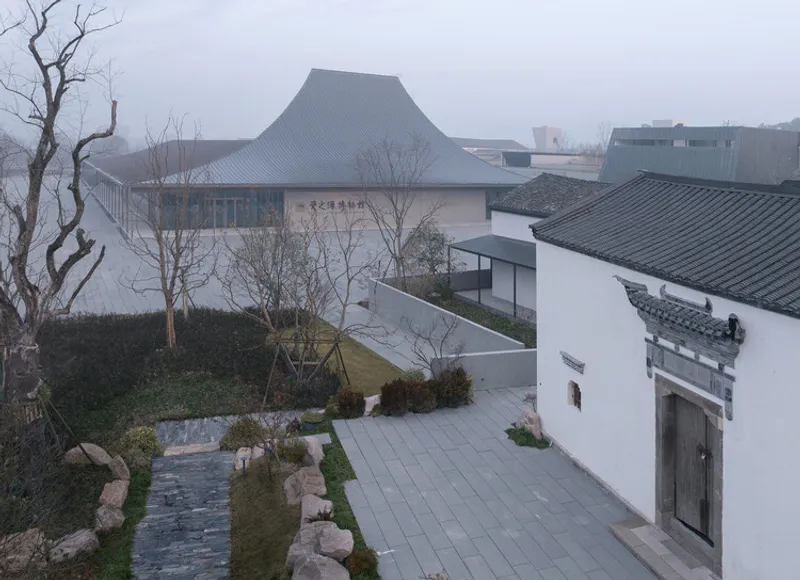
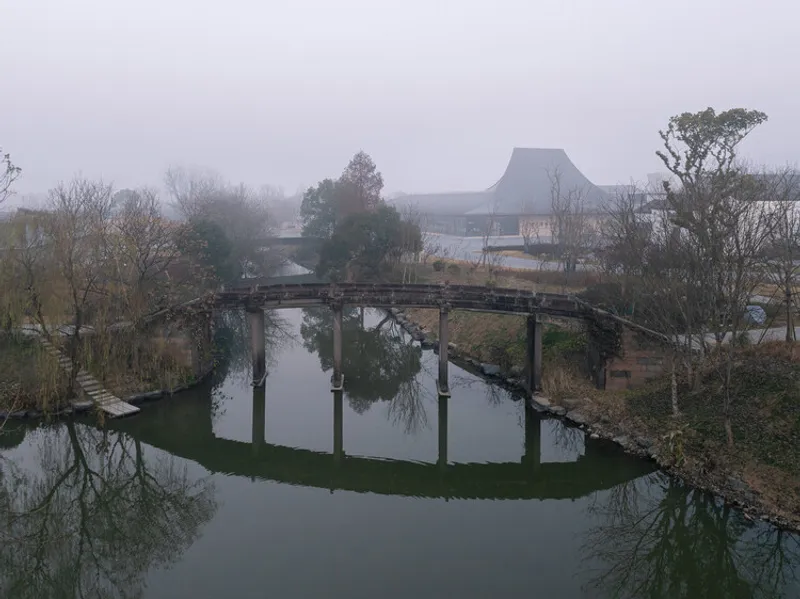
Positioned between ancient kiln ruins dating back to the Shang and Warring States periods and the historic Wukang Shishe Bridge, the museum integrates archaeology, vernacular heritage, and contemporary architecture into a unified spatial narrative. Rather than replacing the past, the project carefully preserves, reconstructs, and reinterprets fragments of the former village fabric, embedding memory directly into the new architectural framework.
Architecture Inspired by Tradition, Expressed Through Modern Form
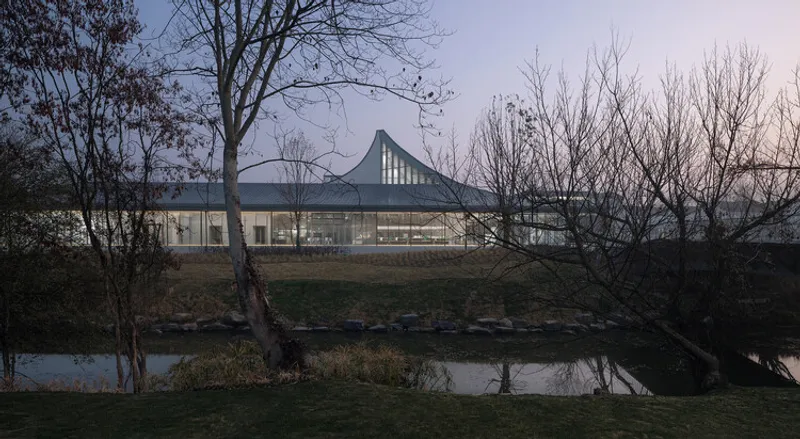
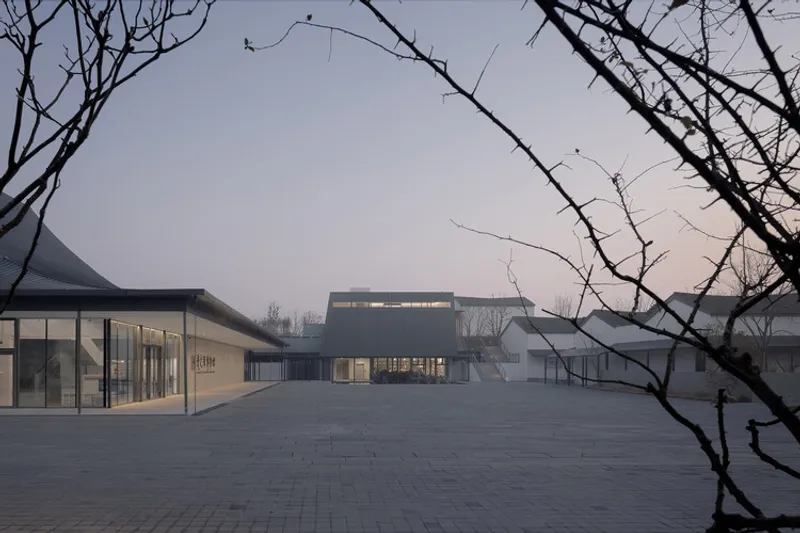
The Porcelain Source Museum is composed of two primary architectural volumes, each responding differently to site, scale, and cultural symbolism.
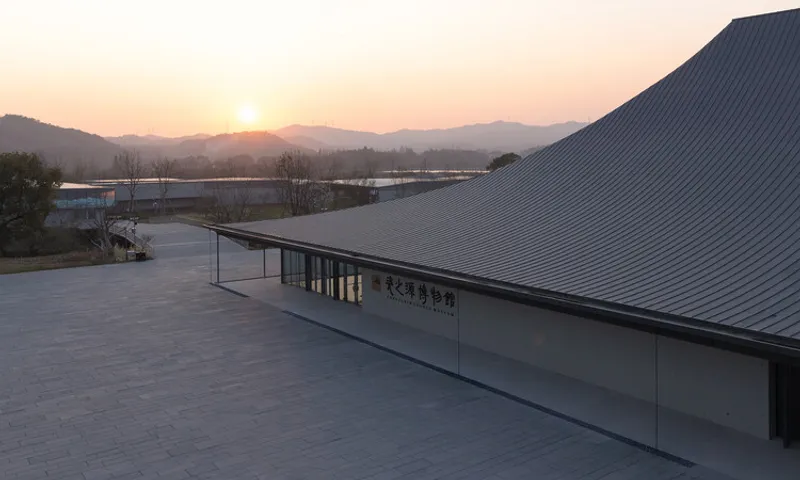
The main structure stretches longitudinally along the riverbank. While its plan is rectilinear, the building’s overall form expresses an organic, flowing quality. Slender columns, extended verandas, and a roofline referencing traditional Xieshan and Wudian typologies evoke classical Chinese architectural language. However, these references are not literal reproductions. Through new scale relationships, curvilinear structural systems, and contemporary material applications, the building exists in a productive tension between tradition and modernity.
The low eaves of the museum intentionally sit below the height of preserved village houses, reinforcing harmony between the large public building and the smaller historic dwellings. This calibrated scale ensures that the museum integrates seamlessly into its cultural landscape rather than dominating it.
Courtyards, Landscape Integration, and Spatial Continuity
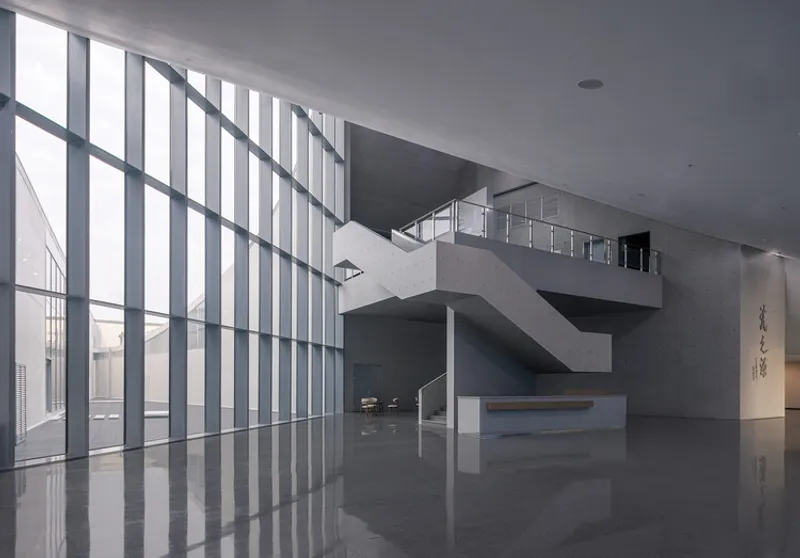
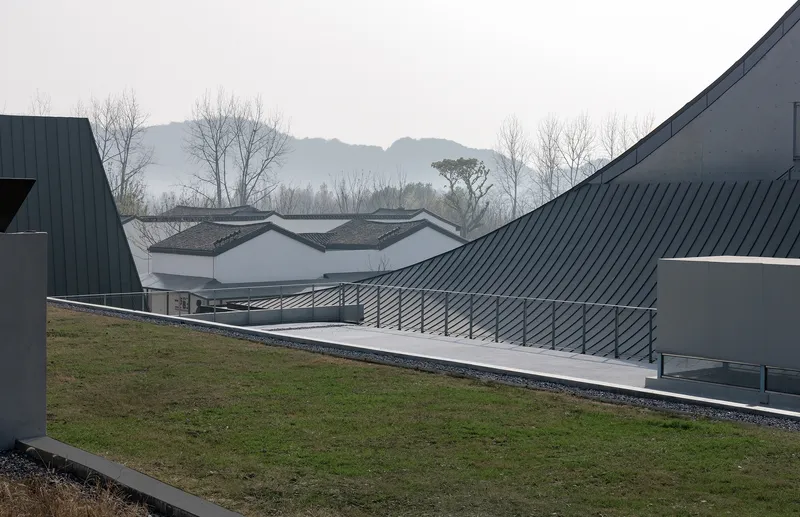
The second architectural component adopts a more landscape-oriented strategy. Partially embedded into the terrain, this portion follows the site’s natural topography, reducing its visual impact while strengthening its environmental performance.
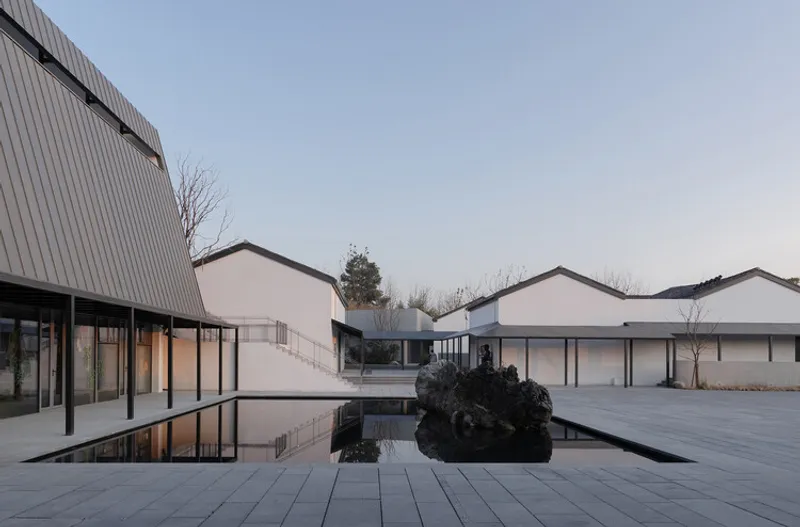
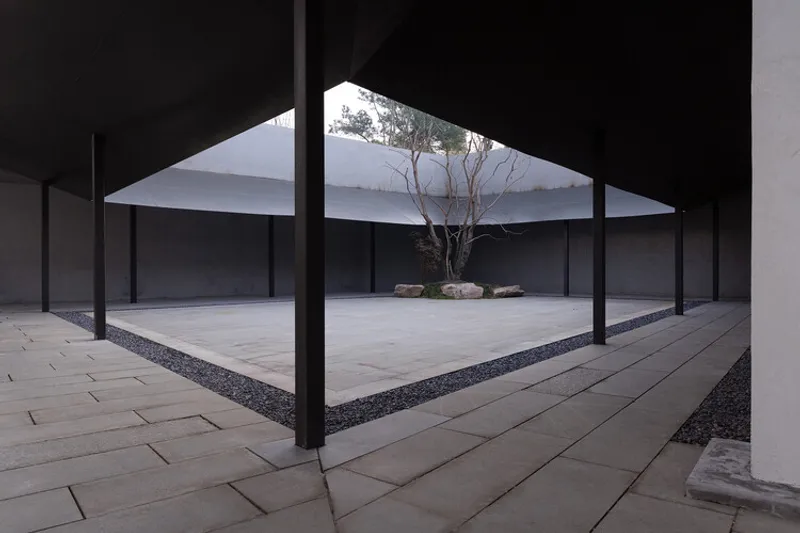
Two courtyards organize daylight, ventilation, and circulation:
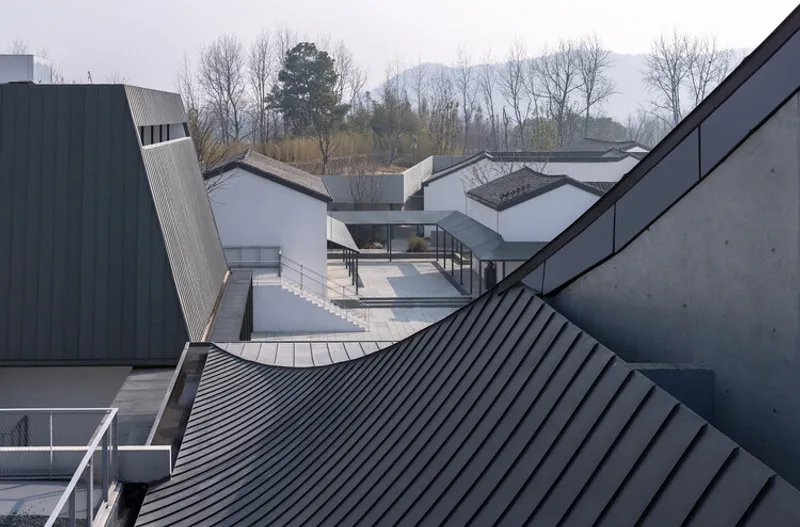
- Traditional Courtyard Reconstruction: Built on the original footprint of a former two-courtyard dwelling, this space functions as a thematic exhibition area dedicated to local village culture. It preserves traditional spatial proportions and rhythms, maintaining continuity with the historical settlement pattern.
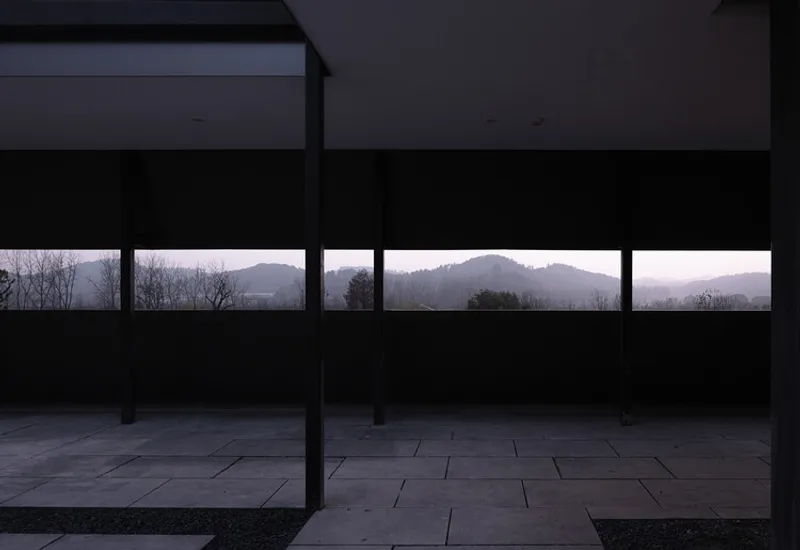
- Contemporary Steel Courtyard: Constructed with steel plate elements, this courtyard reinterprets the atmosphere of the traditional veranda through a modern structural vocabulary. It bridges historical reference with contemporary expression.
The roofscape of this landscape-integrated volume adopts a linear geometric composition that echoes the surrounding agricultural terraces. Its stepped elevations visually connect the museum to the broader regional landscape, positioning the building as both architectural object and environmental extension.
A Curvilinear Roof as Cultural Abstraction
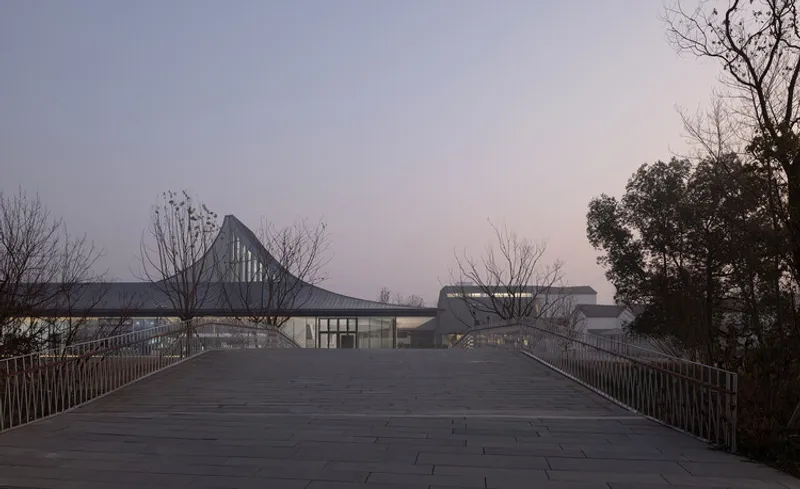
The main museum roof becomes a defining architectural gesture. Its sweeping curves abstract traditional Chinese roof forms while simultaneously referencing the rolling topography beyond the site. The roof integrates an open-air theater that frames views of distant mountains and the adjacent river, dissolving the boundary between interior and exterior.
Verandas and exhibition halls open outward, visually incorporating the historic Shishe Bridge and the flowing river into the museum’s experiential field. This strategy blurs the distinction between built form and natural environment, allowing visitors to perceive history, architecture, and landscape as an interconnected whole.
Preserving Memory Through Architectural Continuity
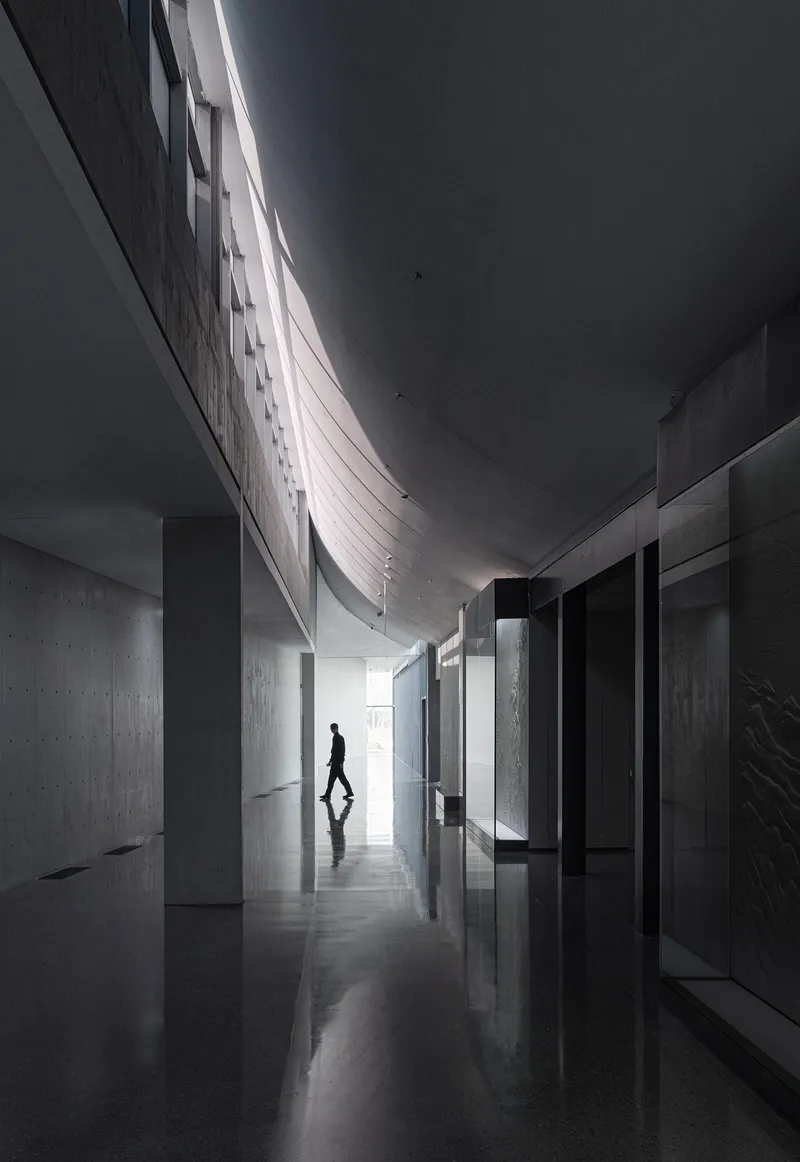
The Porcelain Source Museum does more than display artifacts, it occupies the very ground where early porcelain production once flourished. Portions of original village dwellings have been preserved, reconstructed, or adapted as gallery spaces and support facilities. This adaptive reuse sustains tangible elements of the site’s historical fabric while giving them renewed cultural relevance.
The project embodies a broader architectural philosophy: continuity without imitation. By juxtaposing traditional imagery with contemporary structural systems and materials, the museum generates a perceptual ambiguity that resists fixed classification. It is neither purely historical reconstruction nor purely modern monument, it exists in dialogue with both.
A New Cultural Destination in Zhejiang
As a major museum in Zhejiang Province, the Porcelain Source Museum strengthens regional identity while positioning Huzhou as a destination for architectural tourism and cultural heritage exploration. Through landscape-sensitive design, courtyard typology, vernacular integration, and innovative roof geometry, the project demonstrates how museum architecture can mediate between archaeology, memory, and contemporary civic life.
The building stands as a landmark of sustainable cultural preservation: anchored in its archaeological past, harmonized with its rural landscape, and articulated through refined modern design.
All the photographs are works of
Schran Images


Popular Articles
Popular articles from the community


longwave studio Reorganizes a 112 m² Tainan Apartment Around the Daily Routines of a Family and Two Cats
In Tainan, Taiwan, birch plywood, rust-red furniture and a freestanding plaster wall link arrival, storage, work and family life in one apartment.

U.GA Architects Wraps an Oval Rooftop Pool in Curved Board-Formed Concrete on Busan's Jeollidan-gil
In Busan's Jeonpo-dong, a 454 m² mixed-use block stacks a neighborhood facility, guest rooms and an oval rooftop pool inside spiraling concrete walls.

Architekt Andreas Gruber Scatters 23 Dark Timber Chalets Across a South Tyrolean Forest Edge
In Molini di Tures, Amonti Chalets breaks a resort into a hamlet of gabled timber houses, with parking, storage and services pushed into the slope.

LT2A and OPEN Architectes Thread a Brick and Glass High School Through a Wooded Belgian Campus
In Braine-l'Alleud, a 3,000 m² wing for Collège Cardinal Mercier pairs pale brick with a glazed colonnade, deferring to a small chapel and a dense wood.

Similar Reads
You might also enjoy these articles

Gil Mello Arquitetura Tilts a Single Roof Toward the Waterfalls on a Plateau Above Aiuruoca, Brazil
In Aiuruoca, Minas Gerais, a 200 m² house of local labor and reclaimed poles pairs a low valley veranda with a tall mountain one.
U.GA Architects Wraps an Oval Rooftop Pool in Curved Board-Formed Concrete on Busan's Jeollidan-gil
In Busan's Jeonpo-dong, a 454 m² mixed-use block stacks a neighborhood facility, guest rooms and an oval rooftop pool inside spiraling concrete walls.

Felipe Hess Arquitetos Turns a Blind Stone Wall to the Street and Opens a Brazilian House onto a Courtyard and Canal
A canal-front house in Brazil hides behind painted stone and planting, then opens to an olive-tree courtyard, a reed-ceilinged porch and a curving pool.

David Macias Steps a Doorless Stone and Plaster House Down a Tropical Colombian Hillside
In the humid hills of Colombia, Threshold House replaces the front door with an open void and terraces its 850 m² down the slope instead of fighting it.

Explore Architecture Competitions
Discover active competitions in this discipline

Challenge to reimagine the Iron Throne

Photograph architecture without architects

Illustrate the lost glory of Angkor Wat - Render Challenge

Bring back Drive In's
Comments (0)
Please login or sign up to add comments
No comments yet. Be the first to comment!