
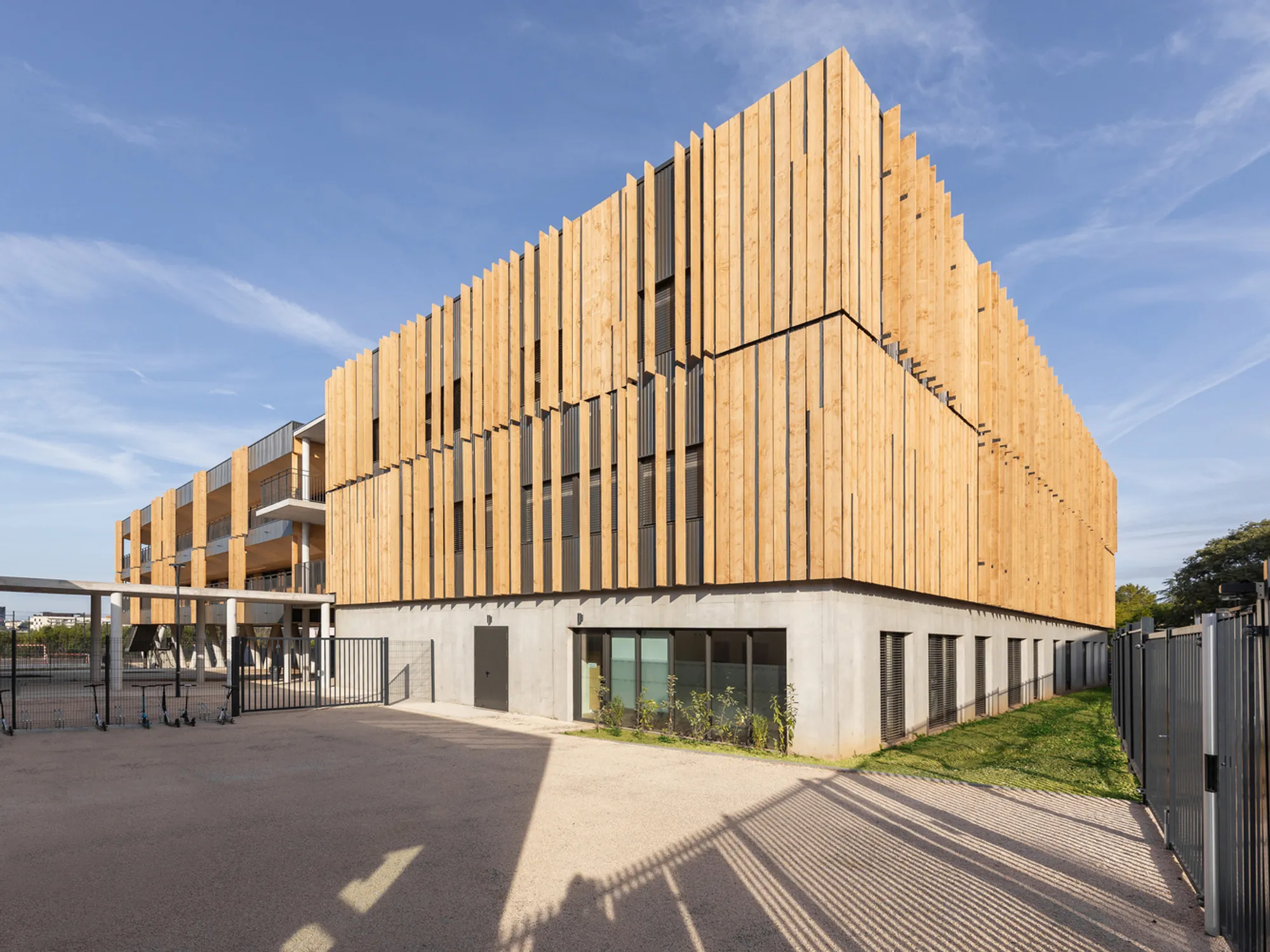
Port Marianne Secondary School by Ateliers A+: A Benchmark in Sustainable Educational Architecture
Sustainable modular school in Montpellier featuring timber construction, passive design, green spaces, and adaptable learning environments integrated within urban context.


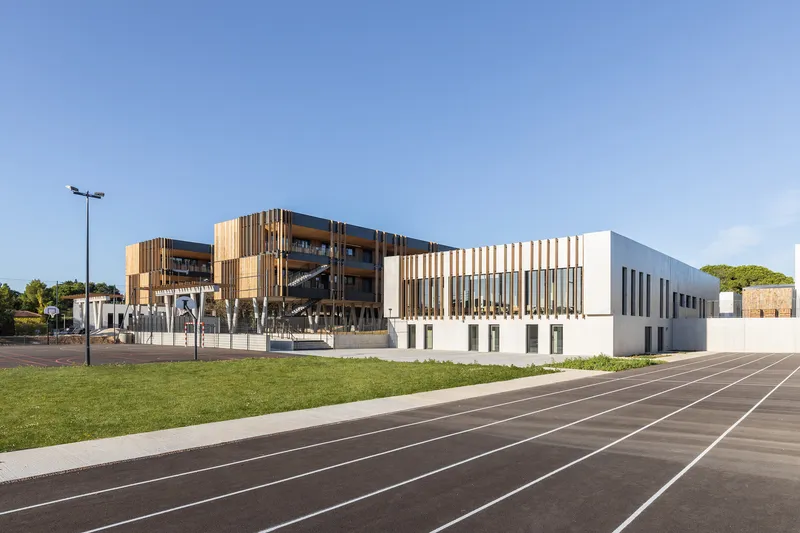
The Port Marianne Secondary School, designed by Ateliers Astands as a forward-thinking model of sustainable school design in Montpellier. Completed in 2023, this 6,575 m² educational facility reflects the evolving demands of contemporary architecture, where environmental responsibility, adaptability, and urban integration converge. Awarded the Occitanie sustainable building label, the project embodies a progressive approach to educational environments, positioning itself as a key reference in green school architecture.
Sustainable Architecture Rooted in Local Context
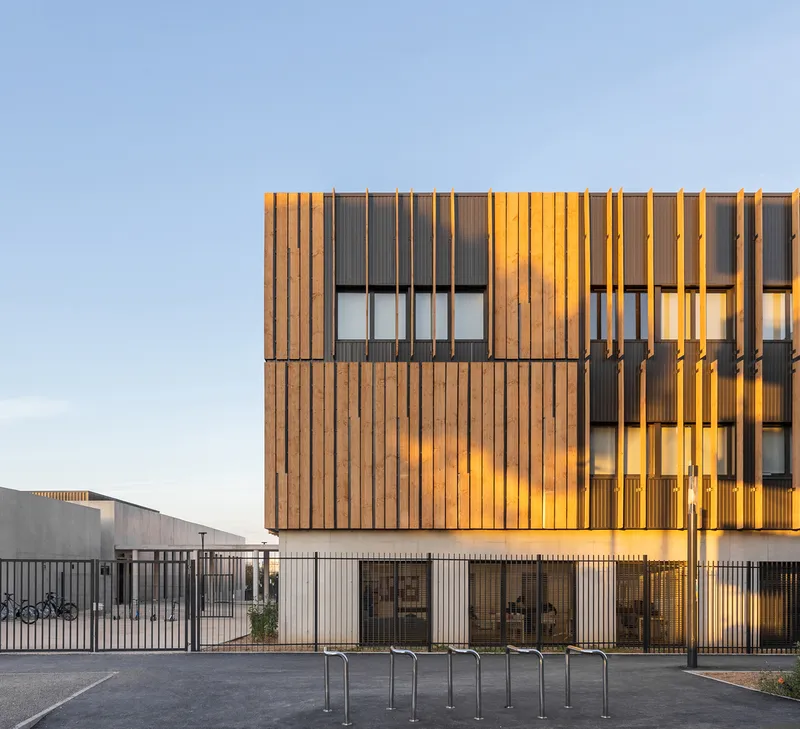
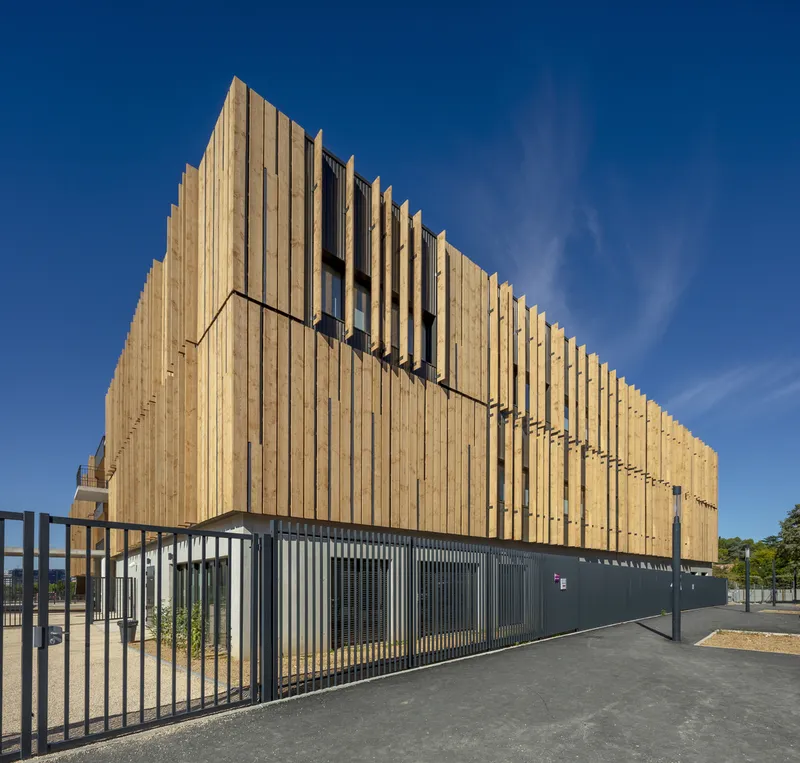
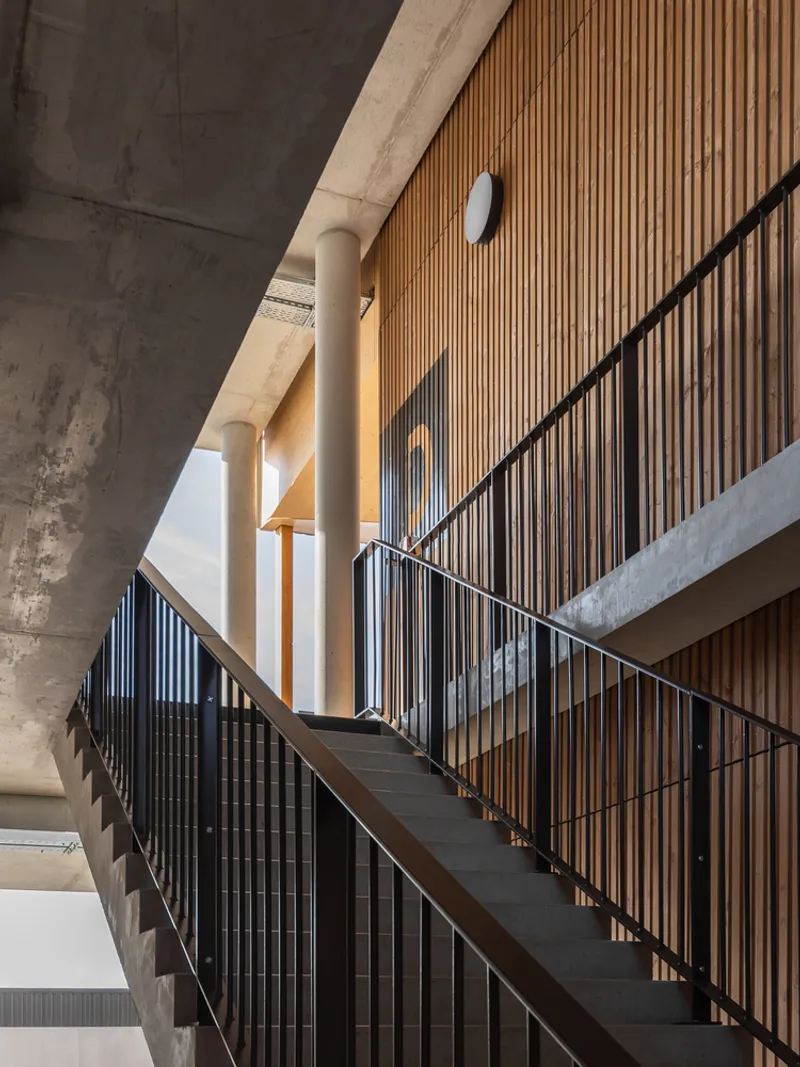
Located within a rapidly transforming urban district, Port Marianne Secondary School responds to both present and future needs through a holistic design strategy. The project prioritizes low-impact construction methods, incorporating low-carbon concrete for its base and bio-based materials throughout the structure. The use of locally sourced timber, such as Douglas fir from the Gard region and spruce from the Cévennes, reinforces the project’s commitment to regional identity and sustainable material sourcing.
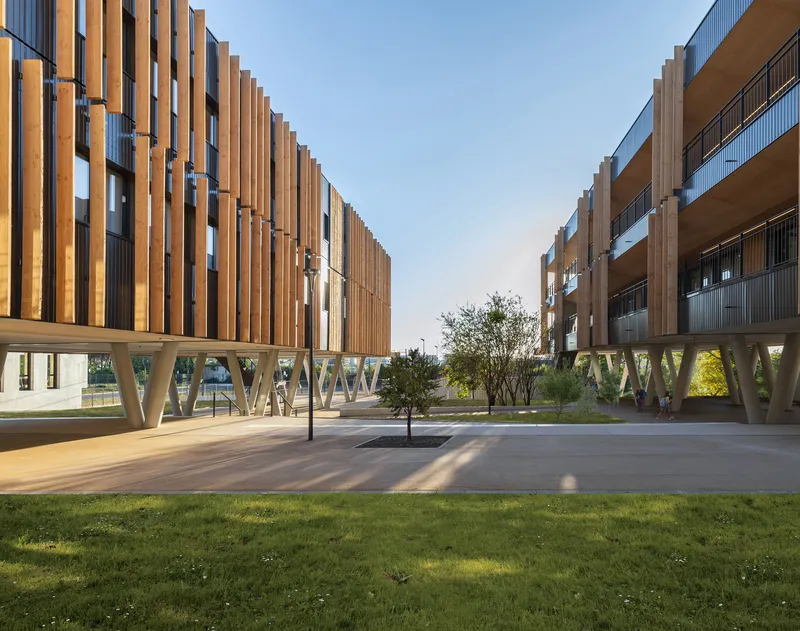
This emphasis on eco-friendly construction aligns with global trends in sustainable architecture, where reducing carbon footprints and supporting local economies are essential design considerations. The modular timber framework not only minimizes environmental impact but also enhances construction efficiency and long-term flexibility.
Modular Design and Adaptive Learning Spaces
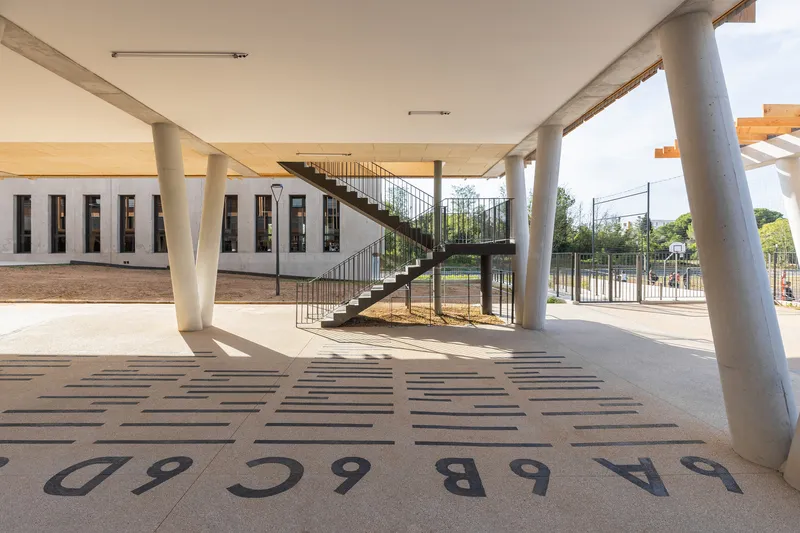
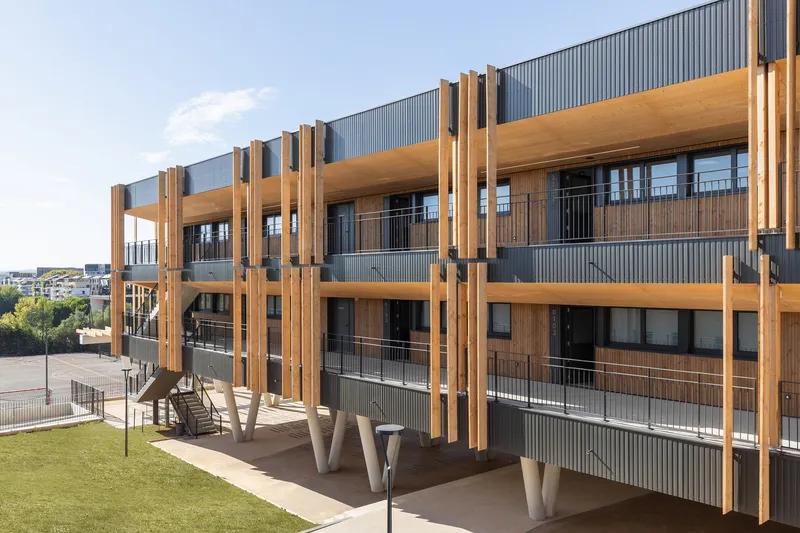
A defining feature of the school is its modular construction system, which allows for future expansion, reconfiguration, or even relocation. This adaptability ensures that the building can evolve alongside changing educational needs, making it a resilient and future-proof architectural solution.
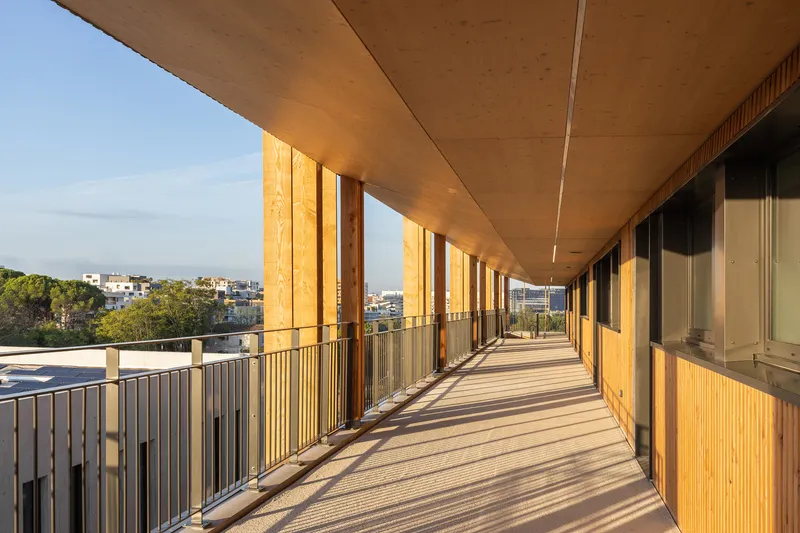
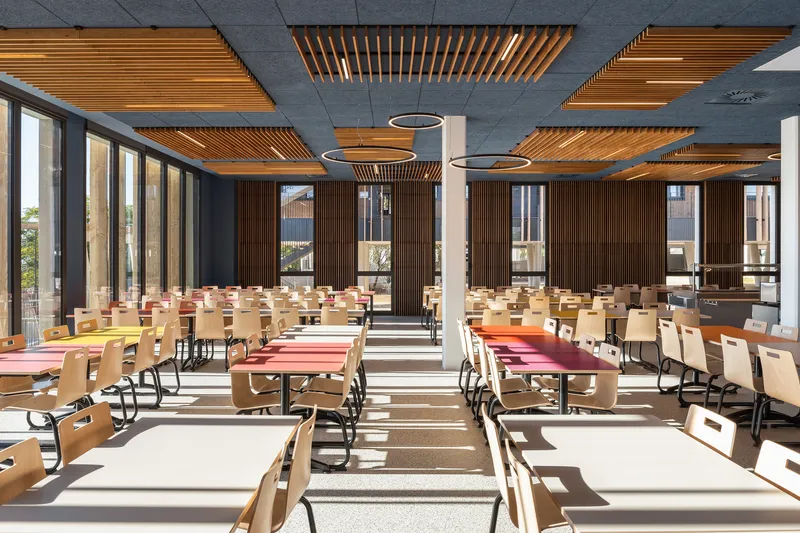
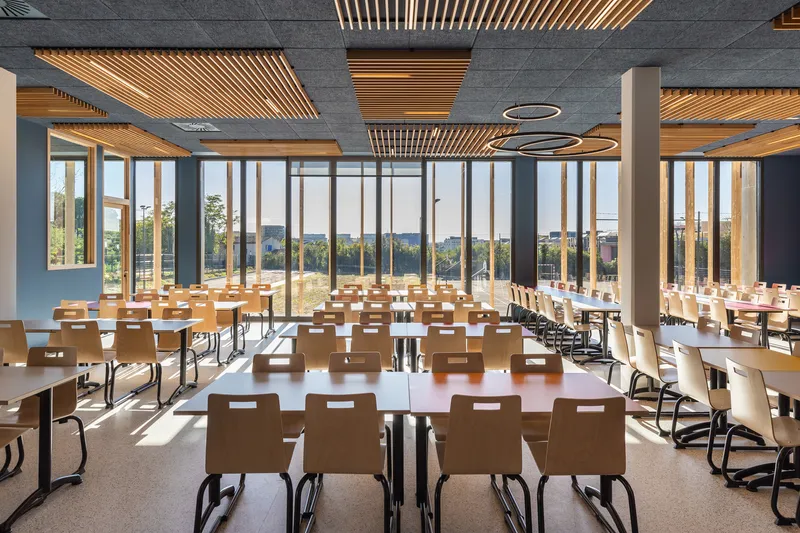
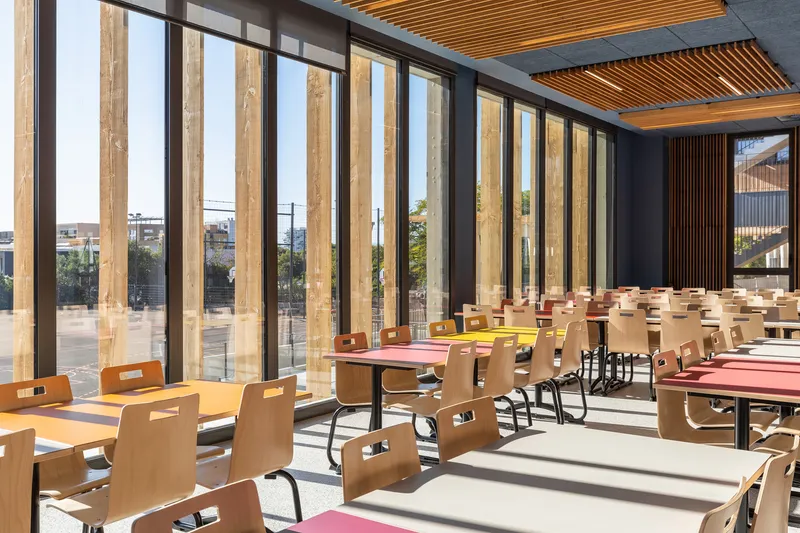
Classrooms are designed with dual orientation, maximizing natural ventilation and daylight penetration. This passive design strategy significantly reduces reliance on artificial lighting and mechanical cooling systems, contributing to energy efficiency while enhancing student comfort and well-being. The spatial organization promotes fluid connectivity between indoor and outdoor environments, fostering a dynamic learning atmosphere.
Climate-Responsive Façade and Environmental Comfort
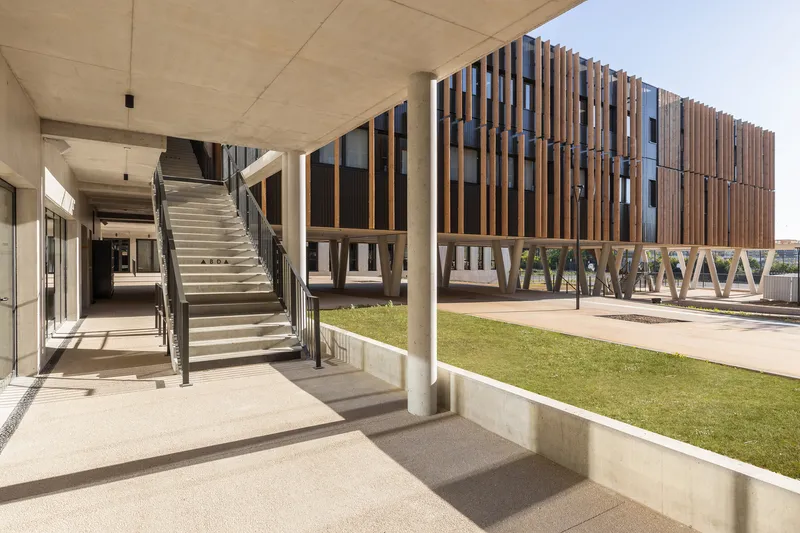
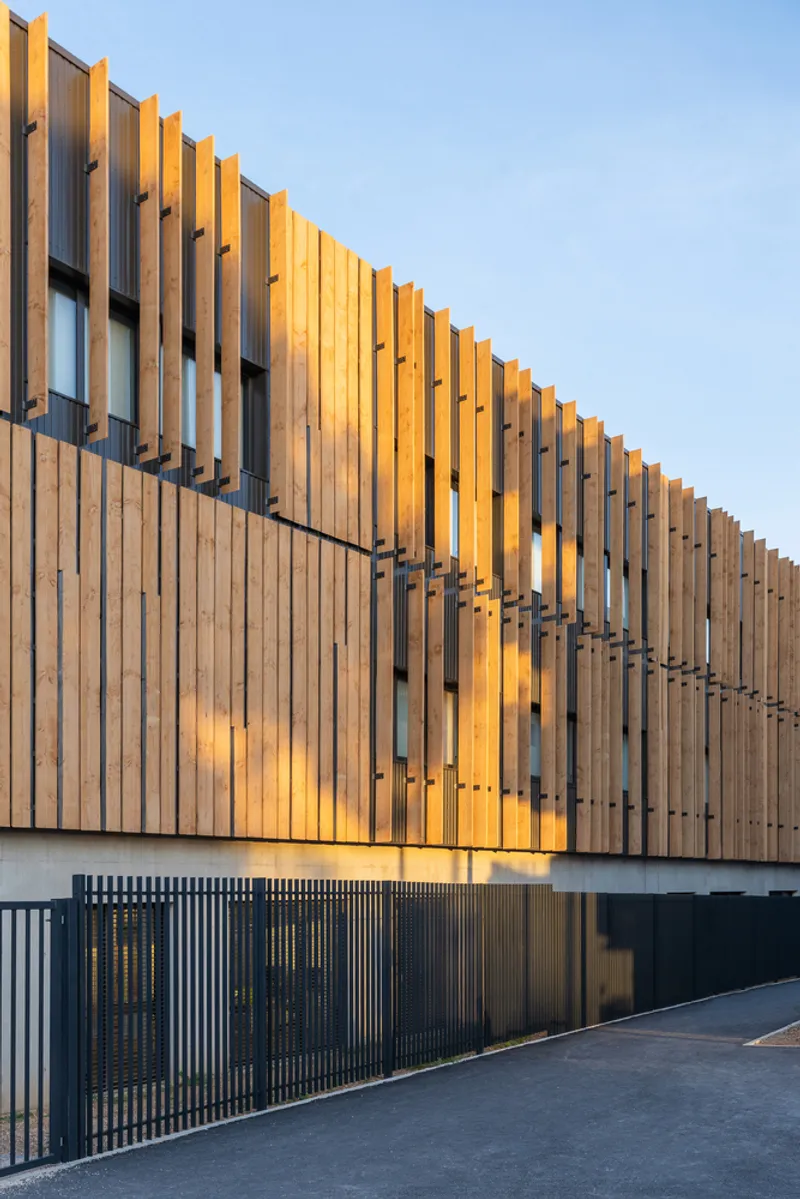
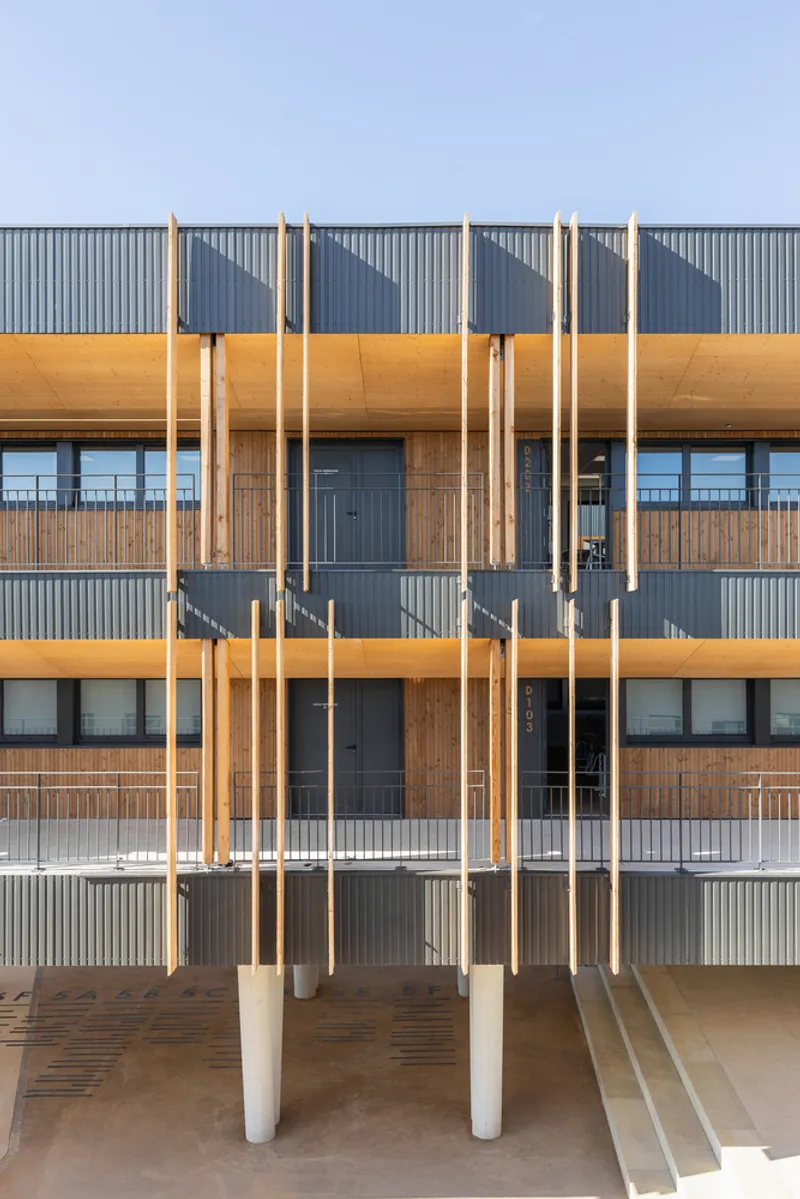
The architectural composition is characterized by layered volumes and vertical wooden brise-soleils that regulate solar exposure. These shading devices not only improve thermal performance but also create a unified visual identity for the school. The façade system blurs boundaries between built form and landscape, reinforcing the project’s integration with its surroundings.
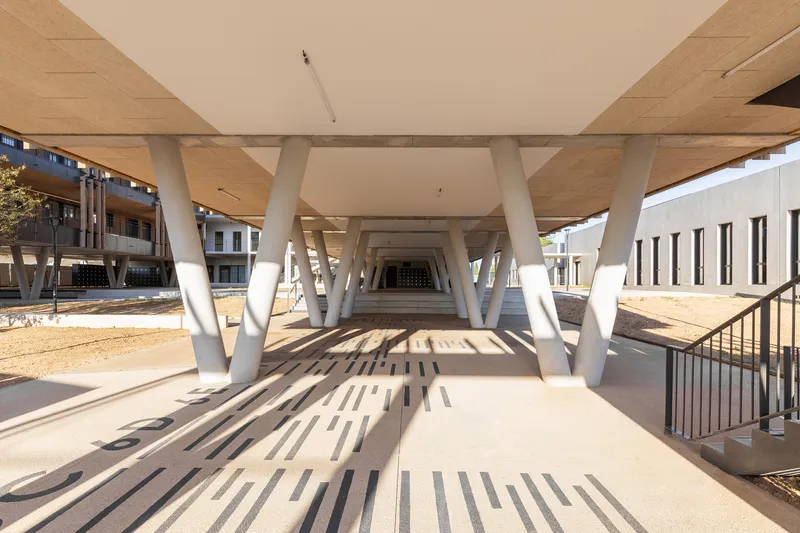
On the courtyard side, elevated wooden modules resemble houses on stilts, creating a playful yet functional architectural expression. The preservation of existing trees and the introduction of new vegetation establish a microclimate that provides natural cooling during warmer months, enhancing outdoor usability and environmental comfort.
Urban Integration and Community Engagement
Strategically positioned within Montpellier’s urban fabric, the school serves as both an educational institution and a civic landmark. Its design strengthens connections to the city center while maintaining a strong relationship with its immediate context. The inclusion of generous green spaces accessible to students and local residents fosters community interaction and promotes a healthier urban lifestyle.
The project also reflects an ethical approach to architecture, emphasizing sustainability, social responsibility, and user-centered design. By integrating natural elements, flexible spaces, and environmentally conscious materials, Port Marianne Secondary School redefines the role of educational buildings in contemporary cities.
A Model for Future Educational Architecture
Port Marianne Secondary School exemplifies how architecture can address environmental challenges while enhancing educational experiences. Its combination of modular design, sustainable materials, and climate-responsive strategies positions it as a leading example of green school architecture in Europe.
As cities continue to evolve, projects like this highlight the importance of designing adaptable, sustainable, and community-oriented educational spaces that can respond to the complexities of modern urban life.
All photographs are works of
© Adrien Guitard




Popular Articles
Popular articles from the community


The Earth Pod: 3D Printed Homes for Resilient Refugee Communities
The Earth Pod reimagines refugee housing through 3D printed homes made from clay, combining resilience, self-sufficiency, and rapid shelter.

Play: Fragments of Their World
Familiar architecture becomes modular playground design, creating safe spaces where displaced children can learn, connect, imagine and play.

Hill & Cross Opera: Sculptural Opera House Architecture Shaped by Tallinn’s Landscape and Identity
Hill & Cross Opera reimagines opera house architecture in Tallinn through its sculptural hill, civic plaza, glass wave and a luminous cross.

The Ocean Hive: Sustainable Architecture for a Self-Sufficient Civilization at Sea
The Ocean Hive imagines sustainable architecture at sea, where modular habitats, algae, wave power and ocean waste sustain a growing colony.


Similar Reads
You might also enjoy these articles

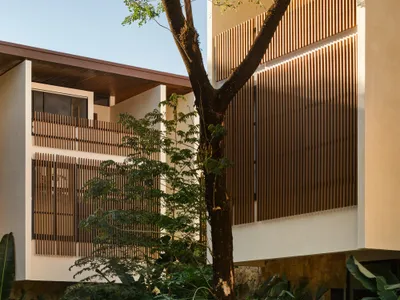
FAMM Arquitectura Organizes Ten Villas Around Courtyards and Jungle in Nosara, Costa Rica
El Molino pairs two elongated volumes with deep overhangs and timber louvers to build a compact coastal community five minutes from the beach.
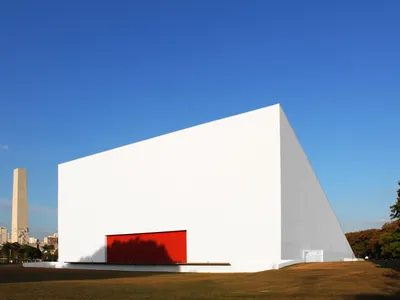
Oscar Niemeyer's Ibirapuera Park Pavilions Define São Paulo's Cultural Identity in Concrete and Curve
A constellation of modernist volumes set within São Paulo's most important urban park, conceived for the city's 400th anniversary in 1954.
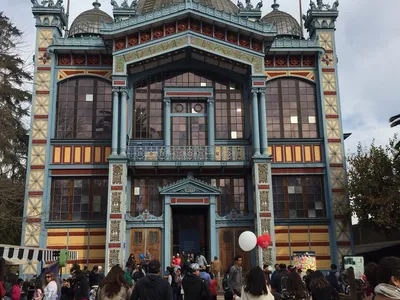
How Henri Picq's 1889 Paris Pavilion Traveled 11,000 Kilometers to Become Santiago's Artequín Museum
A prefabricated iron and glass pavilion built for the Paris Universal Exposition found a second life as a children's art museum in Chile.
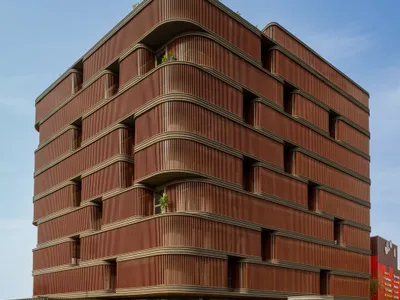
Sanjay Puri Architects Wraps a Jaipur Office Tower in Capsule-Shaped Green Buffers
A nine-level climate-responsive workplace near Jaipur Airport uses stacked planter terraces and aluminium screens to fight 40°C heat.


Explore Architecture Competitions
Discover active competitions in this discipline



Challenge to design public laboratory


Challenge to reimagine the Iron Throne


Photograph architecture without architects


Illustrate the lost glory of Angkor Wat - Render Challenge
Comments (0)
Please login or sign up to add comments
No comments yet. Be the first to comment!