

Cazú Zegers Carves a Pyrite-Inspired Family Lodge into a Chilean Lakeside Cliff
PYR House in Panguipulli descends twelve meters from forest to lake, its geometry drawn from the cubic crystal structure of pyrite.


Building a house on a forty-foot cliff where the sun rises behind the view rather than in front of it is the kind of problem that separates architects who respond to a site from those who simply occupy it. Cazú Zegers, working in Panguipulli in Chile's lake district, took both constraints and turned them into the generative logic of PYR House: a three-story, 2,024-square-meter family lodge that steps from forest canopy to waterline, rotating each level to chase light, shed wind, and frame the panoramic lakescape. The name comes from pyrite, the so-called "stone of home" or "fire stone," and the mineral's cubic crystal lattice shows up most clearly in the building's central staircase, a vertical spine that stitches every floor together through a geometric volume of timber and concrete.
What makes PYR House genuinely interesting is not just the topographic gymnastics but the material philosophy underneath them. Concrete appears only at the subterranean levels, where ground moisture demands it. Everything above is timber and metal, deliberately lightweight so the house can flex with seismic activity rather than fight it. Grey-washed cypress wraps the exterior; lightly whitewashed pine lines the interior. The result is a building that reads as a single geological formation from the outside and as a warm, luminous lodge from within, designed to shelter three to four generations of one family.
Stepping Down the Cliff


From above, PYR House reveals its logic: a series of stacked timber volumes connected by a cantilevered bridge walkway, nestled so tightly into the dense tree cover that the roof planes almost merge with the forest floor. The aerial perspective makes clear that the building is not a single box dropped onto a hillside but rather a cascade of interlocking forms, each angled differently to negotiate the cliff's twelve-meter descent. The projecting terraces and glass openings on the lakeside facade are the building's lungs, pulling daylight deep into rooms that would otherwise be shadowed by the ridge behind them.
Zegers has said she wanted the house to "come out of the landscape," not be carved into it. The distinction matters. The volumes project outward from the rock rather than being excavated from it, which preserves the hillside's integrity and creates the dramatic cantilevers visible from the lake below. A cantilevered walkway at the upper level connects the arrival point to the living spaces, turning the simple act of entering the house into a bridge crossing between forest and sky.
Weathered Cypress and the Weight of Time

The exterior cladding is grey-washed cypress, a material chosen as much for its aging characteristics as for its appearance on day one. Under Panguipulli's overcast skies and heavy rainfall, the timber will silver and darken unevenly, pulling the house closer in tone to the mossy rock and bark that surround it. Horizontal slot windows puncture the facade sparingly, giving the building a fortified, almost geological quality when seen from the hiking trails that wind along the hillside.
There is something deliberately low-tech about the construction, a quality that Zegers's studio cultivates across its body of work. Despite the sophistication of the spatial composition, the detailing relies on Chilean building traditions: board-formed concrete where it appears, standard timber framing, metal connectors. The sophistication is in the design intelligence, not in imported systems or heroic engineering. It is an argument that vernacular construction, pushed hard enough, can produce architecture of real ambition.
The Pyrite Staircase


The central staircase is the conceptual and structural heart of PYR House. It connects the upper land level to the lakeshore, weaving in and out of the floor plan as it descends. Its geometry borrows directly from pyrite's cubic crystal structure, and the curved timber soffit that wraps the stair gives it a sculptural presence that goes well beyond mere circulation. A triangular skylight cut into the board-formed concrete ceiling above floods the stair with a shaft of zenithal light, marking it as something more than a transition space.
At the dining level, the stair opens up beside a long communal table with built-in benches, where the raw concrete ceiling is left exposed. The contrast between the warmth of the timber stair and the coolness of the concrete overhead creates a material tension that keeps the interior from slipping into coziness. It reminds you that this is a house anchored into rock, not a cabin floating on sentiment.
Living Between Forest and Lake

The upper level houses the main living and dining area, an open-plan space wrapped in whitewashed pine and terminated by a wall of glass that opens south toward the lake. A curved timber partition separates zones without closing them off, allowing the room to breathe while still defining areas for cooking, eating, and sitting. The wood-lined ceiling runs continuously to the glazing, pulling the eye outward and making the lake feel like a part of the room rather than a view framed by it.
Zegers conducted meticulous microclimate research before settling on the orientation of each floor. Because the sun rises behind the primary view, the living areas needed to be calibrated carefully to capture indirect light from the north and west while shielding against prevailing winds. Each level faces a slightly different direction, a move that gives the building its stepping, faceted silhouette and ensures that no room is left in permanent shadow. The whitewashed pine amplifies whatever light enters, turning even an overcast afternoon into a quietly luminous experience.
Why This Project Matters
PYR House represents a strain of Chilean architecture that treats local materials and construction traditions not as limitations but as design drivers. Cazú Zegers's insistence on timber as the principal structural material in an earthquake-prone region is not romantic nostalgia; it is a pragmatic choice that delivers flexibility, warmth, and a lighter environmental footprint than an equivalent steel-and-concrete frame. The fact that the house looks this ambitious while relying on what Zegers calls "low-tech solutions" is the real story.
More broadly, the project is a compelling case study in designing with extreme topography rather than against it. The twelve-meter cliff could easily have been treated as an obstacle to be conquered with retaining walls and excavation. Instead, it became the organizational diagram of the house itself, a vertical sequence from forest to rock to water that gives each generation of the family its own relationship to the landscape. That is architecture doing what it does best: finding form in the forces of a particular place.
PYR House by Cazú Zegers, with collaborators Francesca Fazzalari, Francisca Pereira, Carolina Wenzel, Joaquín Garin, and Andrés Rengifo. Structural engineering by Joaquín Valenzuela. Landscape design by Camila Tironi. Panguipulli, Chile. 2,024 square meters. Completed 2023. Photography by Marcos Zegers.
About the Studio
Share Your Own Work on uni.xyz
If projects like this are the kind of work you want to make, uni.xyz is a place to publish your own, find collaborators, and enter design competitions.


Popular Articles
Popular articles from the community

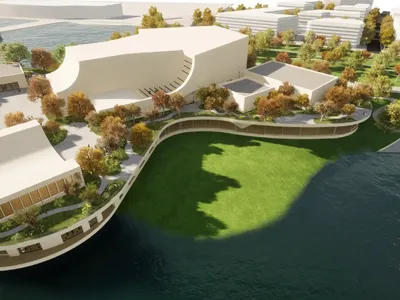
The Amber Palace Opera: A Geological Fiction Surfaces on Tallinn's Baltic Waterfront
Pierre Brillard reimagines a Baltic legend as a public landscape, opera house, and waterfront promenade rooted in Tallinn's coastal identity.
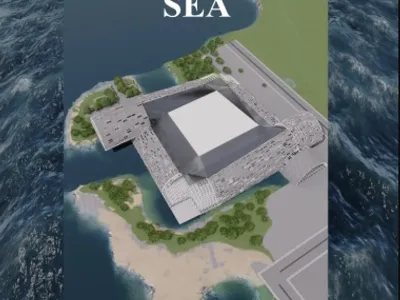
Opera on the Sea: Driftwood Logic Shapes a Timber Opera House on Estonia's Coast
Trevor Orgill's opera house translates the entangled drift of floating timber into a civic building where wood, water, and music converge.

Aquadapt: An Underwater Habitat That Rewrites Its Rooms by the Hour
Curved modules ring the seabed while one shell shifts from breakfast room to cinema, farm and football pitch as residents' needs change.


FCC Arquitectura Expands a Portuguese Granite House with a Board-Marked Concrete Wing
In Portugal, JV House pairs a cleaned-up whitewashed and granite dwelling with a timber-shuttered concrete extension, courtyards and a garden pool.

Similar Reads
You might also enjoy these articles

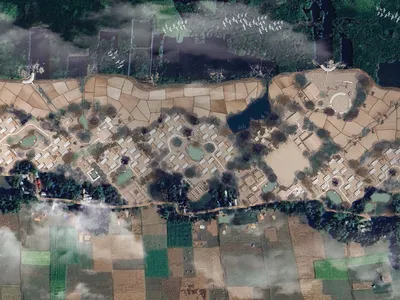
Hodi-Mandai Geram
Project Function: Preservation and revitalization of the Intangible heritage and socio-spatial identity of the Hodi by Housing, Cultural Memory Center, Sacred Grove, landscape, local tourism economy

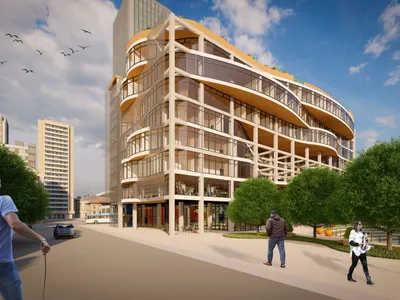
Olio Towers: A Mid-Rise for Performers That Fuses Housing, Rehearsal, and Stage
Located blocks from Houston's Theater District, this modular tower stacks living units around a central performance atrium.
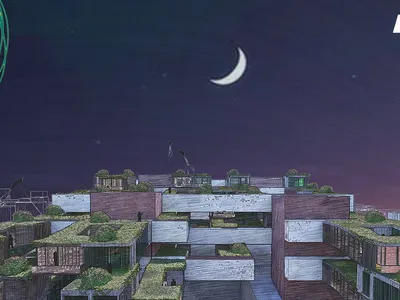
Oasis: Modular Green Housing Carved into Dhaka's Urban Fabric
A shortlisted Plugin Housing entry reclaims unauthorized settlements in Dhaka with stepped concrete volumes, green roofs, and ventilation-driven design.

Black Hole: A Floating Megastructure for the Post-Physical Era
Emiliano Mazzarotto envisions a spherical, self-scaling arena where e-sports, digital hotels, and holographic stadiums replace traditional public space.

Explore Pyht - Bio Architects Competitions
Discover active competitions in this discipline

Challenge to reimagine the Iron Throne

Photograph architecture without architects

Illustrate the lost glory of Angkor Wat - Render Challenge

Design challenge to reuse E-waste
Comments (0)
Please login or sign up to add comments
No comments yet. Be the first to comment!