
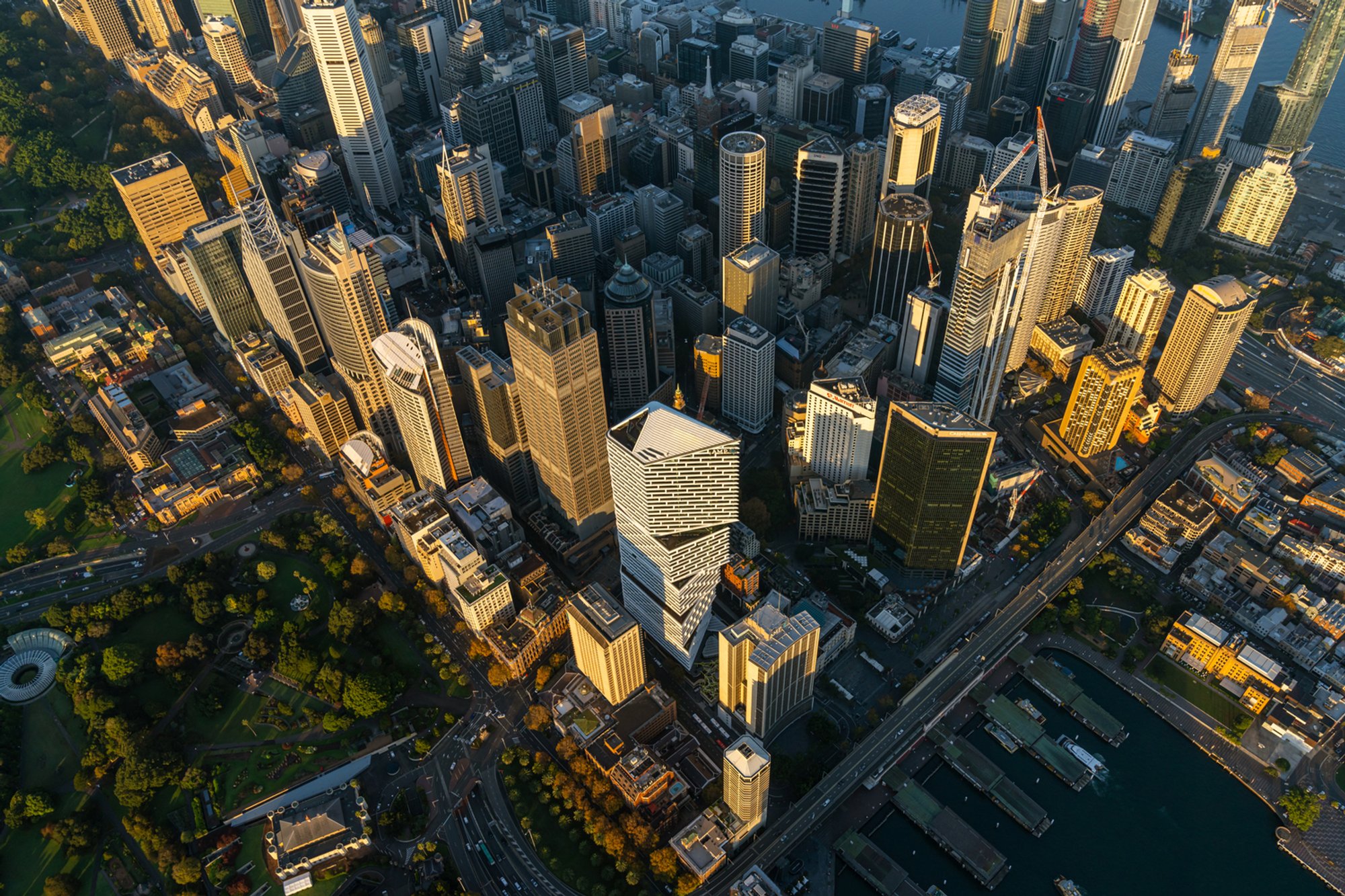
Quay Quarter Tower by 3XN: A Global Benchmark in Adaptive Reuse and Vertical Urbanism
Quay Quarter Tower redefines adaptive reuse with stacked volumes, sustainable design, and a vibrant vertical village in Sydney’s Circular Quay.

Location: Sydney, Australia Architects: 3XN (Design Architect), BVN (Executive Architect) Completion Year: 2022 Program: Office, Retail, Public Space Size: 102,000 m² Photographers: Adam Mørk, Sara Vita, Ethan Rohloff Client: AMP Capital Engineering: BG&E + ADG Landscape Design: ASPECT Studios General Contractor: Multiplex Public Art: Studio Olafur Eliasson Interior Design (Lobby/Market Hall): Tom Dixon Design Research Studio
Reimagining a Landmark: Transformative Architecture at Circular Quay
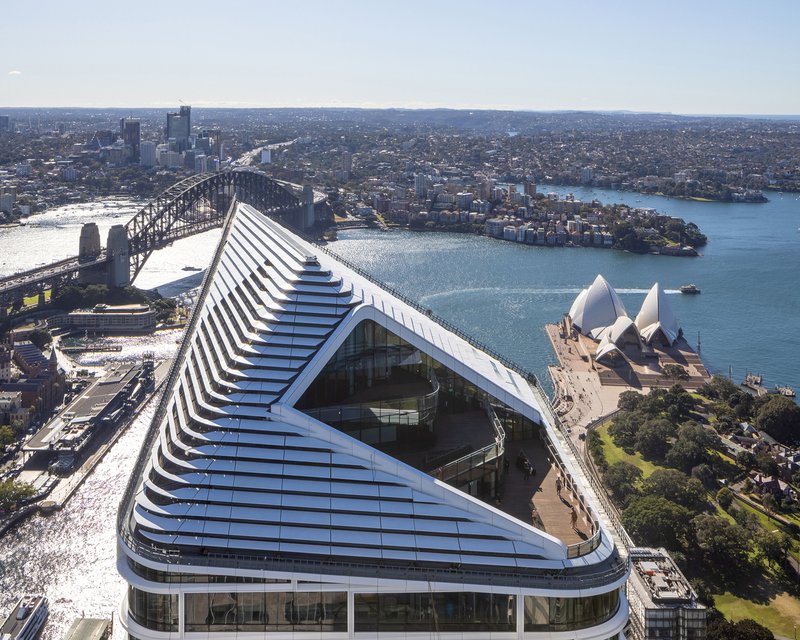
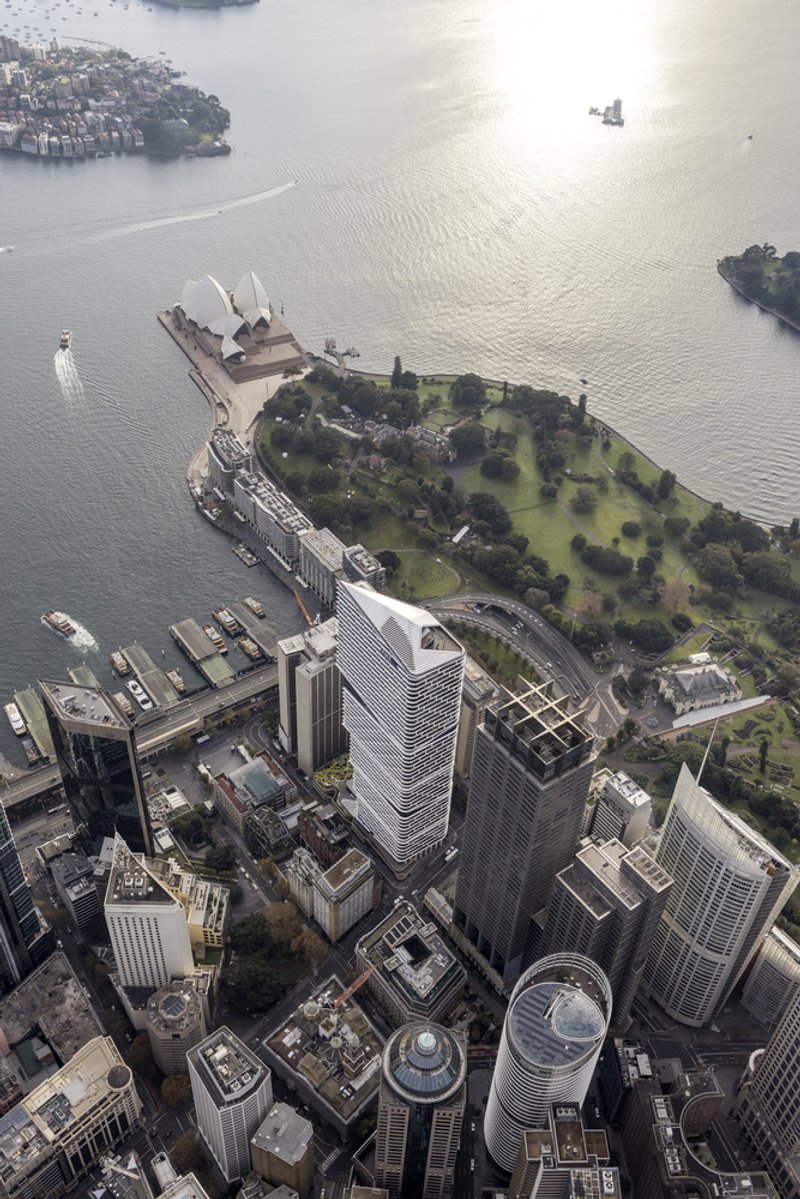
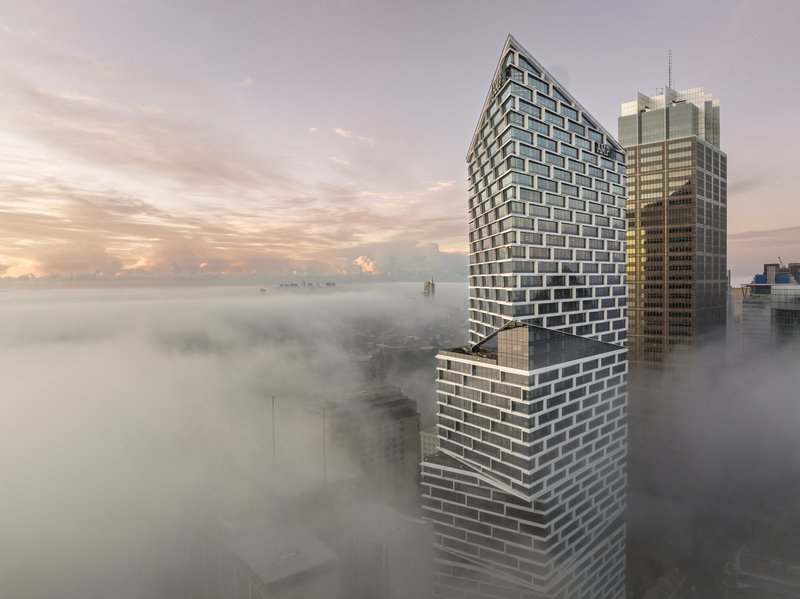
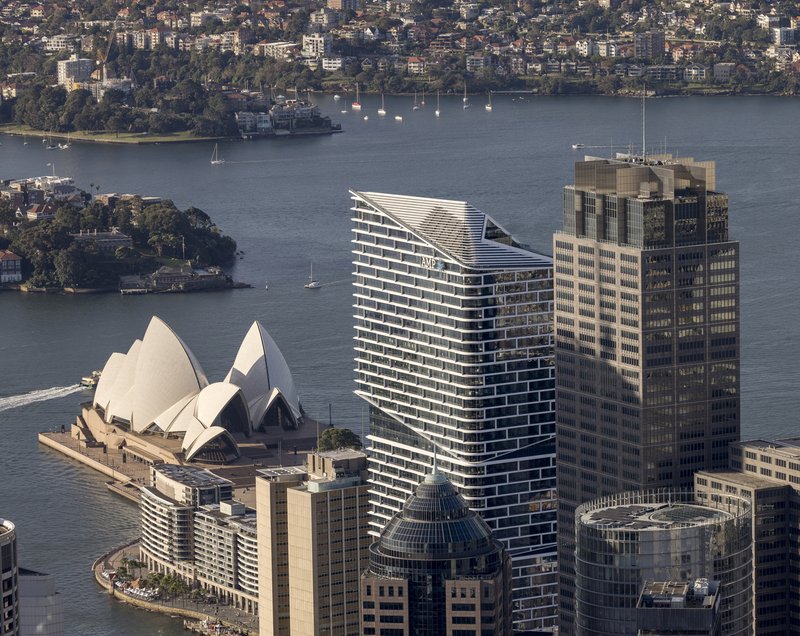
The Quay Quarter Tower (QQT), designed by Danish architecture firm 3XN, is more than just a skyscraper—it is a visionary example of adaptive reuse architecture that challenges conventional approaches to demolition and redevelopment. Rising 206 meters above Sydney's Circular Quay, the 49-storey tower has redefined the city’s skyline while setting a new precedent for sustainable high-rise design.
Initially deemed an improbable proposition, the design emerged victorious in a two-stage international competition in 2014. What makes this project groundbreaking is its transformation of the outdated 1976 AMP Centre into a contemporary vertical village, preserving the structural bones while infusing it with radical new life.
Sustainability Through Adaptive Reuse
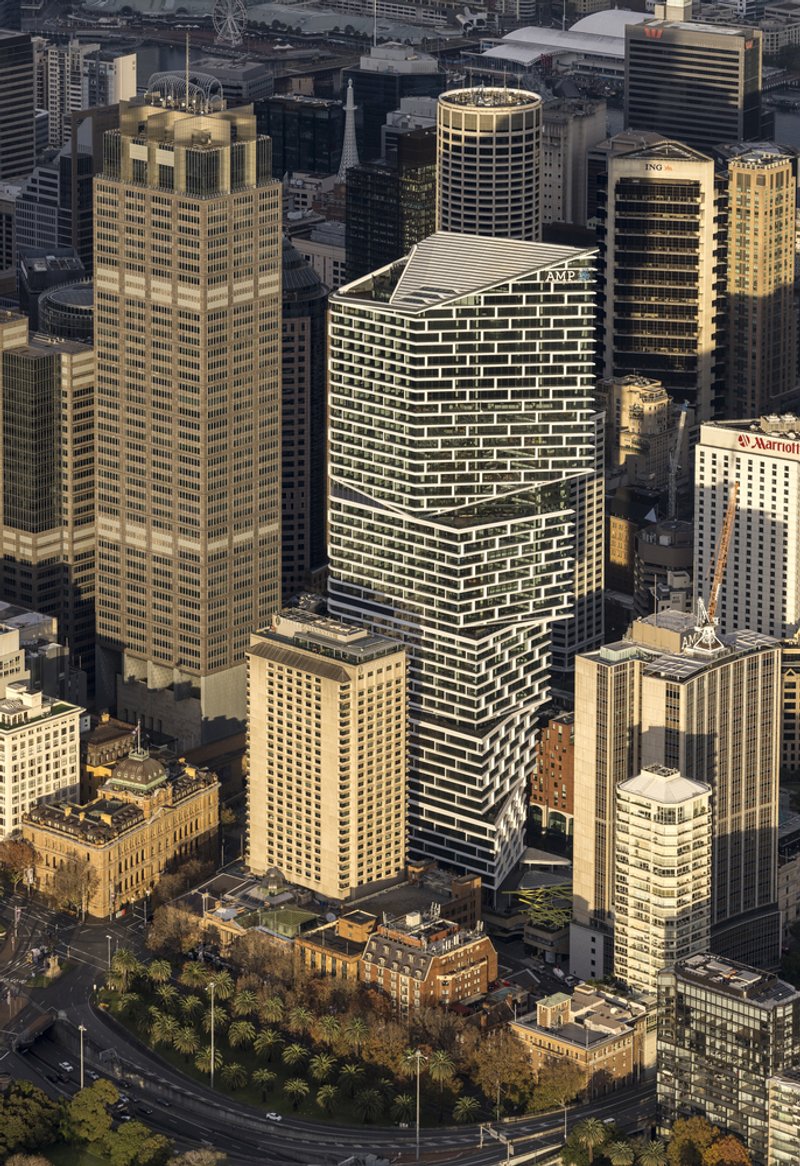
At the heart of QQT’s concept is a commitment to environmental responsibility and carbon-conscious architecture. Instead of opting for total demolition, the project team retained over 65% of the existing structural framework—including beams, columns, and slabs—and 95% of the core structure. This sustainable strategy led to an embodied carbon saving of approximately 7.3 million kilograms, the equivalent of 35,000 Sydney-Melbourne flights.
This approach represents one of the world’s most ambitious examples of high-rise building upcycling, offering a compelling model for cities seeking to modernize while minimizing ecological impact.
Sculpted Form: Stacked Volumes & Shifting Perspectives
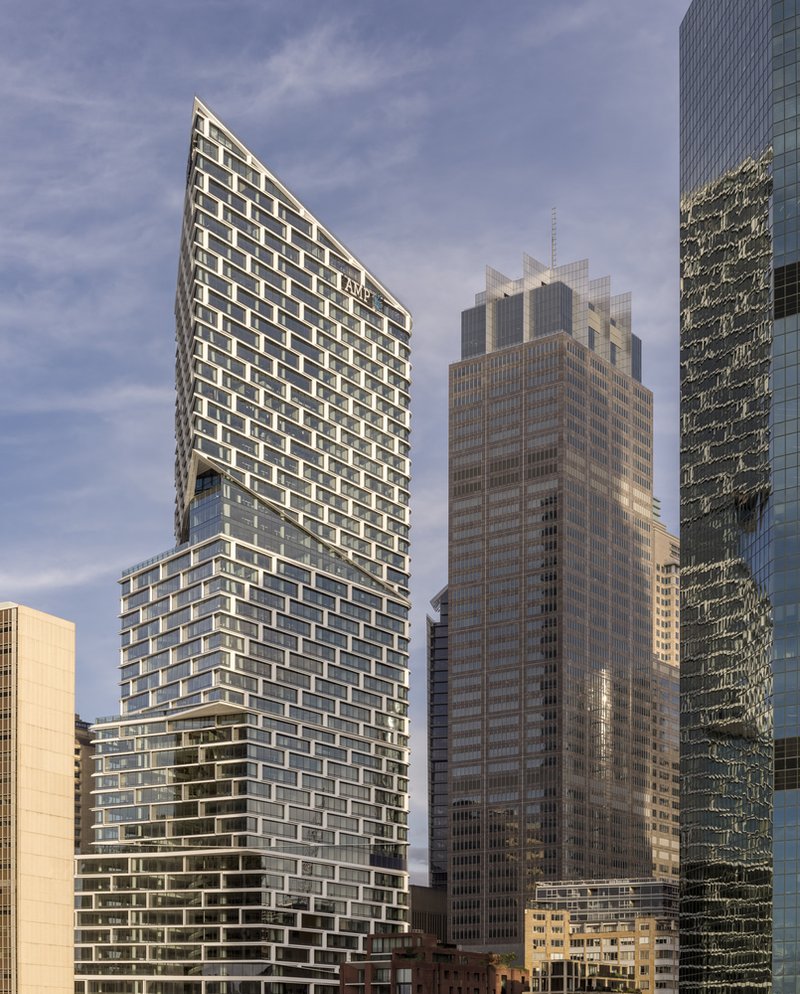
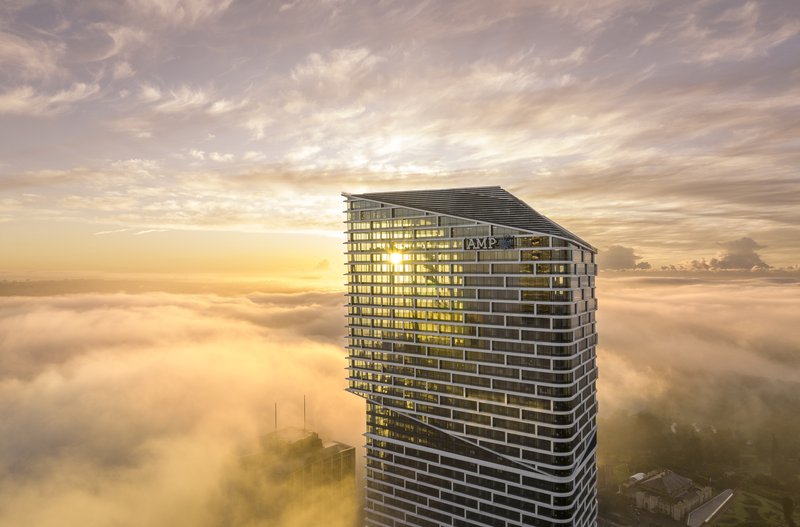
The tower’s sculptural form is defined by five stacked and rotated volumes. Each segment is slightly twisted and offset to create dynamic urban views and ensure compliance with Sydney’s solar access and shade envelope regulations.
This innovative massing strategy not only lends QQT its iconic silhouette but also maximizes usable floor area—adding over 45,000 m² of new space without overwhelming its surroundings. Lower levels are oriented toward Younge Street and the Sydney Harbour Bridge, while upper tiers are angled to capture views of the Royal Botanic Gardens and the Sydney Opera House.
A Vertical Village for 10,000 Daily Users
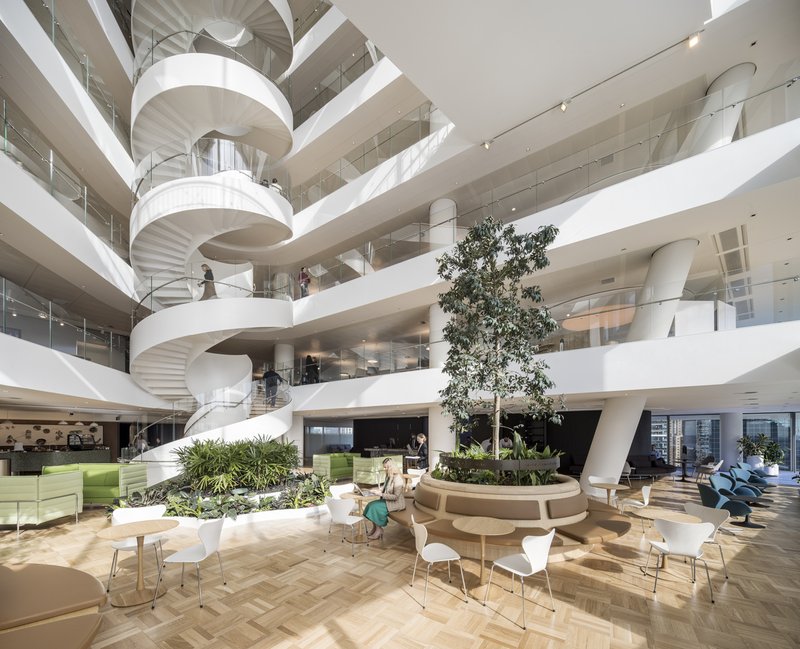
Central to 3XN’s design ethos is the creation of spaces that foster community, well-being, and connection. QQT embodies this through its “vertical village” concept—each of the five volumes functions as a neighborhood within the tower, complete with multi-level atria, open staircases, and shared social spaces.
Spiral staircases and vertical voids connect office floors around naturally lit atriums, encouraging movement, visual connectivity, and cross-organizational collaboration. The typical floorplate spans 2,000 m², but tenants can opt for adaptable in-fill platforms to further customize their spatial configurations.
Connecting Inside and Out: Terraces, Daylight, and Public Realm
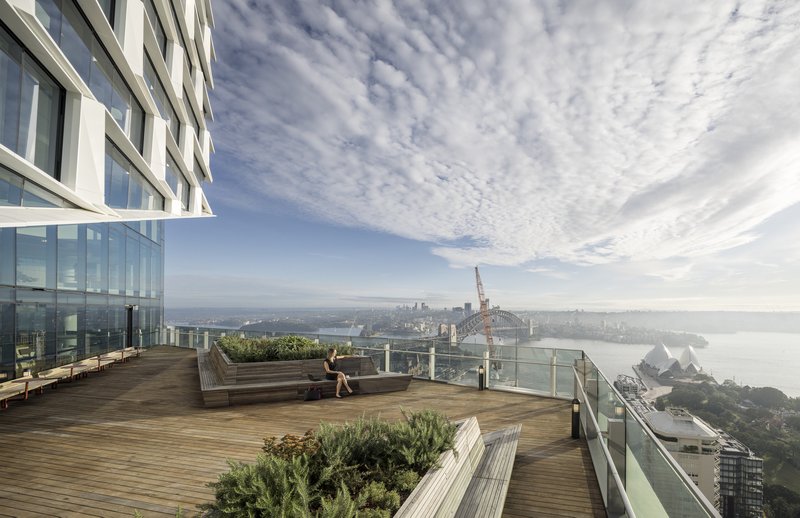
QQT seamlessly integrates interior and exterior spaces. At each stacked volume’s base, landscaped terraces offer occupants access to outdoor spaces without needing to descend to ground level—a rare amenity in high-rise office design.
At the street level, the building’s design rejects the isolating tower-on-podium typology. Instead, QQT introduces a multilevel, publicly accessible podium with a dramatic market hall and civic-scaled lobby carved into the sloped site. This open and inclusive ground plane strengthens the building’s urban integration and public identity.
Collaborative Execution and Artistic Contribution
The realization of QQT was an international and interdisciplinary effort. While 3XN led the design, local firm BVN managed executive architecture duties and completed design development alongside the contractor, Multiplex.
Renowned studio Olafur Eliasson contributed a bespoke public artwork at the base of the tower, while Tom Dixon’s Design Research Studio curated the interiors of the market hall and lobby, imbuing the commercial spaces with a distinctive material and experiential language.




Popular Articles
Popular articles from the community

Atelier Macri Concept Store Interior Design by CASE-REAL
Atelier Macri store features a "ko" counter, walnut wood details, cork displays, blending retail, gallery, and seamless customer experiences.
Inverted Architecture Installation by Studio Link-Arc: Exploring the Intersection of Architecture and Living Organisms
Inverted Architecture Installation by Studio Link-Arc blends mycelium, sustainability, inverted design, ecological cycles, and urban adaptive architecture in Shenzhen.


The Ken Roberts Memorial Delineation Competition (Krob)
As the most senior architectural drawing competition currently in operation anywhere in the world, it draws hundreds of entries each year, awarding the very best submissions in a series of medium-based categories.
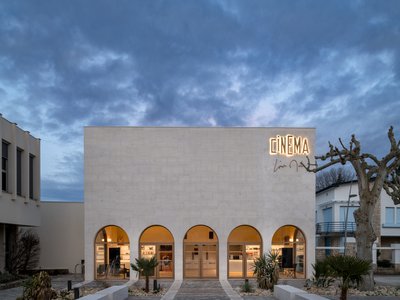
Louis Malle Cinema: A Limestone Cultural Landmark Revitalizing Community Life in Prayssac
Limestone cinema extension with public forecourt, blending heritage and modern design to create flexible cultural spaces and strengthen community interaction.

Similar Reads
You might also enjoy these articles
The Ken Roberts Memorial Delineation Competition (Krob)
As the most senior architectural drawing competition currently in operation anywhere in the world, it draws hundreds of entries each year, awarding the very best submissions in a series of medium-based categories.


Waterfront Redevelopment and Urban Revitalization in Mumbai: Forging a New Dawn for Darukhana
A transformative waterfront redevelopment project reimagining Darukhana’s shipbreaking heritage into an inclusive urban future.

OUT-OF-MAP: A Call for Postcards on Feminist Narratives of Public Space
Rhizoma Design and Research Lab invites artists, designers, architects, researchers, and students to reflect on how feminist perspectives can reshape public space. Selected works will be exhibited in Barcelona, October 2026. Submissions open until 15 April 2026.

Documentation Work on Buddhist Wooden Temple
Architectural syncretism and cultural hybridity: A comparative study of the Buddhist temples in Chattogram Hill tracks

Explore Office Building Competitions
Discover active competitions in this discipline




The International Standard for Design Portfolios


The Global Benchmark for Architecture Dissertation Awards


The Global Benchmark for Graduation Excellence


Challenge to reimagine the Iron Throne
Comments (0)
Please login or sign up to add comments
No comments yet. Be the first to comment!