
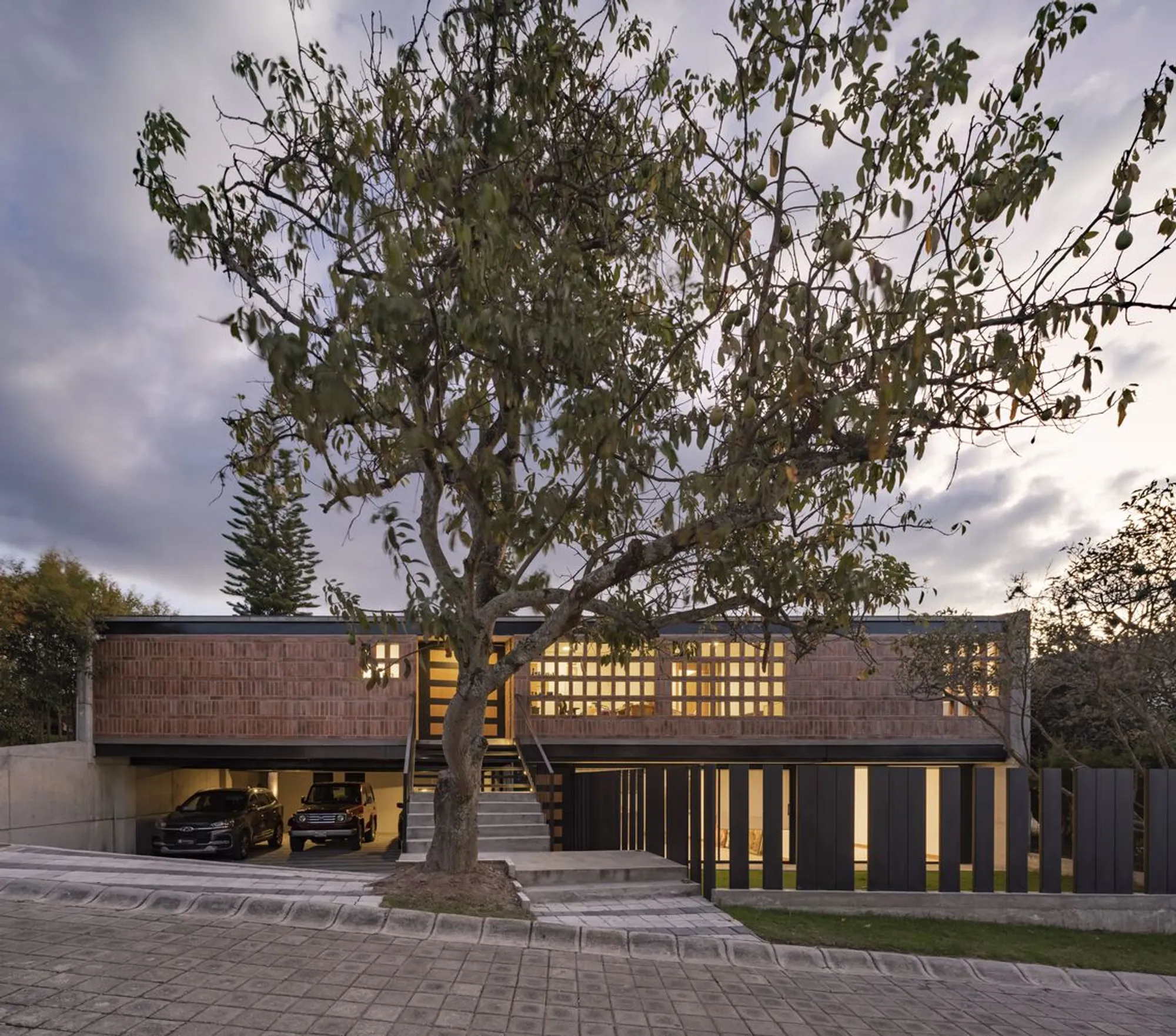
RA House by Bernardo Bustamante Arquitectos
RA House blends topography, brick, and concrete to create intergenerational living with outdoor gardens, privacy, and flexible post-pandemic family spaces.


Architects: Bernardo Bustamante Arquitectos
Rethinking Housing During the Pandemic
RA House, designed by Bernardo Bustamante Arquitectos, emerged during the early months of the COVID-19 pandemic. At a time when families around the world were re-evaluating their living conditions, the project addressed new priorities in residential architecture: flexible workspaces, outdoor connections, spaces for family well-being, and areas dedicated to caring for older generations.
The house reflects a shift away from the compact city paradigm, where social life is concentrated in public spaces, and instead reclaims the home as a central environment for everyday life, work, and leisure.1
Program and Dual Living Concept
The project was designed for a family of four — a couple with two daughters — alongside a secondary residence for the grandparents. The program includes:
- A main house of 220 m² with direct access to gardens and social spaces.
- A secondary apartment at half the size, offering independence and privacy for the grandparents.
- Ample parking and storage areas integrated within the sloped site.
This dual housing strategy promotes intergenerational living, ensuring proximity without compromising privacy.

Topography as a Design Tool
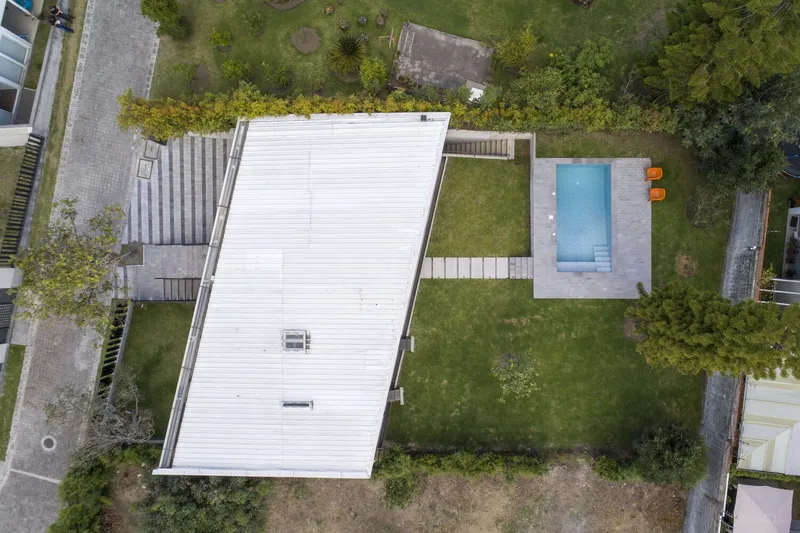
The sloped 600 m² site in Lumbisi, Ecuador, played a key role in the design. The architects took advantage of the double-sloping terrain to organize the program efficiently:
- The front portion houses the parking and the secondary apartment, benefiting from an exclusive garden.
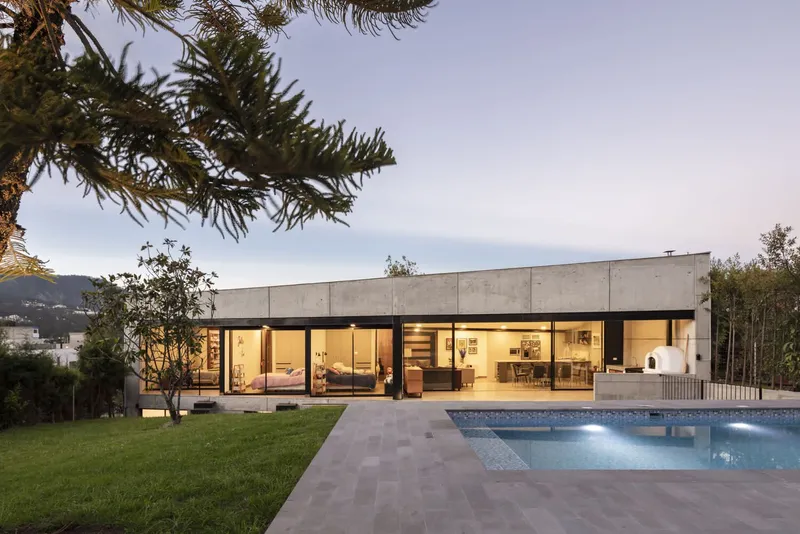
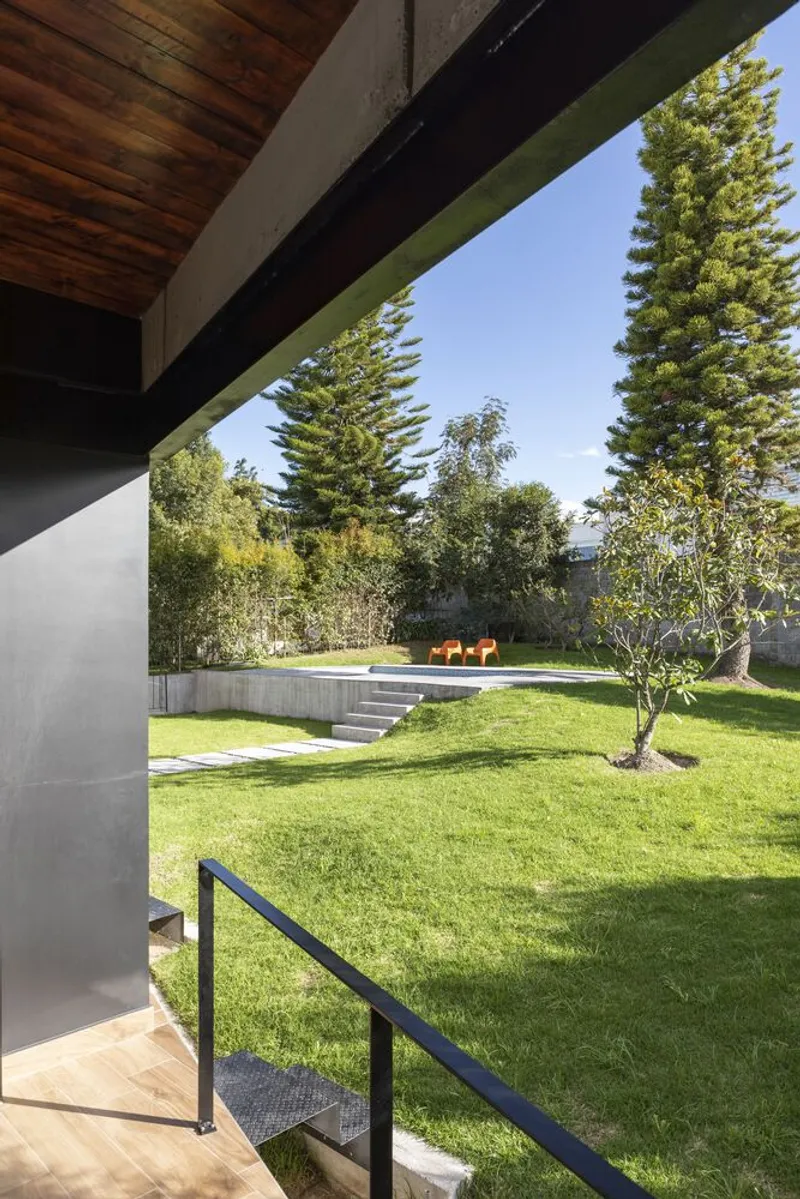
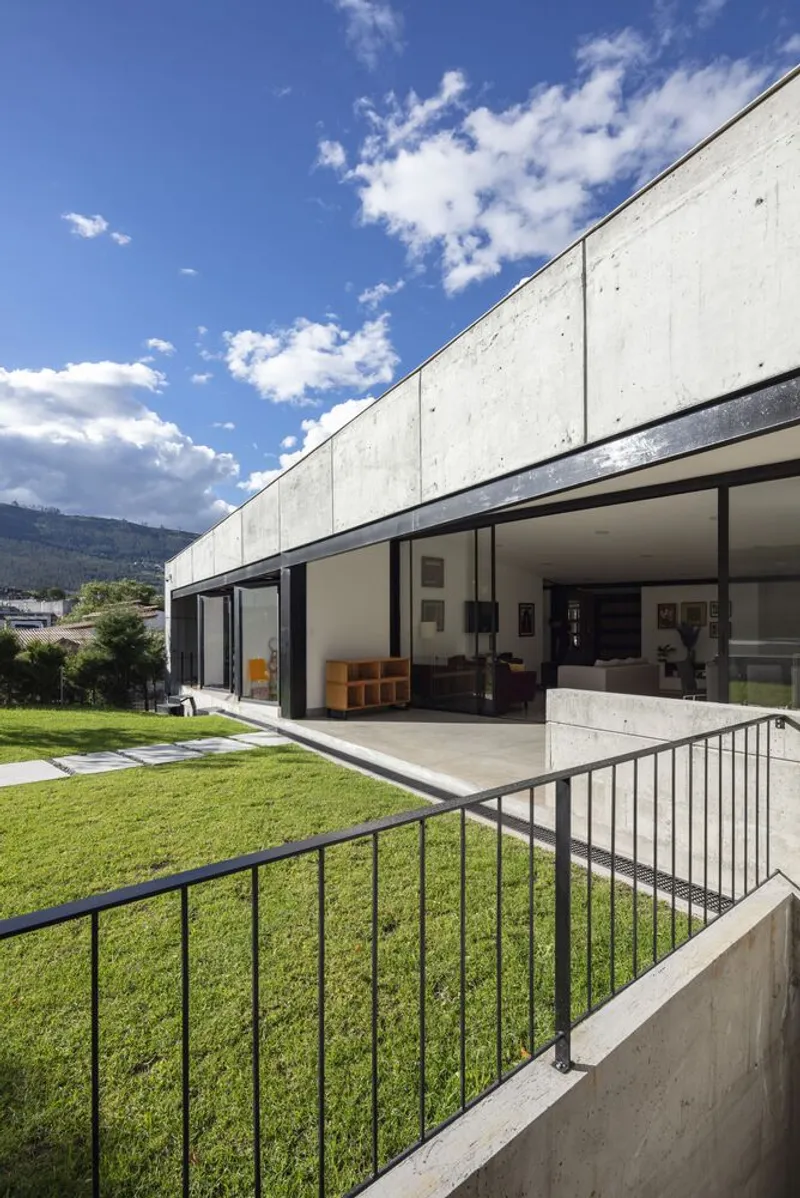
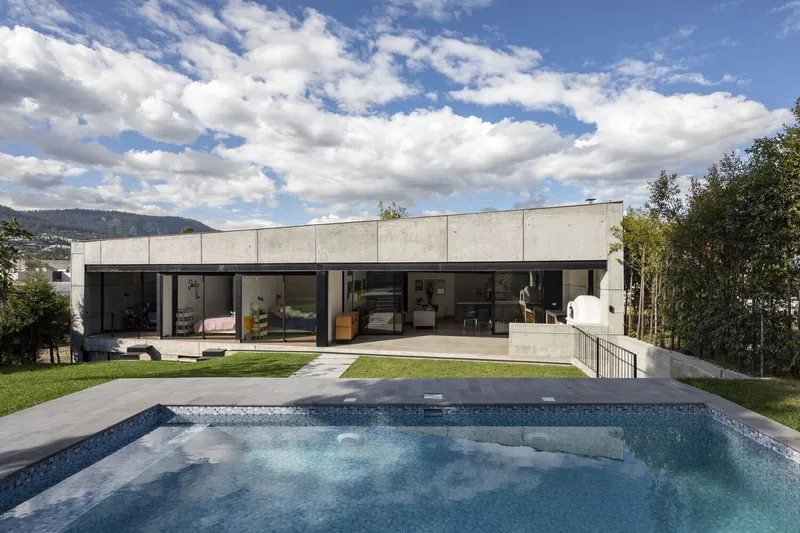
- The upper portion contains the main house, with direct access to a large rear garden and a recreational pool.
- Bedrooms step down with the slope, maintaining privacy and staggered connections to outdoor areas.
The master bedroom sits slightly elevated, offering both views and seclusion through its terrace.
Form and Structure
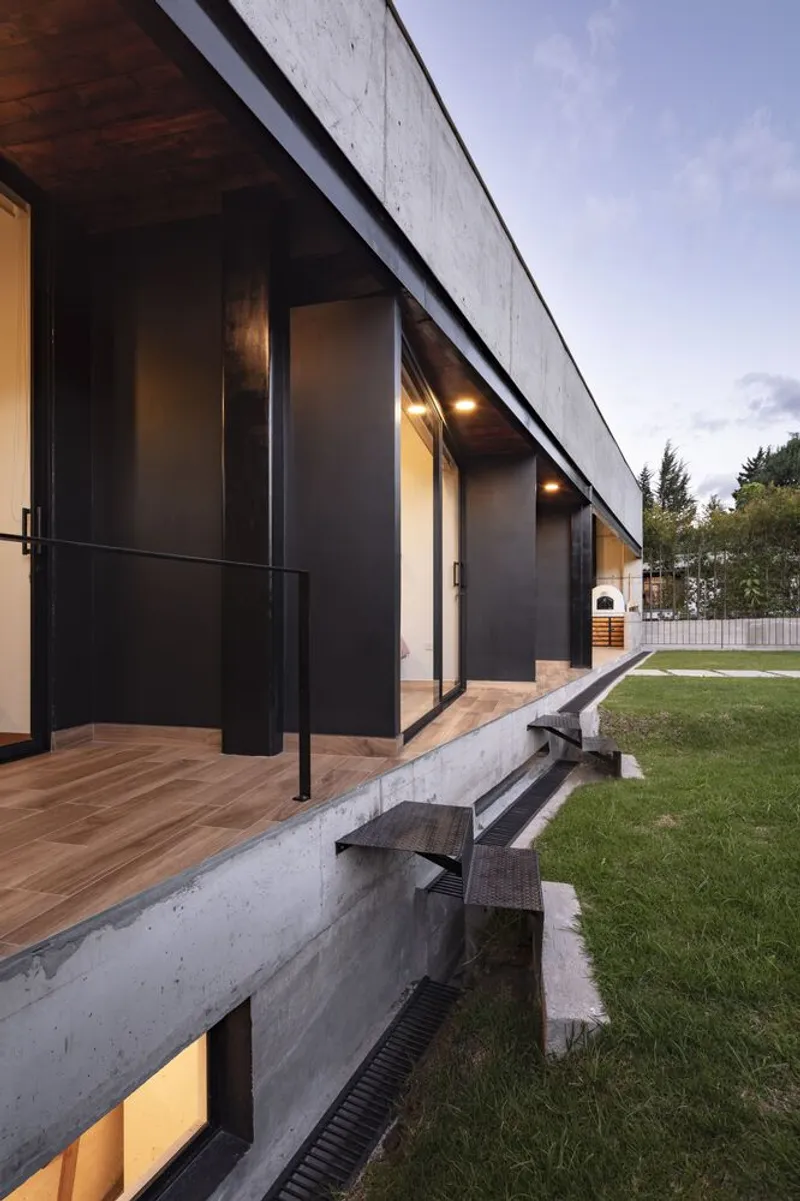
The house’s trapezoidal footprint mirrors the morphology of the terrain. Positioned five meters back from the street, it creates a front garden while maximizing space for the larger rear garden.
Local building ordinances allowed the architects to occupy the full width of the lot by extruding the roof to four meters at all vertices. This generated a roof profile that echoes the natural slopes of the site.
The structure relies on simple but effective systems:
- Lateral reinforced concrete walls paired with a retaining wall.
- Metal beams and a lightweight roof, enabling large open spans.
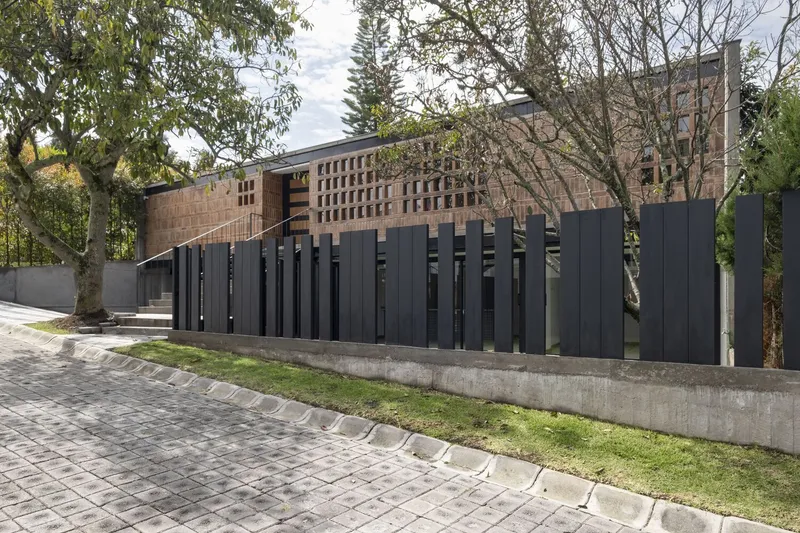
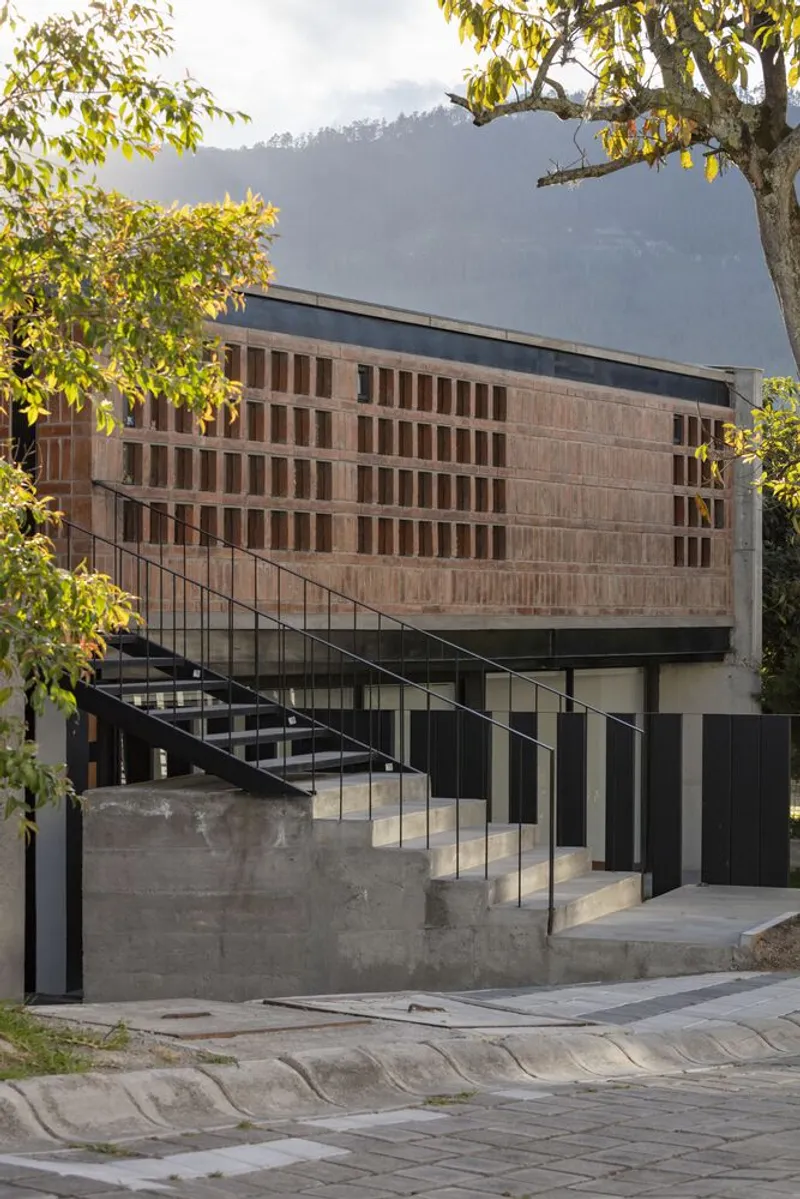
- A brick façade, hand-laid with special bonds to create lattices, regulate natural light, and ensure ventilation.
Materiality and Atmosphere
The construction employs traditional Ecuadorian materials — concrete, brick, and steel — combined in a way that feels both contemporary and rooted in context. The handmade brick skin not only adds warmth but also modulates light and privacy.
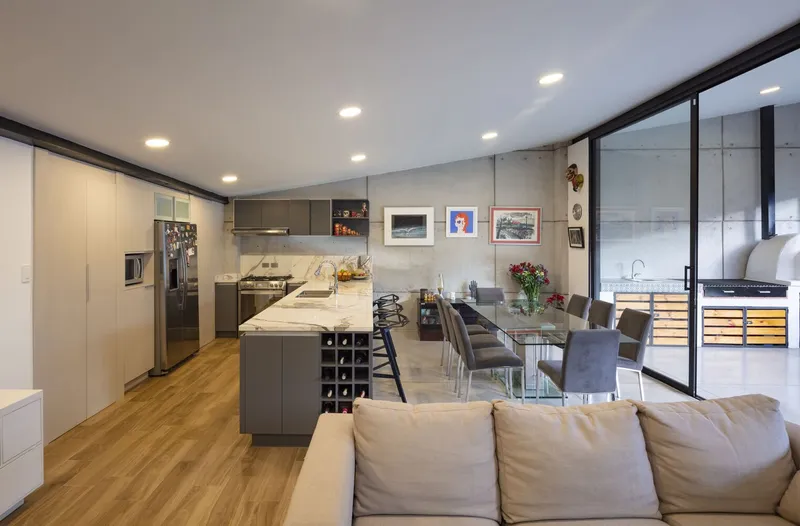
Blending with the surrounding vegetation, RA House achieves a discreet presence from the street while offering high-quality interior spaces filled with natural light and cross-ventilation.
A Contemporary Approach to Family Living
More than a house, RA House embodies a post-pandemic vision of domestic life — one that prioritizes flexibility, health, intergenerational coexistence, and connection to nature.
It stands as an example of Ecuadorian contemporary architecture that respects topography, embraces traditional materials, and redefines the role of housing in modern life.
All photographs are works of
BICUBIK



Popular Articles
Popular articles from the community


Riyadh For All: Intergenerational Urban Design for Active Aging in Rabat
Riyadh For All reimagines urban design in Rabat with intergenerational co-living, adaptive courtyards, and Moroccan cultural exchange today.

The Musturak Paradise: Senior Living Architecture for a Connected Future in Temara, Morocco
The Musturak Paradise reimagines senior living architecture in Temara via private homes, social spaces, culture, community, and shared care.

Hill & Cross Opera: Sculptural Opera House Architecture Shaped by Tallinn’s Landscape and Identity
Hill & Cross Opera reimagines opera house architecture in Tallinn through its sculptural hill, civic plaza, glass wave and a luminous cross.

Conexión: Biophilic Design Reimagines High-Rise Living in Hong Kong
Conexión reimagines high-rise living in Hong Kong through biophilic design, green facades, shared spaces, daylight, water and nature within.

Similar Reads
You might also enjoy these articles


Hodi-Mandai Geram
Project Function: Preservation and revitalization of the Intangible heritage and socio-spatial identity of the Hodi by Housing, Cultural Memory Center, Sacred Grove, landscape, local tourism economy


Olio Towers: A Mid-Rise for Performers That Fuses Housing, Rehearsal, and Stage
Located blocks from Houston's Theater District, this modular tower stacks living units around a central performance atrium.

Oasis: Modular Green Housing Carved into Dhaka's Urban Fabric
A shortlisted Plugin Housing entry reclaims unauthorized settlements in Dhaka with stepped concrete volumes, green roofs, and ventilation-driven design.

Black Hole: A Floating Megastructure for the Post-Physical Era
Emiliano Mazzarotto envisions a spherical, self-scaling arena where e-sports, digital hotels, and holographic stadiums replace traditional public space.

Explore Housing Competitions
Discover active competitions in this discipline



Challenge to reimagine the Iron Throne


Photograph architecture without architects


Illustrate the lost glory of Angkor Wat - Render Challenge


Design challenge to reuse E-waste
Comments (0)
Please login or sign up to add comments
No comments yet. Be the first to comment!