

Reiwa Nexity Head Office Building: A Modern Office Building Architecture in Paris
The Reiwa Nexity Head Office Building exemplifies modern office architecture in Paris, integrating nature and urban design.


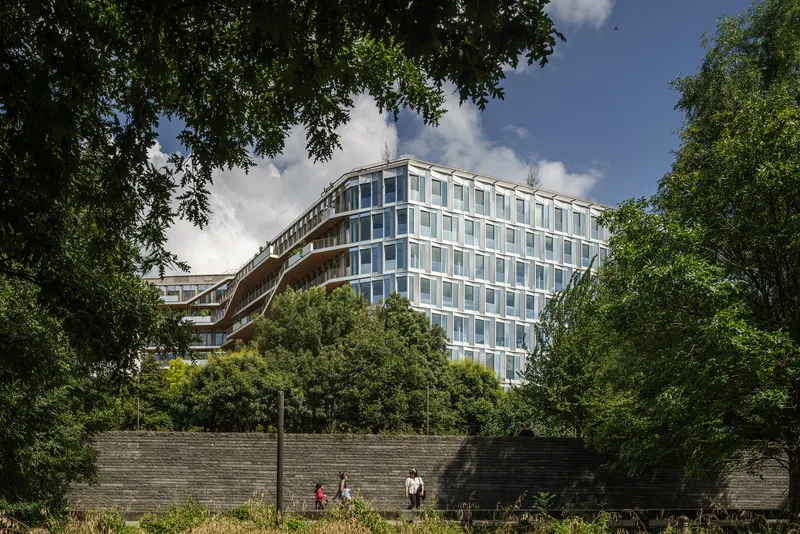
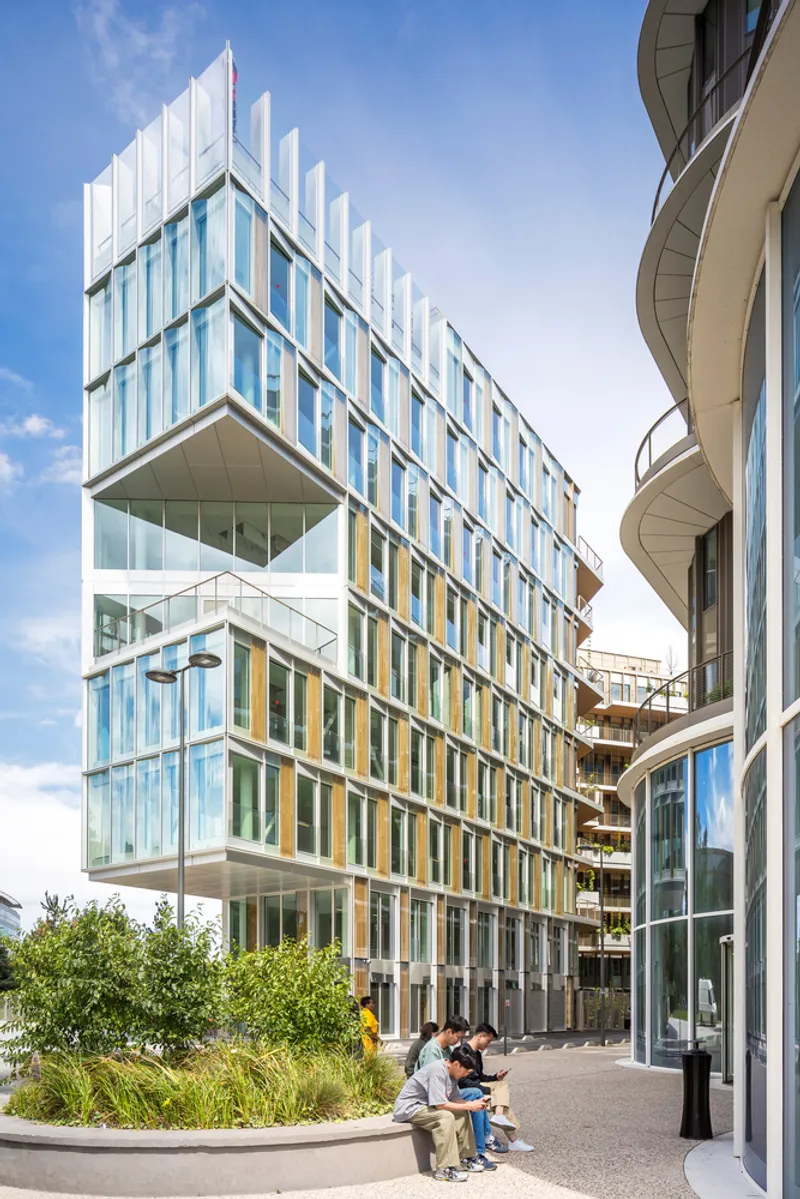
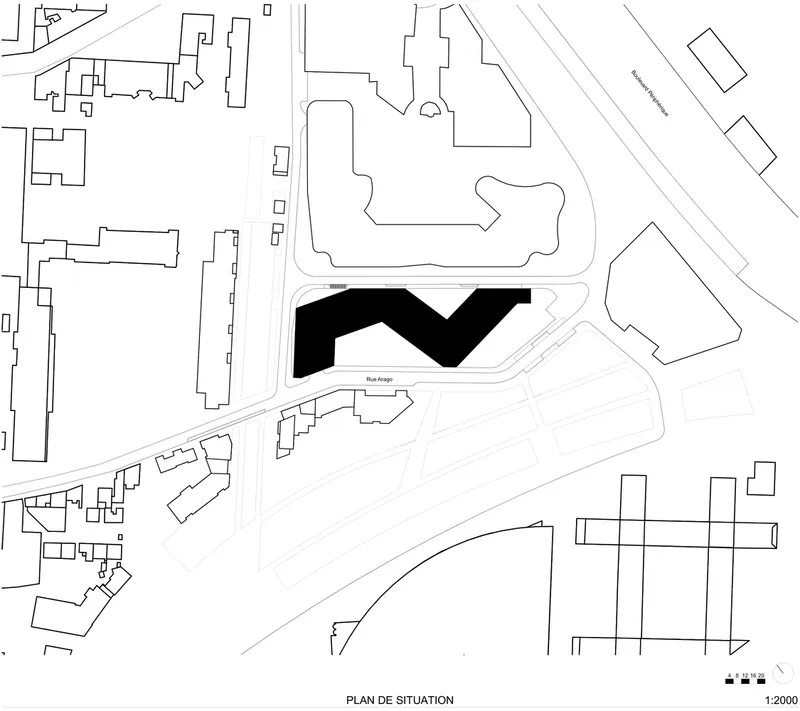
Located in the rapidly developing district of Saint-Ouen-sur-Seine, the Reiwa Nexity Head Office Building stands as a striking example of modern office building architecture in Paris. Designed by Brenac & Gonzalez & Associés, the building is part of a major urban renewal project that seeks to redefine the area between Saint Ouen town hall and the Paris ring road. Completed in 2024, the Reiwa building is not only an office space but also a key element in the revitalization of the district, with its unique architectural approach that balances both large-scale presence and local connectivity.
The Vision: Connecting Scales and Contexts
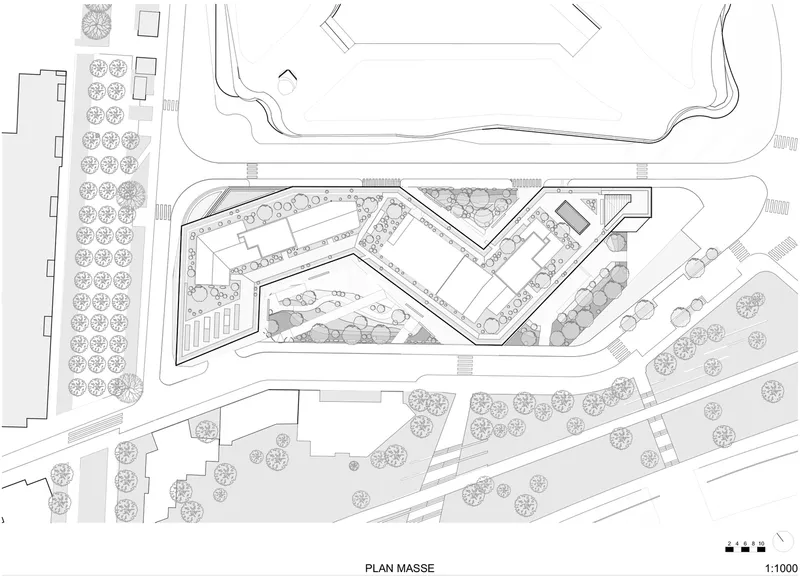
The architects’ ambition for the Reiwa building was to create a structure that works on multiple scales. At the urban level, the building aims to represent the Greater Paris area with its grand scale and iconic design. At the local level, the building serves as a connector to its surroundings—respecting and integrating with the neighboring residential buildings and planted roads. The design seeks to create a seamless transition between the existing environment and the new, ensuring that the building feels both monumental and domestically scaled.

Architectural Strategy: Facades and Landscaping
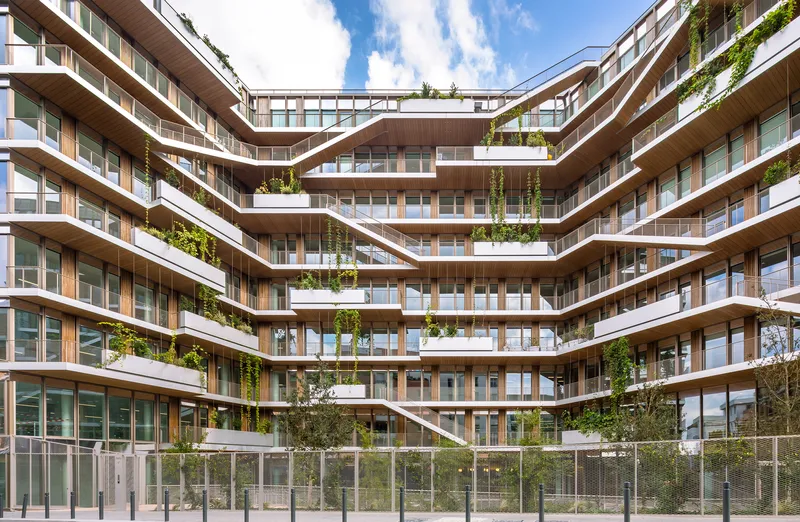
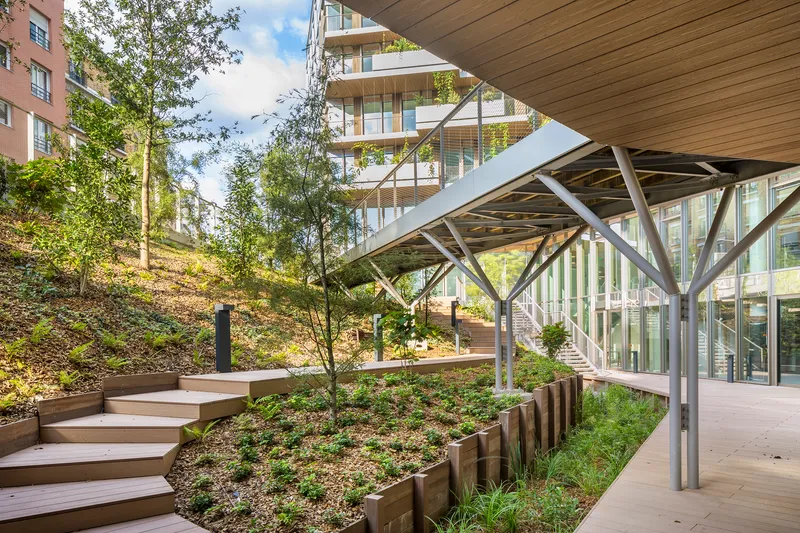
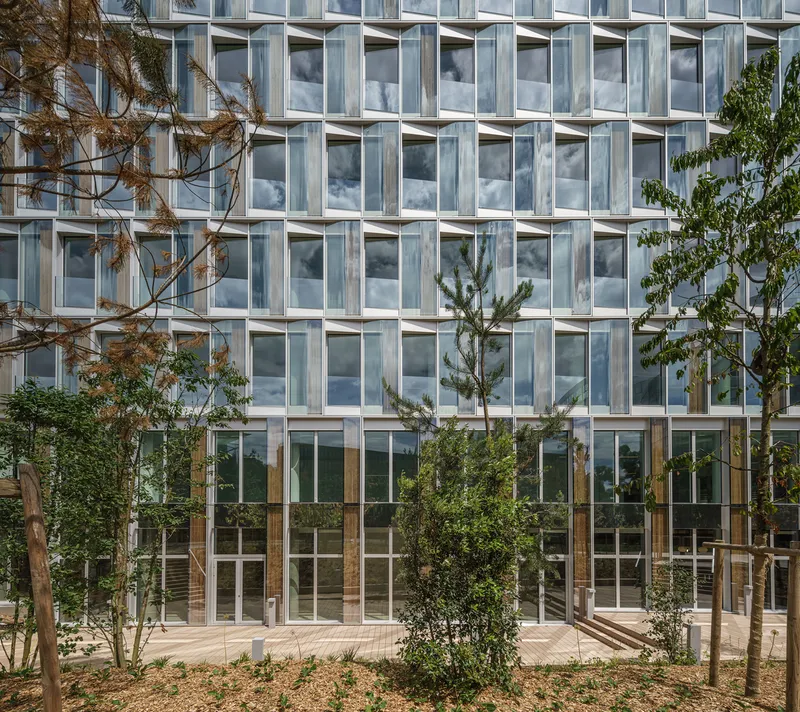
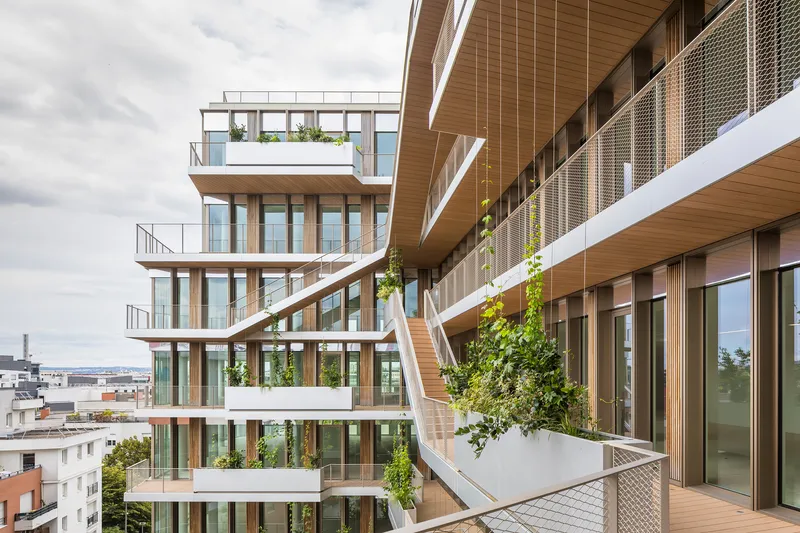
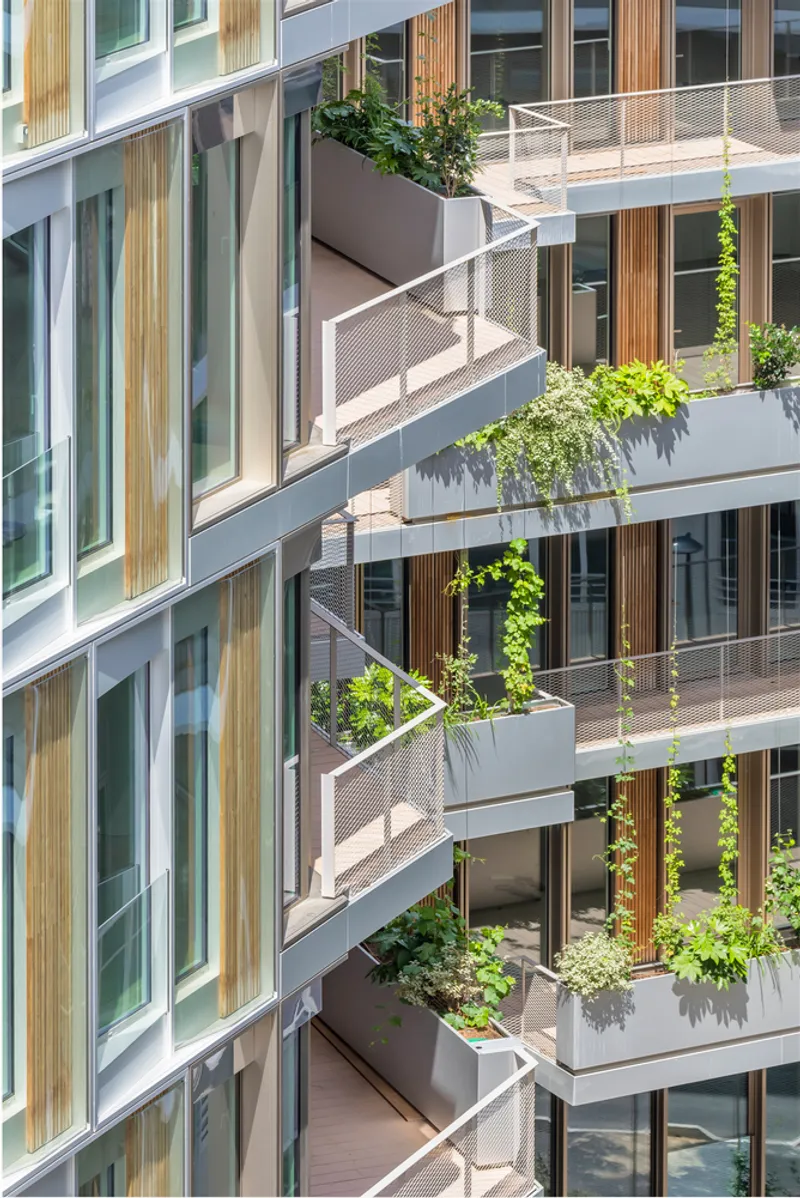
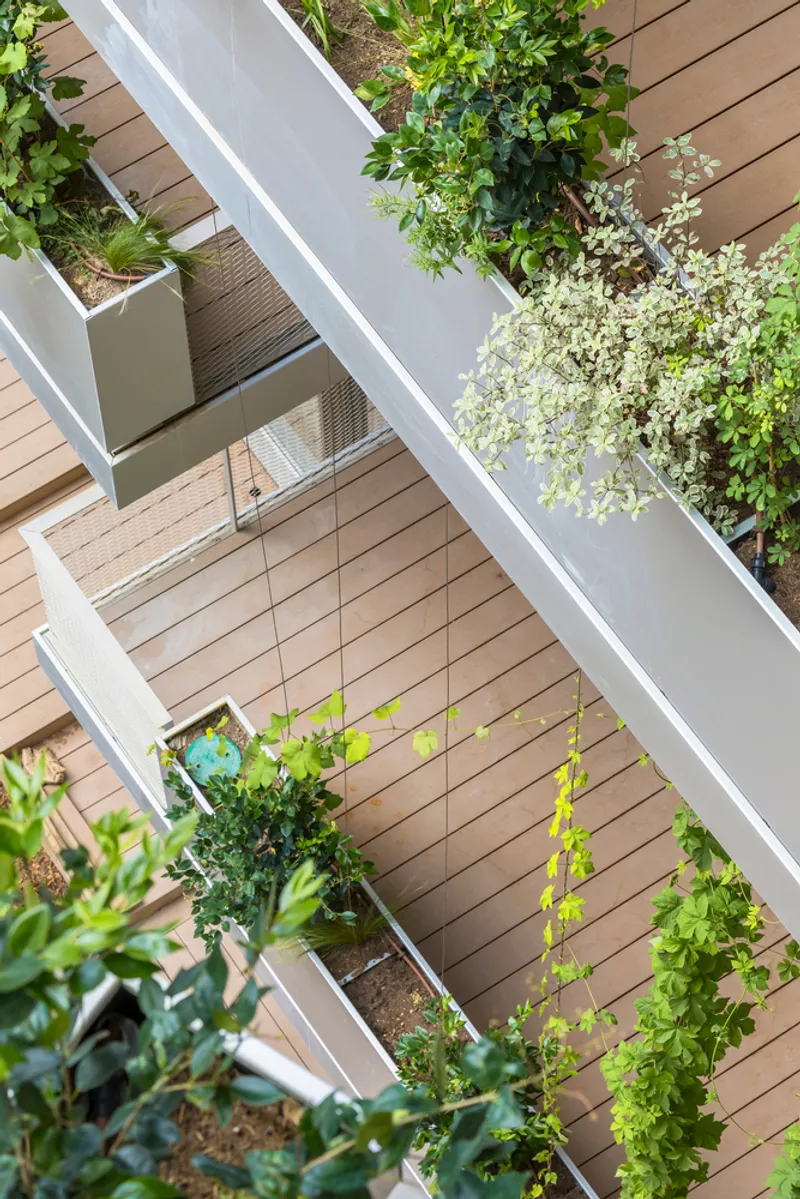
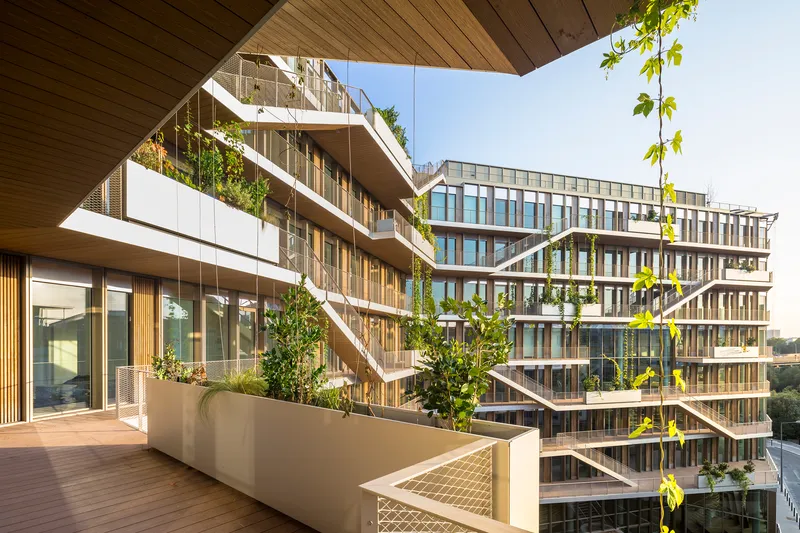
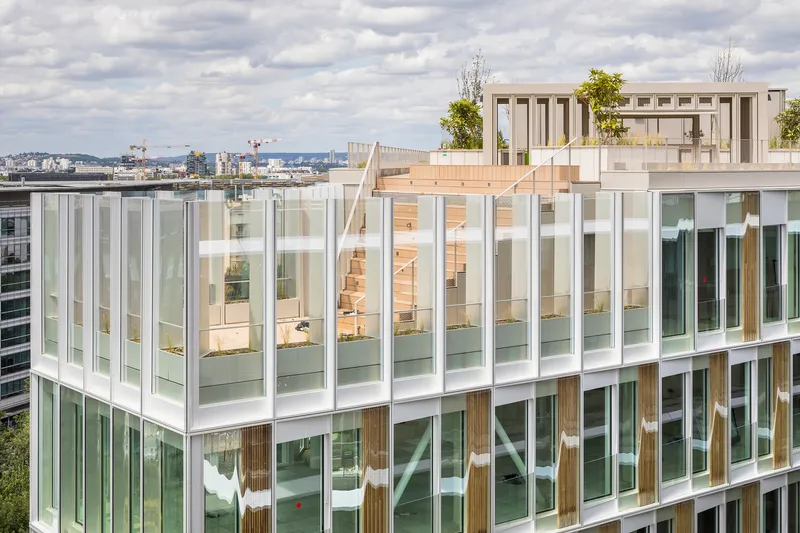
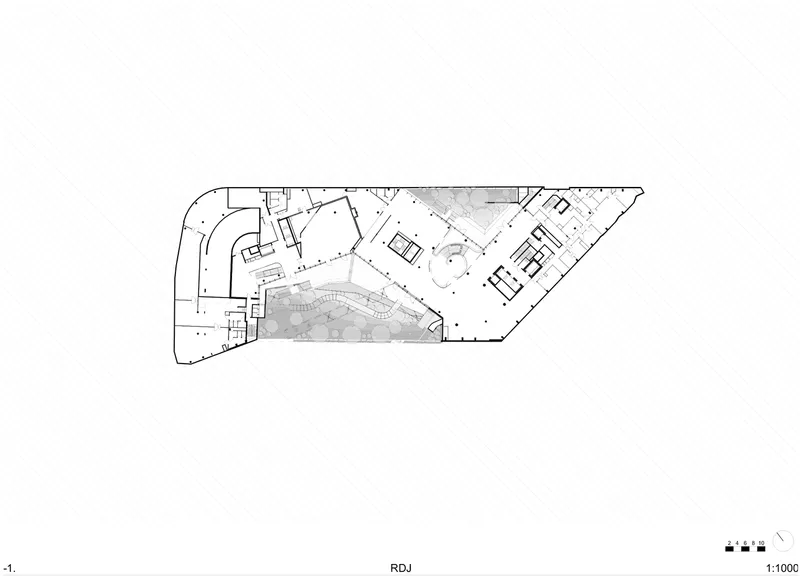
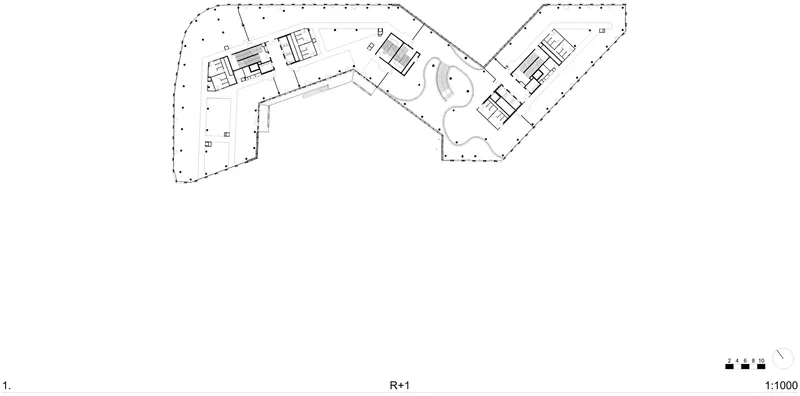
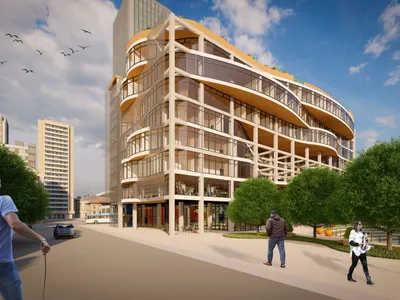
One of the key features of the Reiwa building is the differentiated treatment of its facades. The facades along the property lines are composed of a "uniform texture" created by juxtaposed frames. This crystalline skin of modules imparts an impression of scale and grandeur. In contrast, the facades at the inflections, which create landscaped hollows, feature balconies adorned with planted trellises. These balconies are designed to serve as spaces for relaxation, outdoor work, and casual interactions. They also act as third places, encouraging collaboration and community engagement within the office space.
A Network of External Connections
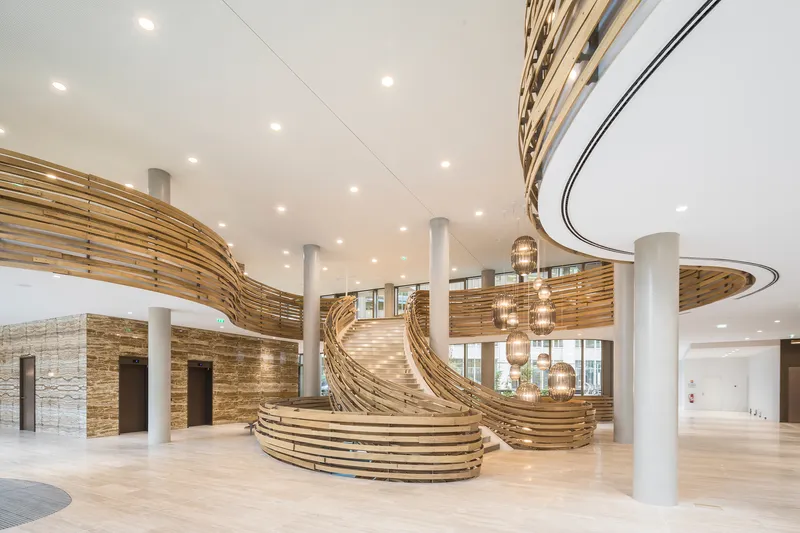
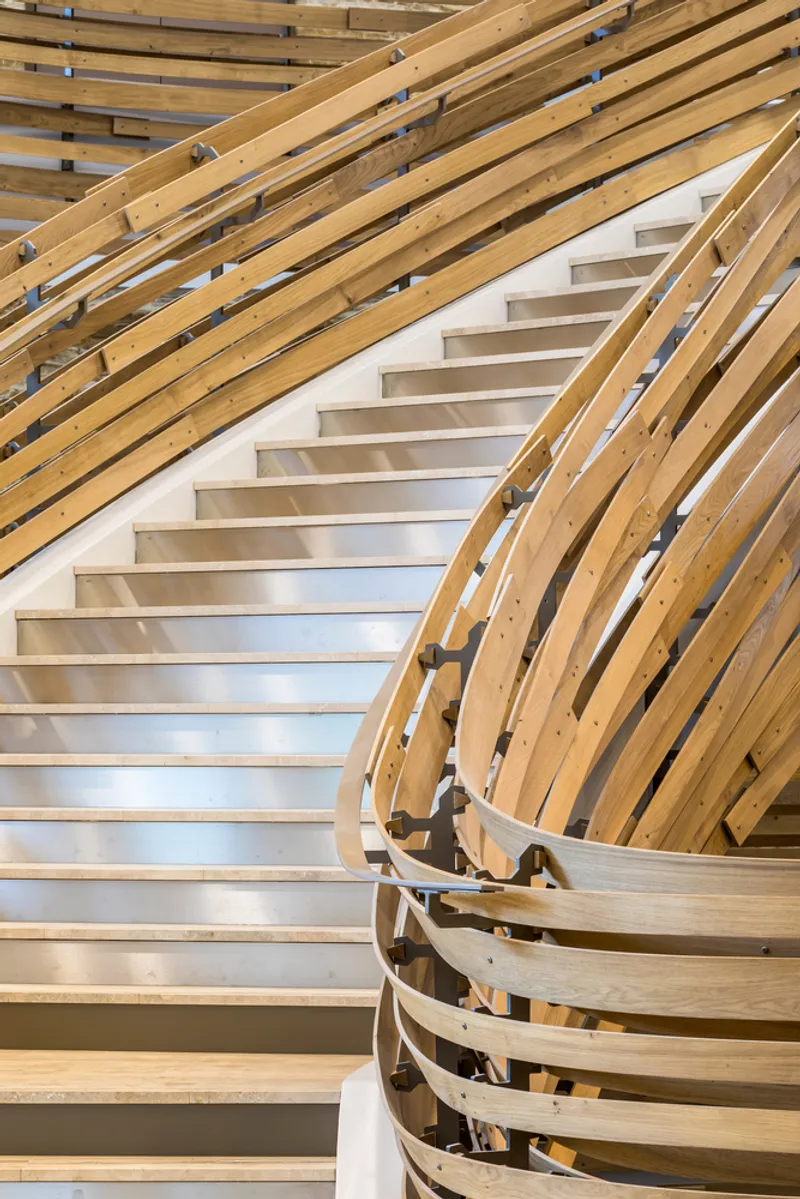
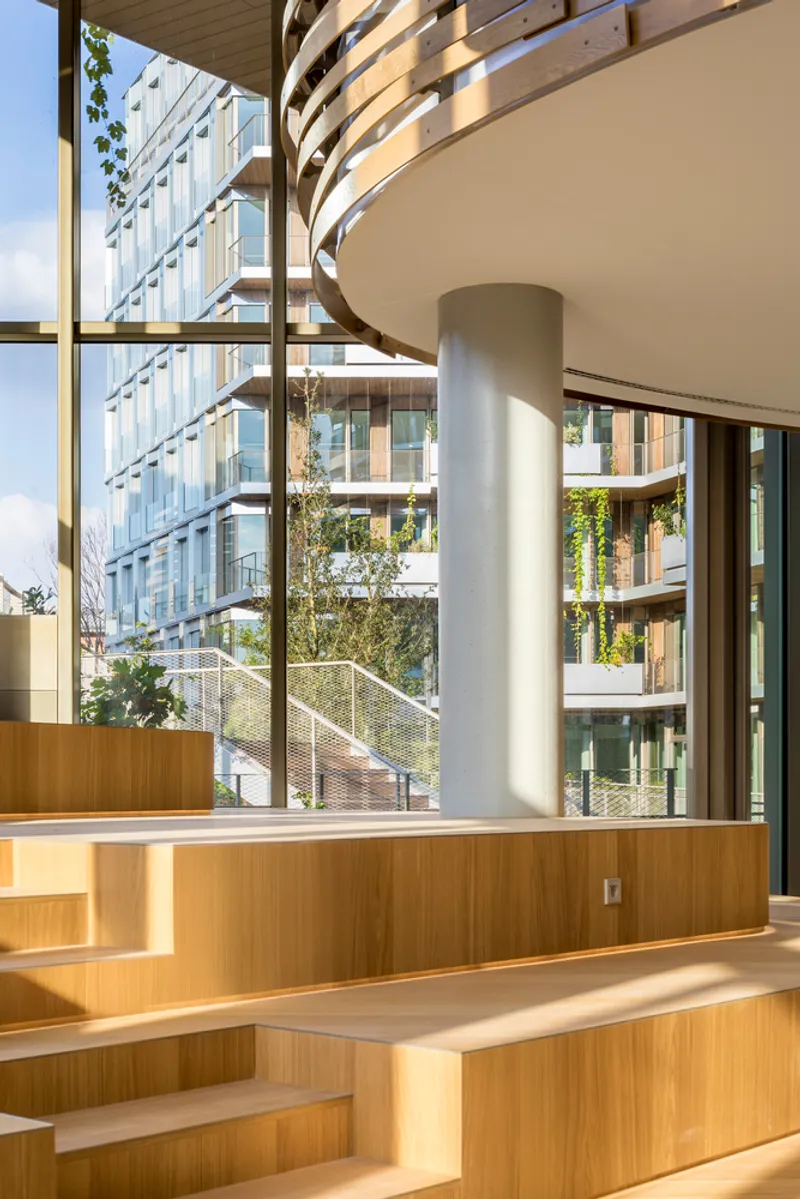
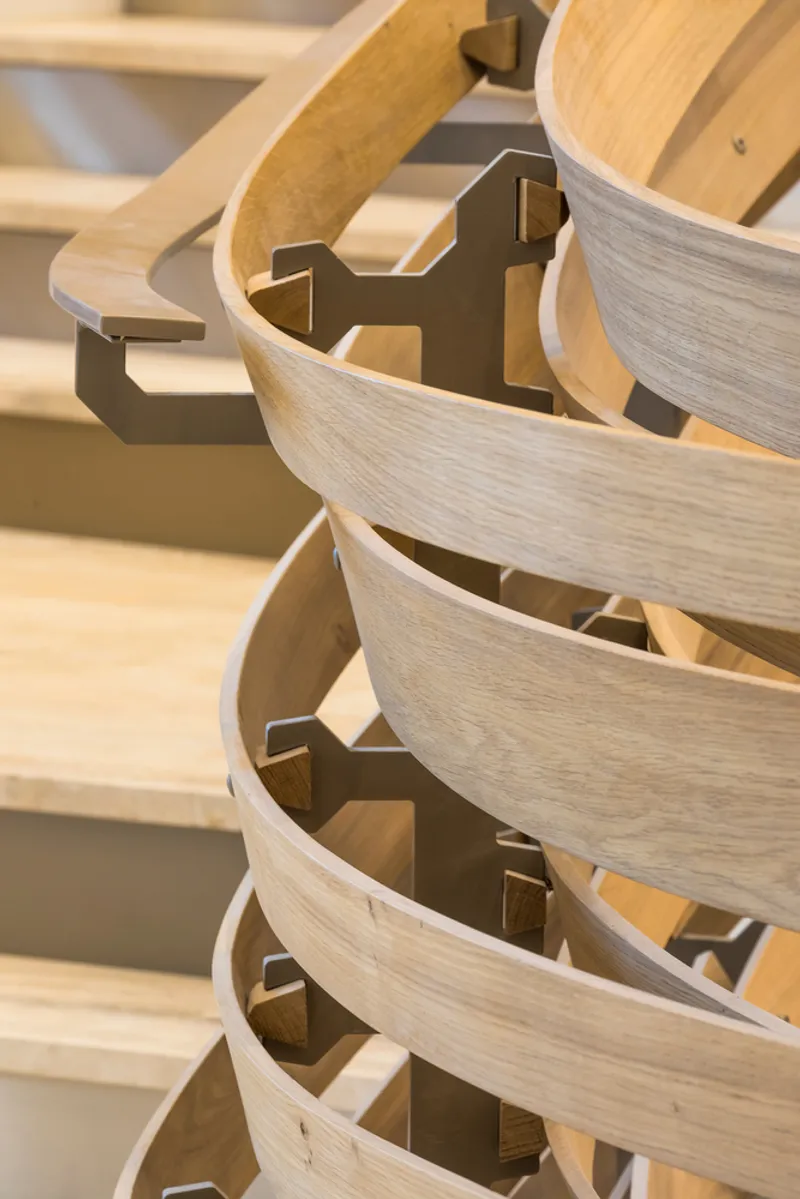
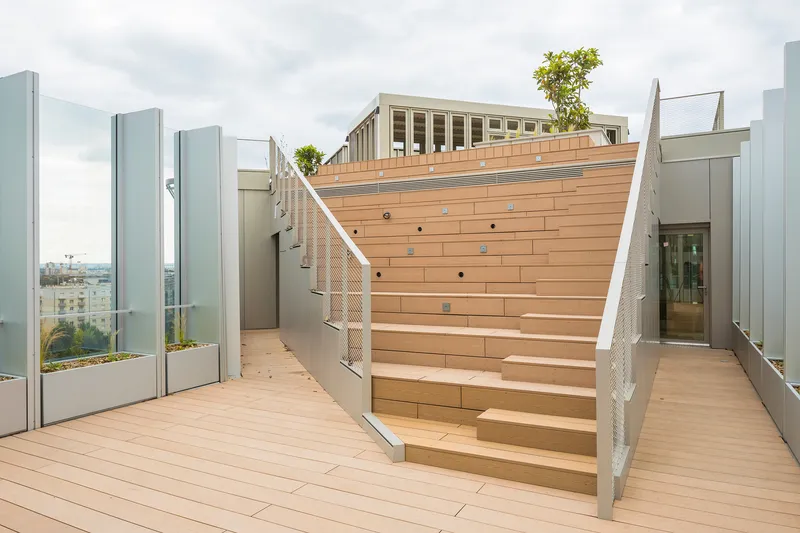
The building’s design emphasizes connection and movement. A network of external staircases links each terrace and garden, creating a continuous path that encourages users to explore the building’s outdoor spaces. These staircases not only enhance the experience of the building but also create a dynamic interaction between the interior and the surrounding landscape. By incorporating these outdoor pathways, the Reiwa building fosters a sense of openness and accessibility.


Domesticity and Landscape Integration
A significant aspect of the Reiwa building’s design is its focus on “domesticity”—creating spaces that feel human-scale and inviting, despite the building’s large size. This is achieved through the strategic use of balconies and gardens, which bring nature into the urban environment. The building’s stratification, with its layered balconies and the presence of greenery, fosters a strong link between the structure and its surroundings. The use of plantings and landscaped terraces also reflects the building’s identity as a "landscape building," where nature and architecture are intertwined.
An Extroverted Building with a Unique Identity
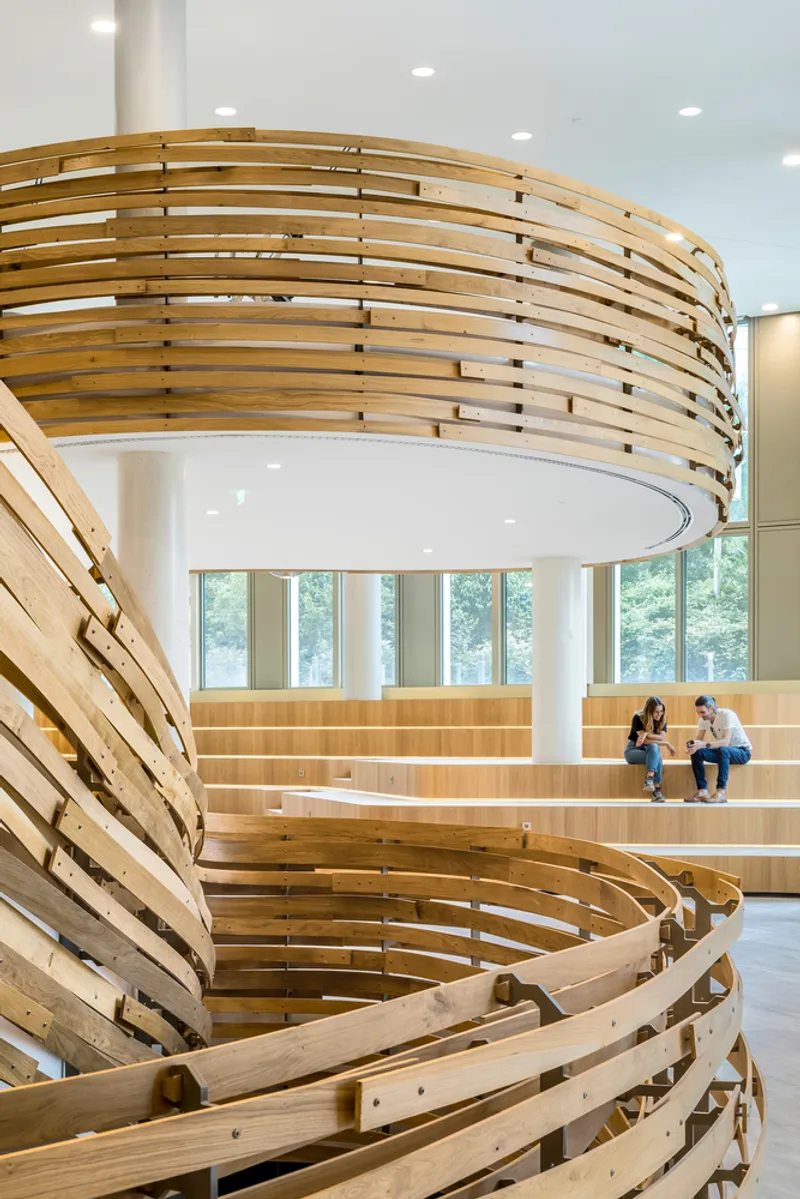
The Reiwa building is not only a functional office space but also an extroverted structure that actively opens up to the outside world. Its bold and expressive architectural design contributes to the influence of the company it houses. The building is designed to be a symbol of the company’s values and aspirations, with its dynamic form and public-facing nature. It stands as a beacon of modern architecture in Paris, reflecting both the contemporary needs of office workers and the evolving urban landscape.

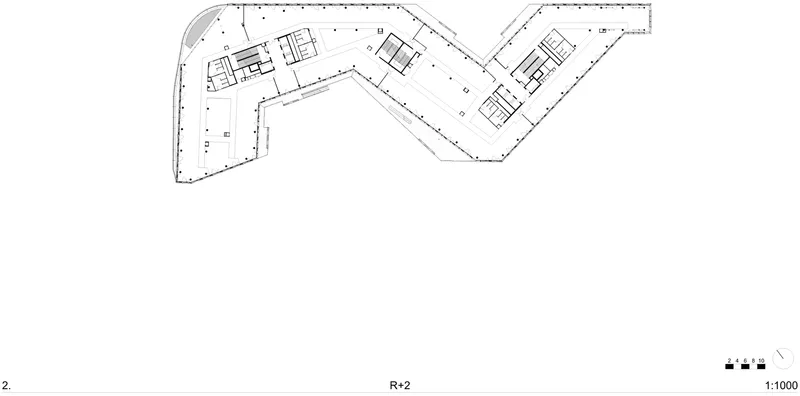
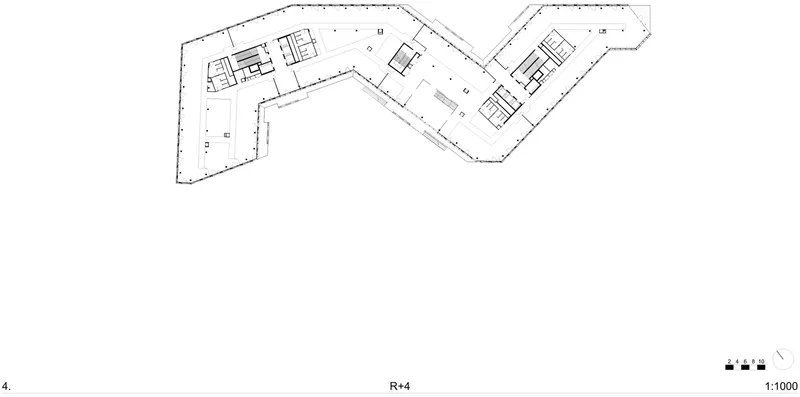

A Landmark of Modern Architecture in Paris
The Reiwa Nexity Head Office Building exemplifies modern office building architecture in Paris, blending scale, functionality, and context. Its innovative use of space, facades, and outdoor connectivity makes it a model for future office buildings in urban renewal projects. The building’s design respects its environment while introducing a new vision for urban architecture, creating a landmark structure that is both visually striking and deeply integrated with its surroundings.


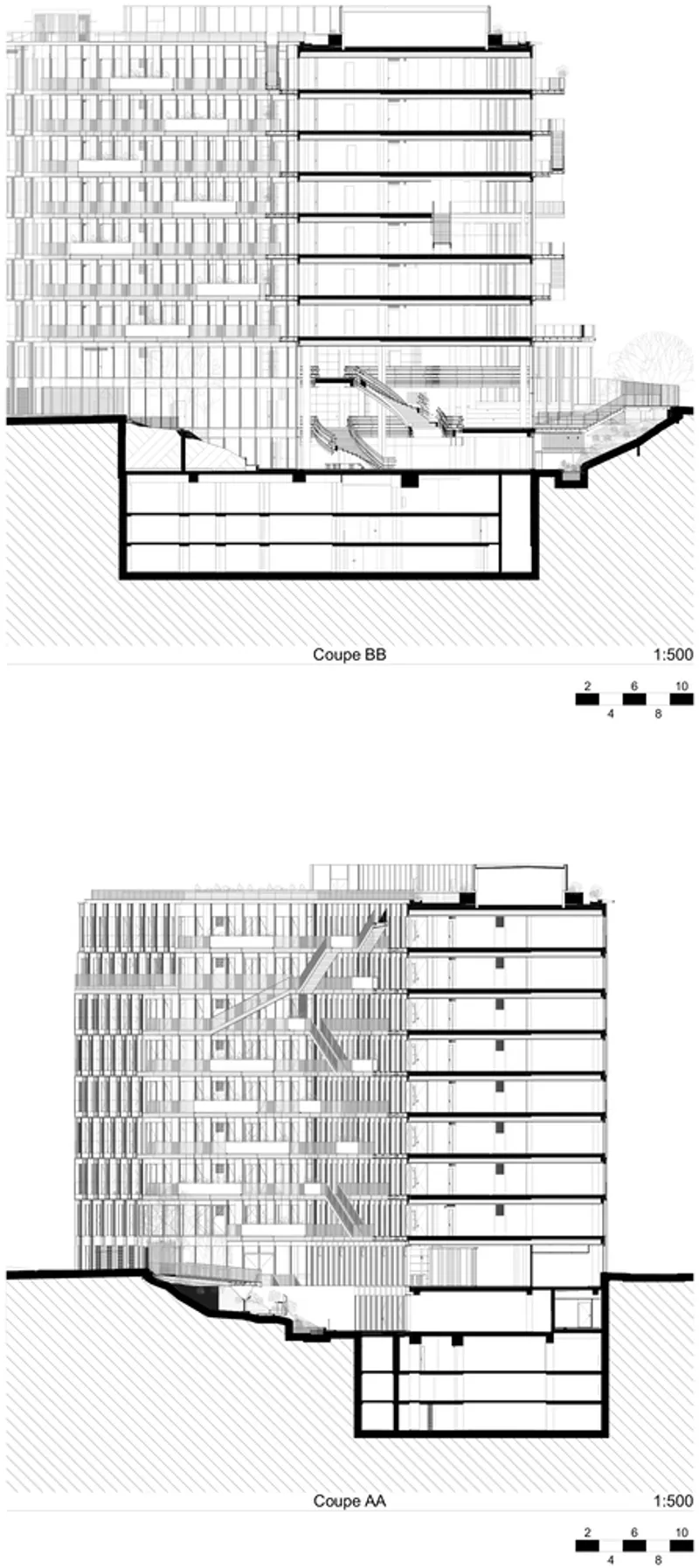


All Photographs are work of Stefan Tuchila, Sergio Grazia


Popular Articles
Popular articles from the community


Madras Spaces Turns a Tight Rural Plot near Tiruchirappalli into an Inward-Looking Courtyard House
A 92 m² farmhouse in V. Thuraiyur, Tamil Nadu, built from load-bearing brick and reclaimed tile, that hides its openness behind a perforated wall.

Charlene Koetz Arquitetura Lifts a Glass House on Piers Above a Mossy Forest Slope in Gramado
In Vila Prinstrop, Brazil, a 455 m² house pairs black-framed glazing with board-formed concrete, rough stone and a forest it barely disturbs.


Engagement Through Sculpture: Concrete Shells That Turn a Paris Square Into a Climbable Lookout
A winning Sculpt[r] 2020 entry drapes timber stairs over sloping concrete shells, offering Parisians a climb, a view and shade beneath.

S-AR Builds a Five-Square-Meter Concrete Chapel in a Mexican Garden from Thin Walls and Old Bricks
In Santiago, Nuevo León, a tunnel of 8 cm concrete walls tilts down to a steel cross, floored with crushed brick from the chapel it replaced.

Similar Reads
You might also enjoy these articles

Hodi-Mandai Geram
Project Function: Preservation and revitalization of the Intangible heritage and socio-spatial identity of the Hodi by Housing, Cultural Memory Center, Sacred Grove, landscape, local tourism economy

Olio Towers: A Mid-Rise for Performers That Fuses Housing, Rehearsal, and Stage
Located blocks from Houston's Theater District, this modular tower stacks living units around a central performance atrium.
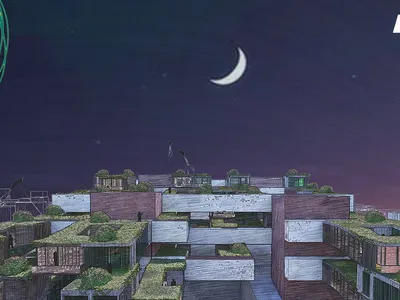
Oasis: Modular Green Housing Carved into Dhaka's Urban Fabric
A shortlisted Plugin Housing entry reclaims unauthorized settlements in Dhaka with stepped concrete volumes, green roofs, and ventilation-driven design.

Black Hole: A Floating Megastructure for the Post-Physical Era
Emiliano Mazzarotto envisions a spherical, self-scaling arena where e-sports, digital hotels, and holographic stadiums replace traditional public space.

Explore Architecture Competitions
Discover active competitions in this discipline

Submit a world, not a render

Studio work deserves a jury

The International Standard for Design Portfolios

The Global Benchmark for Architecture Dissertation Awards
Comments (0)
Please login or sign up to add comments
No comments yet. Be the first to comment!