

Restoration of the Historic Snow Wells in Sierra Espuña by Ecoproyecta
Restoration of two historic snow wells in Sierra Espuña using traditional techniques, preserving cultural heritage and enhancing public visitor experience.


Reviving Murcia’s Ice Heritage through Architectural Conservation
In the heart of the Sierra Espuña mountain range in Alhama de Murcia, Spain, two centuries-old snow wells—known locally as pozos de nieve—have been brought back to life through a thoughtful and technically challenging restoration by Ecoproyecta, a firm renowned for its commitment to sustainable and heritage architecture. The project, completed in 2023, breathes new life into wells number 11 and 13, enhancing both architectural preservation and the visitor experience.

Cultural Heritage and Context: Protecting an Ethnographic Landmark
This initiative stemmed from the broader Master Plan for the Snow Wells of Sierra Espuña, which cataloged and assessed the conservation status of 28 historic snow wells scattered throughout the region. These wells were once vital to the ice trade, storing compacted snow during winter to be distributed throughout warmer months.
Recognizing their historical significance, the area was officially declared a Cultural Heritage Site (Bien de Interés Cultural) in November 2022, listed under the category of an “ethnographic place of interest.” Among the prioritized actions outlined in the Master Plan was the restoration of wells 11 and 13—two of the most accessible and structurally recoverable snow wells in the region.
Architectural Challenge: Restoring with Authenticity
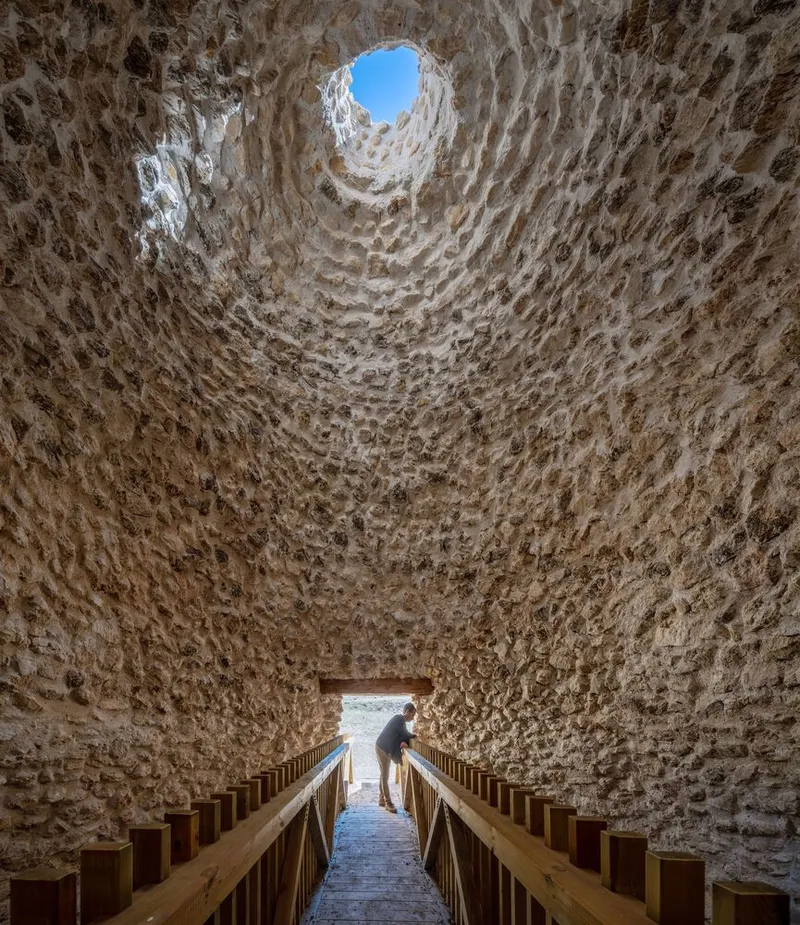
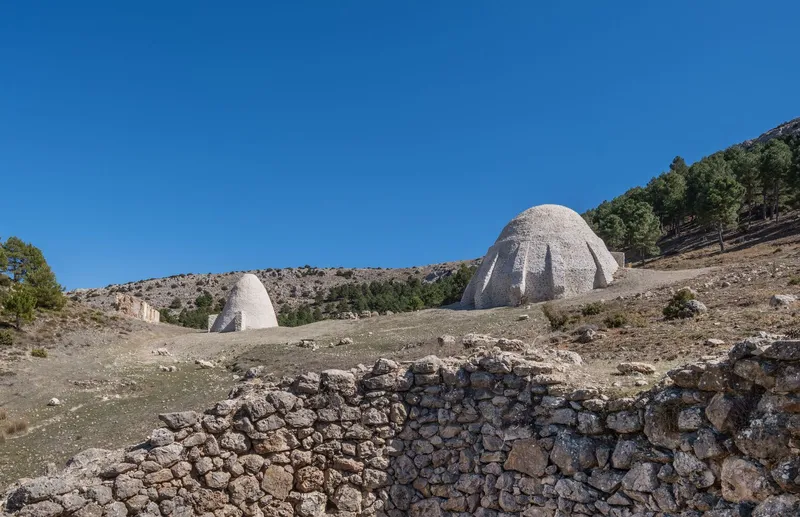
Despite extensive damage—including partial collapse of the domes—these wells retained sufficient structural integrity and historical data to guide the restoration. Well number 11, the largest in the entire Sierra Espuña network, posed a formidable structural challenge due to its size and condition. Meanwhile, well number 13 preserved part of its original dome, offering crucial insights into its original geometry and construction method.
The restoration adhered strictly to traditional building materials and techniques. Unlike previous restorations in the area—which used metal structures—Ecoproyecta employed stone and brick masonry combined with lime mortar, maintaining fidelity to the original construction systems. This approach marked the first time that fully restored wells in Sierra Espuña were rebuilt to mirror their original typologies.
Two Typologies, Two Construction Methods
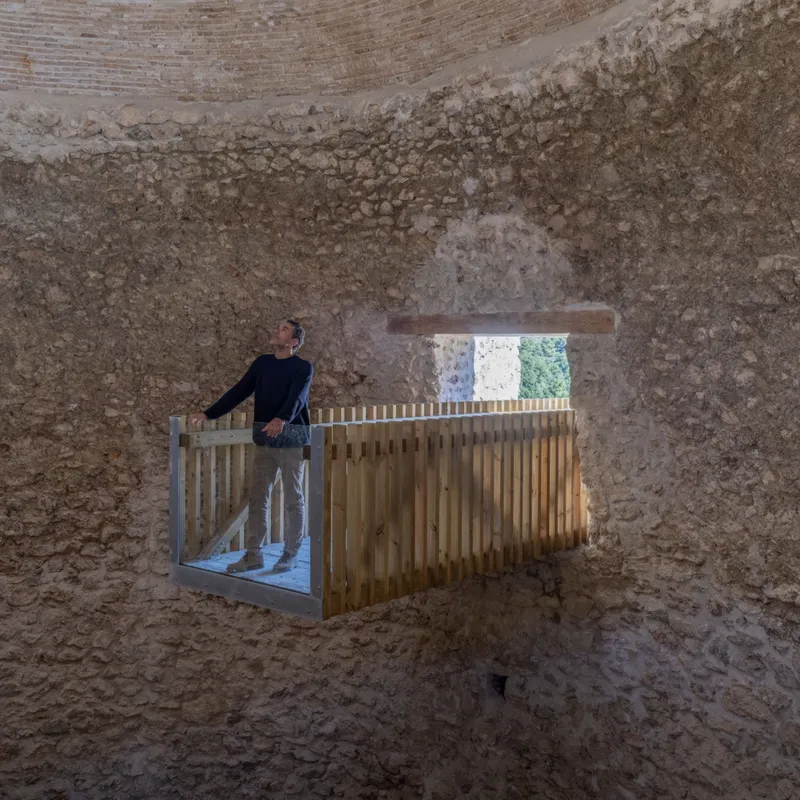
Each snow well presented a distinct architectural typology. Well 11 featured a mixed stone and brick dome, yielding a hemispherical profile. In contrast, well 13’s layered stone masonry resulted in a conical dome. These variations were meticulously preserved during reconstruction, highlighting the diversity in historical construction techniques.
Enhancing the Visitor Experience
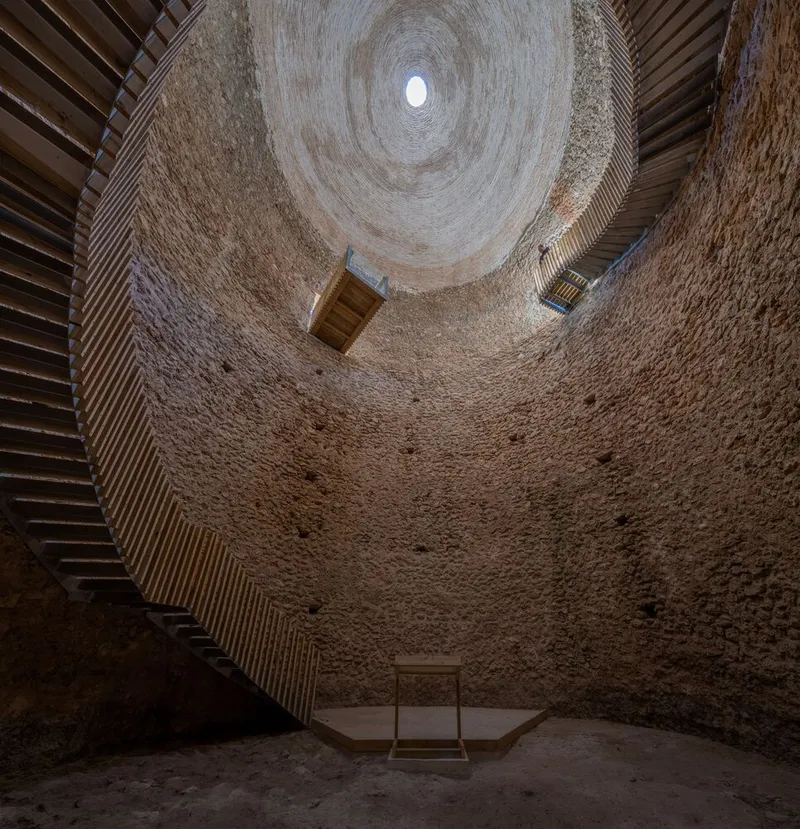
While these restored wells no longer serve their original function in the ice industry, they now provide an immersive historical and architectural experience for visitors. To facilitate public engagement, Ecoproyecta designed new wooden access elements that contrast respectfully with the original materials.
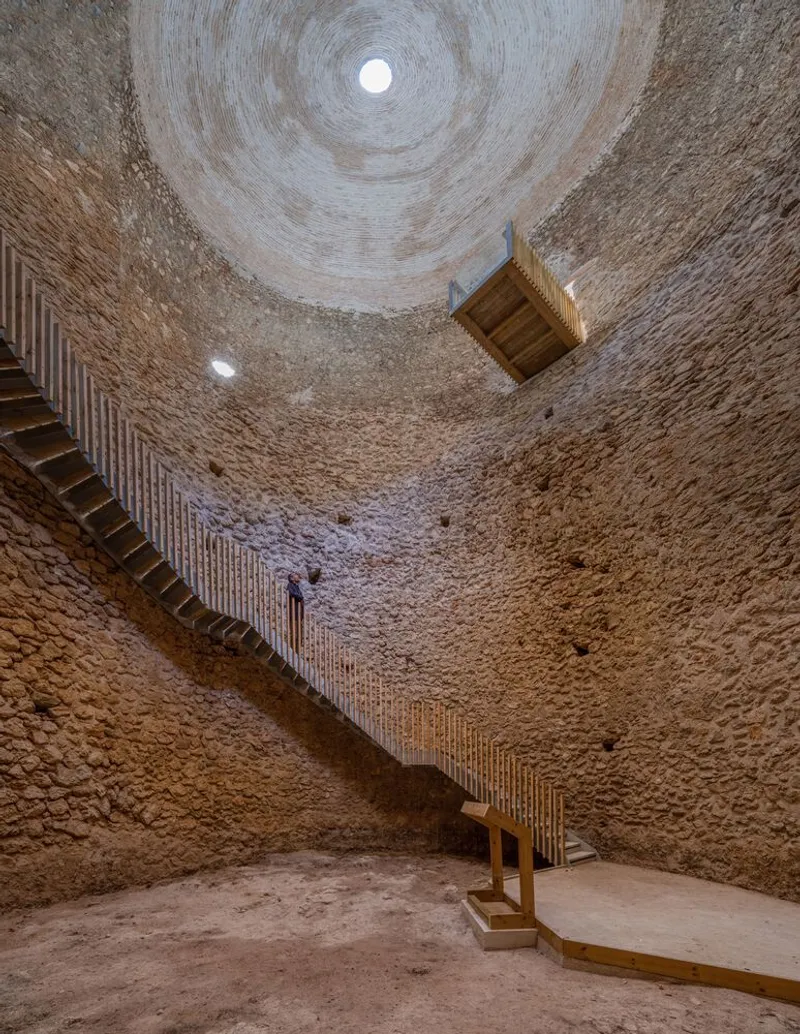
Well 11 now includes a wooden observation platform and staircase, allowing visitors to observe the dome and inner volume from above. Well 13 features a walkway that spans the internal void, offering a dramatic perspective of its stone geometry. These additions help communicate the historical function and structural ingenuity of these once-essential buildings.
A Model for Sustainable Heritage Restoration
The Restoration of the Snow Wells in Sierra Espuña serves as a model for balancing cultural heritage conservation, architectural authenticity, and public accessibility. By employing traditional materials, respecting original construction methods, and introducing minimal yet meaningful contemporary elements, Ecoproyecta has redefined how historical industrial architecture can be adapted for modern interpretation.
Project Details
- Project Name: Restoration of Two Snow Wells in Sierra Espuña
- Location: Alhama de Murcia, Spain
- Architects: Ecoproyecta
- Lead Architects: Pablo Carbonell, Juan Miguel Galera
- Completion Year: 2023
- Total Area: 308 m²
- Photography: David Frutos



Popular Articles
Popular articles from the community


Riyadh For All: Intergenerational Urban Design for Active Aging in Rabat
Riyadh For All reimagines urban design in Rabat with intergenerational co-living, adaptive courtyards, and Moroccan cultural exchange today.
EW PARK: Sustainable Architecture Reimagines the Future of Urban Parking
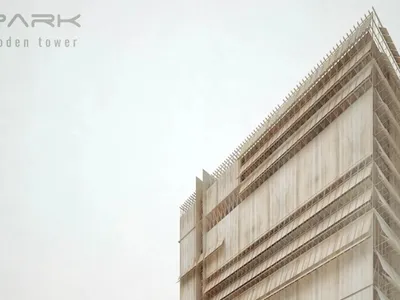
EW PARK reimagines city parking as a modular wooden tower combining automation, solar energy, electric mobility, and adaptable urban design.

Conexión: Biophilic Design Reimagines High-Rise Living in Hong Kong
Conexión reimagines high-rise living in Hong Kong through biophilic design, green facades, shared spaces, daylight, water and nature within.

The Earth Pod: 3D Printed Homes for Resilient Refugee Communities
The Earth Pod reimagines refugee housing through 3D printed homes made from clay, combining resilience, self-sufficiency, and rapid shelter.


Similar Reads
You might also enjoy these articles


Hodi-Mandai Geram
Project Function: Preservation and revitalization of the Intangible heritage and socio-spatial identity of the Hodi by Housing, Cultural Memory Center, Sacred Grove, landscape, local tourism economy


Olio Towers: A Mid-Rise for Performers That Fuses Housing, Rehearsal, and Stage
Located blocks from Houston's Theater District, this modular tower stacks living units around a central performance atrium.

Oasis: Modular Green Housing Carved into Dhaka's Urban Fabric
A shortlisted Plugin Housing entry reclaims unauthorized settlements in Dhaka with stepped concrete volumes, green roofs, and ventilation-driven design.

Black Hole: A Floating Megastructure for the Post-Physical Era
Emiliano Mazzarotto envisions a spherical, self-scaling arena where e-sports, digital hotels, and holographic stadiums replace traditional public space.


Explore Cultural Architecture Competitions
Discover active competitions in this discipline



Challenge to reimagine the Iron Throne


Photograph architecture without architects


Illustrate the lost glory of Angkor Wat - Render Challenge


Bring back Drive In's
Comments (0)
Please login or sign up to add comments
No comments yet. Be the first to comment!