
Devolution Builds a Clothing Store in Xiamen from Salvaged Fujian Timber and Stone
MSLAN Corner uses reclaimed regional materials to turn a 180-square-meter street corner into a hybrid retail space and pocket park.


A clothing store that opens itself to the street, gives part of its footprint to a gravel garden, and builds its identity from reclaimed materials is already doing more than most retail projects. MSLAN Corner, designed by Devolution for the Xiamen-based clothing brand MSLAN, sits at the corner of a city block where it turns 180 square meters into a proposition: that a shop can be a public amenity without sacrificing its commercial purpose. Completed in 2024, the project marks MSLAN's tenth anniversary and introduces what the studio calls a new street shop model.
What makes the project worth studying is less the concept, which is familiar enough, and more the material logic. Lead architects Jiansong Tang and Qi Wang sourced old timber and old stone slabs from across Fujian province, deploying them as primary structural and surface materials. The result is a shop interior that has the patina and heft of something inherited rather than fabricated. Paired with exposed board-formed concrete and restrained detailing, the salvaged materials do the heavy lifting for the store's atmosphere, creating warmth without relying on decorative excess.
Turning the Corner
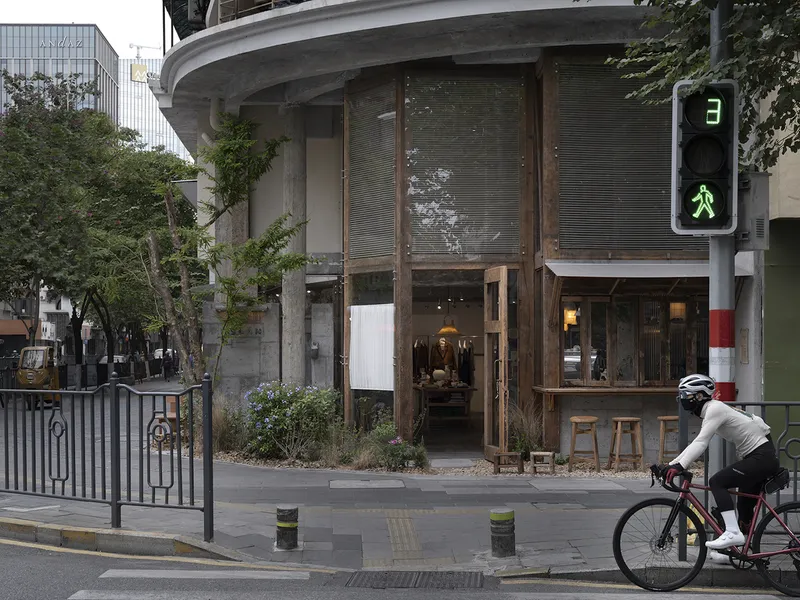
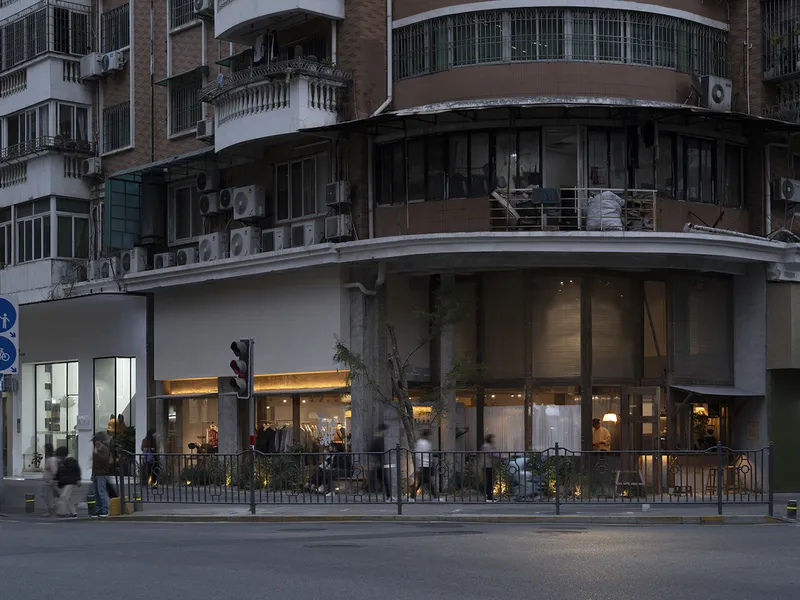
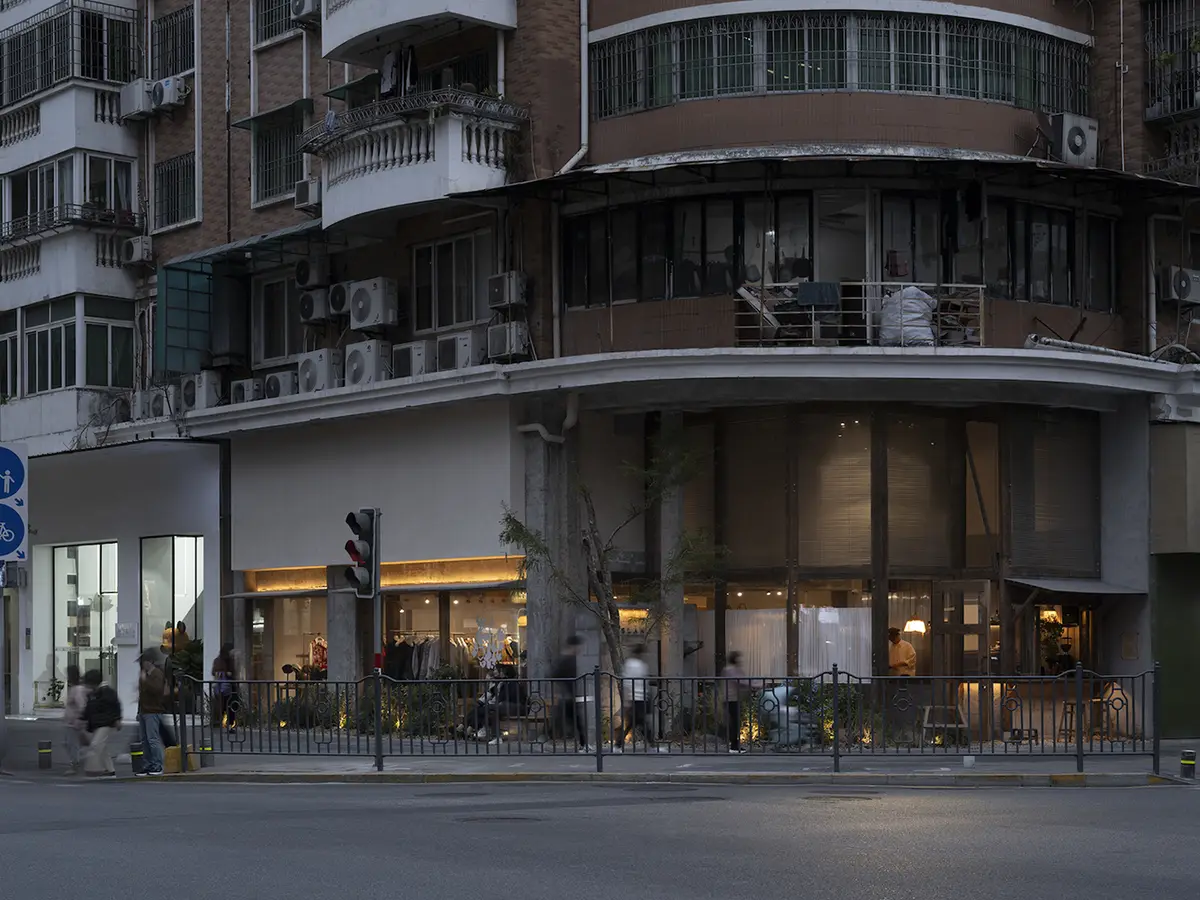
The building's curved concrete facade wraps the block corner with a generous glass surface, making the store legible from both approaching streets. At dusk, the interior glows through timber-framed glazing, pulling the sidewalk into visual contact with the retail floor. The curve is not a decorative flourish; it softens the building's relationship to pedestrian flow, widening the pavement at exactly the point where two streams of foot traffic converge.
Horizontal timber blinds on the upper register modulate light and privacy, giving the facade a layered depth that reads differently across the day. The planted beds running along the base extend the public realm inward, blurring the threshold between sidewalk and store. A cyclist passing the facade or a pedestrian pausing at the garden encounters the building as landscape before they encounter it as commerce.
The Pocket Park as Retail Strategy
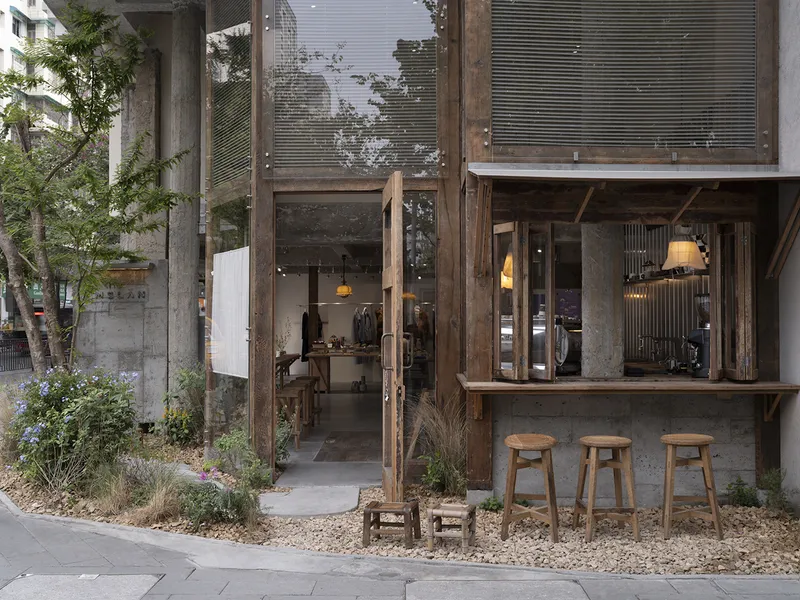
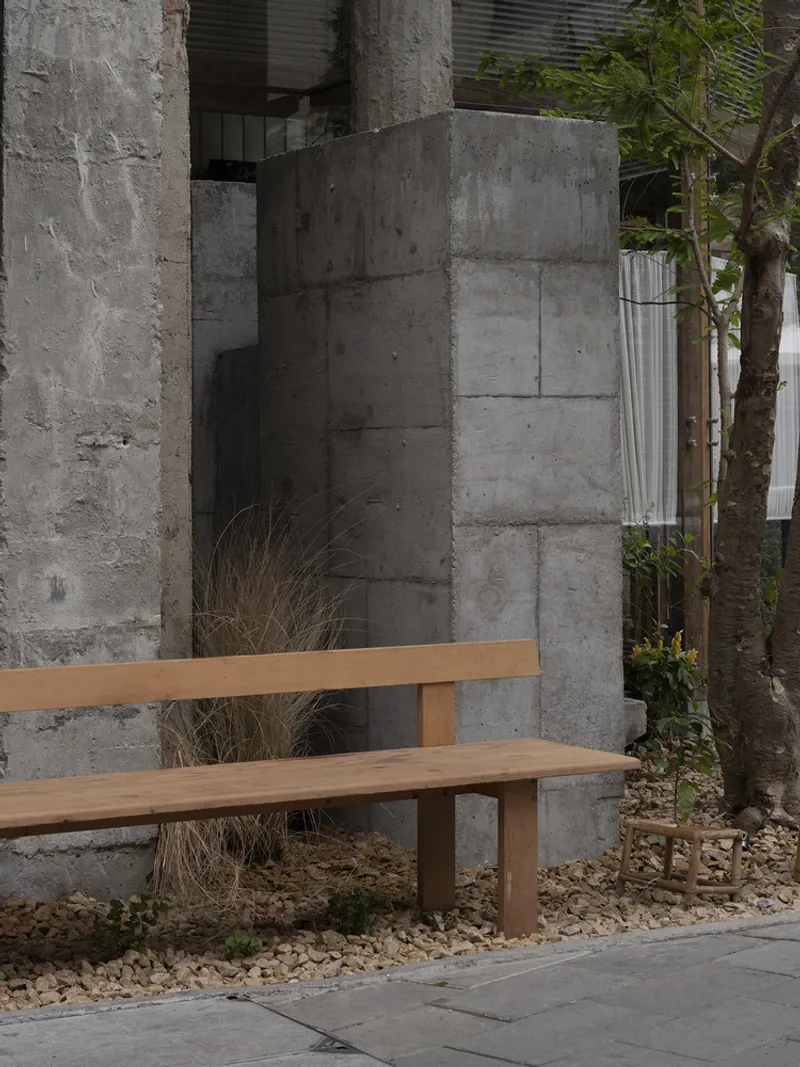
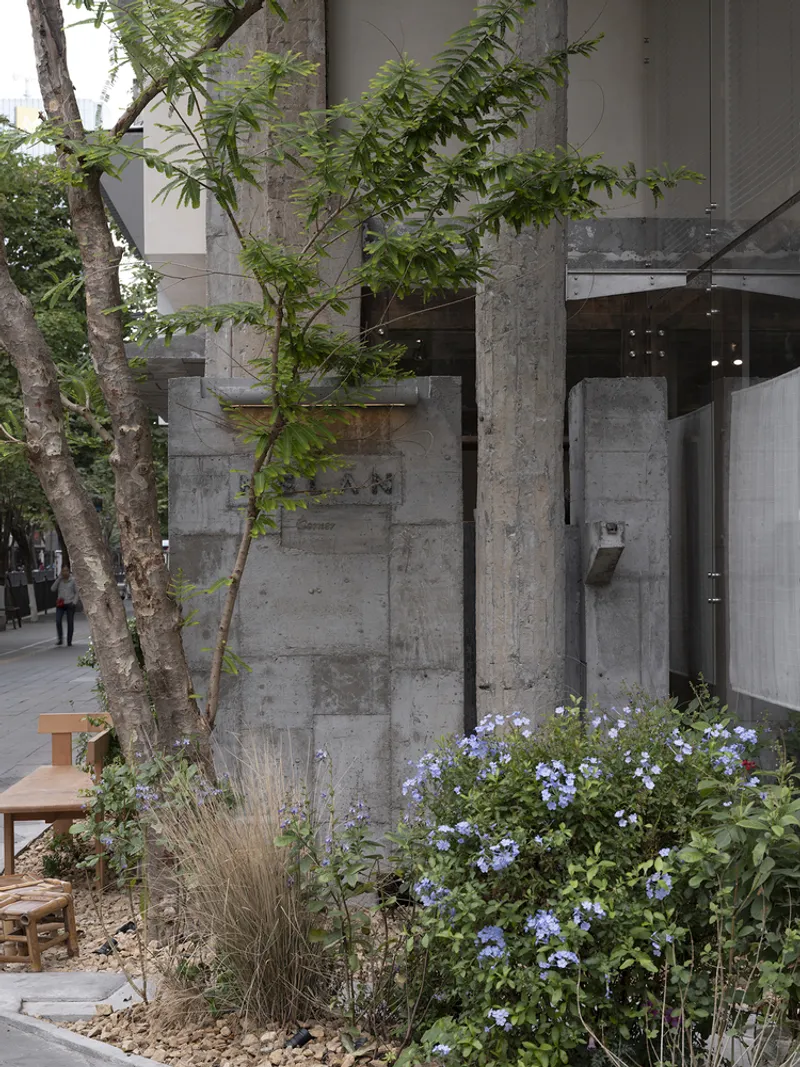
Devolution dedicates a meaningful portion of the site to a small pocket park: gravel ground cover, native shrubs, blue flowering plants, and a young tree. A timber bench sits against the board-formed concrete wall, offering seating that belongs to the neighborhood rather than the brand. The decision to give up sellable floor area for public rest space is the most consequential one in the project. It reframes the store as a contributor to the street, not just a tenant of it.
An outdoor timber bar counter with stools opens directly onto the garden, creating a threshold zone that is neither fully interior nor fully exterior. Customers sitting here occupy a liminal position: they are in the store's orbit, surrounded by merchandise visible through the glass behind them, but they face the garden and the street. It is a smart piece of spatial choreography that invites lingering without pressure.
Salvaged Timber and Concrete Structure
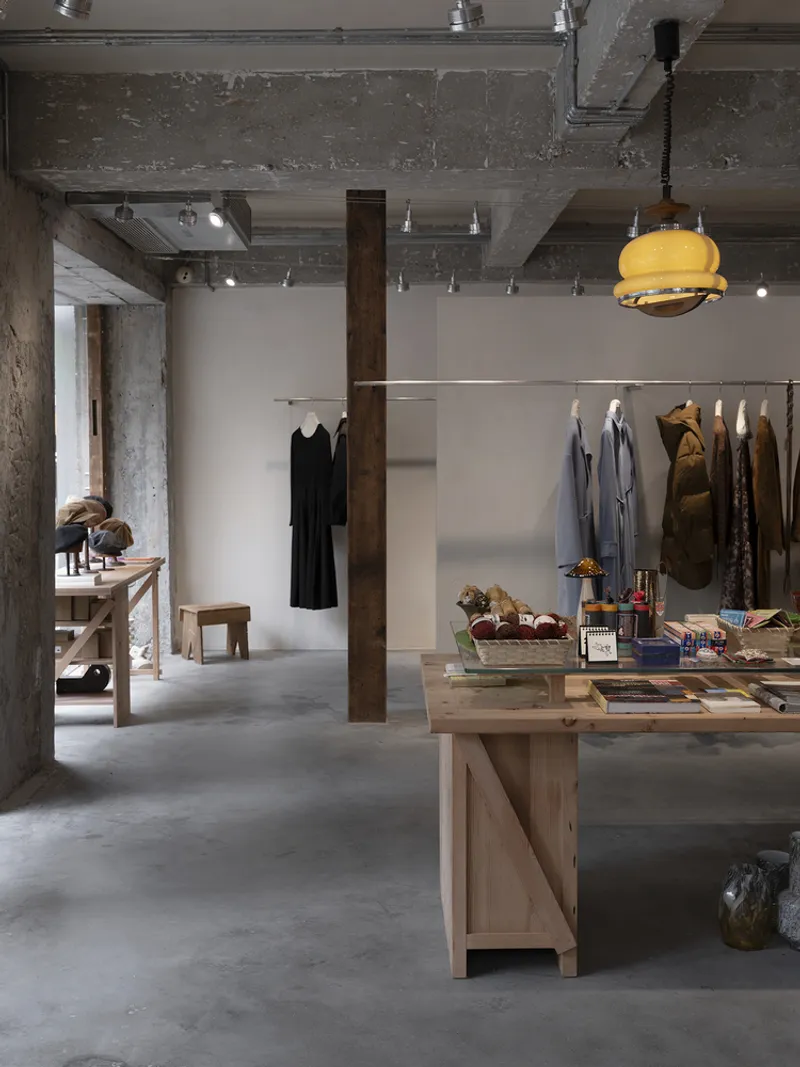
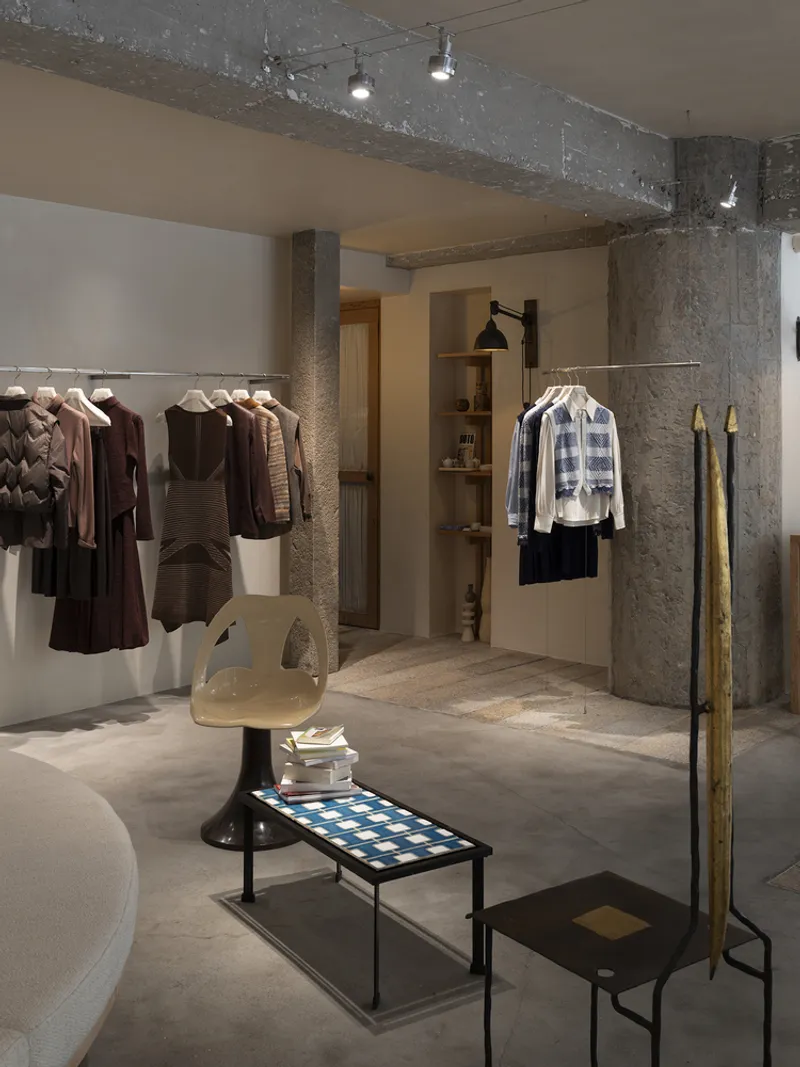
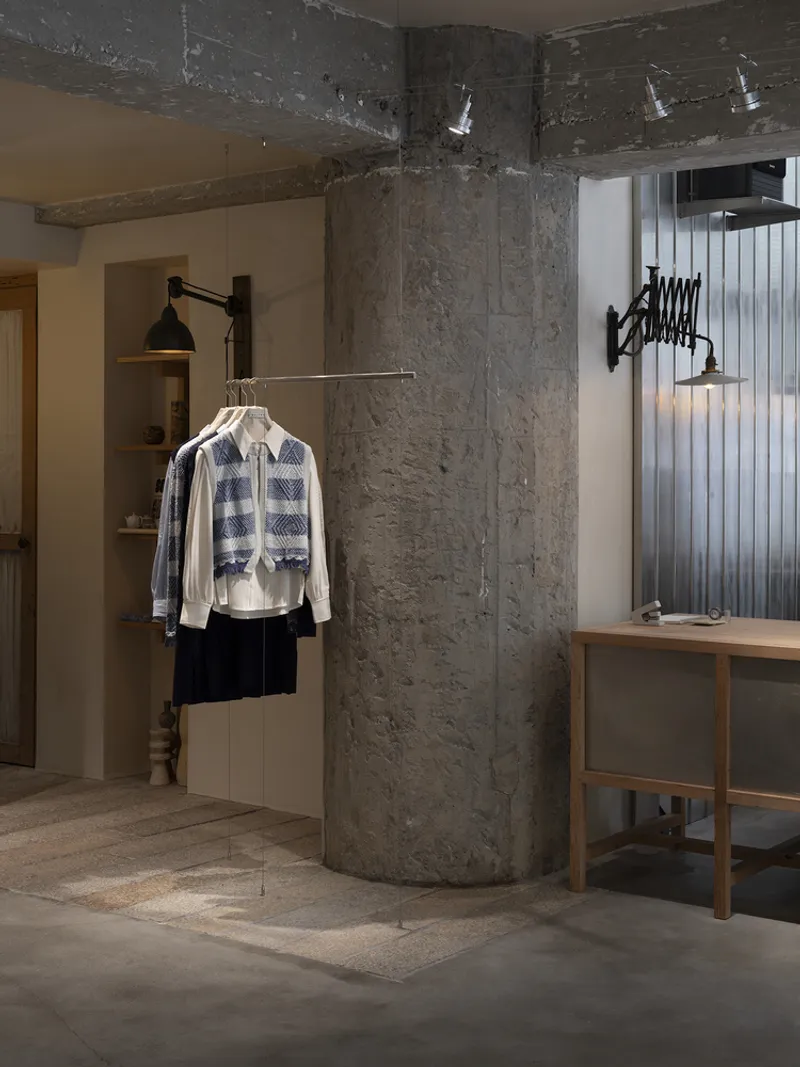
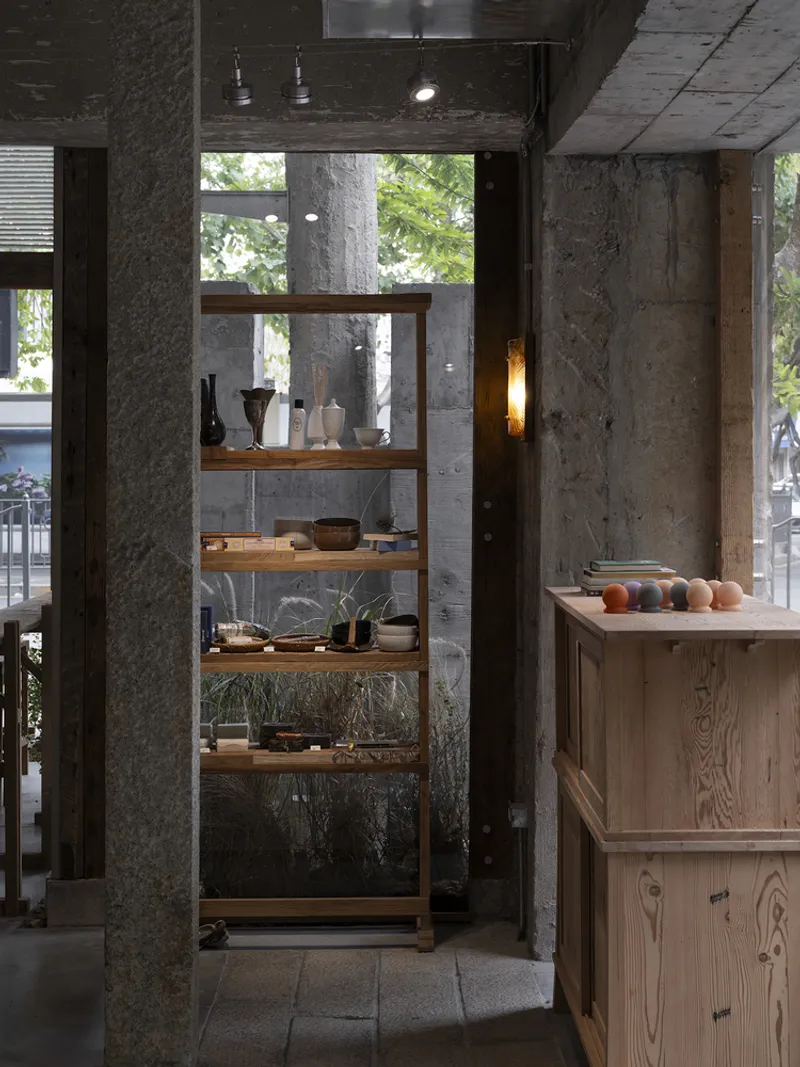
Inside, the structural concrete is left exposed: columns, beams, and ceiling slabs show their formwork grain and imperfections. Against this rough backdrop, the old Fujian timber appears in display tables, shelving units, and counter surfaces, its weathered grain contrasting with the cooler concrete. The palette is deliberately narrow. There is no paint, no applied finish, no cladding. Every surface is either concrete or timber, and both are allowed to show their age.
Track lighting on the exposed ceiling beams provides focused illumination for the clothing racks, keeping the ambient light level low and directing attention to the garments. The effect recalls a workshop or studio more than a conventional retail interior. Suspended clothing racks hang between the concrete columns, treating the structure as furniture rather than concealing it behind partition walls.
Interior Atmosphere and Daylight
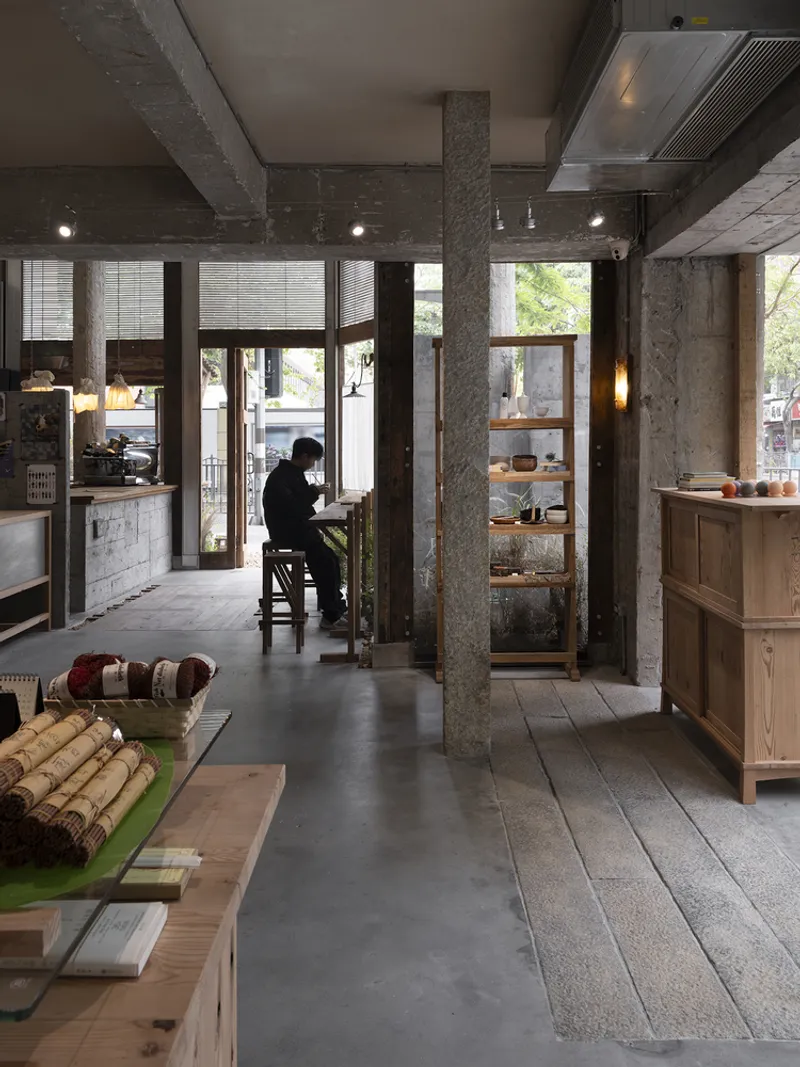
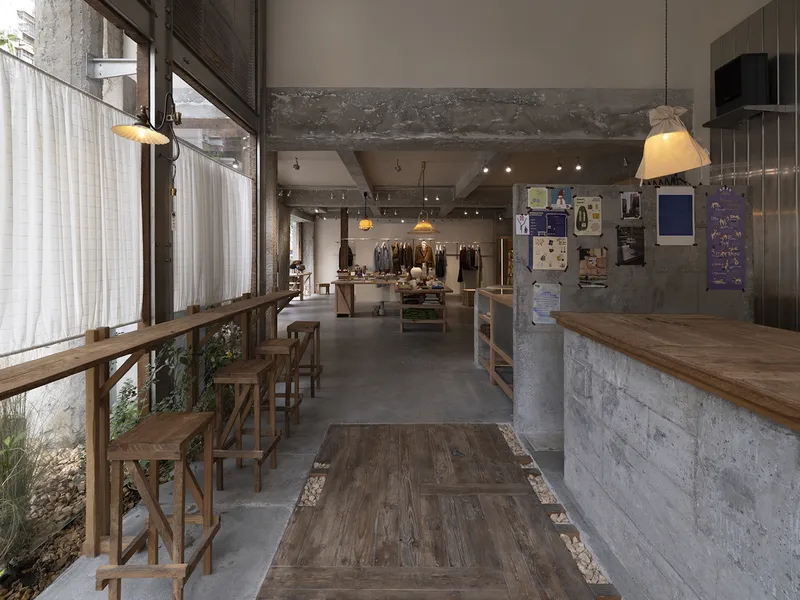
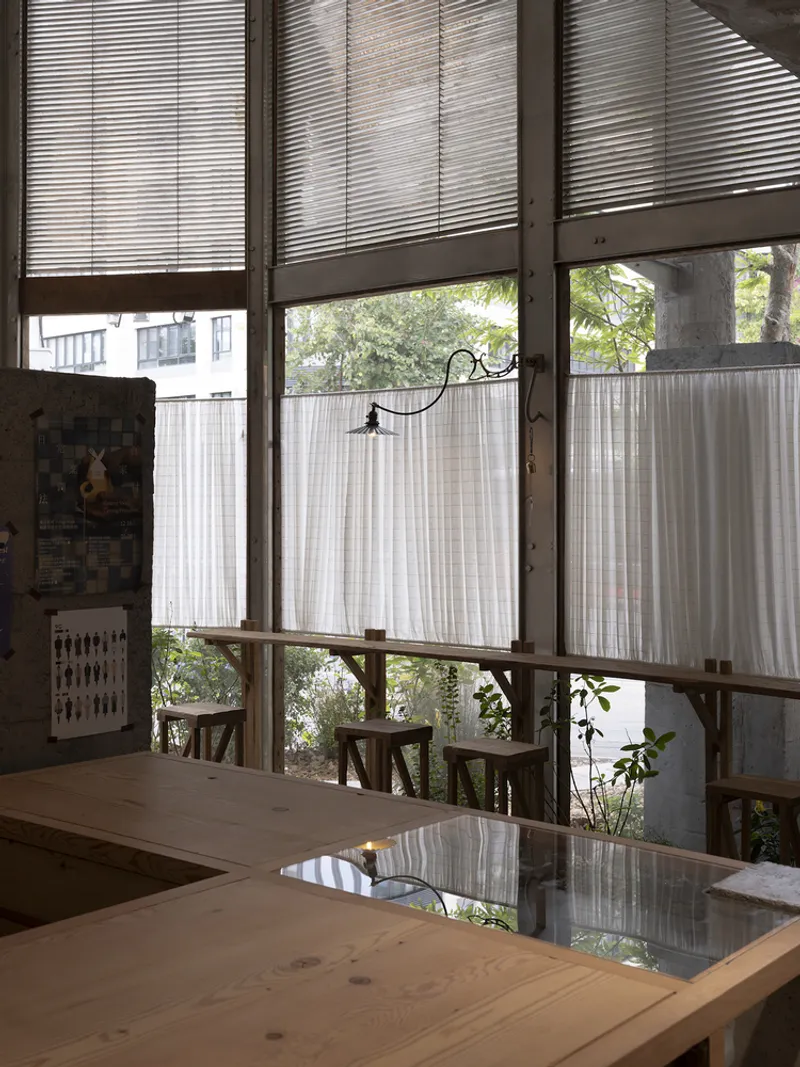
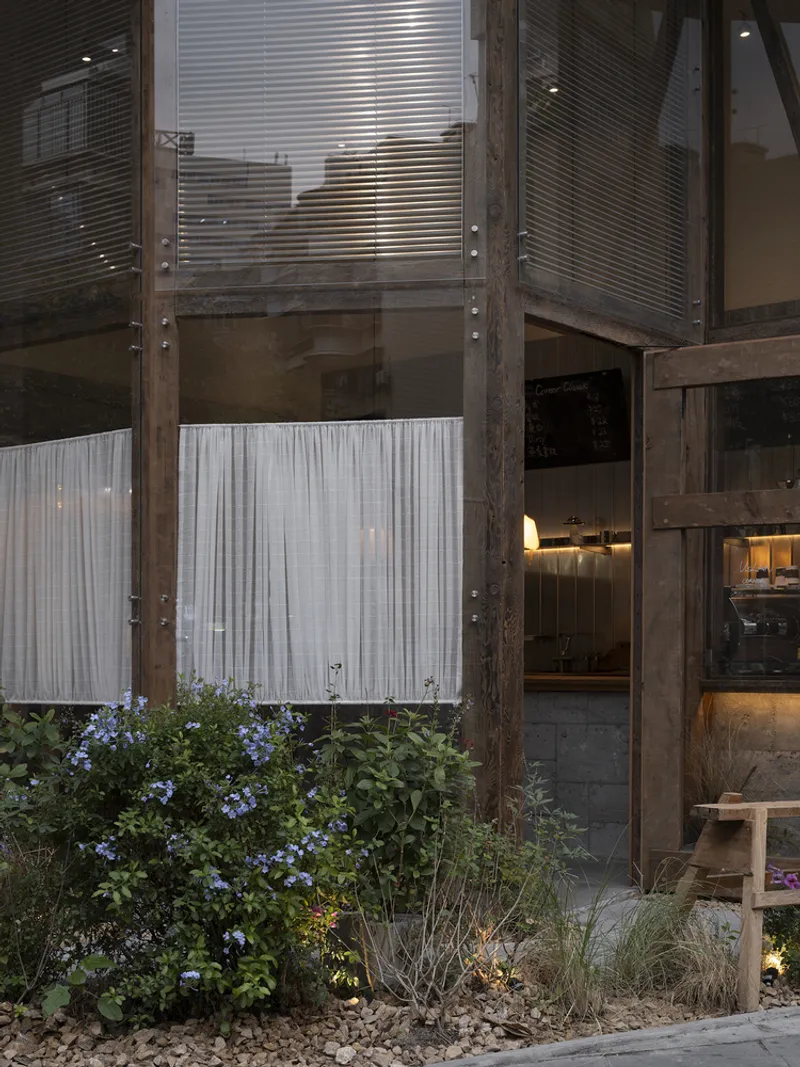
The street-facing windows are the primary light source, filtered through half-height curtains and timber blinds that soften the Xiamen sun without eliminating it. Silhouetted figures against the glass give the interior a cinematic quality, particularly in the afternoon when the light rakes through at a low angle. The counter seating along the window wall transforms daylight into a design feature: customers sit in it, work in it, or simply watch the street through it.
A timber table with a glass insert beneath the tall windows functions as a workspace or display surface, its transparency connecting two layers of the interior. The space reads as inhabitable rather than transactional. There are zones for sitting, for browsing, and for doing nothing in particular, and they overlap without competing. The "Studio Open Day" concept guiding the design makes the most sense here, where the interior feels like a place someone lives in rather than a place that sells things.
Display and Partition Logic
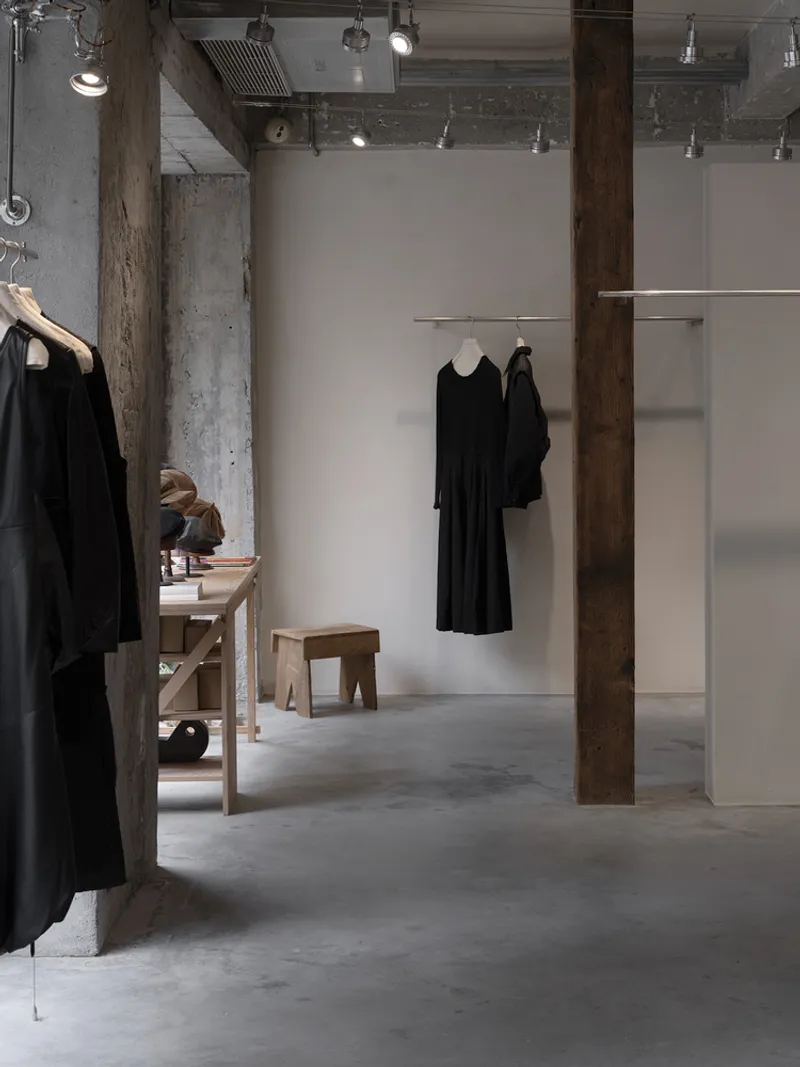
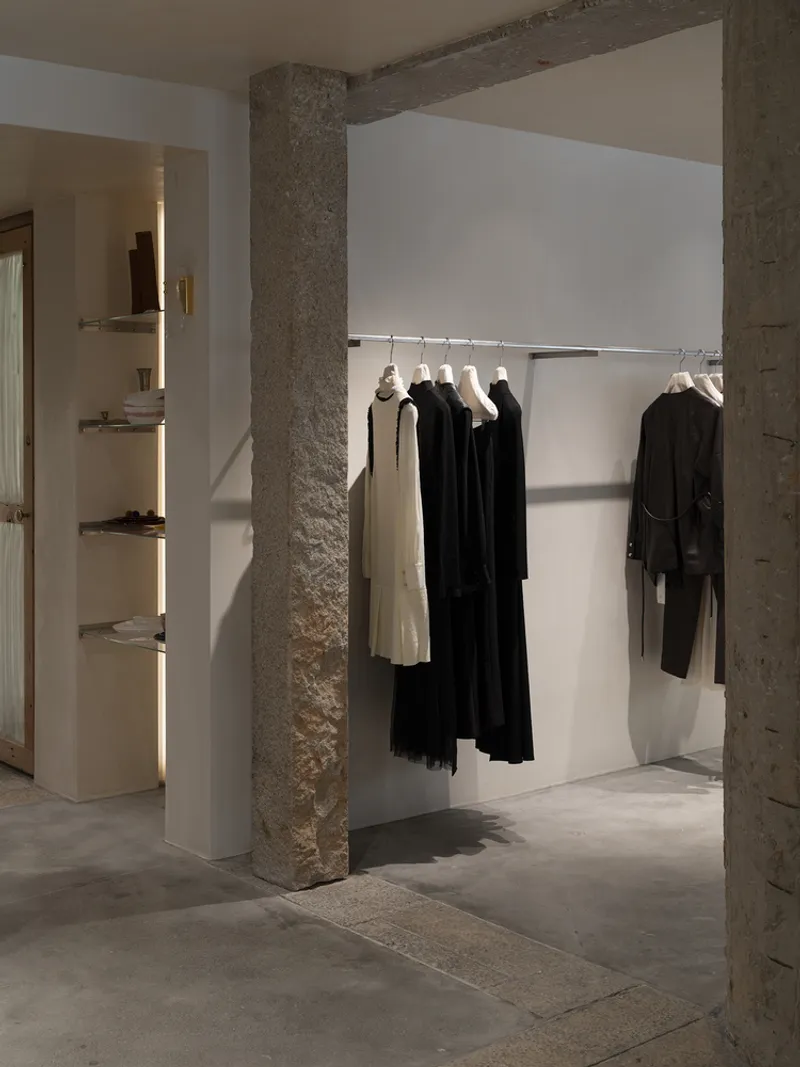
White partitions appear sparingly, used as backdrops for specific display moments rather than as room dividers. Their flatness and neutrality set off the raw materiality of the timber columns and concrete structure, creating visual breathing room in a space that could otherwise feel relentlessly textural. The partitions also allow seasonal reconfiguration: new collections and guest creators can transform the display without altering the architecture.
Timber shelving units slotted between concrete columns serve double duty as storage and spatial markers, subdividing the floor without closing it off. Views through the columns toward the street remain open, maintaining the sense of transparency that defines the project. At dusk, warm directional lighting picks out clothing rails against the concrete, giving the merchandise a gallery-like presentation that rewards evening browsing.
Street Presence and Facade Detail
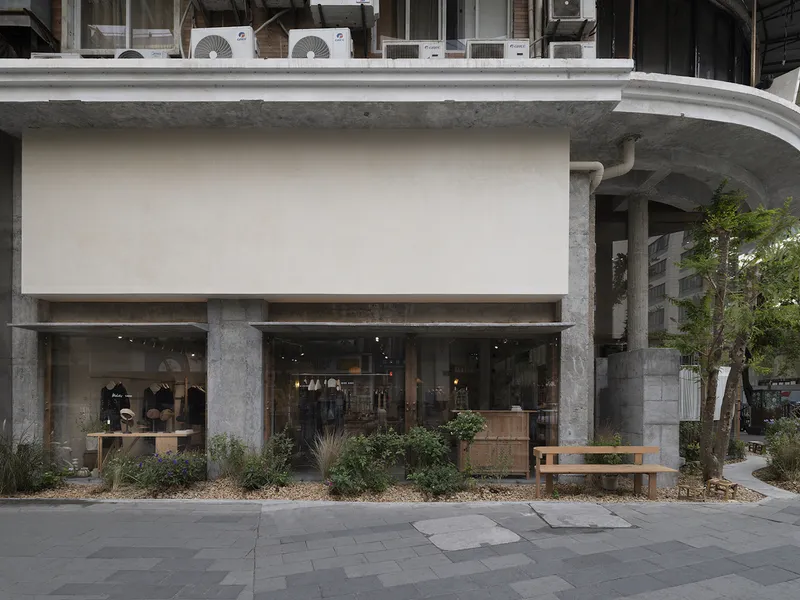
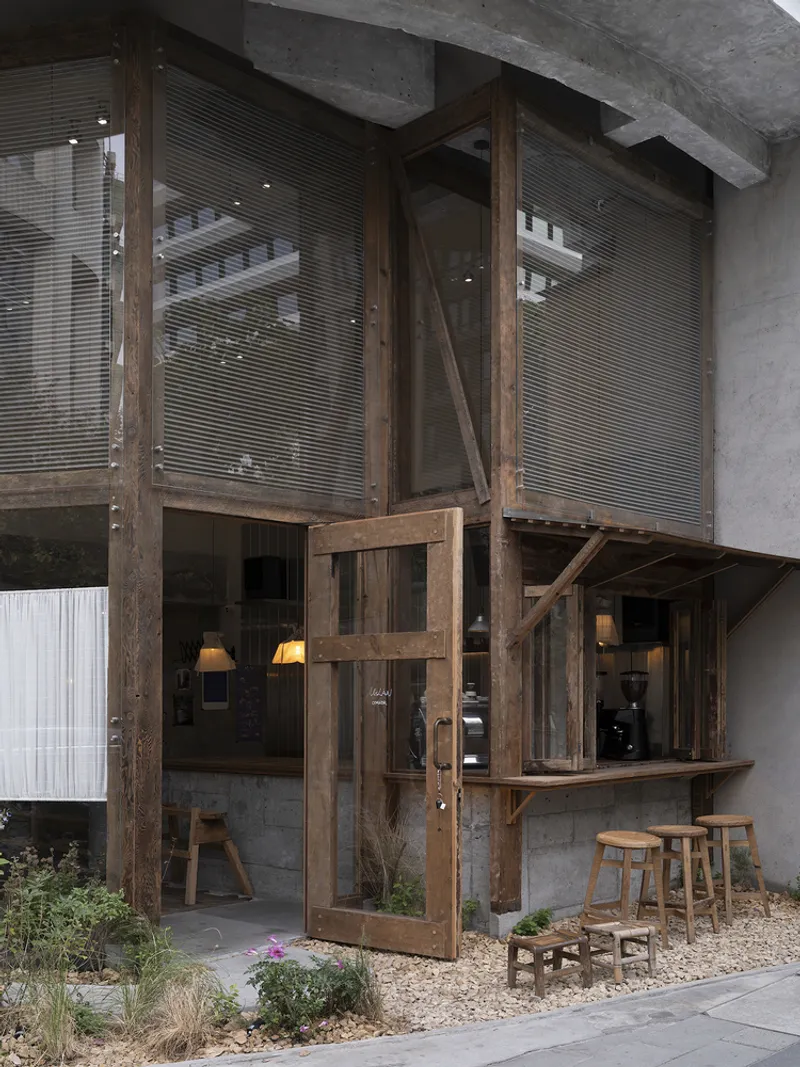
The street-facing elevation layers several systems: an exposed concrete frame, recessed glazing, planted beds, and a wooden bench compose a facade that engages at multiple scales. Up close, the board-formed concrete reveals its grain and imperfections; from across the street, the planted beds and timber elements soften what might otherwise read as austere. The timber-framed entrance, with its glazed door and upper-level blinds, acts as a domestic threshold, scaling the entry down to something more intimate than a typical storefront.
Plans and Drawings
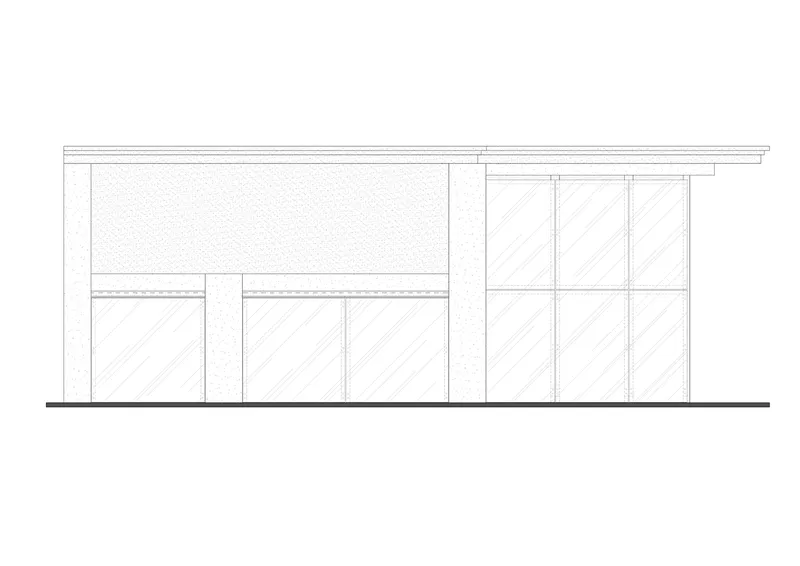
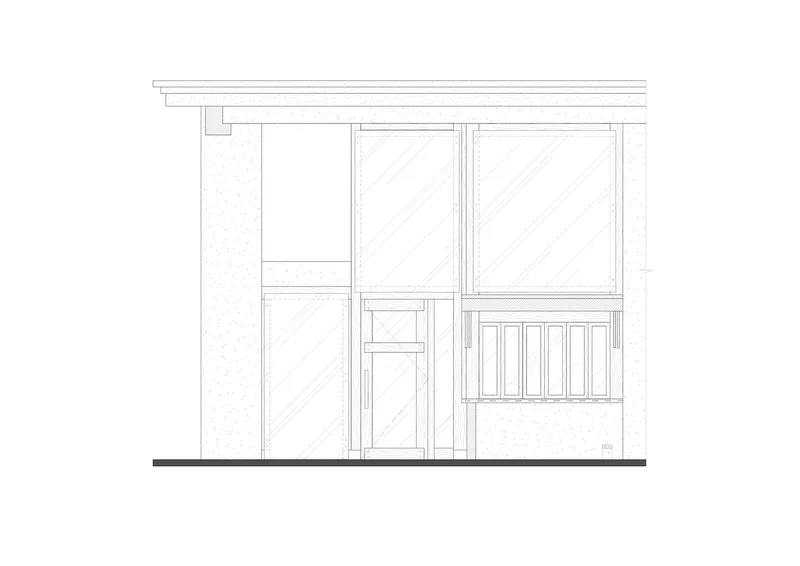
The elevation drawings reveal the facade's compositional discipline. The lower register is almost entirely glazed, framed in timber, while the upper register alternates between solid panels and horizontal banding. Vertical slatted screening on one elevation introduces a finer grain, filtering light and views while maintaining the facade's overall rhythm. The drawings confirm what the photographs suggest: the design relies on a few well-chosen moves repeated consistently rather than a catalogue of effects.
Why This Project Matters
MSLAN Corner makes a case that retail architecture does not need to be loud, expensive, or disposable to be effective. By sourcing its primary materials from Fujian's stock of old timber and stone, Devolution sidesteps the problem of newness that haunts most retail interiors, where every surface looks pristine on opening day and exhausted within a year. The salvaged materials carry a history that cannot be manufactured, and they will age in ways that add to the space rather than diminish it.
More importantly, the project challenges the assumption that every square meter of a commercial site must generate revenue. The pocket park, the public bench, and the outdoor counter seating are all concessions to the neighborhood that a less confident brand would have filled with merchandise. That MSLAN chose to give that space away, and that Devolution designed the architecture to frame the giving, is what elevates the project from competent retail fit-out to something worth paying attention to.
MSLAN Corner by Devolution. Xiamen, China. 180 m². Completed 2024. Lead Architects: Jiansong Tang, Qi Wang. Design Team: Caicai, Longtao. Client: MSLAN. Construction: Rulin Deco.
About the Studio
Share Your Own Work on uni.xyz
If projects like this are the kind of work you want to make, uni.xyz is a place to publish your own, find collaborators, and enter design competitions.


Popular Articles
Popular articles from the community


Jaramillo Van Sluys Arquitectura and Urbanismo Turn a Demolished Registry Lot in Quito into an Orchard Plaza
In Quito's Centro Histórico, a 2,800 m² plaza exposes the San Agustín convent wall and redraws its lost Augustinian orchard in volcanic stone.

David Ortega Stacks a Two-Story Mexico City Penthouse Around a Steel Stair and a Pergola-Shaded Roof Terrace
In Colonia Roma, a 300 m² penthouse uses oak joinery, a planted steel stair and a slatted roof pergola to make a new-build apartment feel like a house.

Juan García Correa, John González and Claudia Rueda Sink a Circular Amphitheater into a Manizales Engineering Building
On the La Nubia campus in Manizales, Colombia, the S1 Building folds labs and offices into a hillside of ramped lawns that double as a campus route.

longwave studio Reorganizes a 112 m² Tainan Apartment Around the Daily Routines of a Family and Two Cats
In Tainan, Taiwan, birch plywood, rust-red furniture and a freestanding plaster wall link arrival, storage, work and family life in one apartment.

Similar Reads
You might also enjoy these articles


Hodi-Mandai Geram
Project Function: Preservation and revitalization of the Intangible heritage and socio-spatial identity of the Hodi by Housing, Cultural Memory Center, Sacred Grove, landscape, local tourism economy


Olio Towers: A Mid-Rise for Performers That Fuses Housing, Rehearsal, and Stage
Located blocks from Houston's Theater District, this modular tower stacks living units around a central performance atrium.

Oasis: Modular Green Housing Carved into Dhaka's Urban Fabric
A shortlisted Plugin Housing entry reclaims unauthorized settlements in Dhaka with stepped concrete volumes, green roofs, and ventilation-driven design.

Black Hole: A Floating Megastructure for the Post-Physical Era
Emiliano Mazzarotto envisions a spherical, self-scaling arena where e-sports, digital hotels, and holographic stadiums replace traditional public space.

Explore Retail of Tomorrow Competitions
Discover active competitions in this discipline

Challenge to reimagine the Iron Throne

Photograph architecture without architects

VR headsets Storefront design competition

Illustrate the lost glory of Angkor Wat - Render Challenge
Comments (0)
Please login or sign up to add comments
No comments yet. Be the first to comment!