
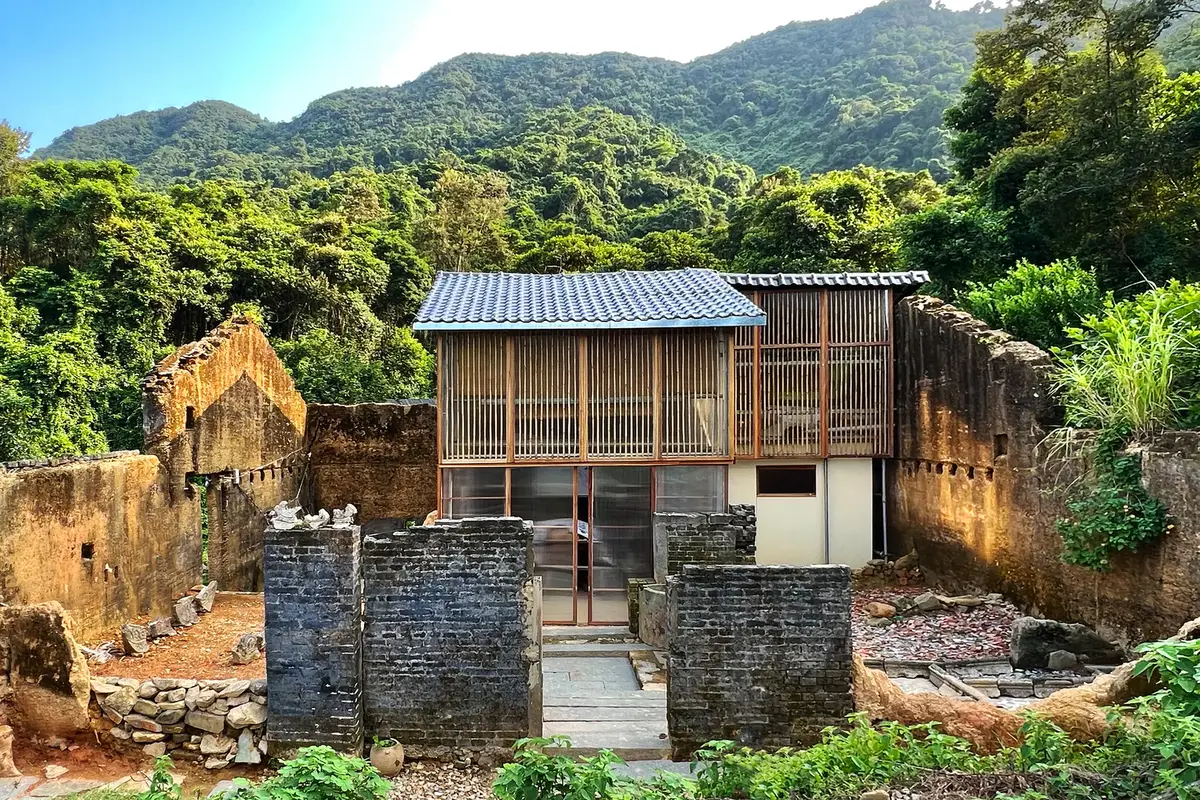
Revitalizing Mui Tsz Lam: Experimental Heritage Restoration by the School of Architecture, The Chinese University of Hong Kong
Revitalizing Mui Tsz Lam blends heritage restoration, sustainable design, and community collaboration to revive Hong Kong’s historic Hakka village.


The historic Hakka village of Mui Tsz Lam (MTL), nestled in Hong Kong’s remote north-east New Territories, stands as a rare and precious cultural landscape dating back over 360 years. Despite its proximity—just 25 kilometers—from Mong Kok, one of the world’s densest urban neighborhoods, Mui Tsz Lam has long been abandoned since the mid-20th century due to mass migration overseas during the 1960s and 70s. Half-buried yet still visibly preserving its authentic character, the village remains a living archive of traditional Hakka rural architecture, featuring rowhouses, feng shui woodlands, terraced agricultural fields, and pristine streams.
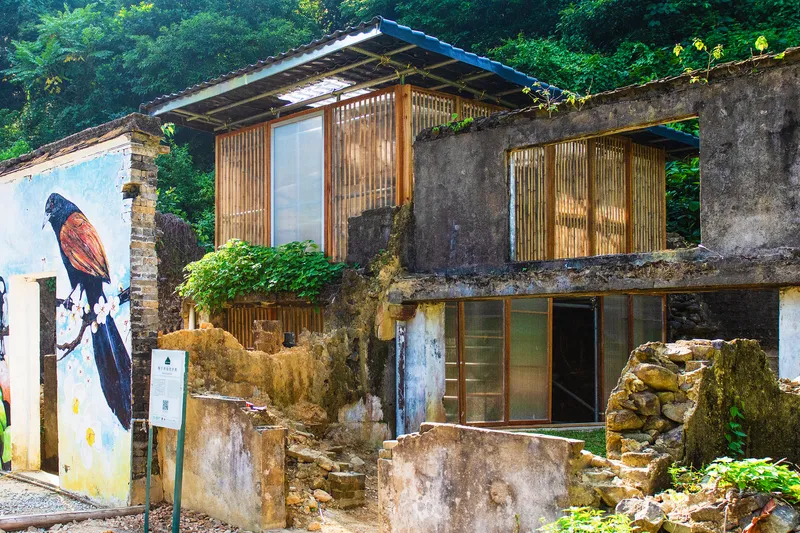
Spearheaded by the School of Architecture at The Chinese University of Hong Kong (CUHK), the Project Plum Grove initiative embodies a pioneering university-village action-research partnership aimed at heritage conservation, rural revitalization, and community engagement. This government-funded experimental restoration project focuses on two key ruinous heritage structures—the Old House and the Mural House—located strategically at opposite ends of the village. These architectural interventions serve as catalysts for the broader village revival.
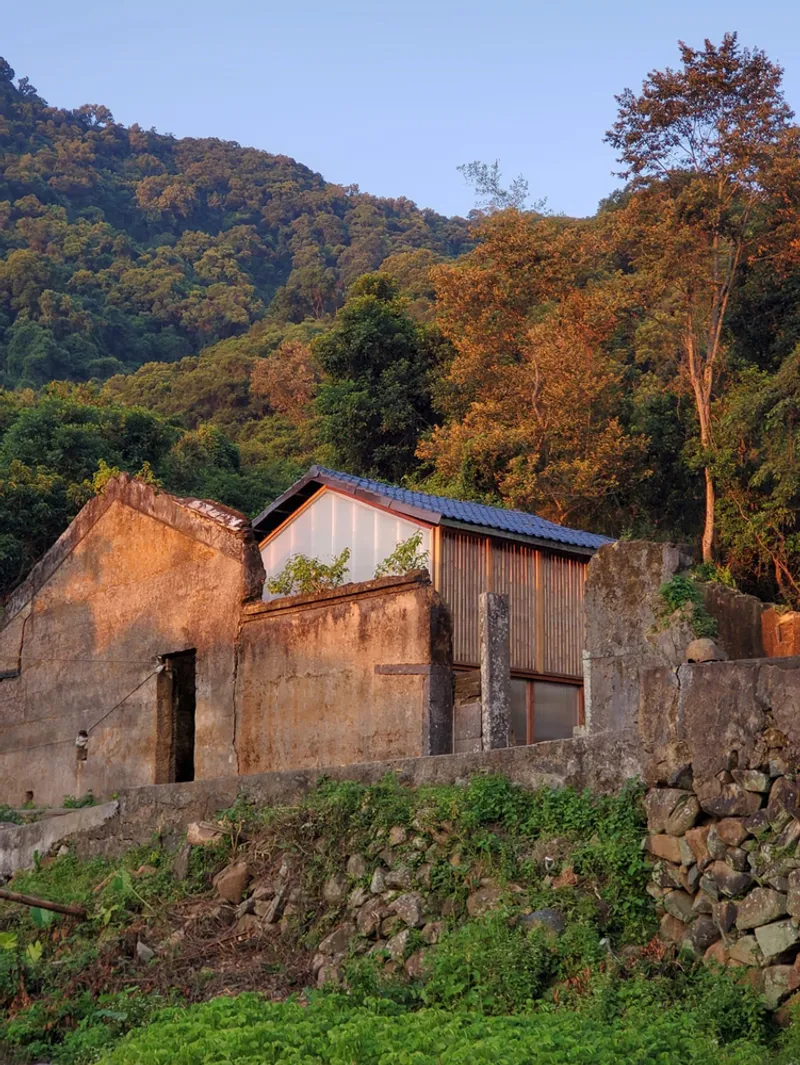
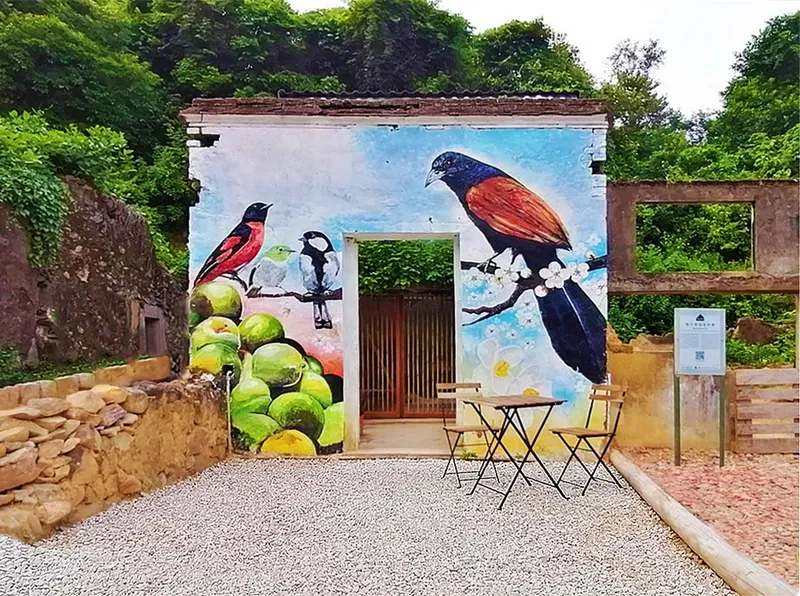
Led by Associate Professor Thomas Chung, Project Plum Grove applies three fundamental design principles to ensure sensitive, sustainable, and participatory restoration:
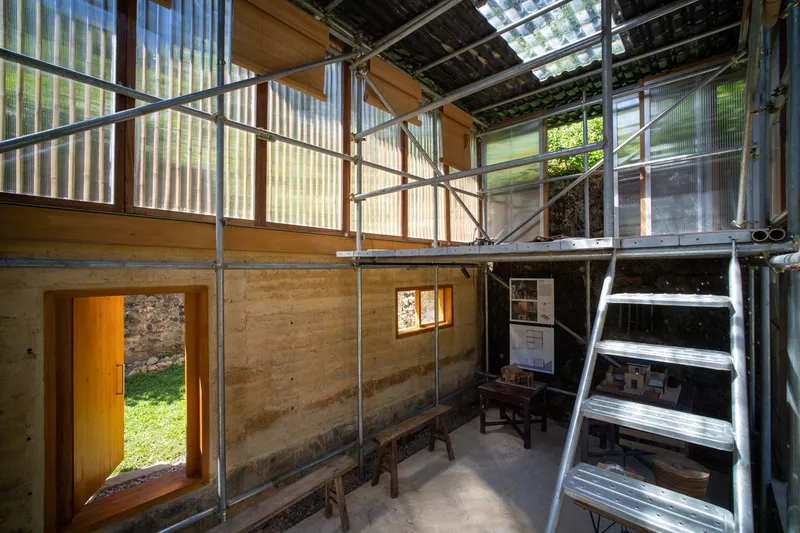
- In-situ reuse and upcycling of locally sourced materials: Techniques such as rammed earth reconstruction bring new life to the original fabric of the buildings, honoring traditional craftsmanship while promoting sustainability.
- Light-touch architectural interventions: The use of scaffolding, timber, and bamboo installations preserves the integrity of the heritage while enabling modern adaptive uses through temporary, reversible structures.
- Co-creative participatory processes: Over two years, the project actively engaged returning villagers, more than 120 public volunteers, and three cohorts of architecture students from CUHK. Through hands-on workshops and on-site co-design sessions, participants collaborated across all stages—from brainstorming to construction and operational trials—creating a dynamic learning environment fostering community ownership.
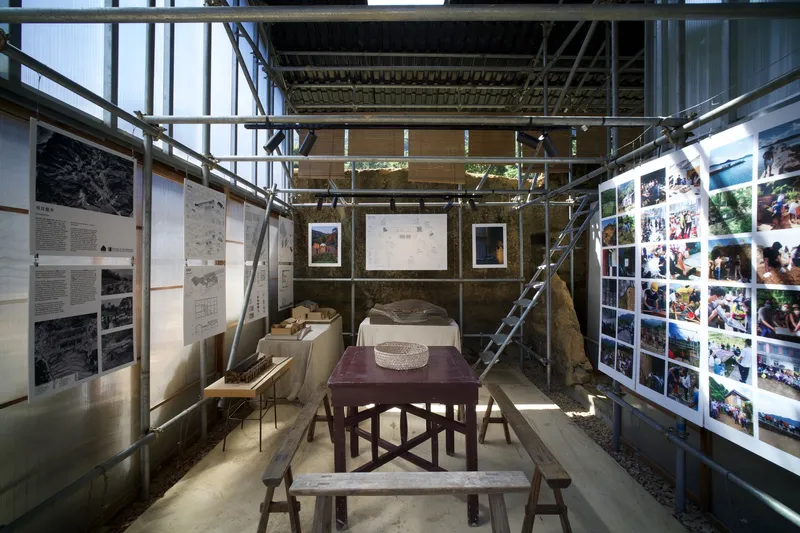
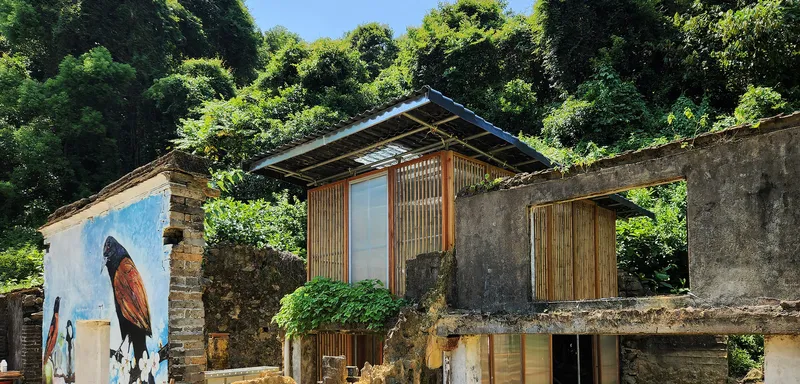
The culmination of this revitalization effort was marked by a vibrant “Blossoming Festival,” celebrating the restored houses’ rebirth as multifunctional spaces for exhibitions, events, and cultural workshops. Villagers shared traditional Hakka stories, prepared heritage snacks, and hosted cultural performances, while students and volunteers curated eco-inspired tours and interactive programs. Attracting over 200 visitors—including government officials, local residents, architects, and academics—the festival highlighted the social and cultural vitality emerging from the restoration work and garnered significant media attention.
Currently entering its second phase of funded restoration, Project Plum Grove continues to amplify its social impact through public talks, guided tours, exhibitions, and participation in prominent events such as the 2022 UABB Biennale in Hong Kong and Shenzhen. This radical renewal experiment has sparked multiple community-driven initiatives, including the volunteer construction of communal furniture, private funding for house rebuilding, NGO-supported communal kitchens, and playground redesign, alongside various cultural and ecological projects.
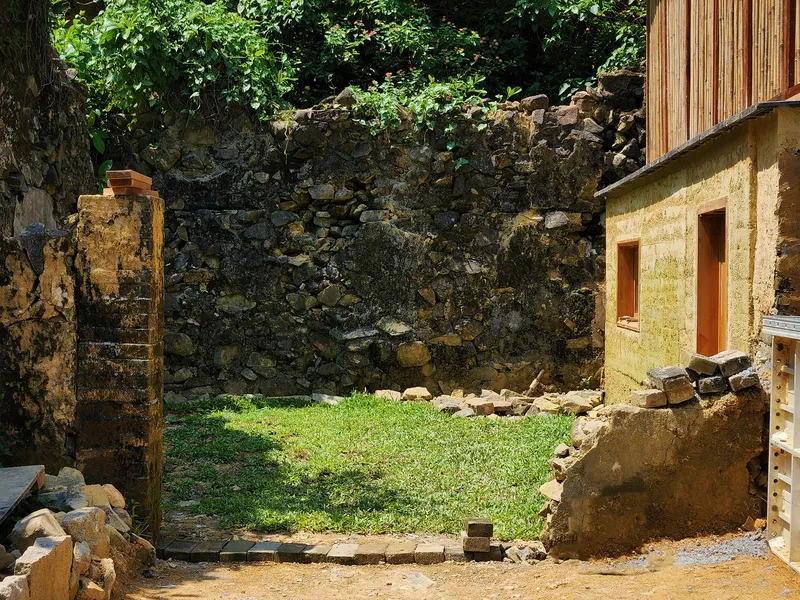
By regenerating place through reconnecting people in a collaborative and process-driven manner, Project Plum Grove offers a compelling and replicable model for long-term rural village revitalization in Hong Kong and beyond. It exemplifies how heritage restoration, sustainable design, and community empowerment can converge to breathe new life into forgotten spaces.


Popular Articles
Popular articles from the community


The Amber Palace Opera: A Geological Fiction Surfaces on Tallinn's Baltic Waterfront
Pierre Brillard reimagines a Baltic legend as a public landscape, opera house, and waterfront promenade rooted in Tallinn's coastal identity.

Manzana Morphosis: Stretching Barcelona's Grid into a Living Landscape for 2050
A radical reworking of the Eixample manzana turns density into a tool for generous public space, vertical ecology, and environmental performance.

Singing Woman: Contemporary Architecture Inspired by Estonia’s Voice and the Sea
Singing Woman turns Estonia’s song culture into flowing opera house architecture, blending public life, landscape, sea, and national memory.

Opera on the Sea: Driftwood Logic Shapes a Timber Opera House on Estonia's Coast
Trevor Orgill's opera house translates the entangled drift of floating timber into a civic building where wood, water, and music converge.

Similar Reads
You might also enjoy these articles


Hodi-Mandai Geram
Project Function: Preservation and revitalization of the Intangible heritage and socio-spatial identity of the Hodi by Housing, Cultural Memory Center, Sacred Grove, landscape, local tourism economy


Olio Towers: A Mid-Rise for Performers That Fuses Housing, Rehearsal, and Stage
Located blocks from Houston's Theater District, this modular tower stacks living units around a central performance atrium.

Oasis: Modular Green Housing Carved into Dhaka's Urban Fabric
A shortlisted Plugin Housing entry reclaims unauthorized settlements in Dhaka with stepped concrete volumes, green roofs, and ventilation-driven design.

Black Hole: A Floating Megastructure for the Post-Physical Era
Emiliano Mazzarotto envisions a spherical, self-scaling arena where e-sports, digital hotels, and holographic stadiums replace traditional public space.

Explore Cultural Architecture Competitions
Discover active competitions in this discipline

Challenge to reimagine the Iron Throne

Photograph architecture without architects

Illustrate the lost glory of Angkor Wat - Render Challenge

Bring back Drive In's
Comments (0)
Please login or sign up to add comments
No comments yet. Be the first to comment!