

Reconnecting with water through nature
'Ripple', aftermath of water crisis


Background
Water as a substance has not only been a source of food, energy, but an inevitable part of the survival of all living beings. As the most evolved species, we have manoeuvred resources like water and used it to its full potential. In its most mundane use such as hygiene, washing, or cooking, is unacknowledged. It is still unacceptable in certain spaces as we have tried to steer it and, its optimum usage in designated spaces. Water in excess quantities in the form of rain or floods is condemned for any ecosystem. It is a form of life and destruction, a contradiction in itself.
Water that was available for all is now being claimed and, is making physical, international and political boundaries. Freshwater in rivers and their basins that flow throughout the earth are now moulded to yield more and more potable water. It has resulted in a considerable increase in water consumption leading to Global Water Crisis. An immediate impact of the global water crisis was the onset of water conflicts among nations, states, communities. Are wars the kind of solution we are looking at, and will they resolve the impending crisis of water around the corner?
Issue
Water and its importance are well known, still, we have been disconnected from it in urban realms. Water is omnipresent and yet visually hidden while it flows through a dense network below the surface. Our contact with water has dissipated into our daily chores, restricted to the water received from taps. Lack of interaction with water in such circumstances has led us to have no perception at all. An interesting water value paradox exists, that shows how we fail to evaluate it lower, compared to diamonds. This holds even though water is a necessity whereas diamonds are not.
Is this due to an anomaly in our perspective or unawareness?
Brief
Water is a crucial element to our existence, yet this disengagement is ironic. The global water crisis was reinforced by rapid urbanization, which might be one of the reasons for its decreasing value. Efficiency in water consumption can be increased with co-operation, which is imperative in these times of growing scarcity. This can be a driving force to change the perception of water altogether and make us more resilient as a species.
This design challenge raised several 'How's to invite design solutions to this alarming problem. How can we establish the role of water as a vital element in supporting human existence? How can we trigger a sense of value that is almost disregarded in our daily lives? How can we find new ways to connect with water in our public spaces while acknowledging its limited supply? Building on these questions, the participants had to propose a model urban public landscape that had the ability to (i.) sensitize its visitors to understand how crucial water as a resource is and (ii.) promote a better sense of consumption and conservation within them.
Objectives
The design objectives were as follows:
Reduced Use: Use modern systems, methods & technologies to promote smarter/lesser use of water.
Celebrate: Introduces water as an essential element to support life in the context of today
Acknowledge: Awareness of water as an exhaustible resource.
Conservation: A model that gathers/harvests more water than it consumes.
City Use: The park should play as a vibrant public space of the city.
Site: Sarayburnu Waterfront
The site chosen for the challenge was a part of the Sarayburnu waterfront. This was located at the end of the Bosphorus Strait, which formed a part of the continental boundary between Europe and Asia. The site was flanked by views of monuments like Hagia Sophia and Topkapi Palace in its skyline. It neighboured the Ataturk’s Statue (Founder of the Republic of Turkey) and the National flag of Turkey faced the road, possessed as a perfect spot for landscape development for awareness of water scarcity, ironically having water in such proximity for the visitors.
Here are the best of competition projects as follows:
Winning Project: WATER WOUND
By: Jay Jieping Wang

 Description: By visualizing the two most important aspects of a global water crisis, the shortage of freshwater resources & the sea-level rise, this project is aiming to stimulate people's sensitivity to the growing water "wound".Water, the most crucial resource on earth, is the most familiar “stranger” in our daily life. People see it and use it every day. But because of its fluidity and immateriality, it is very hard to realize its presence. However, with the growth of the global water crisis, water should not be transparent and omnipresent anymore. By visualizing the two most important aspects of a water crisis, the shortage of freshwater resources & the sea-level rise, our project is aiming to stimulate people’s sensitivity to this precious natural gift.
-----------------
Runner - Up: HILAL
By: Laura Dieguez &Thuy Tran

 Description: The main goal of his? l is to create a public educational experience linked to water conservation. Circulation is choreographed with water on the site so that the visitor experiences natural filter systems such as rain gardens, seals, wetlands, ECO concrete columns that provide oyster habitat, and a gravel infiltration parking lot.
-----------------
People’s Choice: PURIFICATION PLAYGROUND
By: Pitak Asavesna
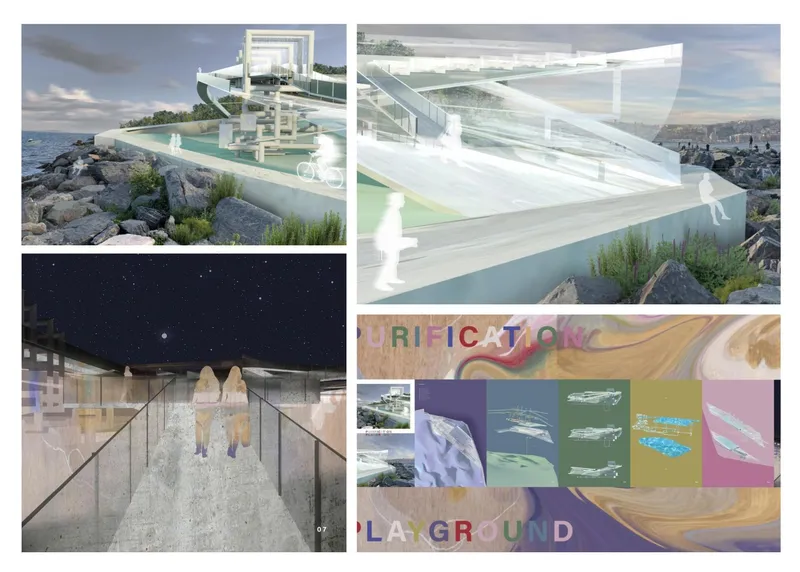
 Description: Water treatment facilities are often hidden from the public, but this design celebrates the ways we refine water for public use. Through the use of transparency, a symbiotic relationship between human interaction and water becomes tangible. Three modes of water are deployed--dynamic, passive, and active--to create a playscape for human/water interaction.
-----------------
People’s Choice: WaterCell Park
By: Andra Gheorghiu, Alexandru Pomazan & Alexandra Bureau
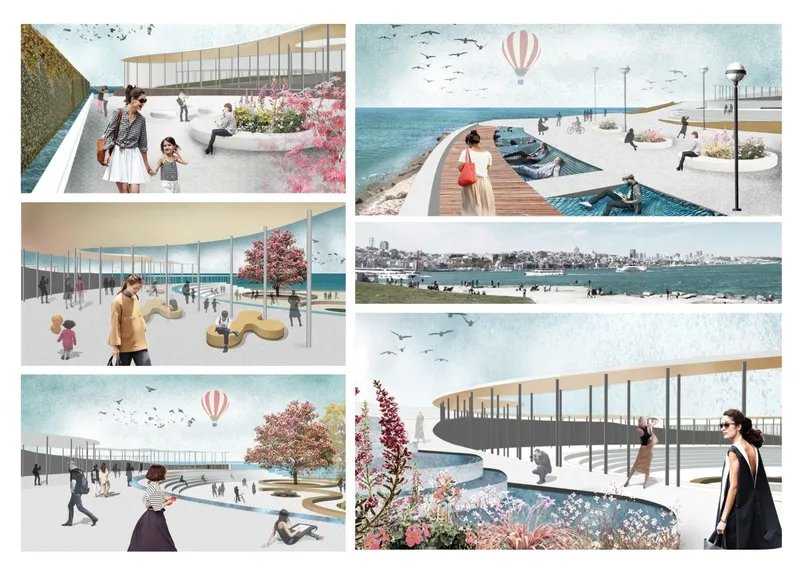
 Description: WaterCell Park comes as a regenerative intervention over one of Istanbul's most iconic neighbourhoods, the site being opened towards the sea, with a wide panoramic view towards two continents. The new proposal would offer an improved usage of space, with many benefits for the whole city through its water recycling features, and varied spaces to be explored.
------------------
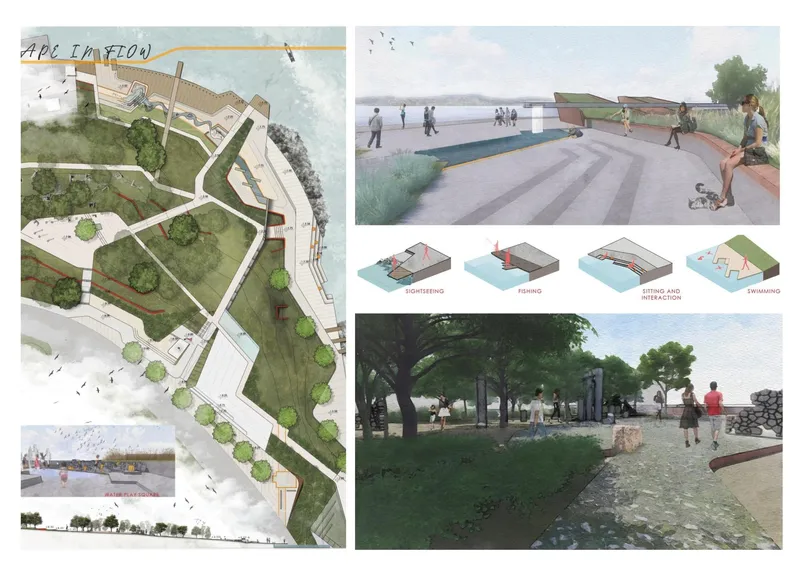
Editorial Choice: Cape in Flow
By: Duygu Kalkanli, Melih Bozkurt & Mert Akay

 Description: Within the historical context, the City of Istanbul has always been in strong social and spatial relations with water that reflects itself in a 'flow'. Having the objective to recode the concept of flow, 'Cape in Flow' comes up with new design strategies both for micro and macro scales to rediscover the potentials of the site as an active urban entity.
-------------------
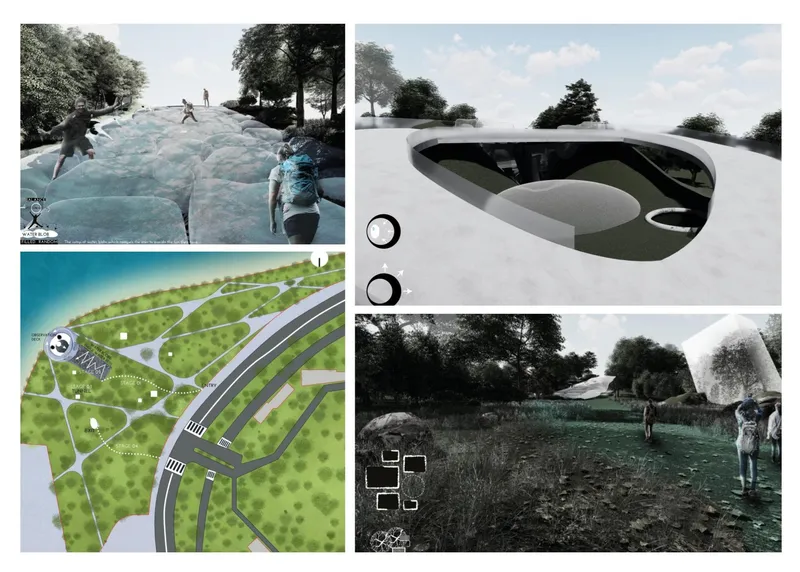
Editorial Choice: Blob effect
By: Sujeen
 Description: The project philosophical approach is to make them realize the over usage of water in the past and its consequence in present. This is done by making them travel on a one-way trip that passes through different experiential spaces and forms. The trip is on the site will be a one-way trip that unknowingly makes a user go through different stages without backing off.
Conclusion
The participants designed a landscape model in the given site that resonated with the aim of water conservation as a theme.
The jury for the competition consisted of esteemed designers, professionals and academicians from around the world. The Lead Jurors for the competitions were as follows:
Ana Sofia Ferreira Pachêco, Co-Founder, Oh!land studio, Portugal
Marc Boutin, Principal, MBAC, Canada

Discover the full results here: https://uni.xyz/competitions/ripple/entries
Discover the design brief here: https://uni.xyz/competitions/ripple/info/about
Follow us on social media: Facebook | Instagram | LinkedIn | Twitter | Youtube
Discover other design competitions to participate here: https://uni.xyz/competitions


Popular Articles
Popular articles from the community


FCC Arquitectura Expands a Portuguese Granite House with a Board-Marked Concrete Wing
In Portugal, JV House pairs a cleaned-up whitewashed and granite dwelling with a timber-shuttered concrete extension, courtyards and a garden pool.

David Ortega Stacks a Two-Story Mexico City Penthouse Around a Steel Stair and a Pergola-Shaded Roof Terrace
In Colonia Roma, a 300 m² penthouse uses oak joinery, a planted steel stair and a slatted roof pergola to make a new-build apartment feel like a house.

ETEH Reworks the Shared Spaces of São Domingos School in Brazil Around Timber, Color and Hanging Plants
At São Domingos School in Brazil, 436 m² of hall, refectory and library are recast with timber joinery, a yellow and blue code and trailing greenery.

Cube Design Draws an Ecological Corridor Between Two Shenzhen Hills with the Nankai Building
Beside Shenzhen's container docks, the Nankai Building pairs stacked balconies with a climbing green screen to connect two hillsides across its height.

Similar Reads
You might also enjoy these articles


Aquadapt: An Underwater Habitat That Rewrites Its Rooms by the Hour
Curved modules ring the seabed while one shell shifts from breakfast room to cinema, farm and football pitch as residents' needs change.

Play: Fragments of Their World: Remembered Architecture Rebuilt as a Modular Playground for Refugee Camps
Tom Gardner abstracts domes, arches and towers from the homelands of displaced families into a kit of child-scaled play parts for camp settlements.
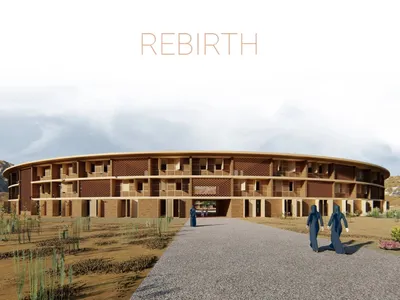
REBIRTH: A Circular Settlement Where Afghan Widows and Their Children Rebuild Life Together
A shortlisted Resile entry turns the circle into a protective ring of timber and brick, gathering homes, classrooms and gardens around a shared landscape.
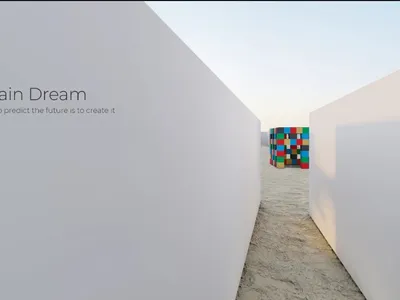
The Main Dream: A Recycled Plastic Kit That Lets Refugee Children Build Their Own Playground
Thirty-centimetre interlocking cubes that connect on three axes turn play into construction, letting children author the spaces they occupy.

Comments (0)
Please login or sign up to add comments
No comments yet. Be the first to comment!