
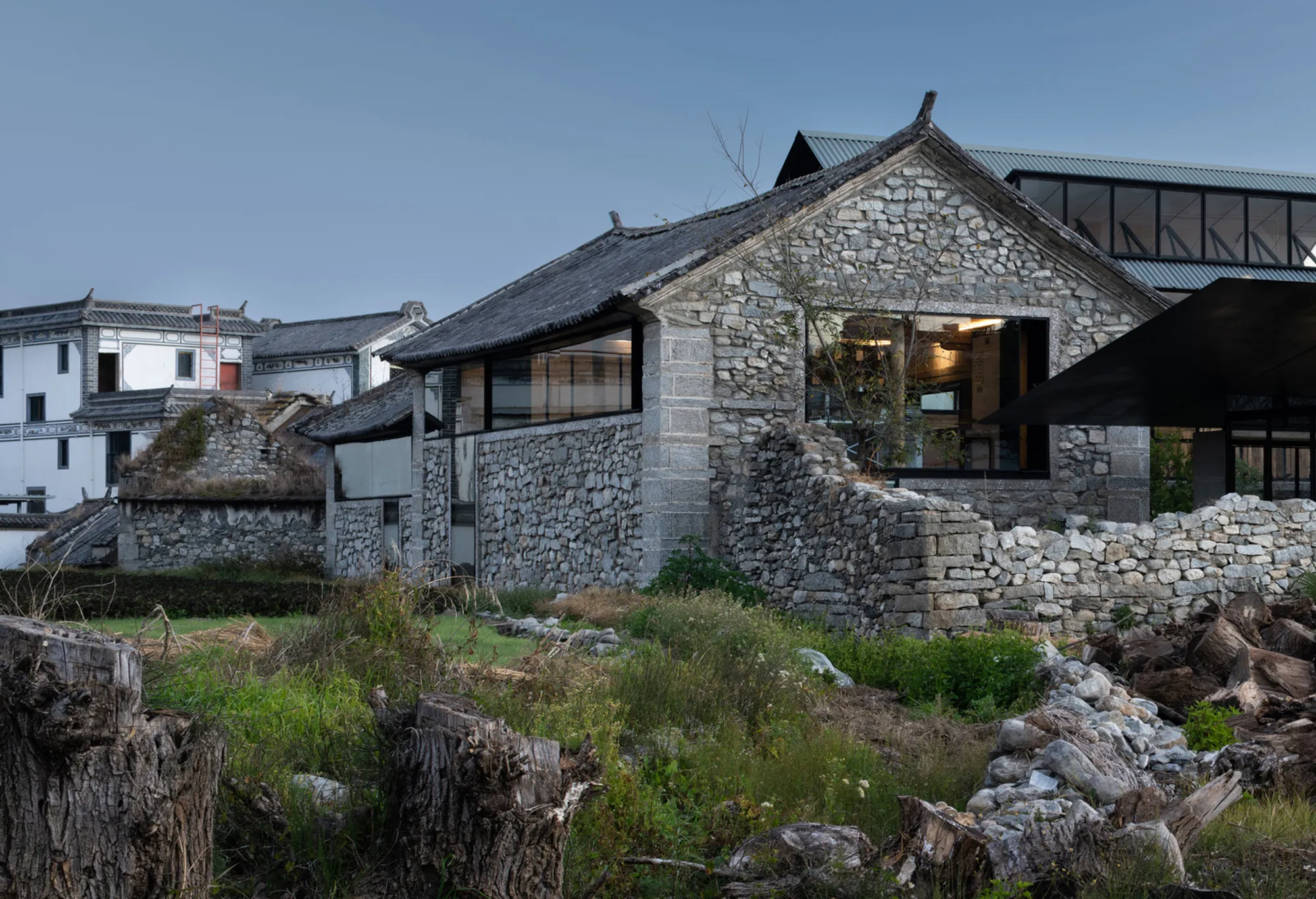
Ruins Cave Garden by ArCONNECT Architects: Adaptive Reuse Meets Nature in Dali, China
Ruins Cave Garden is an adaptive reuse project blending stone ruins, modern interventions, and garden landscapes into a dynamic architectural studio.


In the ancient village landscape of Dali, nestled at the foot of Cangshan Mountain and facing the tranquil waters of Erhai Lake, ArCONNECT Architects has crafted an extraordinary example of adaptive reuse architecture. The Ruins Cave Garden is a transformative studio and living space that emerges from the remnants of abandoned stone and wood structures. Through thoughtful renovation and contextual design, the project bridges traditional Bai architecture with contemporary spatial practices.
A Landscape-Led Renovation: Embracing Ruins and the Mountain
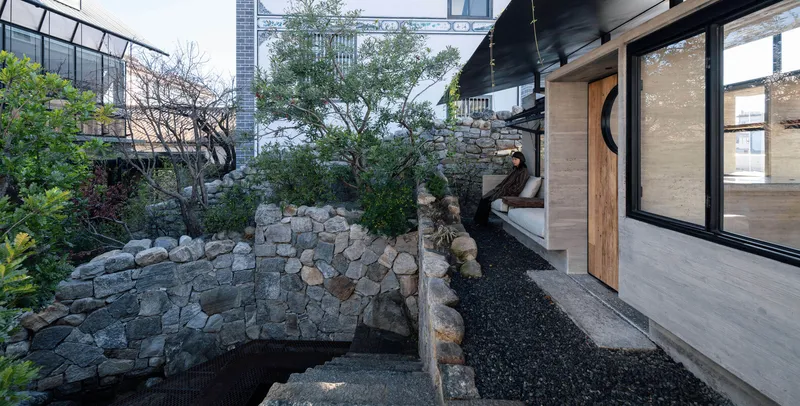
Situated on the southwest edge of the village, the site was once overgrown with weeds, a neglected courtyard surrounded by concrete homes. The existing buildings included a well-preserved 1980s stone-wood house and a partially collapsed brick-concrete structure from the 1990s. A sense of introspective enclosure and expansive outward views defined the site—a duality between the inward-looking traditional courtyard and the majestic Cangshan mountain range.
This contrast became the conceptual core of the renovation: How could a forgotten inward space be reconnected to the vast landscape beyond
On-Site Design Philosophy: Merging Demolition with Creation
With only eight months to complete the transformation before their old lease expired, the architects adopted an on-site, iterative design-build strategy. By working directly on-site, they refined the design in real-time, learning from the existing ruins and responding physically to the environment. The project was divided into two phases: the renovation of the main stone house and north building, followed by the transformation of the garden and courtyard.
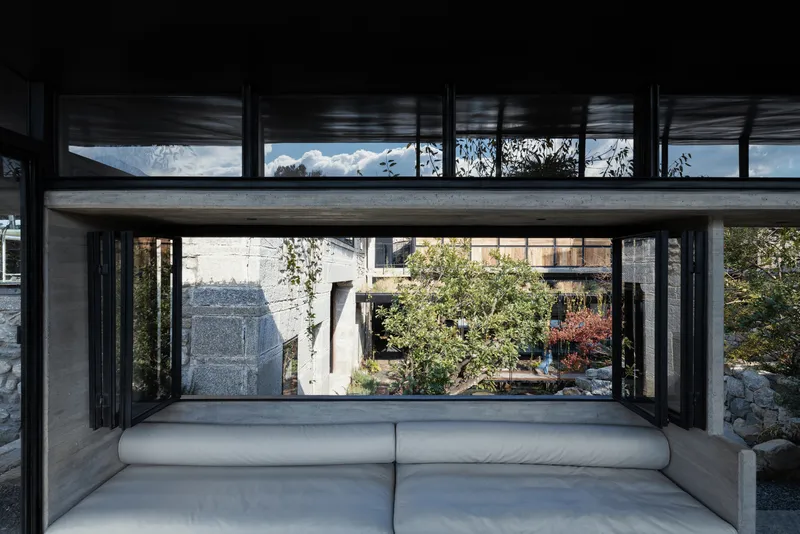
The Stone House: Creating a Mountain-Facing “Cave”
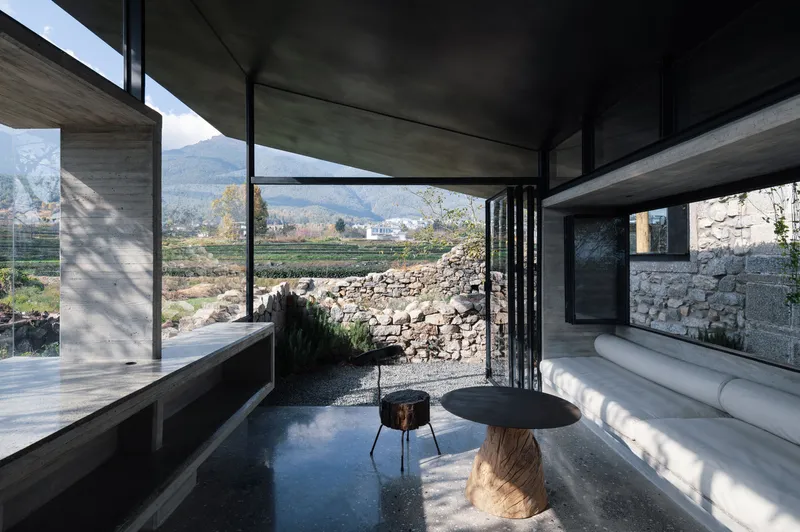
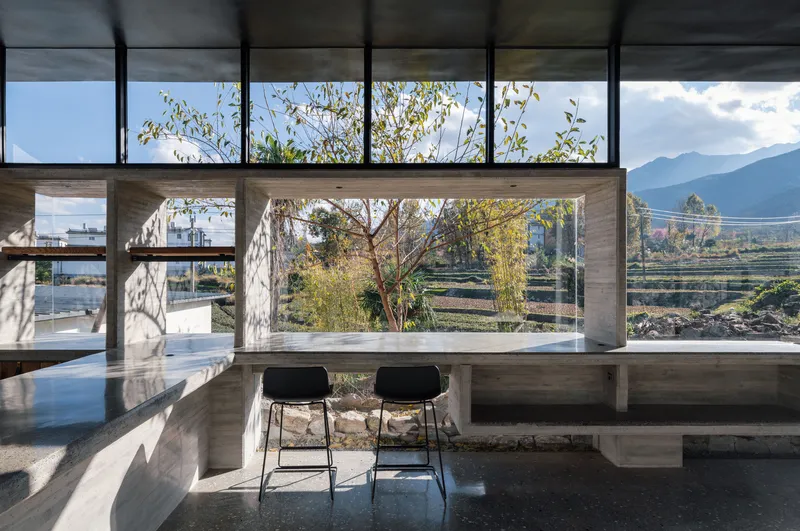
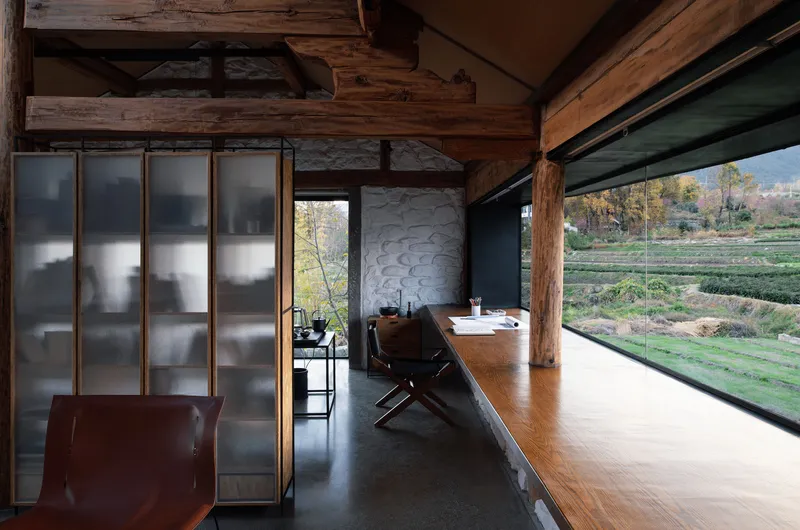
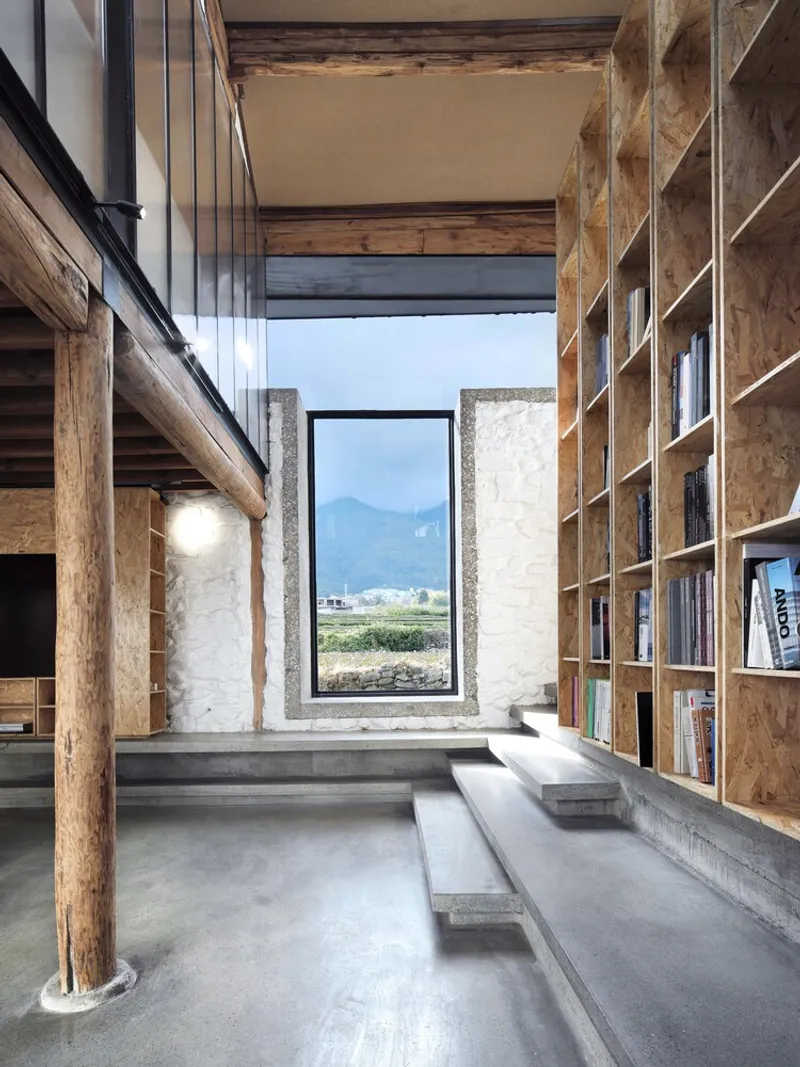
The preserved stone-wood house, with its warm materiality and traditional structure, was transformed into a multi-functional studio space housing a public library, meeting rooms, kitchen, and private workspaces. A T-shaped opening carved into the west façade connects the interiors to the distant mountain range. This opening includes a vertical high-level window aligned with the upper library and a horizontal ribbon window that reveals the terraced landscape when seated, evoking Chinese landscape paintings.
To strengthen the structure, a concrete window frame was integrated with a finish that echoes the rough stone textures. The resulting aesthetic is one of tactile contrast—solid stone meets sleek glass, and the thick 600mm walls create an immersive, “cave-like” spatial experience that deepens the user's engagement with both interior and landscape.
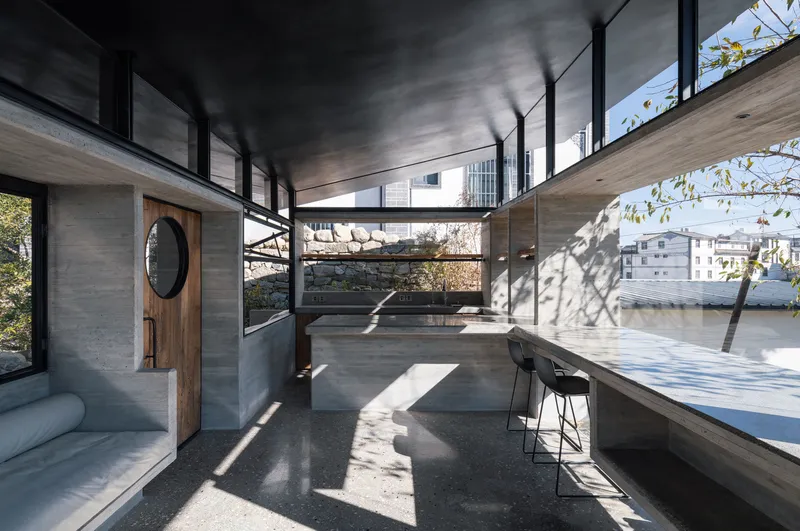
The North Building: A Vertical Transition from Courtyard to Sky
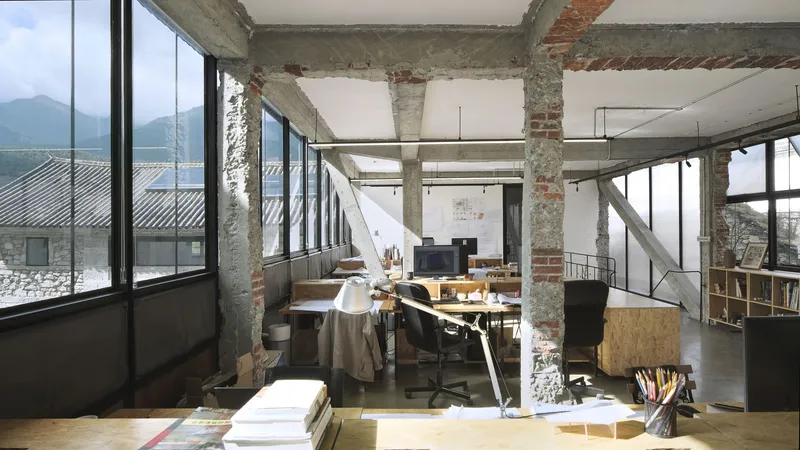
In contrast to the façade-led transformation of the stone house, the North Building renovation focuses on sectional transitions. Retaining the 600mm-thick stone walls on the first floor, the architects introduced wide openings and removed inner walls to create a semi-subterranean cave-like workspace. Reinforced concrete columns and diagonal bracing ensure seismic resilience.
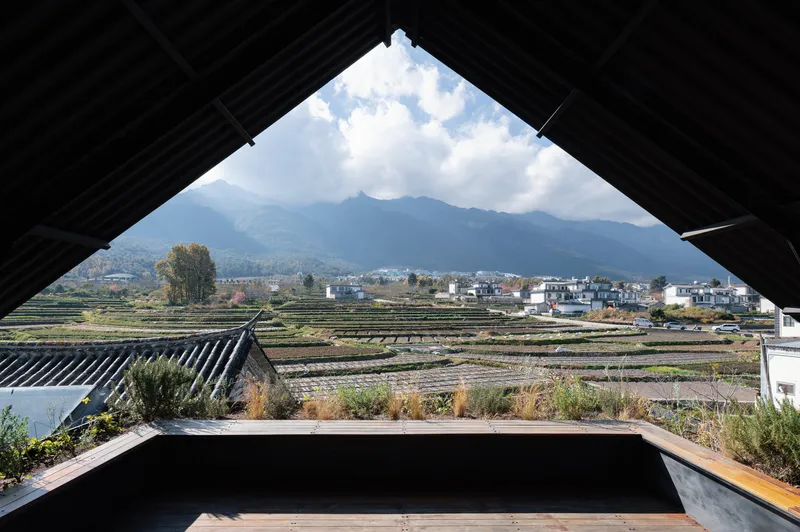
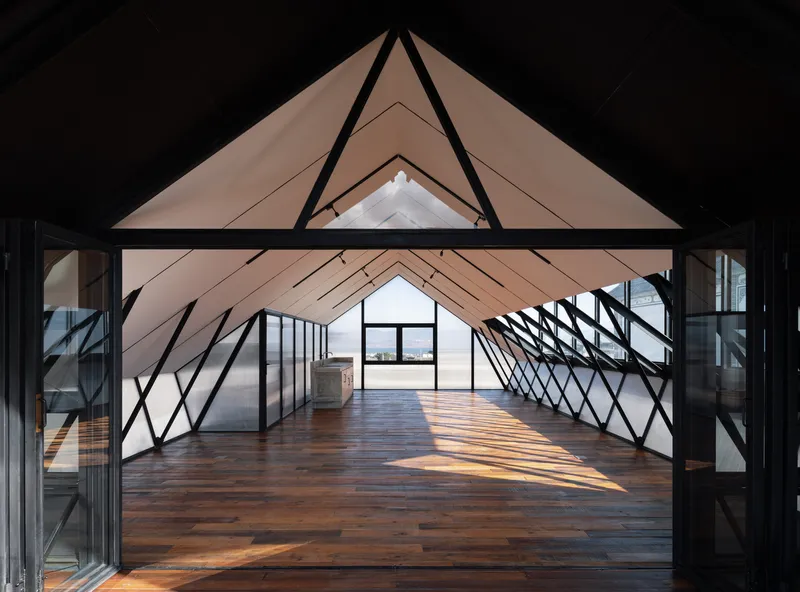
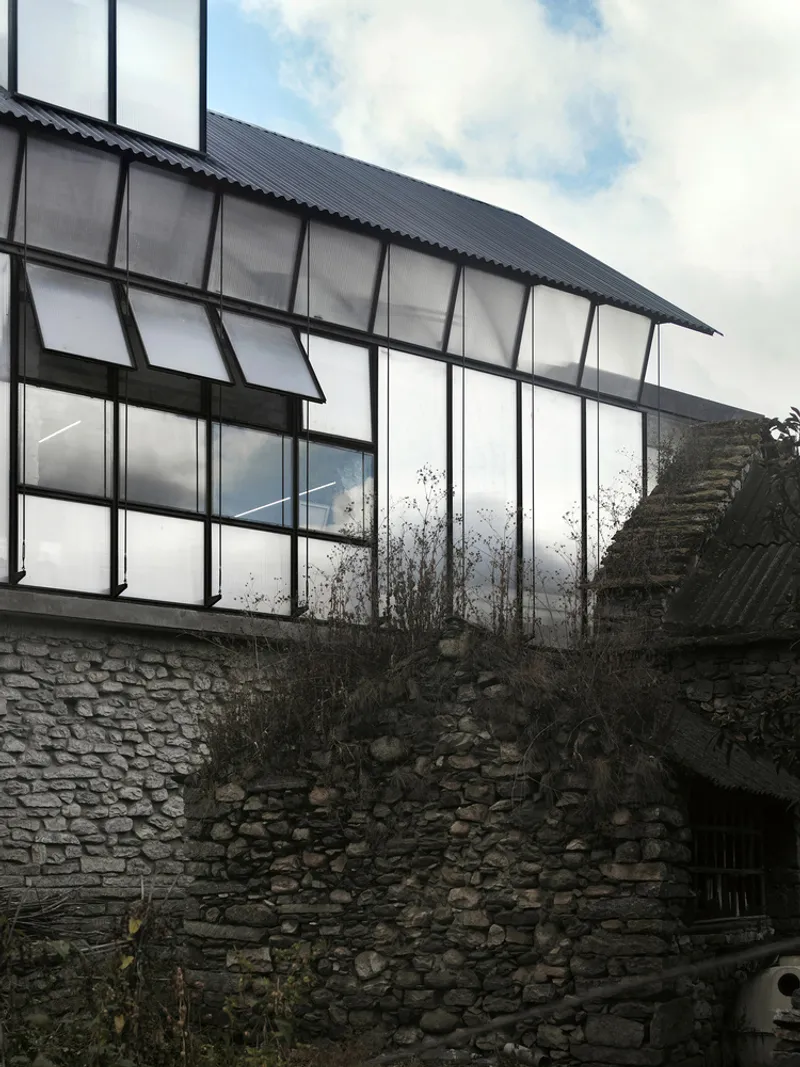
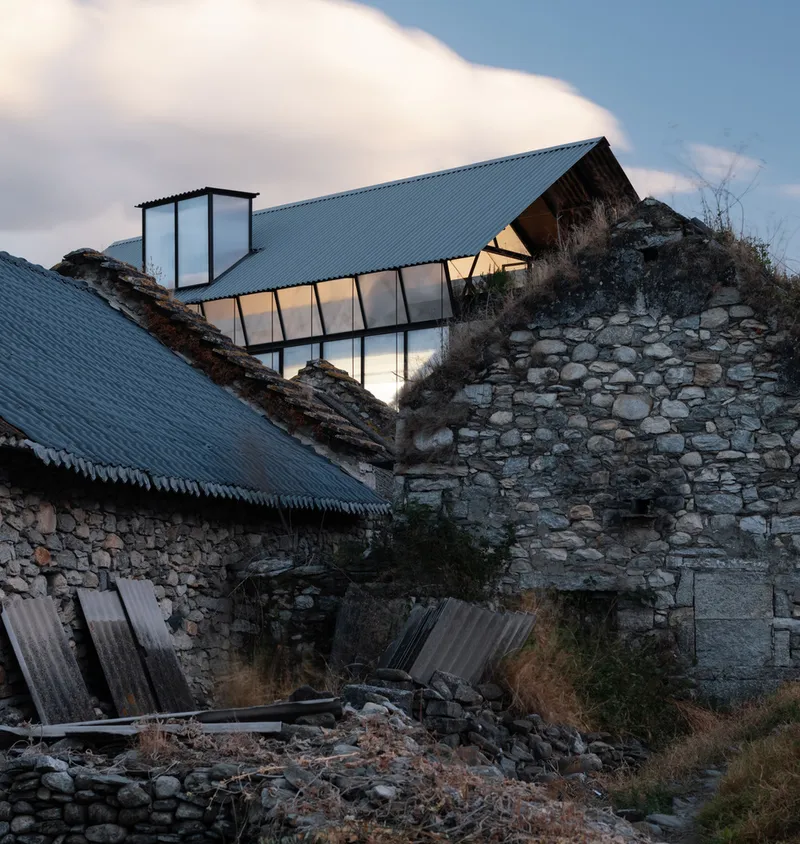
The second floor became an open-plan office, flooded with light through ribbon windows and polycarbonate panels. A light steel attic was added on the third floor, featuring a panoramic terrace that offers stunning views of Cangshan Mountain and glimpses of Erhai Lake.
This steel volume appears as a lightweight, translucent rooftop addition, resting delicately on the stone base—a bold juxtaposition of old and new, solid and transparent. The facade integrates steel diagonal bracing that doubles as a design element and structural reinforcement, reducing visual mass while enhancing wind resistance.
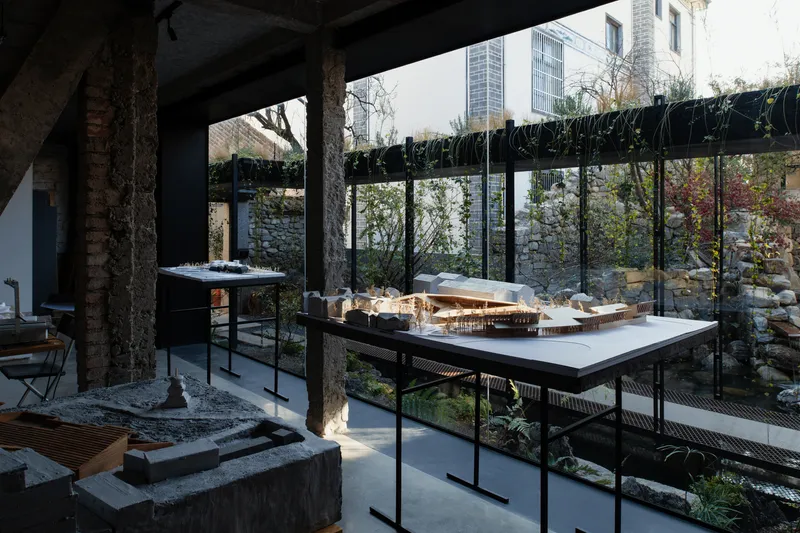
Transforming the Courtyard: From Separation to Synergy
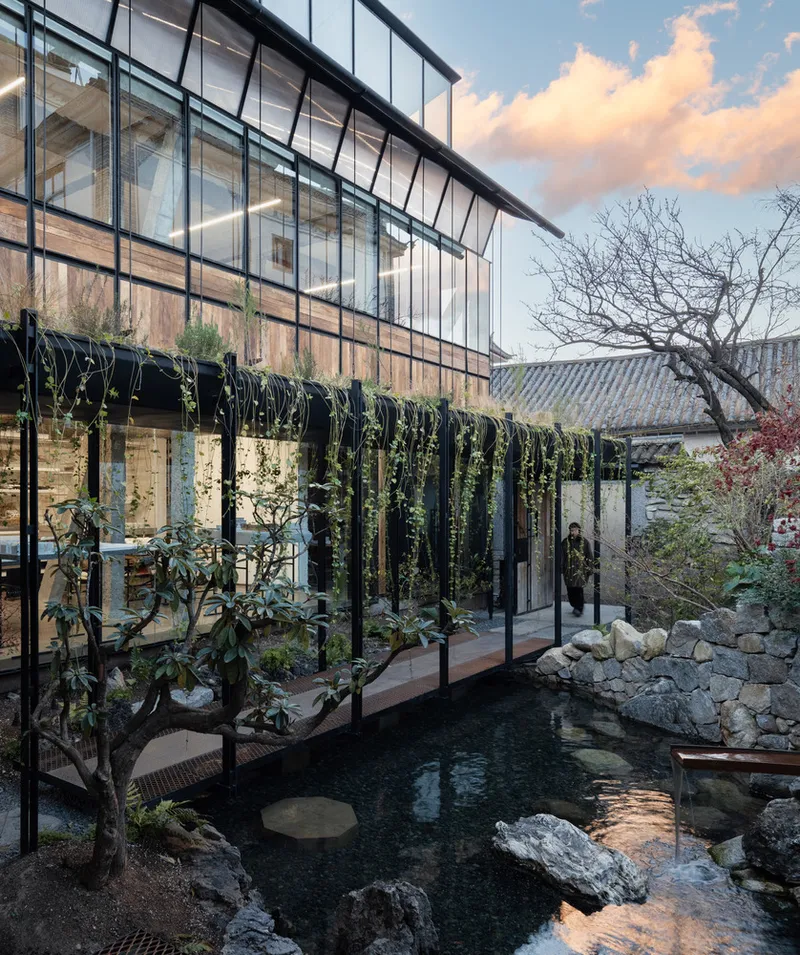
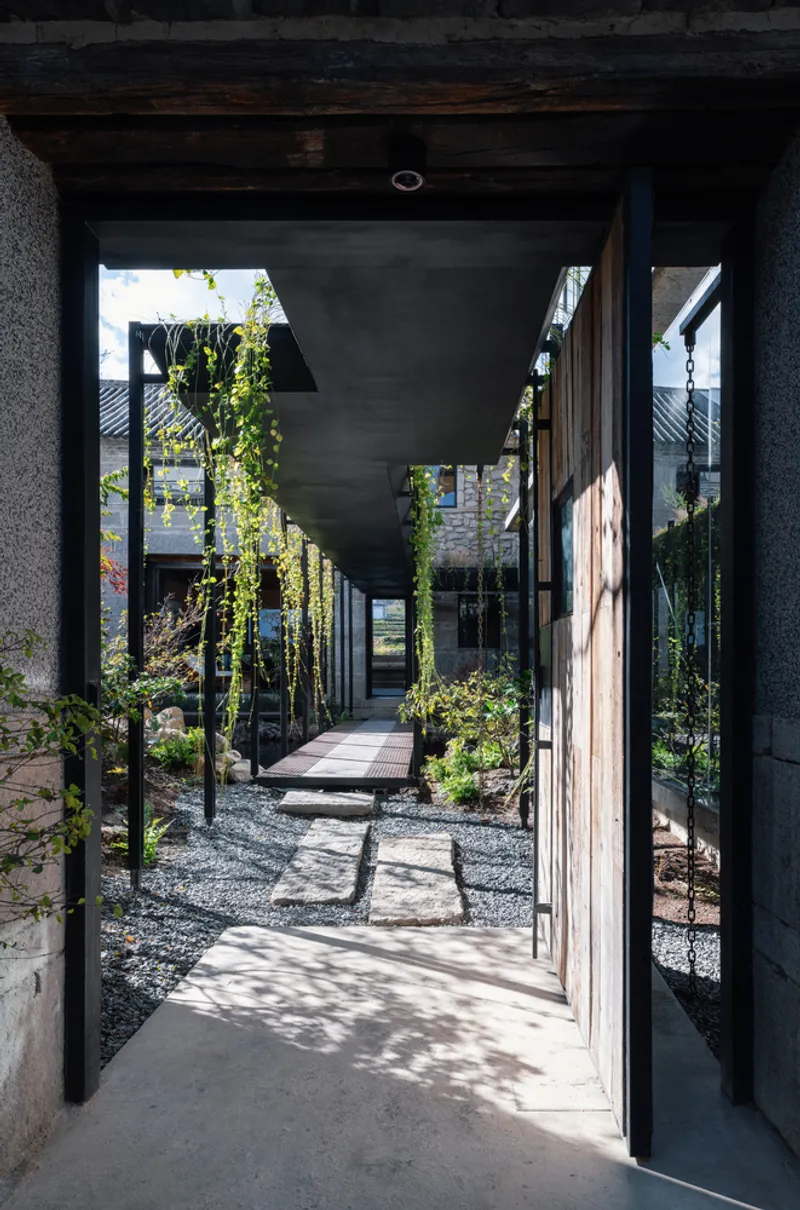
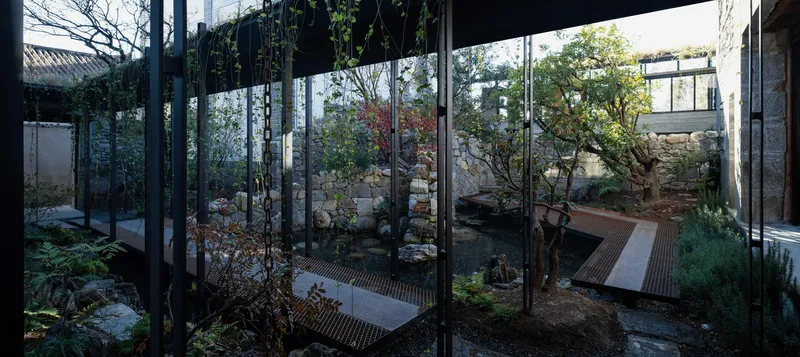
After relocating into the renovated studio, the team turned its attention to the unresolved courtyard. Previously fragmented and scale-imbalanced—especially due to the imposing height of the North Building—the courtyard lacked cohesion and comfort.
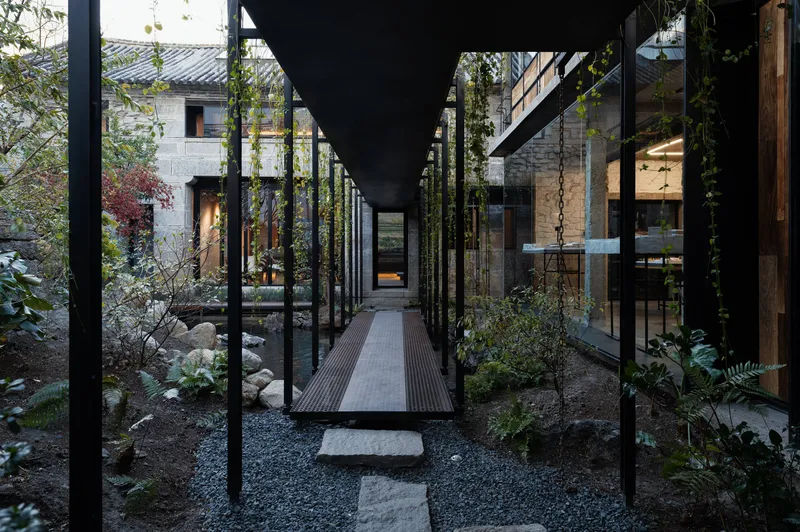
The architects developed a "garden strategy" in the second phase, using the landscape as a binding element between the disparate structures. By introducing stepping terraces, plantings, and fluid pathways, the courtyard evolved into an interactive space that blurs boundaries between built form and nature. This intervention emphasized interconnectedness, transforming the project from a pair of isolated buildings into an integrated architectural ecosystem.
A Contemporary Vernacular Statement
The Ruins Cave Garden is more than a renovation—it is a sensitive response to local traditions, natural elements, and the temporal layering of architecture. ArCONNECT Architects have preserved the essence of Dali’s cultural heritage while adapting it for modern use. Through sustainable restoration, contextual materiality, and spatial reprogramming, the studio demonstrates the potential of adaptive reuse in rural revitalization.
All Photographs are works of Hao Chen, Pengfei Wang




Popular Articles
Popular articles from the community


Co-Life: Senior Housing Design That Reconnects Older Adults With the City
Co-Life reimagines senior housing design through healing gardens, shared streets, workshops, and a sustainable community across generations.

Play: Fragments of Their World
Familiar architecture becomes modular playground design, creating safe spaces where displaced children can learn, connect, imagine and play.

Conexión: Biophilic Design Reimagines High-Rise Living in Hong Kong
Conexión reimagines high-rise living in Hong Kong through biophilic design, green facades, shared spaces, daylight, water and nature within.

Co-life: Sustainable Architecture for Age-Friendly Community Living
Co-life reimagines sustainable architecture for seniors through courtyards, rammed earth, shared gardens, and spaces designed for belonging.
Similar Reads
You might also enjoy these articles


Hodi-Mandai Geram
Project Function: Preservation and revitalization of the Intangible heritage and socio-spatial identity of the Hodi by Housing, Cultural Memory Center, Sacred Grove, landscape, local tourism economy


Olio Towers: A Mid-Rise for Performers That Fuses Housing, Rehearsal, and Stage
Located blocks from Houston's Theater District, this modular tower stacks living units around a central performance atrium.

Oasis: Modular Green Housing Carved into Dhaka's Urban Fabric
A shortlisted Plugin Housing entry reclaims unauthorized settlements in Dhaka with stepped concrete volumes, green roofs, and ventilation-driven design.

Black Hole: A Floating Megastructure for the Post-Physical Era
Emiliano Mazzarotto envisions a spherical, self-scaling arena where e-sports, digital hotels, and holographic stadiums replace traditional public space.

Explore Ruins Competitions
Discover active competitions in this discipline



Challenge to reimagine the Iron Throne


Photograph architecture without architects


Illustrate the lost glory of Angkor Wat - Render Challenge


Design challenge to reuse E-waste
Comments (0)
Please login or sign up to add comments
No comments yet. Be the first to comment!