

Sandra and Mario's House by NUA Arquitectures
Flexible and community-focused office in Shizuoka blending light, openness, and adaptive design to foster collaboration and neighborhood engagement.


Located in the historic town of Vila-seca, Spain, Sandra and Mario's House by NUA Arquitectures is a 207 m² renovation project that reimagines a narrow party-wall dwelling into a luminous and spatially rich family home. Completed in 2022, the design embraces passive sustainability, historical sensitivity, and modern domestic comfort within a challenging urban fabric.

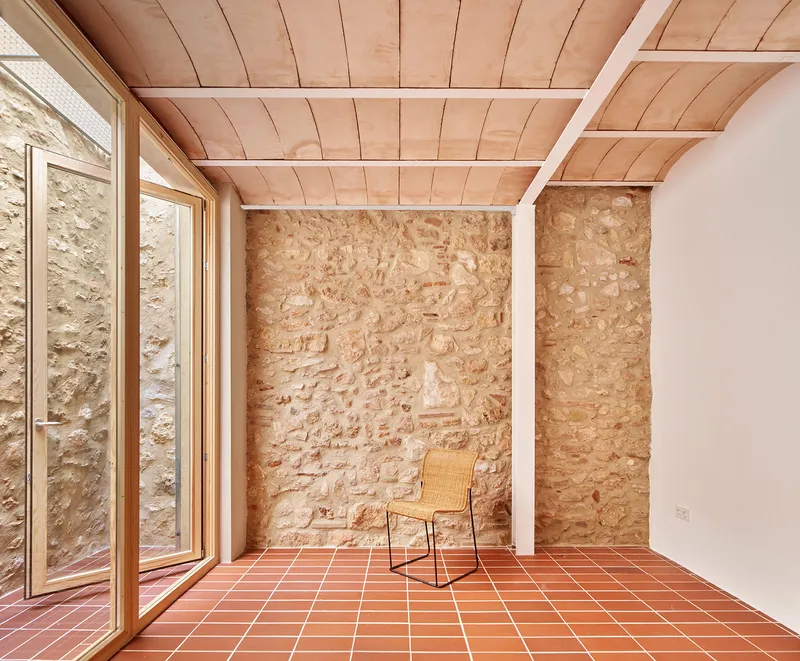
Historical and Urban Context
The origins of Vila-seca trace back to the 12th century as a repopulated frontier between al-Andalus and the County of Barcelona. The house sits along a narrow offshoot of a historical axis leading from the town to the sea, in a neighborhood characterized by party-wall dwellings. The plot's constraints—just 4 meters wide and 15.6 meters long—demanded an architectural response rooted in verticality, light, and circulation.

Spatial Strategy and Sectional Complexity
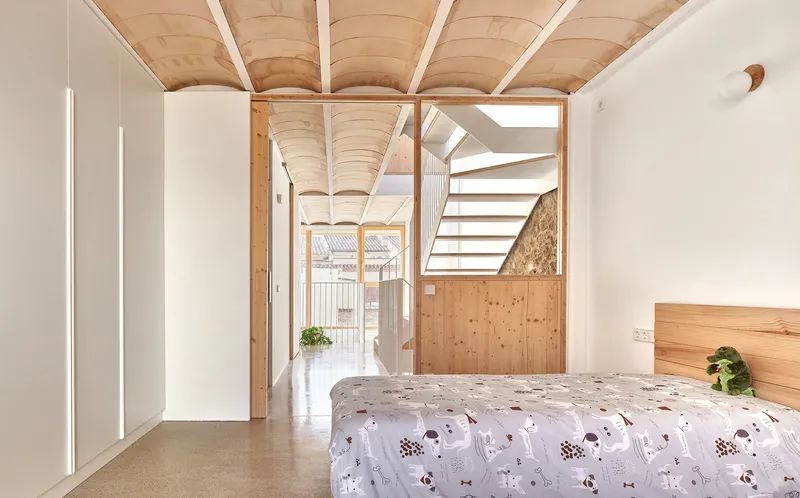
To combat the tight footprint, the architects devised a volumetric approach emphasizing vertical articulation and the play of light. A central staircase, placed alongside one party wall, doubles as a skylight, introducing natural light into the core of the house. Opposite, a band of technical spaces maintains structural clarity while enabling flexibility.


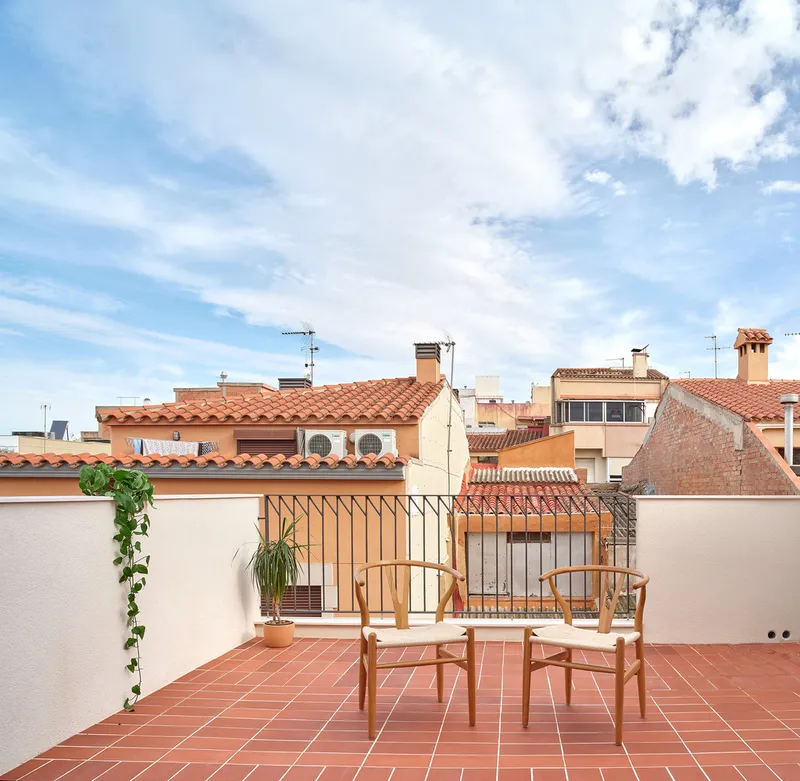
Two fluid living zones flank this central spine, allowing uninterrupted spatial flow and programmatic adaptability. A rear-facing southwest patio brings in daylight and cross-ventilation, enhanced by a double-height space that visually and physically expands the compact footprint. On the ground floor, a multifunctional vestibule blurs the boundary between public and private space, inviting engagement with the street. At the attic level, a setback creates a private terrace that captures light and privacy.

Material Palette and Architectural Dialogue
The house builds a rich material narrative by layering old and new. Original stone party walls are preserved and highlighted, while traditional local materials—ceramics, lime mortar, and timber—are used to establish tactile continuity with the town’s vernacular. The design becomes a living collage, celebrating the passage of time while proposing a forward-looking domestic model.
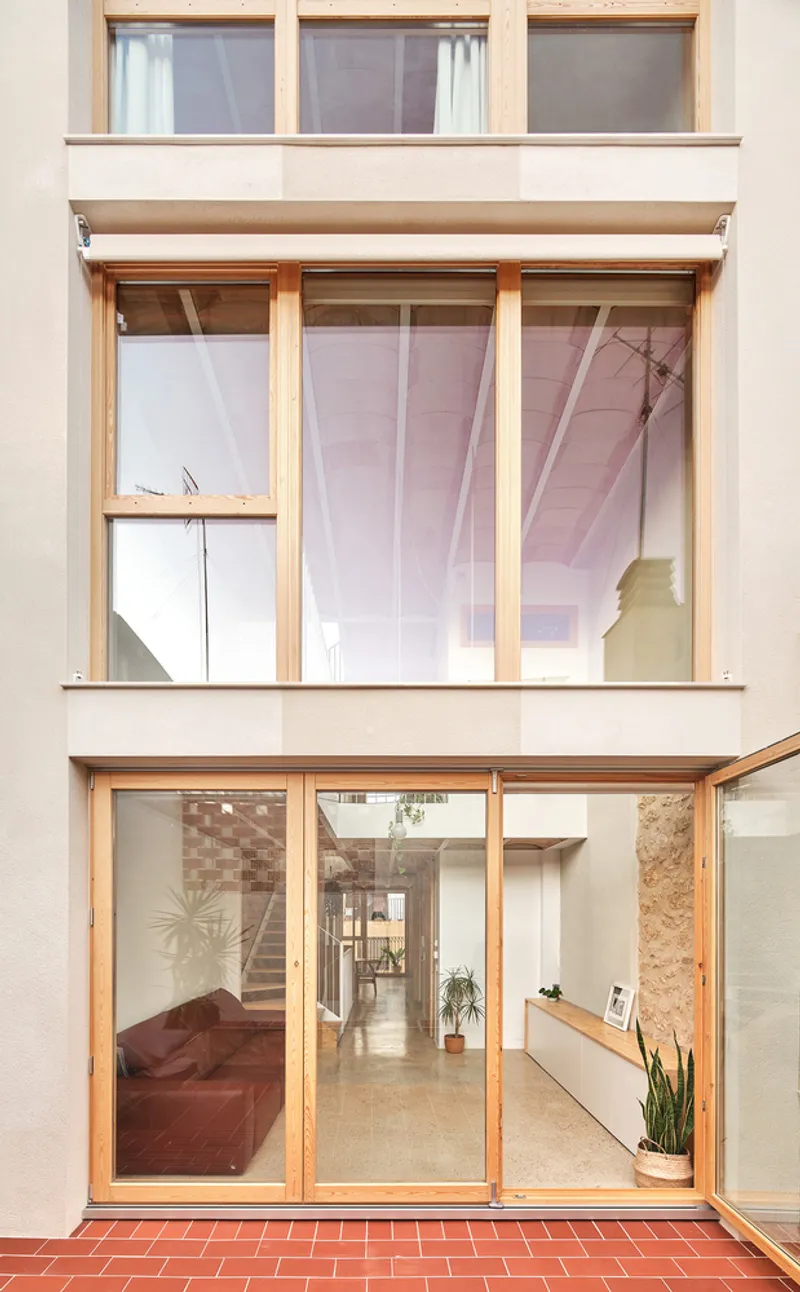
Inside, earthy textures and a restrained color palette balance openness and warmth. Brick, wood, and lime-washed surfaces soften light transitions and enhance seasonal comfort. Passive strategies, such as solar orientation, natural ventilation, and thermal massing, contribute to year-round energy efficiency without sacrificing elegance.

Facade Articulation and Environmental Performance
The street-facing northeast facade is heavier, with an intentional play of solid and void to echo the historic rhythm of Vila-seca’s townhouses. The southwest-facing rear facade, in contrast, is conceived as a glazed surface, maximizing solar gain in winter while operable blinds provide summer shading. This duality allows the house to respond to both urban character and environmental needs.




Popular Articles
Popular articles from the community


Hill & Cross Opera: Sculptural Opera House Architecture Shaped by Tallinn’s Landscape and Identity
Hill & Cross Opera reimagines opera house architecture in Tallinn through its sculptural hill, civic plaza, glass wave and a luminous cross.

Riyadh For All: Intergenerational Urban Design for Active Aging in Rabat
Riyadh For All reimagines urban design in Rabat with intergenerational co-living, adaptive courtyards, and Moroccan cultural exchange today.

The Earth Pod: 3D Printed Homes for Resilient Refugee Communities
The Earth Pod reimagines refugee housing through 3D printed homes made from clay, combining resilience, self-sufficiency, and rapid shelter.

The Musturak Paradise: Senior Living Architecture for a Connected Future in Temara, Morocco
The Musturak Paradise reimagines senior living architecture in Temara via private homes, social spaces, culture, community, and shared care.


Similar Reads
You might also enjoy these articles


Hodi-Mandai Geram
Project Function: Preservation and revitalization of the Intangible heritage and socio-spatial identity of the Hodi by Housing, Cultural Memory Center, Sacred Grove, landscape, local tourism economy


Olio Towers: A Mid-Rise for Performers That Fuses Housing, Rehearsal, and Stage
Located blocks from Houston's Theater District, this modular tower stacks living units around a central performance atrium.

Oasis: Modular Green Housing Carved into Dhaka's Urban Fabric
A shortlisted Plugin Housing entry reclaims unauthorized settlements in Dhaka with stepped concrete volumes, green roofs, and ventilation-driven design.

Black Hole: A Floating Megastructure for the Post-Physical Era
Emiliano Mazzarotto envisions a spherical, self-scaling arena where e-sports, digital hotels, and holographic stadiums replace traditional public space.
Explore Housing Competitions
Discover active competitions in this discipline



Challenge to reimagine the Iron Throne


Photograph architecture without architects


Illustrate the lost glory of Angkor Wat - Render Challenge


Design challenge to reuse E-waste
Comments (0)
Please login or sign up to add comments
No comments yet. Be the first to comment!