

Shucun Kindergarten by Architectural Design Research Institute of SCUT: Coastal-Inspired Rural Education in Yangjiang
Shucun Kindergarten in Yangjiang, China, features modular coastal-inspired architecture, sustainable design, natural light, flexible classrooms, and safe, child-friendly outdoor spaces.


Shucun Kindergarten, designed by the Architectural Design Research Institute of SCUT, is a pioneering educational facility located in the seaside village of Shaba Town, near the scenic Moon Bay in western Guangdong Province. Occupying a site of 4,567 square meters, with a total built area of 4,405 square meters, this rural kindergarten is designed to bridge the educational gap between urban and rural communities, promoting high-quality preschool education in Yangxi County.


Architecture and Design Concept
The design emphasizes simplicity, purity, and harmony with nature, seamlessly integrating the kindergarten into the surrounding village environment. The architecture comprises modular square volumes arranged to emulate natural growth, connected by elevated corridors that define the site boundaries. These clean, white forms resonate with the surrounding box-like village houses, establishing a sense of continuity and belonging.


Drawing inspiration from the coastal environment, the kindergarten incorporates design elements evocative of wind, waves, and sails. Curved gables mimic sea breezes, while second-floor corridors feature flowing, organic shapes inspired by marine ripples and biological curves. The main teaching spaces adopt a fishbone modular layout, echoing local rural architecture while creating a dynamic, functional educational environment.


Functional Layout
The facility includes 12 classrooms for daily activities, alongside specialized rooms for music, physical education, art, science, and reading. Large glass windows bring in abundant natural light and offer expansive views, blurring the line between indoor and outdoor spaces and enhancing spatial transparency. Semi-outdoor and outdoor play areas encourage active exploration, fostering creativity, imagination, and physical development.
Elevated corridors not only connect different functional modules but also provide sheltered ground-level spaces for play and social interaction. This design strategy addresses the region’s hot, rainy summers and frequent typhoons, ensuring continuous activity for children while improving natural ventilation and enhancing the local microclimate.


Sustainability and Local Materials
Sustainability and passive energy efficiency are central to the design. The building employs locally available materials and a reliable frame structure, keeping construction costs low while ensuring durability. Passive energy-saving strategies include solid east-west gables, south-facing eaves to minimize solar gain, and elevated, ventilated corridors. Existing vegetation is retained to provide shade and comfort, creating a safe, healthy, and environmentally conscious learning environment.
The kindergarten’s thoughtful combination of modular forms, coastal design references, and practical climate solutions earned it the 2023 IDA International Design Award Silver Prize in the Education category, marking it as a model for rural preschool architecture in China.


Contextual Integration
Shucun Kindergarten is positioned at the center of a typical rural village, surrounded by self-built homes and narrow roads. The main entrance is strategically set back 17 meters from the intersection of two village streets, ensuring safe pedestrian and vehicular circulation while providing a welcoming waiting area for parents. This careful urban integration reflects a deep understanding of local life and community needs.


By merging modern architectural techniques with the cultural and natural context of Guangdong’s coastline, Shucun Kindergarten establishes a new benchmark for rural educational facilities, promoting quality learning experiences for children while respecting the local heritage and natural environment.

All photographs are works of Mian Xu


Popular Articles
Popular articles from the community

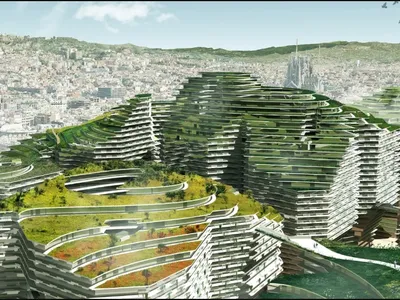
Manzana Morphosis: Stretching Barcelona's Grid into a Living Landscape for 2050
A radical reworking of the Eixample manzana turns density into a tool for generous public space, vertical ecology, and environmental performance.
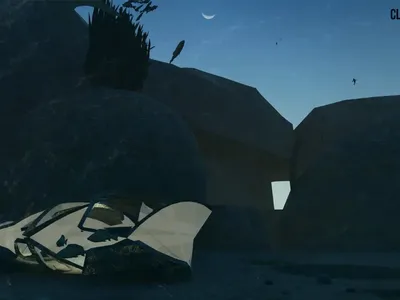
Cloaked Colonization: A Mobile Underwater Habitat That Moves Like a Fish
Micah Abaya's shortlisted EHC Pacific entry reimagines ocean settlement as a dispersed network of self-sustaining architectural organisms.
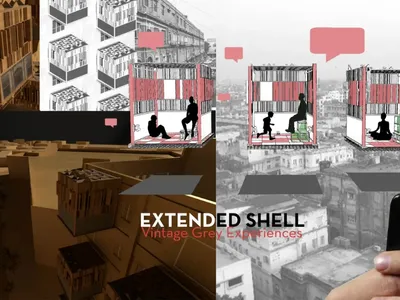
Extended Shell: Retrofitting Kolkata's Balconies as Living Urban Thresholds
A modular retrofit system recovers the social and environmental intelligence of Kolkata's historic verandas for contemporary Park Street residents.
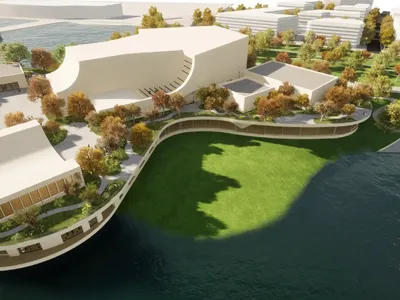
The Amber Palace Opera: A Geological Fiction Surfaces on Tallinn's Baltic Waterfront
Pierre Brillard reimagines a Baltic legend as a public landscape, opera house, and waterfront promenade rooted in Tallinn's coastal identity.

Similar Reads
You might also enjoy these articles

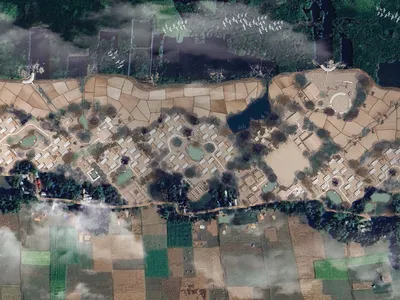
Hodi-Mandai Geram
Project Function: Preservation and revitalization of the Intangible heritage and socio-spatial identity of the Hodi by Housing, Cultural Memory Center, Sacred Grove, landscape, local tourism economy

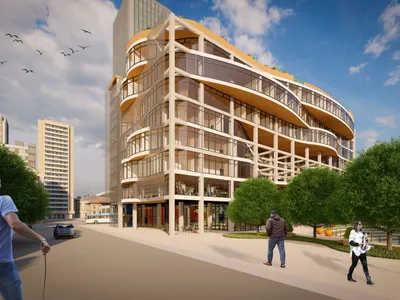
Olio Towers: A Mid-Rise for Performers That Fuses Housing, Rehearsal, and Stage
Located blocks from Houston's Theater District, this modular tower stacks living units around a central performance atrium.
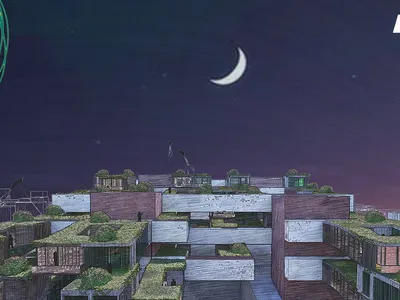
Oasis: Modular Green Housing Carved into Dhaka's Urban Fabric
A shortlisted Plugin Housing entry reclaims unauthorized settlements in Dhaka with stepped concrete volumes, green roofs, and ventilation-driven design.

Black Hole: A Floating Megastructure for the Post-Physical Era
Emiliano Mazzarotto envisions a spherical, self-scaling arena where e-sports, digital hotels, and holographic stadiums replace traditional public space.

Explore Sustainable Design Competitions
Discover active competitions in this discipline

Challenge to reimagine the Iron Throne

Photograph architecture without architects

Illustrate the lost glory of Angkor Wat - Render Challenge

Design challenge to reuse E-waste
Comments (0)
Please login or sign up to add comments
No comments yet. Be the first to comment!