

Solarium House by YKAA: A Compact Urban Retreat in Sapporo
Solarium House by YKAA in Sapporo: compact urban home with central sunlit atrium, diffused light, cozy private rooms, and spatial continuity.


In the heart of Sapporo, amidst high-rise buildings, industrial facilities, and urban parking lots, YKAA has designed a compact yet luminous home that balances intimacy and openness. The Solarium House was conceived for a simplicity-loving couple and their three dogs, who envisioned a cozy dwelling with a sunlit central space where family life could flourish. Despite the dense urban setting and limited natural light, the architects transformed the challenge into an opportunity, creating a home that harmonizes natural illumination, spatial continuity, and psychological comfort.
Maximizing Light in a Dense Urban Context
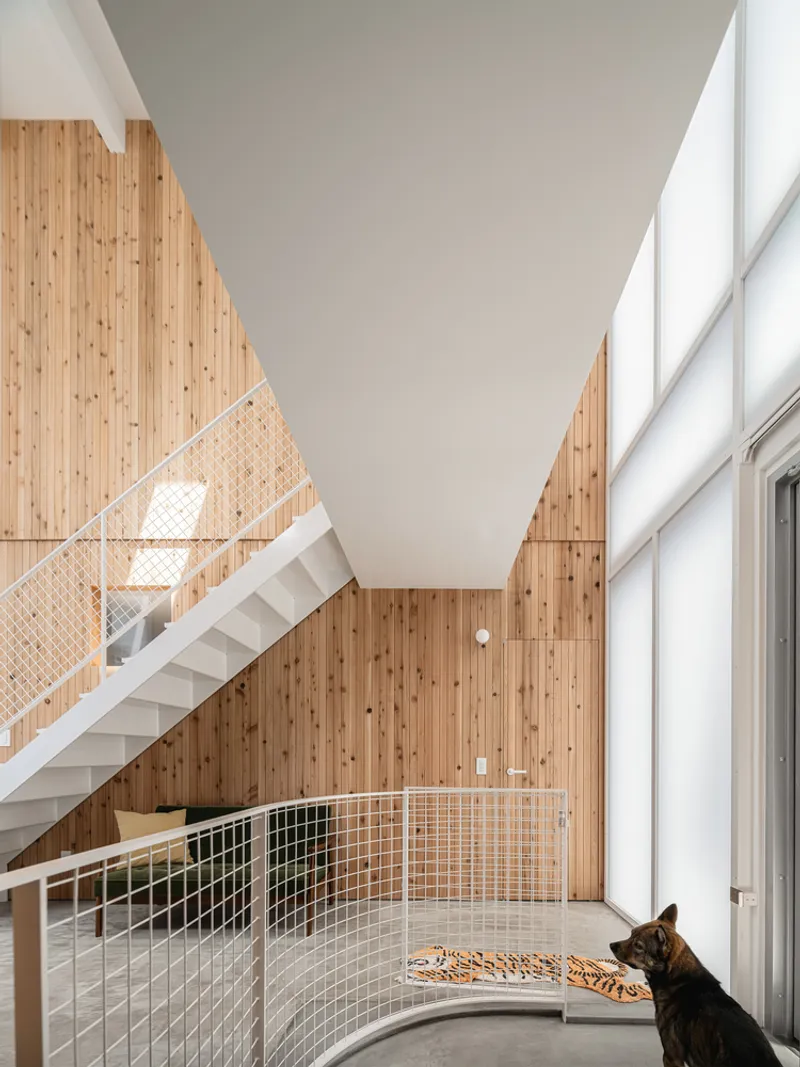
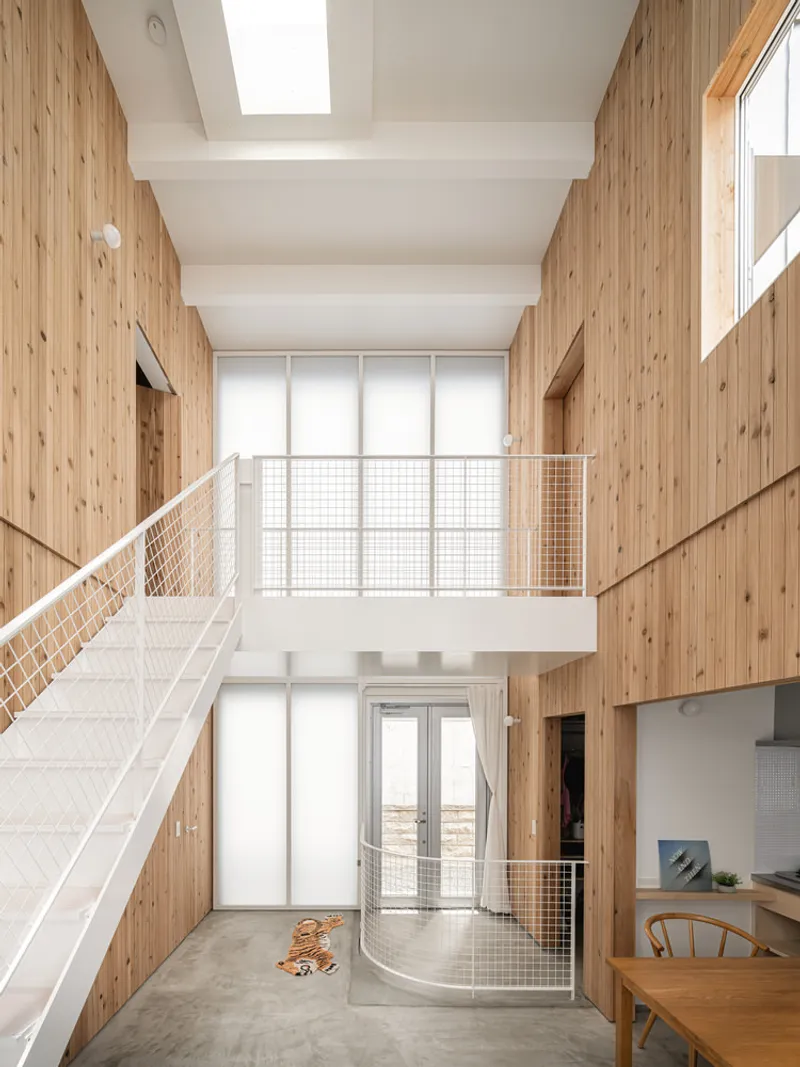
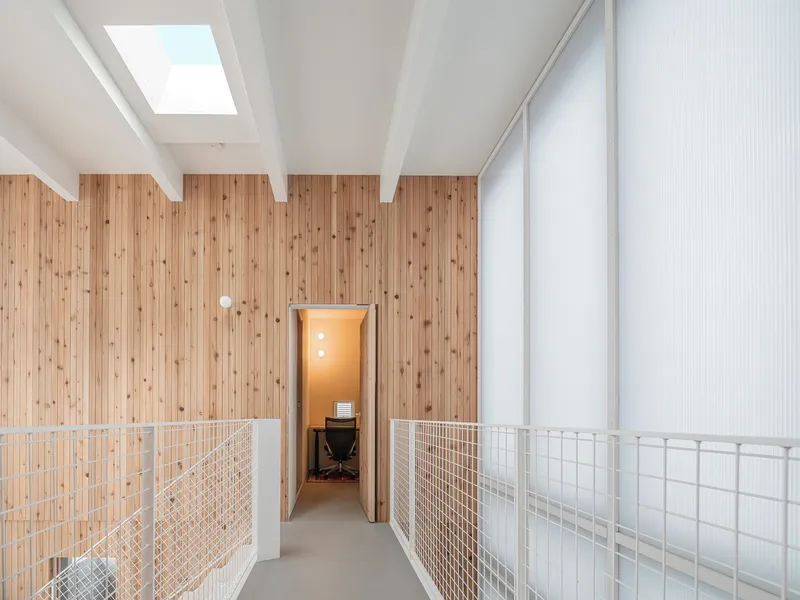
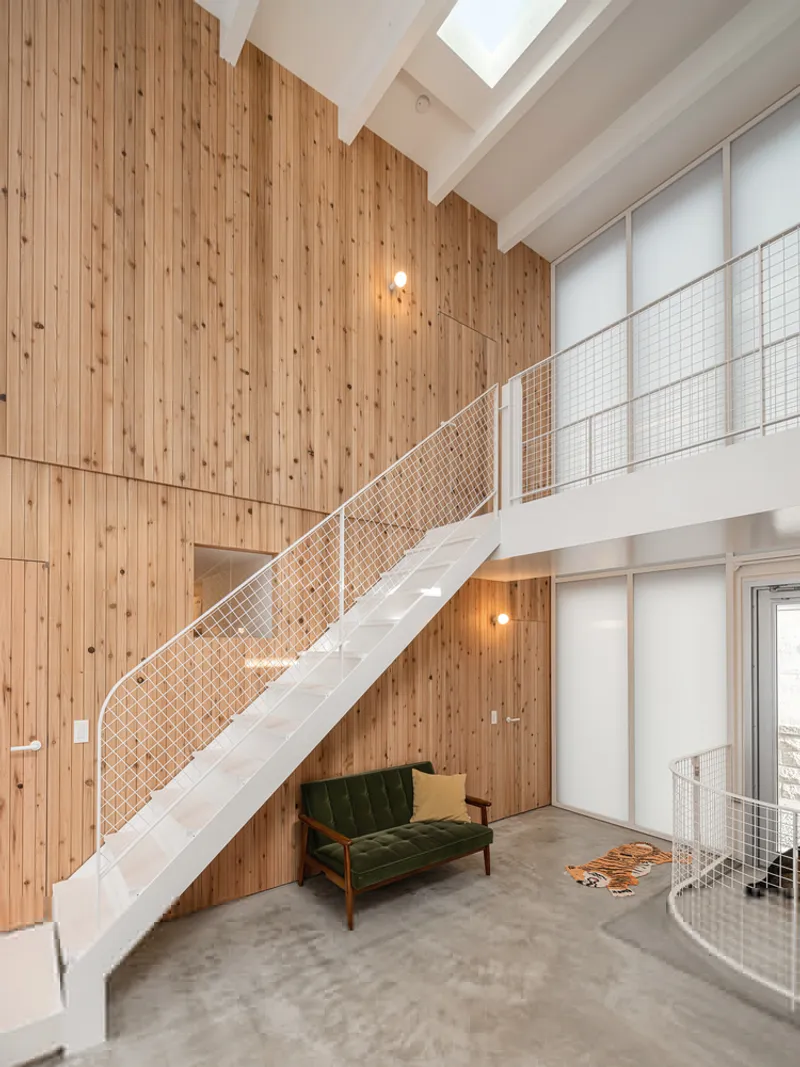
The site posed a significant design challenge: the surrounding cityscape blocked much of the natural light, creating a sense of confinement. To address this, YKAA prioritized the manipulation of light and space. At the core of the design is the Solarium, an atrium that stretches from the northern to southern ends of the house. This central volume acts as the heart of the home, allowing sunlight to penetrate deep into the interior while maintaining privacy from the chaotic outside.
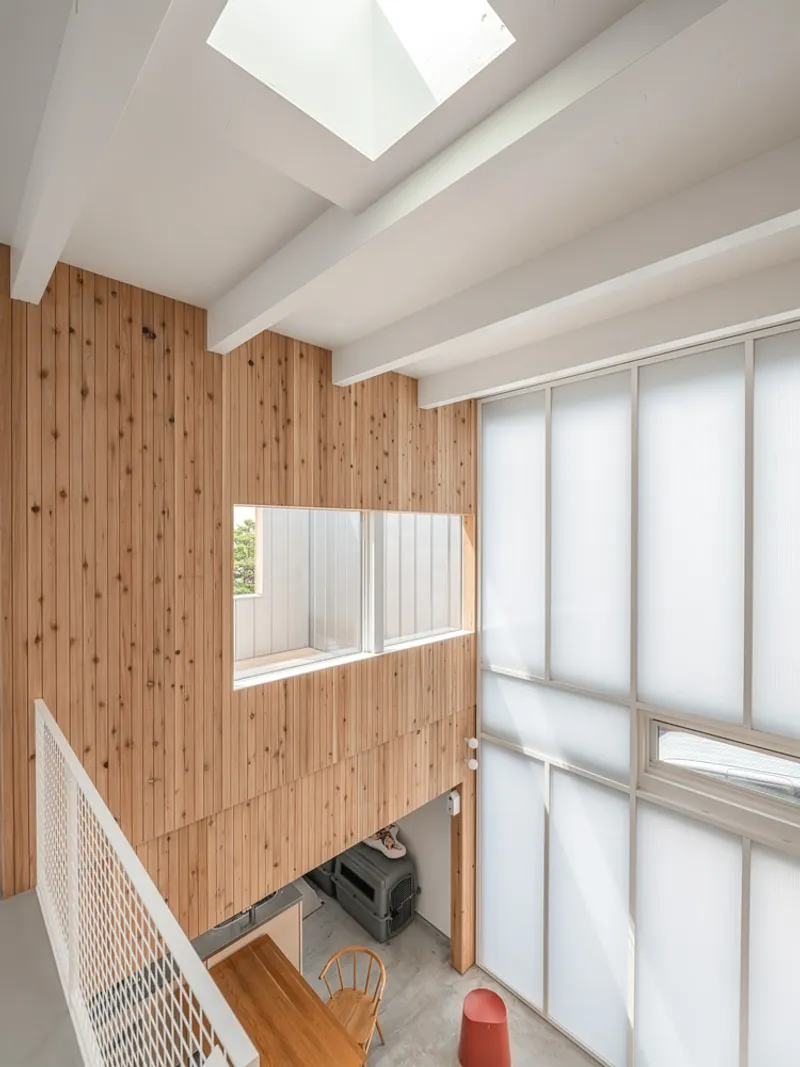
To soften the harsh urban backdrop, the team employed twin-wall polycarbonate panels atop the large atrium windows. These panels diffuse light, creating a soft, natural glow that fills the central space while filtering the urban chaos beyond. Additional skylights and wall openings introduce varying qualities of daylight, enhancing the home’s dynamic lighting throughout the day.
Compact Design with Spatial Fluidity
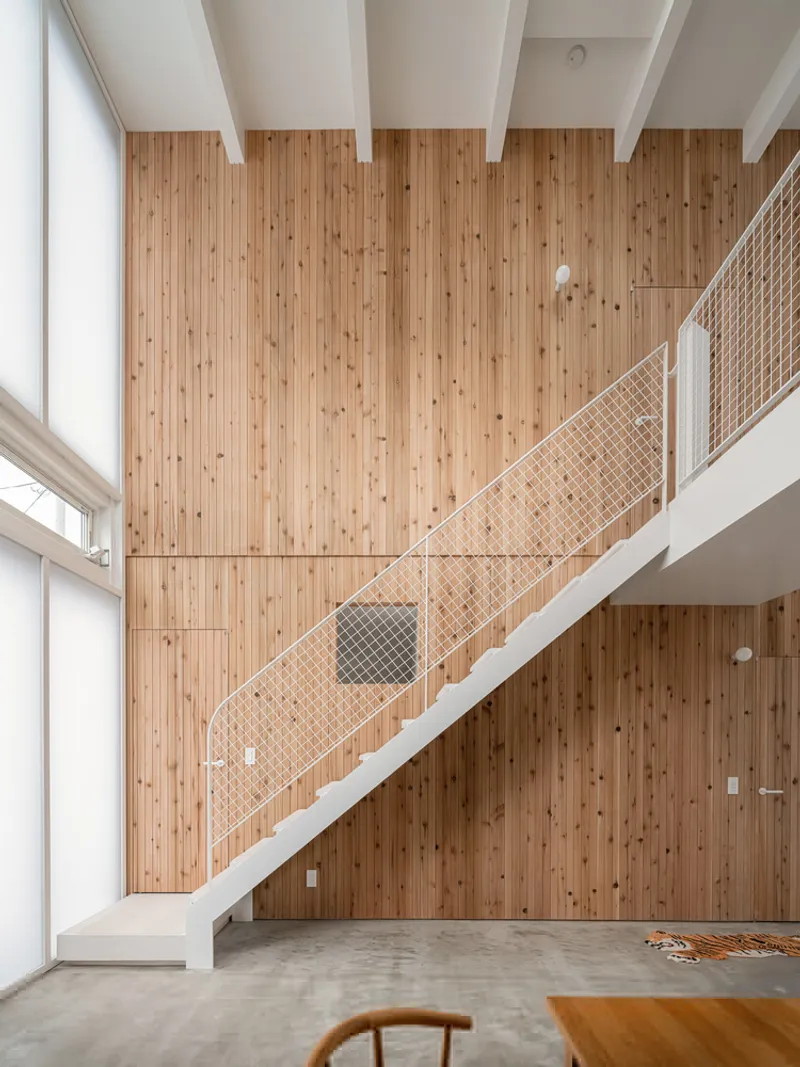
The 50 m² footprint of Solarium House required a careful balance between compactness and comfort. Private areas such as bedrooms, studios, bathrooms, and storage are strategically positioned along the east and west edges. Their deliberately low ceilings and minimal dimensions cultivate cozy, intimate spaces. In contrast, the Solarium features a double-height ceiling, emphasizing openness and creating a sense of spatial expansiveness rarely found in compact urban homes.
Invisible diagonal lines subtly connect the rooms, creating a seamless flow between private and shared spaces. This fluid spatial organization fosters a sense of continuity, making the home feel less like a collection of rooms and more like a single, unified living environment.
Functionality Meets Comfort
Hokkaido winters are notoriously cold, so insulation and heat retention were critical considerations. Polycarbonate panels over window frames reduce heat loss while maintaining transparency, allowing daylight to filter in without compromising energy efficiency. This sustainable strategy ensures comfort during harsh winters while maintaining visual connectivity to the central Solarium.
The home’s layout encourages both togetherness and privacy. While private rooms offer serene retreats, the Solarium enables family members to remain subtly aware of each other’s presence. From the entrance to the living room, dining area, and staircase, every path converges in the Solarium, reinforcing it as the social and visual nucleus of the house.
A Space to Live, Work, and Dream
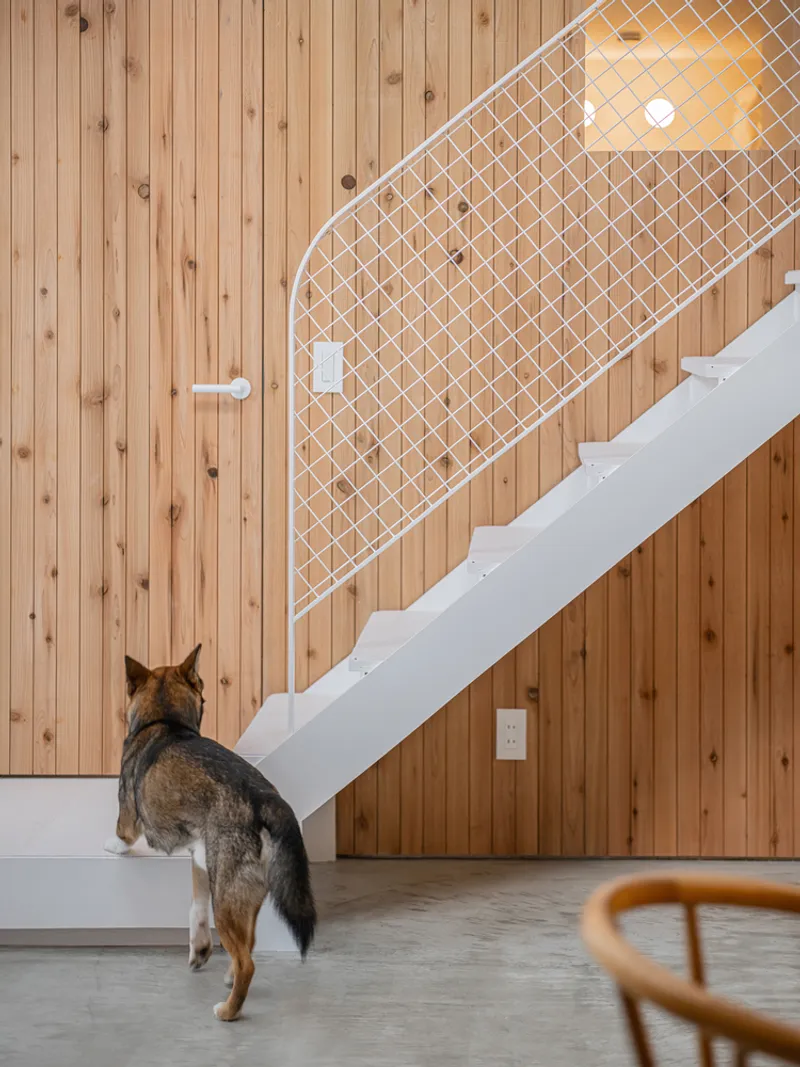
Beyond functionality, the Solarium embodies a lifestyle of flexibility and creativity. Its open design accommodates multiple activities: family gatherings, quiet reflection, or working from home. Through careful consideration of light, materiality, and spatial sequencing, YKAA has crafted a home that elevates everyday living. The house is not just a dwelling but an experience: a compact urban oasis where architecture, nature, and daily life harmoniously converge.
All photographs are works of Ikuya Sasaki, Maryana Kovalchuk


Popular Articles
Popular articles from the community


Cube Design Draws an Ecological Corridor Between Two Shenzhen Hills with the Nankai Building
Beside Shenzhen's container docks, the Nankai Building pairs stacked balconies with a climbing green screen to connect two hillsides across its height.

Jaramillo Van Sluys Arquitectura and Urbanismo Turn a Demolished Registry Lot in Quito into an Orchard Plaza
In Quito's Centro Histórico, a 2,800 m² plaza exposes the San Agustín convent wall and redraws its lost Augustinian orchard in volcanic stone.

David Ortega Stacks a Two-Story Mexico City Penthouse Around a Steel Stair and a Pergola-Shaded Roof Terrace
In Colonia Roma, a 300 m² penthouse uses oak joinery, a planted steel stair and a slatted roof pergola to make a new-build apartment feel like a house.

Architekt Andreas Gruber Scatters 23 Dark Timber Chalets Across a South Tyrolean Forest Edge
In Molini di Tures, Amonti Chalets breaks a resort into a hamlet of gabled timber houses, with parking, storage and services pushed into the slope.

Similar Reads
You might also enjoy these articles


Hodi-Mandai Geram
Project Function: Preservation and revitalization of the Intangible heritage and socio-spatial identity of the Hodi by Housing, Cultural Memory Center, Sacred Grove, landscape, local tourism economy


Olio Towers: A Mid-Rise for Performers That Fuses Housing, Rehearsal, and Stage
Located blocks from Houston's Theater District, this modular tower stacks living units around a central performance atrium.

Oasis: Modular Green Housing Carved into Dhaka's Urban Fabric
A shortlisted Plugin Housing entry reclaims unauthorized settlements in Dhaka with stepped concrete volumes, green roofs, and ventilation-driven design.

Black Hole: A Floating Megastructure for the Post-Physical Era
Emiliano Mazzarotto envisions a spherical, self-scaling arena where e-sports, digital hotels, and holographic stadiums replace traditional public space.

Explore Solar Fabric Competitions
Discover active competitions in this discipline

Challenge to reimagine the Iron Throne

Photograph architecture without architects

Illustrate the lost glory of Angkor Wat - Render Challenge

Design challenge to reuse E-waste
Comments (0)
Please login or sign up to add comments
No comments yet. Be the first to comment!