
Split Level House by OFIS Architects: Modern Slovenian Villa with Timeless Design
Split Level House by OFIS Architects in Ljubljana features black brick façade, double-height spaces, portico entrance, corner design, and panoramic marsh views.

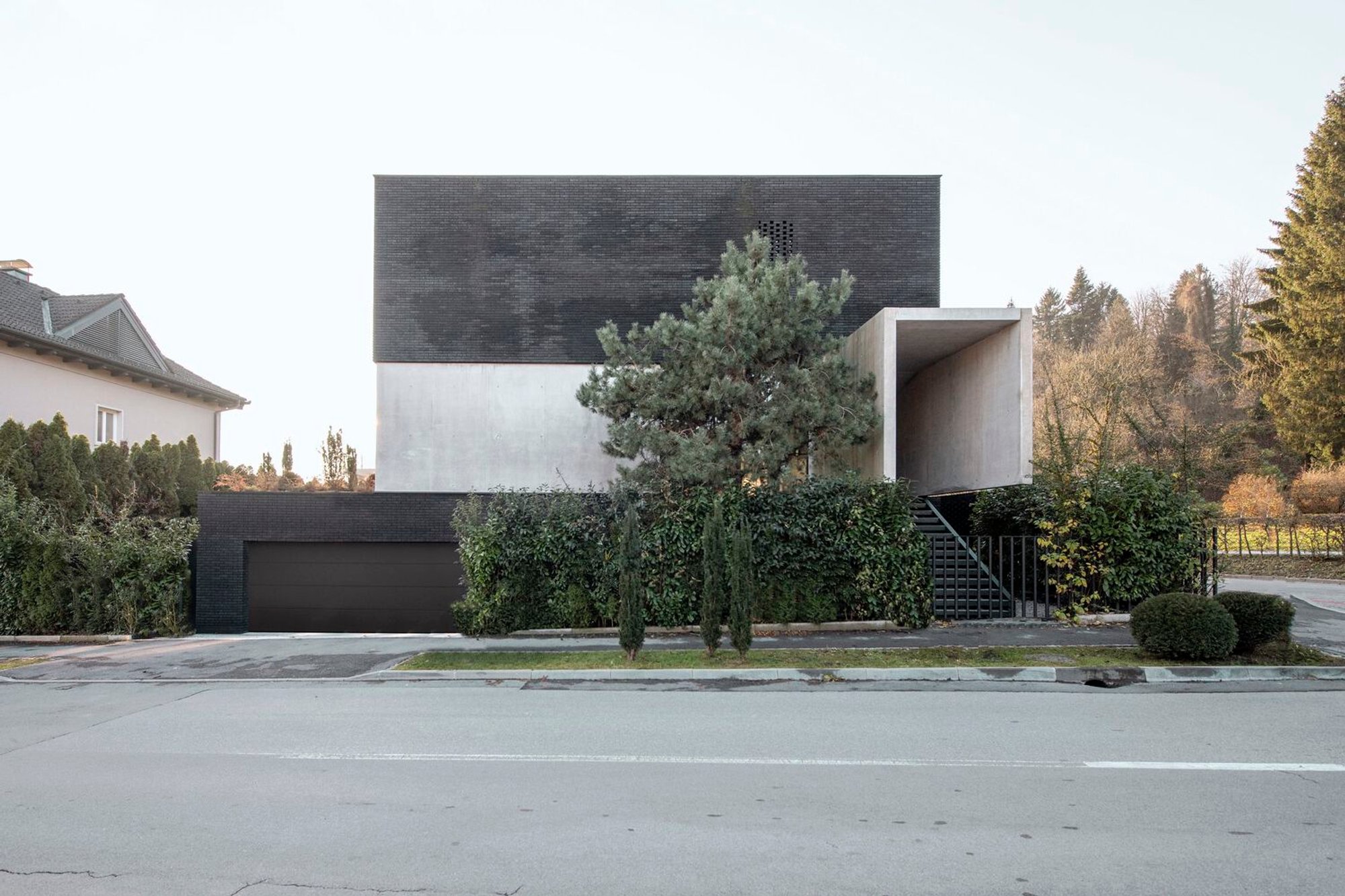
Located in Ljubljana, Slovenia, the Split Level House by OFIS Architects (2024) is a masterclass in contemporary residential architecture, blending historical context, natural surroundings, and modern living. The project sits along Večna pot, one of Ljubljana’s oldest streets, a path winding through ancient forests and the slopes of what is now Tivoli Park.
Historical and Geographical Context
The site of the villa has a rich history. Historically, this area formed the shores of a prehistoric lake within the Ljubljana basin. Evidence of pile-dwelling settlements suggests that the land was once submerged, and early dwellings adapted to flooding risks. Pre-regulation architecture evolved here with raised ground floors and semi-underground basements to mitigate flood damage. This historical legacy influenced the villa’s design, especially the use of a monumental portico, a functional and symbolic architectural element.
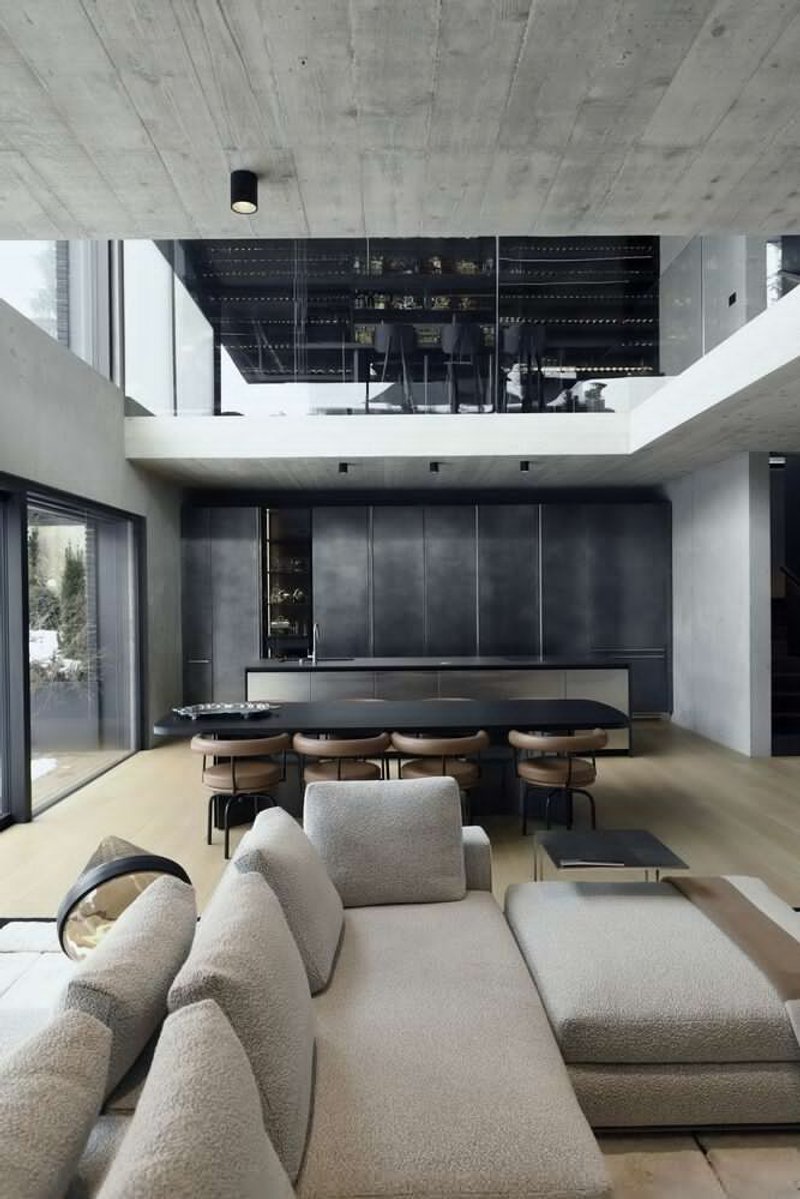
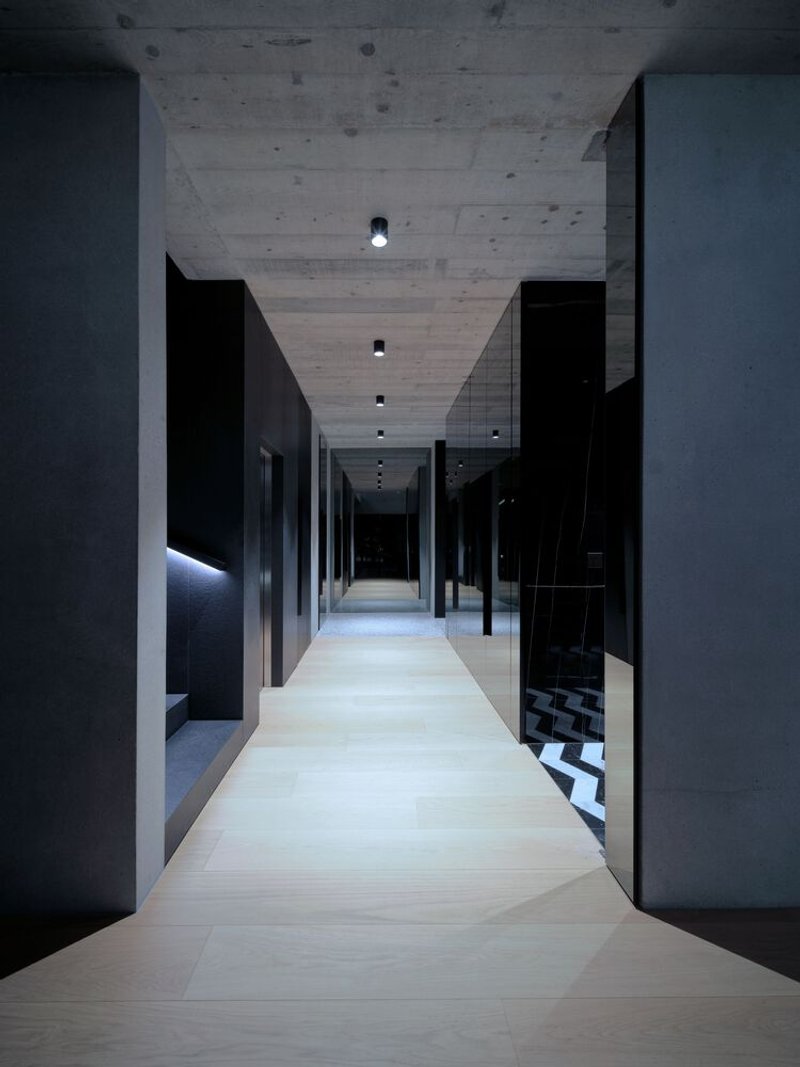
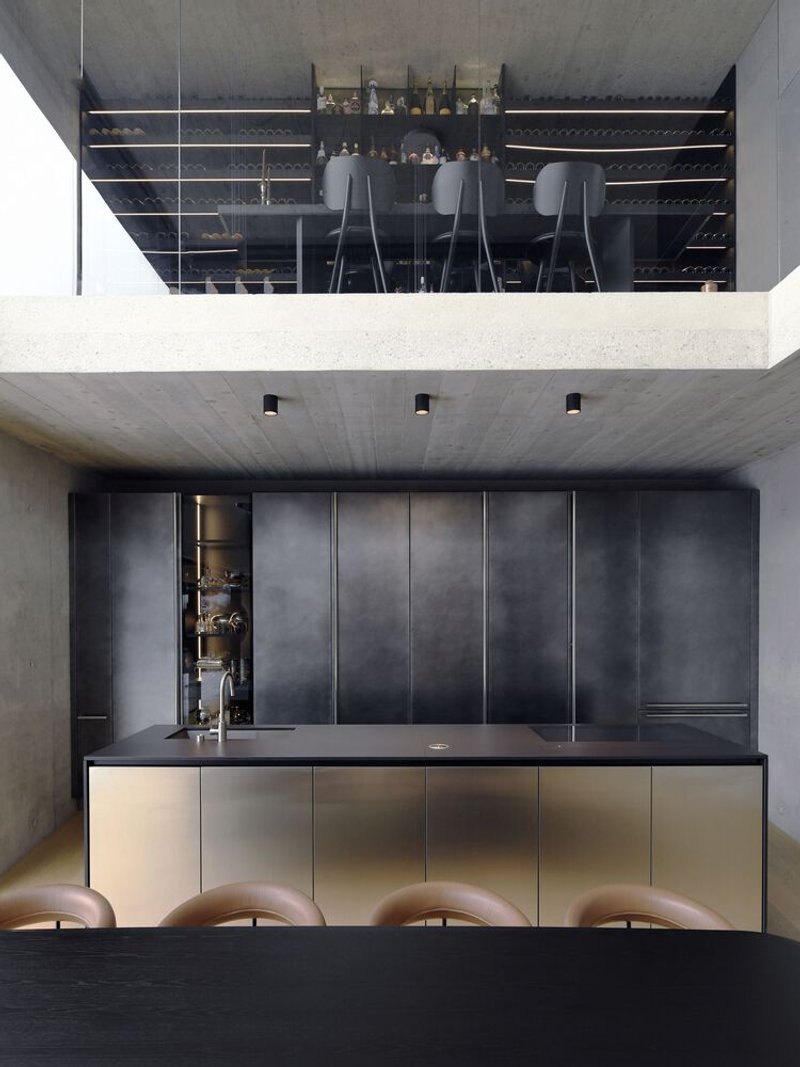
Architectural Layout and Spatial Planning
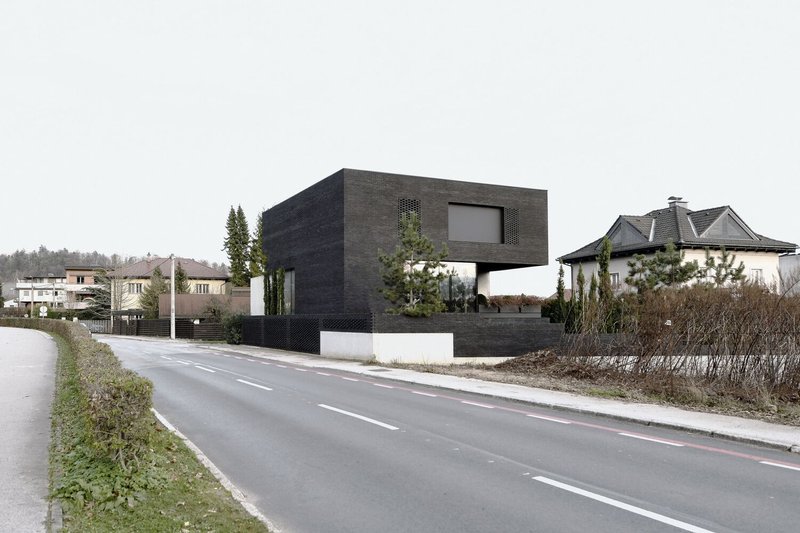
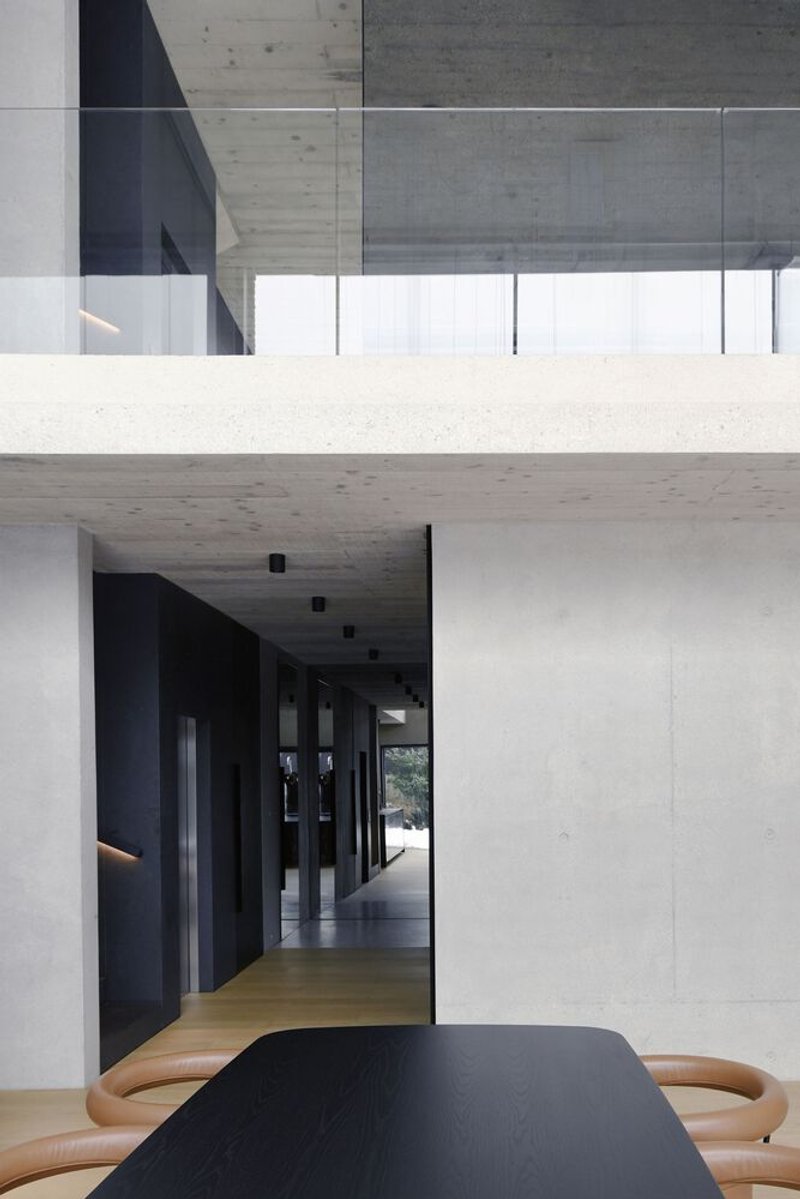
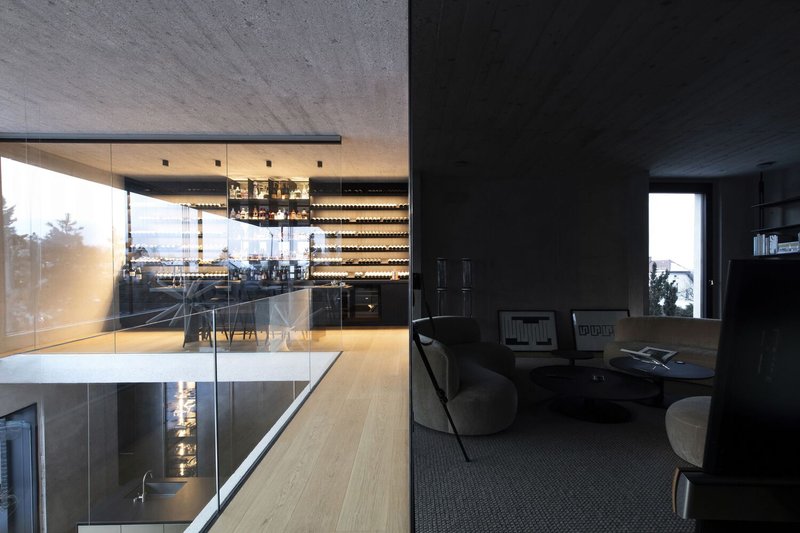
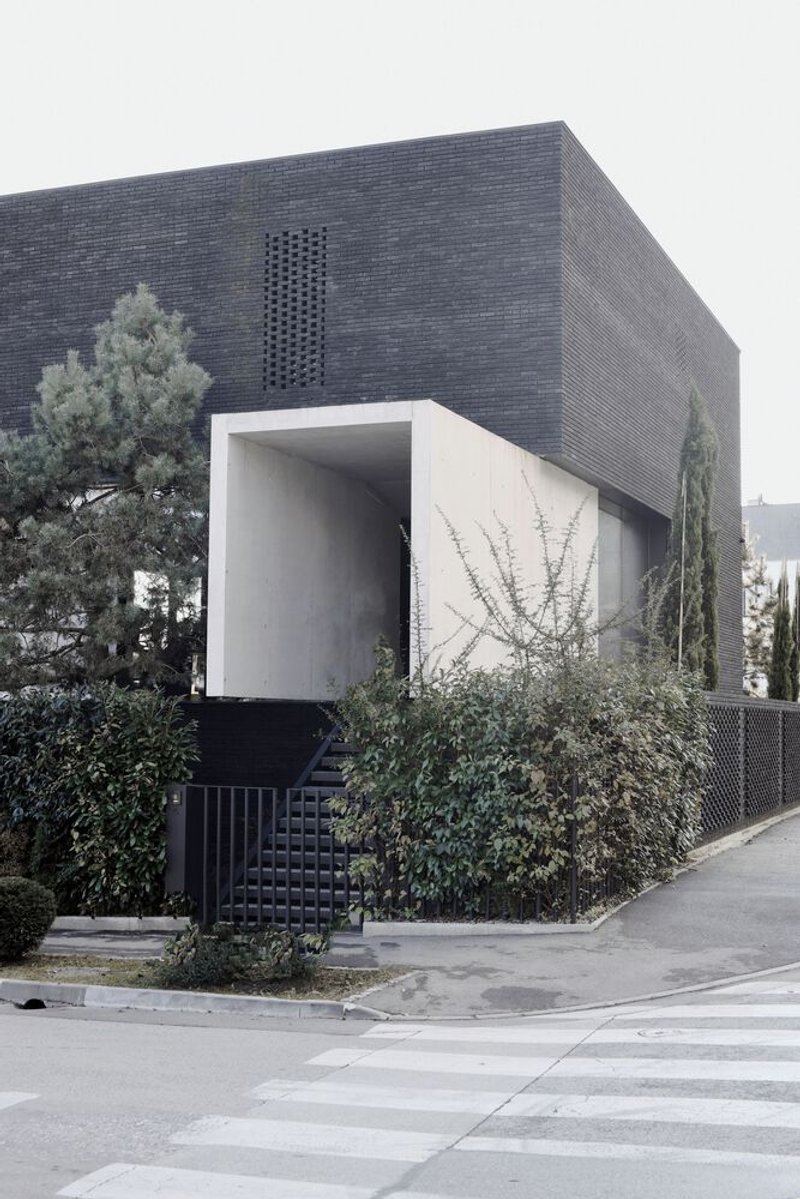
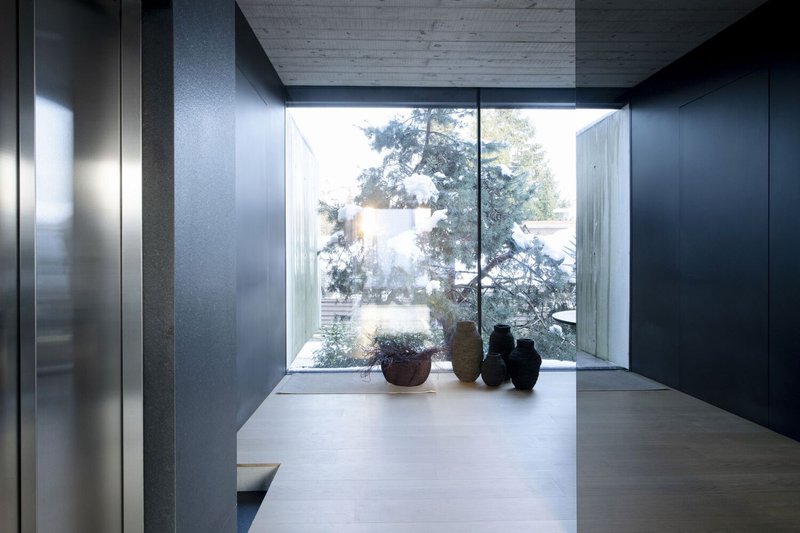
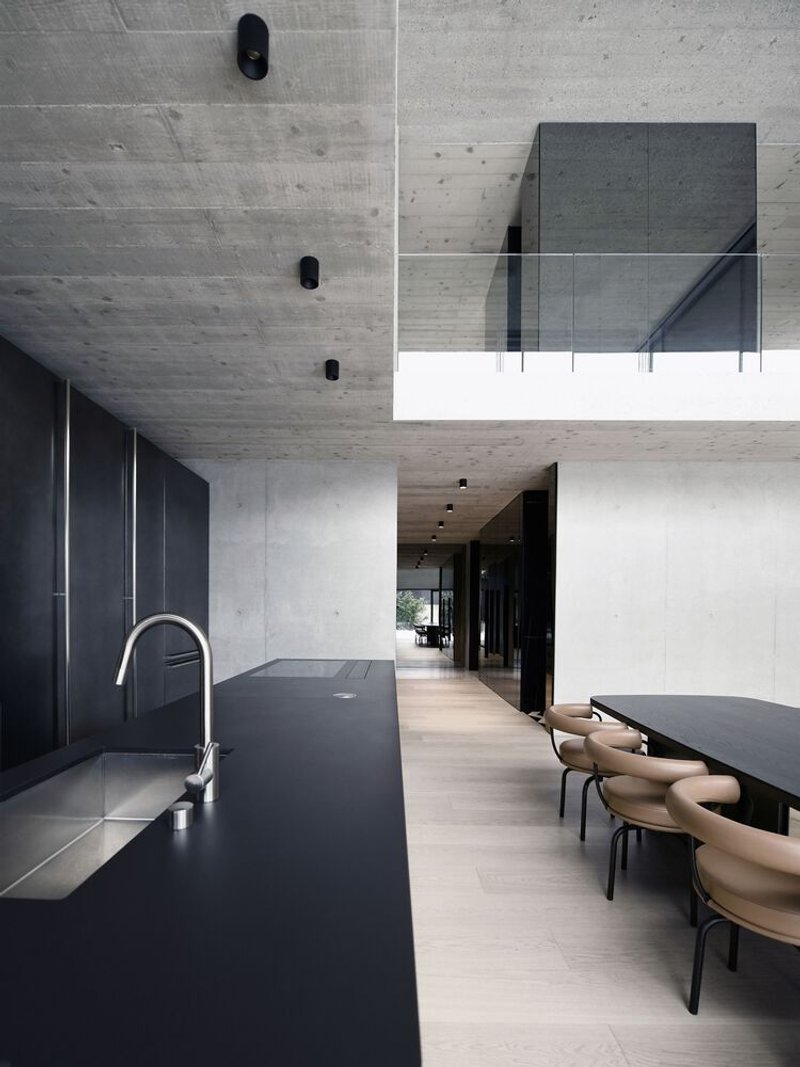
Positioned at the corner of two streets, the villa’s layout responds dynamically to its urban context. The corner location dictated both the façade treatment and the dual-entrance strategy. The main formal entrance features a grand portico that elevates the ground floor, marking the ceremonial ritual of entry. This leads into a foyer and a spacious living area, connected to the first floor via a double-height void, creating a dramatic vertical spatial experience.
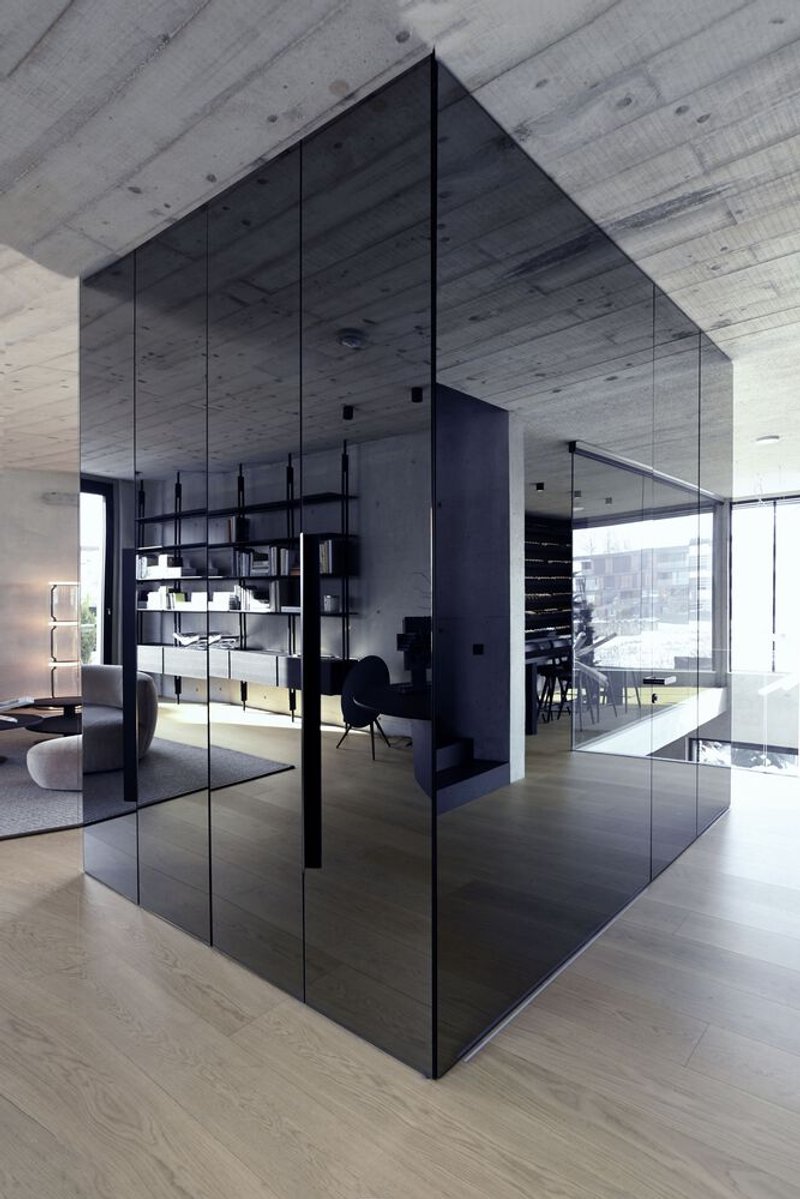
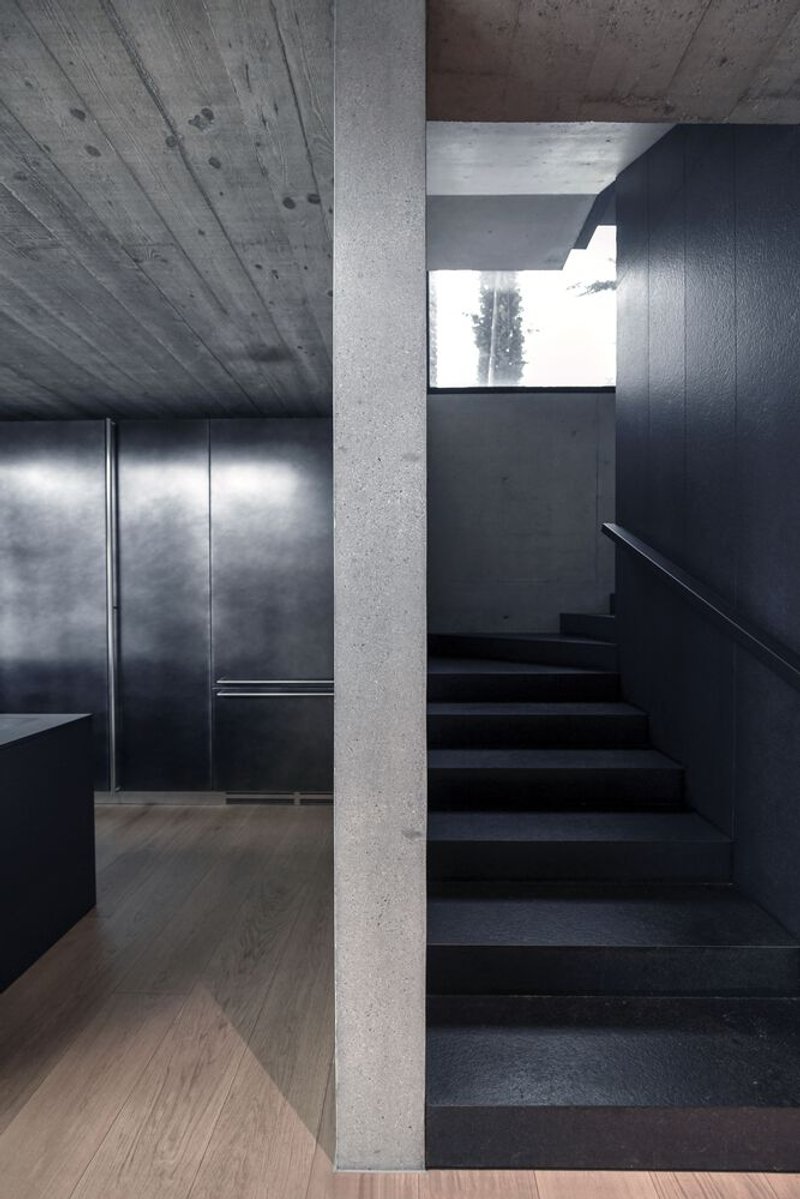
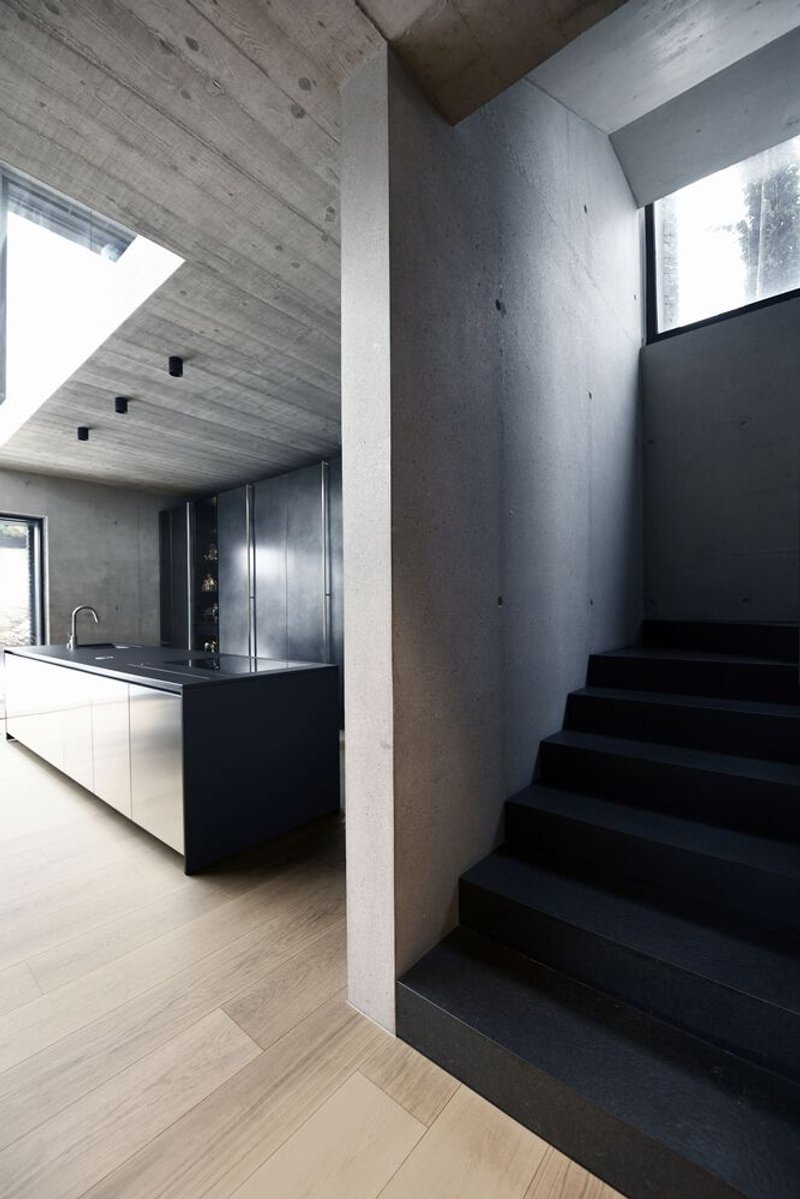
A secondary street-level entrance serves as the family’s everyday access. The ground floor accommodates a modern kitchen, dining and family room, and service areas, while a rectangular staircase seamlessly connects all three levels. The upper floor is dedicated to private sleeping quarters, ensuring a clear separation between public and private zones.
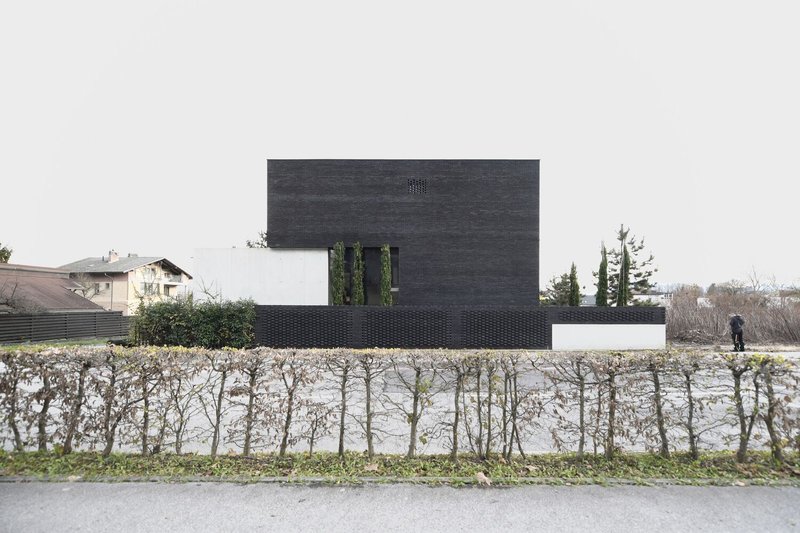
Materiality and Façade Design
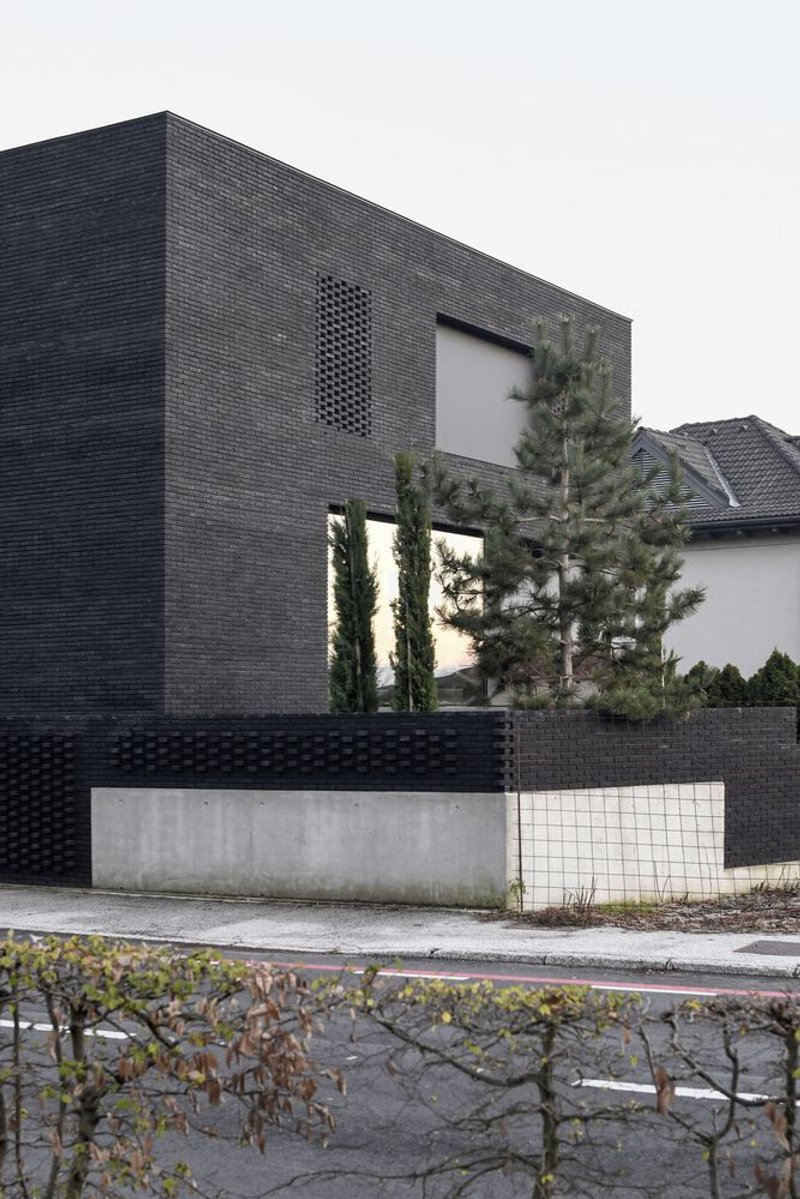
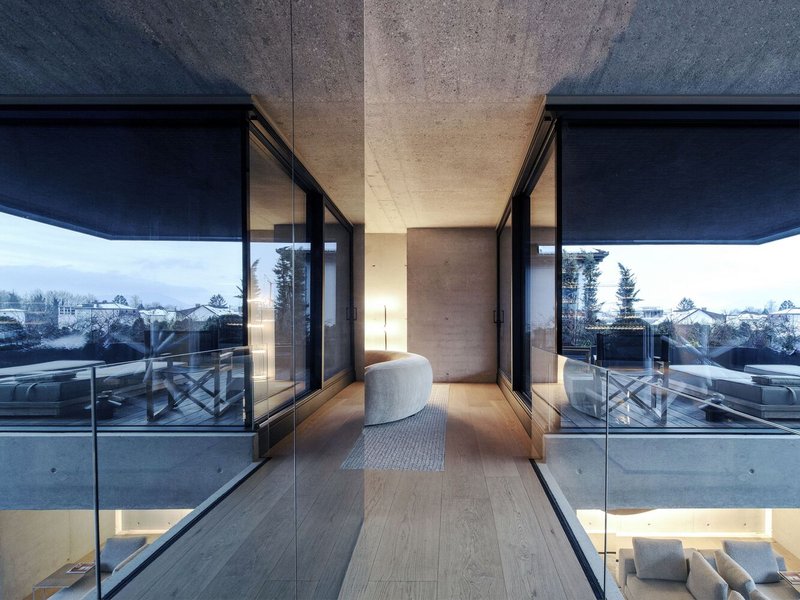
The villa’s striking black brick façade establishes a strong connection to the local context. The surrounding soil, composed of black peat, echoes the dark tones of the Ljubljana marshes, and the brickwork subtly dematerializes the building’s volume, contrasting beautifully with the surrounding greenery. The south-west corner of the house cantilevers over the ground floor, incorporating a large panoramic window overlooking the marsh, visually linking interior spaces with nature.
Architectural Themes and Design Language
The Večna pot Villa interprets timeless architectural motifs. The portico entrance, corner composition, and tripartite façade organization reference classical architecture while integrating modern design principles. The villa’s overall form weaves historical references with contemporary aesthetics, creating a cohesive and elegant addition to Ljubljana’s urban fabric.
Design Team and Project Details
- Architects: OFIS Architects
- Year: 2024
- Photographers: Tomaz Gregoric, Janez Martincic
- Structural Engineering: Project PA
- Mechanical Engineering: STROJNIK
- Electrical Engineering: Elektrobiro
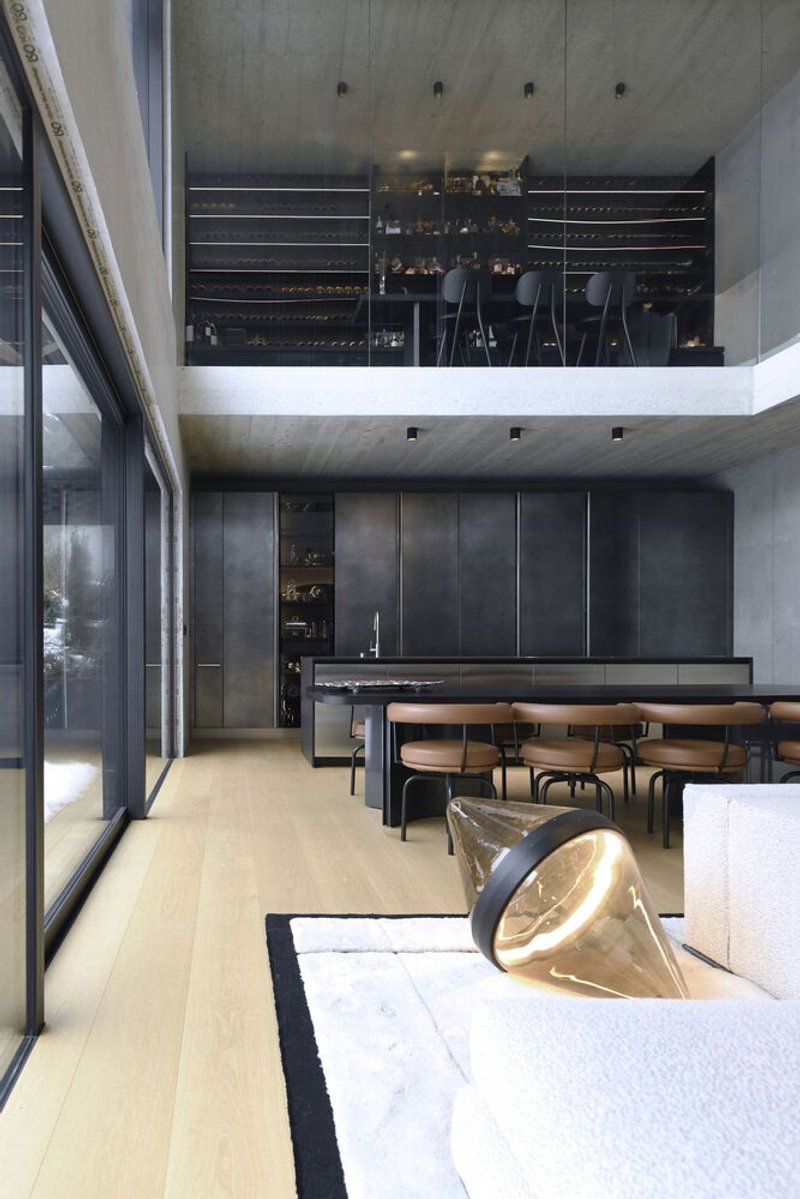
This project demonstrates sustainable urban residential design, modern Slovenian architecture, and thoughtful integration of history, landscape, and daily life into a contemporary villa.
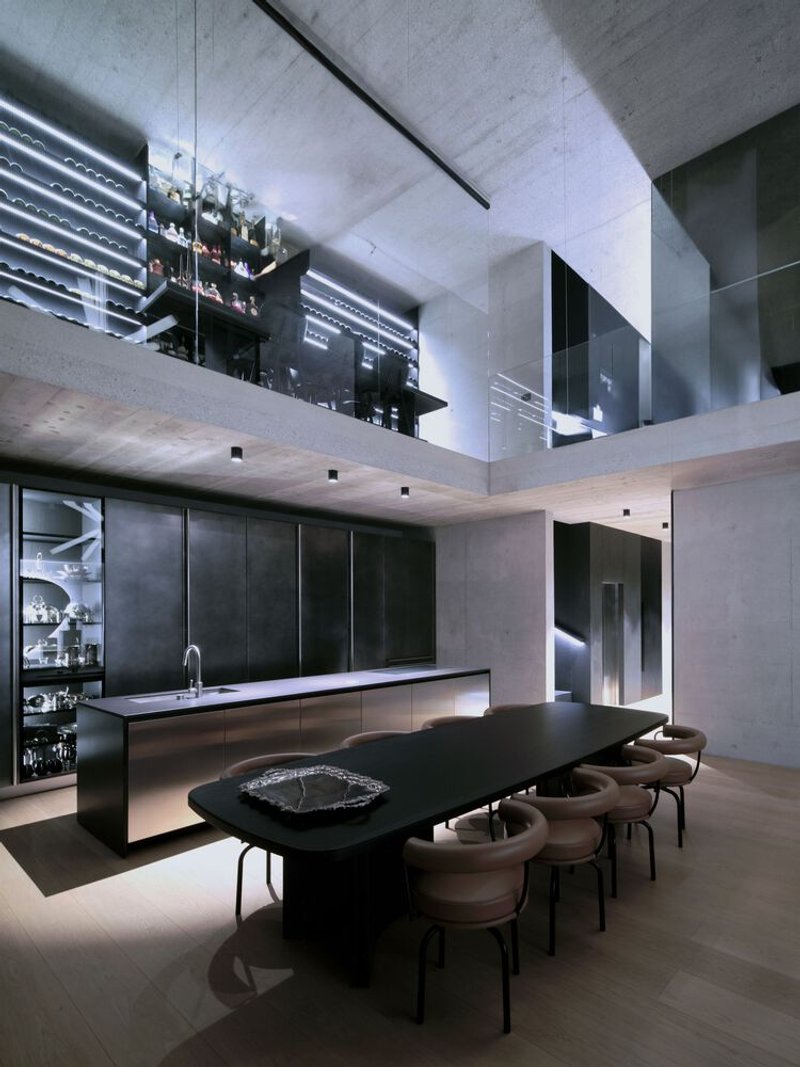
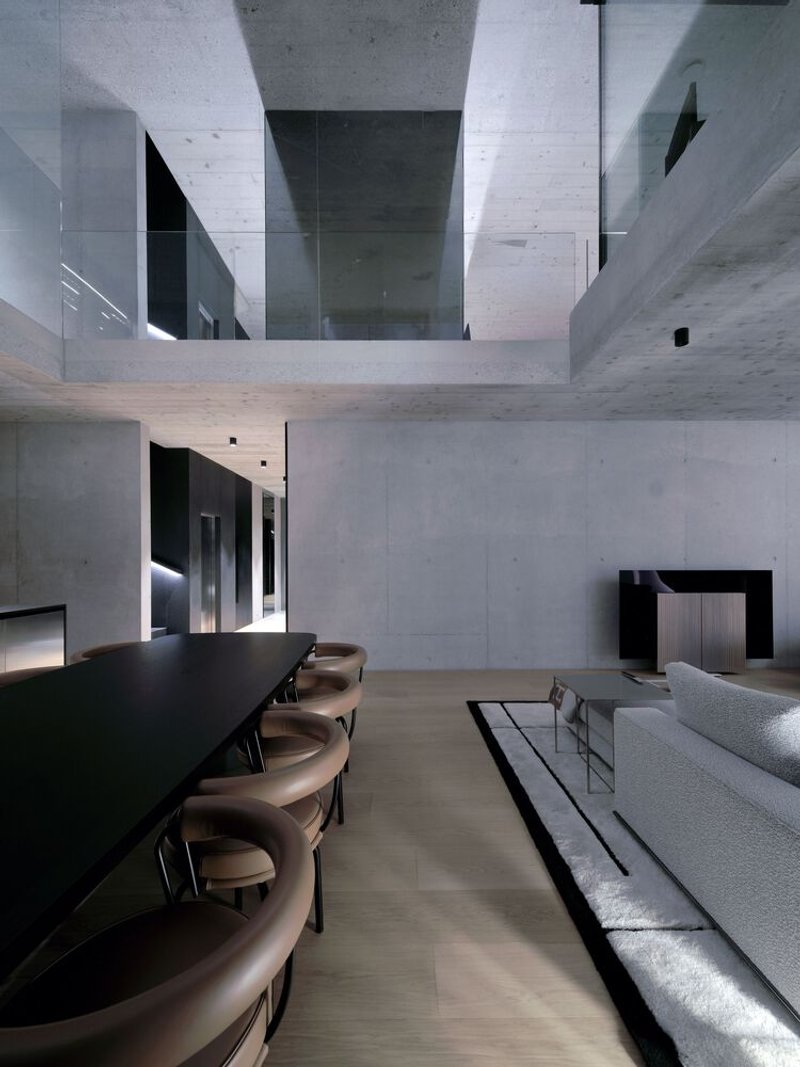
All photographs are works of
Tomaz Gregoric, OFIS Architects




Popular Articles
Popular articles from the community

Kerry Kounnapis Packs 800 Daily Coffees into a 43-Square-Metre Melbourne Laneway Bar
Palace Coffee channels Pellegrini's and European standing bars through oxide-red steel and spotted gum timber in a Ridgway Place sliver.
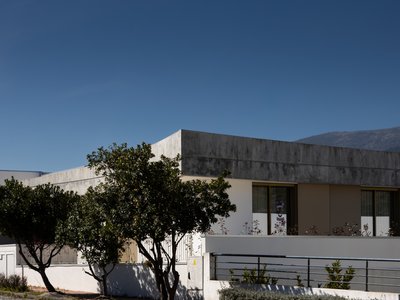
PLATAFORMArq Folds a Concrete Roof Over the Portuguese Mountains in House #474
A 220-square-meter residence in Teixoso, Portugal, wraps board-formed concrete into an angular canopy that frames the Serra da Estrela foothills.

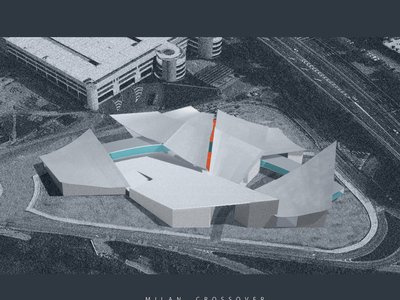
Milan Crossover: Sustainable Architecture for a New Fashion Culture in Milan
Milan Crossover transforms fashion culture through sustainable architecture, linking material libraries, remake studios, and public runways.
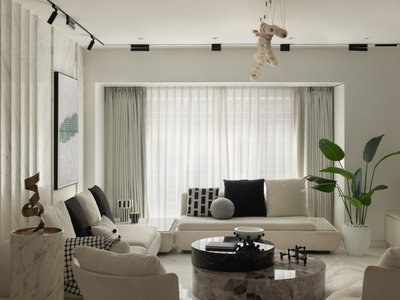
Inside a Timeless Mumbai Residence by Aether Studio
Aether Studio's 2,250 sq ft apartment in Malad, Mumbai uses marble, brass, boucle, and disciplined restraint to build a quiet retreat from the city.


Similar Reads
You might also enjoy these articles
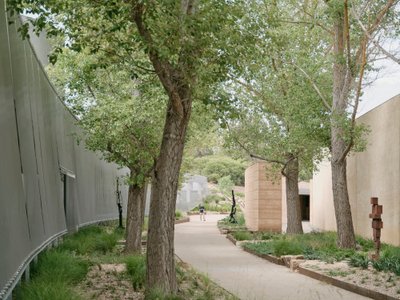
Kerstin Thompson Architects Buries a Cultural Center Beneath Its Own Car Park in the Yarra Valley
The Eva and Marc Besen Centre at TarraWarra hides 2,375 square metres of gallery and archive space under a reinstated landscape in Healesville, Australia.
Kerry Kounnapis Packs 800 Daily Coffees into a 43-Square-Metre Melbourne Laneway Bar
Palace Coffee channels Pellegrini's and European standing bars through oxide-red steel and spotted gum timber in a Ridgway Place sliver.
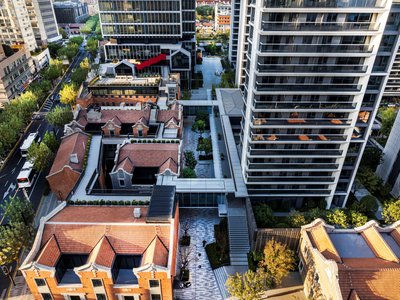
Nikken Sekkei Stacks a Three-Dimensional Lilong Atop Shanghai's Historic Alleyways
A 180-meter tower and restored heritage houses on Nanjing West Road reimagine communal lane life as a vertical mixed-use district.
PLATAFORMArq Folds a Concrete Roof Over the Portuguese Mountains in House #474
A 220-square-meter residence in Teixoso, Portugal, wraps board-formed concrete into an angular canopy that frames the Serra da Estrela foothills.


Explore Housing Competitions
Discover active competitions in this discipline




The International Standard for Design Portfolios


The Global Benchmark for Architecture Dissertation Awards


The Global Benchmark for Graduation Excellence


Challenge to reimagine the Iron Throne
Comments (0)
Please login or sign up to add comments
No comments yet. Be the first to comment!