

Sustainable Brick House Design: Nogal House by Escobedo Soliz in Toluca
Nogal House by Escobedo Soliz showcases sustainable brick house design, balancing affordability, flexibility, and thermal comfort in a contemporary home.


A Contemporary Approach to Affordable and Sustainable Living
Nogal House, designed by Escobedo Soliz Studio, is a compelling example of sustainable brick house design that prioritizes affordability, adaptability, and material efficiency. Located in a semi-rural area on the outskirts of Toluca, Mexico, this 100 m² residence responds to the needs of a newlywed couple seeking a home that can evolve with their growing family. By embracing industrialized brick, concrete, and modular construction techniques, the design achieves a balance between durability, functionality, and aesthetic warmth.


Modular Growth and Flexible Living Spaces
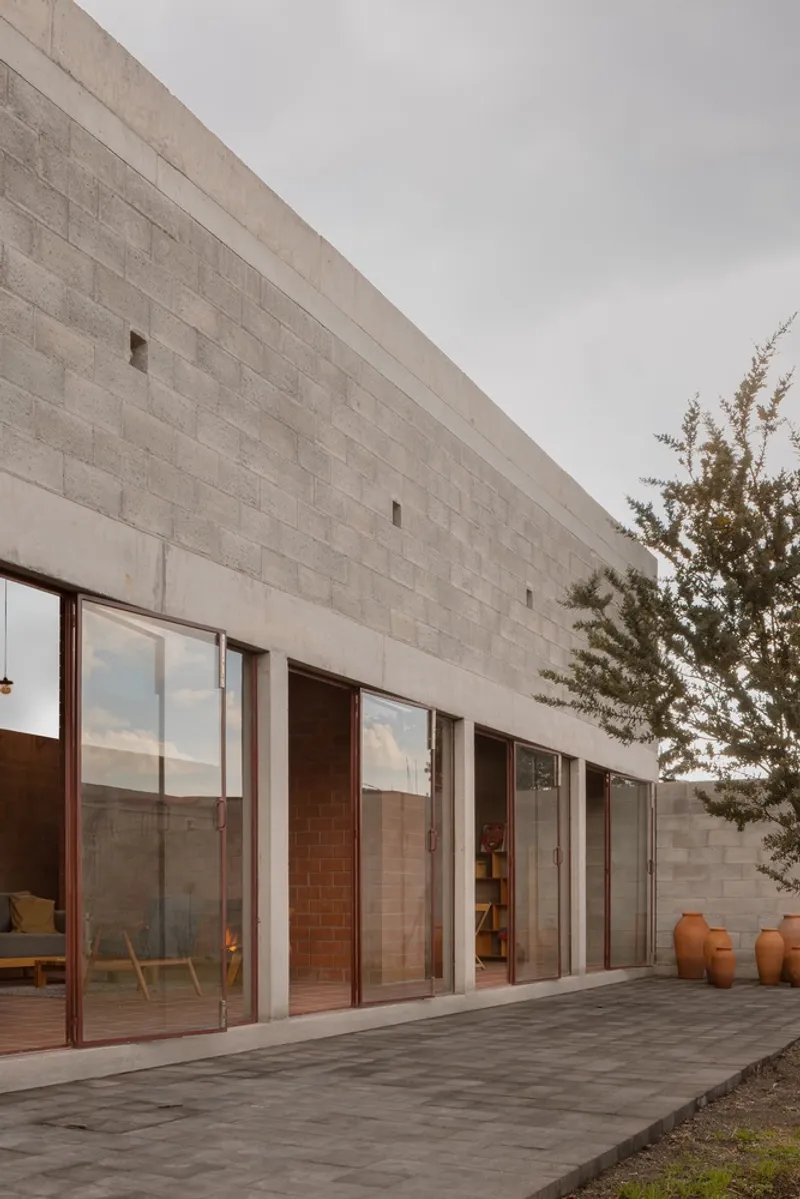
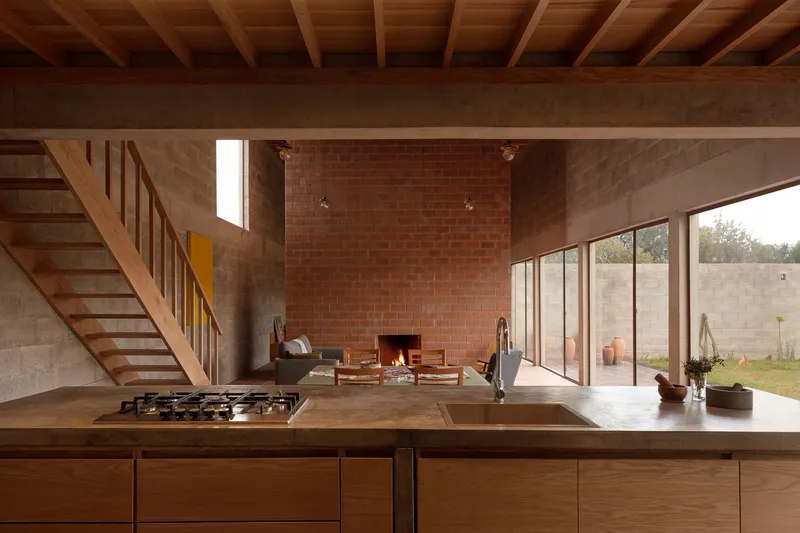
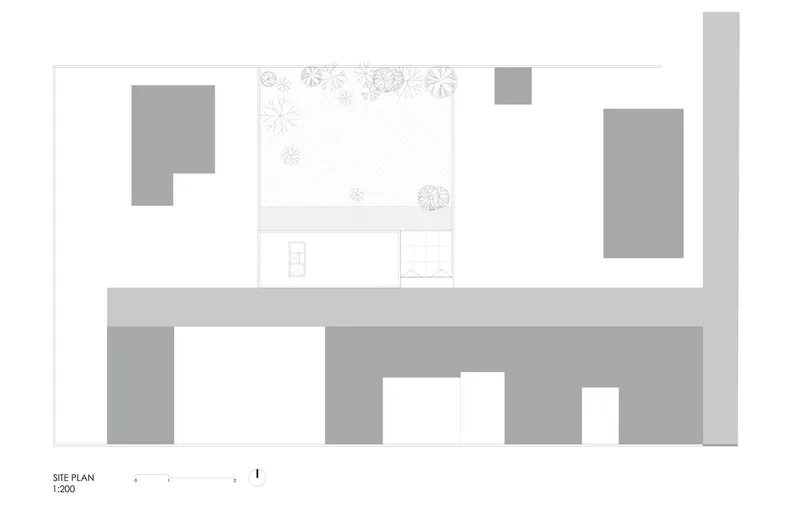
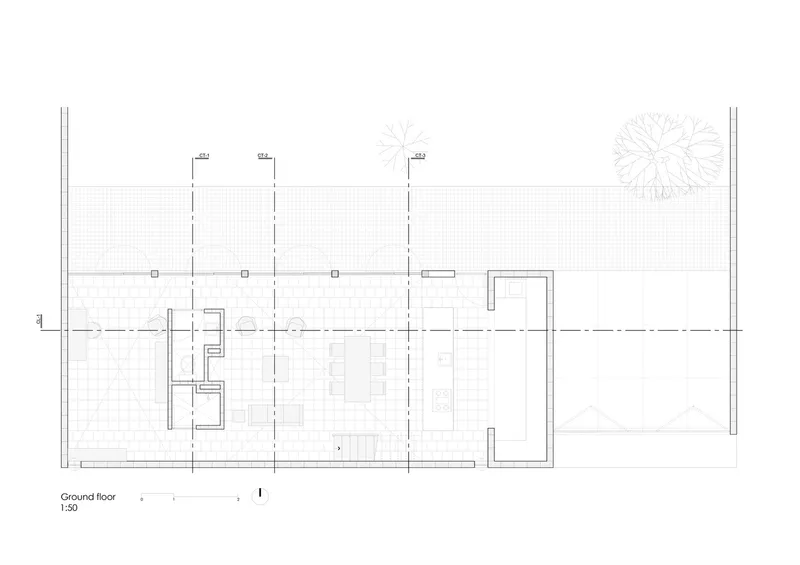
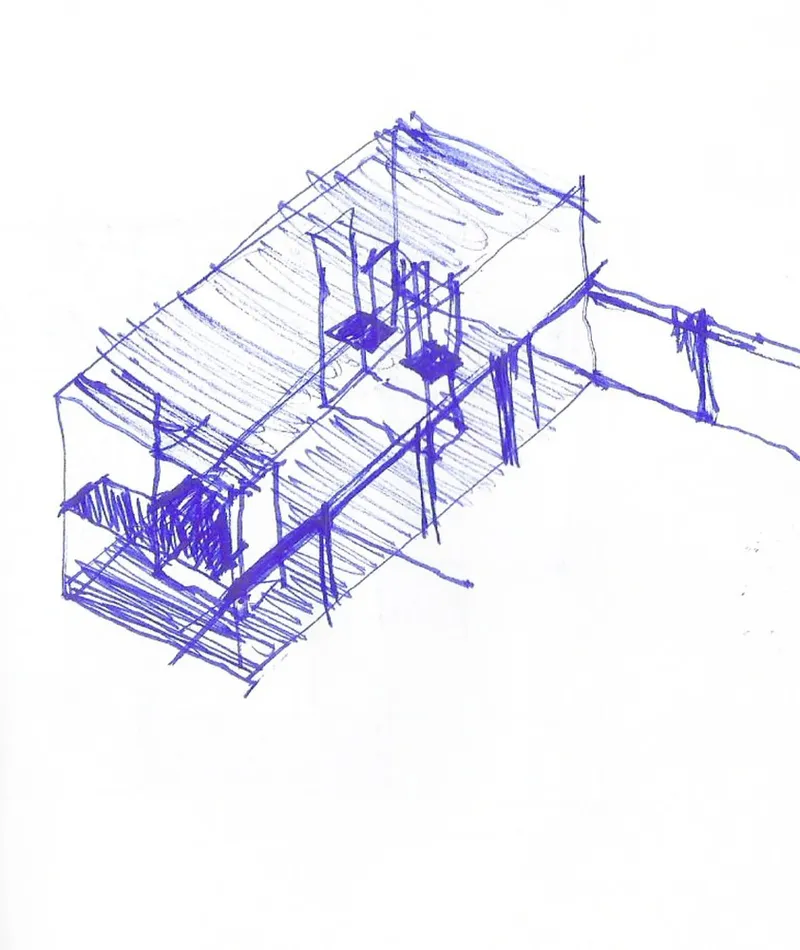
Designed for phased construction, Nogal House introduces a flexible layout that allows for future expansion. The first phase consists of a high-ceilinged rectangular pavilion that serves as the primary living space. This main volume aligns with the street front while opening onto a generous backyard garden, offering a seamless transition between indoor and outdoor environments.


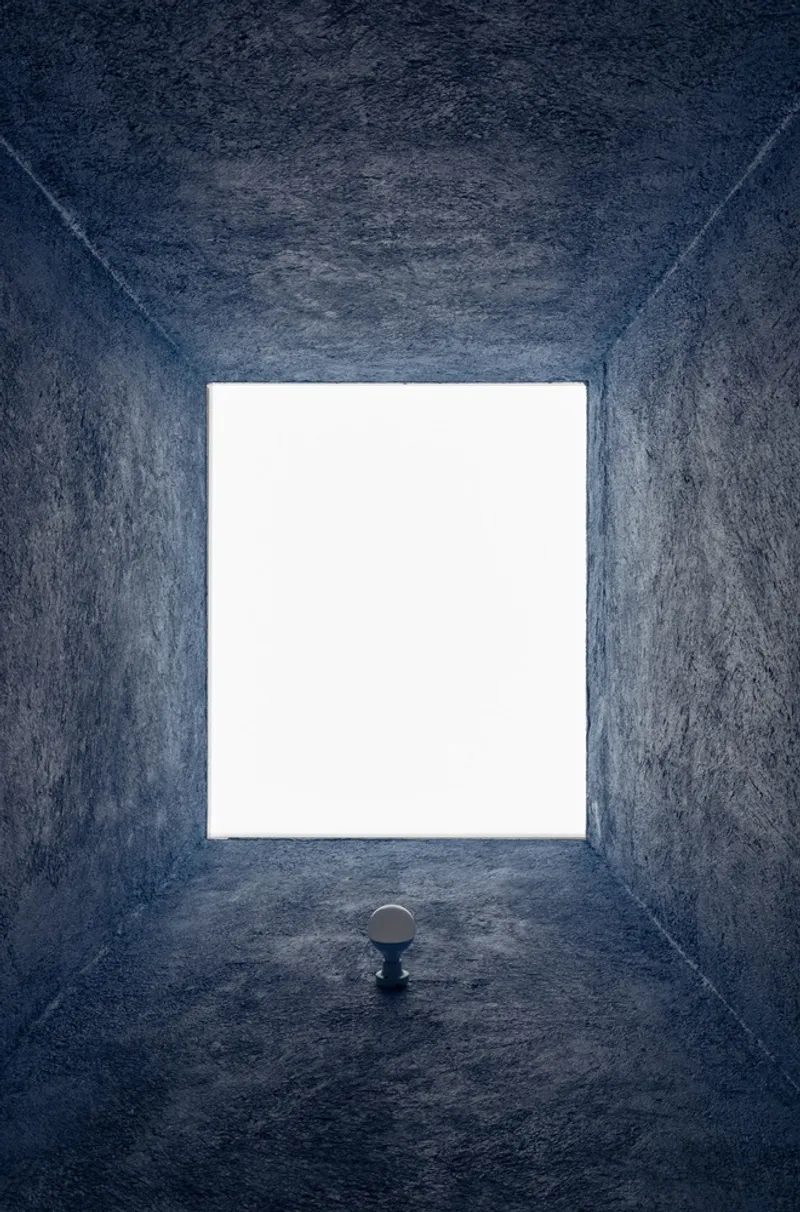
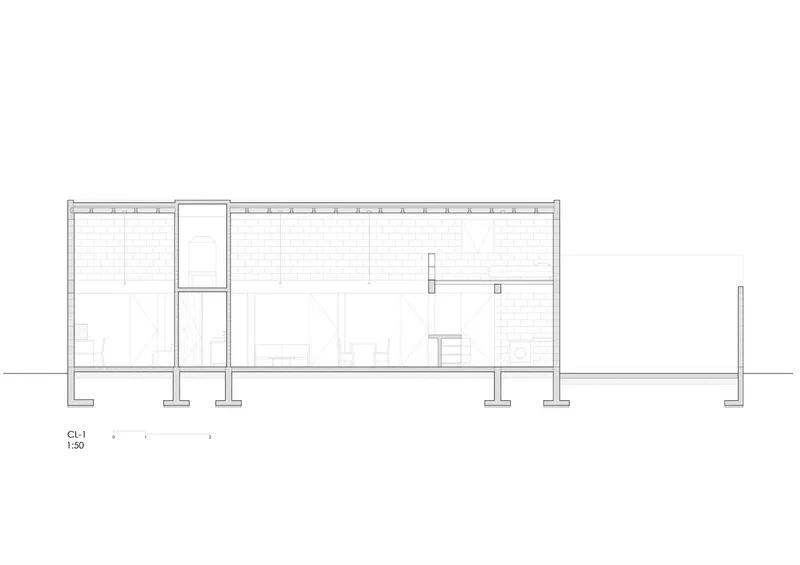
Within this concrete shell, a secondary rectangular prism constructed from ribbed industrial brick houses the service areas, including the bathroom, water storage, and fireplace. This internal volume acts as both a functional core and a visual counterpoint to the raw concrete exterior. The remainder of the space is an open-plan area encompassing the study, living room, dining area, and kitchen. Above the kitchen, a wooden loft accommodates the bedroom, maximizing spatial efficiency without compromising the openness of the design.

Materiality and Thermal Comfort
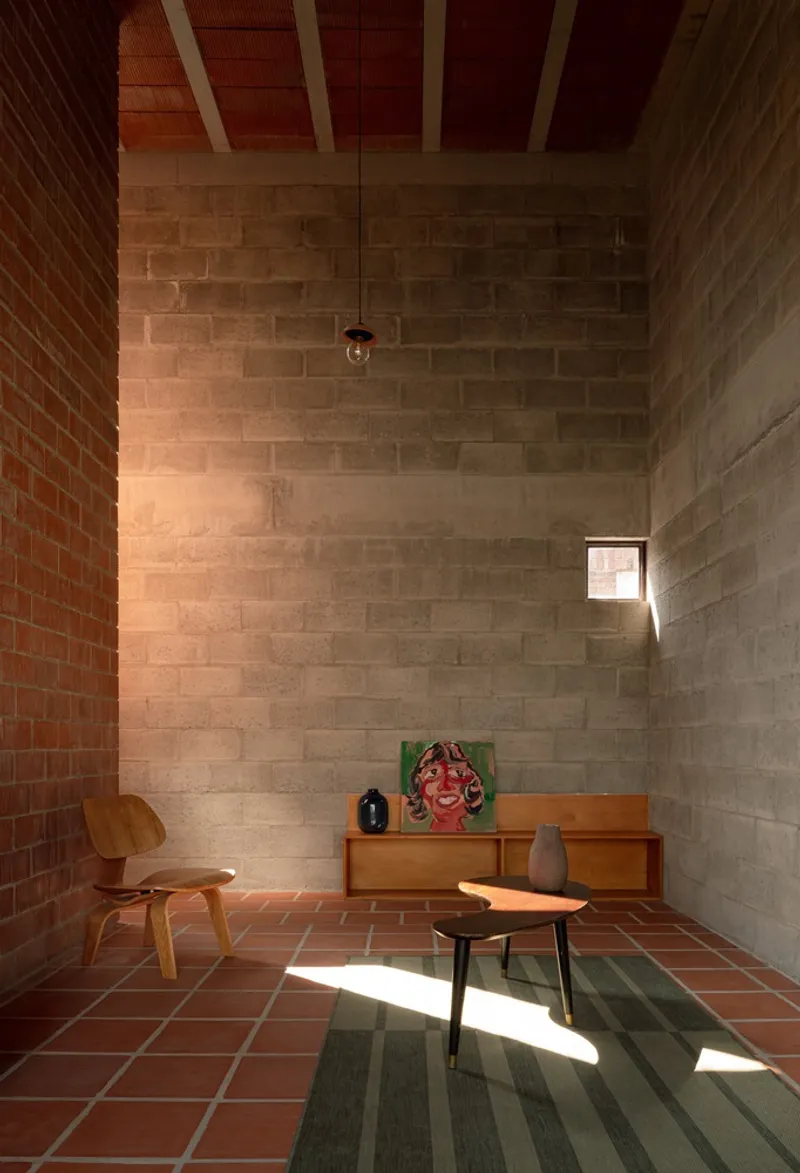
One of the defining characteristics of Nogal House is its innovative use of industrialized brick. The project explores the haptic and chromatic qualities of this material, applying it across different surfaces to create texture and warmth. The natural sepia tones of the brick interact with sunlight throughout the day, casting dynamic shadows and enhancing the interior ambiance.

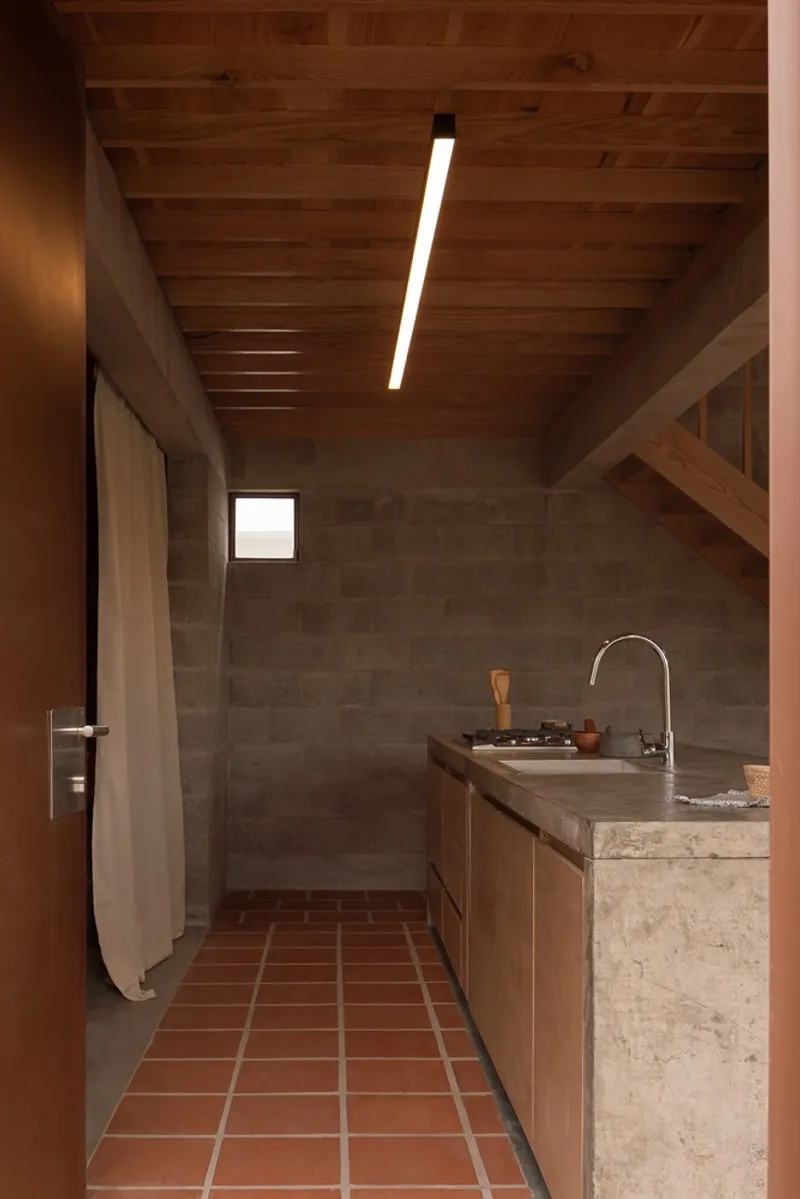

The envelope of the house is deliberately neutral, composed of gray concrete and exposed cement blocks that integrate seamlessly with the surrounding structures. This discreet façade conceals the inviting interior, where the interplay of industrial materials generates a sense of warmth and intimacy. The flooring system features industrial ceramic tiles, while the roof slab utilizes a combination of prestressed beams and industrial ceramic coffers, optimizing both thermal performance and structural integrity.


Integration with the Surrounding Context
Although the house presents a modest exterior, its design strategy enhances both privacy and connectivity. By aligning with neighboring homes built from similar exposed materials, Nogal House maintains a visual continuity with its urban fabric while distinguishing itself through refined craftsmanship and material contrast. The orientation of the house maximizes natural ventilation and daylighting, reducing the need for artificial climate control and supporting sustainable living practices.


A New Paradigm for Affordable Brick Architecture
Nogal House exemplifies how sustainable brick house design can provide a high-quality living environment while remaining cost-effective and adaptable. By prioritizing material honesty, flexible spatial planning, and passive design strategies, Escobedo Soliz Studio has created a residence that embodies both contemporary aesthetics and long-term resilience. This project not only serves as a model for affordable housing but also reinforces the enduring relevance of brick as a sustainable and versatile building material in modern architecture.



A Future-Ready Home Rooted in Tradition
Nogal House challenges conventional notions of affordable housing by demonstrating how strategic material selection and modular planning can enhance both function and aesthetics. As an evolving home designed to accommodate future expansion, it embodies the principles of sustainability, efficiency, and architectural integrity. Through its thoughtful use of brick, concrete, and industrial elements, the project sets a precedent for adaptable and environmentally responsive residential design in semi-urban contexts.


All Photographs are works of Ariadna Polo


Popular Articles
Popular articles from the community


The Ocean Hive: Sustainable Architecture for a Self-Sufficient Civilization at Sea
The Ocean Hive imagines sustainable architecture at sea, where modular habitats, algae, wave power and ocean waste sustain a growing colony.

Hill & Cross Opera: Sculptural Opera House Architecture Shaped by Tallinn’s Landscape and Identity
Hill & Cross Opera reimagines opera house architecture in Tallinn through its sculptural hill, civic plaza, glass wave and a luminous cross.

Conexión: Biophilic Design Reimagines High-Rise Living in Hong Kong
Conexión reimagines high-rise living in Hong Kong through biophilic design, green facades, shared spaces, daylight, water and nature within.

Co-life: Sustainable Architecture for Age-Friendly Community Living
Co-life reimagines sustainable architecture for seniors through courtyards, rammed earth, shared gardens, and spaces designed for belonging.

Similar Reads
You might also enjoy these articles


Hodi-Mandai Geram
Project Function: Preservation and revitalization of the Intangible heritage and socio-spatial identity of the Hodi by Housing, Cultural Memory Center, Sacred Grove, landscape, local tourism economy


Olio Towers: A Mid-Rise for Performers That Fuses Housing, Rehearsal, and Stage
Located blocks from Houston's Theater District, this modular tower stacks living units around a central performance atrium.

Oasis: Modular Green Housing Carved into Dhaka's Urban Fabric
A shortlisted Plugin Housing entry reclaims unauthorized settlements in Dhaka with stepped concrete volumes, green roofs, and ventilation-driven design.

Black Hole: A Floating Megastructure for the Post-Physical Era
Emiliano Mazzarotto envisions a spherical, self-scaling arena where e-sports, digital hotels, and holographic stadiums replace traditional public space.

Explore Eco Friendly Brick Competitions
Discover active competitions in this discipline

Challenge to reimagine the Iron Throne

Photograph architecture without architects

Illustrate the lost glory of Angkor Wat - Render Challenge

Design challenge to reuse E-waste
Comments (0)
Please login or sign up to add comments
No comments yet. Be the first to comment!