

Sustainable Bridge Architecture: The Passerelle des Arts by Marc Mimram
The Passerelle des Arts bridge in Luxembourg showcases sustainable bridge architecture, blending innovative materials with ecological sensitivity.


A Landmark in Sustainable Bridge Design
The Passerelle des Arts, designed by Marc Mimram Architecture Ingénierie in collaboration with Fabeck Architectes, is a remarkable example of sustainable bridge architecture. Located in Luxembourg, this pedestrian bridge harmoniously integrates with its natural surroundings while introducing groundbreaking engineering techniques. The project redefines the relationship between infrastructure and the environment by preserving the existing forest and utilizing innovative materials that minimize maintenance and ecological impact.
Integrating Architecture with Nature
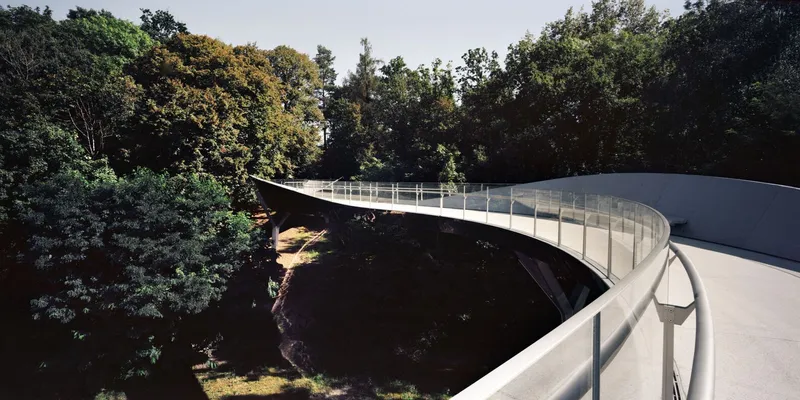
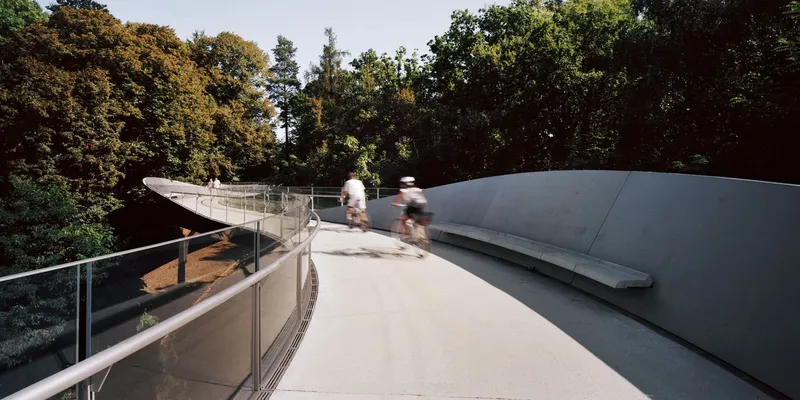
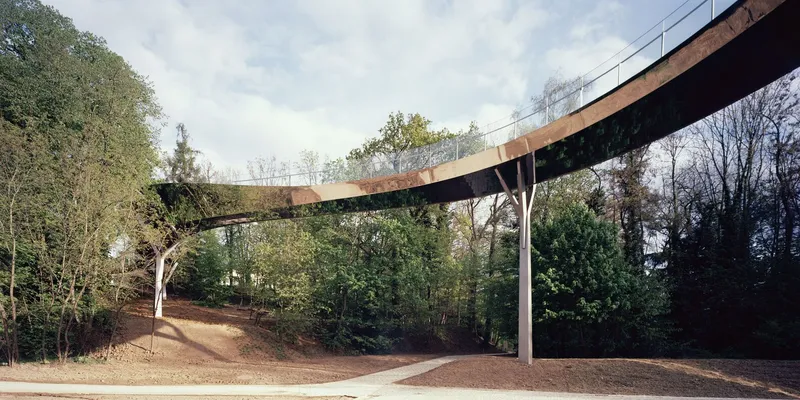
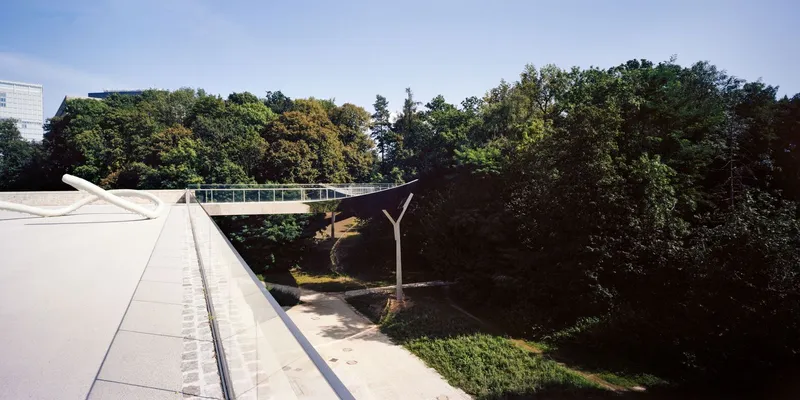
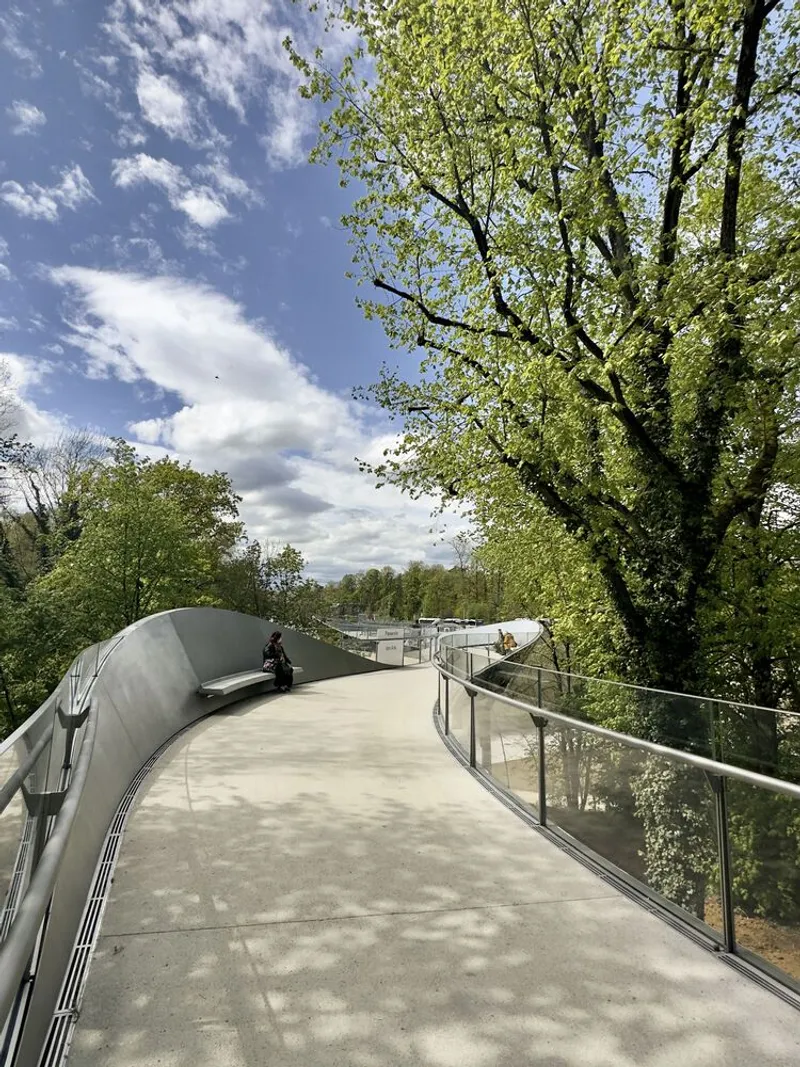
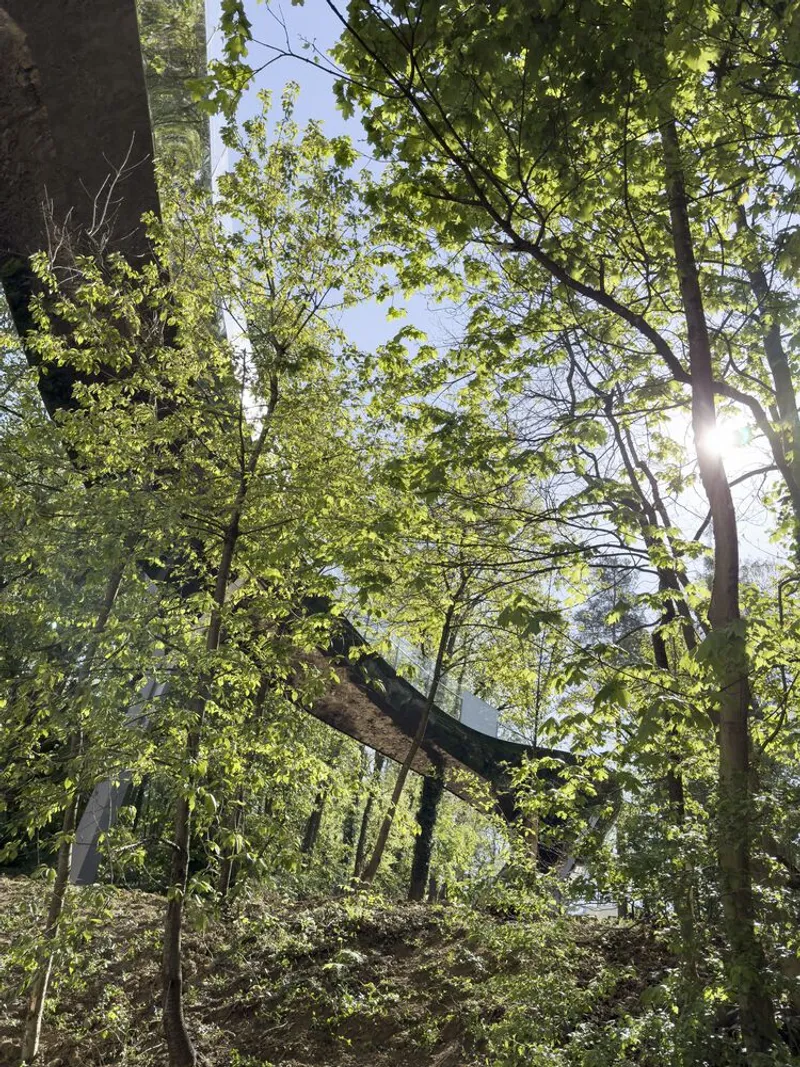
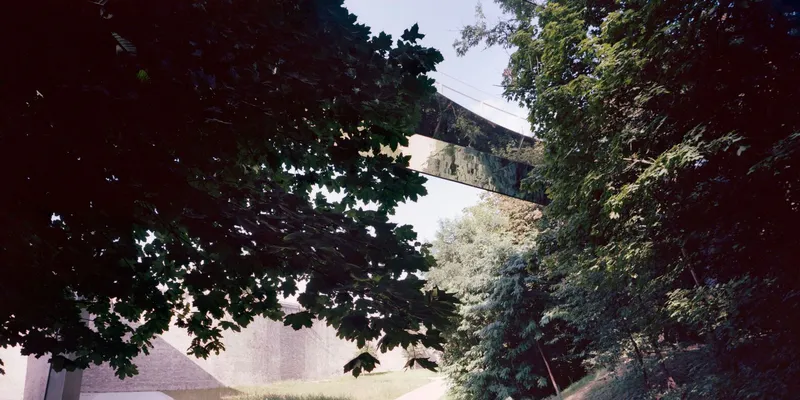
The bridge’s design respects the natural landscape, ensuring that no trees were removed during construction. A carefully orchestrated system of curves and counter-curves allows the bridge to weave through the dense forest, offering pedestrians and cyclists an immersive experience at canopy height. The structure does not merely provide a crossing but enhances the journey by engaging with the surrounding greenery and offering a contemplative passage through nature.

The Innovation of Polished Stainless Steel in Bridge Construction
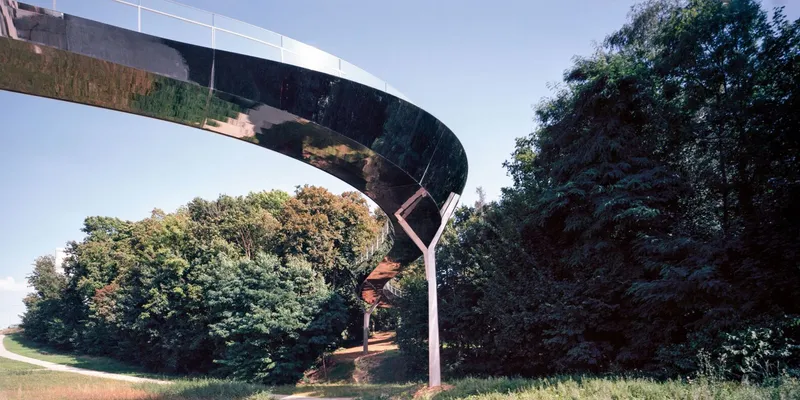
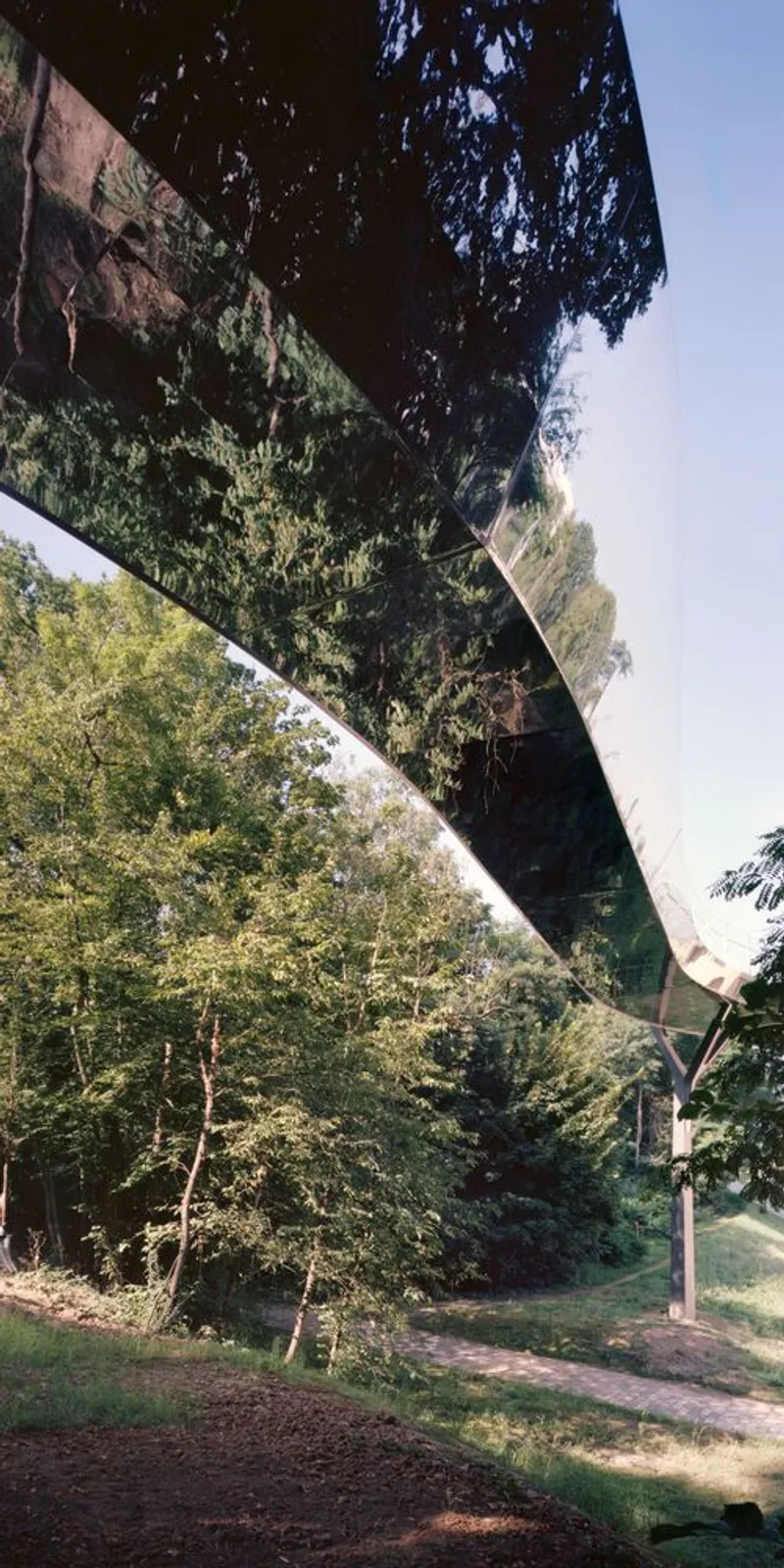
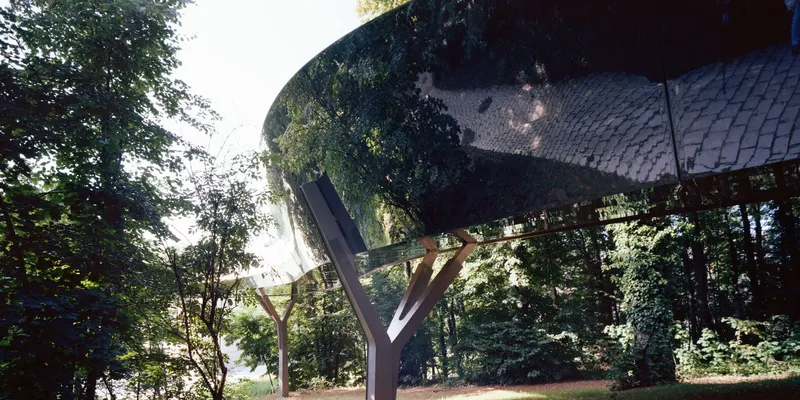
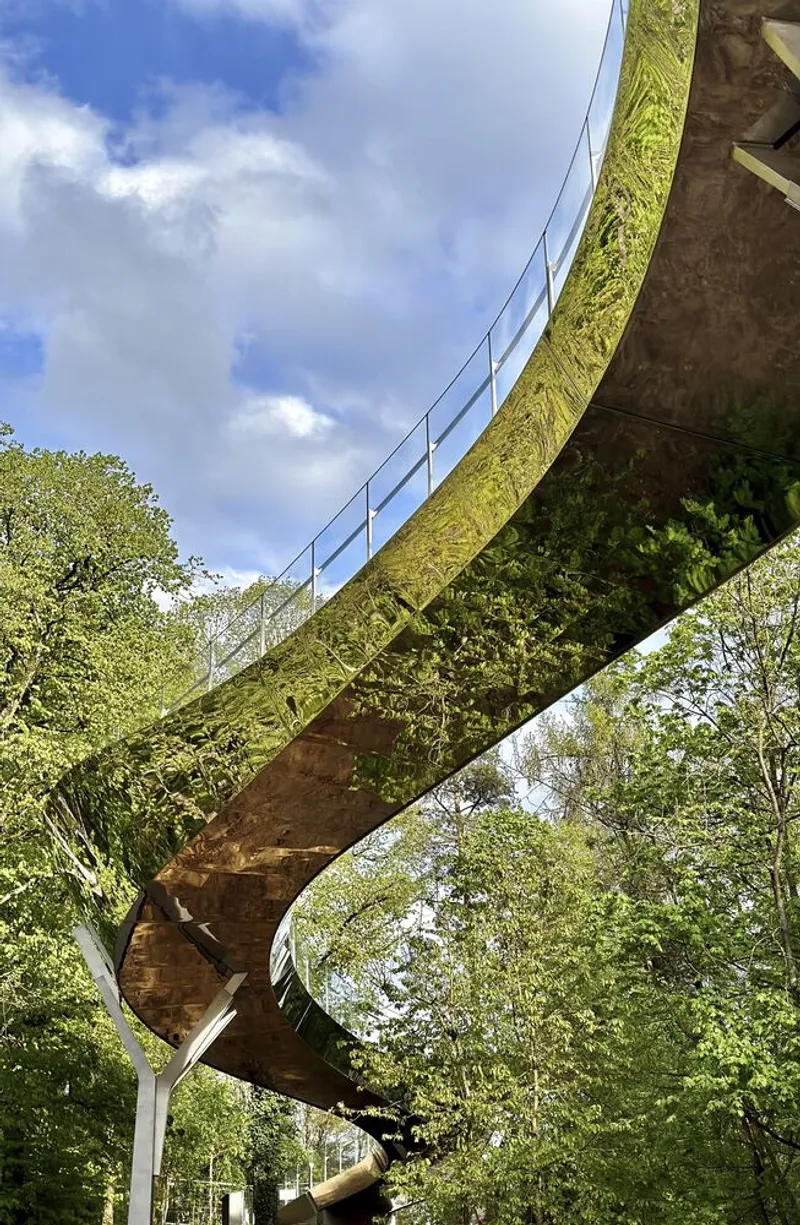
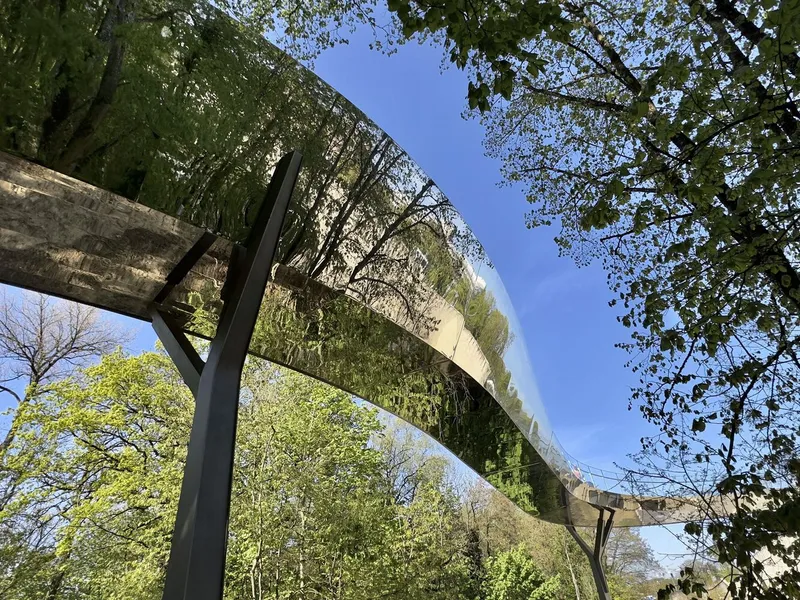
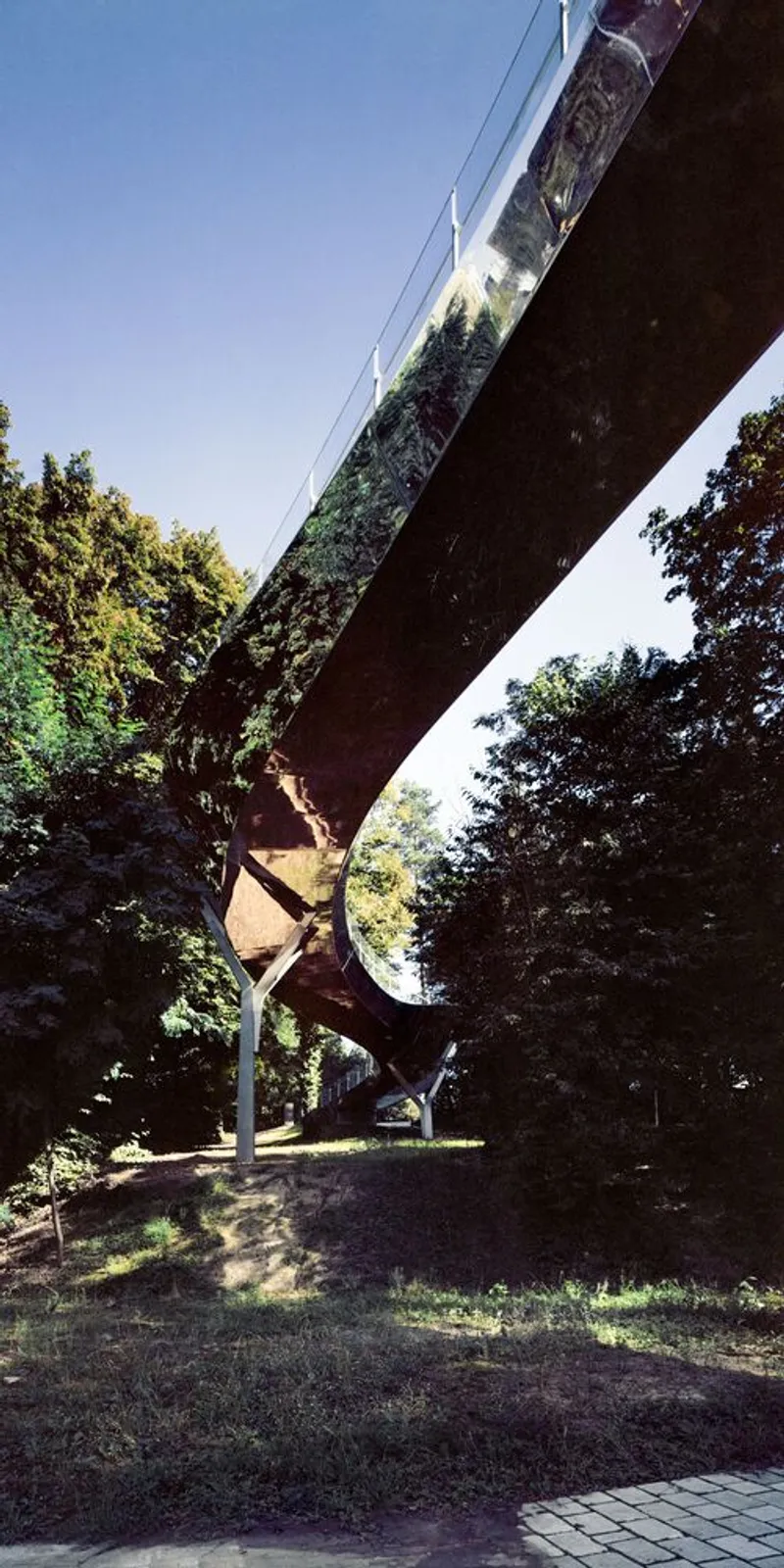
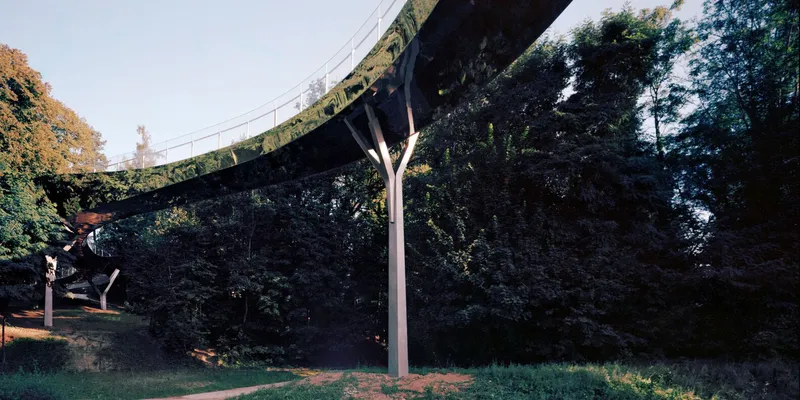
The most distinguishing feature of the Passerelle des Arts is its pioneering use of polished stainless steel, marking a world-first in bridge architecture at this scale. This material was chosen for its exceptional durability, resistance to corrosion, and ability to reduce long-term maintenance. Unlike conventional steel structures that require frequent galvanization or repainting, polished stainless steel maintains its integrity without releasing harmful chemicals into the ecosystem. The reflective surface of the bridge continuously interacts with its environment, subtly blending with the changing colors of the sky and forest throughout the seasons.
A Visual and Sensory Experience
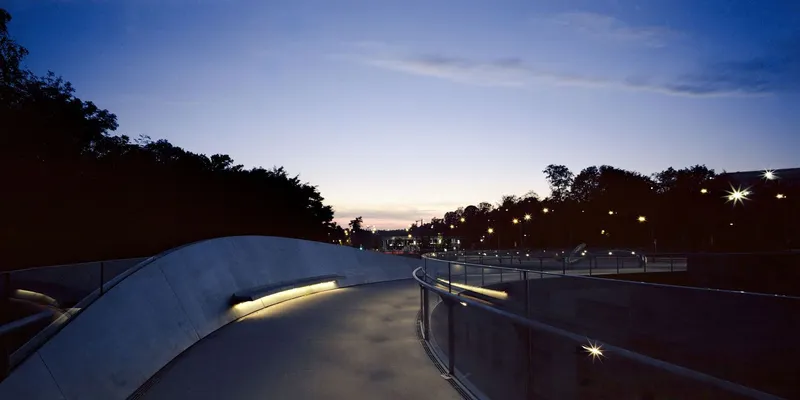
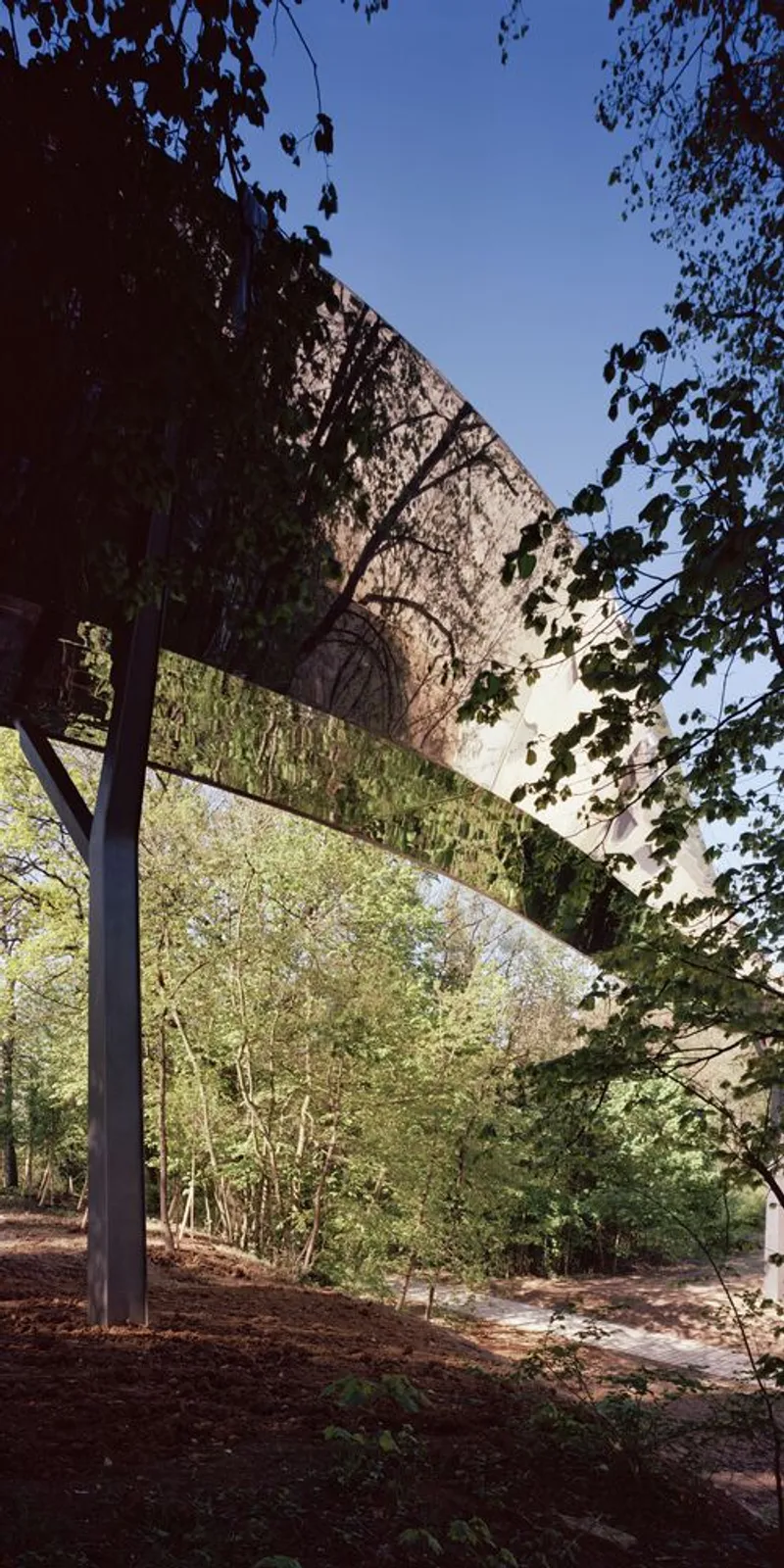
Beyond its structural significance, the Passerelle des Arts provides a transformative spatial experience. Depending on the time of day and season, the mirrored surfaces reflect and deconstruct the surrounding landscape, allowing the bridge to seemingly dissolve into its setting. Pedestrians walking along the pathway experience an evolving visual dialogue between the structure and the environment, while those viewing from below witness a shimmering architectural gesture that elevates the aesthetic appeal of the site.
Advanced Engineering and Sustainable Construction
The implementation of polished stainless steel required the development of specialized engineering techniques, including on-site welding and seamless bolting methods to maintain visual continuity. These innovations ensured that the bridge remains both structurally robust and visually refined. Sustainability was a fundamental consideration throughout the project, with material efficiency playing a critical role in reducing the carbon footprint. The design balances structural performance with minimal material use, exemplifying an approach that aligns with contemporary environmental concerns.
Redefining Sustainable Bridge Architecture
The Passerelle des Arts is more than a functional crossing; it is an architectural statement that reimagines how bridges can coexist with nature. By prioritizing ecological sensitivity, material innovation, and visual harmony, this project sets a new benchmark for sustainable bridge architecture. As cities continue to evolve, structures like the Passerelle des Arts demonstrate that infrastructure can be both environmentally responsible and artistically inspiring, redefining the possibilities of future bridge designs.
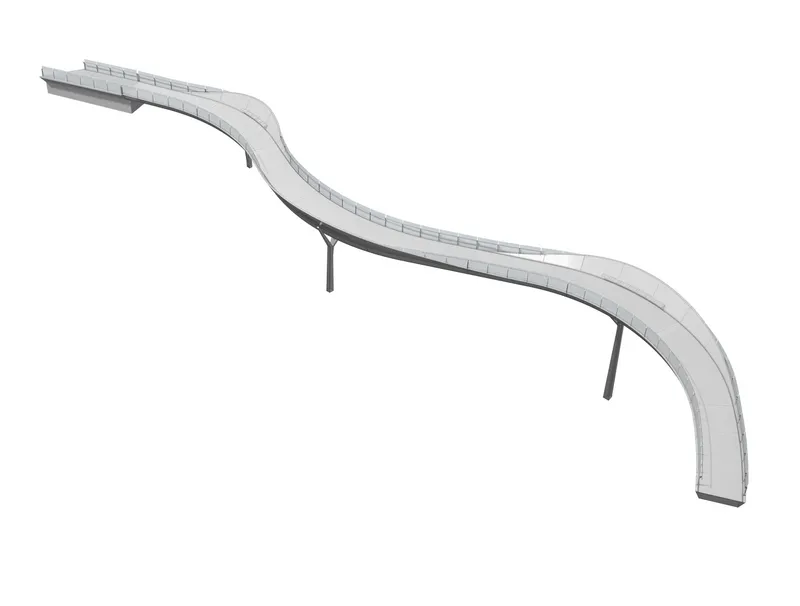
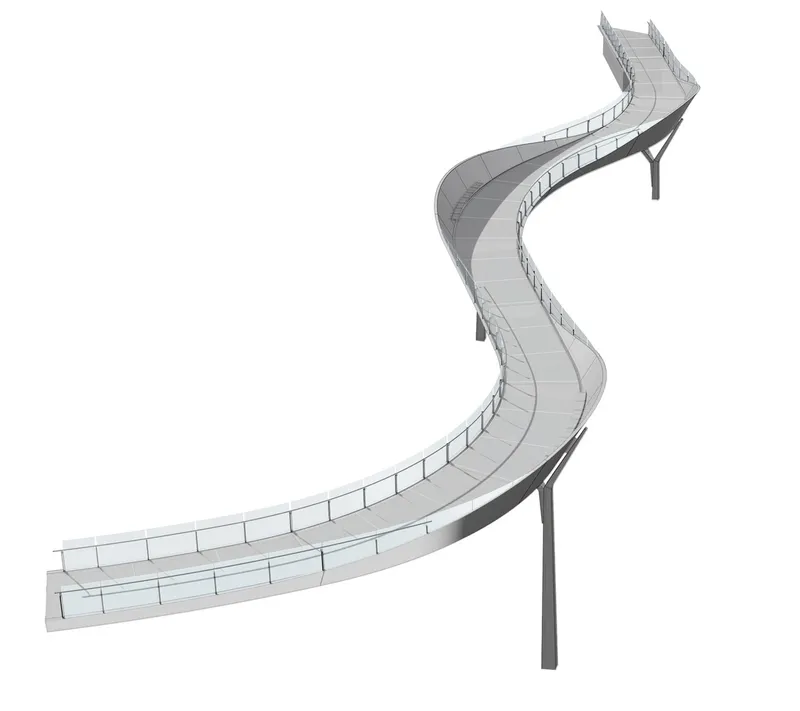
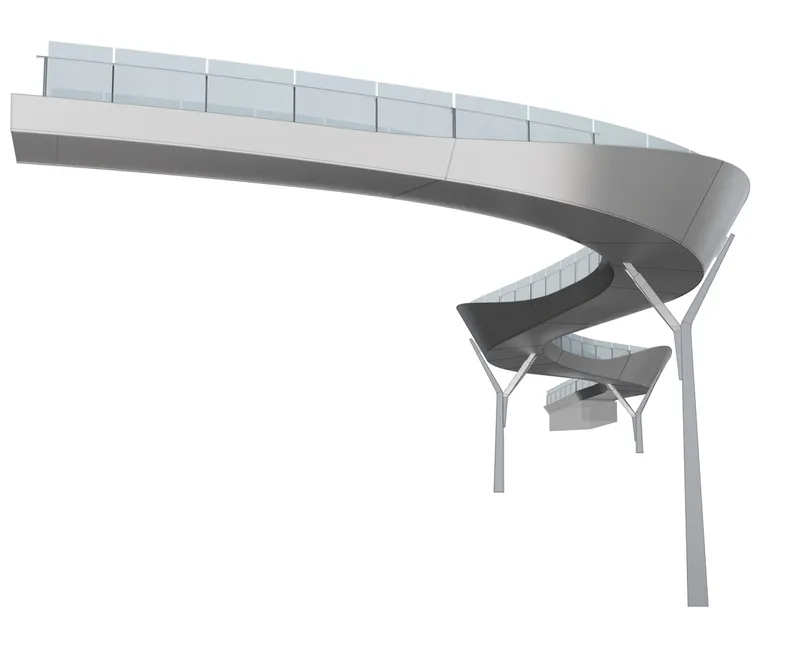
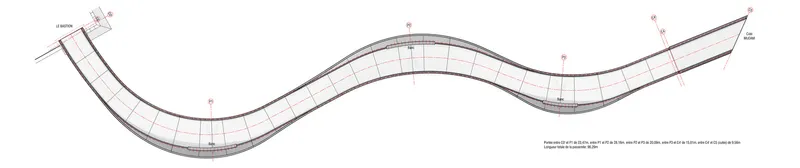
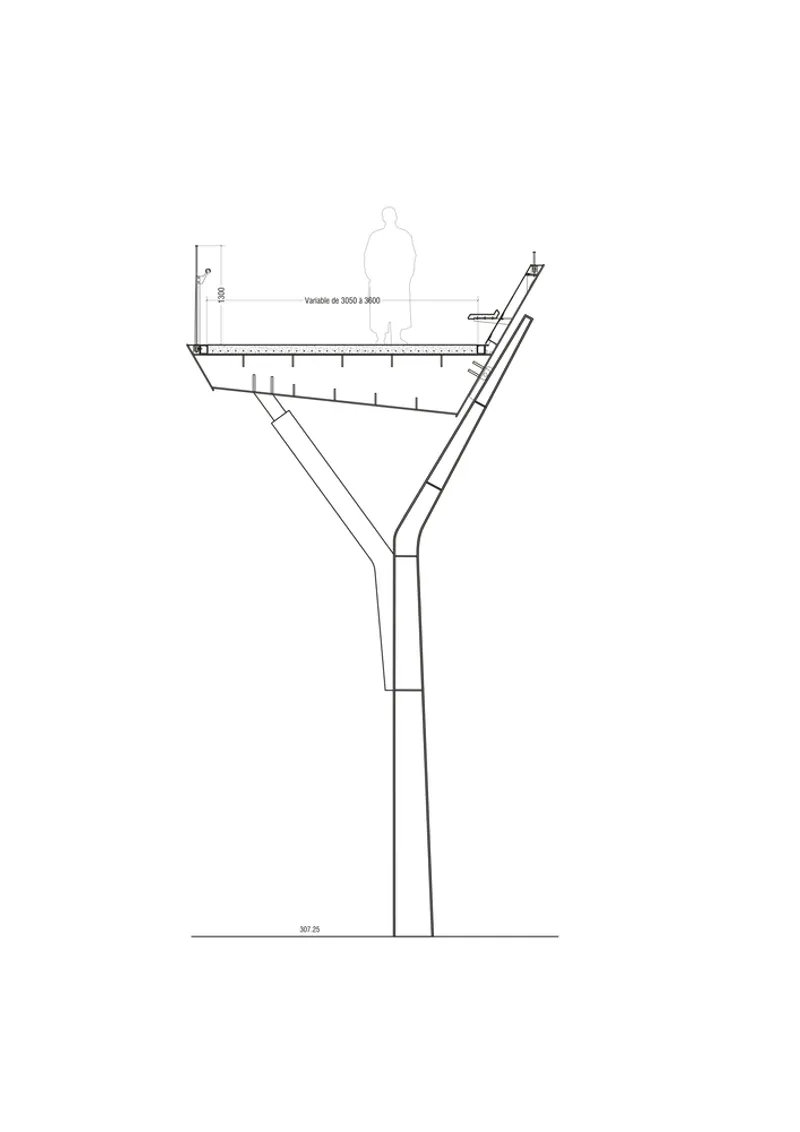

All Photographs are works of Erieta Attali




Popular Articles
Popular articles from the community


The Ocean Hive: Sustainable Architecture for a Self-Sufficient Civilization at Sea
The Ocean Hive imagines sustainable architecture at sea, where modular habitats, algae, wave power and ocean waste sustain a growing colony.

Co-life: Sustainable Architecture for Age-Friendly Community Living
Co-life reimagines sustainable architecture for seniors through courtyards, rammed earth, shared gardens, and spaces designed for belonging.

AL-JANNAH: Sustainable Architecture and Permaculture for Afghan Widows
AL-JANNAH uses sustainable architecture and permaculture to create resilient oasis of housing, learning, work and renewal for Afghan widows.

Hill & Cross Opera: Sculptural Opera House Architecture Shaped by Tallinn’s Landscape and Identity
Hill & Cross Opera reimagines opera house architecture in Tallinn through its sculptural hill, civic plaza, glass wave and a luminous cross.

Similar Reads
You might also enjoy these articles


Hodi-Mandai Geram
Project Function: Preservation and revitalization of the Intangible heritage and socio-spatial identity of the Hodi by Housing, Cultural Memory Center, Sacred Grove, landscape, local tourism economy


Olio Towers: A Mid-Rise for Performers That Fuses Housing, Rehearsal, and Stage
Located blocks from Houston's Theater District, this modular tower stacks living units around a central performance atrium.

Oasis: Modular Green Housing Carved into Dhaka's Urban Fabric
A shortlisted Plugin Housing entry reclaims unauthorized settlements in Dhaka with stepped concrete volumes, green roofs, and ventilation-driven design.

Black Hole: A Floating Megastructure for the Post-Physical Era
Emiliano Mazzarotto envisions a spherical, self-scaling arena where e-sports, digital hotels, and holographic stadiums replace traditional public space.


Explore Foot Bridge Competitions
Discover active competitions in this discipline



Challenge to reimagine the Iron Throne


Photograph architecture without architects


Illustrate the lost glory of Angkor Wat - Render Challenge


Design challenge to reuse E-waste
Comments (0)
Please login or sign up to add comments
No comments yet. Be the first to comment!