

The Namety Cabins: A Visionary Approach to Modular Cabin Architecture in the Forests of Kyiv
Modular forest cabins in Kyiv reimagine childhood tents through artistic design, minimal modules, and transparent transitions blending nature and architecture.


A Modern Reinterpretation of Childhood Tents
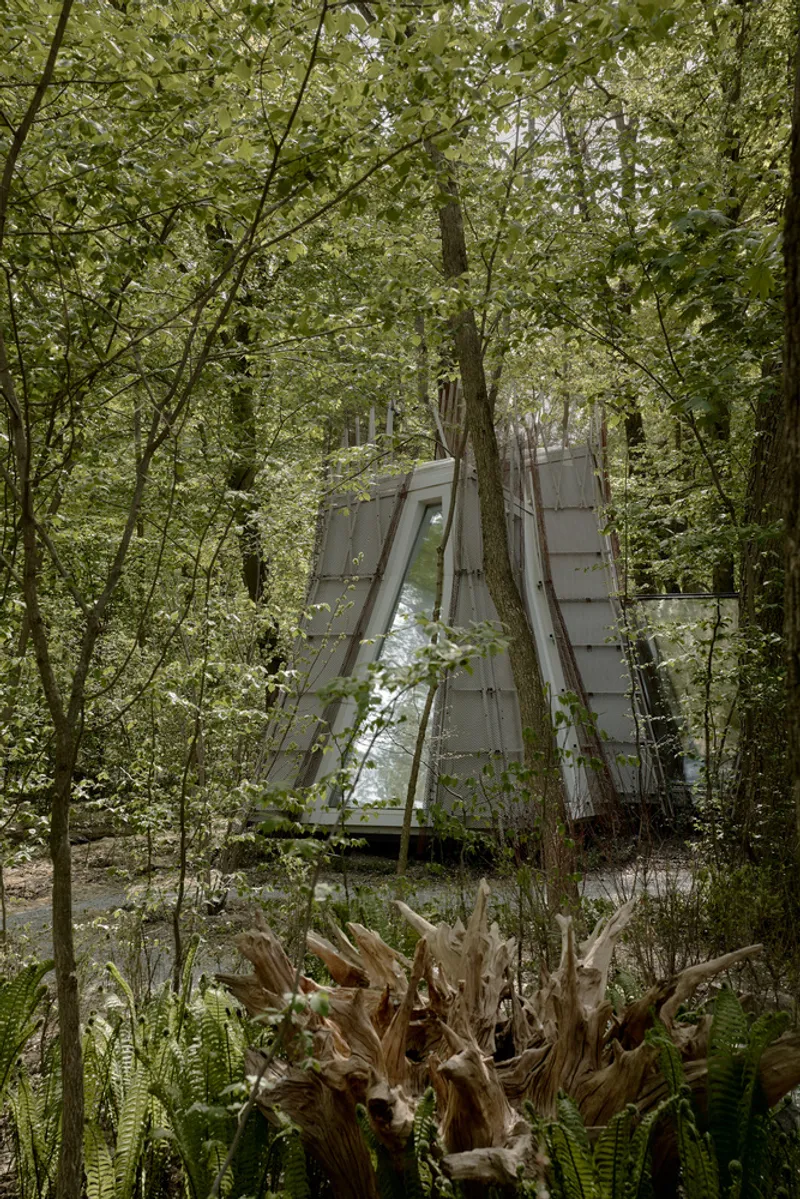
Set within the tranquil parkland of Kyiv, The Namety Cabins by Roman & Dmytro Seliuk redefine modular cabin architecture through a poetic connection between memory and modern design. Inspired by the simplicity of childhood tents and shelters made from forest sticks and branches, the cabins present a harmonious fusion of nostalgia and futurism. These structures embody both technical precision and an artistic narrative rooted deeply in the forested landscape of Ukraine.
Concept and Design Philosophy
The foundational idea behind The Namety Cabins was to develop a modular housing system suitable for hospitality settings, particularly those located within natural environments such as forests, gardens, and parks. The name "Namety" references the Ukrainian word for "tents," recalling the designers’ childhood experiences of first holidays spent in simple, handcrafted shelters. These memories form the emotional blueprint for a project that translates personal nostalgia into a highly adaptable architectural system.
Mono-Functional Modules with Flexible Composition
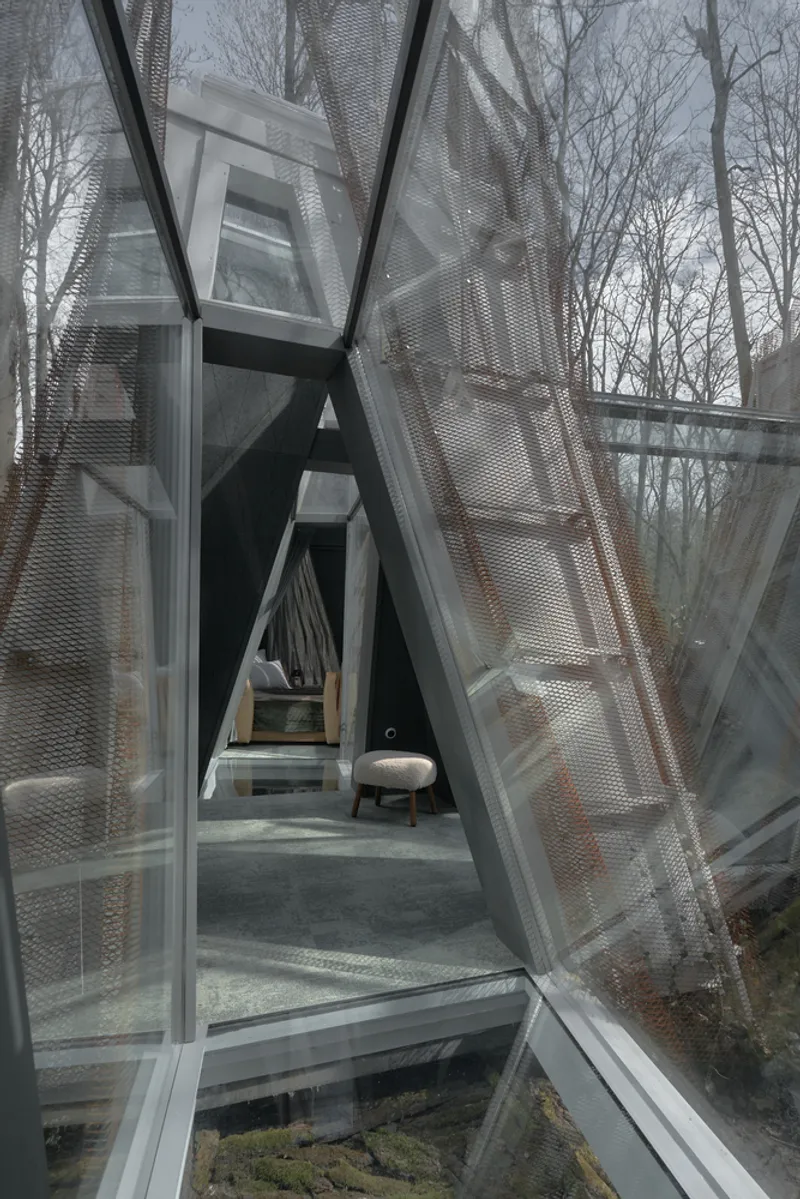
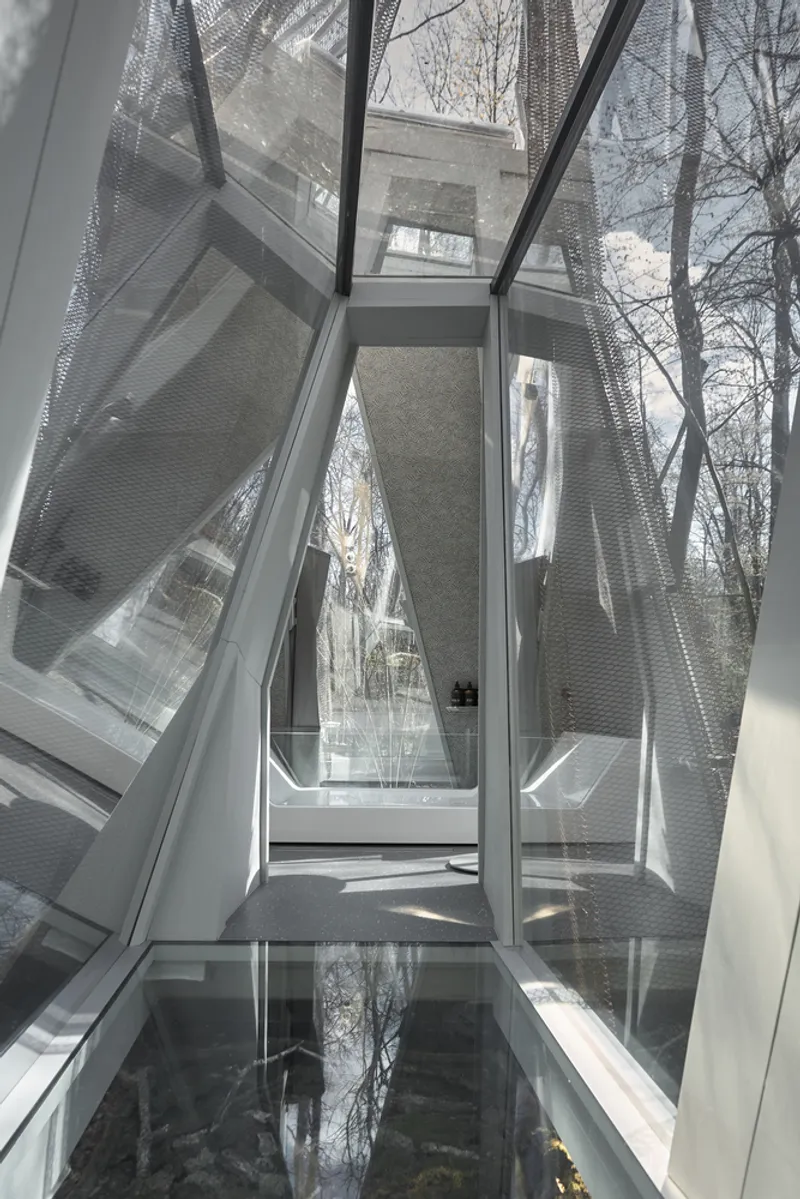
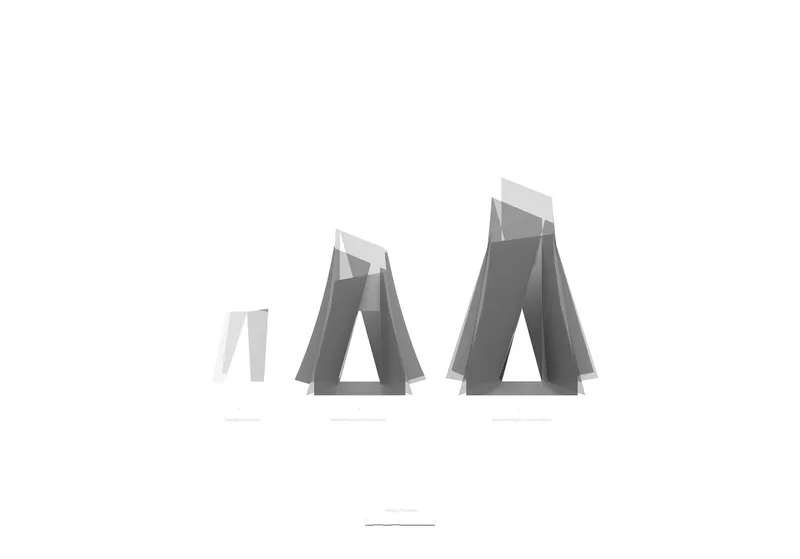
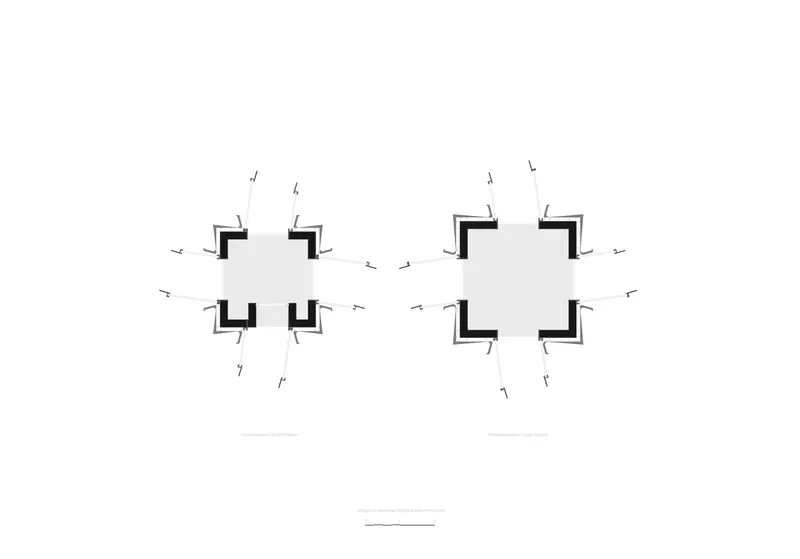
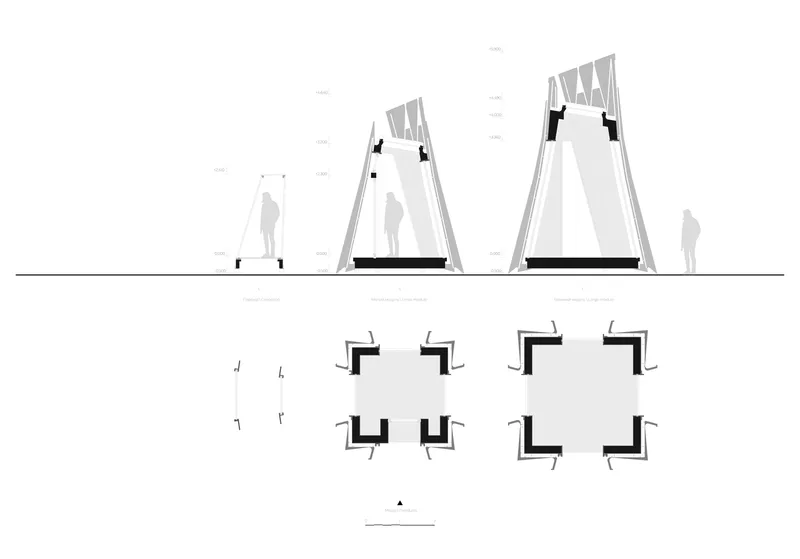
The modular design follows two main principles: mono-function and variation. Each cabin module is dedicated to a single function, from sleeping and living to bathing and cooking, resulting in a minimalist layout optimized for usability. Despite the simplicity of individual units, the system allows endless combinations of modules, making it easy to adapt the structures to different site constraints or programmatic needs. Larger modules handle shared activities, while smaller ones address private uses, making the composition scalable and versatile.
Transparent Transitions and Tent-Inspired Form
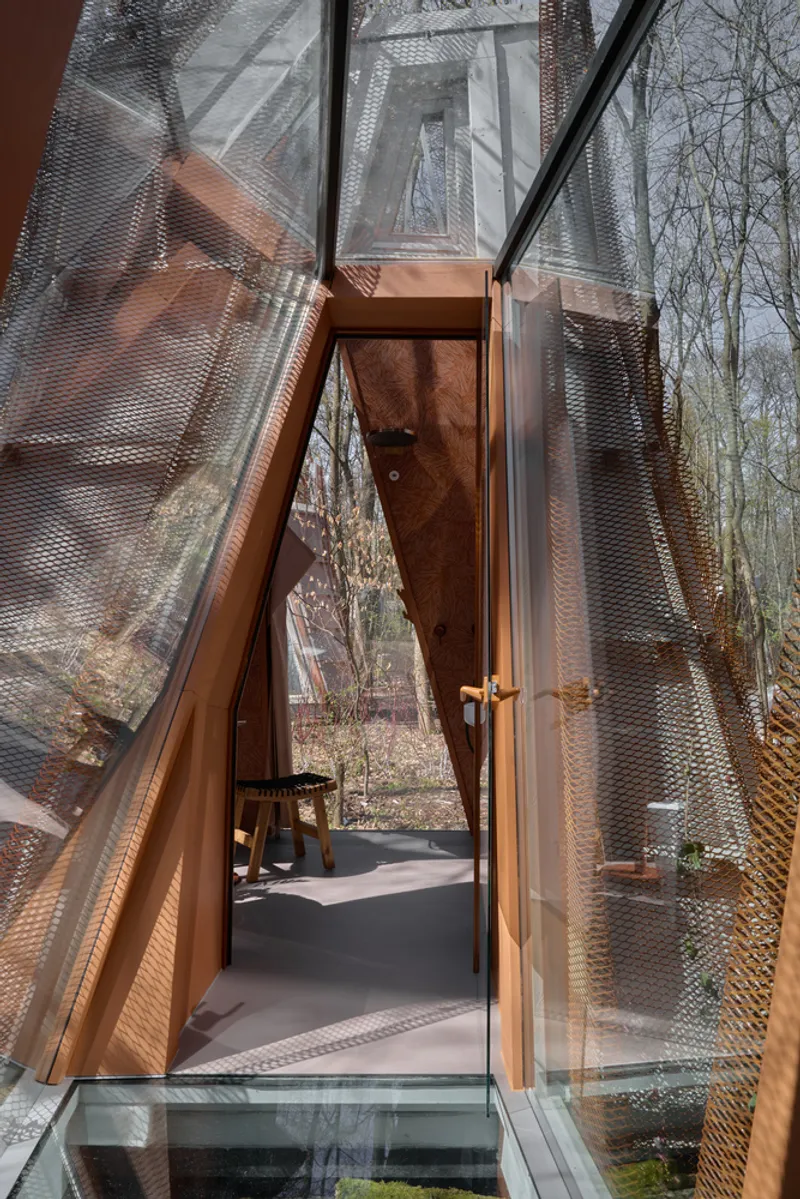
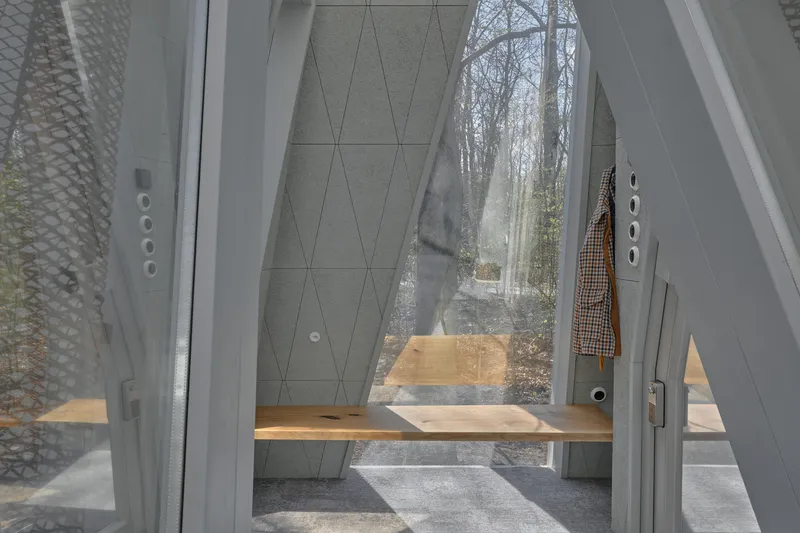
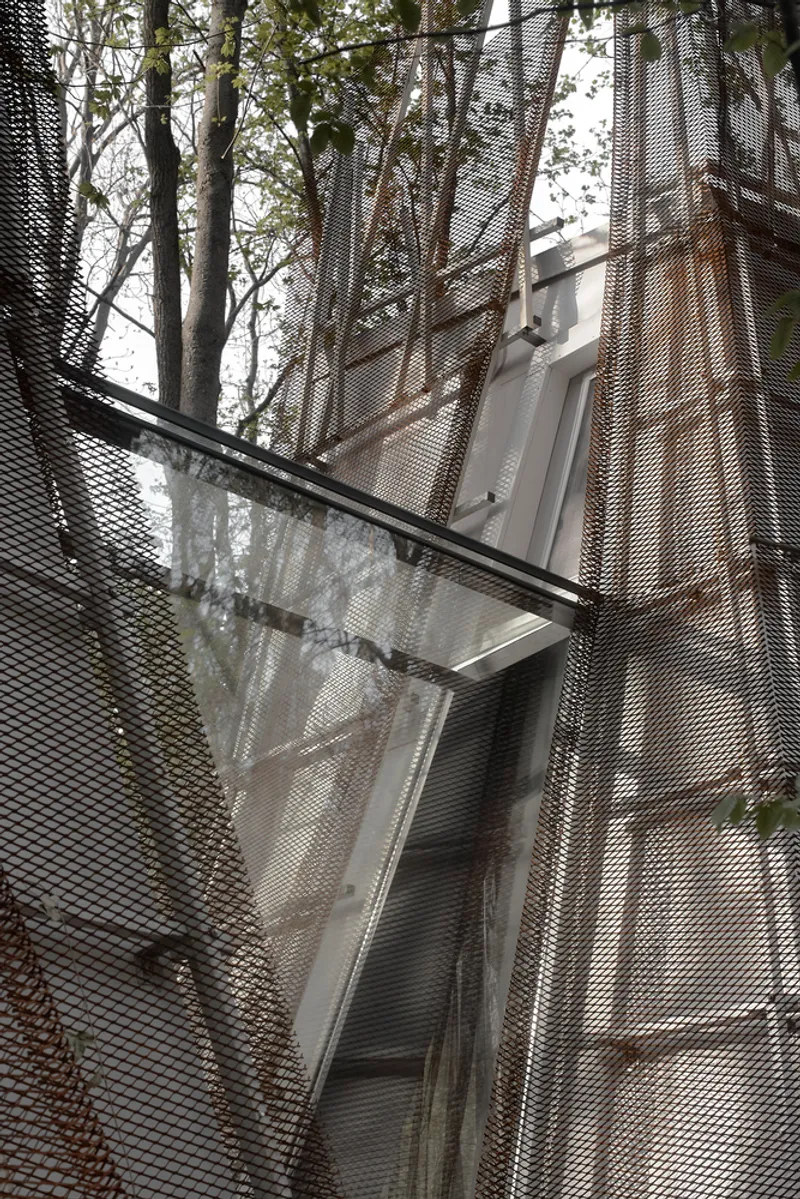
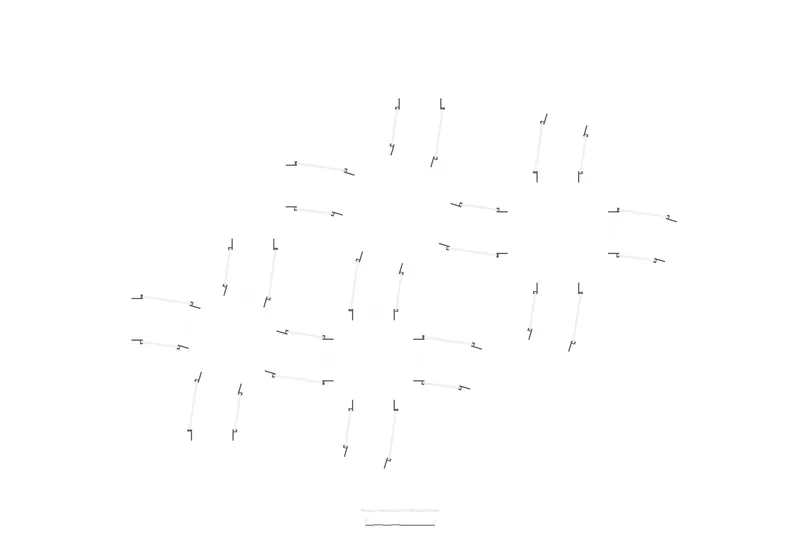
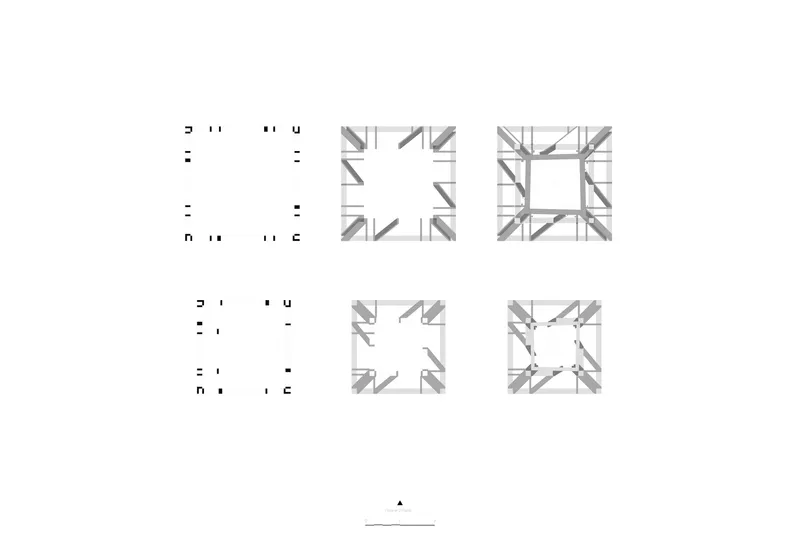
One of the defining characteristics of the project is its treatment of the module transitions. Glass walls, floors, and ceilings connect individual modules, creating visual and physical transparency that dissolves boundaries between indoor and outdoor. These connectors are angled and rotated, evoking the randomness of tents pitched in the wild, contributing to a layered spatial experience that feels organic yet carefully choreographed.
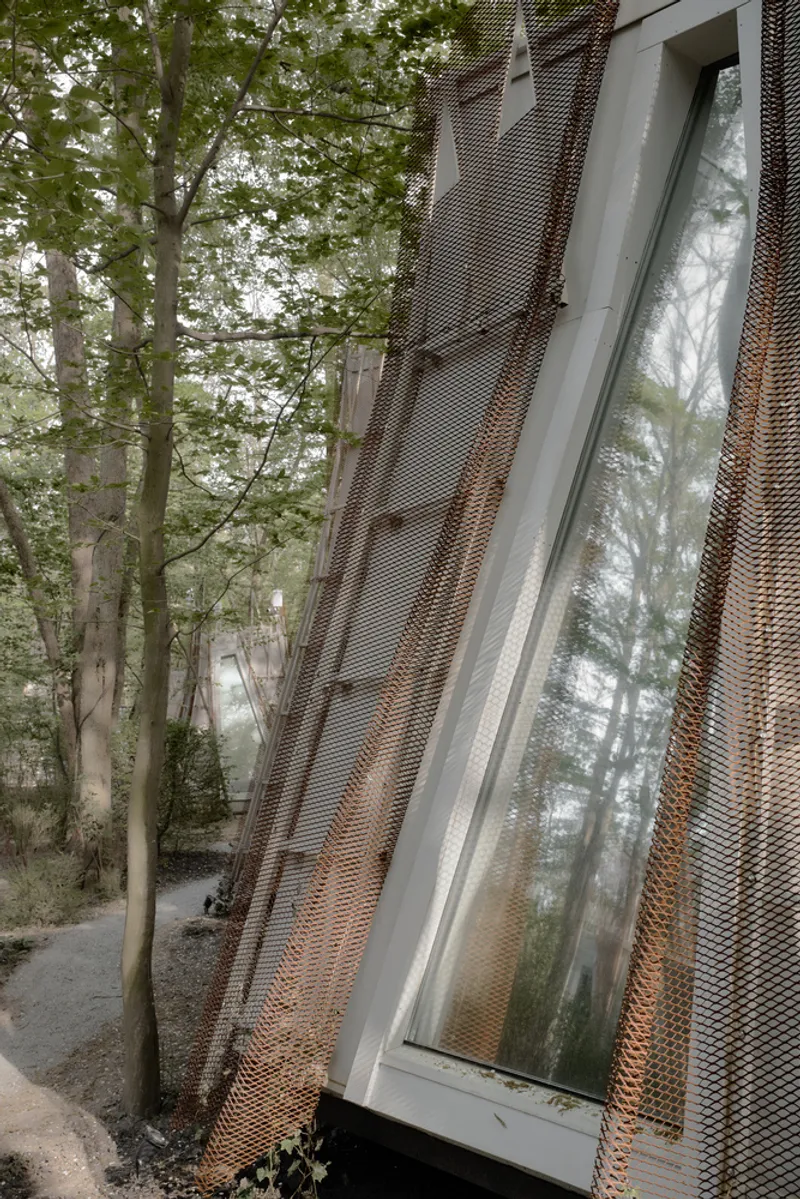
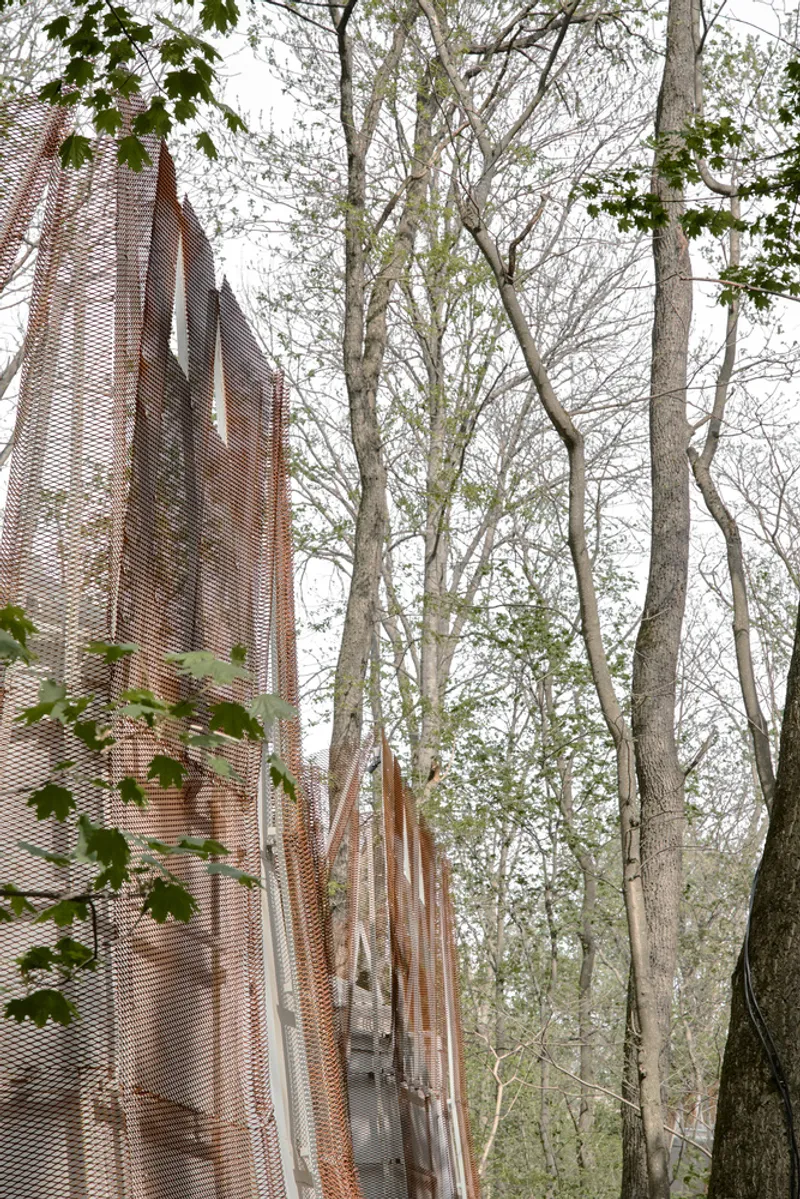
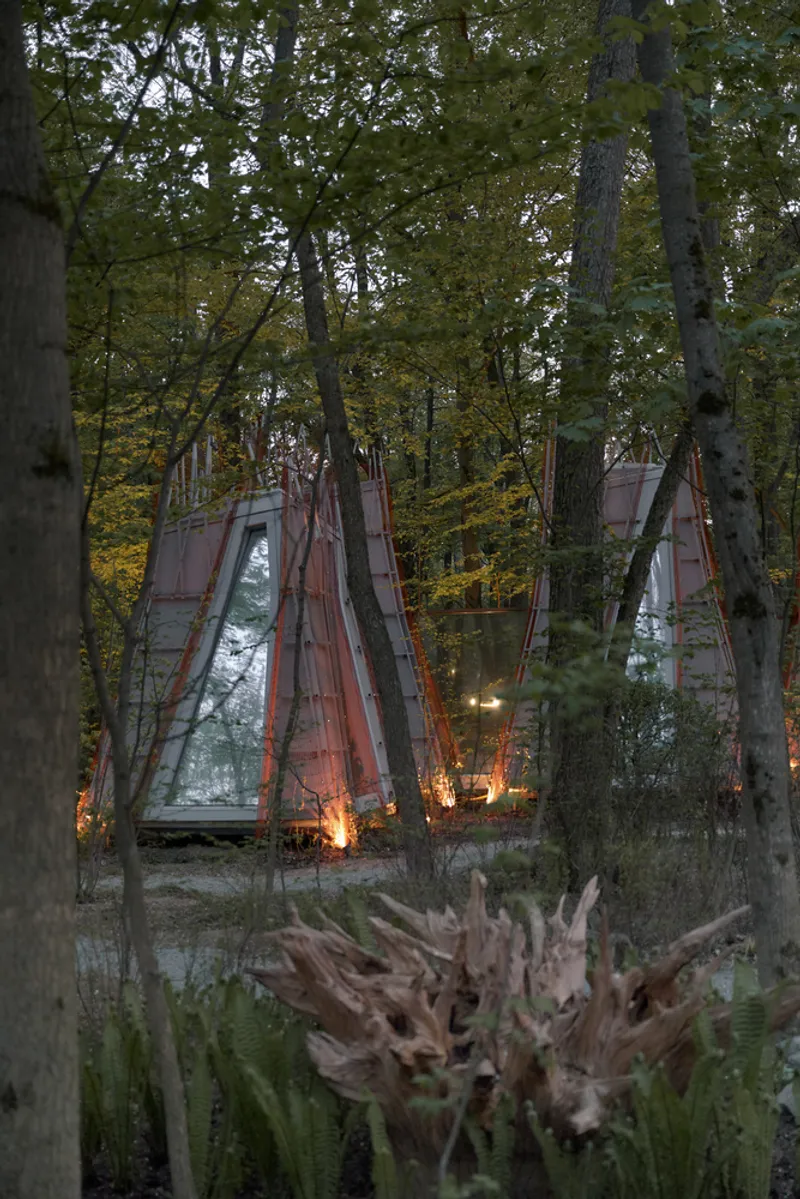
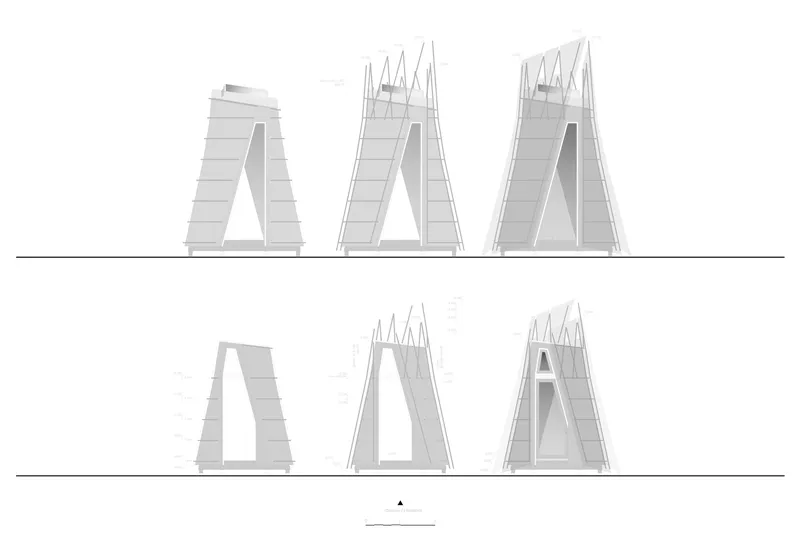
Architecturally, the cabins exhibit a striking duality: they stand out through material contrast, yet merge with their surroundings through color reflections and silhouette transitions. The outer shell, a translucent corten steel mesh, acts like a fabric layer billowing around the structure, creating a tent-like illusion. During the day, this outer grid reflects the forest colors, and at night, it softly glows from within, creating a luminous presence in the landscape.
Material Dialogue with the Landscape
Material choices amplify the conceptual storytelling. The cabins are clad in light-colored wood and corten steel, allowing them to blend in with the forest while also defining their artificial yet ethereal presence. The corten mesh, perched on slender frames reminiscent of twigs, generates a gentle gradient between architecture and wilderness. The trapezoidal windows suggest folds of tent fabric, while skylights in each module enhance the immersive experience of being under a canopy of trees.
Site Integration and Environmental Harmony
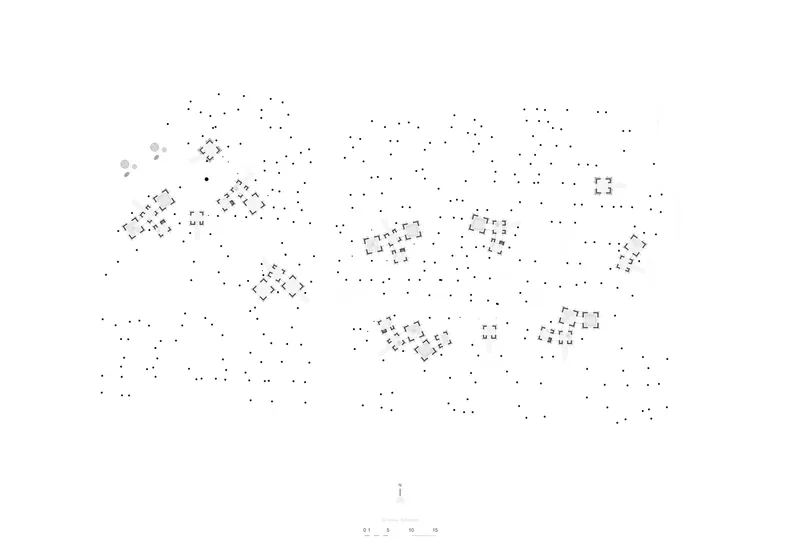
The first completed version of The Namety Cabins stands as a modular park hotel installed within the green grounds of an exhibition complex in Kyiv. With twelve unique combinations of modules forming individual cabins, the project showcases a high level of integration with its natural context. The structures nestle between trees, reinforcing the idea that modularity need not sacrifice environmental sensitivity. Instead, it becomes a tool for precise, lightweight, and flexible land use.

Rethinking Hospitality Through Modular Cabin Architecture
The Namety Cabins illustrate how modular cabin architecture can be emotionally resonant, visually striking, and functionally responsive. Roman & Dmytro Seliuk have not merely created a modular housing system—they have designed a living, breathing narrative of shelter, memory, and place. This project stands as a benchmark for how small-scale architecture can engage deeply with landscape, tradition, and the evolving needs of modern hospitality.
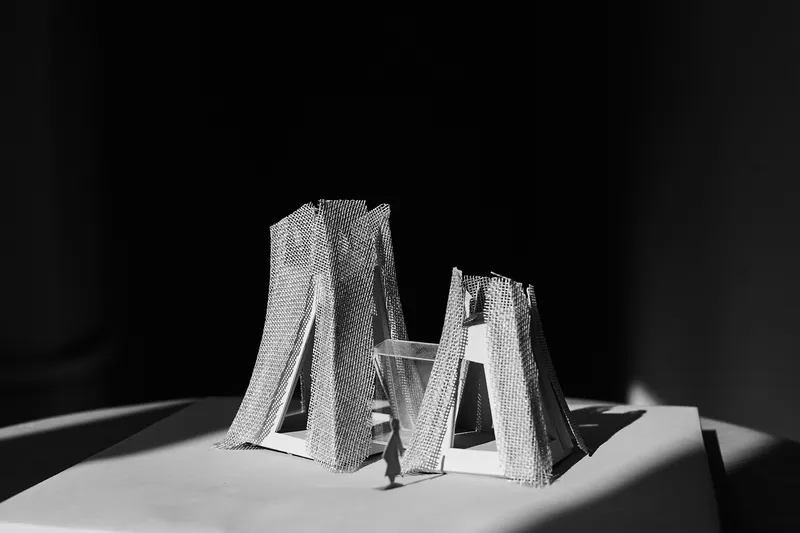
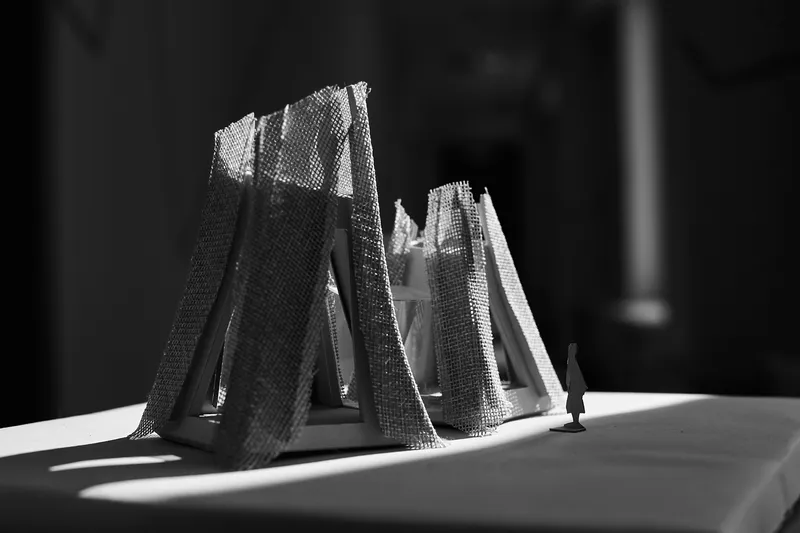
All Photographs are works of Dmytro Seliuk


Popular Articles
Popular articles from the community


David Macias Steps a Doorless Stone and Plaster House Down a Tropical Colombian Hillside
In the humid hills of Colombia, Threshold House replaces the front door with an open void and terraces its 850 m² down the slope instead of fighting it.

Jaramillo Van Sluys Arquitectura and Urbanismo Turn a Demolished Registry Lot in Quito into an Orchard Plaza
In Quito's Centro Histórico, a 2,800 m² plaza exposes the San Agustín convent wall and redraws its lost Augustinian orchard in volcanic stone.

longwave studio Reorganizes a 112 m² Tainan Apartment Around the Daily Routines of a Family and Two Cats
In Tainan, Taiwan, birch plywood, rust-red furniture and a freestanding plaster wall link arrival, storage, work and family life in one apartment.

Juan García Correa, John González and Claudia Rueda Sink a Circular Amphitheater into a Manizales Engineering Building
On the La Nubia campus in Manizales, Colombia, the S1 Building folds labs and offices into a hillside of ramped lawns that double as a campus route.

Similar Reads
You might also enjoy these articles

Gil Mello Arquitetura Tilts a Single Roof Toward the Waterfalls on a Plateau Above Aiuruoca, Brazil
In Aiuruoca, Minas Gerais, a 200 m² house of local labor and reclaimed poles pairs a low valley veranda with a tall mountain one.

U.GA Architects Wraps an Oval Rooftop Pool in Curved Board-Formed Concrete on Busan's Jeollidan-gil
In Busan's Jeonpo-dong, a 454 m² mixed-use block stacks a neighborhood facility, guest rooms and an oval rooftop pool inside spiraling concrete walls.

Felipe Hess Arquitetos Turns a Blind Stone Wall to the Street and Opens a Brazilian House onto a Courtyard and Canal
A canal-front house in Brazil hides behind painted stone and planting, then opens to an olive-tree courtyard, a reed-ceilinged porch and a curving pool.
David Macias Steps a Doorless Stone and Plaster House Down a Tropical Colombian Hillside
In the humid hills of Colombia, Threshold House replaces the front door with an open void and terraces its 850 m² down the slope instead of fighting it.

Explore Architecture Competitions
Discover active competitions in this discipline

Challenge to reimagine the Iron Throne

Photograph architecture without architects

Illustrate the lost glory of Angkor Wat - Render Challenge

Design challenge to reuse E-waste
Comments (0)
Please login or sign up to add comments
No comments yet. Be the first to comment!