

The Pack Corporation Headquarters by Takenaka Corporation
Sustainable, human-centered headquarters in Osaka by Takenaka Corporation blends innovation, wellness, and urban integration through adaptive, flexible design.


Redefining Workplace Design: Blending Functionality, Flexibility, and Wellness
Nestled in the dynamic urban fabric of Osaka’s Tsuruhashi district, The Pack Corporation Headquarters designed by Takenaka Corporation is a striking example of contemporary office architecture that prioritizes human-centered design, adaptability, and sustainable principles. The new headquarters not only mirrors the company’s innovative spirit but also respects the scale, context, and evolving rhythm of the surrounding cityscape.


Contextual Design That Connects with the City
To seamlessly integrate into the neighborhood, the building’s massing is broken down to avoid overpowering the area. A meticulous approach to site-sensitive architecture led to a thoughtful modulation of scale and form, reducing the sense of visual oppression while respecting the local urban grain. Privacy-conscious fenestration, coupled with a serene inner terrace, allows the workplace to breathe while maintaining openness and discretion.
This architectural gesture promotes a stronger relationship between the office interior and the public realm, embodying the philosophy of “working with the city” rather than against it.


Adaptive Architecture for Urban Metabolism
One of the most forward-thinking features of the building is its expandable design, conceived with urban metabolism in mind. Anticipating future growth, the headquarters is structurally and spatially primed for vertical and horizontal expansion, ensuring it evolves along with the company's needs and the fast-paced development of Osaka.
The structure's core, slightly offset due to the irregular plot, serves as more than just a circulation hub. It becomes a social spine, linking floors and departments, and promoting interdepartmental communication. This strategy enhances the workplace’s collaborative culture while optimizing space use.


Wellness Through Natural Ventilation and Open-Air Integration
At the heart of the design is a deep concern for employee well-being and comfort. The building integrates environmental voids, natural ventilation, and terraced green areas, ensuring that workers are always connected to the outdoors. These features help reduce indoor fatigue, improve air quality, and support mental health—key priorities in modern office architecture.
The use of a distinctive X-shaped staircase not only facilitates circulation efficiency but also encourages movement and casual interaction among staff, reinforcing a sense of community and openness.


Architectural Harmony Between Work and Life
By blurring the boundaries between inside and outside, work and life, Takenaka Corporation has created a vibrant, flexible, and inclusive work environment. The headquarters becomes a place not just for labor but for inspiration, innovation, and urban connection. It exemplifies a model of corporate architecture where the building itself becomes a participant in fostering creativity, communication, and wellness.
Located where The Pack Corporation was originally founded, the headquarters is a tribute to its roots and a beacon for its future—anchored in tradition yet boldly progressive.


All the photographs are works of Nacása & Partners Inc.


Popular Articles
Popular articles from the community

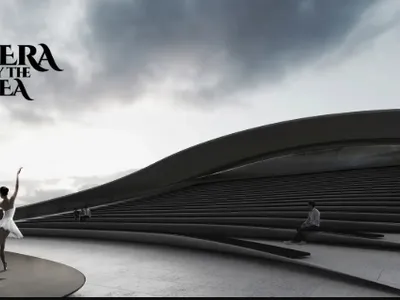
Opera by the Sea Estonia: Three Shells Dissolving Architecture into Tallinn's Coastline
A winning opera house proposal replaces monumental form with interconnected shells that blur the boundary between building, park and Baltic Sea.
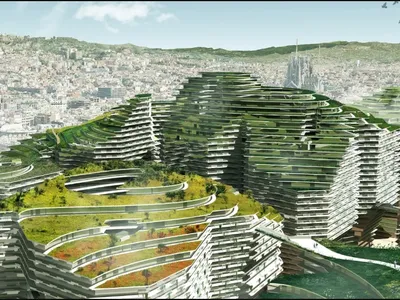
Manzana Morphosis: Stretching Barcelona's Grid into a Living Landscape for 2050
A radical reworking of the Eixample manzana turns density into a tool for generous public space, vertical ecology, and environmental performance.
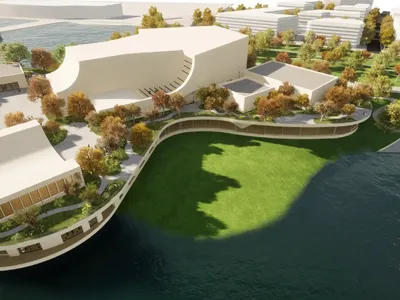
The Amber Palace Opera: A Geological Fiction Surfaces on Tallinn's Baltic Waterfront
Pierre Brillard reimagines a Baltic legend as a public landscape, opera house, and waterfront promenade rooted in Tallinn's coastal identity.
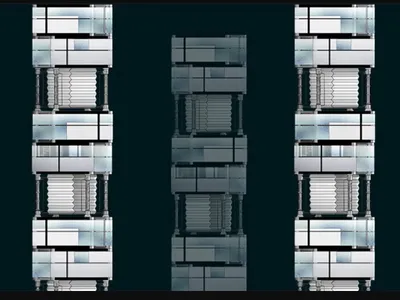
Tsunami Convergenics: Turning Catastrophic Ocean Forces into Underwater Housing Infrastructure
A speculative underwater settlement off the coast of Onagawa, Japan, treats tsunamis and typhoons as energy sources rather than threats.

Similar Reads
You might also enjoy these articles

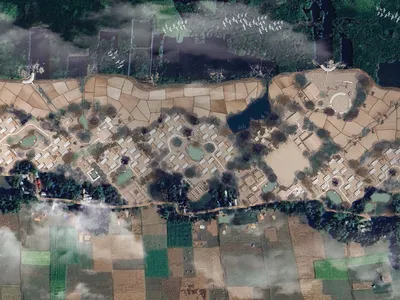
Hodi-Mandai Geram
Project Function: Preservation and revitalization of the Intangible heritage and socio-spatial identity of the Hodi by Housing, Cultural Memory Center, Sacred Grove, landscape, local tourism economy

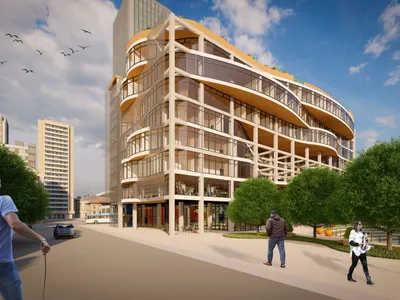
Olio Towers: A Mid-Rise for Performers That Fuses Housing, Rehearsal, and Stage
Located blocks from Houston's Theater District, this modular tower stacks living units around a central performance atrium.
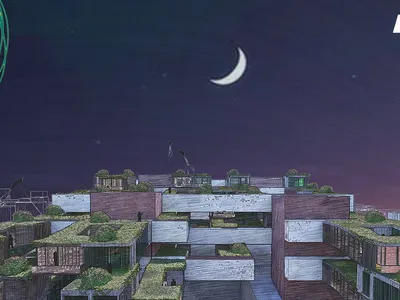
Oasis: Modular Green Housing Carved into Dhaka's Urban Fabric
A shortlisted Plugin Housing entry reclaims unauthorized settlements in Dhaka with stepped concrete volumes, green roofs, and ventilation-driven design.

Black Hole: A Floating Megastructure for the Post-Physical Era
Emiliano Mazzarotto envisions a spherical, self-scaling arena where e-sports, digital hotels, and holographic stadiums replace traditional public space.

Explore Office Building Competitions
Discover active competitions in this discipline

Challenge to reimagine the Iron Throne

Photograph architecture without architects

Illustrate the lost glory of Angkor Wat - Render Challenge

Design challenge to reuse E-waste
Comments (0)
Please login or sign up to add comments
No comments yet. Be the first to comment!