

Transforming 'Waste' Into Opportunity: A Pioneering Design Competition
Redefining Waste: A Groundbreaking Design Competition for a Sustainable Future


Welcome to a groundbreaking competition that transcends the boundaries of conventional design and architecture contests. At the intersection of science, design, and philosophy, this competition challenges you to redefine what we traditionally consider as 'waste.' We're aiming not merely to innovate but to revolutionize the way we think, act, and create. This transformative competition is made possible through a robust partnership—with Design x Design (DxD) as the host and UNI as the co-host and platform provider. Together, we're striving to build bridges between disparate fields, fostering a holistic approach to sustainability.
The Problem Statement
The term 'waste' is a lexically and conceptually complex phenomenon, one that presents significant challenges and yet untapped potential. Our competition aims to delve deep into this multifaceted issue, challenging participants to tackle not just the practical considerations of waste management but the cultural, social, and even metaphysical implications that surround it.
Objectives and Scope
This competition calls for designs that can fundamentally shift our societal paradigms around what 'waste' truly is. We seek entries that are as groundbreaking in their innovation as they are grounded in practicality. The competition’s scope is broad, encompassing everything from environmental sustainability to public health, from technological advances to social justice.
Who Should Participate?
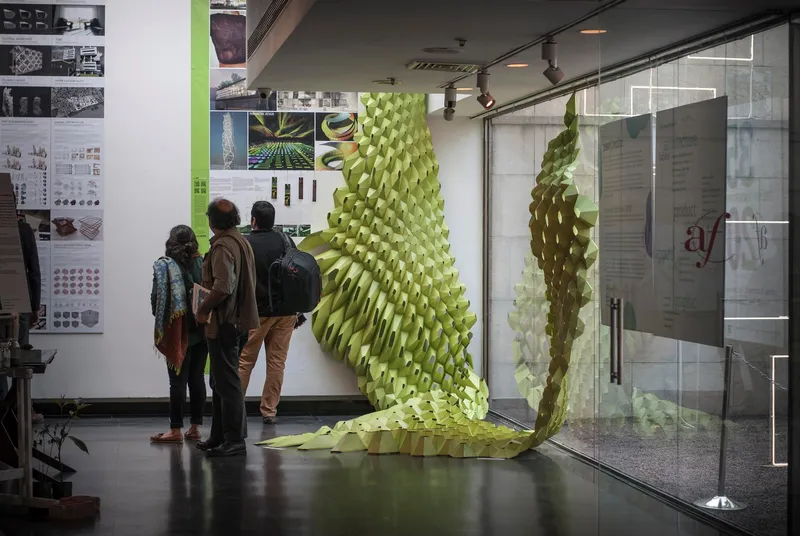
If you think this is just another design or architecture competition, think again. This platform is open to anyone and everyone—from architects to scientists, from artists to thought leaders. It's for anyone passionate about redefining our relationship with waste. As a participant, you not only stand a chance to win grants of up to $7,000 but also the opportunity to showcase your ideas at the prestigious DxD Annual 20under35 Exhibition at the Gallery Romain Rolland, Alliance Francaise de Delhi.
How to Participate
- Register on the UNI competitions page.
- Familiarize yourself with the guidelines and additional resources.
- Craft your proposal meticulously, keeping in mind the rules and Pro-Tips mentioned in the competition brief.
- Submit your design within the stipulated deadline for a chance to turn your vision into reality.
Pro-tip: We strongly recommend leveraging AI and other advanced technologies to enhance your proposal's depth and breadth.
Deadlines and Awards
Please refer to the competitions page for a detailed timeline and deadlines. A substantial grant pool and an opportunity for international exposure await the winning entries.
Questions to Ponder
- How can architecture and design dignify the process of excreta management?
- What role does cultural sensitivity play in your solution? Could it be universally applied or does it cater to specific communities?
- How can technology, particularly AI and IoT, be leveraged to make waste management more effective?
- How does your solution address the stigma associated with waste and excreta?
- Can waste truly transform from being a byproduct to becoming a resource for sustainable development?
This is not just another competition; it's a call to action. Whether you are a student, a professional, or simply a visionary, your ideas have the potential to reshape how we perceive and manage 'waste.' Don't miss this extraordinary opportunity to challenge norms and redefine an essential, yet often overlooked, aspect of human existence.
References (3)


Popular Articles
Popular articles from the community


David Macias Steps a Doorless Stone and Plaster House Down a Tropical Colombian Hillside
In the humid hills of Colombia, Threshold House replaces the front door with an open void and terraces its 850 m² down the slope instead of fighting it.

U.GA Architects Wraps an Oval Rooftop Pool in Curved Board-Formed Concrete on Busan's Jeollidan-gil
In Busan's Jeonpo-dong, a 454 m² mixed-use block stacks a neighborhood facility, guest rooms and an oval rooftop pool inside spiraling concrete walls.

GROUP A Strips a 1969 Rotterdam Harbor Headquarters to Its Frame and Wraps It in Timber Louvers
In Rotterdam's M4H harbor district, Ferro Offices reuses a 1969 frame, adds one timber storey and reaches BREEAM-NL Outstanding.

Cube Design Draws an Ecological Corridor Between Two Shenzhen Hills with the Nankai Building
Beside Shenzhen's container docks, the Nankai Building pairs stacked balconies with a climbing green screen to connect two hillsides across its height.

Similar Reads
You might also enjoy these articles


Rede Arquitetos Turns Circulation into Civic Space at the Educar II SESC School in Fortaleza
In Fortaleza, Brazil, Educar II SESC-CE trades a signature form for mesh screens, yellow thresholds and courtyard walkways built for equatorial heat.
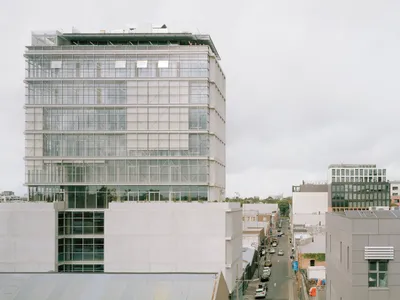
116 Rokeby Building, Collingwood
Sustainable Collingwood office building featuring double-skin façade, natural ventilation, rooftop amenities, and carbon-neutral design focused on wellbeing and longevity.
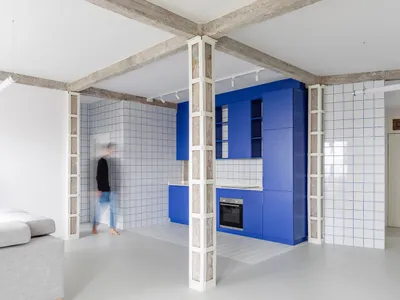
Contemporary Apartment Renovation in Spain: RV House by BIAN Opens Up to the Sea
A minimalist 1930s apartment in Santander is transformed into a flexible, sea-facing home through contemporary Spanish renovation.
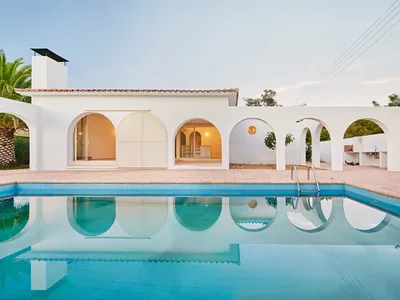
3 Marías House: A Contemporary Mediterranean Courtyard Retreat by Bajet Giramé + Burckhardt
Mediterranean courtyard home blending traditional architecture with modern design, terracotta flooring, flexible interiors, sustainable climate strategies, and garden integration.

Explore Sustainable Design Competitions
Discover active competitions in this discipline

Challenge to visualize future spaces of waste

Design challenge to reuse E-waste
Comments (0)
Please login or sign up to add comments
No comments yet. Be the first to comment!