
Trekroner Church: A Modern Spiritual Landmark in Roskilde, Denmark
Trekroner Church in Roskilde blends modern architecture, organic concrete forms, artistic collaboration, pentagonal tile design, skylights, and serene, spiritual interiors.

Nestled in the heart of Roskilde, Denmark, Trekroner Church, designed by Rørbæk og Møller Arkitekter, is a striking example of contemporary religious architecture that redefines the experience of sacred spaces. Completed in 2024, this 850 m² church merges modern design, innovative construction techniques, and integrated art to create an environment that is both visually captivating and spiritually uplifting.
Organic Architecture and Innovative Concrete Design
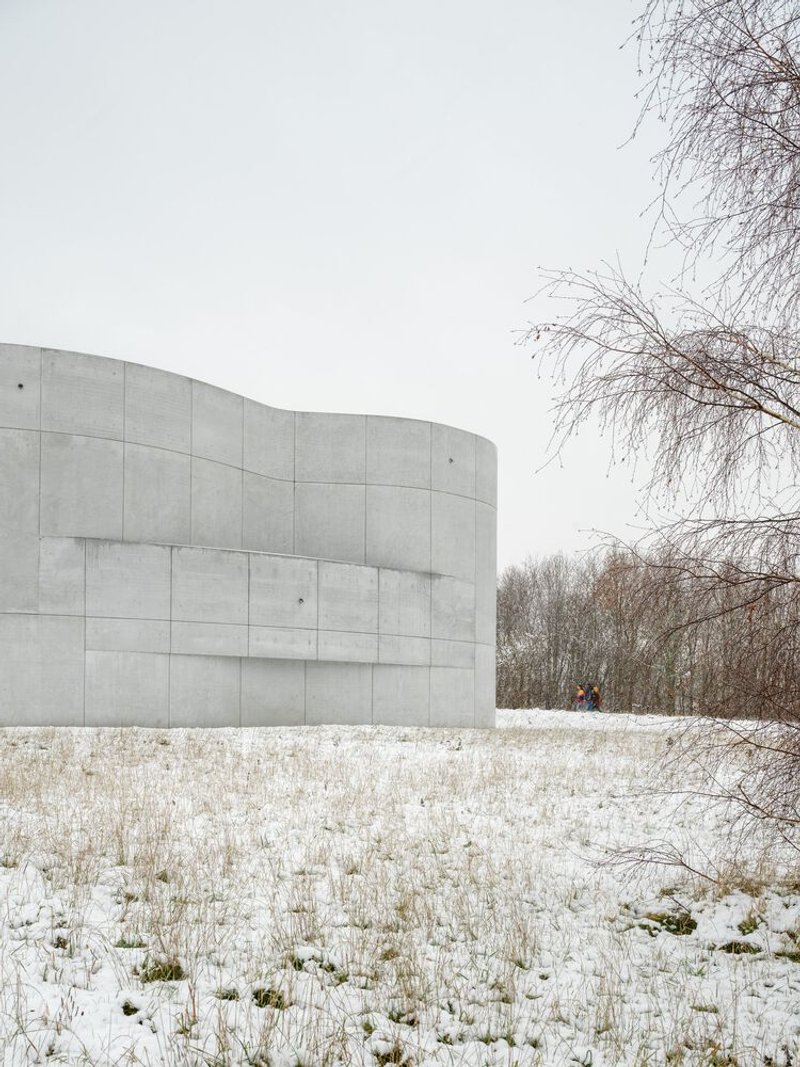
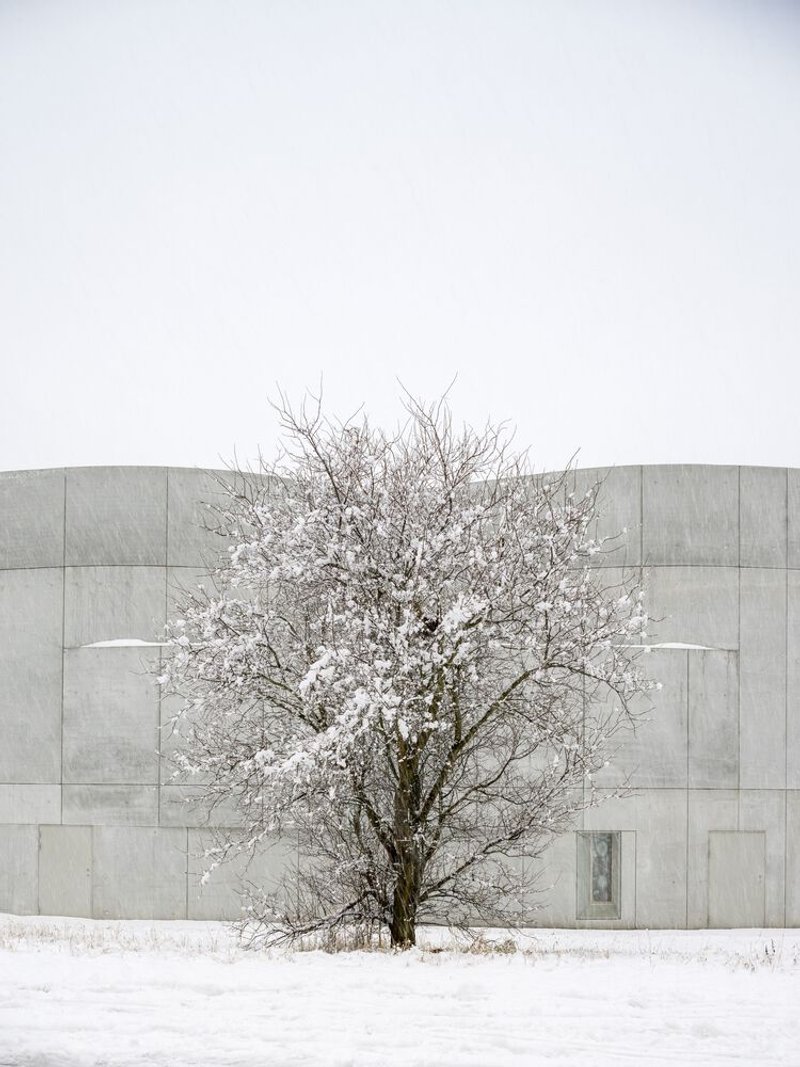
One of the most remarkable aspects of Trekroner Church is its organic curved form, achieved through an ambitious construction process. The architects cast nine large concrete sections on-site using over 200 molds, showcasing a pioneering approach in modern ecclesiastical architecture. This meticulous process highlights the church’s dedication to cutting-edge architectural methods and sets a benchmark for contemporary religious design.
A Symbiosis of Art and Architecture
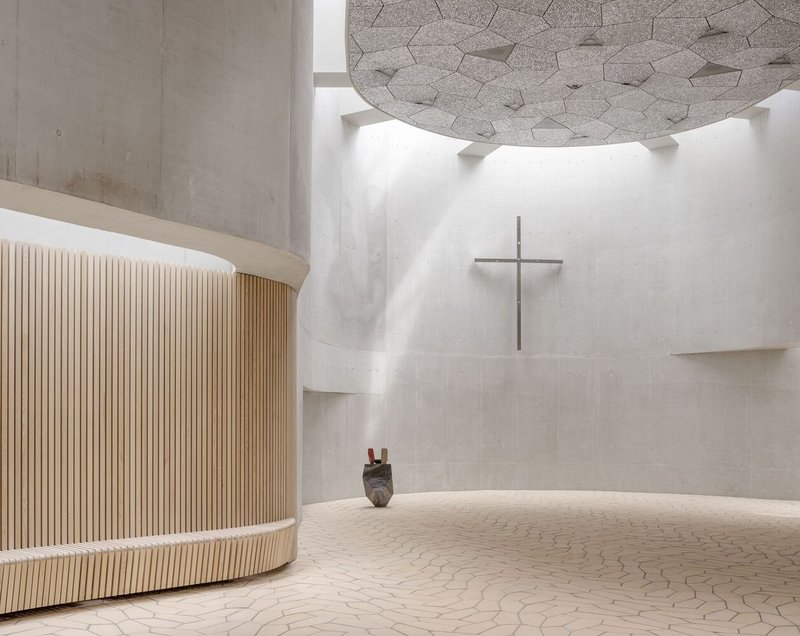
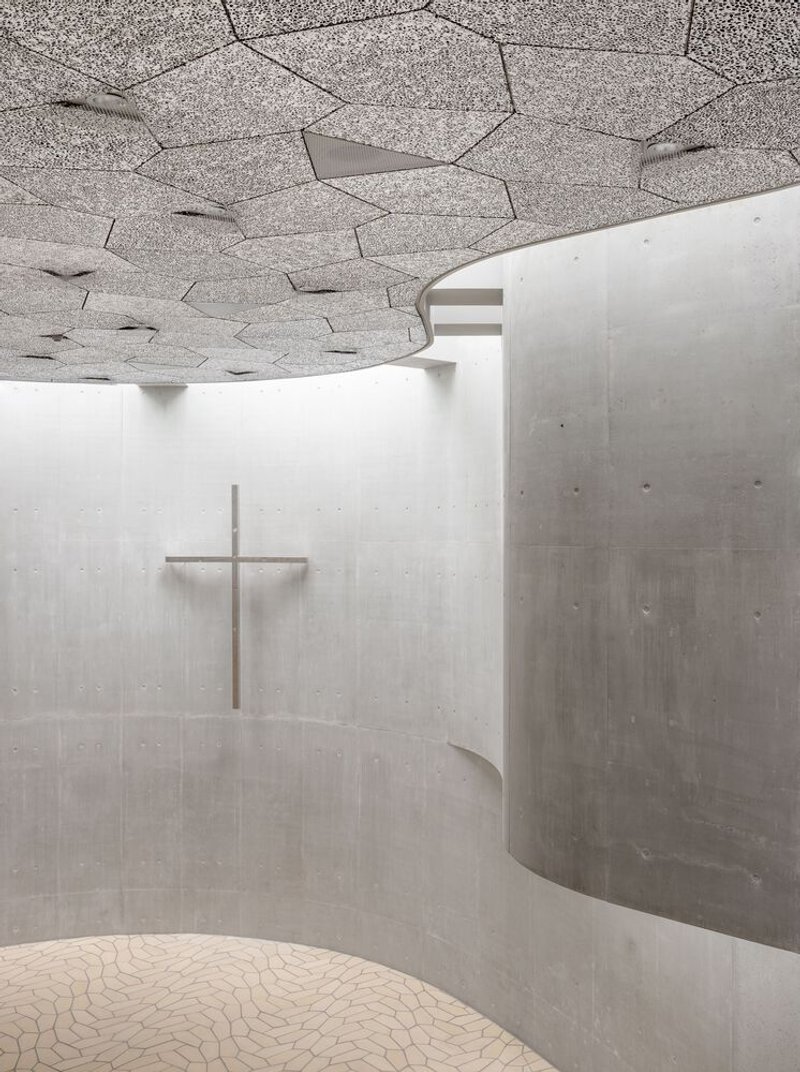
From the outset, the design process emphasized collaboration between architects and artists, creating a seamless integration of art within architecture. Notable contributions include the perforated cross by Henrik Plenge Jakobsen, subtly reflecting the Northern Cross constellation, and installations by artists Alexander Tovborg and Lea Porsager, featuring oak altars and a baptismal font crafted from South African sodalite. This artistic collaboration ensures that every corner of the church resonates with a sense of spiritual harmony.
Material Harmony and Interior Innovation
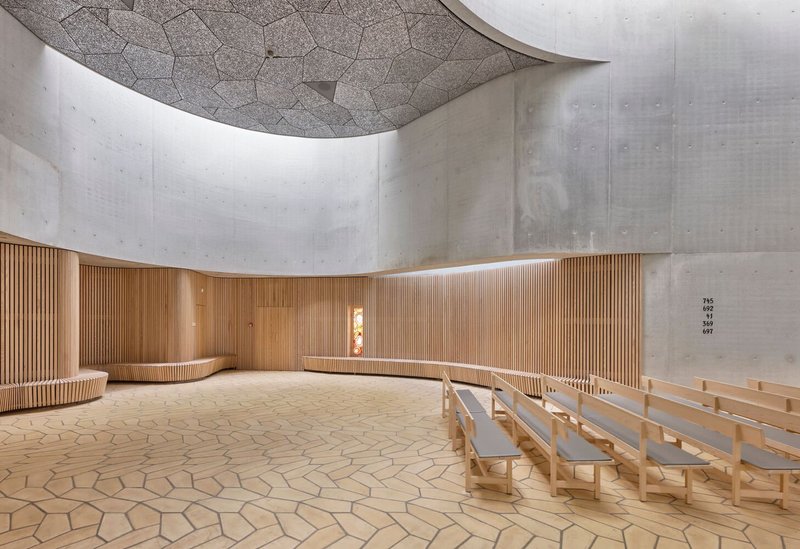
Trekroner Church showcases a thoughtful material palette, blending tradition and modernity. The floor features pentagonal tiles made from German blue clay, a pattern that extends onto the ceiling, creating a cohesive visual rhythm. The ceiling itself is crafted from expanded, water-cut aluminum sourced from recycled cans, serving both as a reflective surface for natural light and as a sound-absorbing element to maintain a serene atmosphere.
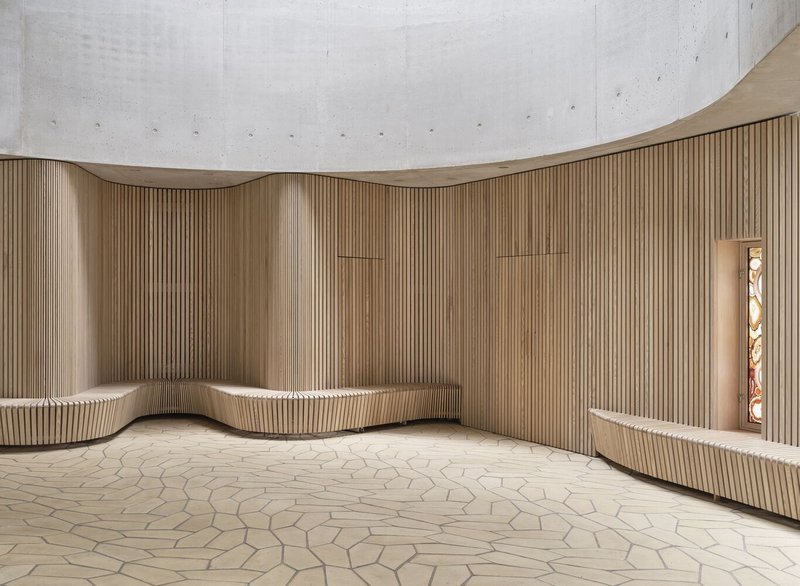
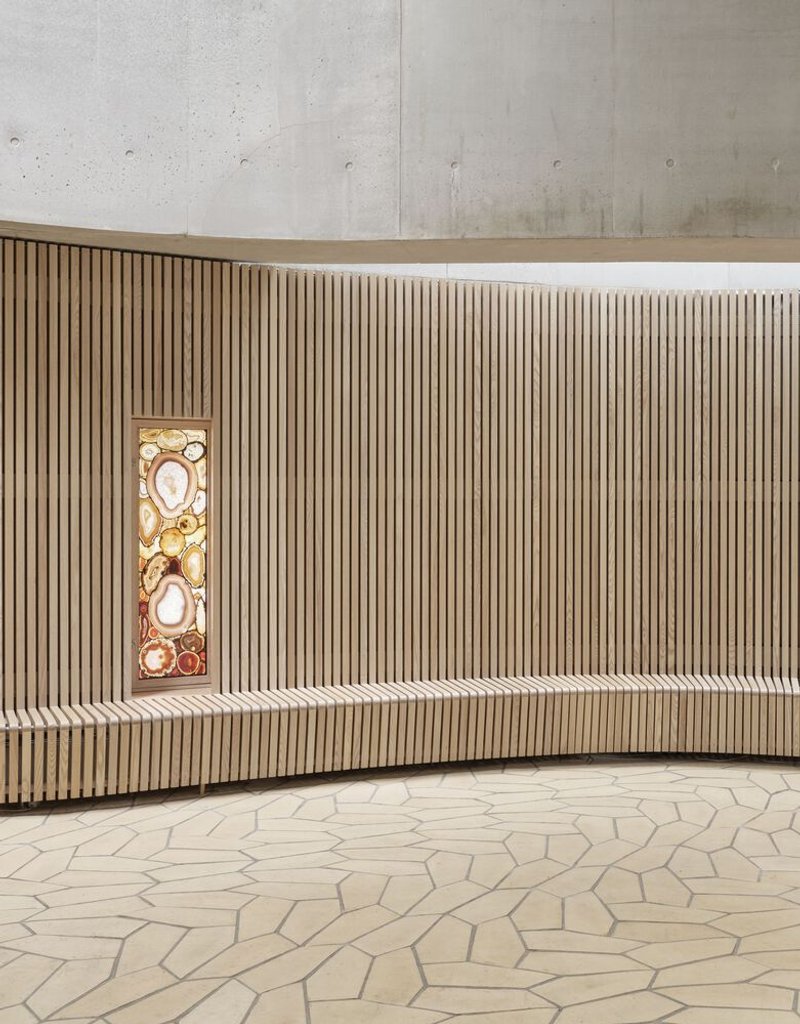
The interior's ash wood elements, including wall cladding, benches, and a handcrafted altar, complement the pale yellowish floor tiles. This careful selection of materials fosters a warm, contemplative environment, illustrating how modern churches can harmonize aesthetics with spiritual experience.
Light as a Spiritual Element
A continuous skylight traces the church’s undulating perimeter, bathing the interior in soft, natural light that changes throughout the day. This architectural gesture not only illuminates the space but also symbolizes the connection between the earthly and the divine, enhancing the spiritual ambiance for worshippers and visitors alike.
Geometry, Meditation, and Tradition
The floor’s pentagonal clinkers, inspired by mathematical research at the University of Washington, demonstrate a modern reinterpretation of centuries-old tiled floor traditions. These uniquely shaped tiles encourage quiet contemplation and create a meditative atmosphere, exemplifying how modern design can honor historic architectural practices while embracing innovation.
Trekroner Church: Where Contemporary Design Meets Tradition
In Trekroner Church, modern architecture, innovative materials, and integrated art converge to craft a sacred space that is both functional and spiritually enriching. Through its pioneering use of concrete, unique geometric flooring, and collaborative artistic interventions, the church stands as a testament to contemporary Danish religious architecture, redefining how sacred spaces can be experienced in the 21st century.
All photographs are works of
Adam Mørk



Popular Articles
Popular articles from the community

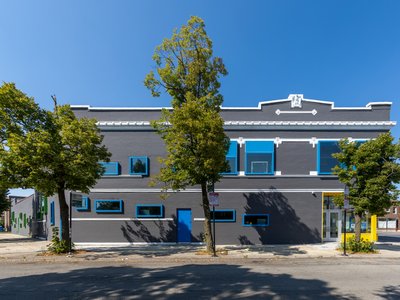
Gads Hill Early Learning Center by JGMA: Adaptive Reuse Shaping Community-Focused Educational Architecture
Adaptive reuse transforms fragmented structure into vibrant early learning center with playful façade, natural light, and community-focused sustainable design.

Free Architecture Competitions You Can Enter Right Now
No entry fees, real prizes. Here are the best free architecture competitions open for submissions in 2026.


The Ken Roberts Memorial Delineation Competition (Krob)
As the most senior architectural drawing competition currently in operation anywhere in the world, it draws hundreds of entries each year, awarding the very best submissions in a series of medium-based categories.
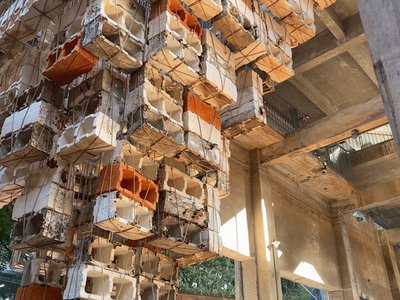
Inverted Architecture Installation by Studio Link-Arc: Exploring the Intersection of Architecture and Living Organisms
Inverted Architecture Installation by Studio Link-Arc blends mycelium, sustainability, inverted design, ecological cycles, and urban adaptive architecture in Shenzhen.
Similar Reads
You might also enjoy these articles
Free Architecture Competitions You Can Enter Right Now
No entry fees, real prizes. Here are the best free architecture competitions open for submissions in 2026.
Top 15 Architecture Competitions to Enter in 2026
From student-friendly idea competitions to prestigious international awards, here are the best architecture competitions open for entries in 2026. Updated regularly.

DIY & Engineering in Computational Design : Enter the BeeGraphy Design Awards
Showcase Your Creativity with Computational Design and Open Source Projects
Innovative Design Solutions: Award-Winning Projects from Recent Architecture Competitions
Exploring award-winning architectural projects shaping the future of design, sustainability, and community.

Explore Architecture Competitions
Discover active competitions in this discipline




The International Standard for Design Portfolios


The Global Benchmark for Architecture Dissertation Awards


The Global Benchmark for Graduation Excellence


Challenge to design an urban locus of culture and heritage
Comments (0)
Please login or sign up to add comments
No comments yet. Be the first to comment!