
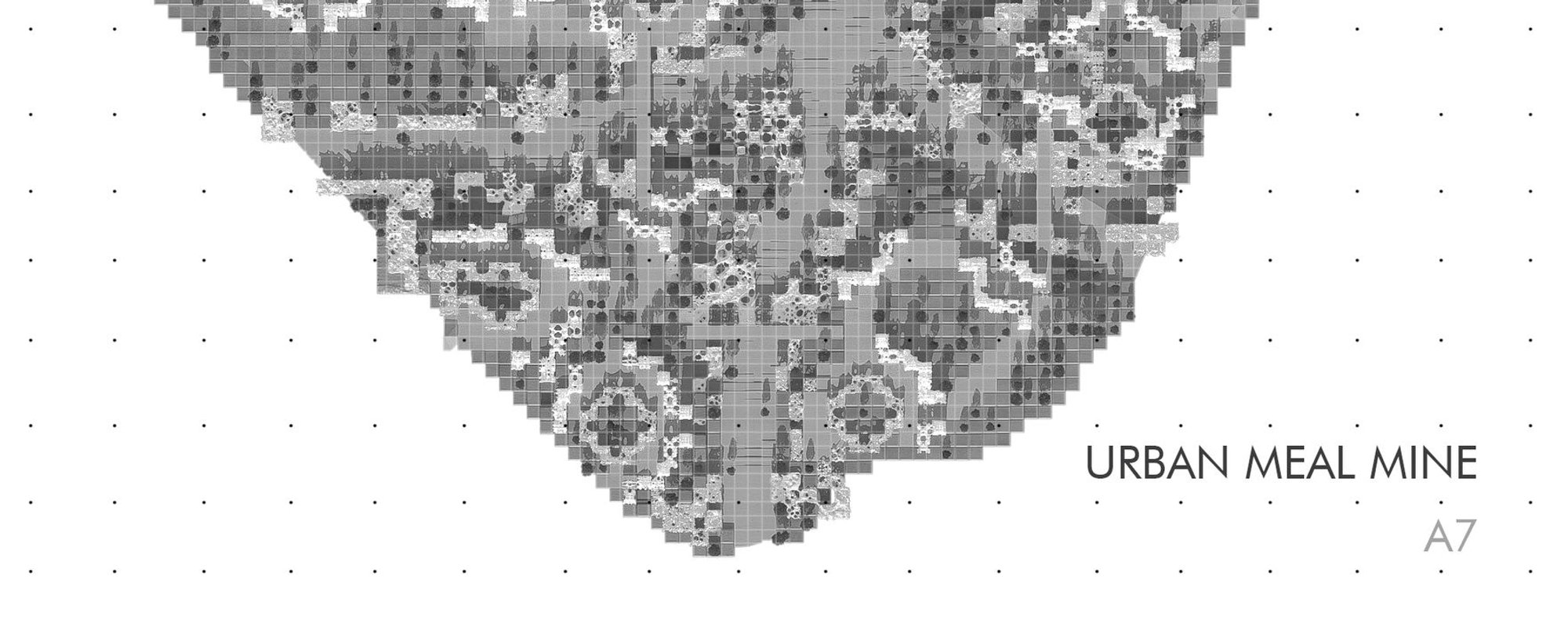
Urban Meal Mine: Redefining Sustainable Urban Architecture
Urban farming architecture that unites food production, community living, and education to build resilient, sustainable future cities.

Urban agriculture has emerged as a crucial solution to food security, sustainability, and community resilience in modern cities. The Urban Meal Mine -A7, designed by Pavol Čičkán and recognized with an Honorable Mention in the Urban Meal Mine competition, is a forward-thinking architectural proposal that integrates market spaces, community living, and vertical farming into a single adaptable system. By weaving food production directly into the urban fabric, the project addresses environmental, social, and economic challenges while setting a new precedent for sustainable urban architecture.
Site and Context
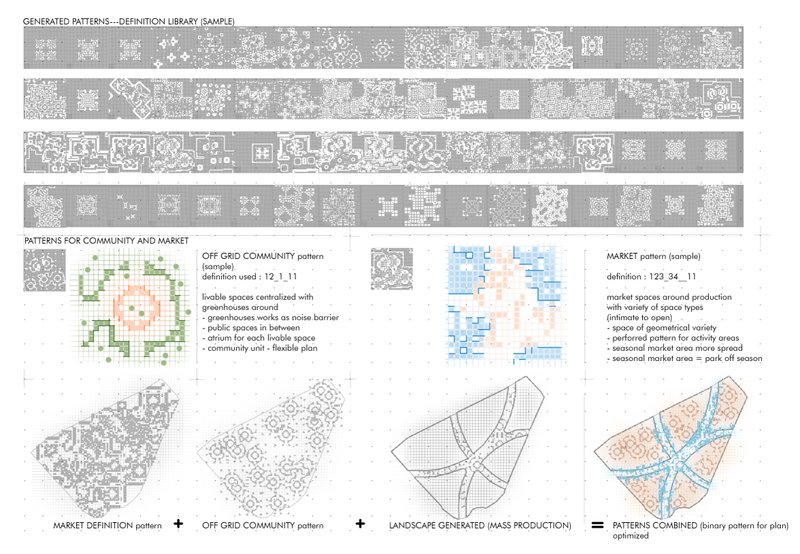
The chosen site lies adjacent to London’s Nine Elms development and is surrounded by residential neighborhoods. With a historic legacy as a market hub, the site presents strong potential for food education and public engagement. Despite its challenges—including railway noise and a mono-functional layout—the site offers unique opportunities to showcase how urban farming architecture can respond to modern challenges.
Challenges Addressed
The project begins by tackling pressing global issues:
- 40% of Earth’s surface is already used for farming.
- 70% of global water consumption goes into agriculture.
- Heavy reliance on imported vegetables leads to unstable infrastructure, rising costs, and quality concerns.
- Increasingly unsustainable urban lifestyles disconnect people from their food sources.
Architectural Solutions
The Urban Meal Mine proposes a radical rethinking of urban space:
- Vertical Farming Principles: Integrating production, living, and market spaces into a single ecosystem.
- Aquaponics and Hydroponics: Efficient plant-growing systems reduce water waste and improve yields.
- Local Food Production: Reduces reliance on imports and promotes seasonal, fresh produce.
- Eco-Awareness and Education: Architecture becomes a tool for sustainability learning.
This layered approach allows the city to generate its own food while fostering education and community resilience.
The Generative System
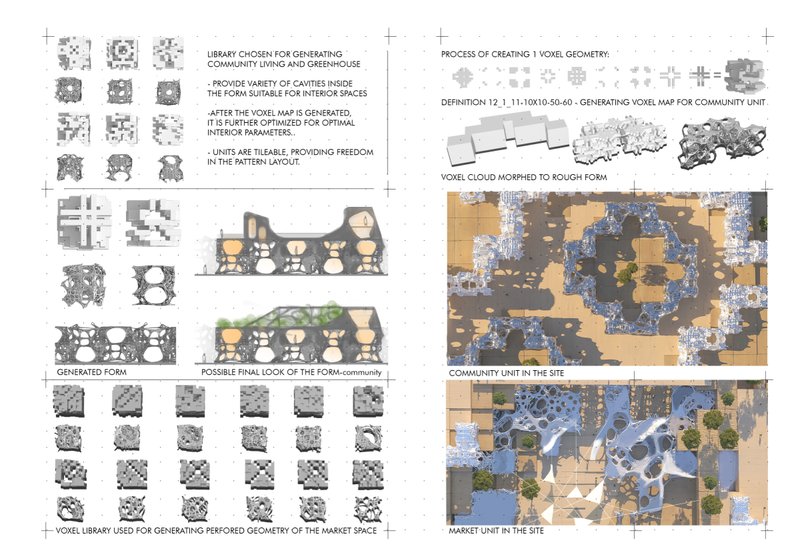
A key innovation of the project is its pattern-based architecture, where generative units grow flexibly and adapt to site conditions. These units:
- Support modular growth adaptable to different scales.
- Create a pattern library for varied building typologies.
- Integrate seamlessly with existing urban grids.
The result is a living system that evolves with community needs, ensuring resilience and adaptability.
Community Integration
The project blurs the line between public, private, and productive spaces:
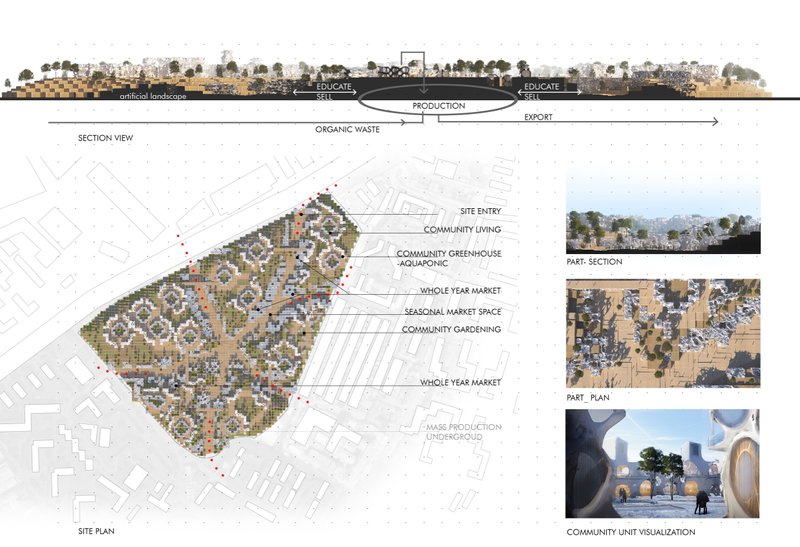
- Market Hubs: Year-round and seasonal markets organized around production.
- Community Living: Flexible units surrounded by greenhouses, public spaces, and atriums.
- Educational Platforms: Spaces dedicated to teaching urban farming methods and ecological awareness.
This approach transforms the site into a sustainable urban village, where people live, learn, and grow together.
Architectural Vision
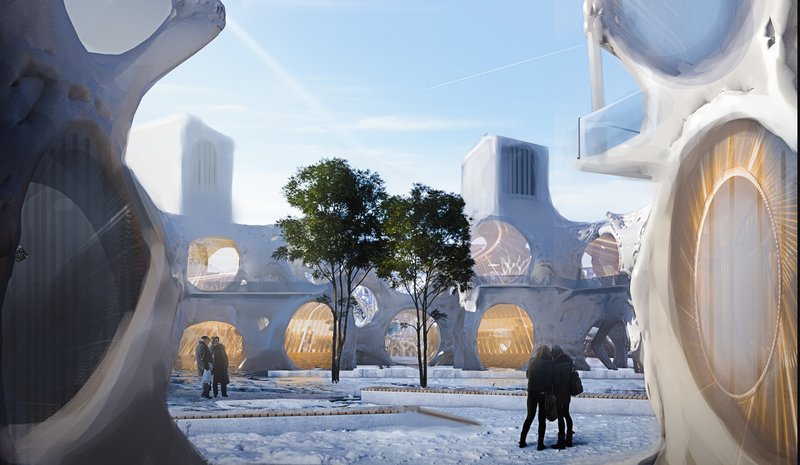
Rendered visuals depict striking organic forms, with perforated geometries and interconnected courtyards. These architectural spaces:
- Create porous, light-filled environments.
- Encourage human interaction and collective activity.
- Showcase architecture as both infrastructure and community catalyst.
By merging futuristic aesthetics with ecological responsibility, the project embodies the essence of sustainable architecture.
The Urban Meal Mine demonstrates how architecture can move beyond shelter to become an active participant in sustainability, education, and food security. Through vertical farming, adaptable generative systems, and community-centered design, Pavol Čičkán’s proposal offers a blueprint for resilient cities of the future. Recognized for its innovation, this Honorable Mention project sets a bold precedent for urban farming architecture worldwide.




Popular Articles
Popular articles from the community

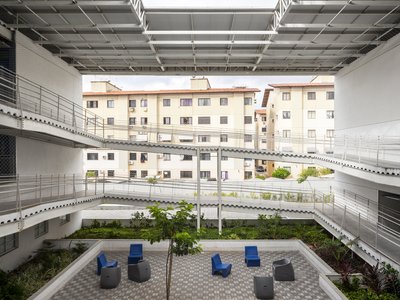
Rede Arquitetos Builds an Open-Air School in Fortaleza That Doubles as a Neighborhood Living Room
Educar II SESC-CE folds sports, dance, and community gathering into a courtyard campus wrapped in mesh and tropical color.
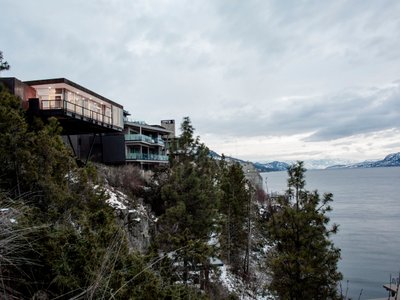
Alton Cliff House: A Harmonious Retreat by f2a Architecture in Lake Country, Canada
Alton Cliff House blends corten steel, prefabrication, and sustainable design, creating a luxurious, energy-efficient retreat perched on Canadian cliffs.

Free Architecture Competitions You Can Enter Right Now
No entry fees, real prizes. Here are the best free architecture competitions open for submissions in 2026.

Filtering Space: A Gradual Spatial Experience
From urban intensity to spatial calm.


Similar Reads
You might also enjoy these articles
20 Most Popular Commercial Architecture Projects of 2025
From sustainable market concepts to heritage factories, the commercial buildings and proposals that drew the most attention on uni.xyz this year.
Free Architecture Competitions You Can Enter Right Now
No entry fees, real prizes. Here are the best free architecture competitions open for submissions in 2026.
Top 15 Architecture Competitions to Enter in 2026
From student-friendly idea competitions to prestigious international awards, here are the best architecture competitions open for entries in 2026. Updated regularly.

DIY & Engineering in Computational Design : Enter the BeeGraphy Design Awards
Showcase Your Creativity with Computational Design and Open Source Projects





Comments (0)
Please login or sign up to add comments
No comments yet. Be the first to comment!