
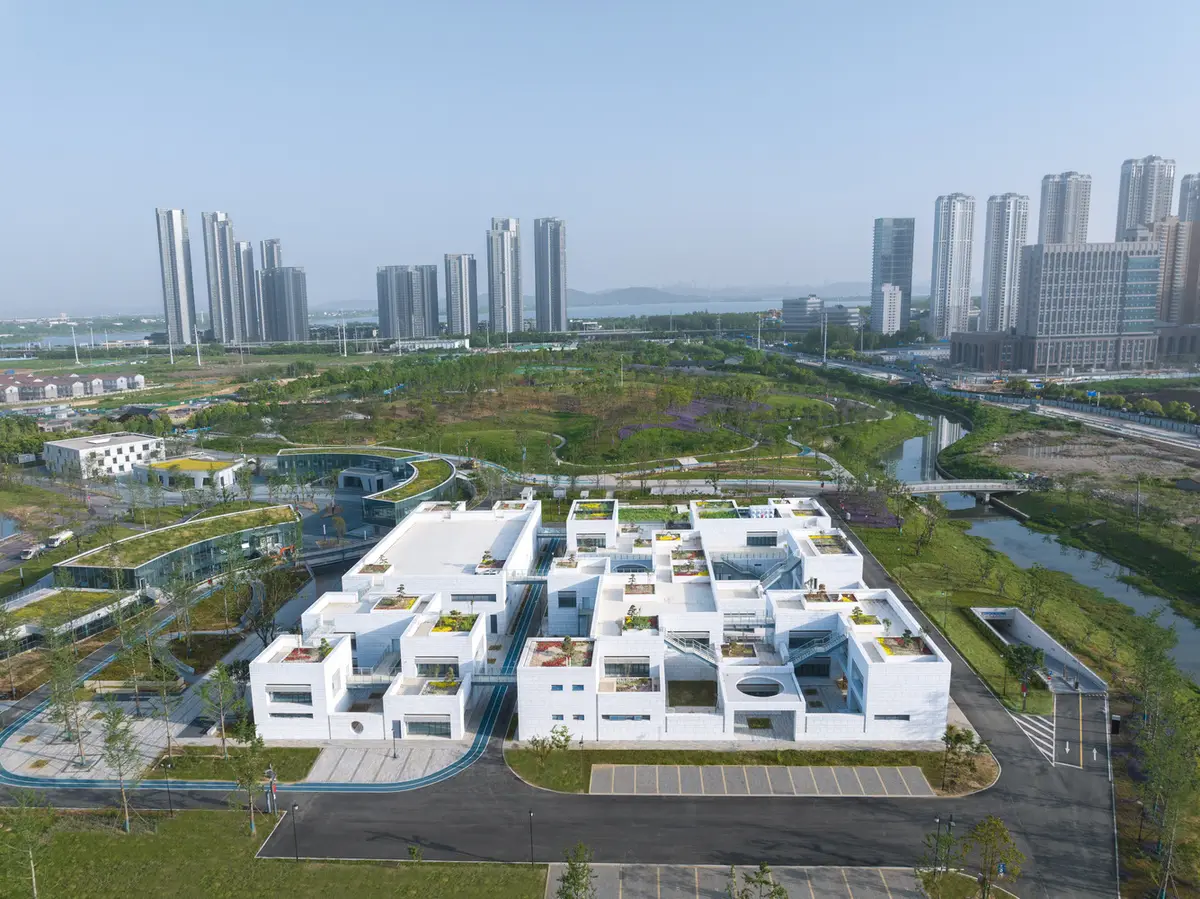
Wuhan Sponge Park Research and Visitor Center: A Landmark in Urban Sustainable Design
Wuhan Sponge Park Visitor Center by UAO Design blends sustainable urban sponge park, educational facilities, landscape integration, and historic Beiyang Bridge inspiration.


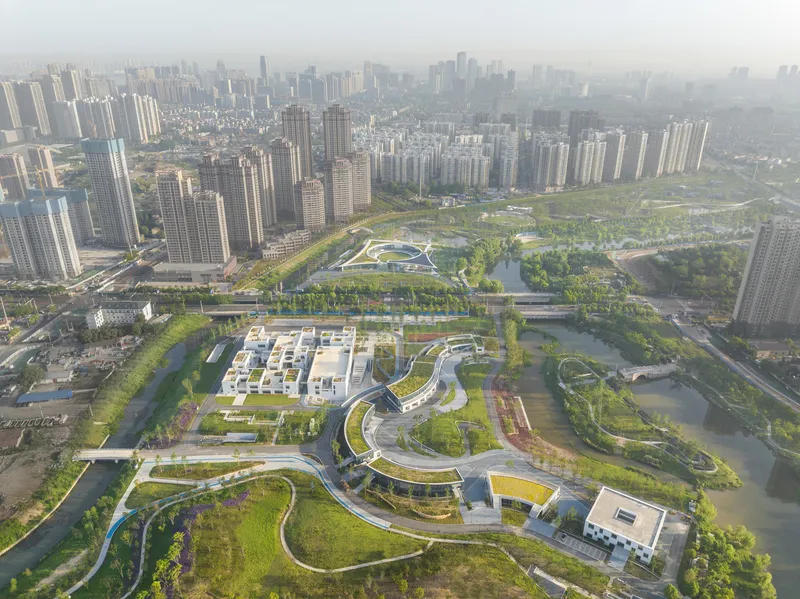
The Wuhan Sponge Park Research + Visitor Center, designed by UAO Design and led by architect Tao Li, is a pioneering example of integrating sustainable urban design with educational and recreational facilities. Completed in 2023, this expansive 40,385 m² project in Wu Han Shi, China reimagines the concept of sponge urbanism, blending research, learning, and visitor engagement within a multifunctional park environment. Photographed by In Between, the project showcases a harmonious dialogue between architecture, landscape, and cultural heritage.
Urban Integration and Site Context
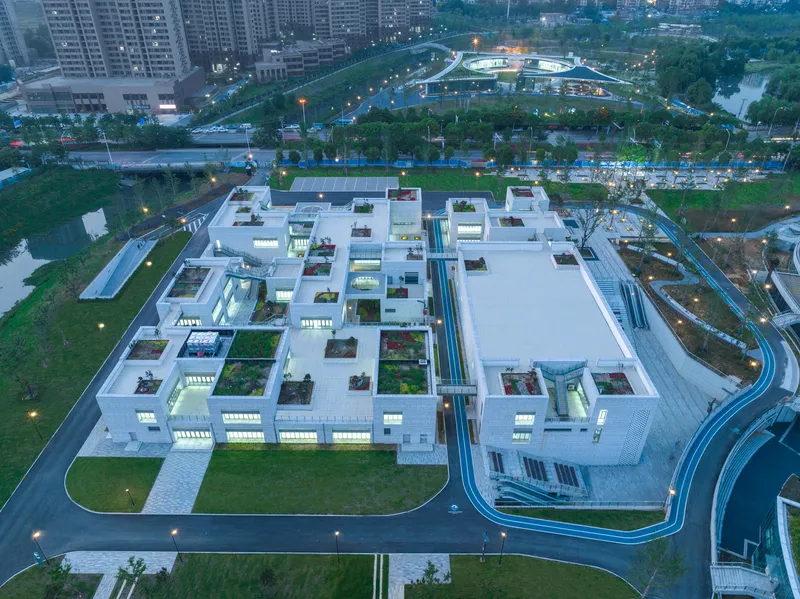
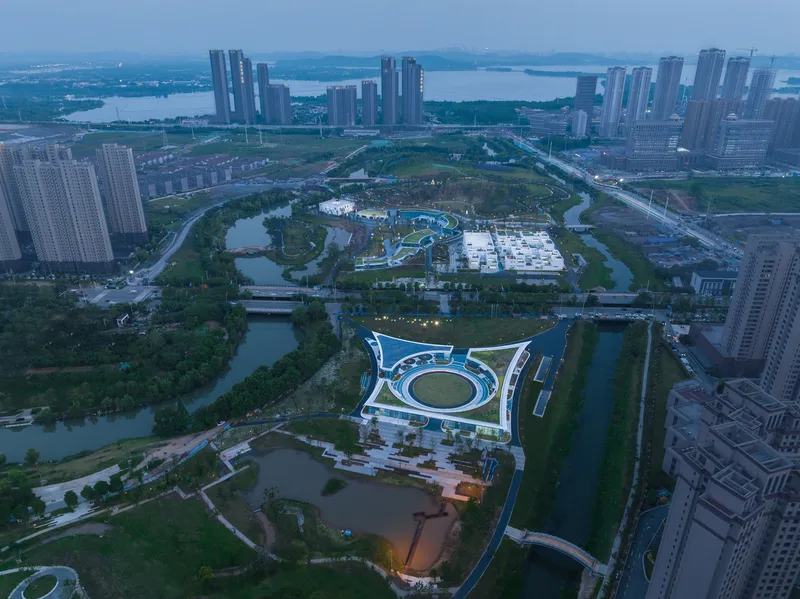
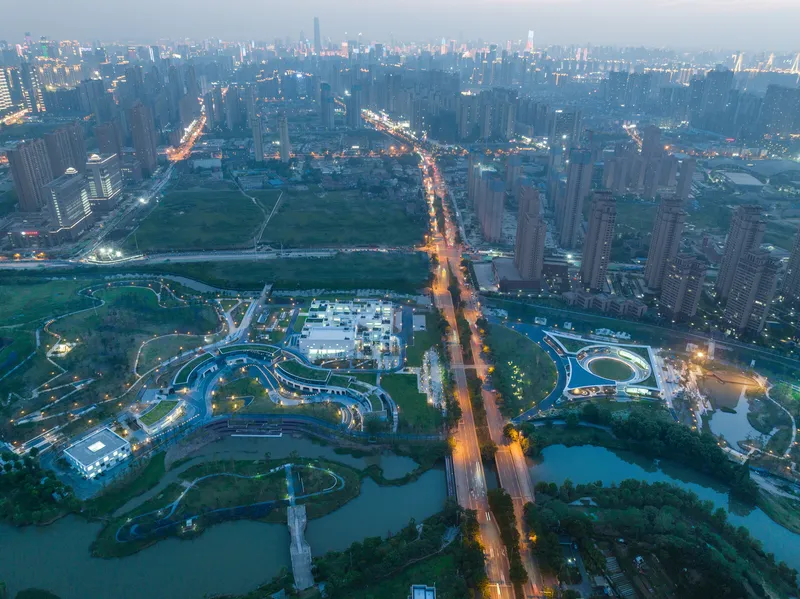
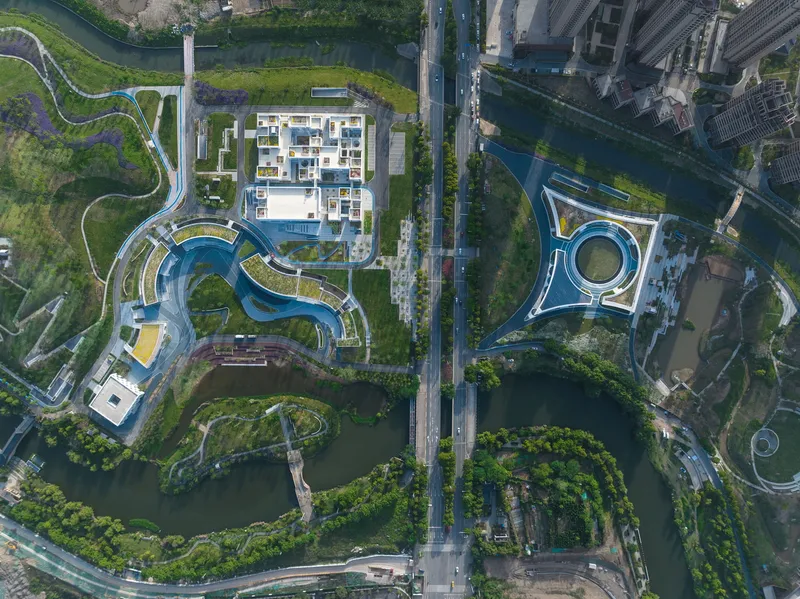
Situated along an urban strip park, the project occupies a strategic location between two artificial river channels, Donghu Port and Shahu Port. The site straddles Tuanjie Avenue, with the visitor center located on the northern plot and the research and learning complex on the southern plot. This division allows a thoughtful distribution of functions: the north plot focuses on tourism and public engagement, while the south plot houses teaching facilities, dormitories, administrative offices, and outdoor activity spaces for educational programs.
A key feature of the design is its respectful integration of local history. To the east lies the Beiyang Ancient Bridge, a Ming Dynasty stone bridge that inspired the recurring theme of “bridge and connection” throughout the masterplan, connecting both the physical and conceptual aspects of the park.
Architectural Layout and Design Strategy
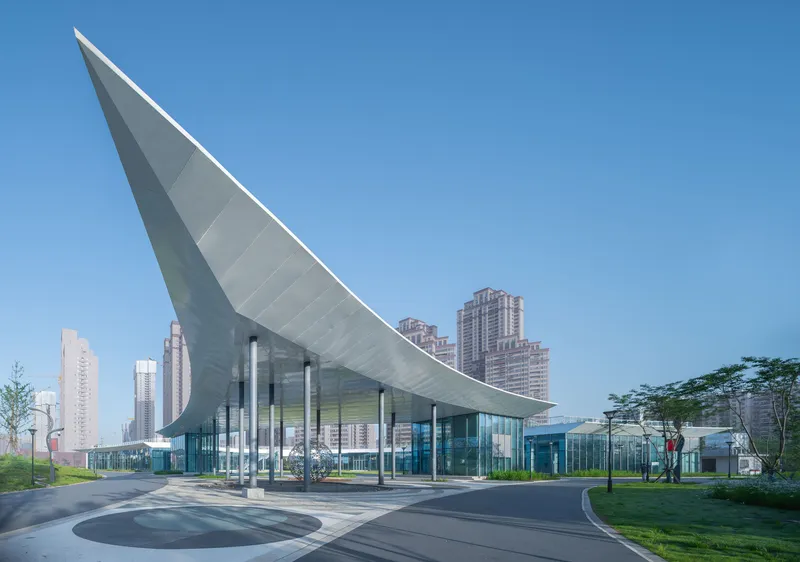
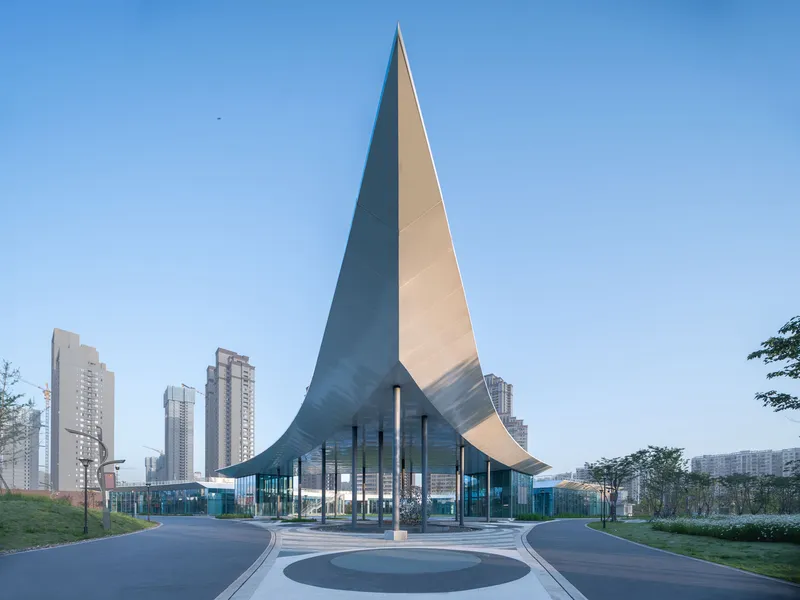
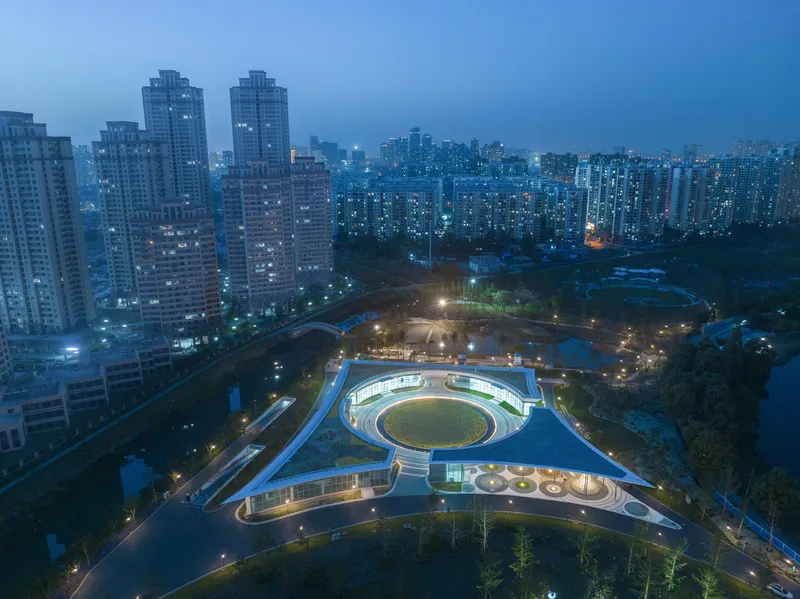
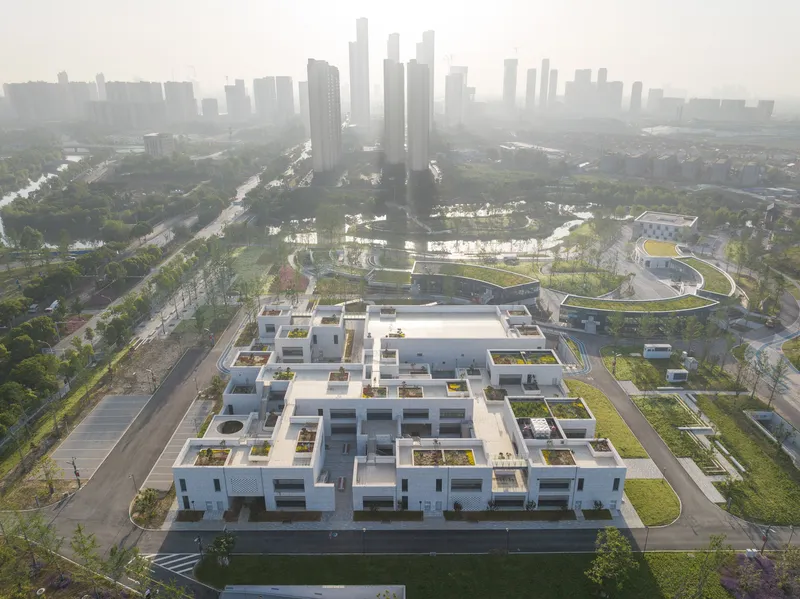
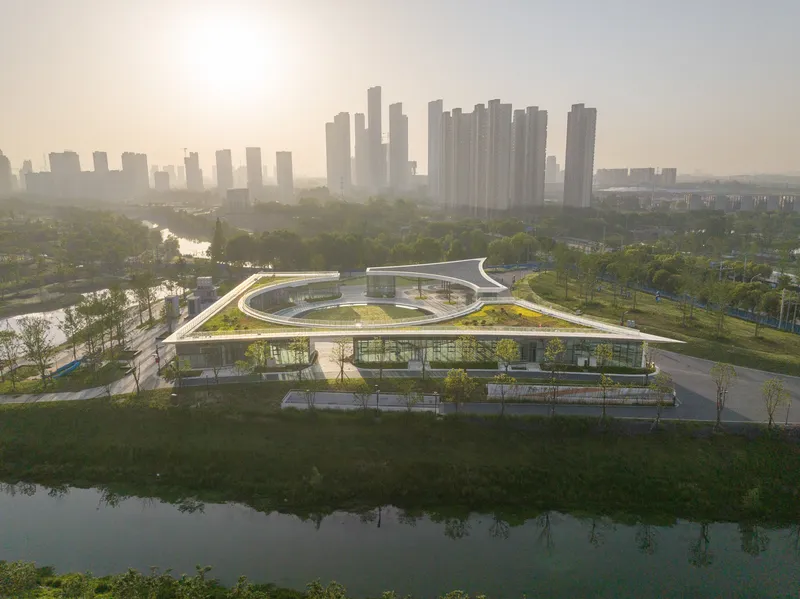
The visitor center adopts a non-standard quadrilateral form that responds to the site’s terrain and minimizes the building footprint. Its inward-facing circular plaza creates a welcoming public gathering space while preserving openness. Meanwhile, the south-side research and learning center is organized into three distinct blocks: a square teaching area, a curved dormitory area, and a single-story office block. This arrangement balances geometric clarity and fluidity, creating dynamic spatial interactions while maintaining visual coherence with the visitor center.
The southern dormitory block cleverly adapts to the topography. Elevated slightly above the flood level of the adjacent river channel, the two-story dormitory presents only a single floor along the main road elevation, blending seamlessly into the landscape. The design leverages the natural slope and hilly features, enhancing both environmental performance and visual integration.
Innovative Courtyard and Grid Systems
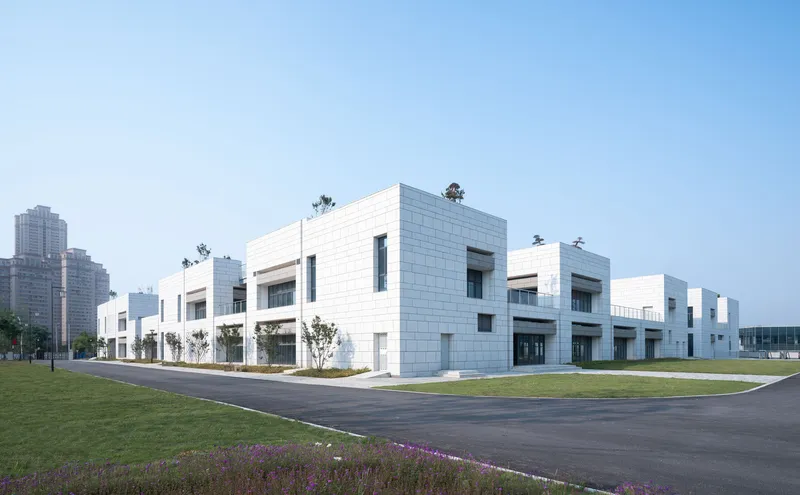
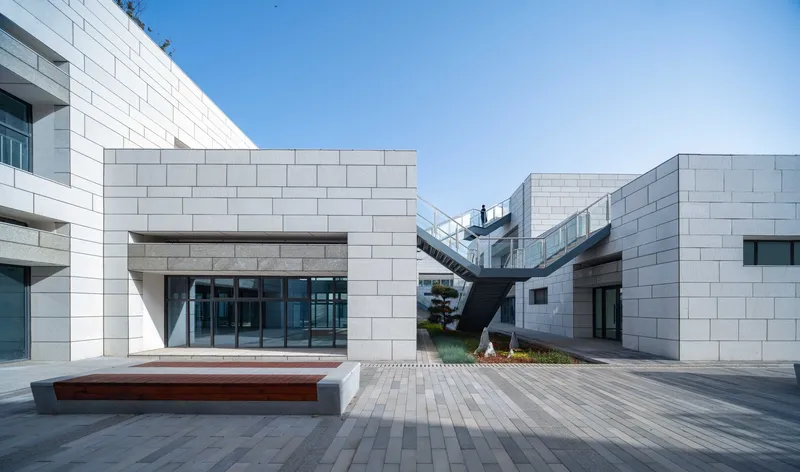
The teaching area employs a 10x10 square grid with 8.4-meter column spacing, forming three vertically stacked layers. By selectively extracting unit boxes, designers created negative space courtyards and terraces that ensure natural lighting, cross-ventilation, and inward-facing views for all rooms. These open-air voids foster social interaction, circulation, and connectivity through stairways and elevated trestles, establishing a dynamic, human-centered learning environment.
Architecture Rooted in Landscape
UAO Design’s approach emphasizes harmony between architecture and nature. The project respects the topography, natural landscapes, and local environment, drawing inspiration from traditional Chinese literati painting, where the landscape dominates and architecture plays a supportive role. Buildings are deliberately designed to enhance views, integrate with terrain, and maintain a low-impact presence, reflecting a sustainable and context-sensitive architectural philosophy.
This fusion of landscape-driven design, innovative educational spaces, and community-oriented facilities makes the Wuhan Sponge Park Research + Visitor Center a model of modern urban sponge park architecture. It demonstrates how sustainable urban interventions can simultaneously support research, learning, and public recreation.
All photographs are works of
In Between


Popular Articles
Popular articles from the community


ALGAL REALM: A Bio-Integrated Lunar Habitat Design for Life Beyond Earth
ALGAL REALM reimagines lunar habitat design with algae-powered life support, 3D-printed regolith, and vertical living for a lunar future.

Co-Life: Senior Housing Design That Reconnects Older Adults With the City
Co-Life reimagines senior housing design through healing gardens, shared streets, workshops, and a sustainable community across generations.

Little Red Riding Hood: Architectural Design as a Journey Through Fear, Light, and Storytelling
Little Red Riding Hood reimagines the fairy tale through architectural design shaped by fear, light, scale, memory, uncertainty, and choice.

Co-life: Sustainable Architecture for Age-Friendly Community Living
Co-life reimagines sustainable architecture for seniors through courtyards, rammed earth, shared gardens, and spaces designed for belonging.

Similar Reads
You might also enjoy these articles

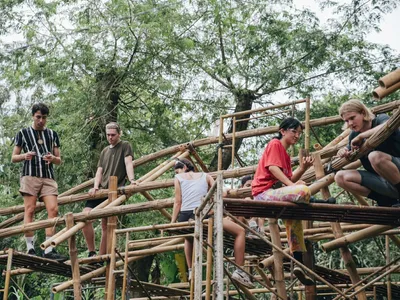
Bamboo Housing Challenge 2026: Design Affordable, Sustainable Homes Using Bamboo
An international design competition by Bamboo U and IBUKU inviting architects and designers to reimagine affordable housing using bamboo — with the winning design built full-scale in Bali.

Computational Design & Education: Beegraphy Design Awards Introduces 7th Category (Featuring Jiyun's Innovative Approach)
Dive into Beegraphy’s 7th Design Awards category, where computational design meets education to create immersive, interactive learning tools, inspired by Jiyun’s work.
From Parametric Lighting to Urban Furniture: Join the 2nd Workshop in Beegraphy’s Computational Design Series
Dive into Cutting-Edge Design Techniques and Practical Applications with Industry Experts

Last Call: Unleash Your Architectural Genius in SHAK's Kindergarten Design Competition
Urgent call for architects to join SHAK's kindergarten design competition before the looming deadline

Explore Sustainable Design Competitions
Discover active competitions in this discipline

Challenge to reimagine the Iron Throne

Photograph architecture without architects

Illustrate the lost glory of Angkor Wat - Render Challenge

Design challenge to reuse E-waste
Comments (0)
Please login or sign up to add comments
No comments yet. Be the first to comment!