


Blender
TOOL3D modeling, rendering, and animation using Blender software for architecture and design visualization.


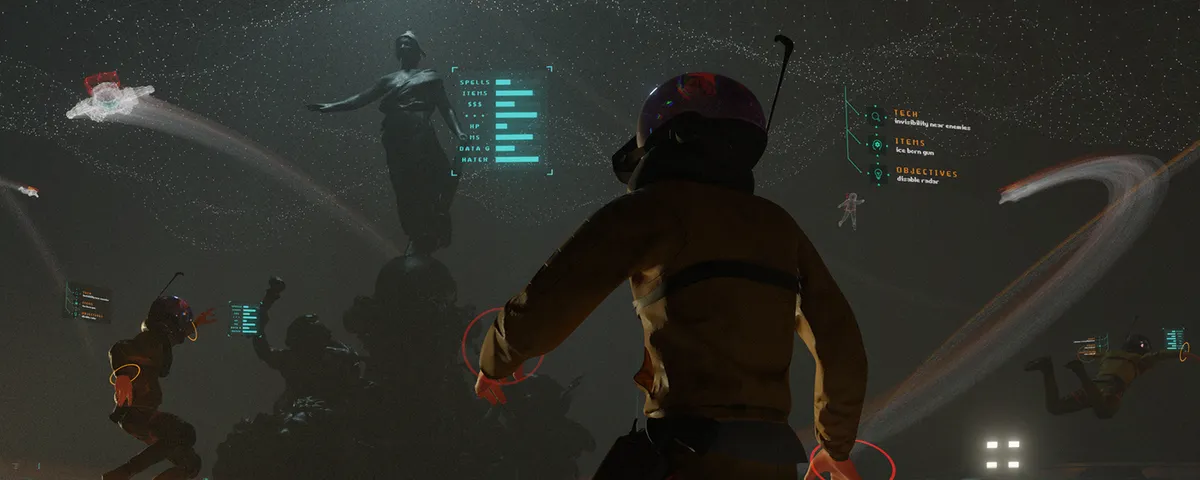
Urban Circus
By 2050, the urbanization of metropolises will lead to global oppression. Not building is the key to countering densification. Why not use the symbol of the show in the collective imagination as a place of representation of future e-sport competitions? Urban Circus is an itinerant arena that can be set up in the heart of urban centres.

MARS ROTOR
Long term habitation on Mars will require Earth-like facilities for rest and recuperation away from Scientific or economic outposts and encampments. By augmenting Martian gravity with spin gravity, a more Ear


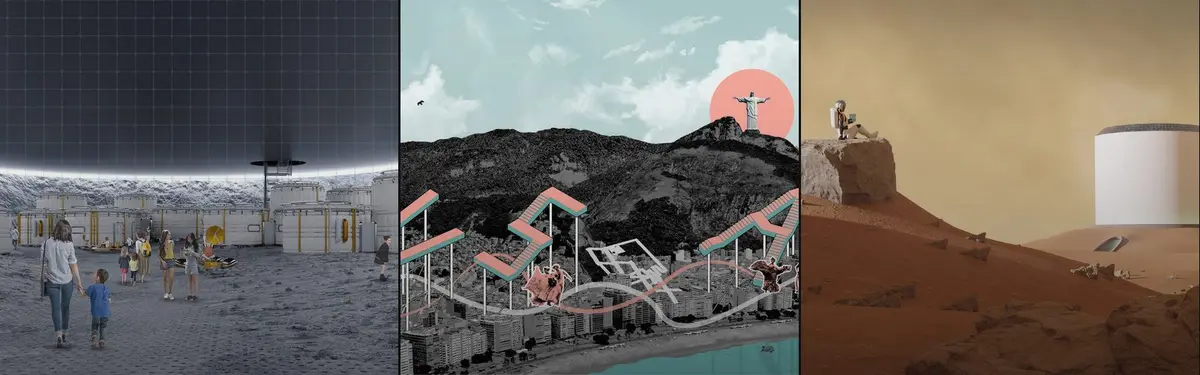
MOONTRIP Interactive Space Education Center
It's been 50 years since we first landed on the Moon. What would the future of space education look like in the next 50 years? Interactive environment, taking advantage of rapidly developing technologies to inspire and educate young generations about space exploration, role of different people, but also commemorate great milestone of humankind - first ever l


CHANGE title
The "CHANGE title" model is adaptable and affordable in both urban, architectural and interior scale. Built using reusable, prefabricated construction elements, it offers the needed flexibility in ever-changing city. As people move in and out of the building, the movable, modular wall panels allow to create their own unique living space.


Thank you!
Very detailed and well presented.


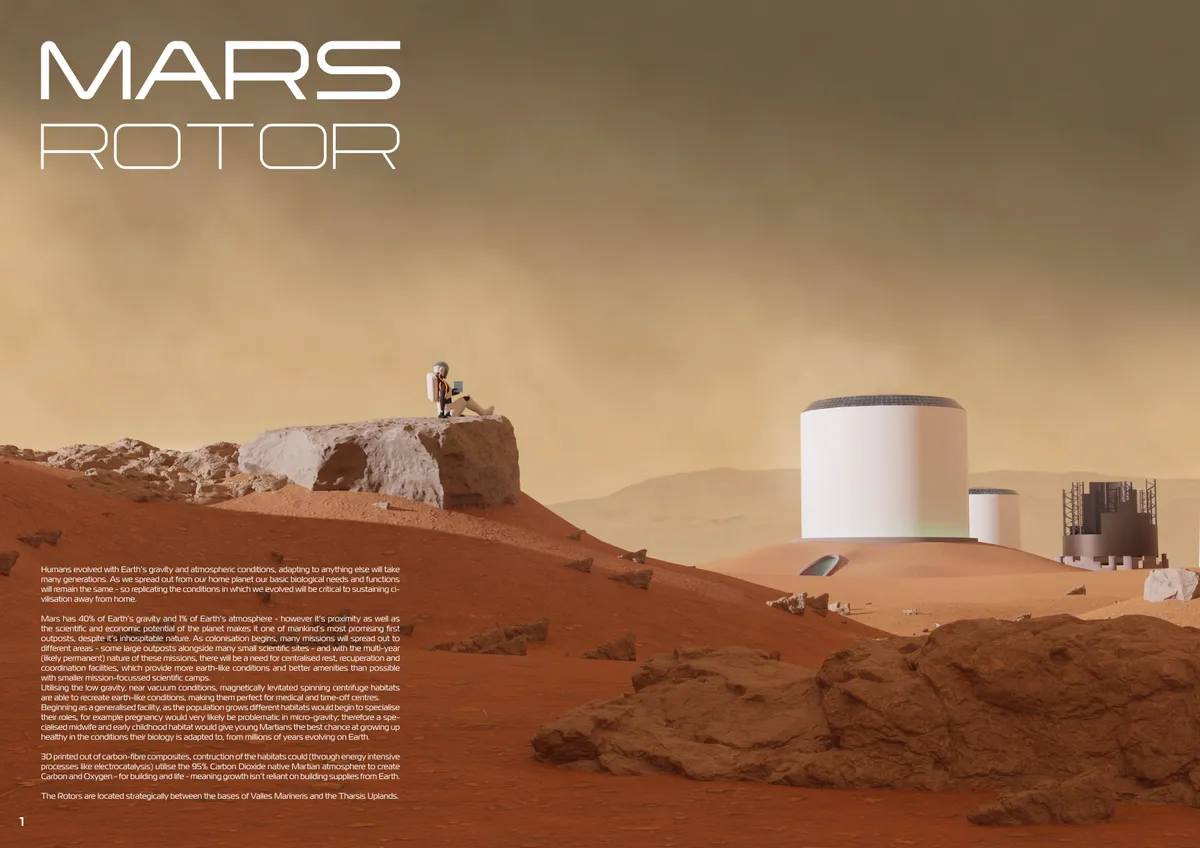
MARS ROTOR
Humans evolved with Earth’s gravity and atmospheric conditions, adapting to anything else will take many generations. As we spread out from our home planet our basic biological needs and functions will remain the same - so replicating the conditions in which we evolved will be critical to sustaining civilisation away from home. Mars has 40% of Earth’s gravity and 1% of Earth’s atmosphere - however it’s proximity as well as the scientific and economic potential of the planet makes it one of mankind’s most promising first outposts, despite it’s inhospitable nature. As colonisation begins, many missions will spread out to different areas - some large outposts alongside many small scientific sites - and with the multi-year (likely permanent) nature of these missions, there will be a need for centralised rest, recuperation and coordination facilities, which provide more earth-like conditions and better amenities than possible with smaller mission-focussed scientific camps. Utilising the low gravity, near vacuum conditions, magnetically levitated spinning centrifuge habitats are able to recreate earth-like conditions, making them perfect for medical and time-off centres. Beginning as a generalised facility, as the population grows different habitats would begin to specialise their roles, for example pregnancy would very likely be problematic in micro-gravity; therefore a specialised midwife and early childhood habitat would give young Martians the best chance at growing up healthy in the conditions their biology is adapted to, from millions of years evolving on Earth. 3D printed out of carbon-fibre composites, contruction of the habitats could (through energy intensive processes like electrocatalysis) utilise the 95% Carbon Dioxide native Martian atmosphere to create Carbon and Oxygen - for building and life - meaning growth isn’t reliant on building supplies from Earth. The Rotors are located strategically between the bases of Valles Marineris and the Tharsis Uplands.


Treehouse mansion
Our project is concentrated on the needs of the family, which moved to India for half a year. To make working from home easy and to help them maintain a healthy work-life balance. We wanted their new home to be modern and functional, but also to merge with the surroundings and show its vernacular character.


Nice!
VereyvGood
Good


Wonderfully experiential.
I am extremely pleased with the attention to detail in creating a complete story and encapsulated aesthetic in this presentation. It's immediately obvious how the building concept was arrived at, how that concept is something intellectually accessible to the public, how it is a celebration of lunar landings, and how it is forward-looking toward inspiring future generations. I especially appreciate dividing the building into multiple levels that can occupy the same space but exist tonally independent of one another. A simulacrum of the lunar surface, rendered large, is a perfect environment for enticing a child's imagination, especially when supplied with the visual props of habitat modules. A minor critique however is that the modules are unlikely to be large enough in the as-presented planform for many of activities planned for them. I would love to see if this concept could be taken further to create a similar space to the lunar surface focused instead on orbital habitats. Achieving a generative concept that leads the imagination towards a conversation full of new ideas is difficult and uncommon, and this presentation does it.