
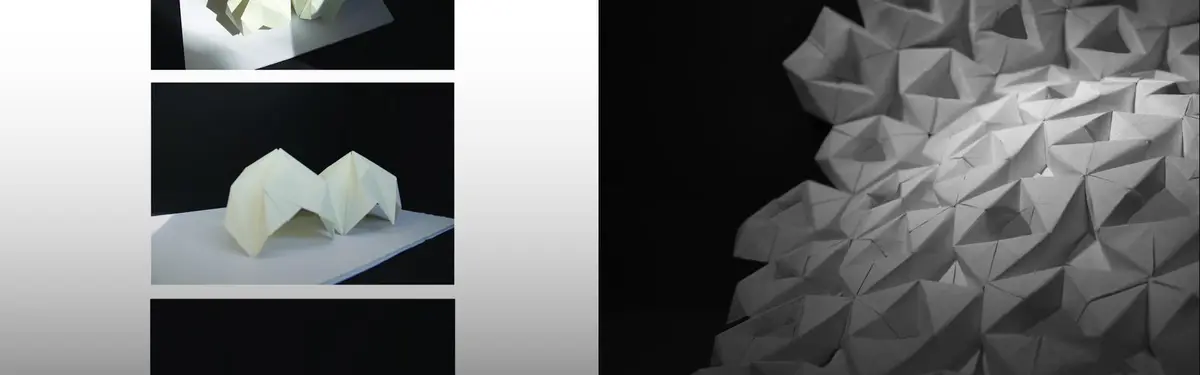


Origami
Folding techniques and origami principles applied to architectural and design projects.
Origami, the traditional art of paper folding, has become a significant design methodology in contemporary architecture and spatial design. Designers use origami principles to create innovative structures, interactive spaces, and functional objects that explore geometry, materiality, and transformation.
The community examines how folding systems generate pavilions and public installations, develop cooling and shading solutions, transform existing buildings and landscapes, and create interactive environments. Projects range from temporary structures to permanent architectural interventions that demonstrate origami's practical applications beyond paper.


Popular projects
View all 7 projects


Latest journals
View all 13 journals

Approach Design Studio Folds a Public Park into a Former Police Station in Beijing
A decommissioned police station in Daxing District becomes a hybrid office and community park wrapped in a steel exoskeleton.

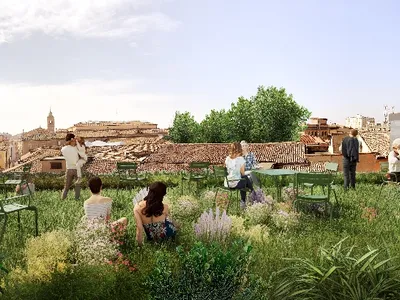
Revolutionary Origami-inspired Kinetic Roof by CRA and Italo Rota Enhances 18th-Century Italian Landmark Restoration
CRA and Italo Rota's Innovative Design Brings Modern Functionality to a Historical Treasure

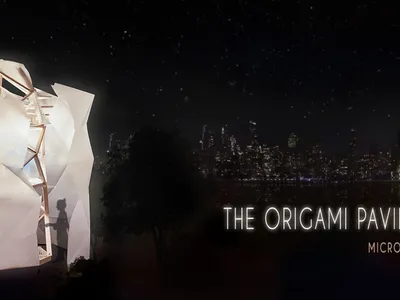
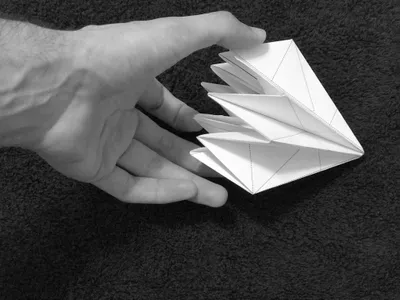
Crumple: Foldable Architecture
This project investigates the housing crisis in Dadaab camp in Kenya. The manifesto in which the geometry reidentify the process of foldable tensile structure. Manifold creates a three-dimensional space that allow refugees to designate their own spaces based on their own needs.


