

The origami pavilion
Micro Libraries

Concept
The process of creating a conceptual form for the library was exhaustive. The ideas were created one after another in a period of two weeks, but not all of them were satisfying. The main idea of the project was to create a model of a library with the use of the origami technique. After outlining the overall concept, our next step was to polish up the design and the idea was to have as much empty space as possible so that the micro-library wouldn’t be perceived as cramped. The main objective of the project was to emphasize lightness. We were inspired by Japanese culture, the projects of the brilliant architect Kengo Kuma, and repeated modularity. To choose the right one for a project, there was a need to create those structures by hand and mold them in accordance with the model we have adopted. Designing the initial shape that would later be repeated was just the first step in achieving the whole form of the building. The next step was to find the right construction that would match the cover. There were various suggestions. Choosing the right design depends on how it would fit into the repeating blocks of bevels and triangles. Another important factor was that the internal components were built into the structure itself. Because the area of the library was limited, having more empty space leads to a feeling of lightness in the people inside. As a result, there was one polished final version. These two steps of the design process were carried out with the use of the experimental miniature models. This method was the most inspiring because there were plenty of new ideas brought to the project. Building tentative models was a huge advantage which allowed us to identify all the issues in the project. All components of the project were put together to create a whole building, and they merged well.

Materials
There remained however an important issue in a project that was overlooked. The roof didn't exist. In order to put all parts together into one complete object, the roof was made with the same material as the cover. They were both made from translucent material. In the model, this was replaced by tracing paper because of soft light dispersion. The idea of using this material was also thought out with the interior and people's comfort in mind. The harsh light of the sun isn't always the most pleasing for working or reading. This replacement is beneficial for all visitors. What’s more, diffused light is cozier and also helps in being more focused and feels homely. The choice of material for the construction was also important. Because we were inspired by Kengo Kuma and his fascination with natural materials, wood was the best option. Moreover, this material has a magnificent impact on mental health, so the library may also serve another purpose - a place for physical and mental rest. The floors and seats were made with a mesh structure, to be openwork and to create a feeling of spaciousness. The finished project adhered to all the concepts and assumptions that we had made, most notably the light construction and space in the center of the library. Also, some of the similarities with Kengo Kuma's projects are visible. What's more, all the typical things that a library usually has, have been hidden and that creates a sense of desirable privacy.
Expansion and Future
The project has the potential to become a real building that is small but simultaneously spacious and comfortable. The library could also be completely portable, as it can be disassembled by its modular design. What's more, at night the building would look like a lantern so the exterior could be as attractive as the interior. The tourists might have another attraction to come and see. Of course, some upgrades to the interior could be made. One of the ideas is to connect the covering to the structure and use the material of the outdoor covering and make seats from it. In that case, readers could be sitting on the cover of the building rather than on the mesh. Also, there could be the possibility of using boards that would be hidden in the structure to lay them on the openwork floor and create a more comfortable workspace. The future is unknown and the adjustments will be made in accordance with the needs of visitors to the origami house.

Popular Articles
Popular articles from the community


Singing Woman: Contemporary Architecture Inspired by Estonia’s Voice and the Sea
Singing Woman turns Estonia’s song culture into flowing opera house architecture, blending public life, landscape, sea, and national memory.
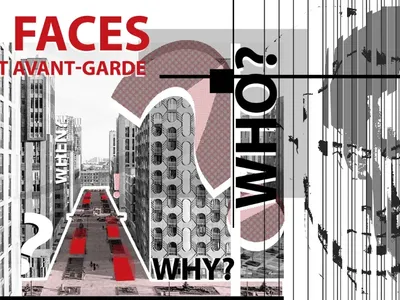
Faces of the Soviet Avant-Garde: Turning Moscow's Street Names into an Open-Air Museum
A network of sculptural installations across a Moscow residential district transforms forgotten architect names into spatial encounters with cultural memor

Opera on the Sea: Driftwood Logic Shapes a Timber Opera House on Estonia's Coast
Trevor Orgill's opera house translates the entangled drift of floating timber into a civic building where wood, water, and music converge.
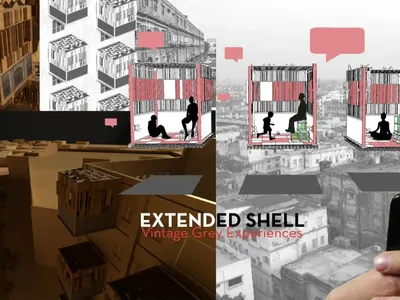
Extended Shell: Retrofitting Kolkata's Balconies as Living Urban Thresholds
A modular retrofit system recovers the social and environmental intelligence of Kolkata's historic verandas for contemporary Park Street residents.

Similar Reads
You might also enjoy these articles

Day and Night Park: A Time-Based Urban Newsstand in Beijing
A temporary urban newsstand in Beijing blending travel, light, and reading through poetic colors, compact form, and community-focused design.

Modernist Patio Renovation in El Masnou, Barcelona by Oliver Segura Arquitectura + Cebrià Arquitectura
Modernist patio renovation blending tradition and innovation with a movable pool, leveled floors, and Catalan materials in El Masnou.
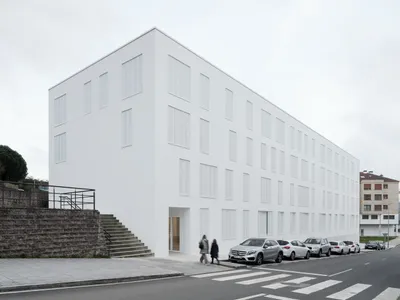
Alto Residencial Coop: Cooperative Housing Development in Santiago de Compostela by Carbajo Barrios Arquitectos
A linear cooperative housing complex blending white volumes and perforated metal façades, enhancing community living, natural light, privacy, and urban integration.
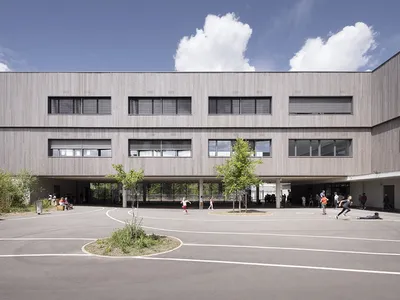
Vil Genis School by BPA ARCHITECTURE – Massy, France
Vil Genis School in Massy, France, features sustainable design, south-facing classrooms, community integration, accessible spaces, and modern educational architecture.

Explore Origami Competitions
Discover active competitions in this discipline


Challenge to reimagine the Iron Throne

Photograph architecture without architects

Illustrate the lost glory of Angkor Wat - Render Challenge

Design challenge to reuse E-waste
Comments (0)
Please login or sign up to add comments
No comments yet. Be the first to comment!